Published: August 2025 | Last updated: May 2026 | Editorial review and quality control: Martina N.
You opened the lab portal between meetings, or maybe at 11pm in bed, expecting the result to read negative. Instead it said reactive. Or equivocal. Or treponemal antibodies detected. None of which is the word you wanted to see, and none of which actually tells you, in plain English, whether you have syphilis right now.
That's the gap this article fills. Syphilis testing is layered on purpose: a screening test, then a confirmatory test, then sometimes a numerical titer to track how active the infection is. Each test answers a slightly different question, which is why one line on a lab report rarely tells the whole story. The next few sections walk through what each result type actually means, what counts as a false alarm, and what your doctor's next step usually is.
Key Takeaways
- A reactive screening test means antibodies were detected, not that syphilis is confirmed. Per CDC guidance, a second confirmatory test is the standard step before any diagnosis.
- A non-reactive result is usually reliable after 6 weeks. Testing earlier than 6 weeks after a possible exposure may miss an infection still building toward detectable antibody levels, so repeat at the 6-week mark to be sure.
How Syphilis Testing Works (and Why It Takes Two Steps)
Syphilis is caused by a bacterium called Treponema pallidum. Most blood tests don't try to find the bacterium itself. Instead, they look for antibodies, the chemical fingerprints your immune system leaves behind after meeting the infection.
To reduce errors, clinicians use two categories of antibody tests that cross-check each other. The screening test is sensitive (it catches almost any antibody activity that looks like syphilis, including some that turn out to be from something else). The confirmatory test is specific (it only reacts to antibodies that are genuinely targeting Treponema pallidum). When both tests agree, the diagnosis is reliable. When they disagree, your doctor digs deeper. Some U.S. labs now run the reverse sequence, starting with the treponemal test, but the clinical meaning of each test does not change.
| Test Category | Common Examples | What It Detects | What It's Used For |
|---|---|---|---|
| Non-treponemal | RPR, VDRL | Antibodies the body produces during active infection | Screening, and monitoring how titers fall after treatment |
| Treponemal | FTA-ABS, TP-PA, EIA | Antibodies specific to the syphilis bacterium itself | Confirming a reactive screening result |
What a Non-Reactive (Negative) Result Actually Means
A non-reactive syphilis test means the screening test did not detect antibodies linked to the infection. In most situations, that's a straightforward negative.
The one wrinkle is timing. Your immune system needs time to produce enough antibodies for the test to find them. That waiting period is called the window period. Syphilis antibodies usually become detectable within 3 to 6 weeks after exposure, and most clinicians consider 6 weeks the reliable cutoff for an antibody blood test. Earlier testing can miss an infection that's already taking hold.
If you tested within the first couple of weeks after a possible exposure, a single negative result doesn't fully clear you. Repeating the test at 6 weeks (and sometimes again at 12 weeks for higher-risk exposures) is the standard recommendation.
| Time After Exposure | Test Reliability | Typical Recommendation |
|---|---|---|
| 0 to 2 weeks | Low | Antibodies usually not yet detectable; retest later |
| 3 to 6 weeks | Moderate to high | Most infections become detectable in this window |
| 6 weeks or longer | High | Negative result is usually reliable |
| 12 weeks | Very high | Used to fully rule out exposure in high-risk scenarios |
What Reactive Actually Means (Hint: Not Diagnosed)
This is the word that sends most people into a Google spiral. A reactive result means the screening test detected antibodies associated with syphilis. In plain terms, the test flagged something worth a closer look.
What it does not automatically mean: that you currently have an active syphilis infection.
A reactive screening test can come from three different sources. It may reflect a current, untreated infection. It may reflect a past infection that was already treated, since some antibodies linger in the bloodstream long after the bacteria are gone. Or it may be a false positive triggered by another condition that produces similar-looking antibodies. The confirmatory treponemal test, sometimes combined with a numerical RPR titer, is what tells your doctor which of those three is going on.
This two-step system is the reason patients almost never get a syphilis diagnosis from one test alone. If the second test is also positive, the picture is clear. If the second test is negative, the first was likely a false alarm.
A reactive screening test could mean (1) a current, untreated infection, (2) a past infection that was treated and resolved, or (3) a false positive from an unrelated condition. The confirmatory treponemal test plus a numerical RPR titer is what separates these three.
When a Past Infection Still Shows Up on Tests
One of the most counterintuitive facts about syphilis testing is that treponemal antibodies often stay in the bloodstream for life, even after the infection is fully cured. So someone who was treated for syphilis ten years ago can still test positive on a treponemal test today. That's not a treatment failure. It's the immune system's long memory.
To tell the difference between past and active infection, clinicians look at non-treponemal titers (the numerical RPR result, written as ratios like 1:8 or 1:32). High or rising titers point toward active infection. Low or stable titers, especially in someone with a documented treatment history, usually indicate a past, resolved infection. Per CDC treatment guidelines, a fourfold drop in titer (for example, from 1:32 down to 1:8) is the standard evidence that treatment worked.
Why False Positive Syphilis Tests Sometimes Happen
Seeing a reactive result and later learning it was a false positive is unsettling. It happens often enough that doctors specifically design the two-step algorithm to catch it.
A false positive simply means the screening test reacted to antibodies that resembled syphilis antibodies but weren't actually from a Treponema pallidum infection. The immune system uses similar protein shapes to fight many different threats, and certain conditions create cross-reactive signals that confuse the test.
This is exactly why confirmatory testing exists. A single reactive screening result is the start of a workup, not the end of one. Doctors combine the second test, any visible symptoms, sexual history, and other medical context before making any diagnosis or treatment decision.
| Condition or Situation | Why It Can Cause a False Positive |
|---|---|
| Pregnancy | Hormonal and immune shifts during pregnancy can occasionally produce antibodies that look similar in screening tests |
| Autoimmune disorders (lupus, rheumatoid arthritis) | These conditions create antibodies that can cross-react with non-treponemal test reagents |
| Recent viral infections | Some viruses temporarily activate antibody patterns that mimic syphilis screening markers |
| IV drug use | Associated with a higher rate of biological false-positive reactions |
| Older age | Immune system changes can increase cross-reactivity over time |
| Previously treated syphilis | Treponemal antibodies often remain detectable for life even after successful treatment |
When Symptoms and Test Results Don't Match Up
Another situation that confuses people is when their symptoms and their test result point in opposite directions. Someone with classic syphilis-looking symptoms gets a negative test. Or someone who feels completely fine gets a reactive result.
Both happen more often than most people realize, and there's a reason syphilis specialists call this infection the great imitator. Its symptoms overlap with dozens of unrelated conditions, and in many people it produces no noticeable symptoms at all. The earliest sign is usually a painless sore called a chancre, which appears at the site where the bacteria entered the body. Because the sore doesn't hurt and often appears in places that aren't easy to see (inside the vagina, on the cervix, around the anus, in the mouth), it's commonly missed entirely.
Later stages can bring a rash on the palms and soles, swollen lymph nodes, fatigue, fever, or mucous membrane patches, per NHS syphilis guidance. These can resemble flu, allergic reactions, dermatitis, or viral illnesses. Blood testing, not symptom-spotting alone, is how syphilis is reliably diagnosed.
What Happens After a Confirmed Positive Result
If both the screening and confirmatory tests come back positive and the clinical picture supports it, your doctor will typically diagnose syphilis and start treatment. The good news is that syphilis is one of the few bacterial sexually transmitted infections that remains fully curable with antibiotics.
The standard treatment is benzathine penicillin G, given as an intramuscular injection. Dosing follows the CDC STI Treatment Guidelines and depends on the stage of infection. Primary, secondary, and early latent syphilis is typically treated with a single dose. Late latent syphilis, or cases of unknown duration, requires three doses given one week apart. Neurosyphilis, infection that has reached the nervous system, requires intravenous penicillin in a hospital setting rather than an outpatient injection; the treating clinician arranges this if the clinical picture warrants it.
Most people start improving quickly once treatment begins. Follow-up RPR titers are usually scheduled at 6 and 12 months to confirm the numbers are dropping, which is how doctors verify the treatment worked.
Penicillin G, administered parenterally, is the preferred drug for treating persons in all stages of syphilis.
How Long Syphilis Tests Stay Positive After Treatment
One of the most confusing aspects of syphilis testing is that some tests stay positive for life even after the infection is cured. This catches a lot of people off guard at routine bloodwork years later.
Treponemal tests (FTA-ABS, TP-PA, treponemal EIA) detect antibodies specific to the syphilis bacterium. Once your immune system has made them, they typically stay detectable for the rest of your life. A positive treponemal test in someone with a documented treatment history is not a sign of new infection. It's a sign of past exposure that the immune system remembers.
RPR and VDRL titers, on the other hand, fall after successful treatment. A fourfold drop within 6 to 12 months is the standard benchmark.
| Test Type | After Successful Treatment | What Doctors Use It For |
|---|---|---|
| Treponemal (FTA-ABS, TP-PA) | Usually remain positive for life | Confirming past or current exposure |
| Non-treponemal (RPR, VDRL) | Titers fall fourfold within 6 to 12 months | Monitoring treatment response and detecting reinfection |
What If Your Result Is Equivocal or Inconclusive
Sometimes a lab report doesn't read cleanly positive or negative. The wording might be equivocal, indeterminate, borderline, or simply a note recommending repeat testing. This usually means the antibody signal was present but too weak for the lab to confidently classify it.
A few things commonly cause this. The test may have been done during the early window period, when antibody levels were still building. The sample may have had quality issues. Or the patient may be in a phase where titers are dropping (after treatment) or rising (early new infection), and the test caught the moment of crossover.
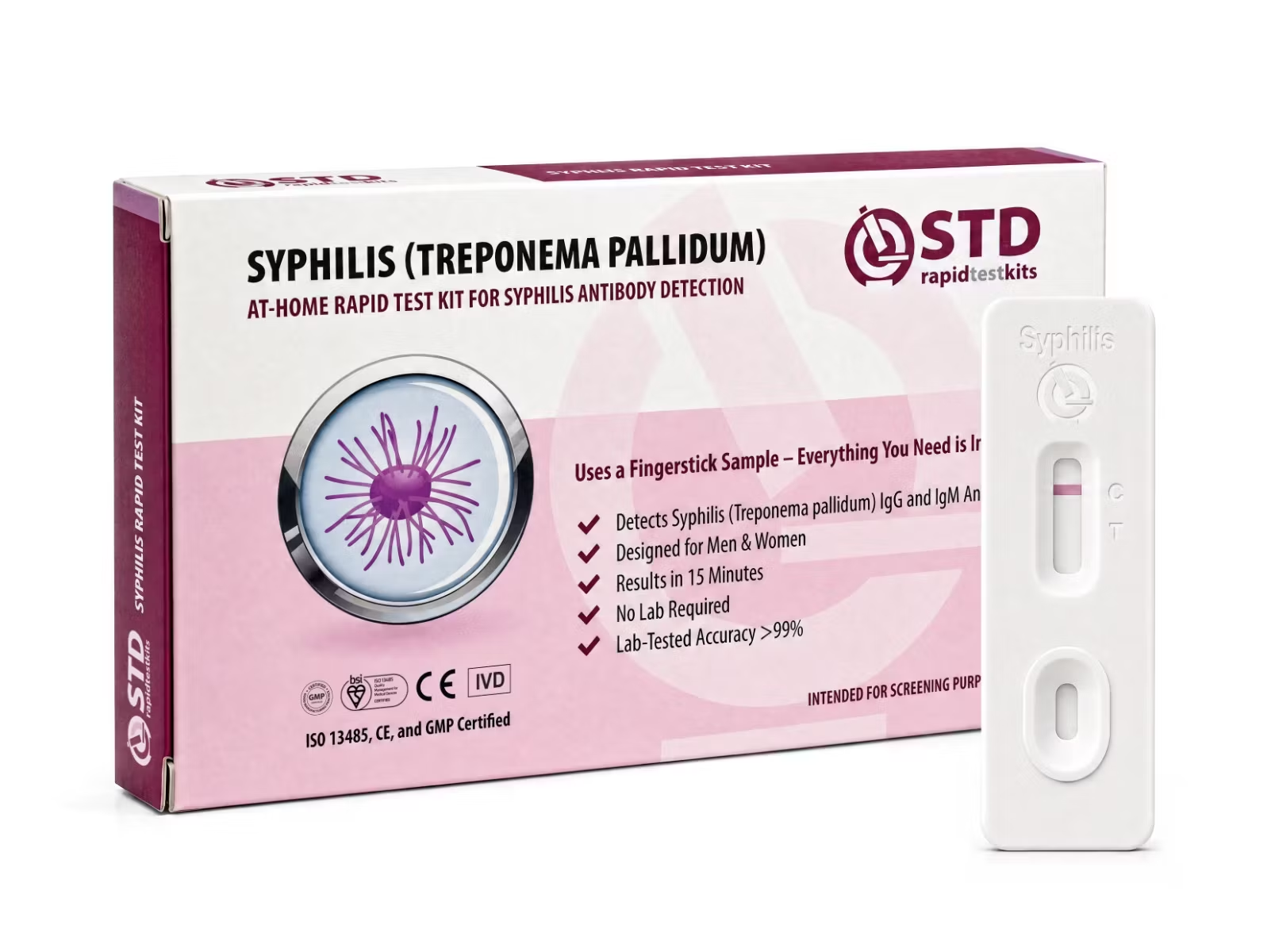
Rapid at-home tests can also produce faint lines that leave people unsure how to read them. The standard rule on most lateral flow rapid tests is that any visible test line, no matter how faint, counts as a reactive result. Faint lines should always be followed up with a clinic-based confirmatory test, not dismissed as a wash.
In every equivocal case, the answer is the same: repeat the test in 2 to 4 weeks, run a different confirmatory test, or do both. Inconclusive doesn't mean broken. It means more data is needed.
Why the Testing Window Matters More Than People Realize
The single most common reason for a confusing syphilis result is testing too early. Antibodies don't appear instantly after exposure. Your immune system has to recognize the bacteria, mount a response, and produce enough antibodies for a blood test to find them. Until that happens, you can be infected and still test negative.
Most syphilis blood tests become reliable around 6 weeks after exposure. Testing earlier than that can give useful information if it's already positive, but a negative result in that early window cannot fully rule out infection.
If you had a possible exposure within the last few days or weeks and your initial test came back negative, the protocol most clinics follow is to retest at 6 weeks. For higher-risk exposures, a second retest at 12 weeks adds extra reassurance.
0 to 2 weeks after exposure: antibodies usually not yet detectable. 3 to 6 weeks: most infections become detectable. 6 weeks: the standard reliable cutoff for a negative result. 12 weeks: the extra check after higher-risk exposures.
What Doctors Look At Besides the Number on Your Report
A single lab result is one input. When clinicians interpret syphilis tests, they look at a wider clinical picture that includes symptoms, sexual history, timing of possible exposures, prior STI history, pregnancy status, and any conditions (autoimmune disease, recent viral illness) that could affect antibody production.
A reactive test in someone with a painless genital sore or the classic palm-and-sole rash carries more diagnostic weight than the same result in someone with no symptoms and no risk factors. A reactive test in someone with documented past treatment is interpreted very differently from the same result in a treatment-naive patient. And pregnant patients are screened more frequently than the general population, per CDC guidance, because untreated syphilis in pregnancy carries serious risks to the baby.
If You're Sitting With a Confusing Result Right Now
The most useful thing to remember while waiting on confirmatory testing is that screening tests are designed to catch potential infections early. That means they cast a wide net and sometimes flag signals that turn out to be harmless. A reactive screening result is the start of a workup, not a final answer.
The second useful thing: syphilis, even when confirmed, is treatable. Penicillin works extremely well, especially when the infection is caught early. The path from a confusing portal message to a clear answer is usually short and well-established, even when the initial moment feels frightening.
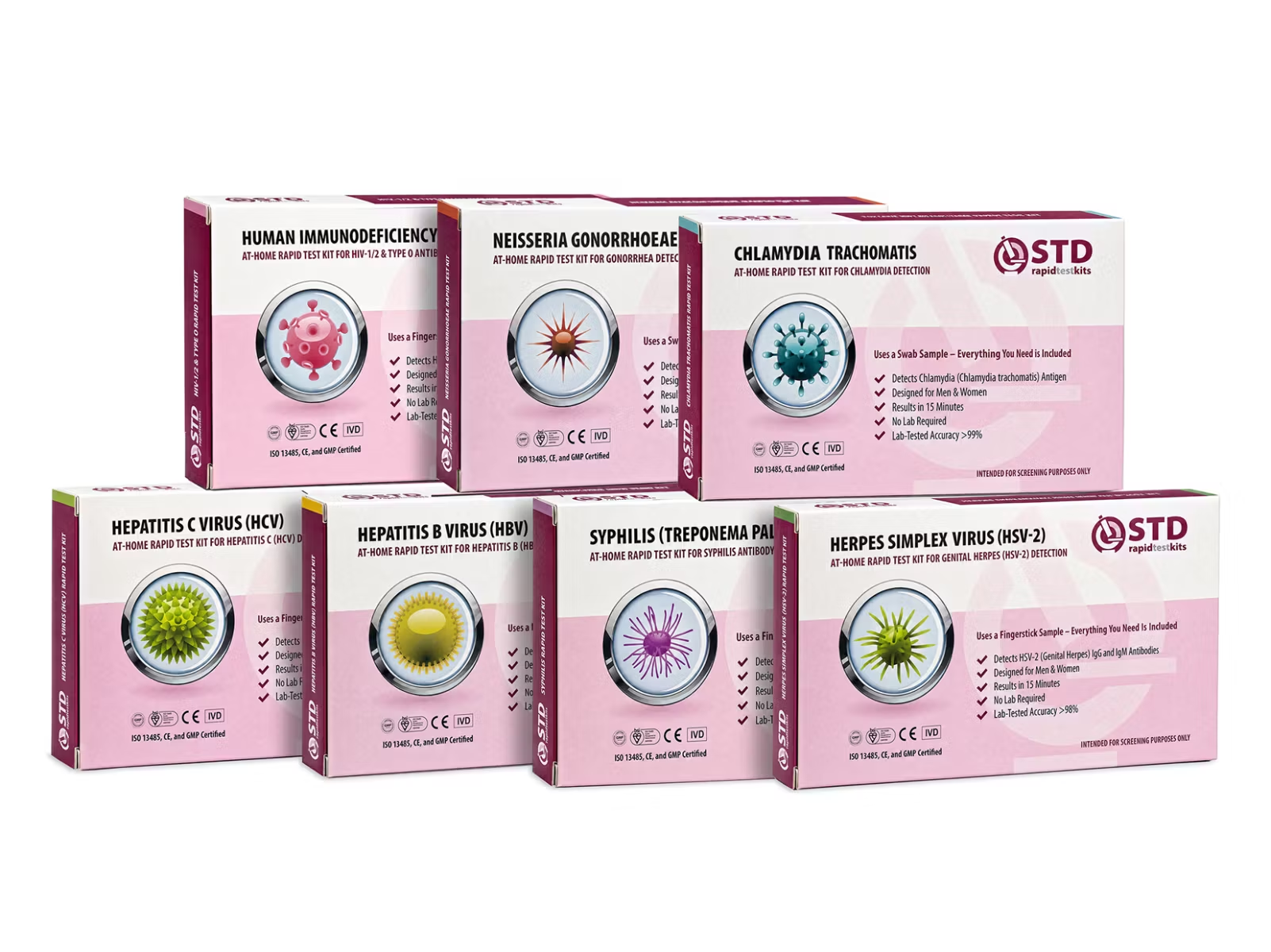
If you're waiting on lab follow-up and want a private screening option, an at-home test like the Rapid Syphilis Home Test or a broader combination STI screen can give you a first answer at home. Any reactive at-home result should still be followed by a clinic confirmatory test.
Frequently Asked Questions
- If my syphilis test is reactive, does that mean I definitely have syphilis?
- A reactive screen starts a two-test workup, not a diagnosis. The confirmatory treponemal test separates a real positive from a false alarm. Past treated infections and certain unrelated conditions (pregnancy, autoimmune disease, recent viral infection) can both trigger a reactive screening result without indicating current active infection. Your doctor combines the second test with your symptoms and history before calling anything a diagnosis.
- Can a syphilis test miss an infection if I tested too early?
- Yes. Syphilis antibodies usually become detectable around 3 to 6 weeks after exposure, with 6 weeks considered the reliable cutoff. Someone tested within the first 2 weeks can be infected and still test negative simply because their immune system hasn't built up enough antibodies yet. That's why clinics routinely recommend retesting at 6 weeks (and sometimes 12 weeks) after a possible exposure.
- Why is my syphilis test still positive years after I was treated?
- Treponemal antibodies (the kind detected by FTA-ABS, TP-PA, and treponemal EIA tests) typically remain in the bloodstream for life, even after the infection is fully cured. A positive treponemal test years later isn't a sign of new infection. It's a sign of past exposure that your immune system remembers. Doctors use the non-treponemal RPR or VDRL titer to distinguish past from active infection.
- What does non-reactive actually mean on a syphilis test?
- Non-reactive means the test didn't detect antibodies associated with syphilis. In most situations that's a straightforward negative result. The exception is timing: if you tested within the first few weeks after a possible exposure, antibodies may not yet be detectable, and the result should be confirmed with a repeat test around the 6-week mark.
- What does an RPR titer like 1:8 or 1:32 mean?
- The number reflects how diluted your blood sample can be while still showing a reaction. Higher titers (1:32, 1:64) tend to indicate more active infection. Lower titers (1:1, 1:2) often indicate older or treated infection. The most useful information comes from trend over time. Per CDC treatment guidelines, a fourfold drop in titer (for example from 1:32 down to 1:8) within 6 to 12 months is the standard evidence that treatment worked.
- Can something other than syphilis cause a false positive screening test?
- Yes. Pregnancy, autoimmune diseases like lupus, recent viral infections, IV drug use, and older age can all occasionally produce antibodies that cross-react with non-treponemal screening reagents. This is exactly why two-step testing exists. The confirmatory treponemal test is much more specific and rules out most biological false positives.
- What does a faint line on an at-home rapid syphilis test mean?
- On most lateral flow rapid tests, any visible test line counts as reactive, even a faint one. Faint lines often reflect lower antibody concentration, common in early infection or after treatment. Treat any visible test line as a reactive result and follow up with a clinic-based confirmatory test rather than dismissing it.
- What happens after a confirmed positive syphilis result?
- One benzathine penicillin G injection clears early-stage syphilis (primary, secondary, or early latent). Late latent or unknown-duration infections require three weekly injections. Follow-up RPR titers at 6 and 12 months confirm the infection is resolved. Syphilis is fully curable when treated, especially when caught early.
How we sourced this article: This guide synthesizes current syphilis testing guidance from the U.S. Centers for Disease Control and Prevention (including the CDC STI Treatment Guidelines), the World Health Organization, Mayo Clinic, and the UK National Health Service. We focused on screening algorithms, the relationship between non-treponemal and treponemal tests, RPR titer interpretation, false-positive sources, and treatment monitoring. All explanations are written in plain English to help readers make informed decisions about testing and follow-up. This article does not replace individual clinical advice.
- U.S. Centers for Disease Control and Prevention. Syphilis basic information, screening guidance, and overview of detection windows.
- U.S. Centers for Disease Control and Prevention. STI Treatment Guidelines, syphilis section, including penicillin treatment, post-treatment titer monitoring, and pregnancy screening guidance.
- World Health Organization. Syphilis fact sheet covering global burden, transmission, and diagnostic principles.
- UK National Health Service. Syphilis overview including signs, symptoms, the painless chancre, the palm-and-sole rash of secondary syphilis, and testing guidance.
- Mayo Clinic. Syphilis symptoms, stages, and clinical presentation including primary chancre and secondary rash patterns.
- Mayo Clinic. Syphilis diagnosis and treatment, including non-treponemal and treponemal test descriptions.
