
Published: December 2025 | Last updated: May 2026 | Editorial review and quality control: Martina N.
Getting an HIV result you did not expect, especially in the days after a vaccine, is a stomach-drop moment. The short answer is yes: certain vaccines can occasionally cause a false positive on an HIV antibody screening test, and a reactive screen after a recent shot does not mean you have HIV. Cases are rare, the science behind why it happens is well understood, and the standard testing system is built to catch and resolve these results through a follow-up confirmatory test that uses a different method.
This guide walks through what is actually happening when a vaccine briefly cross-reacts with an HIV screen, which tests are vulnerable and which are not, how long to wait between a shot and a screening test, and what your next move should be if your initial result does not match your real exposure history.
Key Takeaways
- Recent vaccines (including COVID-19, flu, hepatitis B, and HPV shots) can on rare occasions trigger a false reactive result on an HIV antibody screening test, but a reactive screen is never a final HIV diagnosis on its own.
- Confirmatory testing with an HIV-1/HIV-2 differentiation assay or an HIV RNA nucleic acid test (NAAT) clears up vaccine-related cross-reactivity, and an RNA-based test is not affected by vaccines at all.
How a vaccine can briefly confuse an HIV antibody test
Vaccines do not contain HIV. What they do is exactly what they are designed to do: stimulate your immune system to produce antibodies and other immune signals against a target pathogen, whether that is influenza, hepatitis B, COVID-19, or HPV. Most of the time the antibodies produced are highly specific to the vaccine target and have no overlap with anything else circulating in your blood.
Occasionally, the antibody response from a vaccine is broad enough that an HIV antibody screening test reads it as a weakly reactive signal. This is called cross-reactivity, and it is a known limitation of antibody-based screening tests across many infectious diseases, not only HIV. The screening assay is doing its job correctly, your immune system is doing its job correctly, and the chemistry of the test happens to read recently produced antibodies as suspicious.
Antibody-based HIV tests, including most rapid finger-prick kits and the 4th-generation antigen/antibody combo tests used at clinics, look for antibodies your body has produced against HIV. They are highly sensitive, which is exactly why they remain the standard front-line screening tool. That same sensitivity is what makes the rare false reactive possible.
Confirmatory testing solves the problem in a different way. The HIV-1/HIV-2 antibody differentiation immunoassay looks for antibodies that are specifically distinguishable as HIV-1 or HIV-2, rather than the broader screen. The HIV RNA nucleic acid amplification test (NAAT) does not look at antibodies at all; it detects the genetic material of HIV itself. Neither of these is meaningfully affected by recent vaccination, which is why the CDC's HIV testing guidance treats a single reactive screen as preliminary rather than diagnostic.
A screening test looks for any HIV antibody in your blood, which is what makes it occasionally vulnerable to cross-reactivity. A confirmatory test looks for something more specific: either antibodies distinguishable as HIV-1 or HIV-2, or the genetic material of HIV itself. The pairing is the design, not a workaround.
Which HIV tests can show a false positive after a vaccine
Not all HIV tests behave the same way when your immune system is freshly activated. Tests that look for your antibodies to HIV are the ones most likely to be affected by a recent vaccine. Tests that look for the virus itself are essentially immune to this problem.
The table below summarizes the main test categories used in U.S. and U.K. testing pathways, what each one actually detects, and how it tends to behave in the days after a routine adult vaccination.
| Test type | What it detects | Risk of false positive after a recent vaccine | Confirmatory step |
|---|---|---|---|
| Rapid finger-prick antibody test (at-home or clinic) | HIV-1 and HIV-2 antibodies | Possible in rare cases, especially within 2 to 3 weeks of a vaccine | Lab-based confirmatory testing required |
| 4th-generation antigen/antibody combo test (lab) | HIV antibodies plus p24 antigen | Low; occasionally reported | Differentiation assay per CDC algorithm |
| HIV-1/HIV-2 differentiation immunoassay (lab) | Antibodies distinguishable as HIV-1 vs HIV-2 | Very low | Used as the second step in the CDC algorithm |
| HIV RNA NAAT (nucleic acid test) | HIV viral RNA in blood | Not affected by vaccines | Definitive when used |
How long to wait between a vaccine and an HIV antibody test
If your last sexual exposure was low risk and you are testing for general reassurance, the cleanest result usually comes from waiting at least two to three weeks after a vaccine before using an antibody-based screening test. That window gives the immune surge from the shot time to settle, which reduces the (already small) chance of a non-specific reactive signal.
That timing is a comfort buffer rather than a hard clinical rule. There is no public health guideline that says you must avoid HIV testing after a vaccine, and waiting is not the right move in every situation. If you have had a real high-risk exposure, a needlestick injury, or symptoms that suggest acute HIV (fever, rash, swollen lymph nodes within 2 to 4 weeks of exposure), do not delay testing because you happened to get a flu shot last week. Go directly for an HIV RNA NAAT, which is not affected by vaccine-related cross-reactivity and which can detect HIV during the early window when antibody tests are still negative.
Two common scenarios trip people up on timing. First, routine PrEP screening, where a panel of vaccines (hepatitis A, hepatitis B, HPV catch-up) is sometimes refreshed at the same visit as a screening HIV test. The combination occasionally produces a weak reactive that is not a real positive. Second, pre-relationship testing done in the same week as a flu shot or COVID booster. In both cases the fix is the same: clinic staff repeat the test using a different method, and the second result almost always resolves to negative.
Two timing rules to remember
- For reassurance testing after a low-risk situation: wait two to three weeks after the most recent vaccine before using an antibody-based HIV test.
- For high-risk exposure or symptoms of acute HIV: do not wait. Go directly for an HIV RNA NAAT, which is not affected by recent vaccination.
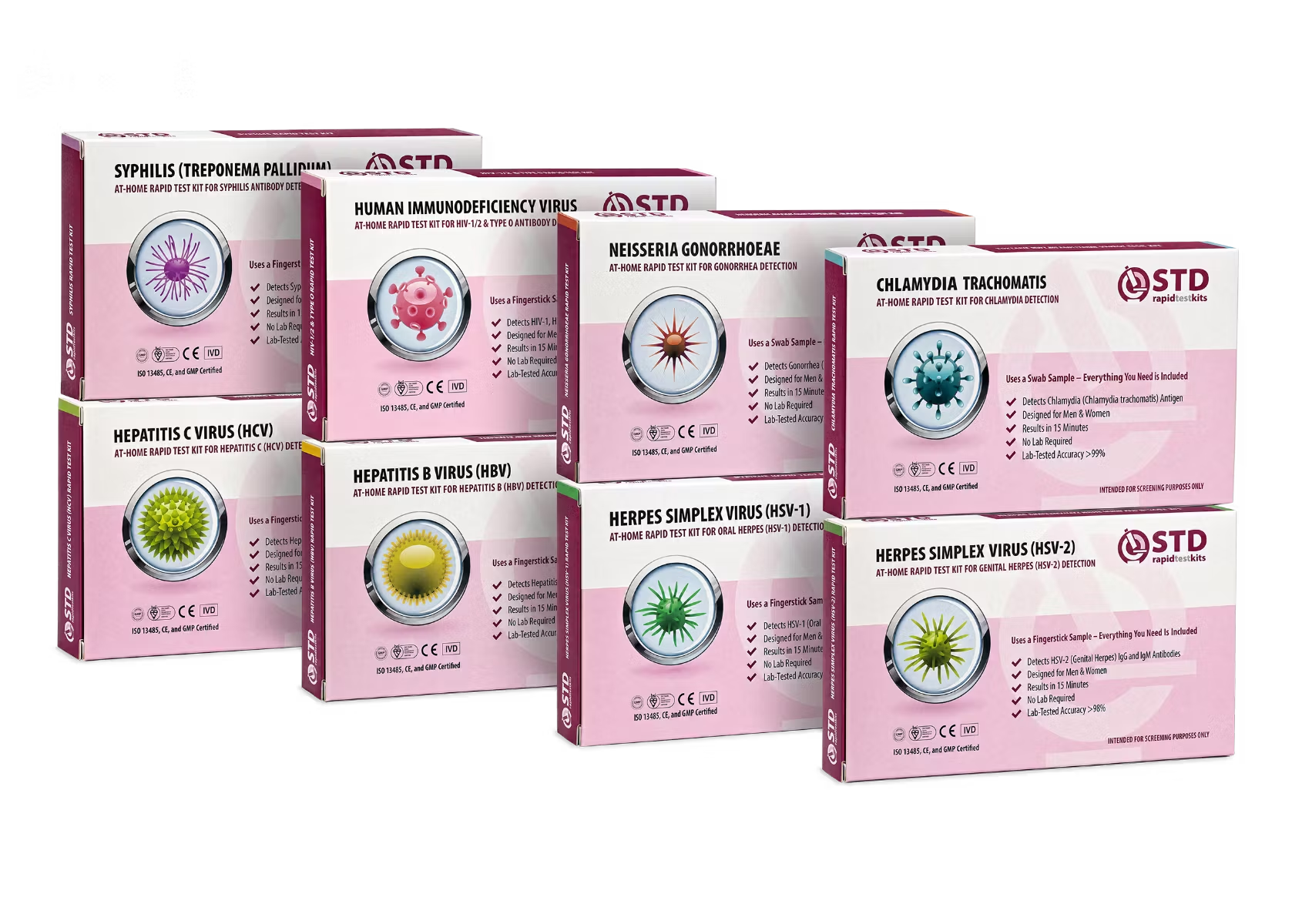
STD Rapid Test Kits sells the at-home lateral-flow panels referenced in this article. Any reactive result on a home rapid test should be confirmed at a clinic before being treated as a diagnosis.
What to do if your HIV screen is reactive shortly after a vaccine
A reactive result on a screening test is exactly that: a screening result. The standard CDC testing algorithm builds in a follow-up step because no antibody screen, including the most modern ones, is perfect on the first pass. Here is how the next steps should look in practice.
First, do not retest with another rapid antibody kit at home. A second rapid test that uses the same antibody-based chemistry tends to produce a similar result, which can deepen panic without adding clarity. The right next step is a different method, not the same method twice.
Second, contact your primary care provider or a sexual health clinic and tell them three things: that you had a reactive screen, what kind of test it was (a home rapid kit or a clinic combo test), and what vaccines, if any, you have received in the past month. With that context they can order the right confirmatory pathway: a 4th-generation lab combo test followed by an HIV-1/HIV-2 differentiation assay, with an HIV RNA NAAT as the next step if the differentiation result is indeterminate.
Third, if your real exposure history is genuinely low risk and your timing puts you within roughly three weeks of a vaccine, ask specifically whether an HIV RNA test can be added to your confirmatory workup. RNA testing bypasses the antibody pathway entirely and is the fastest way to get a clean answer when vaccine cross-reactivity is on the table.

How the layered HIV testing algorithm handles this
U.S. and U.K. testing systems both use what is sometimes called a stepped or layered algorithm. A screening test catches as many true positives as possible (high sensitivity), and confirmatory tests filter out false positives by using a different chemistry (high specificity). Vaccines, recent infections, autoimmune conditions, and pregnancy can all occasionally cause a non-specific reactive screen. The algorithm exists so that those cases are flagged, retested, and resolved with confidence.
The CDC's recommended laboratory pathway starts with an antigen/antibody combo test. If reactive, the same blood sample moves to an HIV-1/HIV-2 antibody differentiation immunoassay. If that step is also reactive, the sequence is treated as a confirmed positive. If the differentiation step is negative or indeterminate, an HIV-1 RNA NAAT is performed. A negative NAAT after a reactive screen, in the context of a recent vaccine and no real exposure, is the clinical pattern that almost always identifies cross-reactivity as the cause.
The NHS HIV testing pathway follows the same logic, with confirmation handled at a specialist sexual health clinic when a screening result is positive. Both systems treat a reactive screen as a signal to investigate further rather than a final answer.
According to <a href="https://www.cdc.gov/hiv/testing/" target="_blank" rel="noopener">CDC HIV testing guidance</a>, any reactive result on an antibody or antigen/antibody screening test requires confirmatory follow-up testing before an HIV diagnosis can be made. A positive home rapid test is a signal to seek a confirmatory lab test, not a diagnosis on its own.
When vaccines are least likely to interfere with an HIV test
Three patterns make a vaccine-related false positive almost vanishingly unlikely:
- Wait at least 21 days after the most recent vaccine before using an antibody-based screening test.
- Choose a test that detects HIV RNA rather than antibodies (a NAAT), which is not affected by vaccine-stimulated immune activity.
- If your last possible exposure was more than 30 days ago, the HIV antibodies the test is looking for, if present, would already be well established. A reactive result in that situation is more likely to reflect a real exposure and less likely to be vaccine-related cross-reactivity.
Once your immune system returns to baseline, antibody tests work as designed. Vaccines do not produce a permanent change to your immune profile that confuses HIV testing for months on end. The window of possible interference is short, measured in weeks rather than months.
Do vaccines affect tests for other STIs?
For the most part, no. The antibody chemistry that makes HIV screening occasionally vulnerable to vaccine cross-reactivity is fairly specific to HIV testing. Tests for chlamydia and gonorrhea look for the genetic material of those bacteria (NAAT) or for bacterial antigens, neither of which is influenced by your immune response to a flu shot or COVID booster. Syphilis testing uses a two-step approach (a non-treponemal screen plus a treponemal confirmatory test) that has its own well-known limitations but is not meaningfully affected by routine vaccinations.
Hepatitis B testing has the inverse situation worth noting. A recent hepatitis B vaccine should produce a positive surface antibody (anti-HBs) result on purpose, because that is what the vaccine is for. If you are testing for hepatitis B status after a vaccine, the panel and how the result is interpreted matters more than the timing.
A positive hepatitis B surface antibody (anti-HBs) result after a hepatitis B vaccine is the intended outcome, not a false positive. It signals that the vaccine has produced protective antibodies. If your hep B test is positive after a recent vaccination, ask which marker was measured (surface antibody, surface antigen, or core antibody) before drawing any conclusions about infection.

The bottom line on vaccines and HIV testing
A vaccine does not give you HIV, and most of the time it has no effect on your HIV test result either. The narrow scenario worth knowing about is this: an HIV antibody screening test, taken within roughly two to three weeks of a vaccine, can on rare occasions read as reactive because of cross-reactivity with the new antibody response. A confirmatory test using a different method resolves the result, which is exactly what the CDC and NHS testing pathways are built to do.
If your initial result does not line up with your actual exposure history or your recent vaccine timing, ask for a confirmatory test, ideally one that includes an HIV RNA NAAT. That follow-up step is the difference between a stressful 24 hours and a clean answer.
Your next steps in three lines
- For reassurance testing in a low-risk situation: wait two to three weeks after your most recent vaccine before using an antibody-based HIV test.
- For a high-risk exposure or symptoms suggestive of acute HIV: do not delay; go directly for an HIV RNA NAAT, which is not affected by recent vaccination.
- For any reactive screening result: follow up with lab-based confirmatory testing and tell the provider what vaccines you received in the past month so they can order the right confirmatory pathway.
Frequently asked questions
- Can a vaccine really cause an HIV test to come back positive?
- Yes, on rare occasions. Some vaccines (COVID-19, flu, hepatitis B, HPV) produce a strong antibody response that an HIV antibody screening test can pick up as a non-specific reactive signal. It is uncommon, and a reactive screening result is not the same as an HIV diagnosis. Confirmatory testing with a different method resolves the result.
- I just had a COVID booster and my HIV test is reactive. What now?
- Do not panic and do not retest with another rapid kit. Contact a primary care provider or sexual health clinic, mention the recent vaccine, and ask for confirmatory testing per the standard CDC algorithm. An HIV RNA NAAT, which is not affected by vaccines, gives the cleanest answer when vaccine cross-reactivity is on the table.
- How long should I wait after a vaccine before doing an HIV antibody test?
- If you are testing for general reassurance after a low-risk situation, two to three weeks after the vaccine is a sensible buffer. If you have had a real high-risk exposure or symptoms of acute HIV, do not delay; go directly for an HIV RNA NAAT, which is not affected by recent vaccination.
- I see a faint second line on my home rapid test. Does that mean I have HIV?
- Not necessarily. A faint line on a rapid antibody test should always be followed up with a lab-based confirmatory test, regardless of vaccine history. If you are within two to three weeks of a vaccine, vaccine cross-reactivity is one possible explanation among several. Confirmation, not retesting at home, is the right next step.
- Are some HIV tests more reliable after a vaccine than others?
- Yes. Tests that look for HIV genetic material (HIV RNA NAAT) are not meaningfully affected by recent vaccines because they do not depend on the antibody response. Lab-based 4th-generation antigen/antibody combo tests are also less likely to be confused than rapid antibody-only screens. If timing is tight, ask specifically for an RNA-based test.
- Can vaccines affect tests for other STIs like chlamydia or gonorrhea?
- Generally no. Chlamydia and gonorrhea testing relies on detecting bacterial genetic material or antigens, which is not influenced by your immune response to a flu shot or COVID booster. The HIV portion of an STI panel is the part where vaccine cross-reactivity occasionally matters.
- Should I retest after a weird HIV result that came shortly after a vaccine?
- Yes, with the right method. Repeat antibody-based testing with a different sample at a clinic, or ask for an HIV RNA NAAT. Retesting with the same home rapid kit tends to give the same result, which can prolong the worry without adding new information.
- How should I bring this up with my doctor?
- Try this script: "I had a reactive HIV screening test. I had a vaccine within the past few weeks and my real exposure history is low risk. Can we run a confirmatory test, ideally including an HIV RNA NAAT?" Most providers will recognize this as a reasonable request and order the right follow-up.
- U.S. Centers for Disease Control and Prevention. HIV Testing overview, including the CDC laboratory testing algorithm, test types, and guidance that a reactive antibody screen requires confirmatory follow-up before diagnosis.
- World Health Organization. HIV and AIDS fact sheet, including global testing recommendations and the rationale for confirmatory testing after a reactive screen.
- National Health Service (UK). HIV and AIDS, Diagnosis. NHS guidance on the screening-then-confirmation testing pathway used in the UK.
- U.S. Centers for Disease Control and Prevention. HIV information hub covering transmission, prevention, testing, and treatment, with links to detailed guidance on acute infection and test-window periods.
