







Last updated: April 2026
Noticing a rash on your genitals after sex can feel like an instant panic moment, but most rashes are not actually caused by STDs. The challenge is knowing the difference, because some infections do show up this way. This guide breaks down exactly what’s happening, how to tell the difference, and when testing gives you real answers.
You notice it in the shower or while getting dressed, a patch of redness, maybe some irritation, maybe small bumps. Your brain goes straight to worst-case scenario. But here’s the reality: genital skin is sensitive, and sex introduces friction, fluids, and bacteria that can trigger reactions quickly. Some are harmless. Some need attention. Knowing which is which is what matters.
A genital rash after sex is not automatically an STD. In fact, most appear within hours because of skin irritation, allergic reactions, or friction, not infection. But certain STDs like herpes or syphilis can also cause visible skin changes, usually with specific timing and patterns. The key is understanding what your body is actually reacting to, and when testing becomes the smartest next step.

People are also reading: Which At-Home STD Tests Actually Work? We Tried the Top 8 in 2025
You Noticed a Rash After Sex, Here’s What That Actually Means
Let’s start with the moment most people recognize: everything felt normal during sex, and then later, sometimes that same day, you notice redness, itching, or a rash. It’s incredibly common. And it doesn’t automatically mean infection. Your skin, especially in the genital area, is one of the most reactive environments in your body.
During sex, your skin experiences friction, exposure to bodily fluids, changes in pH, and sometimes contact with latex or lubricants. That combination can disrupt the outer layer of the skin, the epidermal barrier, which normally protects against irritation. Once that barrier is slightly compromised, inflammation kicks in quickly. That’s why irritation-based rashes can appear within hours, not days.
This timing detail is one of the biggest clues. If a rash shows up the same day or within 24 hours of sex, it is far more likely to be a skin reaction than an STD. Most infections require time to replicate inside the body before causing visible symptoms. Your immune system doesn’t react instantly, it needs time to recognize and respond to an invading organism.
That said, the confusion is completely understandable. Some STD-related symptoms do involve the skin, and visually, they can overlap with harmless conditions. A red patch can look like irritation, or like early herpes. Small bumps can be clogged follicles, or something else. This is why guessing based on appearance alone almost never works.
Another layer to this is heightened awareness. After sex, especially with a new partner, you’re more likely to notice things you might have ignored otherwise. A minor irritation that would normally go unnoticed suddenly feels significant. That doesn’t mean you’re imagining it, it just means context matters.
Here’s the grounded reality: most genital rashes after sex are caused by mechanical or chemical irritation, not infection. But because some STDs can present with skin symptoms, the goal isn’t to guess, it’s to understand timing, progression, and when testing becomes necessary.
What an STD-Related Rash Actually Looks Like (And Why It Happens)
When an STD causes a rash, it’s not random, it follows a biological process. The infection gets into the body, starts to copy itself, and then the immune system reacts. Sores, lesions, and rashes that can be seen are caused by the immune system. It takes time, and the type of infection will determine how long it takes.
Take herpes, for example. After exposure to the herpes simplex virus (HSV-1 or HSV-2), the virus travels along nerve pathways and begins replicating in skin cells. The immune system responds by creating inflammation and fluid-filled blisters. These typically appear 2 to 12 days after exposure, not immediately after sex. The lesions often start as tingling or burning sensations before turning into clusters of painful blisters.
The pattern of syphilis is completely different. A bacterium gets in through tiny holes in the skin and causes it. A single, hard sore called a chancre is usually the first sign. It shows up about three weeks after exposure. It doesn't hurt most of the time, so it's easy to miss. A rash can develop later in the infection, but again, this is not immediate.
HIV is sometimes associated with a rash, but not specifically limited to the genitals. During early infection, some people develop a widespread rash as part of the body’s systemic immune response. This usually occurs 2 to 4 weeks after exposure and is accompanied by flu-like symptoms, not just localized skin irritation.
What all of these have in common is timing and progression. STD-related rashes don’t typically appear within hours of sex. They evolve over days or weeks, often with additional symptoms like pain, ulcers, or systemic signs. According to the CDC, many STDs also remain asymptomatic in early stages, meaning visible rashes are not even the most common first sign.
Texture and sensation are two other important differences. STD-related lesions often involve structural changes in the skin, blisters, ulcers, or defined sores. These are different from diffuse redness or mild irritation. The immune system is actively fighting an infection, and that creates more pronounced, localized damage to skin cells.
Still, there’s overlap. Early herpes can sometimes look like small red bumps before blistering. Mild syphilis sores can be overlooked. That’s why visual diagnosis is unreliable. Even healthcare providers rely on testing, not just appearance, to confirm what’s going on.
The bottom line here is simple but powerful: if a rash appears immediately after sex, it’s unlikely to be caused by an STD. If it develops days later, changes over time, or includes sores or pain, that’s when testing becomes essential to get real answers.
Check Your STD Status in Minutes
Test at Home with Remedium6-in-1 STD Test Kit
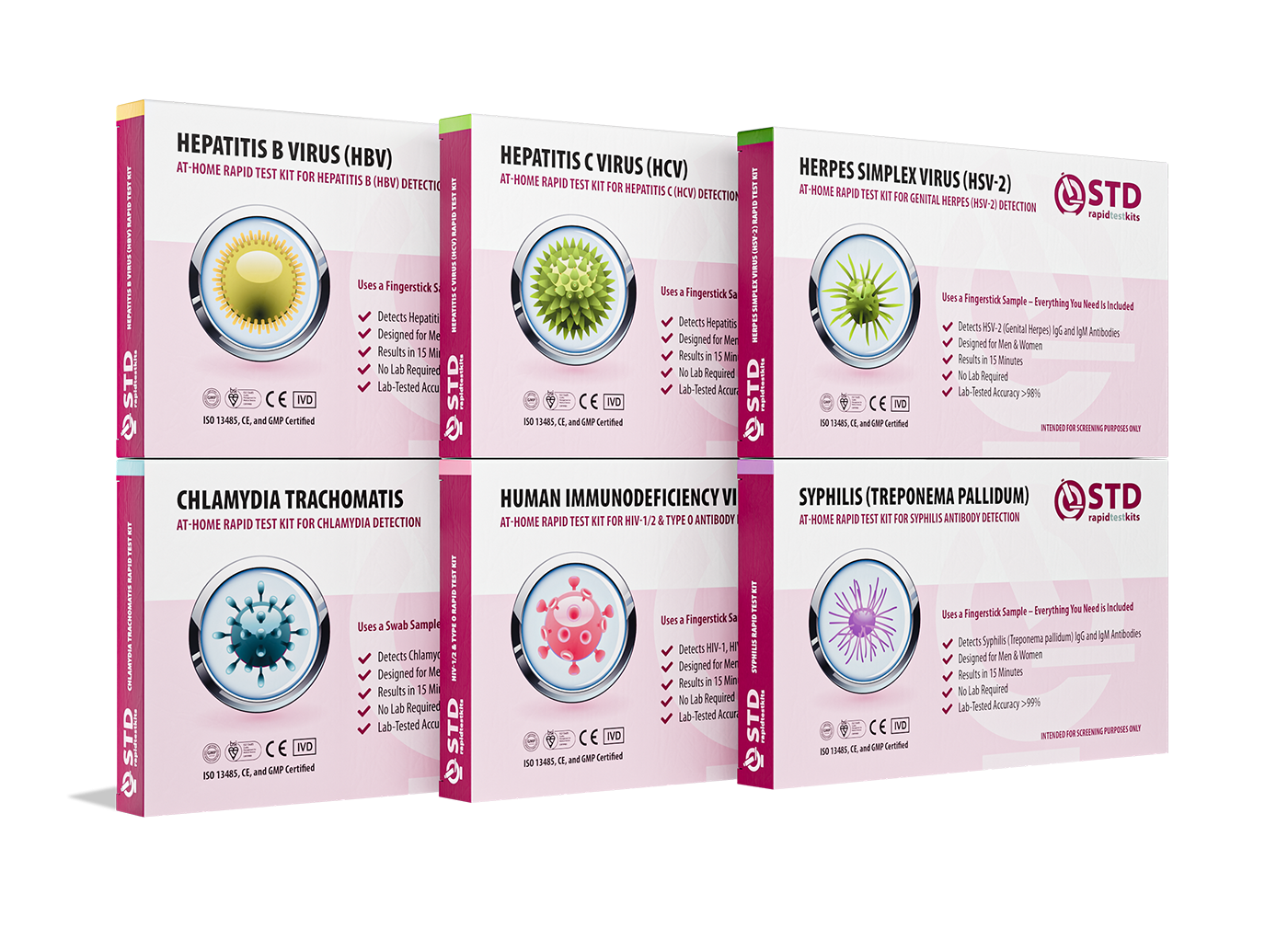
 For Men & Women
 Results in Minutes
 No Lab Needed
 Private & Discreet
Order Now $119.00 $294.00
For all 6 tests
The Most Common Non-STD Causes of Genital Rash
This is the part most people don’t expect: the majority of genital rashes that show up after sex have nothing to do with infections. They’re your skin reacting in real time to stress, friction, or exposure to something new. And genital skin is particularly sensitive because it’s thinner, more hydrated, and more prone to micro-tears than other areas of your body.
Friction is one of the biggest triggers. During sex, repeated movement can create tiny abrasions in the skin, so small you don’t feel them in the moment. But afterward, those areas become inflamed, showing up as redness, soreness, or a patchy rash. This is especially common if there wasn’t enough lubrication or if the session was longer or more intense than usual.
Then there’s contact irritation. Condoms, lubricants, spermicides, body washes, or even laundry detergent residue on sheets can all trigger a reaction. Latex sensitivity, for example, doesn’t always show up as a dramatic allergy, it can present as mild redness, itching, or a rash within hours of exposure. That timing is a major clue: fast reaction usually means skin-level irritation, not infection.
Shaving and grooming also play a role. Your skin barrier is already a little weak if you've shaved recently. Sex can cause hair follicles to become inflamed, which can look like a rash or small bumps. People often think these are signs of an STD, especially when they happen right after sex.
Another common cause is yeast or bacterial imbalance. There is a microbiome in the genital area that keeps things stable by balancing bacteria and yeast. Sex can throw off that balance by adding new bacteria or changing the pH of the area. This can cause redness, itching, or irritation within 24 to 72 hours, especially in warm, damp places.
What ties all of these together is speed. Non-STD rashes tend to appear quickly because they’re driven by inflammation at the surface level. Your body isn’t fighting an invading pathogen, it’s reacting to irritation. That’s why these rashes often improve within a few days if the underlying trigger is removed.
STD vs Skin Irritation, How to Tell the Difference
This is where things get practical. When you’re staring at a rash and trying not to spiral, what you actually need are clear differences, not vague guesses. The two biggest factors that separate STD-related symptoms from harmless irritation are timing and progression.
Skin irritation shows up fast and usually stays superficial. STD-related symptoms take longer and tend to evolve. The difference is biological: irritation affects the outer layer of skin right away, while infections take time to spread and cause a stronger immune response.
There’s also the question of sensation. Irritation often feels like itching, burning, or general discomfort across a wider area. STD-related lesions are more likely to feel localized, painful blisters, ulcers, or distinct sores that don’t just fade quickly.
Here’s a side-by-side comparison that makes this easier to process:
| Feature | Skin Irritation | STD-Related Rash |
|---|---|---|
| Timing after sex | Within hours (same day) | Days to weeks after exposure |
| Cause | Friction, allergy, pH imbalance | Viral or bacterial infection |
| Appearance | Redness, mild bumps, patchy rash | Blisters, sores, ulcers, defined lesions |
| Sensation | Itchy, irritated, burning | Painful, tender, or ulcer-like |
| Progression | Improves within a few days | Worsens or evolves without treatment |
Now picture this: you notice redness that night after sex, it feels a little irritated, and by the next day it's already going away. That pattern strongly points to irritation. On the other hand, if nothing shows up right away, but several days later you notice distinct sores or blisters that worsen over time, that’s when an STD becomes more likely.
According to the NHS, many STD symptoms are delayed specifically because the body needs time to respond to infection. That delay is one of the most reliable ways to separate infection from immediate skin reactions.
The key takeaway is this: your body’s timeline tells a story. Fast = reaction. Delayed and evolving = something worth testing.
People are also reading: Is Swallowing Sperm Safe? What Oral Sex Doesn’t Protect You From
When and How to Test for STDs After a Rash Appears
This is where guessing stops and clarity begins. If you’re even slightly unsure whether a genital rash could be an STD, testing is the fastest way to get a real answer. But timing matters more than most people realize, testing too early can give you a false negative, which is basically false reassurance.
Different infections require different types of tests because they behave differently in the body. The best test for bacterial STDs like chlamydia and gonorrhea is an NAAT (nucleic acid amplification test). This test looks for the bacteria's genetic material and is very accurate once there are enough of the bacteria.
Blood tests are used to find viral infections like HIV, herpes, and hepatitis, as well as bacterial infections like syphilis. These tests look for antibodies or antigens, which are signals your immune system sends out when you get sick. That means your body needs time to build those signals before the test can detect them.
Here’s the exact timing that matters, no guessing, no vague windows:
- Chlamydia: test from 14 days after exposure
- Gonorrhea: test from 3 weeks after exposure
- Syphilis: test from 6 weeks after exposure
- HIV: test at 6 weeks for first indicator, retest at 12 weeks for certainty
- Herpes HSV-1 and HSV-2: test from 6 weeks after exposure
- Hepatitis B: test from 6 weeks after exposure
- Hepatitis C: test from 8–11 weeks after exposure
These timeframes exist because of how infections develop. After exposure, pathogens replicate quietly before reaching detectable levels. At the same time, your immune system needs time to produce measurable responses. Testing before these windows means the infection might be present, but invisible to the test.
If you test within the correct window and the result is negative, it means no detectable infection was found at that time. If you tested too early, a negative result does not rule anything out, that’s why retesting is sometimes necessary.
A positive result, on the other hand, means the infection has been confirmed. It’s not a “maybe.” It means your body has either the pathogen itself (NAAT) or a verified immune response (blood test). The next step is straightforward: follow up with a healthcare provider for confirmation and management. The important part is that you now have clarity instead of uncertainty.
Retesting is important because of the window period, which is the time between exposure and when a test can reliably find an infection. You might have to test again at the right time to confirm your status if you test before the window closes.
If you want a private, fast way to get answers, you can use an at-home kit like the STD Rapid Test Kits combo panel, which checks for multiple infections at once. It’s designed for exactly this situation, when you don’t want to keep guessing and just want clear results.
When a Rash Is a Sign You Shouldn’t Wait
Most genital rashes after sex are harmless and settle down once the skin recovers. But there are specific signs that shift this from “monitor it” to “don’t wait, get clarity now.” The difference comes down to how your body is behaving over time, not just what the rash looks like in a single moment.
If the rash turns into distinct sores, blisters, or ulcers, that’s a major signal that something more than surface irritation is happening. This type of skin breakdown usually means that the cells are damaged more deeply, and this is usually caused by a virus or bacteria rather than just inflammation. For instance, herpes sores start out as itchy spots, but as the virus spreads through skin cells, they get worse and turn into blisters filled with fluid.
Pain is another important sign. Irritation can be uncomfortable or itchy, but it usually doesn't hurt a lot in one spot. If a rash hurts, especially if the pain is in certain spots, it means that nerve endings are involved. That’s more consistent with infections like herpes, which interact directly with nerve pathways.
There’s also the question of spread. A friction rash usually stays in one general area and improves as the skin heals. But if you notice the rash expanding, becoming more defined, or changing shape over several days, your immune system may be responding to an active infection. That progression matters more than the initial appearance.
Now think about timing again. If nothing showed up immediately after sex, but a rash appears several days later and keeps evolving, that’s your cue to take it seriously. According to the World Health Organization (WHO), many STIs develop gradually after exposure, with symptoms emerging only after the pathogen has had time to multiply.
Another situation that deserves attention is when a rash appears alongside other symptoms, fever, fatigue, swollen lymph nodes, or flu-like feelings. That combination points to a systemic immune response, not just a localized skin reaction. In other words, your body isn’t just irritated, it’s actively fighting something.
The takeaway here isn’t to panic, it’s to recognize patterns. A rash that fades quickly is usually harmless. A rash that evolves, spreads, or becomes painful is your signal to stop guessing and move toward testing.
Check Your STD Status in Minutes
Test at Home with Remedium7-in-1 STD Test Kit
 For Men & WomenResults in MinutesNo Lab NeededPrivate & Discreet
Order Now $129.00 $343.00
For all 7 tests
What to Do Next (Even If You’re Not Sure Yet)
If you’re stuck in that in-between space, where the rash doesn’t look dramatic but doesn’t feel completely normal either, you’re not alone. This is exactly where most people hesitate. They wait, overanalyze, and scroll through images that only make things more confusing. The problem is, visual comparison rarely gives you a reliable answer.
The most grounded next step is simple: give your body a short window to show what it’s doing. If the rash improves within 48 to 72 hours, especially after avoiding friction, switching products, or letting the skin rest, it strongly suggests irritation. Your skin barrier is repairing itself, and the inflammation is resolving.
If it doesn’t improve, or if it changes in any way, testing becomes the smartest move. Not because something is definitely wrong, but because testing replaces uncertainty with facts. That shift alone can take you out of the mental loop of “what if” and into a clear plan.
There’s also a practical side to this. If you’ve had unprotected sex or a new partner, even a mild symptom is enough reason to test. Not all STDs cause obvious symptoms, and sometimes a rash is the only visible clue. Testing isn’t an overreaction, it’s a way to get ahead of something early, when it’s easiest to manage.
And let’s be real about something: a lot of people delay testing because of stigma, not logic. But sexual health is just health. Getting tested doesn’t mean you did something wrong, it means you’re paying attention to your body and taking control of your situation.
If you want privacy and speed, using an at-home option like STD Rapid Test Kits can make the process feel a lot more manageable. You’re not sitting in a waiting room or overexplaining anything, you’re just getting answers.
The goal here isn’t to label every rash. It’s to understand what your body is doing, respect the timeline of how infections actually work, and take action when it makes sense. That’s how you move from anxiety to clarity.
FAQs
1. I noticed a rash right after sex, did I just catch an STD?
Probably not. STDs don’t work that fast. If something shows up the same day, your skin is reacting to friction, lube, latex, or just general irritation. Infections need time, usually days or weeks, to show visible symptoms.
2. How does an STD rash feel?
It’s usually more than just “a little irritated.” Think specific spots that hurt, burn, or turn into blisters or sores. Herpes, for example, often starts with a tingling feeling before anything even shows up. That’s very different from a general itchy patch.
3. If it doesn’t hurt, does that mean I’m in the clear?
Not always, but it’s a good sign. Some infections like syphilis can cause painless sores, which is why they’re easy to miss. But a flat, non-painful rash that fades quickly is far more likely to be irritation than an STD.
4. The rash showed up the next day, should I be worried?
Next-day rashes still lean heavily toward irritation. Your skin can react within hours to friction or a new product. If it showed up quickly and starts calming down within a couple of days, that’s your body healing, not an infection taking hold.
5. What if it’s still there after a few days?
That’s when you stop guessing. If a rash sticks around beyond 72 hours, changes shape, spreads, or starts to hurt, testing becomes the smart move. Not because it’s definitely an STD, but because now you need a real answer.
6. Can shaving make this worse or cause it?
Absolutely. Freshly shaved skin is basically on high alert. Add friction from sex, and hair follicles can get inflamed fast. What looks like a rash is often just irritated follicles trying to recover.
7. Could this just be an allergic reaction?
Yes, and it’s more common than people think. Condoms, lubricants, even body wash residue can trigger a reaction. If you used something new and the rash showed up quickly, your skin is likely telling you it didn’t like it.
8. Should I wait it out or test right away?
There’s a middle ground. If it looks mild and improves within 48–72 hours, you can monitor it. But if you had unprotected sex or a new partner, testing at the correct window is still the best way to fully relax and move on.
9. Can an STD rash just go away on its own?
Some symptoms may go away, but that doesn't mean the infection is gone. That's the hard part. Even though the infection is still in your body, your skin may look normal again. That's why testing is more important than just symptoms.
10. Be honest, can I figure this out just by looking at it?
Honestly? No. Even experienced clinicians don’t rely on visuals alone. Too many things look alike down there. Testing is what turns “I think I’m fine” into “I know I’m fine.”
Take Control of the Situation with Clear Answers
If you’ve made it this far, you already understand the most important thing: not every rash is an STD, but some are, and guessing won’t give you certainty. The difference between stress and clarity usually comes down to one simple step: testing at the right time.
If you want a comprehensive check after a potential exposure, the STD Rapid Test Kits combo panels allow you to screen for multiple infections in one go. If your concern is more specific, like herpes symptoms, starting with a targeted test can also give you fast, focused answers.
You can explore all available options and choose what fits your situation best here: STD Rapid Test Kits homepage. It’s private, fast, and designed for exactly this kind of moment, when you just want to stop guessing and know.
How We Sourced This: Our article was constructed based on current advice from the most prominent public health and medical organizations, and then molded into simple language based on the situations that people actually experience, such as treatment, reinfection by a partner, no-symptom exposure, and the uncomfortable question of whether it “came back.” In the background, our pool of research included more diverse public health advice, clinical advice, and medical references, but the following are the most pertinent and useful for readers who want to verify our claims for themselves.
Sources
1. CDC – Sexually Transmitted Diseases Overview
2. WHO – Sexually Transmitted Infections Fact Sheet
4. CDC – Genital Herpes Fact Sheet
6. DermNet NZ – Genital Skin Problems
About the Author
Dr. F. David, MD is a board-certified infectious disease specialist focused on STI prevention, diagnosis, and treatment. He writes with a direct, sex-positive, stigma-free approach designed to help readers get clear answers without the panic spiral.
Reviewed by: Rapid STD Test Kits Medical Review Team | Last medically reviewed: April 2026
This article is for informational purposes and does not replace medical advice.


