






Silent STDs in Women: The Infections That Cause Damage Without Symptoms
Last updated: April 2026
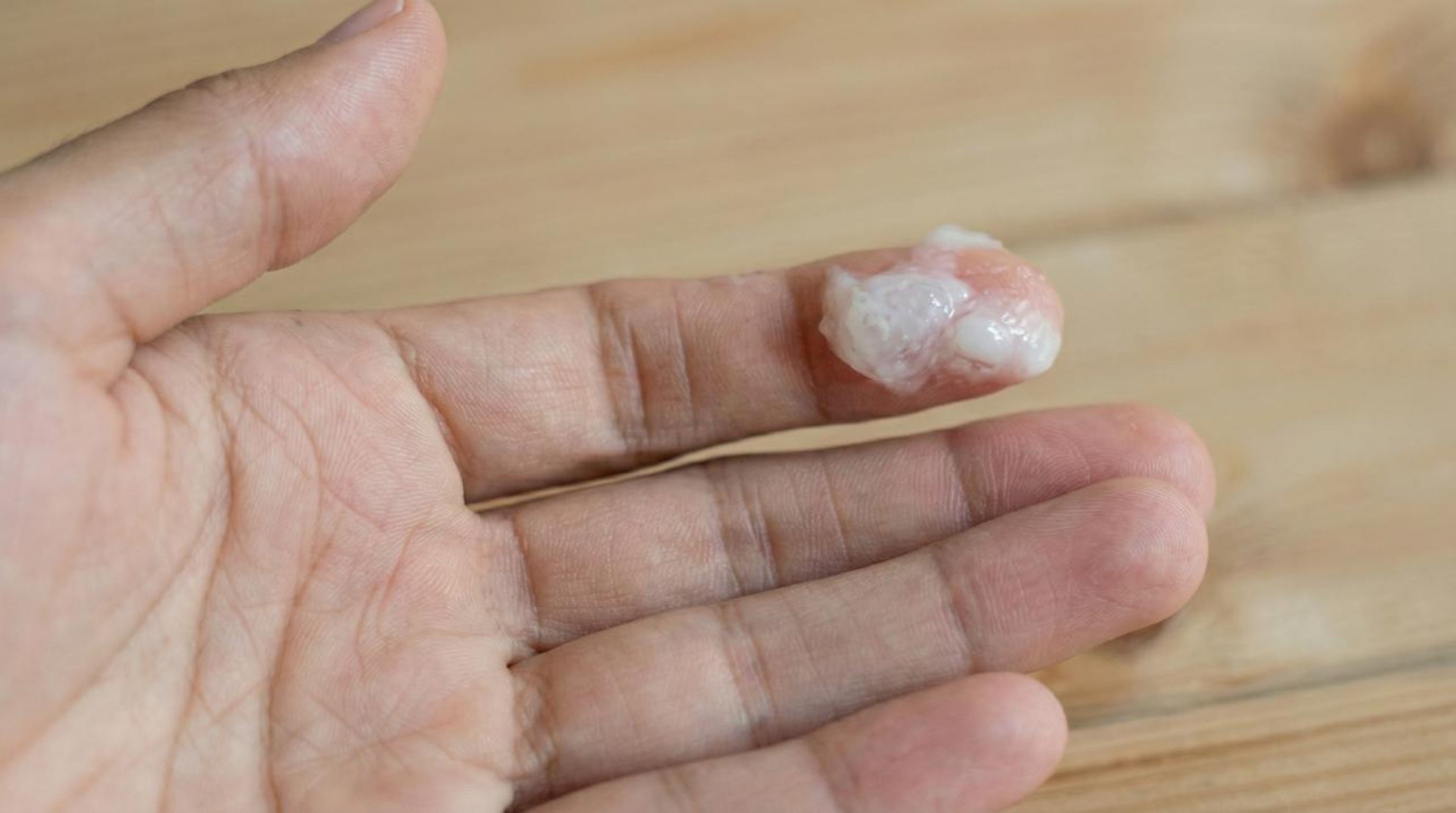
If you're noticing unusual discharge, chlamydia is one of the most common causes, but it rarely looks dramatic. Chlamydia discharge is typically cloudy, white, yellow, or slightly watery, and it usually appears within 7 to 21 days after exposure. The most reliable way to know is to test at 14 days or later. Everything else is guesswork.
You might be doing a quick check and notice something feels off. Not extreme. Not painful. Just different enough to make your brain start racing. That gap between "something seems wrong" and "I actually know what's going on" is exactly what this article closes.

People are also reading: Testicle Pain Explained: Urgent Causes vs Harmless Aches
What Chlamydia Discharge Actually Looks Like
Chlamydia rarely announces itself loudly. Most of the time, it shows up as a subtle shift, something that doesn't quite match your usual pattern.
The discharge is often cloudy or milky. It can be white, pale yellow, or slightly gray. Some people notice it feels thinner and more watery than usual, while others describe a slightly thicker, mucus-like texture. There's no single look, which is exactly why people second-guess it.
According to the CDC, chlamydia is the most commonly reported bacterial STI in the United States, with over 1.6 million cases recorded in a single year. That means what you're noticing right now is something clinicians deal with constantly, it's common, and it's very treatable once identified.
That's also why visual assessment doesn't work. Two people can both have chlamydia and describe completely different discharge experiences.
Chlamydia Discharge in Men vs Women
The experience can feel very different depending on your body, and that's where a lot of confusion starts.
In men, discharge tends to stand out because it isn't something you normally see. It may appear as fluid at the tip of the penis, clear, cloudy, or slightly yellow. Even a small amount is worth paying attention to, especially if it shows up in the morning or between urination.
In women, it's a bit more layered. Vaginal discharge is normal, so it's not about whether it exists; it's whether something has changed. You might notice more of it, a different color, a faint, unfamiliar smell, or just a texture that's different enough to catch your attention.
That's the detail most people miss. The question isn't whether discharge is present. It's whether it has shifted from your personal baseline.
| Condition | Color & Texture |
|---|---|
| Normal discharge | Clear or white, smooth, varies with cycle, mild smell |
| Chlamydia | Cloudy, white, yellow, watery, or slightly mucus-like |
| Gonorrhea | Thicker, yellow-green, more noticeable, and heavier |
| Yeast infection | Thick, white, clumpy (cottage cheese-like) |
Other Symptoms That Can Appear Alongside Discharge
Discharge is often just one piece of the picture.
You might feel a burning sensation when urinating. Some people experience irritation or itching in the genital area, mild discomfort during sex, or a dull ache in the lower abdomen. These aren't always painful; some people barely register them, especially in the early stages.
And sometimes, nothing else shows up at all.
The NHS and WHO both emphasize that chlamydia is frequently asymptomatic , especially in women. You can carry it without any clear symptoms, which is why testing matters far more than symptom-matching.
When Chlamydia Discharge Starts After Exposure
Timing matters here more than most people expect.
Chlamydia symptoms, including discharge, usually appear between 7 and 21 days after exposure. Some people notice changes earlier, but many don't see anything until the second or third week , and some never develop noticeable symptoms at all.
You might be scanning your body for signs, expecting something obvious. But chlamydia doesn't work on a schedule you can predict. It can stay quiet while still being present, which is why waiting to feel sick before testing isn't a strategy that works.
Check Your STD Status in Minutes
Test at Home with RemediumChlamydia Test Kit
Claim Your Kit Today
Save 31%
 For Men & Women
 Results in Minutes
 No Lab Needed
 Private & Discreet
Order Now $33.99 $49.00
Testing for Chlamydia: When, How, and What It Means
If you're noticing discharge and wondering what to do next, testing is the step that actually gives you a real answer.
The standard test for chlamydia is a NAAT (nucleic acid amplification test), carried out using a urine sample or a swab. It detects the bacteria's DNA directly, making it highly accurate, but only when timed correctly.
Testing too early can return a false negative even when the infection is present. The most reliable window is 14 days after exposure. That's when detection accuracy is strongest. If you test before that and get a negative, it doesn't fully rule chlamydia out. Retesting at the two-week mark is the safer move.
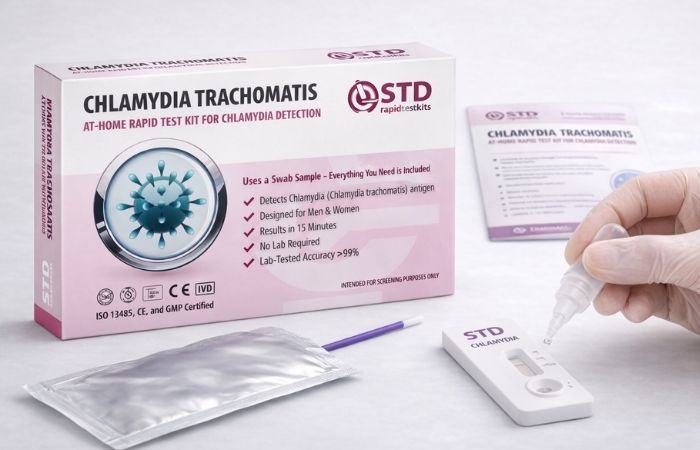
At-home testing has made this easier than it used to be. A discreet test kit removes the barrier of a clinic visit entirely. The Chlamydia At-Home Rapid Test Kit works for both men and women. You collect a sample, follow the instructions, and read the result within minutes. No waiting days. No appointments. Just a clear answer.
| Time After Exposure | What It Means |
|---|---|
| 1–7 days | Too early, high chance of false negative |
| 7–13 days | Possible detection, but not fully reliable |
| 14+ days | Most accurate testing window |
If your brain is stuck in the loop of "what if," a test is the fastest exit.
What to Do If Your Result Is Positive
A positive result can feel like a shock, even when part of you suspected something was off. That reaction is completely normal, and the path forward is straightforward.
A healthcare provider can prescribe antibiotics that treat chlamydia effectively. Do not self-medicate or attempt to manage it without a confirmed diagnosis and a prescription. You'll also need to notify recent sexual partners so they can get tested and treated, not as an act of blame, but to stop the cycle of reinfection.
Follow-up testing is often recommended after treatment to confirm the infection has cleared. And going forward, regular testing is simply part of staying in control of your health when you're sexually active.
The most important thing to hold onto: chlamydia is common, treatable, and fully manageable. The only variable is knowing it's there.
Can You Have Chlamydia Discharge Without Other Symptoms?
Yes, and this is where a lot of people get misled into dismissing it.
You might notice discharge and nothing else. No pain, no burning, no obvious warning signs. That doesn't rule chlamydia out. In fact, isolated discharge with no other symptoms is a pretty common presentation, particularly in the early stages.
The CDC and WHO both describe chlamydia as frequently "silent." That means discharge might be the only visible clue your body produces. If it doesn't hurt, it's easy to dismiss. If it's mild, it's easy to rationalize away. But an infection doesn't need to be dramatic to be real, or to cause complications if left untreated.
How Long Does Chlamydia Discharge Last?
Without treatment, discharge from chlamydia can persist for weeks or even months.
It doesn't always follow a straight line. Some people notice it fluctuating, lighter some days, heavier others. That inconsistency can create false reassurance, like the infection might be sorting itself out. It isn't. Chlamydia doesn't resolve on its own, and periods of reduced symptoms don't mean the bacteria has cleared.
With the right antibiotic treatment from a healthcare provider, symptoms typically start improving within a week. But finishing the full course and following up with a test is still important, even after the discharge stops.
If symptoms persist or worsen after treatment, see a provider in person rather than waiting it out.
People are also reading: How Long Can You Have Chlamydia Without Knowing?
When Discharge Is NOT an STD
Not every change means something serious, and this part matters just as much.
Discharge shifts naturally throughout the menstrual cycle. It can change after sex, with new products, or from temporary irritation. Yeast infections, bacterial imbalance, and friction can all produce discharge changes that look concerning but aren't sexually transmitted.
Context matters. Timing, recent exposure, and any accompanying symptoms all play a role in what you're actually looking at.
But if there's genuine uncertainty, especially after a new sexual encounter, testing is the cleanest way to separate normal variation from something that needs treatment. Not because something is definitely wrong, but because uncertainty is its own kind of burden.
When to See a Doctor Immediately
Most cases of chlamydia discharge don't require an emergency visit, but some situations do. If you notice any of the following alongside discharge, contact a healthcare provider promptly rather than waiting to test at home:
- Fever or chills alongside genital symptoms
- Severe pelvic or lower abdominal pain (particularly in women, as this can indicate pelvic inflammatory disease)
- Blood in the discharge or unexplained bleeding between periods
- Significant pain during sex that is new or worsening
- Swelling, redness, or warmth in the genital area
- Testicular pain or swelling in men (can indicate epididymitis, a complication of untreated chlamydia)
These symptoms suggest the infection may have progressed beyond the early stage. At-home testing is still useful to confirm the cause, but these signs warrant same-day medical attention, not a few days of waiting to see what happens.
Why Visual Guessing Doesn't Work
It's tempting to try to figure this out by appearance alone. You compare what you're seeing to images online. You read descriptions and try to match them exactly. You convince yourself it looks like one thing or another.
The problem is that discharge overlaps across multiple conditions. Chlamydia can look like gonorrhea. Gonorrhea can look like other infections. A bacterial imbalance or basic irritation can look identical to both.
The NHS explicitly notes that many sexually transmitted infections don't present with clear or consistent symptoms, which is exactly why clinicians don't diagnose based on appearance alone. They test. That's the standard for a reason.
You're not missing something obvious. The biology simply isn't designed to be visually clear.
Check Your STD Status in Minutes
Test at Home with Remedium3-in-1 STD Test Kit
Claim Your Kit Today
Save 53%
For Men & WomenResults in MinutesNo Lab NeededPrivate & DiscreetOrder Now $69.00 $147.00
For all 3 tests
Common Mistakes People Make When Trying to Diagnose Discharge
Almost everyone tries to self-diagnose first. It makes sense, you want to know before booking an appointment, before telling a partner, before deciding whether it's even worth worrying about.
The problem is that discharge is one of the least reliable symptoms to assess on your own, and the mistakes people make tend to extend the uncertainty rather than resolve it.
| Mistake | Why It's Misleading |
|---|---|
| Relying on color alone | Color varies widely and overlaps between infections and normal discharge |
| Comparing to online images | Images often show extreme cases, not typical real-life presentation |
| Waiting for pain | Many STDs, including chlamydia, can be entirely painless |
| Assuming symptoms must be constant | Symptoms can come and go without the infection disappearing |
| Testing too early | Can lead to false reassurance due to the window period |
Even clinicians don't diagnose discharge visually, they test. If you've been going back and forth trying to decide what it looks like, that uncertainty is your signal. Not that something is definitely wrong, but that it's time to stop guessing and get a real answer.
How to Tell If Your Discharge Is Getting Worse
One of the hardest parts is figuring out whether things are staying the same, slowly improving, or quietly progressing. Infections like chlamydia don't follow a clean, predictable pattern. Symptoms can fluctuate, fade, and come back, and that doesn't mean the infection is resolving. It just means your body is reacting differently at different times.
Look for changes over time rather than a single moment. Here's what matters:
| Change | What It Could Mean |
|---|---|
| Increase in volume | The infection may be becoming more active or spreading |
| Shift to a yellow or darker color | Possible increase in inflammation or infection intensity |
| New odor | Bacterial changes or co-infection may be present |
| Added symptoms (burning, pain) | The infection may be progressing beyond the early stages |
| Symptoms that come and go | Infection is still present despite temporary improvement |
You don't need to hit all of these for it to matter. Even one noticeable change after a recent sexual encounter is enough reason to test. If you've been watching it day by day, trying to figure it out, that's the moment where testing becomes the smarter move than waiting.
Taking Control: What Actually Matters Right Now
If you've made it this far, you're probably trying to answer one question: "Is this something I need to worry about?"
The honest answer: if your discharge has changed and you've had any potential exposure, it's worth testing. Not because something is definitely wrong. Because guessing doesn't give you closure , and sitting in uncertainty is genuinely unpleasant when a clear answer is available.
Chlamydia and gonorrhea frequently occur together. CDC data puts co-infection rates at around 30–40%, which is why combination testing is often the smarter move when discharge is the presenting symptom. The Chlamydia & Gonorrhea 2-in-1 At-Home Rapid Test Kit lets you check for both at once , no appointments, no delays.

People are also reading: Top-Rated US In-Home STD Fast Testing Kits: Receive Results Immediately in the Convenience of Your Own Home
FAQs
1. How long does the discharge last with chlamydia?
Without treatment, chlamydia discharge can persist for weeks or even months, and it won't follow a predictable pattern. It may lighten on some days and worsen on others, which creates the misleading impression that the infection is sorting itself out. It isn't. Chlamydia does not resolve without antibiotics. With a full course of treatment prescribed by a healthcare provider, symptoms typically begin improving within a week. Even after the discharge stops, follow-up testing is still recommended to confirm the infection has fully cleared.
2. Can I have chlamydia discharge but no other symptoms?
Yes, and it's one of the more common presentations rather than the exception. Chlamydia infects epithelial cells and replicates inside them, which means the immune response that drives pain, burning, or irritation can stay mild enough to never register. Discharge without any other symptom doesn't rule chlamydia out, if anything, it's exactly the kind of subtle signal the infection tends to produce. A test taken at 14 days or later is the only thing that actually answers the question.
3. Can men get chlamydia discharge?
Yes. In men, chlamydia most commonly infects the urethra, and discharge from the tip of the penis, clear, cloudy, or slightly yellow, is a recognized symptom. It's often subtle: a small amount noticeable in the morning, or dried residue that's easy to dismiss. Because discharge isn't something men typically see, any new fluid at the urethral opening is worth paying attention to, particularly if it appeared in the weeks following a new sexual exposure.
4. Is chlamydia discharge ever yellow?
Yes. Chlamydia discharge can range from white and cloudy to pale yellow or faintly gray and watery, there's no single color that confirms or rules it out. What matters more than shade is whether your discharge has changed from your personal baseline. A discharge that looks slightly different from what's normal for you, especially following a potential exposure, is a reason to test rather than to try to diagnose by color.
5. Does chlamydia discharge have a smell?
It can, though the odor is typically mild rather than strong, noticeable as unfamiliar rather than immediately obvious. This distinguishes it from bacterial vaginosis, which tends to produce a more distinct fishy smell, particularly after sex. Chlamydia-related odor comes from the inflammatory fluid the body produces in response to the infection, and it doesn't always accompany discharge. A change in smell alongside any other shift in discharge, color, volume, texture, is worth testing rather than monitoring.
6. Can discharge come and go with chlamydia?
Yes. Chlamydia symptoms, including discharge, can fluctuate over time as the immune response varies. A few days where things seem to improve doesn't mean the infection has cleared, the bacteria are still present, still replicating, and still transmissible. This fluctuating pattern is one of the main reasons people delay testing longer than they should: they wait to see if it comes back, then wait again when it settles down. The infection doesn't follow that logic. Only a test does.
7. How soon after exposure does discharge appear?
When discharge does appear, it usually shows up between 7 and 21 days after exposure, that's when the bacteria have replicated enough to trigger a visible immune response. Some people notice changes earlier; others never develop any visible symptoms at all, which is why the absence of discharge isn't reassurance that the infection isn't there. The testing window of 14 days exists for a different reason: it's when the NAAT can reliably detect bacterial DNA, not when symptoms are guaranteed to appear.
8. If I test negative early, am I clear?
Not if you tested before the 14-day window. A negative result before that point doesn't rule chlamydia out, it reflects that the bacterial DNA hadn't yet reached a concentration the test can detect, regardless of whether infection is present. Testing early and getting a negative is one of the most common sources of false reassurance after a potential exposure. If you tested before two weeks, retest at the 14-day mark. That result means something. The earlier one doesn't.
9. Can you have chlamydia with no discharge at all?
Yes, and this is extremely common. The CDC and WHO both describe chlamydia as frequently asymptomatic, no discharge, no burning, no itching, no sign of anything. This is one of the core reasons chlamydia is the most commonly reported bacterial STI in the US: it spreads silently. Waiting until something feels wrong before testing is exactly how the infection continues spreading undetected. Regular testing based on exposure timing, not symptoms, is the only reliable strategy.
10. What should I do if I'm unsure?
Test at the right time, that's the move that actually resolves the uncertainty. Watching and waiting doesn't give you new information; it just extends the period where you don't know. If there's been a potential exposure, mark the date and plan your test for 14 days out. That result will tell you something definitive. In the meantime, if you're sexually active with a new or untested partner, the Chlamydia & Gonorrhea 2-in-1 kit covers both infections at once, since co-infection rates run at 30–40% and testing for one without the other is a common way to miss something.
How We Sourced This: This article draws on current clinical guidance from the CDC, WHO, NHS, Planned Parenthood, and peer-reviewed sources via NCBI. The content was written to reflect real situations people actually face , including testing timing, partner notification, and the experience of symptoms that don't follow a textbook pattern. The sources below are the most relevant for readers who want to verify specific claims.
Sources
3. Planned Parenthood – Chlamydia
4. NCBI – Chlamydia trachomatis
About the Author
Dr. F. David, MD is a board-certified infectious disease specialist with over 15 years of clinical experience diagnosing and treating sexually transmitted infections. He has worked across both clinical and public health settings, advising on STI prevention programs and patient education initiatives. He writes with a direct, sex-positive, stigma-free approach designed to help readers get clear answers without the panic spiral.
Reviewed by: Rapid STD Test Kits Medical Review Team | Last medically reviewed: April 2026
This article is for informational purposes and does not replace medical advice.


