Do Friends with Benefits Need STI Testing? Why Trust Isn't Enough
Why familiar partners aren't automatically safer partners.




- FWB arrangements drop condoms faster, test less often, and skip exposure conversations more readily than either monogamous relationships or one-time hookups, even when the sex itself is identical.
- Most common bacterial STIs (chlamydia, gonorrhea, trichomoniasis) and many viral ones (HSV, HPV) can be present without symptoms for months or years. Absence of symptoms does not confirm absence of infection.
Published: October 2025 | Last updated: May 2026 | Editorial review and quality control: Martina N.
Why is friends-with-benefits sex riskier than it feels?
Familiarity makes condom use slip, testing get postponed, and outside partners stay unspoken, even when the actual exposure math hasn't changed. The CDC recommends every-3-to-6-month STI testing for sexually active adults with non-monogamous partners, regardless of how close the regular partner feels.
You know their middle name. You've met their dog. You text them when something funny happens at work, and somewhere along the way the condoms disappeared and the last STI test either of you got was "sometime last year, probably." Friends with benefits arrangements aren't riskier because the sex is wilder or because the partners involved are less careful in general. They're riskier because they feel familiar, and familiarity is the exact cognitive shortcut that infections quietly exploit.
What follows is a recognizable behavioral pattern, not an indictment of anyone who finds themselves in it. The same person who would insist on a condom with a stranger from a dating app will often skip protection with someone they've slept with thirty times, even when the second person almost certainly has a wider sexual network. The brain treats "I know this person" as "I know this person's exposures." Those are not the same thing.
Key Takeaways
- FWB arrangements drop condoms faster, test less often, and skip exposure conversations more readily than either monogamous relationships or one-time hookups, even when the sex itself is identical.
- Most common bacterial STIs (chlamydia, gonorrhea, trichomoniasis) and many viral ones (HSV, HPV) can be present without symptoms for months or years. Absence of symptoms does not confirm absence of infection.
Why familiar feels safer than it actually is
The data on this is unkind to romantic intuition. The CDC's About STIs overview describes how most new diagnoses arise from ongoing sexual partnerships rather than isolated single encounters, because repeated unprotected contact with fewer testing checkpoints accumulates risk faster than the felt urgency to test. The riskiest partner, statistically, is often the regular one whose other relationships are invisible, rather than the stranger.
Three behaviors drive this. First, regular partners tend to drop condoms after the first few encounters, because the friction of a barrier feels disproportionate when you've already shared a toothbrush twice. Second, regular partners tend to test less often, because emotional comfort lowers perceived risk even when the actual risk hasn't changed. Third, regular partners tend to skip conversations about what's happening outside the arrangement, because that conversation feels like a relationship escalation neither person wants to make.
None of those three behaviors is unique to friends with benefits. What's unique is that all three tend to happen together, inside a relationship structure that doesn't have the explicit commitment mechanisms (closed exclusivity, joint testing at the start, mutual partner notification) that long-term couples use to manage the same set of risks.
Across most long-running FWB arrangements, the same three things tend to drift together: condoms get dropped, regular testing gets postponed, and conversations about outside partners go unsaid. Any one of them, on its own, is recoverable. All three together is how an arrangement that feels safer becomes the one that quietly accumulates exposure.
The quiet condom drop-off
Studies of barrier behavior across non-committed sexual relationships consistently find the same arc. Condom use is highest at the first encounter, drops measurably across the first few weeks, and reaches roughly background levels after a few months of regular contact. The CDC's condom-use overview notes that consistent and correct use is the single most important variable in real-world protection, and consistent use is exactly what casual-but-recurring partnerships erode.
Familiarity does the work here, not ignorance. Each instance of using a condom requires a small interruption (locating, opening, applying), and the social cost of that interruption rises in proportion to how comfortable the situation feels. With someone you know, the interruption registers as awkward. With a stranger, it registers as standard. The behavior shifts even though the biology doesn't.
What follows is a quiet escalation. Once condoms have been dropped a few times without obvious consequence, the default switches: condoms now require a reason to use, instead of requiring a reason to skip. Most partners never have an explicit conversation about this shift; it happens through omission. Alcohol and late-night decisions accelerate the same drift, because the threshold for skipping protection is lower at 1 a.m. than at the start of an evening.
Meanwhile, the underlying exposure math has not changed. Chlamydia and gonorrhea are the two most commonly reported notifiable STIs in the United States, and both transmit efficiently through unprotected vaginal, anal, and oral contact. The CDC's About STIs page notes that many STIs produce no symptoms during early infection.
When used consistently and correctly, condoms are highly effective in preventing sexual transmission of HIV and other STIs.
Why FWBs test less, even though they should test more
The counterintuitive part of FWB risk is that people in these arrangements often test less frequently than people who hook up with strangers. Emotional comfort with the partner reduces the felt urgency to test, and the arrangement itself has no built-in checkpoint forcing a test. New monogamous relationships often include an explicit "let's both test before we stop using condoms" conversation. New one-night-stand exposures often trigger a "should I get checked?" thought. The stable FWB arrangement has neither, and the months stretch quietly into years.
There's a cost to testing late that goes beyond the obvious one. The obvious cost is treatment delay for the infected person. Chlamydia caught at three weeks is a single course of antibiotics; chlamydia caught at fifteen months may already have caused pelvic inflammatory disease, scarred fallopian tubes, or affected fertility. The less obvious cost is transmission to other partners during the gap. An untested person doesn't just carry their own risk; they redistribute it across their sexual network.
The CDC's screening recommendations suggest at least annual testing for sexually active people with new or multiple partners, and more frequent testing (every three to six months) for higher-risk patterns. "Higher-risk pattern" includes consistent unprotected sex with someone whose other partners aren't visible to you. That description fits most ongoing FWB arrangements. Match your testing cadence to your actual behavior, not to how you feel about the person.
This article is published by stdrapidtestkits.com. We sell at-home STI testing kits, and we link to specific products where they fit the reader's situation. We don't recommend tests we don't think a particular reader needs.
Trust is a feeling. Testing is data.
There's a useful distinction borrowed from security engineering: trust is what you assume in the absence of verification, and verification is what removes the need to assume. Sexual health is not different in kind from any other risk where assumptions can be checked. The check is a test. The cost of the test (financial, emotional, logistical) is the only thing that prevents most people from doing it more often.
A few practical points the data supports. Many sexually transmitted infections can be present without any visible or felt symptoms for weeks to years. The WHO's STI fact sheet notes that STIs are often asymptomatic; more than one million new curable STI acquisitions occur daily worldwide, and the majority go unrecognized by the person carrying the infection. Mayo Clinic's STI overview echoes the same point: many STIs cause no signs in the early stages, which is why exposure history matters more than how a person feels week to week. HPV, herpes simplex virus, and early HIV infection are similarly asymptomatic for most of their carriers. The absence of symptoms is, statistically, the expected state for an infected person at any given moment.
HIV transmission risk per single sexual act is low but real, and that low absolute number is what makes it easy to underestimate over months of repeated exposure. Receptive vaginal or anal sex carries higher per-act risk than insertive sex, and the presence of another STI (especially an ulcerative one like syphilis or active herpes), a higher viral load in the source partner, or condomless contact each push the per-act risk up by a meaningful multiple. For most STIs, feeling fine and carrying an active infection are entirely compatible states; only a test resolves which is which at a given moment. Repeating that more loudly doesn't change the underlying biology, but it does change how a reader makes decisions about the next sexual encounter.
What FWB exposure actually looks like, by the numbers
Compare two people having sex with the same frequency, one through a series of weekend hookups and the other through a six-month FWB. The hookup partner is more likely to use a condom, more likely to test between encounters, and more likely to have an explicit conversation about exposure before sex. The FWB partner is less likely to do any of those things. Even if the absolute number of sex acts is identical, the FWB pattern accumulates more unprotected exposure events with fewer testing checkpoints between them.
The variable people underestimate most is concurrent partner overlap. In a hookup pattern, individual partners are short-term, so an infection acquired from one partner has a narrow transmission window before that partnership ends. In an FWB pattern, the partnership persists for months while each person may have other concurrent partners. An infection introduced into that network by any one of those concurrent partners can reach the original FWB pair and remain there for the duration. Concurrent partnerships are a well-established driver of STI transmission in epidemiological models, because an infection can move through a sexual network faster than any one person notices symptoms or seeks testing.
That conclusion follows from network structure, not from any moral judgment about the arrangement itself. A longer-lasting partnership with concurrent partners on either side is a more efficient infection-spreading structure than a chain of short partnerships, given the same total number of contacts. Network epidemiology calls this concurrency, and concurrency is among the single biggest amplifiers of STI prevalence in modeling studies of sexual networks.
| Behavior | One-time hookup | Long-term FWB |
|---|---|---|
| Condom use | Higher (first-encounter caution) | Lower (drops within weeks) |
| Pre-sex STI conversation | More common (less familiar partner) | Rare (feels like a relationship move) |
| Testing cadence after the encounter | Often triggered | Drifts away (no triggering event) |
| Concurrent overlapping partners | Less likely (short timeframe) | More likely (months of parallel partners) |
| Felt risk | High | Low |
| Actual risk | Depends on protection used | Often higher than felt |
Condoms help, with limits
Used correctly and consistently, condoms reduce the per-act transmission probability of HIV substantially, and provide similarly strong protection against chlamydia, gonorrhea, and trichomoniasis. The CDC's condom-effectiveness summary describes consistent and correct use as the single strongest intervention available for fluid-borne infections. Consistent, correct use is what the evidence measures, and that consistency is exactly what ongoing casual arrangements erode over time.
Herpes simplex (both HSV-1 and HSV-2) transmits through skin-to-skin contact in areas a condom does not cover, including the upper thigh, scrotum, and perineum, so condom protection against herpes acquisition is partial at best. HPV transmits the same way, and HPV transmission has been documented in couples who consistently used condoms. Persistent infection with high-risk HPV strains is the primary cause of cervical cancer and is also linked to oropharyngeal and anal cancers, which is one of the strongest reasons HPV vaccination matters for both partners regardless of arrangement type (routine vaccination through age 26 and shared clinical decision-making through age 45 under current CDC ACIP guidance on HPV vaccination). Syphilis transmits on contact with a chancre (a typically painless sore that appears at the site of initial infection), and a chancre present on non-covered skin can transmit during penetrative sex even when a condom is used.
None of this is a reason to stop using condoms; it's a reason not to treat them as the only line of defense. The combination that actually approaches comprehensive protection is consistent condom use, regular testing, partner notification when a test comes back positive, and HPV vaccination for anyone in the eligible age range.
| Infection | Condom protection level | Primary transmission route |
|---|---|---|
| HIV | Strong with consistent use | Blood, semen, vaginal fluids |
| Chlamydia | Strong | Genital fluids during vaginal, anal, or oral contact |
| Gonorrhea | Strong | Genital, anal, and oral mucosal fluids |
| Trichomoniasis | Strong | Vaginal fluids; primarily a vaginal-pathogen infection |
| Herpes simplex (HSV-1, HSV-2) | Moderate | Skin-to-skin contact in genital, anal, or oral region |
| HPV | Partial | Skin-to-skin contact in genital or anal region |
| Syphilis | Moderate | Contact with chancre or rash, sometimes on non-covered skin |
Sex toys, oral, and the gaps people don't think about
Shared sex toys are an underappreciated route for HPV, chlamydia, gonorrhea, herpes, and trichomoniasis. Any toy passed between partners, or between body sites within the same session, can transfer infection if it isn't cleaned between uses. Silicone, glass, and steel toys can be sanitized between uses; porous materials should be covered with a condom that gets changed between partners or body sites.
Oral sex is the other route that often gets misclassified as low-risk. "Safer" gets used as shorthand for "safe" in conversations about oral contact, and that shorthand is wrong. Oral gonorrhea, oral chlamydia (less common but documented), oral HSV-1, HSV-2 transmission to genitals, and oral HPV are all real transmission pathways. Oral gonorrhea is increasingly resistant to first-line antibiotics and is often asymptomatic in the throat, which is why public-health guidance recommends considering oral exposure alongside other anatomical sites when planning testing.
Pharyngeal (throat) and rectal swab testing for oral or anal exposure requires clinic-administered sample collection. That's not a sample type our home kits cover. For a specific concern about oral or rectal exposure, see a clinic for pharyngeal or rectal NAAT testing. Pharyngeal gonorrhea will not show on a genital swab, so the sample site genuinely matters. Our at-home rapid tests cover the adjacent genital and bloodwork risks that almost always accompany oral exposure events.

How to ask your FWB to test with you, without making it weird
The conversation people imagine is usually worse than the one people actually have. Most partners are relieved when the testing question gets raised, because they were thinking about it too and didn't know how to say so. NHS sexual health guidance addresses the discomfort many people feel about attending for screening, offering anonymous appointments and noting that staff are there to help, not to judge. The fix is rarely more information; it's rehearsing two or three plain-English sentences that you can actually say out loud. A few phrasings tend to land better than the formal version.
- "I'm doing a round of testing, want to do it together? It's quicker if we both have current results."
- "I get tested every few months because I'd rather know than guess. When did you last get a full panel?"
- "Are you sleeping with anyone else right now? I want to know so I can think about condoms and testing."
- "I want to keep using condoms for now. We can revisit after we both test."
Why those phrasings work
The first two frame testing as your own routine, separate from any verdict on the other person. The third ties exclusivity to a concrete next step rather than to a relationship escalation. The fourth keeps the timeline specific instead of making condoms feel like a permanent rule.
If the response is dismissive, deflective, or angry, that response is itself useful information. Someone who refuses to test with a regular sexual partner is communicating something about their broader posture toward sexual health, and that information is worth more than the awkwardness of having asked. A partner who tests willingly is communicating respect. A partner who refuses is communicating risk.
The other practical lever is at-home testing. Neither person needs to schedule a clinic visit, sit in a waiting room, or do an in-person intake interview. The kit arrives, both partners run it, and both see the result within the same fifteen-minute window. Your own testing is your own testing, separately; it doesn't require their permission or participation.
The phrasings above all share one feature: they make testing your own routine, not a verdict on your partner. The version that consistently works in practice is the one that asks the partner to join your testing schedule, instead of asking whether they've been trustworthy. Frame it as logistics, not litmus test.
Common myths worth correcting
A few misconceptions come up repeatedly in FWB conversations and lead to bad decisions.
What people get wrong about casual-partner STI risk
Myth: If they look healthy, they're fine.
Fact: Most bacterial STIs cause no visible signs. The CDC notes that the majority of chlamydia and gonorrhea cases produce no symptoms, particularly in people with female anatomy. "Looks fine" is consistent with both an uninfected partner AND a partner carrying an active infection. Only a test distinguishes the two.
Myth: Condoms eliminate STI risk.
Fact: Condoms substantially reduce transmission of most STIs but do not eliminate it, particularly for infections that spread through skin-to-skin contact outside the area a condom covers. Herpes, HPV, and syphilis (from a chancre on the surrounding skin) can all transmit even with consistent condom use.
Myth: Oral sex is safe.
Fact: Oral transmission is well documented for gonorrhea, syphilis, herpes, and HPV, and possible for chlamydia. Pharyngeal gonorrhea is not detected by a genital swab. For oral-route concerns, a clinic throat swab is the right test; our at-home kits cover genital and blood samples only.
Myth: You only need to test after symptoms.
Fact: The point of routine screening is to catch the infections that never produce symptoms in many people. Waiting for symptoms is the failure mode that drives onward transmission in concurrent-partner networks, because the carrier transmits during the asymptomatic window before they would think to test.
Myth: At-home tests aren't reliable.
Fact: At-home rapid lateral-flow tests have published sensitivity and specificity figures comparable to clinic rapid tests using the same chemistry. They're screening tools, not diagnostic confirmations. Laboratory NAAT remains the analytical gold standard, and any positive at-home rapid result is worth confirming with a lab NAAT before treatment.
Window periods: when to test for what
One reason people delay testing is uncertainty about whether enough time has passed since an exposure for a test to be accurate. The window period is the gap between exposure and the point at which a test reliably detects the infection. Different infections have different windows, and matching the test to the right window prevents both false reassurance and unnecessary repeat testing.
Broad-strokes windows for the rapid-test technology used in at-home kits: chlamydia and gonorrhea are typically detectable within 1 to 2 weeks after exposure, with sensitivity climbing toward the 14-day mark. HIV antibody home tests are typically reliable from about 23 to 90 days after exposure; clinic-administered fourth-generation antigen/antibody assays narrow that slightly to roughly 18 to 90 days because they pick up viral antigen earlier. Syphilis antibodies are typically reliable from 3 to 6 weeks, with occasional outliers up to 12 weeks. HSV-2 antibody seroconversion typically reaches reliable detection at about 12 weeks for most assays, with some package inserts citing up to 16 weeks for the outer bound. Hepatitis B surface antigen (HBsAg, what most rapid hepatitis B tests detect) is typically detectable about 4 to 10 weeks after exposure. Hepatitis C antibodies are reliable about 8 to 11 weeks after exposure on average, with some people seroconverting later. Specific kit instructions narrow these windows further based on the assay used; check the insert for the test you actually purchased.
For an ongoing FWB arrangement, the simplest plan is a baseline test at the start, repeated every three to six months, plus an additional test if a specific exposure event raises concern. Specific-exposure testing has to wait long enough for the relevant window to pass before a negative result actually means anything, since a too-early negative can be the kind of false reassurance that delays a real diagnosis.

If you're sleeping with someone regularly, test with them regularly
The conclusion is unromantic but practical. Trust is fine as a relationship value, but on its own it doesn't function as a public-health strategy. Two specific habits do most of the work: testing on a regular cadence regardless of how the relationship feels week to week, and using barriers until both partners have tested within the relevant window periods and explicitly agreed to drop them.
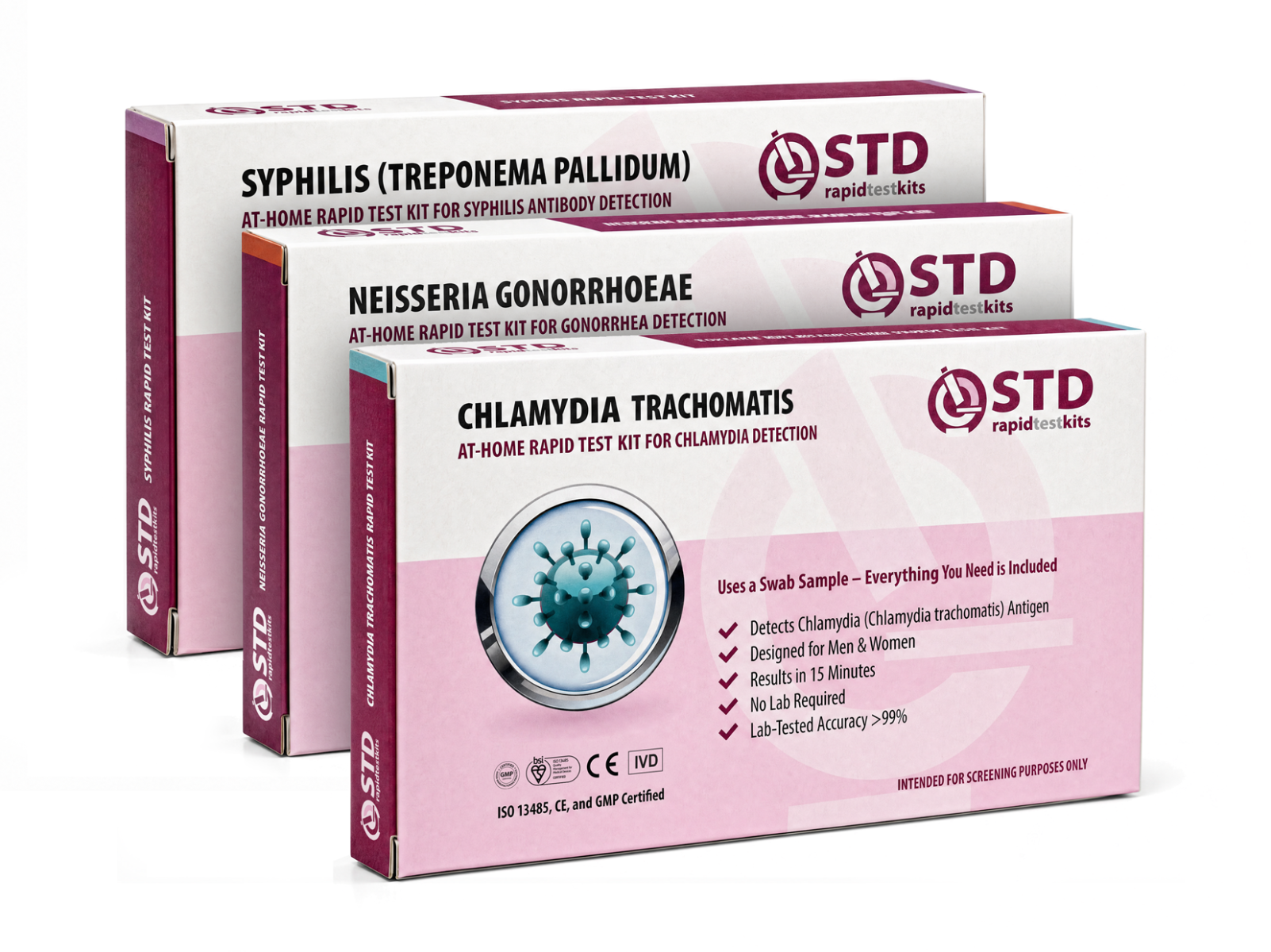
At-home rapid lateral-flow tests like our 3-in-1 chlamydia, gonorrhea, and syphilis kit have made the screening side of this routine substantially less burdensome than a clinic visit. Laboratory NAAT remains the analytical gold standard; at-home rapid lateral-flow tests trade some sensitivity for convenience, and for routine screening of asymptomatic adults, that trade-off is what makes the every-three-to-six-month cadence actually happen. Any positive at-home rapid result is worth confirming with a lab NAAT before treatment decisions, since rapid tests are designed as screens, not as diagnostic confirmations.
If a specific exposure event has happened (a condom break, a partner disclosing they had not tested in over a year, new symptoms appearing), the better path is a clinical visit for a full panel including pharyngeal and rectal swabs as appropriate, plus follow-up testing at the end of the relevant window. At-home tests handle the routine-screening case well; clinic testing handles the specific-exposure case.
What to do next
- Get a baseline test this week. Both partners, same window. Use an at-home rapid panel or schedule a clinic appointment, whichever fits your schedule fastest.
- Have the explicit conversation about outside contacts and what "no condoms" actually means going forward. Pick one of the four phrasings from the section above and say it out loud once before you have to use it.
- Set a recurring testing cadence: quarterly if either of you has outside contacts, six-monthly when barrier use has been genuinely consistent. Put a calendar reminder on the date now, while the intention is fresh.
- Confirm any positive rapid result with a clinic NAAT before starting treatment, and notify any partners from the relevant window period so they can test too.
Most people with sexually transmitted infections experience no symptoms. Without testing, infections are spread to others unknowingly.
Frequently Asked Questions
- Is friends-with-benefits sex actually riskier than a one-time hookup?
- Statistically, long-term FWB arrangements often accumulate more unprotected exposure events than a series of one-time hookups, because condoms tend to be dropped after the first few encounters and testing tends to slow down. The infection risk per individual sex act may be lower with a known partner, but the cumulative risk over months of consistent unprotected contact frequently exceeds the cumulative risk of occasional protected encounters. The structure of the arrangement matters more than how either partner feels about it.
- If we only sleep with each other, do we still need to test?
- Yes, with two caveats. First, "we only sleep with each other" is rarely verifiable in an FWB arrangement that hasn't been explicitly closed; many people describe a pattern that's exclusive in intent but not in practice. Second, even if both partners are genuinely exclusive, infections present before the arrangement started can surface months later, particularly viral infections like HSV and HPV that can be asymptomatic for years. A baseline test plus periodic follow-up testing is the right cadence even for confirmed exclusivity.
- Which STIs are most likely to show up in long-term FWB arrangements?
- Chlamydia and gonorrhea are the most commonly reported bacterial STIs in the United States, and both transmit efficiently through unprotected vaginal, anal, or oral contact. Trichomoniasis is also common and frequently missed because women may have no symptoms. Among viral infections, HSV-2 and HPV are the most frequently transmitted in long-term arrangements, both because they transmit through skin contact that condoms don't fully cover, and because they're often asymptomatic in the carrier.
- How often should we test if we're an active FWB pair?
- Quarterly is the right default for an active pair where either person has outside contacts. Six-month intervals are defensible only when barrier use has genuinely been consistent throughout, and if the arrangement has been running for more than a year with no recent test, the first priority is getting a baseline, not debating cadence.
- Can someone transmit an STI without any symptoms?
- Yes. The majority of chlamydia and gonorrhea infections cause no symptoms, particularly in women. HSV-2 carriers may shed virus and transmit during asymptomatic periods. HPV infections are frequently silent. HIV is most contagious during the early acute phase, which usually does not produce specific symptoms. The practical conclusion: "I feel fine and so does my partner" is consistent with both partners being infection-free AND with both partners having an asymptomatic infection. Only a test distinguishes between the two states.
- What's the best at-home test for someone in an FWB arrangement?
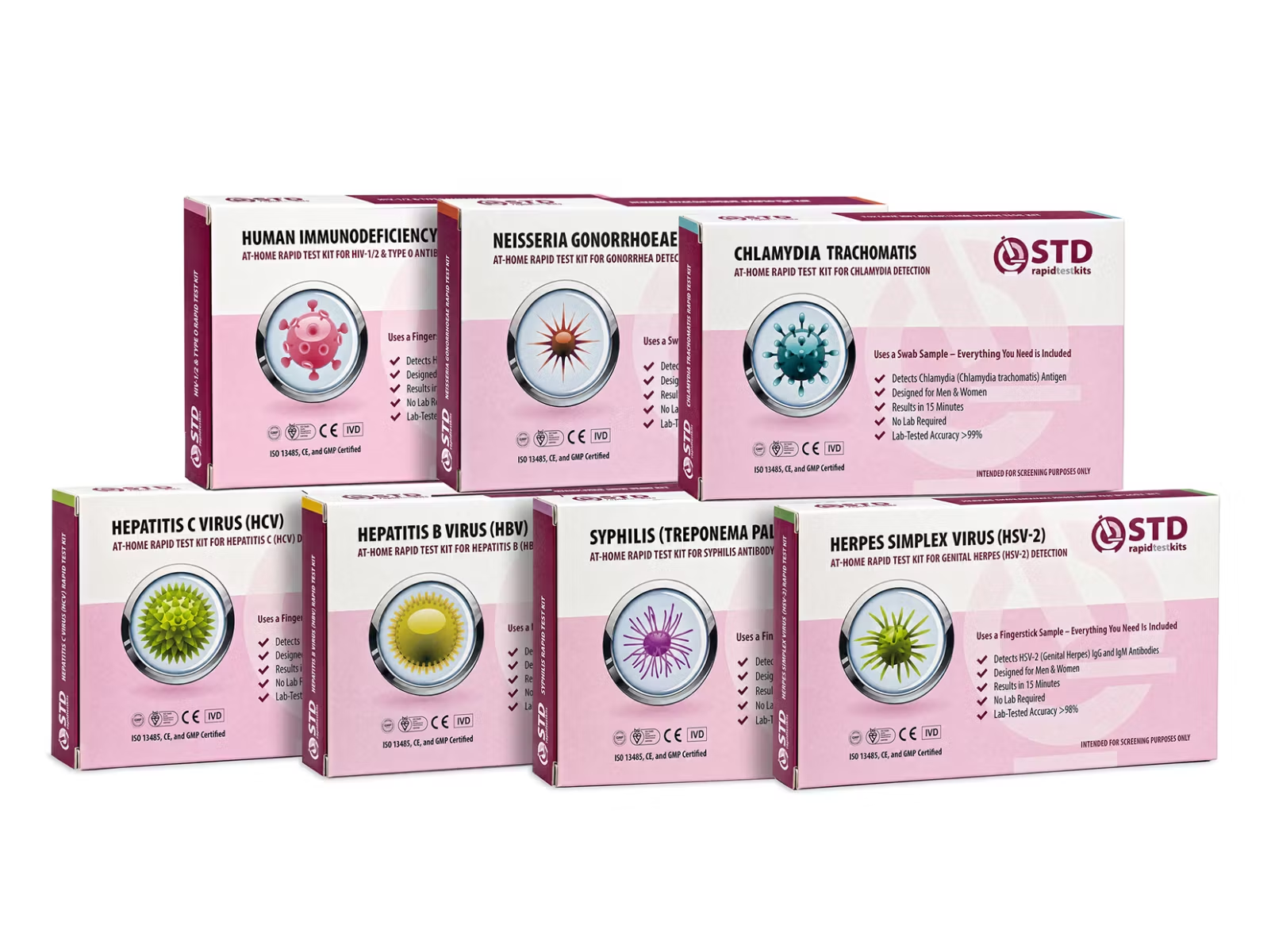
- For a partner pair where both people test together, a combination kit that covers the highest-prevalence infections in one shipment is usually the cleanest option. The 3-in-1 kit covers chlamydia, gonorrhea, and syphilis, which together represent the largest share of new reported STI diagnoses. The 7-in-1 kit adds HIV, hepatitis B, hepatitis C, and herpes, which is appropriate when either partner has had unprotected contact outside the arrangement or hasn't tested in over a year. Pharyngeal (throat) and rectal swab testing for oral or anal exposure is not something we sell at home; that requires a clinic visit.
- We just stopped using condoms. What now?
- Test, wait the appropriate window, retest, and have an explicit conversation. Practical sequence: both partners test at the moment of the decision (baseline), wait 14 days for chlamydia and gonorrhea sensitivity to reach a reliable level, wait 23 to 90 days for HIV depending on the assay used, and wait about 12 weeks for HSV-2 if a new exposure is suspected. In the interim, talk about what "no condoms" means for the rest of each person's sexual contact, because the exposure structure has just changed.
- What if my FWB partner refuses to test or use condoms?
- That refusal is information about how they handle sexual-health risk generally, not a one-off reaction to your specific question. The reasonable options narrow to two: keep condom use mandatory regardless of their preference, or step back from the arrangement. There is no clinically defensible case for going condomless with a partner who refuses to test, because you've removed both layers of risk reduction at once. You can still get yourself tested independently; your own testing doesn't require their participation.
Our article was constructed based on current advice from the most prominent public health and medical organizations, and then molded into simple language based on the situations that people actually experience. Primary sources include the U.S. Centers for Disease Control and Prevention, the World Health Organization, the UK National Health Service, and Mayo Clinic. Where specific numeric claims appear in the body (testing windows, screening cadence, condom-effectiveness language), the inline links point to the relevant root-level public-health resource. This article is published by stdrapidtestkits.com, which sells at-home STI testing kits. Product recommendations reflect fit for the reader's concern, not commercial preference. No real patient anecdotes are reproduced in this article; example phrasings are illustrative rather than clinical reports.
- World Health Organization. Sexually transmitted infections (STIs) fact sheet: overview of global prevalence, asymptomatic carriage rates, and transmission routes.
- U.S. Centers for Disease Control and Prevention. Condom Use overview: effectiveness data and guidance on consistent and correct use.
- U.S. Centers for Disease Control and Prevention. STI Treatment Guidelines, Screening Recommendations: testing intervals by population and risk profile.
- U.S. Centers for Disease Control and Prevention. HPV Vaccination Schedule and ACIP Recommendations: age-based vaccination guidance through age 26 routine and shared decision-making through age 45.
- UK National Health Service. Sexually transmitted infections (STIs) overview: symptom variability, testing access, and discomfort about screening as a barrier to care.
- Mayo Clinic. Sexually transmitted diseases (STDs): symptoms and causes, including the high prevalence of asymptomatic early-stage infection.