
Published: October 2025 | Last updated: May 2026 | Editorial review and quality control: Martina N.
Doxycycline as post-exposure prophylaxis (DoxyPEP) arrived in sexual health care with real promise. A single 200 mg dose taken within 72 hours of condomless sex sharply lowers the odds of picking up chlamydia or syphilis. For people who keep testing positive, that prevention tool felt overdue.
The catch is showing up in surveillance data on both sides of the Atlantic. The U.S. CDC's Gonococcal Isolate Surveillance Project has tracked persistently high tetracycline resistance in gonorrhea isolates for years. The European picture is sharper still: the European Centre for Disease Prevention and Control's Euro-GASP programme reported roughly 58 percent of recent gonorrhea isolates resistant to tetracycline, the drug class doxycycline belongs to. The chlamydia and syphilis benefit of DoxyPEP is still real. The cost, in resistance pressure on a bug that already evades most antibiotics we have, is becoming harder to ignore. This article walks through what the data actually shows, why gonorrhea adapts faster than nearly any bacteria we treat, what's changing in DoxyPEP guidance, and how to test smarter if you use it.
Key Takeaways
- DoxyPEP cuts chlamydia and syphilis by roughly 70 to 90 percent in pooled trial data, but its gonorrhea protection is inconsistent and roughly 58 percent of European gonorrhea isolates already resist tetracycline (the doxycycline drug class).
- Standard rapid tests and lab NAATs detect gonorrhea but do not tell you if the strain is drug-resistant. If treatment fails or infections return, ask your provider about culture and antimicrobial susceptibility testing.
Why DoxyPEP Looked Like a Breakthrough
The first DoxyPEP results made a strong impression. Pooled across the three pivotal trials reviewed by the CDC, a single 200 mg doxycycline dose taken within 72 hours of condomless sex reduced chlamydia by about 70 to 90 percent and early syphilis by about 70 to 87 percent in cisgender men who have sex with men and transgender women either on PrEP or living with HIV (CDC MMWR Recommendations and Reports, Vol 73, No 2, 2024). The French DoxyVAC study echoed the chlamydia and syphilis findings.
For sexually active people with one or more bacterial STIs in the past year, the effect was practical, not theoretical. The CDC issued formal clinical guidelines in 2024 recommending DoxyPEP for those populations (CDC clinical guidance on Doxy PEP for bacterial STI prevention). Clinics began offering it routinely. Use spread well beyond the original trial groups, including casual prescribing in some primary-care settings.
The caution was always there. Doxycycline kills bacteria broadly, and broad antibiotic exposure across a population is the textbook setup for resistance to evolve. Researchers flagged that risk during the trials. The trade-off seemed acceptable because the prevention benefit was clear. The question now is whether the trade-off still pencils out as scale and circulating resistance change the math.
Pooled trial data summarized in the 2024 CDC MMWR review: chlamydia reduction roughly 70 to 90 percent, early syphilis reduction roughly 70 to 87 percent, gonorrhea reduction around 50 percent with more between-site variability than for the other two infections. Figures vary by trial and population; the MMWR document is the canonical source.
What the European Resistance Data Adds
The European Centre for Disease Prevention and Control runs the Euro-GASP programme, which collects gonorrhea isolates from sentinel labs across participating European countries and tests how well common antibiotics still kill them. The most recent surveillance round looked at thousands of strains. Tetracycline came out worst (ECDC, gonococcal antimicrobial susceptibility surveillance).
The interpretation matters. A roughly 58 percent tetracycline-resistance rate in clinical isolates does not mean a 58 percent chance of catching a resistant strain on any given exposure. Resistance varies by country, by population, and by sampling. But it does mean that if you are relying on doxycycline to head off gonorrhea after sex anywhere on the continent, more than half the time the bacteria you might have picked up is biologically wired to ignore your pills. The math no longer favors DoxyPEP as a single-drug shield against gonorrhea in Europe, and U.S. GISP data have long shown elevated tetracycline resistance domestically too.
The same Euro-GASP round shows a sharply different picture for ceftriaxone, the cephalosporin used as first-line gonorrhea treatment. Resistance to ceftriaxone in Europe sits well under 1 percent, which is why it remains the cornerstone of the treatment landscape. Azithromycin sits in the middle, with resistance now around 23 percent in the most recent survey, which is why most national guidelines no longer use azithromycin as a routine companion drug.
| Antibiotic | European resistance (Euro-GASP) | Clinical role today |
|---|---|---|
| Tetracycline (includes doxycycline) | Approximately 58 percent | Drug class behind DoxyPEP; resistance now limits gonorrhea benefit |
| Azithromycin | Approximately 23 percent | Resistance trending up; rarely first-line for gonorrhea now |
| Ceftriaxone | Less than 1 percent | Cornerstone of treatment; closely surveilled for emerging resistance |
How Antibiotic Resistance Actually Develops
Resistance is not something you feel happening. Most bacteria die when an antibiotic hits them, but a small fraction survive thanks to random mutations or genes picked up from neighboring microbes. Those survivors reproduce. Over generations, the resistant share of the bacterial population grows.
Gonorrhea (Neisseria gonorrhoeae) is unusually good at this. It mutates quickly, and it readily swaps genetic material with related bacterial species through horizontal gene transfer. The CDC classifies drug-resistant gonorrhea as one of its urgent antimicrobial-resistance threats (CDC, Drug-Resistant Neisseria gonorrhoeae). The bacterium has already developed resistance, in turn, to penicillin, tetracyclines, sulfonamides, fluoroquinolones, and more recently reduced susceptibility to azithromycin. Cephalosporins like ceftriaxone are the last reliably effective option, and ceftriaxone-resistant strains have been documented in multiple countries.
Repeated low-dose doxycycline exposure is exactly the kind of selection pressure that favors resistant strains. With DoxyPEP, doxycycline reaches genital, throat, and rectal tissues at concentrations that may not always be high enough to wipe out gonorrhea but are enough to kill off susceptible strains. The strains left behind are the ones better equipped to survive next time, which is the mechanism Euro-GASP is now measuring at the population level.
Is DoxyPEP making gonorrhea harder to treat?
Possibly, yes. DoxyPEP cuts chlamydia and syphilis significantly and reduces gonorrhea by roughly half on average, but the benefit comes with a measurable cost: surveillance shows tetracycline resistance climbing in gonorrhea isolates, with Euro-GASP reporting around 58 percent of European isolates already resistant. Tetracycline resistance is also a marker for broader multi-drug resistance. Standard treatment with ceftriaxone still works in the large majority of cases, though the margin is narrowing.
Why Gonorrhea Outpaces Our Antibiotics
Most bacteria adapt slowly. Gonorrhea adapts quickly, and the way it lives in the body gives it extra room to evolve.
Three things matter. First, gonorrhea colonizes mucosal surfaces (urethra, cervix, throat, rectum) that antibiotics often reach at lower concentrations than they reach in blood. Sub-therapeutic exposure is exactly what selects for resistant strains. Second, pharyngeal gonorrhea is frequently asymptomatic, so people carry it without knowing, and it has more time to swap genes with other Neisseria species in the throat, some of which already carry tetracycline-resistance genes. Third, gonorrhea has an uncommonly flexible genome, picking up resistance traits from related microbes through transformation rather than waiting for spontaneous mutations alone.
Resistance also develops faster when antibiotics are used unnecessarily or incompletely. That is the core concern with DoxyPEP at population scale: exposing the body to antibiotics after sex when no infection is present, repeatedly, in the very tissues where gonorrhea most easily acquires new genetic material. "It worked for my friend" stories do not generalize here either. Protection is strain-specific, not pill-specific. A friend in a region with mostly sensitive gonorrhea strains can plausibly avoid gonorrhea on DoxyPEP. The same pills after a weekend in a city where resistant strains dominate do little.

Is DoxyPEP Still Worth Taking?
The picture is mixed. DoxyPEP shows strong protection against chlamydia and syphilis across multiple trials and reduces gonorrhea by roughly half across pooled trial data. For many at-risk individuals it remains a meaningful prevention tool when paired with informed consent and regular screening.
DoxyPEP's risk-benefit ratio is being stressed at population scale. Tens of thousands of people taking doxycycline after every condomless encounter, set against a backdrop where more than half of circulating gonorrhea in Europe already resists tetracycline, makes the population-level math turn unfavorable for gonorrhea protection. The individual benefit against chlamydia and syphilis still holds; the public-health risk to future gonorrhea treatment is real, and current prescribing debates are working through how to weigh those two facts. Here is how the picture compares across the bacterial STIs DoxyPEP is meant to address:
| STI | DoxyPEP effectiveness (CDC MMWR Vol 73, No 2) | Resistance concern |
|---|---|---|
| Chlamydia | About 70 to 90 percent reduction | Low. No major resistance trends identified. |
| Syphilis | About 70 to 87 percent reduction | Moderate. Active monitoring underway. |
| Gonorrhea | Approximately 50 percent on average, more between-trial variability | High. Tetracycline resistance roughly 58 percent in European isolates. |
When Treatment Fails: Resistance and Standard Testing
Suppose you test positive for gonorrhea. Standard therapy is a single intramuscular injection of ceftriaxone, dosed by weight (CDC STI Treatment Guidelines, gonococcal infections among adolescents and adults). For most cases that resolves the infection cleanly. But if symptoms persist or you test positive again within weeks, treatment failure is a real possibility, especially in pharyngeal infections where ceftriaxone reaches lower local concentrations.
Many patients and even some providers are unprepared for this scenario. Resistance testing (also called culture and antimicrobial-susceptibility testing) is not available in every clinic. Most rapid and NAAT tests confirm presence of the bacteria but do not tell you which antibiotics will work against this particular strain. To get a sensitivity panel, your provider needs to culture the organism, which takes a swab in viable transport media and a lab equipped to do the work.
If you have been treated for gonorrhea more than once in a year, or if your infection persists despite treatment, ask your provider about culture-based testing. If your clinic cannot do it, ask for a referral to an infectious-disease specialist or a public-health STI clinic. Tetracycline resistance is not always immediately obvious in symptoms, and it can correlate with reduced susceptibility to other antibiotic classes.
This is an urgent public health threat because gonorrhea control in the United States largely relies on our ability to successfully treat the infection.
This article is published by stdrapidtestkits.com, which sells at-home rapid STI testing kits. The product recommendation below is included because it matches the testing context discussed above, not for commercial reasons unrelated to article fit.
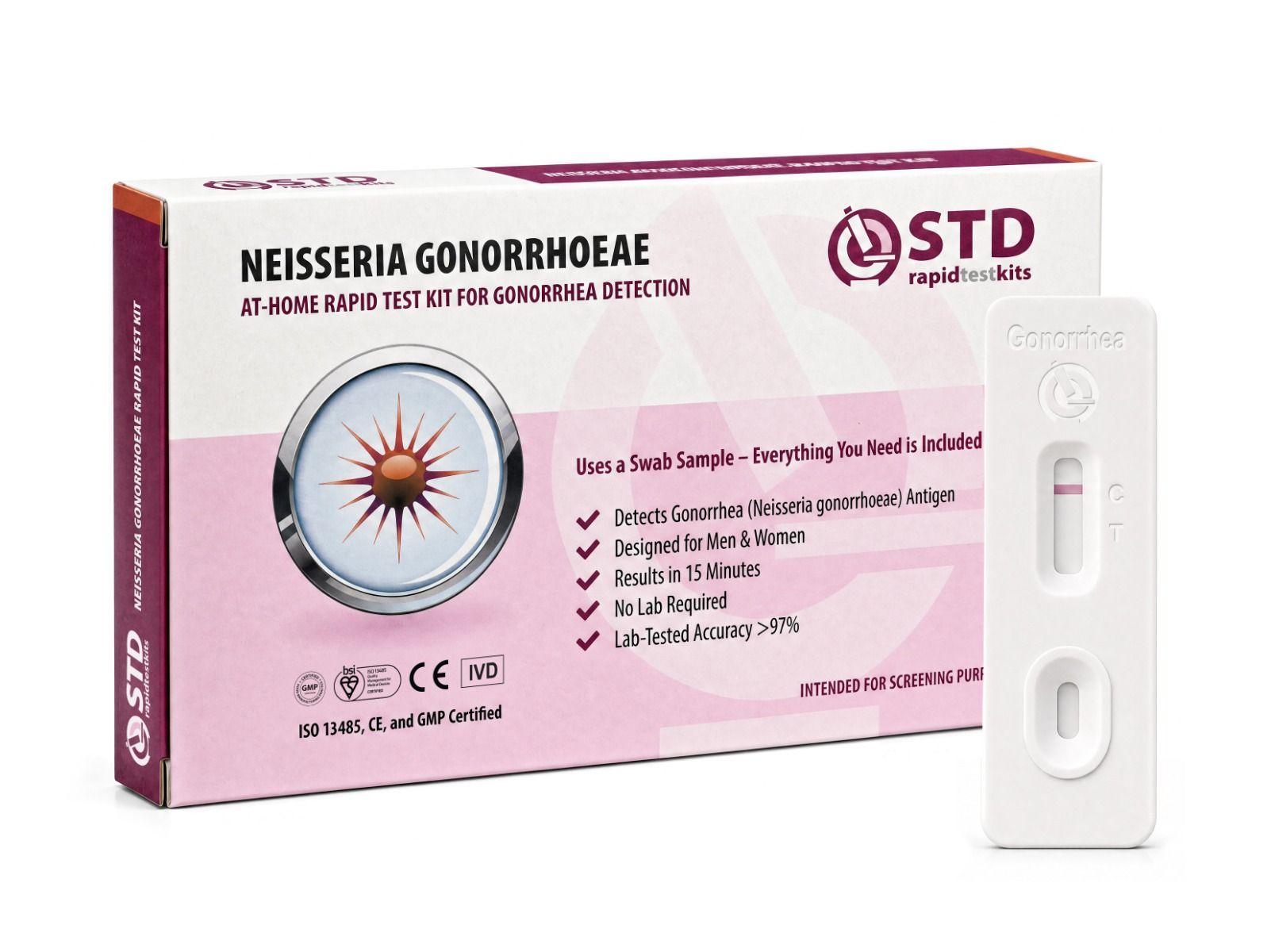
Alternatives to Antibiotic-Based Prevention
For people concerned about resistance, or those who have had recurrent infections, several protective steps do not depend on antibiotics. Condoms still meaningfully reduce transmission of gonorrhea, chlamydia, syphilis, and HIV, particularly for the throat and rectal exposures where DoxyPEP evidence is thinnest. Regular screening of all sexually active partners shortens the time an undetected infection can spread. Open partner communication, including disclosing recent positives so partners can be tested and treated together, breaks reinfection cycles that no prophylaxis can fix.
DoxyPEP itself does not have to be abandoned. Targeted use is what current expert framing increasingly emphasizes: prescribe primarily for people at highest risk for chlamydia and syphilis specifically, with full transparency about the limited gonorrhea benefit and the resistance pressure. Some clinics are already adjusting their prescribing thresholds. Others are piloting programs that pair DoxyPEP access with quarterly resistance monitoring of any gonorrhea isolates from users.
Non-antibiotic protective steps
- Barrier methods (condoms) meaningfully reduce transmission of gonorrhea, chlamydia, syphilis, and HIV during the encounters they cover, including the oral and anal exposures DoxyPEP covers poorly.
- Routine screening across all current partners shortens the time an asymptomatic infection can spread between people.
- Open partner communication, including disclosing positives so partners can be tested and treated together, breaks reinfection cycles.
Talking to Your Provider About DoxyPEP and Resistance
Not all providers are deep in the nuances of DoxyPEP-related resistance. Some clinics are only beginning to track local resistance trends. That means it may be on you to bring it up, especially if you have had multiple infections, persistent symptoms, or take DoxyPEP often.
The framing is partnership, not confrontation. Resistance patterns are evolving fast, and patients who advocate for accurate testing help the broader system respond sooner. If your clinic does not offer culture-based resistance testing, ask about referrals to a public-health STI clinic or an infectious-disease specialist. Access varies, and so does the quality of follow-up.
"I have been using DoxyPEP for STI prevention. I am wondering whether it could be affecting my test results or treatment outcomes. Should we do a culture or resistance test?"
"I have had gonorrhea more than once this year. Could we look at whether it might be drug-resistant, and culture the next positive sample so the lab can run susceptibility testing?"
When to Retest After Using DoxyPEP
If you have taken DoxyPEP, especially several times in a short span, time your testing strategically. Some users feel reassured and skip follow-up. Others test too soon and get false negatives because doxycycline has knocked the bacterial load below the detection threshold without fully clearing colonization, particularly in throat and rectal sites. A clearer testing window helps you get reliable results. Use this rough timeline:
| Time since exposure | What to know about testing |
|---|---|
| 0 to 3 days | Too early for reliable gonorrhea detection. DoxyPEP may also interfere with early colonization, making early test results less informative. |
| 7 to 14 days | Window where most gonorrhea infections become detectable on NAAT or rapid tests. Worth retesting later if symptoms develop. |
| 21 to 28 days | Optimal window to confirm clearance or detect persistent or resistant strains after DoxyPEP use. Particularly important if you have had recurrent infections. |
Test Smarter, Not Just More Often
If you test routinely already, the practical change is simple: pair an early screen with a follow-up screen at the 3 to 4 week mark, especially after any DoxyPEP use. If the early screen is negative but the follow-up is positive, that gap was the resistance picture you would have missed otherwise.
For people with throat or rectal exposure, ask about site-specific testing. A urethral or vaginal swab does not detect a pharyngeal or rectal infection, and oral and anal sites are exactly where asymptomatic gonorrhea most often hides. Our at-home kits cover the genital site only; site-specific pharyngeal or rectal swabs require a clinic visit. A multi-site or combination home kit makes the genital piece easier to manage between provider visits.
Screen at day 7 to 14 after a relevant exposure. Follow up at day 21 to 28 if you took DoxyPEP, since early doxycycline exposure can suppress bacterial load without clearing colonization. Ask a clinic about pharyngeal or rectal swabs separately, because home kits cover the genital site only.
What to Do If a Gonorrhea Test Comes Back Positive
A positive home rapid test is a screening signal, not a final diagnosis. The next steps look the same regardless of whether you took DoxyPEP first.
Get clinical confirmation and treatment. The CDC's treatment guidelines recommend a single intramuscular injection of ceftriaxone for uncomplicated gonorrhea in most adults, with dosing adjusted for body weight in some cases. A clinician will confirm the diagnosis with a lab NAAT, treat any chlamydia co-infection (common enough to warrant attention even with a negative chlamydia screen), and advise on retesting timelines.
Notify recent partners. The standard window is anyone you have had sex with in the prior 60 days, or your most recent partner if that was longer ago. Many partners will be asymptomatic and will not know they need testing without your message. Most U.S. states allow expedited partner therapy in some form, where the clinician can write a treatment course for a partner without a separate visit, and many local health departments will help with anonymous partner notification through partner services if a direct conversation is not an option.
Avoid self-treating with leftover antibiotics. Self-medication with whatever is in the medicine cabinet is one of the routes resistance spreads in the first place. A wrong dose or the wrong drug can mask the infection without clearing it, leaving you to pass on a resistant strain you no longer feel symptoms from. Whatever the temptation, route this through a clinician.
Three steps after a positive home test
- Get clinical confirmation. Book a clinic visit for a lab NAAT and a single intramuscular ceftriaxone injection per current CDC treatment guidelines; ask for culture if you have had repeated infections so the lab can assess antimicrobial susceptibility.
- Notify recent partners within the prior 60 days, or your most recent partner if longer ago. Most U.S. states allow some form of expedited partner therapy through the prescribing clinician, and many health departments offer anonymous partner-services support.
- Do not self-treat with leftover antibiotics. Wrong drug or wrong dose can mask infection without clearing it and accelerates resistance. Route treatment through a clinician every time.
Who Should Be Concerned, and Who Shouldn't Panic
If you are a casual DoxyPEP user, someone who has taken it a handful of times in the last year and tests regularly, you are probably not contributing meaningfully to the resistance trend. The signal in surveillance is being driven by repeated, frequent use across populations with high baseline STI incidence.
Concern is warranted if you take DoxyPEP weekly or more, especially in urban MSM settings with high local DoxyPEP uptake, or if you have had repeated gonorrhea infections in a short window. In those situations, talk with your provider about whether targeted use, behavioral adjustments, and culture-based testing make sense for you specifically. Gonorrhea is still treatable in the vast majority of cases, even as the treatment margin gets tighter, and each documented case of resistance is an early warning signal that prescribing patterns and surveillance need to adapt.
| User profile | What's reasonable |
|---|---|
| Casual user: a few DoxyPEP doses per year, regular screening, no recurrent gonorrhea | Continue current practice. Test routinely, including throat and rectal sites if relevant to your exposure. |
| Frequent user: weekly or more, or repeated gonorrhea infections in a short window | Talk with your provider about targeted use, culture-based testing, and behavioral adjustments. Consider asking that any positive be cultured for antimicrobial susceptibility. |
Frequently Asked Questions
- Can doxycycline still prevent gonorrhea?
- Not reliably. Doxycycline does not work especially well against gonorrhea on its own, and Euro-GASP data show roughly 58 percent of European gonorrhea isolates already resist tetracycline (the class doxycycline belongs to). Pooled trials show about a 50 percent average reduction in gonorrhea, with wide variability by site. DoxyPEP still substantially cuts chlamydia and syphilis in supported populations, but for gonorrhea it cannot be your only line of defense. Test 7 to 14 days after exposure even if you took the pills.
- Should I stop taking DoxyPEP altogether?
- Not necessarily. If you use it to prevent chlamydia and syphilis and you test regularly, DoxyPEP can still offer real protection for those infections. If you are taking it after every encounter or weekly, it is worth a conversation with your provider about whether more selective use makes sense for your specific risk profile. Do not change a prescribed plan without talking to the clinician who set it up.
- How would I know if my gonorrhea is resistant?
- A positive retest within roughly three weeks of completing a standard ceftriaxone course is the clearest practical clue. Standard rapid and NAAT tests report only presence of the bacteria, not which antibiotics will work on it. If you get a positive retest, ask your provider to send a culture to a lab that can run antimicrobial susceptibility testing on the isolate.
- What should I ask my doctor if I have had gonorrhea more than once this year?
- A direct prompt works: "I have had a few infections recently. Could this be antibiotic resistance? Can we do a culture and sensitivity test?" Many clinics rely on tests that report only positive or negative without telling you which antibiotics will work on this particular strain. Asking opens the door to better information.
- Can I test for resistance at home?
- No. At-home tests can tell you whether you are infected, but they cannot tell you which antibiotics the strain will respond to. Resistance testing requires lab culture under specific conditions, and a provider who can request the right panel.
- Does DoxyPEP affect test results?
- Sometimes, yes. If you test very soon after exposure while doxycycline is still active in your system, the bacterial load may be suppressed below the detection threshold without being fully cleared. A follow-up test 3 to 4 weeks later catches anything the early test missed.
- Is it safe to keep leftover antibiotics for "just in case"?
- Generally no. Self-medicating with leftover antibiotics encourages resistance, can mask infections without clearing them, and bypasses the susceptibility-informed treatment a clinician would actually choose. If you think you have been exposed, test, and let the result drive treatment decisions.
- Is super gonorrhea a real thing or just clickbait?
- It is real, but the framing matters. "Super gonorrhea" describes strains resistant to multiple antibiotics, including in some cases reduced susceptibility to the cephalosporin ceftriaxone we rely on as first-line treatment. A small number of cases globally have been very difficult to treat. The list of remaining options is shrinking, which is why public-health agencies are paying close attention now.
- U.S. Centers for Disease Control and Prevention. CDC Recommendations for the Use of Doxycycline Postexposure Prophylaxis for Bacterial Sexually Transmitted Infection Prevention. MMWR Recommendations and Reports, Vol 73, No 2, 2024. The formal clinical guideline document containing the pooled trial efficacy figures cited in this article.
- U.S. Centers for Disease Control and Prevention. Clinical guidance for the use of doxycycline post-exposure prophylaxis (Doxy PEP) for bacterial STI prevention, including indicated populations and dosing.
- U.S. Centers for Disease Control and Prevention. Drug-Resistant Neisseria gonorrhoeae public-health overview, including current resistance trends and the urgent-threat classification.
- U.S. Centers for Disease Control and Prevention. STI Treatment Guidelines: Gonococcal Infections Among Adolescents and Adults. Standard ceftriaxone dosing and follow-up recommendations.
- European Centre for Disease Prevention and Control. Gonococcal antimicrobial susceptibility surveillance (Euro-GASP) reporting on tetracycline, azithromycin, and ceftriaxone resistance rates among European gonorrhea isolates.
- World Health Organization. Sexually Transmitted Infections (STIs) fact sheet. Global surveillance, treatment landscape, and antimicrobial resistance context.
