Can You Get Cold Sores from Shared Makeup? HSV-1 Transmission Explained
How HSV-1 really spreads through kissing, makeup, and shared items
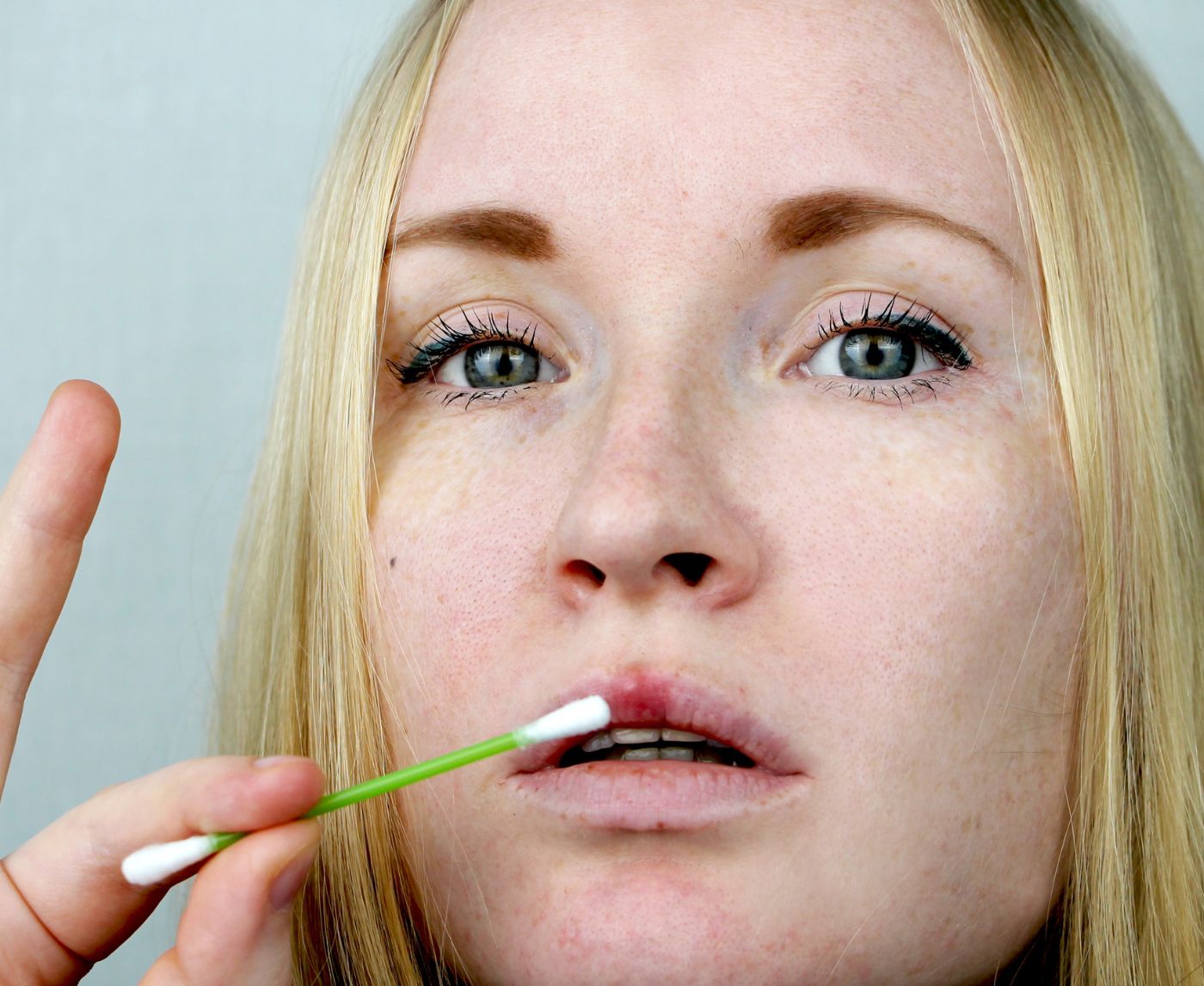



- HSV-1 spreads most efficiently through direct mouth contact during an active outbreak or in the tingling phase right before a sore forms. Sharing lipstick, lip balm, or drinks can transmit it, but only when timing and conditions line up.
- About two-thirds of people under 50 worldwide carry HSV-1 (WHO). Most picked it up through non-sexual childhood contact. A cold sore is a common viral infection, not a moral judgment.
Published: November 2025 | Last updated: May 2026 | Editorial review and quality control: Martina N.
The bump on your lip showed up the morning after a sleepover. Or after a music festival. Or after a single kiss with someone new. The question that follows is almost always the same: can you really catch oral herpes from sharing makeup?
Short answer, yes. HSV-1, the virus behind most cold sores, can spread through items that touched someone's mouth or an active sore. But the real risk depends on timing, symptoms, and small details that almost no one tells you about. Most adults who carry HSV-1 picked it up in childhood through ordinary family contact, long before sex was on the radar. This guide breaks down the actual transmission risks by scenario, how to tell a cold sore from a pimple, and what to do if you wake up with one.
It's Not Just Sex: How HSV-1 Actually Spreads
HSV-1 doesn't need intercourse to spread. It needs direct contact with virus that is actively shedding from someone's skin or mucous membrane. That happens during a visible cold sore, during the prodrome (tingling) phase right before a sore forms, and on a meaningful number of days when no symptoms are present at all.
Most adults who carry HSV-1 picked it up in childhood through family kisses, shared drinks, and shared utensils. The WHO estimates around 3.8 billion people under 50 globally (about 64%) have HSV-1 (WHO 2023 fact sheet). For most, the first exposure had nothing to do with sex.
What reliably transmits HSV-1:
- Direct skin-to-skin contact with an active cold sore
- Mouth-to-mouth kissing, especially during outbreak or prodrome
- Sharing items that just touched an active sore: lipstick, lip balm, mascara wand, vape, water bottle, utensils, razors
- Oral-to-genital contact (which is why HSV-1 increasingly causes genital herpes too)
What doesn't reliably transmit it: toilet seats, dry surfaces hours after contact, casual handshakes or hugs, dishes washed in hot water. The pattern is consistent. HSV-1 needs moisture, viable virus, and an entry point (cracked skin, mucous membrane). Without all three, transmission drops sharply.
Sharing Lipstick or Lip Balm: What's the Real Risk?
This is the scenario most people actually ask about. You shared a tube of lipstick or balm with someone, and now you're wondering whether that mattered. The honest answer depends on three things.
First, was the person actively shedding virus when they used it? During a visible cold sore or the tingling prodrome, yes. During asymptomatic shedding, sometimes. Otherwise, probably not. Second, how soon after did you use it? HSV-1 doesn't survive long on dry surfaces, so a shorter gap between uses means higher risk. Third, did you have any breaks in your skin? A cracked lip, a small cut, or a sore inside the mouth all give the virus a path inside.
For the casual scenario of borrowing a friend's lipstick on a normal day, when they had no symptoms and no recent outbreak, transmission is unlikely but not impossible. For sharing a tube during a visible outbreak, the risk is meaningfully higher. The table below maps the most common everyday scenarios to a realistic risk level.
| Scenario | Risk Level | Why It Matters |
|---|---|---|
| Kissing someone with an active cold sore | High | Direct mouth-to-skin contact during active viral shedding is the most efficient transmission route |
| Sharing lip balm or lipstick during an outbreak | Moderate | Virus can transfer briefly when product contacts a fresh sore, then a cracked lip on the next user |
| Sharing lipstick with no symptoms present | Low | Possible during asymptomatic shedding but uncommon in real-world transmission data |
| Sharing mascara with someone who has ocular HSV | Low | Theoretically possible but very rare; bacterial conjunctivitis is the bigger risk here |
| Sharing drinks or utensils briefly | Low | Saliva contact is the route, mainly relevant during active or prodromal stages |
| Touching your face after someone with HSV touches theirs | Very Low | Virus does not survive long on hands or dry surfaces |
What About Mascara? The Eye Herpes Question
Eye herpes, technically called ocular HSV-1 or herpes simplex keratitis, is a real condition that can damage the cornea if untreated (American Academy of Ophthalmology). It usually starts when someone with an oral cold sore touches the sore and then rubs an eye, transferring virus from mouth to eye on a contaminated finger. It rarely starts from a mascara wand.
For mascara to transmit HSV-1, a fairly specific chain of events has to happen. Someone with active viral shedding has to contaminate the wand. You have to use it soon enough that viable virus is still on the bristles. The wand has to touch a vulnerable surface like the inner eyelid or cornea. Each step is unlikely, and stacked together the overall risk is low.
The bigger reasons to never share mascara have nothing to do with herpes. Bacterial conjunctivitis, staphylococcus, and adenovirus transmit much more easily on a wand than HSV-1 does. The rule "don't share eye makeup" stands, just for different reasons than people usually assume.
After a cold sore episode, any of these symptoms in one eye need same-day or next-day evaluation by an ophthalmologist: redness, eye pain, light sensitivity, blurred vision, or a foreign-body sensation. Untreated ocular HSV-1 can scar the cornea and permanently affect vision.
Asymptomatic Shedding: Spreading HSV-1 Without Knowing
One of the most frustrating things about oral herpes is that it doesn't always announce itself. Many people who carry HSV-1 never develop visible cold sores. Others get them rarely. But the virus can still become active on the skin or mucous membranes without producing a visible lesion, a phase clinicians call asymptomatic shedding.
Research on oral HSV-1 shedding shows it happens on a meaningful fraction of days even in people with no symptoms (CDC genital herpes overview, which covers the same shedding biology that drives oral transmission). Visible cold sores are the highest-risk window, and asymptomatic shedding fills in the gaps on days when nothing looks wrong. No single percentage captures the full picture because rates vary by study population.
This is one reason HSV-1 became so common in the first place. Even people who try to be careful can transmit it without realizing anything is wrong. The mechanism is not hygiene. It is how the virus replicates and how often it appears on the skin in a transmissible form. (This article is published by stdrapidtestkits.com, which sells at-home STI testing kits. Products are recommended based on fit-for-purpose, not commercial benefit.)
How Long Can HSV-1 Live on Surfaces?
HSV-1 is fragile outside the body. Unlike spore-forming bacteria, it needs moisture and protein (saliva, secretions) to stay viable, and it breaks down fast on dry surfaces.
In real-world conditions, this means a lipstick tube used during an active outbreak loses meaningful transmission risk within hours. A drinking glass washed in hot water is essentially zero risk. A shared towel that has dried fully poses very little risk. The exceptions are warm, moist environments. A damp washcloth used by someone with a cold sore, then used by someone else within a couple of hours, carries more risk than a dry surface would. Same logic for a recently capped balm tube. The virus survives longest where it stays wet, and shortest where it dries.
None of this makes surfaces a major transmission route in practice. Direct mouth-to-skin contact is dramatically more efficient than any object-mediated route. Surfaces matter mostly when they bridge two mucous membranes within a short window.
| Shared Item or Surface | Realistic Risk Window |
|---|---|
| Dry towel hours after use | Very low |
| Dried lip balm cap, lipstick tube hours later | Very low |
| Drinking glass washed in hot water | Essentially zero |
| Recently capped lip product used during outbreak, next user within an hour | Moderate |
| Damp washcloth shared within 2 hours during outbreak | Moderate |
| Mascara wand shared during ocular HSV outbreak, immediate next use | Low |
Cold Sore or Just a Pimple? How to Tell the Difference
You see a bump on your lip and start running through the possibilities. Cold sore? Pimple? Allergic reaction? Stress bump? Early-stage cold sores can mimic acne or dry skin, but the trajectory is different.
Cold sores follow a fairly predictable arc: tingling or burning first, then a small cluster of clear fluid-filled blisters, then rupture and crust, then healing over 7 to 14 days (NHS cold sores guide). Pimples don't tingle before they appear, are usually pus-filled rather than clear, and tend to be isolated. Allergic reactions cause swelling without distinct blisters. The location helps too. Cold sores almost always cluster around the lip border or just above it, while pimples appear anywhere on the face.
If you're not sure, the most useful test is time. A cold sore will progress through its stages within a few days. A pimple won't follow that pattern. The comparison below covers the practical signs that separate the two.
| Sign | Cold Sore (HSV-1) | Pimple |
|---|---|---|
| Tingling or burning before bump appears | Common (the prodrome) | Rare |
| Fluid content | Clear fluid-filled blisters | Pus, not clear fluid |
| Typical location | Lip border, just above lip, sometimes nose or chin | Anywhere on the face, including jawline and cheeks |
| Pattern | Often clustered, several small blisters together | Usually isolated, single bump |
| Healing pattern | Blister, rupture, yellow-brown crust, scab | Inflammation, sometimes a head, fades or pops |
| Recurs in same spot | Very common, especially after sun, stress, or illness | Uncommon |
When Is a Cold Sore Most Contagious?
Cold sores aren't equally contagious throughout their cycle. The risk peaks during the blistering and oozing stages, drops once scabbing begins, and approaches baseline once the skin has healed underneath.
There's a quieter window most people miss though: the prodrome, the 12 to 24 hours of tingling, burning, or itching before any visible sore forms. The virus is already replicating at the skin surface, and transmission risk is high (Mayo Clinic). People often pass HSV-1 in this window without realizing they're contagious, because nothing looks wrong yet.
Once a sore is fully healed and the skin underneath is back to normal, transmission risk drops sharply but doesn't reach zero, because of asymptomatic shedding. The practical rule: assume some risk anytime you have an active or healing sore, and avoid direct mouth contact and sharing personal items in those windows. The timeline below maps each stage to its real contagious level.
| Stage | What's Happening | Contagious Level |
|---|---|---|
| Prodrome (Day 1) | Tingling, burning, or itching before any visible sore forms | High |
| Blistering (Days 2 to 3) | Small fluid-filled blisters form on lip or nearby skin | Very high |
| Oozing or ulcer (Day 4) | Blisters rupture and leak fluid containing active virus | Highest |
| Scabbing (Days 5 to 8) | Sore dries and forms a yellow-brown crust | Moderate |
| Healing (Days 9 to 14) | Scab falls off, new skin underneath | Low (but not zero) |
Cold Sore Myths That Keep Refusing to Die
Misinformation about herpes creates more shame than the virus itself does. The myths below are the ones that keep coming up in search queries and comment sections. Each one matters because it pushes people away from testing, partners, or honest conversation, and toward unnecessary panic.
| Myth | Reality |
|---|---|
| You can get herpes from a toilet seat | Not credible. HSV-1 doesn't survive on dry surfaces, and toilet seats don't contact mucous membranes anyway. |
| Cold sores mean someone is sexually active | Untrue. HSV-1 is most often acquired in childhood through casual family contact, kissing, and shared cups. |
| Using someone's towel gives you herpes | Very unlikely. Virus survival on dry fabric is poor, and contact with broken skin would still be required. |
| No visible sores means no risk | Untrue. Asymptomatic shedding is well documented and accounts for a meaningful share of HSV-1 transmission. |
| Only "dirty" people get herpes | Completely untrue. HSV-1 is one of the most common viruses on Earth, present in about two-thirds of adults under 50. |
| A cold sore is harmless once it scabs | Partly true. Risk drops once scabbing starts but doesn't reach zero until the skin fully heals. |
Most HSV infections are asymptomatic, but transmission to others can still occur in the absence of any visible signs or symptoms.
What to Do If You Wake Up With a Cold Sore
A cold sore doesn't require panic. It does require a pause. Avoid kissing, oral sex, and any direct mouth-to-skin contact until the sore has fully healed. Wash your hands often, especially before touching your eyes or putting in contact lenses, because hand-to-eye transfer is the most common way ocular HSV-1 starts. Don't share anything that touches your mouth: cups, utensils, lip products, vapes, food being passed around.
Common triggers for outbreaks include stress, sun exposure, illness, fatigue, hormonal shifts around menstruation, and dental work that traumatizes the lip area (Johns Hopkins). Tracking your personal triggers helps you anticipate outbreaks and start treatment earlier, before the first blister forms.
Over-the-counter: docosanol (Abreva) applied at the first tingle can shorten an outbreak.
Prescription antivirals: valacyclovir, acyclovir, and famciclovir all work better when started early in the prodrome.
Frequent outbreaks (more than 4 to 6 per year): ask a clinician about daily suppressive antiviral therapy, which reduces both outbreak frequency and asymptomatic shedding.
How to Talk to a Partner About Cold Sores
Disclosure isn't legally required for oral HSV-1 in most places, but a calm heads-up before kissing or oral contact is the considerate move. Most people respond well to a simple sentence: "I get cold sores sometimes. When I feel one coming on, I'll let you know and we'll avoid kissing until it heals."
What helps in those conversations is keeping it short and matter-of-fact, sharing the actual facts (it's common, it's manageable, you'll avoid contact during outbreaks), and not framing it as a confession. What doesn't help is a long guilt-laden monologue, overstating the risk, or apologizing for having a common virus.
If the other person reacts poorly, that's information about them, not about you. HSV-1 is common enough that being open about it tends to filter for people who can have an adult conversation about health. The flip side: if you find out a current or recent partner has cold sores, asking when their last outbreak was, and whether they feel any tingling now, gives you the most actionable upfront information.
"Hey, before we go further: I get cold sores sometimes. It's oral herpes, very common, and I'm not having an outbreak right now. If I ever feel one coming on, I'll let you know and we'll skip kissing until it heals." Short, factual, no apology, no overstatement.
When Testing for HSV-1 Actually Helps
Testing for HSV-1 works differently from testing for chlamydia or HIV. The standard at-home rapid test is a fingerstick blood antibody test. It detects whether the immune system has been exposed and produced antibodies. That's useful for confirming established infection, but it's not the right tool for diagnosing an active lesion. For a visible sore, a clinician can swab the lesion directly for a PCR or culture test, which is the most accurate way to confirm what's happening in real time.
When a blood antibody test makes sense:
- You've had cold sores in the past and want to confirm what virus you carry
- You're entering a new relationship and want to know your status before disclosure conversations
- You had a possible exposure 12 or more weeks ago and want clarity
When clinic testing is the better option:
- You have an active visible sore right now (swab beats antibodies for current infection)
- You're within the antibody window period (under 12 weeks since possible exposure)
- You need treatment, not just a result
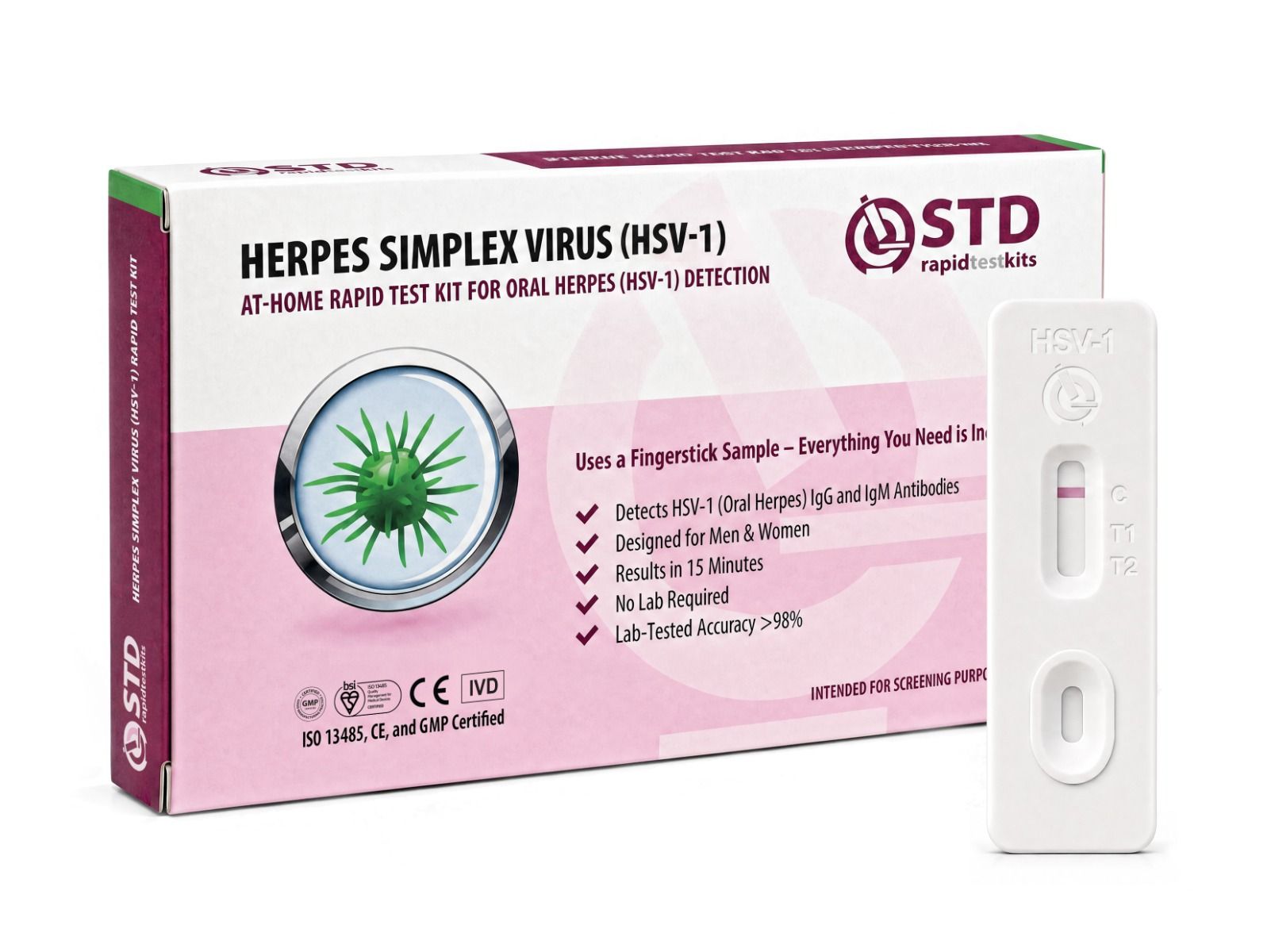
At-home blood antibody testing is one good option for the first set of scenarios. It's private, the result comes back in about 15 minutes, and it answers a specific question ("have I been exposed?") without requiring a clinic visit or an awkward conversation upfront.
You're Not Doomed, You're Informed
A cold sore from a shared lipstick isn't a moral failing, an indictment of your hygiene, or a permanent label on who you are. HSV-1 is a very common virus that the majority of adults under 50 carry, picked up most often in childhood from people who loved them. The practical responses are knowing your status, recognizing your triggers, being careful during outbreaks, and being open with partners. Shame isn't on the list.
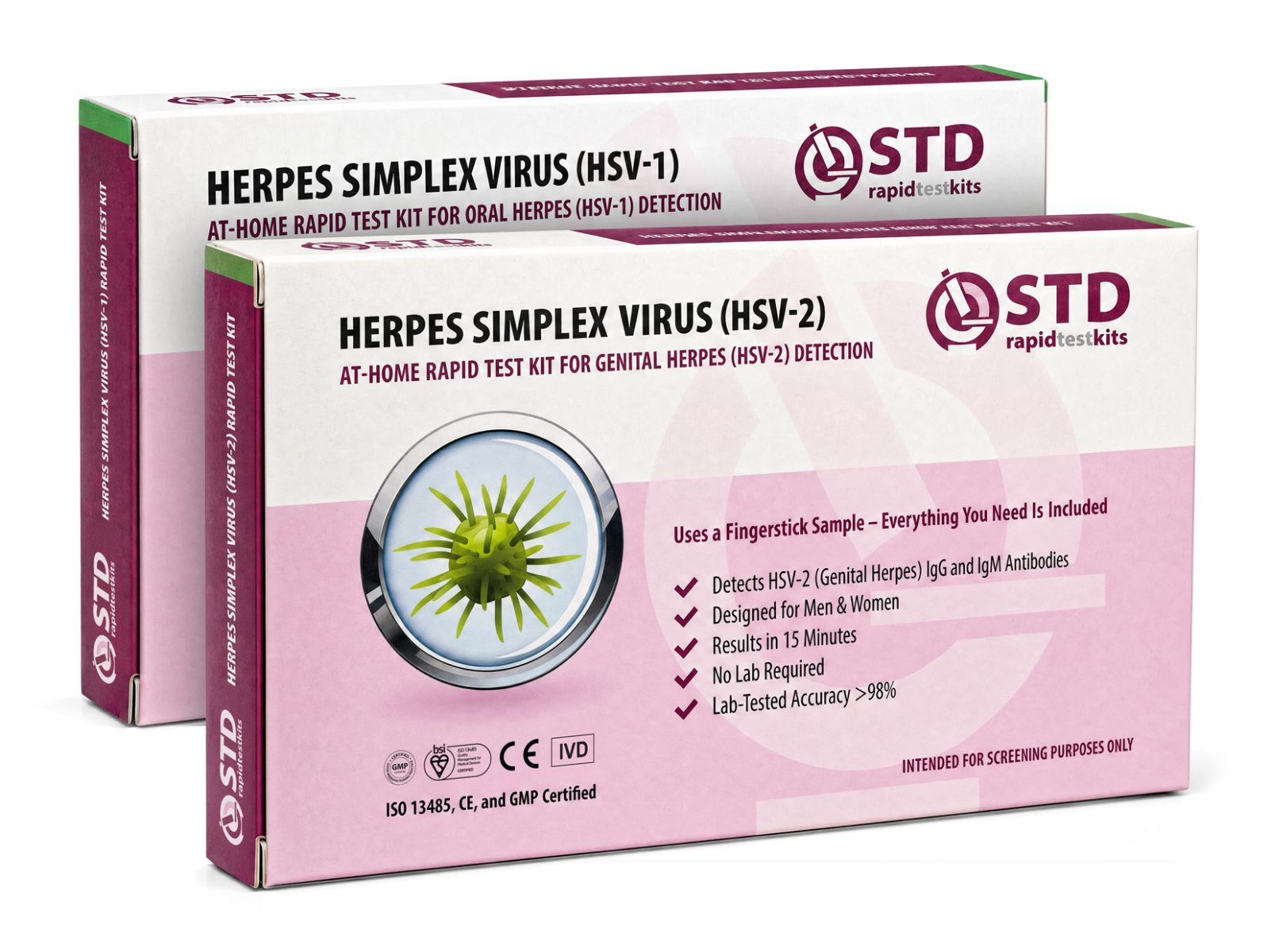
If you want a concrete next step, the at-home herpes tests linked above are private, fast, and answer one specific question: do you carry HSV-1, HSV-2, or both. That information makes every other conversation in this article easier.
Three Next Steps
- Know your personal triggers (stress, sun, illness, dental work) so you can start antivirals at the first tingle.
- Avoid kissing, oral contact, and sharing lip products from the first tingle through full healing of the skin underneath.
- If your status is uncertain and any possible exposure was 12 or more weeks ago, run an at-home HSV blood antibody test for a private answer.
FAQs
- Can I really get herpes from sharing lipstick?
- Possible, but not the most common route. If someone with an active cold sore or in the tingling prodrome uses a lipstick, and you use it soon after with a cracked lip or sore in the mouth, the virus can transfer. Outside that specific window, the risk drops sharply because HSV-1 doesn't survive long on dry surfaces. The bigger message is timing and skin condition, not that lipstick itself is dangerous.
- Can mascara actually give me herpes?
- Only in narrow circumstances. For HSV-1 to travel via mascara, someone would need an active ocular HSV infection, contaminate the wand, and you would need to use it soon after on a vulnerable surface like the inner eyelid. Each step is unlikely. The bigger reasons not to share mascara are bacterial conjunctivitis and other common eye infections, which transmit much more easily on a wand than HSV-1 does.
- How do I tell a cold sore apart from a pimple?
- Watch the trajectory. Cold sores tingle or burn before any bump appears, then form a cluster of small clear fluid-filled blisters that rupture and crust, healing over 7 to 14 days. Pimples don't tingle first, are usually pus-filled rather than clear, tend to be isolated, and appear anywhere on the face. Cold sores almost always cluster on the lip border or just above. If a few days clarify which pattern is unfolding, that's usually answer enough.
- Can someone spread HSV-1 without a visible cold sore?
- Yes. Asymptomatic shedding is well documented, and it accounts for a meaningful share of all HSV-1 transmissions. The virus can be active at the skin surface even when nothing is visible. This is one reason HSV-1 is so common: even careful people transmit it without knowing they're contagious.
- Is HSV-1 the same as HSV-2?
- No. They're closely related viruses but they differ in typical location and behavior. HSV-1 traditionally causes oral herpes (cold sores), HSV-2 traditionally causes genital herpes. The split is no longer clean though: HSV-1 increasingly causes genital herpes through oral-to-genital contact, and HSV-2 can show up orally. Type-specific blood tests can tell you which virus you have.
- How long is a cold sore contagious?
- From the first tingling sensation (the prodrome) through complete healing of the skin, generally 7 to 14 days total. Risk is highest during blistering and oozing, moderate during scabbing, and low (but not zero) once the skin has healed underneath. Direct mouth contact and shared mouth-touching items should be avoided throughout that entire window.
- Should I get tested for HSV-1 at home?
- Yes, if you want a private answer without a clinic visit. A fingerstick blood antibody test gives a result in about 15 minutes and costs no appointment time. The key constraint: antibody tests need at least 12 weeks since the possible exposure to be reliable, because that's how long seroconversion typically takes. If you have an active visible sore right now, skip the home blood test and see a clinician for a lesion swab, which is the accurate tool for diagnosing a current outbreak.
- Is oral herpes really an STD?
- It depends on the route. HSV-1 is most often picked up non-sexually in childhood through kissing and shared utensils. It can also transmit during oral sex, which is increasingly how HSV-1 ends up as genital herpes. The label "STD" applies when transmission occurred sexually. The virus itself is the same either way, and so is the management.
How We Sourced This Article: We combined current guidance from leading public-health and clinical organizations (WHO, CDC, NHS, Mayo Clinic, Johns Hopkins, AAO) with peer-reviewed research on HSV-1 shedding and transmission to make this guide practical and accurate. Every external link in this article was checked to confirm it leads to a reputable destination and opens in a new tab, so you can verify claims without losing your place.
- World Health Organization. Herpes simplex virus fact sheet, including 3.8 billion under-50 prevalence estimate and asymptomatic transmission patterns.
- U.S. Centers for Disease Control and Prevention. Genital herpes overview covering HSV transmission, asymptomatic shedding, and prevention.
- National Health Service (UK). Cold sores: symptoms, contagious stages, treatment options, and when to see a clinician.
- Mayo Clinic. Cold sore symptoms, causes, common triggers, prodrome timing, and treatment guidance.
- Johns Hopkins Medicine. Oral herpes clinical picture, outbreak cycle, common triggers, and management.
- American Academy of Ophthalmology. Herpes keratitis (ocular HSV-1) overview, including corneal scarring risk and transmission from oral lesions via hand contact.