Published: November 2025 | Last updated: May 2026 | Editorial review and quality control: Martina N.
Do you need to clean sex toys after every use?
Yes, every time, including solo and external-only use. Mild soap and warm water for 20 to 30 seconds handles most non-porous toys such as silicone, glass, and steel. Porous toys, shared toys, and toys that switch body areas need stricter steps, including a fresh condom and full drying before storage.
Short answer: yes. Every single time, whether the toy was used alone, only touched skin externally, or stayed in play for under a minute. The reason has nothing to do with judgment and everything to do with what bacteria, yeast, and certain viruses do when they land on a warm, moist, body-temperature surface and then get put away for next time.
This guide covers what survives on an unwashed toy, which cleaning method suits which material, the routine that handles almost everything, and what changes when you share toys, switch body areas, or reach for the wrong lube. It also walks through the myths worth ignoring, when post-use irritation is worth taking seriously, and when an at-home STI test is the sensible next step. The work is small, the protection is real, and the whole routine takes about as long as brushing your teeth.
Key Takeaways
- Wash every sex toy after every use, including solo and external-only use. Bacteria, yeast, and some viruses survive on toy surfaces and can trigger infection or pass to the next session.
- Match the method to the material. Mild soap and warm water handles non-porous toys (silicone, glass, steel); porous, shared, or body-swapping toys need stricter steps, including a fresh condom and full drying before storage.
Why every use counts, even solo
The idea that a toy used alone is safe to skip cleaning is the most common shortcut people take, and the one most likely to cause an avoidable problem. The risk is not whether you have a partner. The risk is what builds up on a surface that touches genital skin, mucous membranes, or fluid.
Vaginal, anal, and oral tissue each carry their own balance of bacteria and fungi. Introducing an object that holds the previous session's bacteria, leftover lube, dead skin cells, and warm moisture can tip that balance. The usual results are everyday infections, not exotic ones: bacterial vaginosis, urinary tract infections, and yeast overgrowth. The NHS describes bacterial vaginosis as a change in the natural balance of bacteria in the vagina, with sexual activity, IUD use, and perfumed products in or around the vagina among the recognised triggers (NHS: Bacterial vaginosis). UTIs follow a similar mechanism, with bacteria from one part of the body reaching the urethra and travelling up to the bladder (Mayo Clinic: Urinary tract infection).
External use is not a free pass. A vibrator used on the vulva picks up lube residue, sweat, and surface bacteria. Store it unwashed and use it again days later, and that residue has been growing the whole time. The same goes for suction toys, external massagers, and rings used during partnered play.
The common consequences are ordinary infections, and four account for most cases:
- Urinary tract infections from gut bacteria moved to the urethra.
- Bacterial vaginosis from disruption of the vaginal microbiome, often after anal-to-vaginal use without a wash.
- Yeast (Candida) overgrowth recolonising from a porous surface that was not fully cleaned and dried.
- STI transmission between partners on shared or rotated toys without a barrier.
All four are largely preventable with about thirty seconds of soap and warm water.
What can survive on a toy surface
A toy that looks clean is not sterile. Depending on the material, the surface texture, and how damp it was when stored, several common organisms stay viable for hours or days. That is why a quick rinse is not the same as a proper wash.
The table below summarises roughly how long common pathogens can stay infectious on toy-relevant surfaces at room temperature. These are general estimates from environmental microbiology, not measurements on any one toy. Peer-reviewed research has detected HPV DNA on used vibrators even after standard cleaning, which is the practical reason a condom barrier matters for any shared, textured device.
| Pathogen | Approximate surface survival | Higher-risk materials |
|---|---|---|
| HPV (DNA detectable) | Hours; reported up to about 24 hours after use | Soft thermoplastic elastomer, silicone, rubber |
| Herpes simplex (HSV) | Hours on hard surfaces; longer in moisture | Plastic, rubber |
| Candida (yeast) | Around 24 to 72 hours in moist conditions | Porous materials (jelly, cyberskin, TPE) |
| Chlamydia / gonorrhea | Approximately 2 to 3 hours on dry surfaces | Hard plastic, silicone |
| Trichomonas vaginalis | Several hours in moisture | Damp porous materials |
How to clean it: method by material
Standing at the sink, the questions get oddly specific. Is hand soap enough? Does boiling help? Is a pricey spray better than a bar of soap? For most toys, plain unscented soap and warm water does the job. The catch is the word non-porous. Medical-grade silicone, borosilicate glass, and stainless steel clean up best; ABS plastic sits a step below; porous materials like jelly, rubber, TPE, and cyberskin sit at the bottom because their microscopic channels trap fluid and organisms.
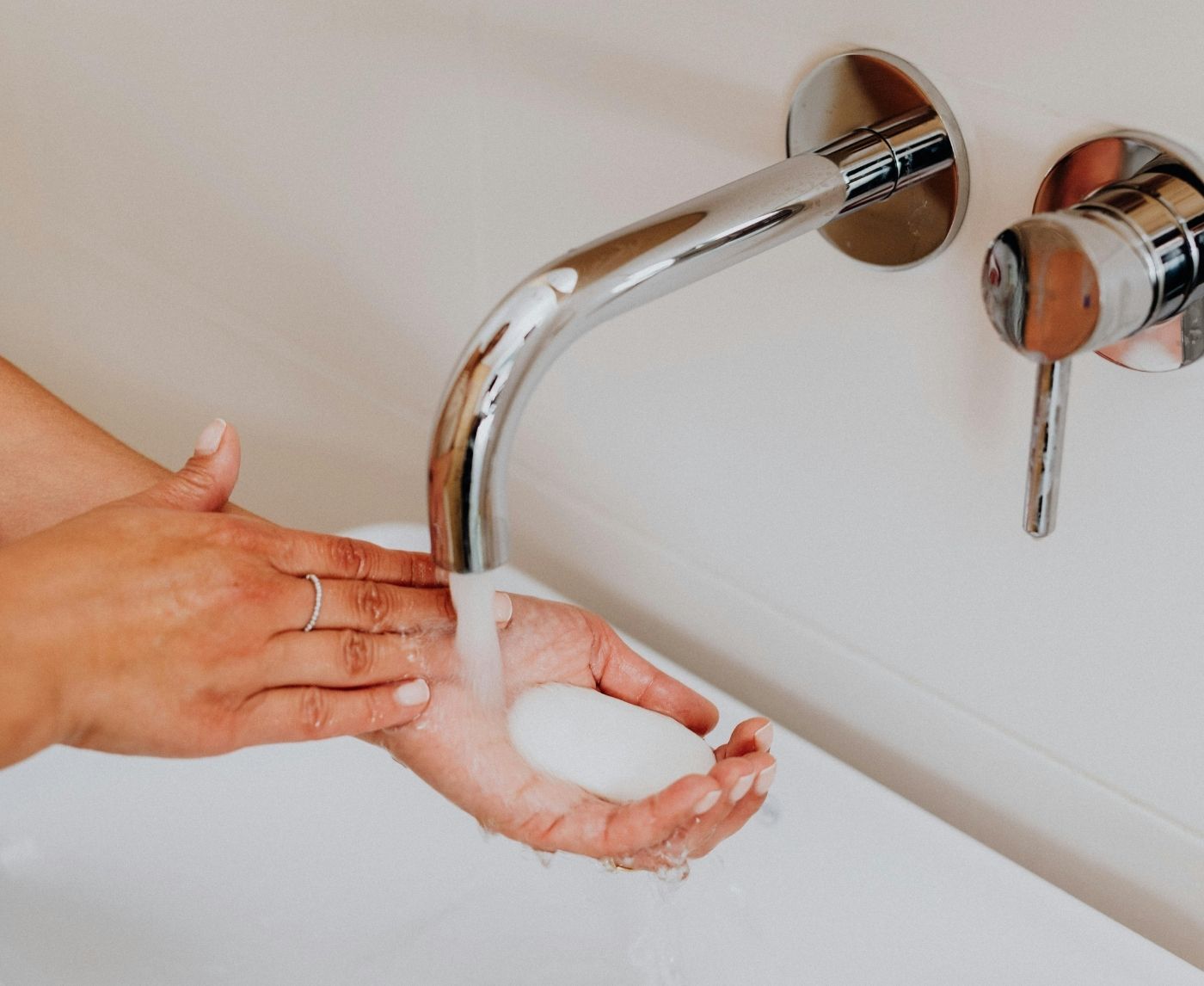
The routine that handles daily maintenance for almost any toy:
- Rinse under warm (not hot) water to remove residue from the previous use.
- Apply a small amount of fragrance-free, dye-free mild liquid soap. Hand soap or unscented body wash works. Skip antibacterial soaps with triclosan, perfumes, or strong essential oils, which irritate sensitive tissue next time.
- Lather by hand or with a soft cloth for 20 to 30 seconds, paying attention to seams, ridges, and textured detail. Avoid abrasive pads, which scratch even non-porous surfaces and create new bacterial niches.
- Rinse thoroughly until no soap film remains. Leftover soap irritates mucous membranes and is a more common cause of post-cleaning irritation than people expect.
- Pat dry with a clean lint-free towel or air dry on a rack. Storing a damp toy is the fastest way to recreate the problem you just removed.
For battery or rechargeable toys, keep the charging port and battery compartment dry. Most are splash-resistant, not waterproof, and submerging the wrong part can short the motor. Porous toys such as cyberskin can be patted dry and dusted lightly with cornstarch once fully dry, which keeps the surface from turning tacky.
Cleaning by material
| Material | Porosity | Everyday wash | Deeper clean |
|---|---|---|---|
| Medical-grade silicone | Non-porous | Mild soap and warm water, air dry | Boil 3 to 5 min if no motor, or 70% isopropyl wipe |
| Glass (borosilicate) | Non-porous | Mild soap and warm water | Boil, or 70% isopropyl wipe |
| Stainless steel | Non-porous | Mild soap and warm water | Boil, or 70% isopropyl wipe |
| ABS plastic | Non-porous | Mild soap and water, do not boil | 70% isopropyl wipe, air dry fully |
| Jelly, rubber, TPE, cyberskin | Porous | Mild soap, full rinse, always use a condom | Cannot be reliably disinfected; barrier plus regular replacement |
Non-porous toys can be deeply disinfected; porous toys cannot, so they need a condom barrier and replacement on a schedule.
Lube and material compatibility
Lube is part of toy hygiene, because the wrong lube degrades the surface and creates the roughness that traps bacteria.
- Water-based lube works with virtually every toy material and every condom. It can leave a faint film when it dries, but that rinses off easily. Lowest cleaning load.
- Silicone-based lube lasts longer and feels smooth, but it can bond with silicone toys at a molecular level and leave the surface sticky, gummy, or pitted. Glass, steel, and ABS plastic tolerate it.
- Oil-based lube breaks down latex condoms, weakens some plastics, and leaves a stubborn film. Best avoided for toy use.
Not sure what your toy is made of? Water-based is the safe default. Brands usually print the material on the packaging; if a toy came unlabeled, treat it as porous and use a condom over it. A toy that stays sticky after cleaning is showing a chemical change in the material, usually from a lube reaction, plasticizer migration, or age. That stickiness will not buff out, and the toy can no longer be cleaned the way it was designed to be.
Sharing toys and switching body areas
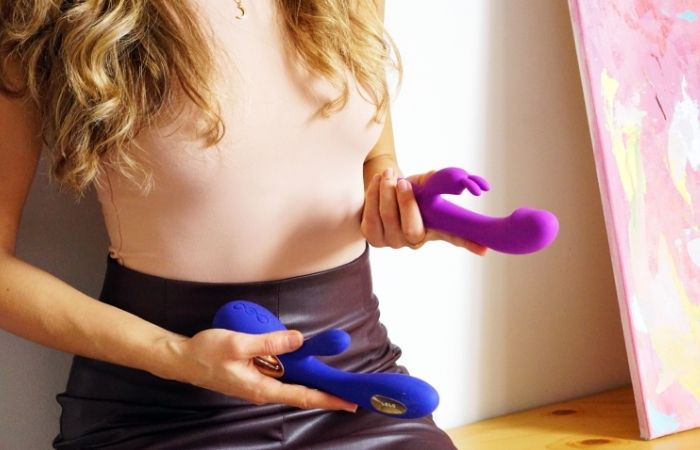
Cleaning stops being a personal-hygiene choice and becomes STI prevention the moment a second person uses the same toy. The NHS lists sharing sex toys among the transmission routes for trichomoniasis, alongside vaginal sex without a condom and genital skin-to-skin contact (NHS: Trichomoniasis). The same fomite logic applies to chlamydia, gonorrhea, HPV, and herpes. The CDC notes that STIs pass through vaginal, oral, and anal sex, and that you can carry an infection without knowing it (CDC: About STIs).
For shared use, the pattern is simple: clean fully between users, and roll a fresh external condom onto the toy for each person when you can. The condom carries the contamination, the toy stays cleaner, and the next user starts on a clean barrier. This matters most for porous toys that resist deep cleaning.
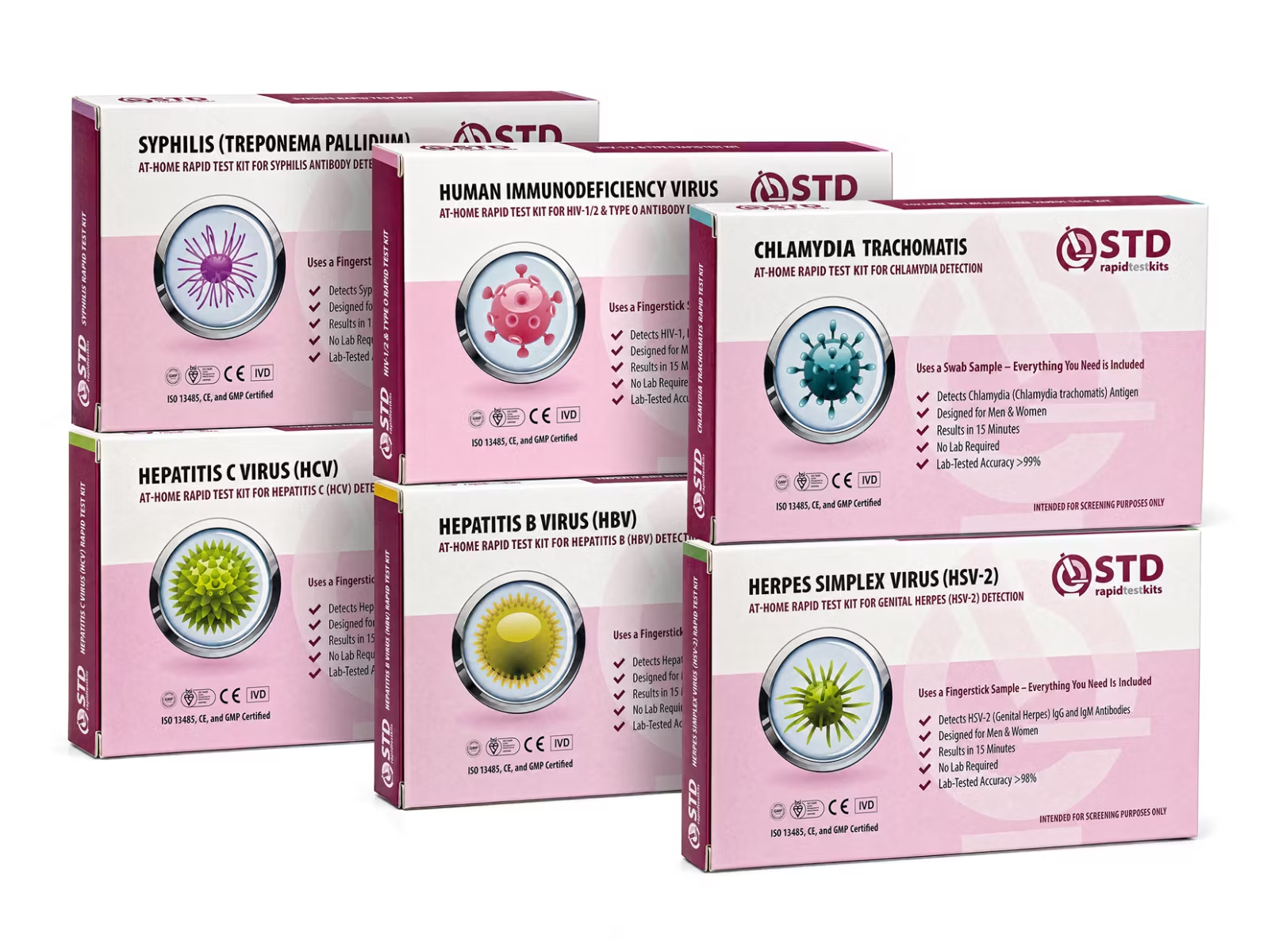
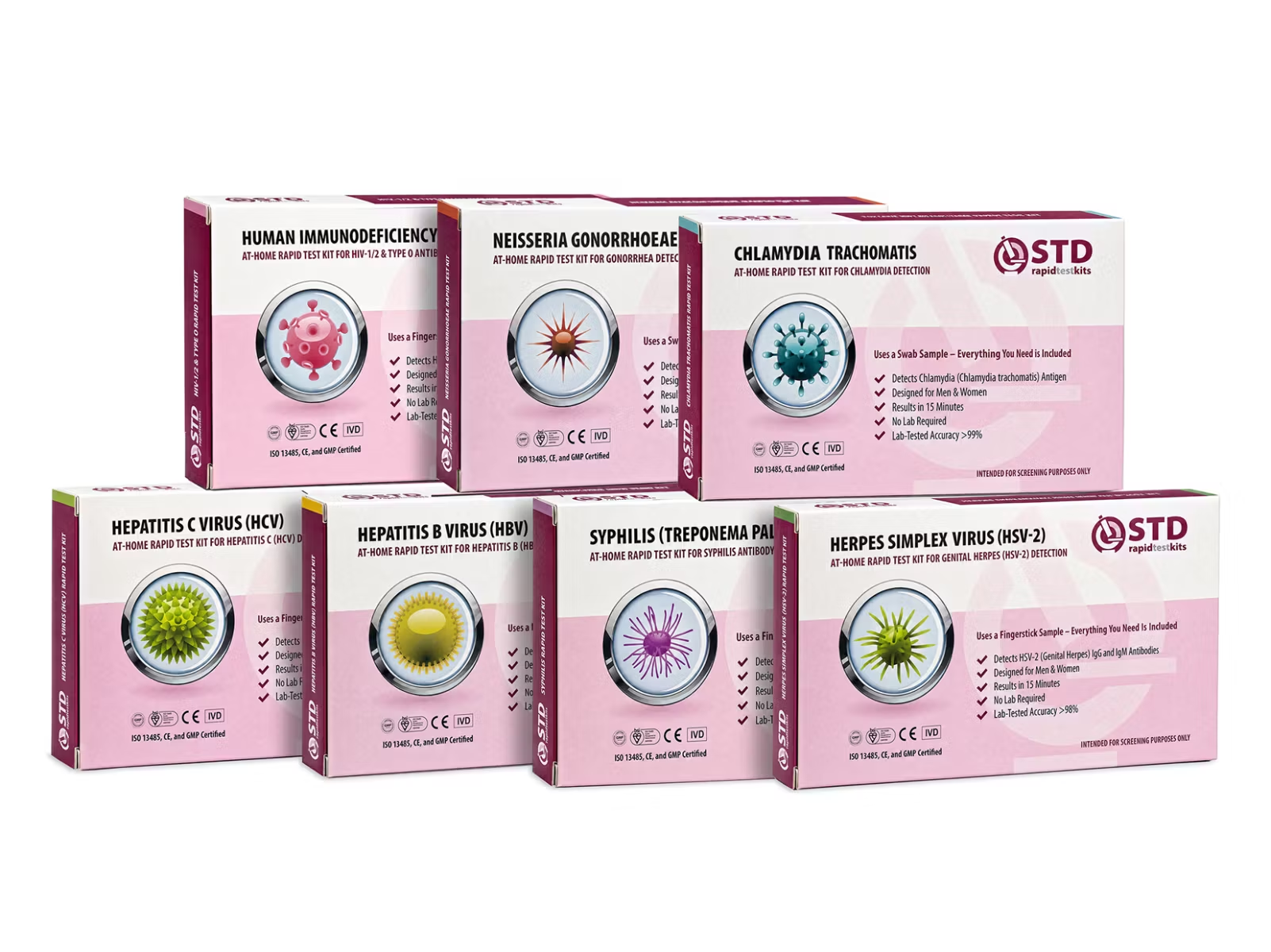
Switching body areas counts as a sharing event, even with one person. Never move a toy from anal to vaginal use in the same session without cleaning, swapping the condom, or using a separate toy, because gut bacteria moved to the vagina or urethra is a documented driver of UTIs and bacterial vaginosis. Anal toys with a flared base are worth keeping separate and marking with a dab of coloured tape. After a new partner, a partner of unknown status, or a session where cleaning got skipped, testing answers the question that cleaning cannot. We stock at-home STI test kits for the most common infections, including the multi-STI panel below.
Wash sex toys with warm water and mild soap before and after every use. Use a new condom on the toy each time you share with a partner, especially if the toy is porous.
Storage and when to retire a toy
Cleaning is half the routine. Storage is the half that recontaminates a perfectly washed toy. A few rules keep it clean between sessions:
- Dry fully before storing. A damp toy in a closed container is a small incubator.
- Use a breathable cotton or microfiber pouch, not a sealed plastic bag, which traps moisture and encourages mold.
- Keep toys from touching each other directly. Some silicone and jelly formulations react over time and can discolor, fuse, or degrade where they meet. One toy per pouch, or use dividers.
- Skip the bathroom drawer. Humid air and temperature swings degrade materials. A bedroom drawer or closet shelf is better.
Toys used during a period deserve a same-day wash rather than being set aside, because menstrual blood is protein-rich and feeds bacterial growth on any surface left overnight. And no toy lasts forever. Retire one once it feels sticky after a thorough wash, shows cracks or pitting, discolors, or holds an odor that will not wash off. A useful rule borrowed from clinical instrument care: a toy you would not hand to someone else clean is not clean enough for you either.
Porous toys (jelly, cyberskin, TPE, rubber): replace after about a year of regular use, sooner if shared. Medical-grade silicone, glass, and stainless steel, with proper care: several years.
Common myths about cleaning
A few misconceptions sound reasonable and are not. Each one is the reason someone skips a step that matters.
Toy-cleaning myths, corrected
Myth: Rinsing with water gets a toy clean.
Fact: Water alone leaves bacteria, lubricant film, and viral particles behind. Soap is a surfactant that lifts oils and biological material off the surface so they can be rinsed away. Without it, you are moving residue around rather than removing it.
Myth: If it does not smell, it is clean.
Fact: Smell is not a reliable sign of microbial load. Bacteria can build up to significant levels with no odor at all, especially inside motor housings and seams.
Myth: Solo use means you can skip the wash.
Fact: Your own bacteria are normal where they live, but concentrated on a surface overnight and reintroduced to a different site, they cause UTIs, bacterial vaginosis, and yeast overgrowth. Gut bacteria moved to the urethra is the most common offender clinicians see.
Myth: Bleach disinfects a sex toy.
Fact: Bleach degrades silicone, jelly, rubber, and TPE, and leaves residue that irritates mucous membranes. For a deeper clean on non-porous toys, boil for 3 to 5 minutes (no motor), or wipe with 70% isopropyl alcohol and then rinse.
When post-use irritation is worth a test
Most irritation after toy use is not an STI. The usual causes are mild chemical irritation from lube, friction, a temporary pH shift, or a brewing yeast infection, and they tend to settle within a few days with rest and plain-water rinsing. Some signs, though, are worth taking seriously: discharge that lasts more than a few days or changes color or odor; burning, itching, or rawness that does not improve; visible sores, ulcers, or warts; pelvic or testicular pain or fever; or recent shared-toy use with a partner of unknown status.
Timing matters once you decide to test. Most rapid and self tests are antibody tests, which can detect HIV 23 to 90 days after exposure (CDC: HIV testing). Swab tests for chlamydia and gonorrhea become reliable around two weeks after exposure. Herpes is slower: it can take up to 16 weeks or more for current antibody tests to detect infection (CDC: Herpes testing). If you have a visible sore, a clinic swab or PCR during the outbreak tells you more than a home antibody test. The WHO estimates that more than one million curable STIs are acquired every day worldwide in people aged 15 to 49, most without symptoms, which is why testing rather than guesswork is the only reliable way to know your status (WHO: Sexually transmitted infections). Home rapid kits use lateral-flow chemistry, which is convenient for screening; labs use NAAT or PCR, which pick up early or low-level infections more sensitively, so any positive home result is worth confirming at a clinic.
Should I test after using a toy?
Did you share a toy with a new partner, or a partner whose STI status you do not know?
Yes: Plan to test. Swab tests for chlamydia and gonorrhea read reliably about two weeks after exposure; blood tests for HIV, syphilis, and herpes need longer windows, so check each test's window before trusting a negative.
Do you have a visible sore, ulcer, or wart, or discharge that has lasted more than a few days?
Yes: See a clinic now. An active lesion is best swabbed or PCR-tested during the outbreak, which a home antibody test cannot do.
Solo use only, no new symptoms, and no shared exposure?
Yes: Routine cleaning is enough; no test is needed unless something changes.
No: If anything is uncertain, an at-home multi-STI screen after the window period is a low-cost way to confirm, with any positive result checked at a clinic.
Guidance only. A healthcare provider can advise based on your specific situation.
FAQs
- Do I really have to clean after every single use, even when I am alone?
- Yes. Bacteria, yeast, and surface residue accumulate on any moist, body-temperature surface between uses. Partner or no partner makes no difference to what grows on a surface left overnight, and external-only use counts too. Plain unscented soap and warm water for about 30 seconds covers most situations.
- Is soap and water enough, or do I need a specialty cleaner?
- For non-porous materials (silicone, glass, stainless steel, ABS plastic), unscented mild soap and warm water is enough. Specialty sprays are convenient between back-to-back uses, but they do not outperform a proper soap wash. Porous toys are harder to clean fully regardless of product, which is why a condom over a porous toy is the safer compromise.
- Is rinsing with hot water enough to clean a toy?
- No. Water alone does not remove bacteria, lubricant film, or viral particles. Soap is the active ingredient; without it, you are spreading residue around rather than removing it. A 20 to 30 second scrub with mild soap, followed by a full rinse and air dry, is the baseline.
- Can I get an STI from a toy I used a week ago and did not clean?
- It depends on what the toy contacted and what material it is made of. Chlamydia and gonorrhea typically do not survive more than a few hours on dry surfaces, but HPV and herpes can persist longer, especially in moist porous materials. If symptoms appear after using a stale toy, or after a shared-toy session, testing is the only way to know.
- Does boiling a toy actually work, and is bleach safe?
- Boiling works for 100% silicone, borosilicate glass, or stainless steel toys with no motor or charging port; three to five minutes in a rolling boil kills most pathogens. Bleach is not recommended for home toy cleaning, because it damages most materials and leaves residue that irritates mucous membranes. For motorized non-porous toys, a 70% isopropyl alcohol wipe (then rinse) is the better deep-clean option.
- How do I clean a vibrator with a motor?
- Do not submerge it unless the manufacturer specifically says it is waterproof. Wipe the body with a damp soapy cloth, paying attention to seams and the area around buttons, then wipe again with a clean damp cloth to remove soap residue, and air dry completely before putting it away. Check the charging port is dry before storing.
- How long do sex toys last, and what lube is safe?
- Medical-grade silicone, glass, and stainless steel, well cared for, can last several years. Porous materials (jelly, cyberskin, TPE, rubber) should be replaced after about a year of regular use, sooner if shared. Retire any toy that develops cracks, persistent stickiness, discoloration, or a smell that will not wash off. For lube, water-based works with every material and is the safe default; silicone-based degrades silicone toys, and oil-based breaks down latex condoms.
How we sourced this article: This guide synthesizes current public-health and clinical guidance from the U.S. Centers for Disease Control and Prevention, the World Health Organization, the UK National Health Service, Mayo Clinic, and Planned Parenthood. Specific claims are linked inline to the source page. This is a plain-English summary of established guidance, not a substitute for clinical care. If symptoms persist or worsen, see a licensed provider.
- World Health Organization. Sexually transmitted infections (STIs) fact sheet, including the figure of more than one million curable STIs acquired daily in people aged 15 to 49.
- U.S. Centers for Disease Control and Prevention. About sexually transmitted infections: transmission routes and the importance of testing.
- U.S. Centers for Disease Control and Prevention. HIV testing: window periods by test type, including the 23-to-90-day window for antibody and self tests.
- U.S. Centers for Disease Control and Prevention. Herpes testing: detection windows, including the up-to-16-weeks-or-more figure for current antibody tests.
- UK National Health Service. Trichomoniasis: transmission routes, including sharing sex toys.
- UK National Health Service. Bacterial vaginosis: causes and contributing factors, including sexual activity, IUD use, and perfumed products.
- Mayo Clinic. Urinary tract infection: how displaced bacteria reach the urethra and bladder.
- Planned Parenthood. Sex toy safety, cleaning, sharing, and condom-use guidance.
