







Quick Answer: The best time to test, and type of test for you, comes down to your life. Rapid tests with results in minutes offer speed but only scan for a few infections. Lab-backed mail-in tests are more accurate but take longer and generally cost more.
Why At-Home STD Testing Makes Sense (For More People Than You’d Think)
You decided to go with an at-home test for a reason, and guess what? It’s a valid one. Maybe you’re feeling a little self-conscious, and you’d rather just skip the whole sit-in-the-clinic-like-assembly-line-testing-part altogether.
Either way, the upside is that you can test, and keep your pants on. No excuses to a partner needed. Of course, at-home tests come with pros and cons, but they’re more reliable than they used to be and cover a surprising variety of STDs.
I’ll break down the differences between quick rapid “instant” kits and the more accurate mail-in options, covering what types of samples they take, how their timing works, and which infections they cover. We’ll also weigh in on sensitivity, payment methods, results timeframes, and real-talk around how to handle positive results and partner disclosure.
The 2025 Field: What’s on the Market and How They Differ
There’s no shortage of choices anymore. You’ve got companies offering combo panels, individual infection tests, subscription test boxes, even anonymous lab drop-off. It’s easy to get overwhelmed if you don’t know how they stack up.
Let’s say you're considering two of the biggest categories: rapid-result kits (like the kind you can use at home with results in under 20 minutes) and mail-in tests (where you collect the sample at home but send it to a lab for processing). Each has strengths and trade-offs, so choosing isn’t about “the best overall.” It’s about what works for your situation.
For example, Combo STD Test Kits that test for multiple infections at once are ideal if you’ve had a recent high-risk encounter or don’t know exactly what you were exposed to. Meanwhile, a single-use Chlamydia Rapid Test Kit might be enough if you’re following up after treatment or rechecking a past infection.
Comparing Test Kits by Speed, Cost, and Accuracy
| Test Type | Typical Cost | Result Time | Accuracy Range | Infections Covered |
|---|---|---|---|---|
| At-Home Rapid (Cassette Style) | $40–$80 per infection | 15–20 minutes | 85–98% | 1–4 (varies by kit) |
| Mail-In Lab Testing | $79–$149 for full panels | 2–5 business days | 92–99% | Up to 8–10 STDs |
| Clinic-Based Testing | Varies (often $150+ or covered) | Same day to 1 week | 95–99.9% | Custom panels, full access |
Figure 1: Side-by-side breakdown to help match test type with your real-world needs, whether you’re worried about symptoms, exposure timing, or budget.
Real Life Timing: When Each Test Makes the Most Sense
It’s not just about how fast you get results, it’s about when those results actually mean something. You might feel the panic the morning after a risky hookup and want answers right now. That’s human. But early testing, especially within the first 48–72 hours, can produce false negatives for several infections.
Take gonorrhea and chlamydia, the gold standard testing window is around 7 to 14 days post-exposure. Testing too early? You might miss an infection that's just beginning to incubate. On the other end, syphilis and HIV can take weeks before antibodies or detectable levels appear in your blood or oral fluid. Mail-in tests that analyze blood drops or swabs have higher sensitivity here.
We’ll walk through that timing in detail in the next section, with examples of when to trust a result, and when to retest.
People are also reading: When to Test for Chlamydia After Exposure
When Should You Test? (And When to Wait)
Picture this: it’s four days after a random hookup in a city you barely remember. You used protection, but something still feels off, maybe it’s nothing, maybe it’s paranoia. You panic-order a rapid test. It’s negative. You breathe... until you wake up eight days later with a weird burning sensation and the memory that they didn’t mention testing status at all.
This is why timing matters. Tests don’t work on intention, they work on biology. Every infection has its own window period: the time between exposure and when it can be accurately detected. Testing outside that window might feel reassuring, but it’s often premature.
Below is a practical breakdown of how soon different STDs show up on common tests and when you can trust a result to mean what you hope it means.
Window Periods and Accuracy by Infection
| Infection | Test Type | Minimum Detection Time | Ideal Testing Window |
|---|---|---|---|
| Chlamydia | NAAT / Rapid Swab | 5 days | 7–14 days |
| Gonorrhea | NAAT / Rapid Swab | 5 days | 7–14 days |
| Syphilis | Antibody Blood Test | 3 weeks | 6–12 weeks |
| HIV | Ag/Ab Combo / RNA NAAT | 2 weeks | 4–6 weeks |
| Trichomoniasis | Antigen / NAAT | 5 days | 1–2 weeks |
Figure 2: Typical window periods for common STDs, showing how long after exposure each test type becomes reliable.
How Long Do Results Take? (And Why That Feels Like Forever)
Ask anyone who’s taken a test and then had to wait: those 48 hours can feel like a damn eternity. One reader told us they refreshed their email inbox 123 times before getting their mail-in test result, on a Sunday night, no less. It’s not just about waiting. It’s about waiting while imagining every worst-case scenario your brain can conjure.
Rapid tests, like cassette-style fingerprick kits, give you results in 15 to 20 minutes. That’s a huge win for anxiety, but they often only test for 1–2 infections at a time. Mail-in tests, while more comprehensive and often more accurate, usually take 2 to 5 days after arrival at the lab. So you’ve got to factor in shipping both ways, and emotional stamina.
Speed might matter more if you’ve had recent symptoms, are traveling, or need to test discreetly without mail delays. Accuracy may be worth the wait if you’re testing a new partner or making a big decision about sexual activity.
Sample Types: What You’re Actually Sending In
Quick reality check: you won’t be peeing in a cup in your living room. Most tests rely on either swabs (oral, vaginal, rectal), fingerprick blood samples, or urine. The test type dictates the sample you’ll give. That’s where a lot of confusion, and nerves, kick in.
If you’re testing for herpes, blood is required. For HPV, swabs are the go-to. For chlamydia or gonorrhea, urine tests are often enough. It’s important to know what you’re being tested for so you’re not surprised when the kit arrives with a lancet or two swabs instead of a bottle to pee in.
Collection sounds intimidating until you realize most kits walk you through it with visual guides. Still, this is where test anxiety becomes real, so we’ll talk about how to make the process feel less overwhelming in the next section.
Check Your STD Status in Minutes
Test at Home with Remedium7-in-1 STD Test Kit
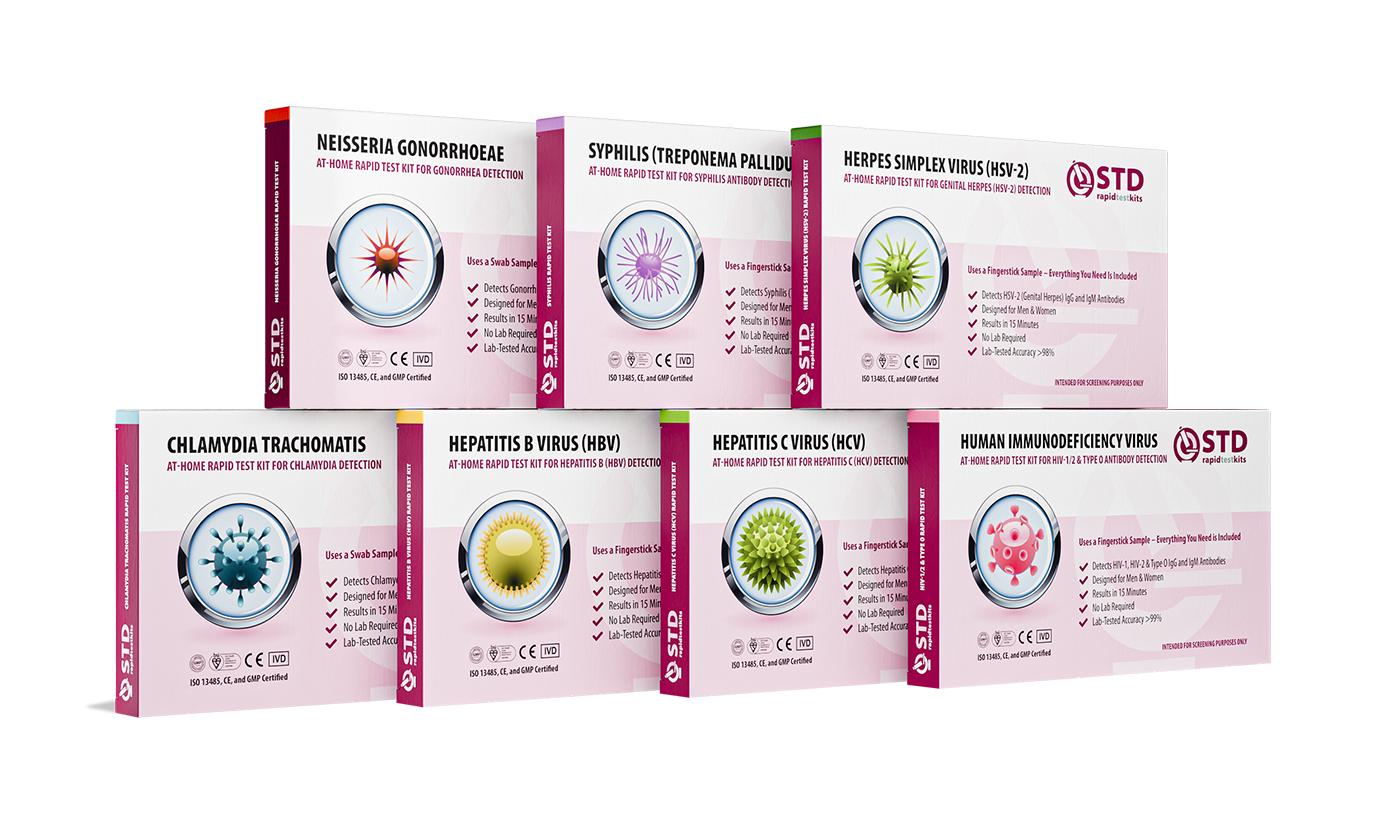
 For Men & Women
 Results in Minutes
 No Lab Needed
 Private & Discreet
Order Now $129.00 $343.00
For all 7 tests
Choosing the Right Test for You (Not Just the One With Ads)
This is where most people get stuck. You’re staring at five brands that all claim to be “#1,” all with sleek packaging and conflicting customer reviews. Some are FDA-cleared. Some aren’t. Some look sketchy. Some look like they belong in a skincare box from Sephora. So how do you actually decide?
Here’s the truth: there isn’t one “best” test for everyone. There’s only the test that fits your situation. A 21-year-old queer man testing after a Pride weekend has different needs than a 35-year-old woman in a monogamous relationship testing after a potential breach. Privacy matters more to some. Accuracy may be everything to others. For a lot of people, budget is the final decider, especially if insurance isn’t an option.
Think about what matters most to you right now. Is it getting results before the weekend? Is it confirming symptoms that just started? Is it ruling out a bunch of infections after a risky encounter? The answer to that question, not the Amazon reviews, is what should guide your choice.
“I Just Needed to Know Before I Saw Him Again”
Sophia, 28, had been seeing someone new. Things moved fast, emotionally and physically. Then a few days after they hooked up, she started itching. No visible bumps. No smell. Just... off. She didn’t want to ruin things by seeming paranoid, but she couldn’t shake the worry. She ordered a rapid test that arrived two days later, used it in her bathroom with the fan running, and got a negative for chlamydia and trichomoniasis in 15 minutes. Still, something didn’t sit right. She followed up with a mail-in panel to confirm the result, because peace of mind is worth more than a single test result.
Her story isn’t unusual. The best approach is often layered. Start with a rapid if you need relief. Follow up with lab-grade testing if symptoms stick around or if you’re worried about accuracy. Retesting isn’t paranoia, it’s smart risk management.
Let’s Talk About Discreet Shipping (Because Yes, It’s Really Discreet)
If you're living with roommates, nosy neighbors, or parents who think your mail is theirs to open, then the phrase "discreet shipping" becomes more than a marketing term. It becomes a necessity.
Here’s what most reputable brands actually mean: no medical labels on the box, no identifiers on billing statements, and packaging that looks more like a wellness product or vitamin subscription than anything STI-related. Some kits arrive in plain brown or white padded mailers. Others look like skincare boxes.
Results are almost always delivered online, secured behind a password. No notifications, no paper in the mail, no embarrassing phone calls, unless you request them. So if you’ve been avoiding testing because of visibility? That part’s covered.
People are also reading: Can You Get Hepatitis B From Oral Sex? Yes, and Here’s How.
Common Testing Mistakes That Can Ruin Your Results
There’s something about testing at home that makes people forget it’s still a medical process. Maybe it’s the casualness of opening the box in your kitchen or doing a swab while watching Netflix. But user error is one of the biggest reasons at-home tests get false negatives or inconclusive results.
People rush the swab. They skip handwashing. They don’t wait the full reaction time. Or they test while drunk, high, or right after peeing when urine samples should be midstream. It’s not about judgment, it’s about accuracy.
It’s worth taking 10 extra minutes to slow down, read the instructions twice, and follow through like your health depends on it. Because it kind of does.
Real Talk: When to Skip the Kit and Head to a Clinic
Home tests are amazing. But they’re not perfect for every situation. If you’re experiencing intense symptoms, like burning pain, open sores, pelvic cramps, or fever, you need in-person care. No matter how good the test is, it can’t treat you or evaluate your symptoms in real time.
If you’ve experienced assault, or if you're concerned about HIV exposure within 72 hours, skip the kit and go to urgent care or a local clinic immediately. In these cases, the window for treatment can make a life-changing difference.
Also: if your test result is positive and you’re not sure what comes next, clinics can help with treatment options, partner notification tools, and emotional support that a box can’t deliver.
FAQs
1. Are these at-home STD tests actually legit?
Yep, when you’re using the right ones. We’re not talking about sketchy $9 mystery swabs from a discount site. Reputable kits (the kind linked in this article) use the same tech that labs and clinics rely on, just designed for private use. They’re not 100% foolproof, but they’re pretty damn close, especially when used at the right time and followed up properly.
2. How soon after sex can I test?
Depends on what you're worried about. For things like chlamydia or gonorrhea, the sweet spot is 7 to 14 days post-hookup. Test earlier and you risk a false negative because your body hasn’t reacted yet. Think of it like waiting for film to develop, testing too soon is like pulling the photo out before it forms.
3. Is it strange to test if I don't have any symptoms?
Not at all. You could feel fine and still have something without realizing it. Getting tested based on risk, not just symptoms, is one of the best things you can do for yourself and your partners.
4. What happens if the test comes back positive?
First: don’t spiral. A positive result doesn’t make you dirty, reckless, or doomed, it just means you have more info now. Most STDs are treatable, and all of them are manageable. The next move is to confirm the result (if needed), connect with a provider, and start treatment. You’ve already done the hardest part: you got tested.
5. Do I need to test again if my symptoms don’t go away?
Yeah, that’s a good call. Sometimes the infection is still incubating, or maybe the test didn’t cover the right thing. If your body’s still waving red flags, listen to it. You’re not being paranoid, you’re being responsible.
6. Can I use these tests if I’m on antibiotics?
Timing’s tricky here. If you're in the middle of treatment, testing might give you a false sense of security. It’s usually best to finish the meds, wait a bit (a week or two), then test to make sure the infection is really gone.
7. Will the kit fit in my mailbox? Will my roommates know what it is?
Unless your roommates are professional mail inspectors, no. These kits are designed to be stealthy. Think: plain packaging, no loud logos, billing that doesn’t scream “SEXUAL HEALTH.” If you didn’t know what it was, you’d probably think it was a protein bar subscription.
8. Can I mess up the test?
Only if you’re super careless. The instructions are usually clear, and everything you need is in the box. But yeah, don’t rush it. Wash your hands. Read the insert. Don’t take a swab selfie in the mirror while doing it. Treat it like a medical process, because it is.
9. Is this okay to do with a partner?
Hell yes, and it can actually be kind of bonding. Whether you’re new to each other or navigating non-monogamy, testing together shows you care about everyone involved. Some couples even test before trips or before going condom-free. If it’s mutual and respectful, go for it.
10. What if I still don’t know which test to pick?
Totally fair. If you’re not sure where to start, go with a combo panel that checks for the most common infections. They’re designed for situations like yours, when you just want answers without playing the guessing game. The key is to start somewhere, even if it’s not perfect.
What to Do Next (Because Waiting Isn’t a Strategy)
If you’re still scrolling, you probably haven’t made your decision yet. That’s okay. But don’t let inertia win. The truth is, no test can help you until you take it. And clarity, real, grounded, blood-pressure-lowering clarity, is only a few steps away.
Whether you want answers in minutes or the highest accuracy possible, there’s a test for you. You don’t have to explain yourself, wait for a doctor’s appointment, or dread a clinic lobby. Just start where you are and choose the next step that makes sense for your life.
You deserve answers, not assumptions. This combo test kit checks for multiple STDs discreetly and quickly, because peace of mind shouldn’t take a week.
How We Sourced This Article: We combined current guidance from leading medical organizations with peer-reviewed research and lived-experience reporting to make this guide practical, compassionate, and accurate. In total, around fifteen references informed the writing; below, we’ve highlighted some of the most relevant and reader-friendly sources.
Sources
1. CDC: STD Screening Recommendations
2. Getting Tested for STIs – CDC
4. Reliability of HIV Rapid Diagnostic Tests for Self‑Testing: A Meta‑Analysis
5. Rapid Tests for Sexually Transmitted Infections: The Way Forward
6. Point‑of‑Care Testing for Sexually Transmitted Infections: Recent Advances
7. Sexually Transmitted Infections: Updated Guideline From the CDC (AFP)
About the Author
Dr. F. David, MD is a board-certified infectious disease specialist focused on STI prevention, diagnosis, and treatment. He blends clinical precision with a no-nonsense, sex-positive approach and is committed to expanding access for readers in both urban and off-grid settings.
Reviewed by: N. Alvarez, PA-C | Last medically reviewed: October 2025
This article is for information only and should not be used as medical advice.


