






Quick Answer: Chlamydia in gay men often causes no symptoms, especially in the throat or rectum. Many men only find out through routine screening or after passing it to a partner.
What If You Feel Nothing? Why That Doesn’t Mean You’re Clear
Matt’s story isn’t unique. Studies show that rectal chlamydia is often entirely asymptomatic in men who have sex with men. That means no itching, no discharge, no bleeding, no soreness. Nothing. A 2023 study published in Sexually Transmitted Infections found that over 70% of rectal chlamydia infections in MSM were asymptomatic, yet still highly transmissible.
It’s not just rectal. Oral chlamydia is another silent culprit. You can acquire it from giving oral sex to a partner who has chlamydia in their urethra or rectum, and it often presents no pain, no sore throat, and no visible lesions. One UK-based clinic study found that among MSM who tested positive for oral chlamydia, over 80% had no symptoms at all.
The truth is, many gay and bi men assume they’ll “feel it” if they’re infected. But unlike some STDs that tend to cause obvious symptoms (like the blistering pain of herpes or the rash from syphilis), chlamydia often stays under the radar. And that can lead to missed diagnoses, untreated infections, and unintentional transmission.
Where Chlamydia Hides in Gay Men’s Bodies
Depending on what kind of sex you have, and what kind of protection you use, chlamydia can infect different parts of the body. In gay and bi men, the three most common infection sites are:
1. The Urethra: This is the tube you pee through. Urethral chlamydia is more likely to show symptoms than other types. You might notice burning during urination, discharge (clear or cloudy), or an itchy feeling inside the penis. But here’s the twist: even here, around half of infections show no symptoms at all.
2. The Rectum: This is the silent stronghold. Rectal chlamydia is usually picked up through receptive anal sex, but it can also be spread via fingers, toys, or rimming. Symptoms, when they do happen, might feel like mild itching, bleeding after sex, or what some people think is a hemorrhoid flare-up. Most of the time, though? Nothing.
3. The Throat: Giving oral sex to someone with chlamydia in their genitals or rectum can result in a throat infection. It’s rare for this to cause pain or a sore throat. If you do feel something, it might mimic a mild cold, or be so subtle you chalk it up to dry air or allergies.
People are also reading: Think It’s Just a Cold Sore? Why It Could Be Syphilis Instead
Timing Matters: How Long Before Chlamydia Shows Up?
If you’ve had unprotected sex and are wondering when to test, the answer isn’t immediate. Chlamydia takes time to show up in tests, even if you’re infected. This is called the window period, and it’s one of the most important reasons why timing matters. Test too early, and you might get a false negative.
| Test Type | Body Site | When It Can Detect Chlamydia | Most Accurate Testing Time |
|---|---|---|---|
| NAAT (Nucleic Acid Amplification Test) | Urethra (urine) | 5–7 days after exposure | 14 days after exposure |
| NAAT (swab) | Rectum | 7–10 days | 14+ days |
| NAAT (throat swab) | Pharynx | 7–14 days | 14+ days |
Table 1: Chlamydia testing timelines for gay and bi men based on exposure site. Source: CDC and Mayo Clinic testing guidelines.
That means if you hooked up on a Saturday, testing the next Monday probably won’t show anything, even if you’re infected. This delay is why many experts recommend waiting at least 10–14 days before testing, or doing an initial test now with a follow-up later if symptoms show up or exposure was high-risk.
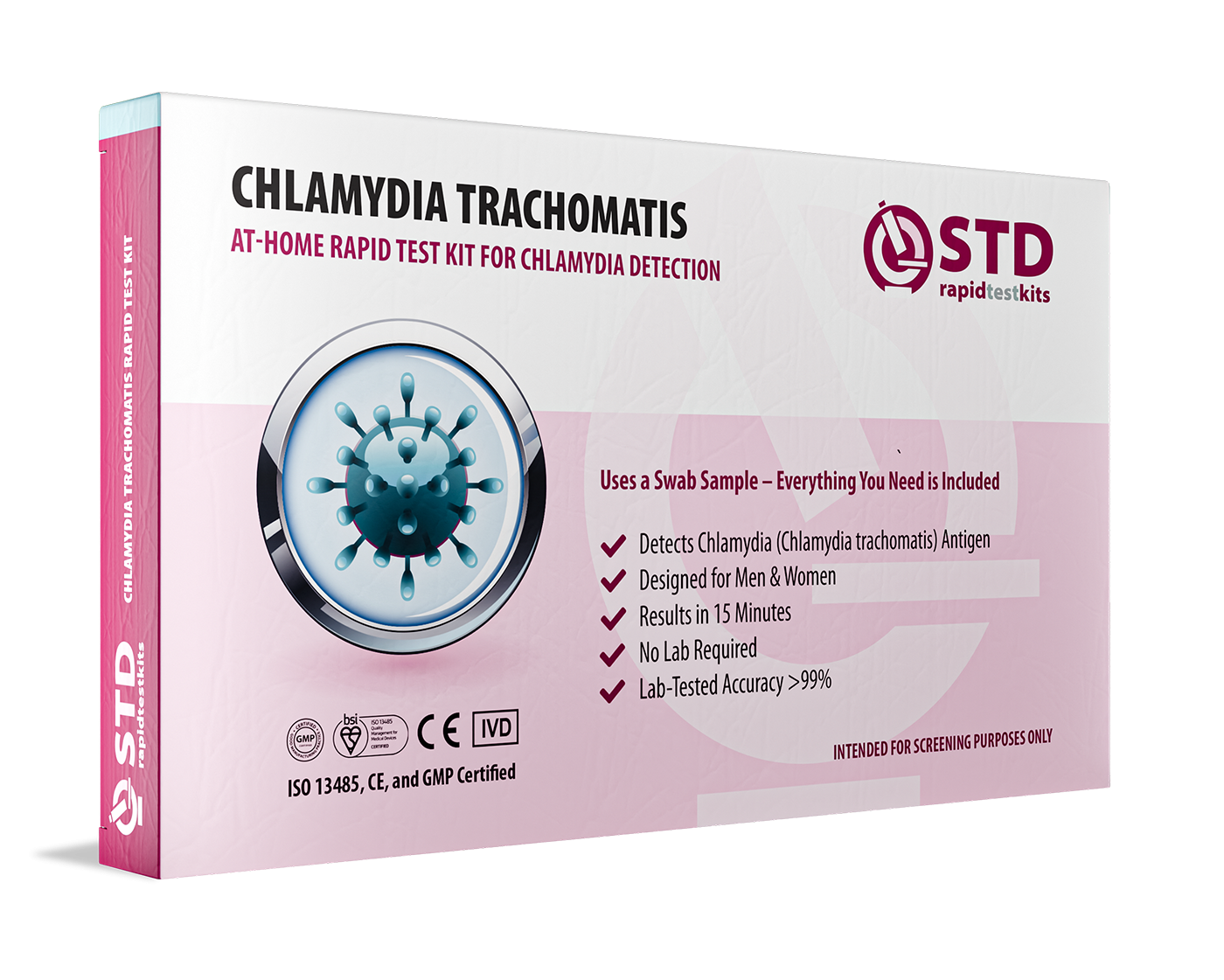
Need to test now but unsure if it’s too early? You can order a discreet at-home kit that screens for chlamydia at all major sites, like this combo STD test kit. If you’re still within the window period, just retest in two weeks for peace of mind.
Check Your STD Status in Minutes
Test at Home with RemediumChlamydia Test Kit
 For Men & Women
 Results in Minutes
 No Lab Needed
 Private & Discreet
Order Now $33.99 $49.00
When It Wasn’t What They Thought: Misread Symptoms and Missed Clues
Jorge, 32, thought his soreness was just from a particularly intense night with a new partner. They’d used lube. No condoms. No visible symptoms. “I figured I just went too hard,” he later said. “I even joked about needing to ‘recover’ after that session.” It wasn’t until a partner messaged him weeks later, after testing positive, that Jorge realized he’d been carrying rectal chlamydia the whole time.
It’s common for men to write off early chlamydia signs as something else, especially if those signs are vague or overlap with everyday occurrences. A little bleeding after sex? Might be hemorrhoids. Throat tickle? Probably allergies. Minor urethral irritation? Maybe soap, or a hangover from that post-party dehydration. But when you put these small signals together, or if they repeat, it’s worth testing. Because chlamydia doesn’t always scream. Sometimes, it just whispers.
Another case: Drew, 25, a college student who noticed a slight clear drip from his urethra two days after a hookup. “It was so faint, I thought it was leftover lube or something,” he said. A week later, it was gone. But two months later, after developing epididymitis (inflammation near the testicle), he learned he’d had undiagnosed chlamydia for weeks. “If I’d tested sooner, I could’ve saved myself a lot of pain, and a long round of antibiotics.”
Why Chlamydia Hits Gay Men Differently (and Silently)
Chlamydia is tricky for everyone, but there are unique reasons it often goes undetected in gay and bi men. The biggest factor? The sites of exposure. While vaginal infections often present more noticeable symptoms, rectal and oral infections, more common in MSM populations, frequently present none at all.
Another reason: most routine STD tests at clinics or urgent care centers don’t automatically include rectal or throat swabs unless you ask. So if you’re only getting urine tested, you might completely miss an infection in your throat or rectum. This testing gap leaves many gay men unknowingly positive, and potentially transmitting the infection through hookups, even if they think they’ve “tested clean.”
There’s also the issue of social scripts around testing. Many men rely on visible symptoms, partner disclosures, or general health to determine when to test. But with chlamydia often lurking silently, that system fails. It’s not about feeling sick, it’s about knowing your exposure. If you’re sexually active, especially with new or multiple partners, regular testing is the only way to know for sure.
How Often Should Gay Men Get Tested for Chlamydia?
The CDC recommends that sexually active gay, bisexual, and other men who have sex with men test for chlamydia and gonorrhea at least once a year. But that’s a baseline. If you have multiple partners, don’t always use protection, engage in group sex, or are part of a community with higher STI rates, testing every 3–6 months is more appropriate.
Some men create rituals around testing: after vacations, after a breakup, before starting a new relationship, or every time they get a notification from a partner. Others choose to test after anal play with new partners, even if it felt safe in the moment. There’s no shame in testing “too often.” The only real risk is not testing enough.
| Sexual Activity Level | Recommended Chlamydia Testing Frequency |
|---|---|
| Monogamous relationship with recent negative tests | Annually (or as needed based on symptoms or concerns) |
| Multiple partners, inconsistent condom use | Every 3–6 months |
| Engaging in group sex, anonymous partners, or apps | Every 3 months or more often based on exposure |
Table 2: CDC-aligned testing intervals based on lifestyle and risk factors for gay and bisexual men.
If you’re unsure how often to test, or want to skip awkward clinic visits, consider an at-home STD test kit tailored to MSM. Some kits allow you to choose throat, rectal, and urine samples from home, giving you full coverage without stepping into a clinic.
What If You Test Positive, And Didn’t See It Coming?
For many men, getting a positive result when you had no symptoms feels disorienting. “I felt betrayed by my own body,” said Eli, 27, after testing positive for chlamydia in a routine panel. “Like, how could something be inside me and I had no idea?”
This emotional whiplash is real, and valid. It’s common to spiral: Who gave it to me? Who did I give it to? Do I have to tell them? Am I dirty? The answer to that last one: absolutely not. Chlamydia is incredibly common. It’s not a moral failure. It’s a biological event. And treatment is straightforward.
If you test positive, here’s what usually happens:
You’ll be prescribed antibiotics, typically a one-time dose of azithromycin or a 7-day course of doxycycline. You may be advised to avoid sex for seven days after starting treatment, and to notify recent partners. Some clinics or online services can send anonymous notifications if you’re not ready to disclose personally. Retesting is often recommended after 3 months to make sure the infection is fully cleared and not re-acquired.
This is also a good time to open conversations about mutual testing, protection, and risk patterns. Many men find that this moment, though stressful, opens up more honest communication with future partners and even leads to healthier sexual routines.
How “Clean” Assumptions Lead to Missed Infections
There’s a familiar exchange in dating apps and text threads:
“You clean?” “Yeah, tested last month. All good.”
It sounds responsible. It even feels reassuring. But here’s the catch: someone could test negative for chlamydia on Tuesday and still be infected by Friday, without knowing. Especially if the exposure was recent or didn’t include full-site testing (like throat and rectum swabs), that “clean” status can be misleading.
In hookup culture, where speed and convenience often outweigh nuance, these clean checks become shorthand. But shorthand leaves room for silence, and chlamydia thrives in silence. That’s why experts now push for clearer conversations like: “When’s the last time you tested for chlamydia, rectal and all?” or “Do you usually test your throat too?” Yes, they’re more awkward. But they’re also more accurate.
People are also reading: Pain in One Testicle After Sex? It Could Be More Than a Pull
Douching, Rimming, and Other Risky Assumptions
Douching before sex is common in gay communities, especially among receptive partners. But here’s something many don’t realize: douching can increase your risk of rectal STIs, including chlamydia. Why? Because it can irritate the rectal lining, creating tiny tears that make it easier for bacteria to enter and take hold, even if the partner doesn’t ejaculate inside.
Rimming (oral-anal contact) also carries risk. If a partner has rectal chlamydia and you go down on them, you can get infected in your throat. Same goes in reverse. And because oral chlamydia usually has no symptoms, you could be giving or getting it without knowing.
Sharing toys without cleaning them between partners or switching between anus and mouth? Same deal. Chlamydia can hitch a ride on surfaces, and while it doesn’t live long outside the body, it doesn’t need much time either.
None of this is a warning against pleasure, it’s about awareness. These are risks you can manage with simple swaps: condoms on toys, thorough cleaning, regular testing, and being open with partners about exposure.
Why Retesting Matters, Even After Treatment
So, you got treated. You took the meds. No symptoms (still). Do you need to test again?
In most cases, yes. Experts recommend retesting three months after treatment, especially if:
, You didn’t use protection with the same partner afterward. , Your partner didn’t get treated. , You resumed sex quickly or didn’t complete your full treatment course. , You’re sexually active with multiple partners.
Chlamydia reinfection is common, especially in MSM communities where many infections go undiagnosed. The CDC estimates that up to 20% of people treated for chlamydia get reinfected within a few months, often by the same untreated partner. This is why many providers now prescribe expedited partner therapy (EPT), where you can offer meds to your recent partner without them needing an appointment.
Don’t rely on symptoms to tell you when to retest. Trust your timeline. If it’s been 3 months since a positive test, or 2 weeks since a risky encounter, it’s time to check again.
If you're ready to get answers now, this at-home chlamydia test covers the sites that matter most for MSM, throat, rectum, and urine, and ships discreetly.
Check Your STD Status in Minutes
Test at Home with Remedium7-in-1 STD Test Kit
 For Men & WomenResults in MinutesNo Lab NeededPrivate & Discreet
Order Now $129.00 $343.00
For all 7 tests
You're Not Broken, Dirty, or Alone
One final story. Kyle, 38, had avoided testing for over a year. Not because he wasn’t sexually active, he was. But he was terrified of what it might mean if he got a positive result. “I think I thought it would mean something about me,” he said. “Like I failed at being safe.”
When he finally tested, he had chlamydia in both his rectum and throat. He cried, not because he was sick, but because he realized how long he’d avoided his own health. “It was easier to live in the maybe than in the truth,” he admitted. But once treated, Kyle felt something he hadn’t in months: peace. “Knowing was better than guessing.”
If you’ve made it this far into this article, you’re already doing the hard part: confronting the unknown. You don’t need to panic. You don’t need to be perfect. You just need to test, treat, and move forward, with care, not shame.
And if your head is spinning with questions, start here: STD Rapid Test Kits offers discreet, accurate tests for chlamydia and other STDs that you can use from home. Whether it’s a recent hookup, a gut feeling, or just peace of mind, you deserve clarity.
FAQs
1. Can I really have chlamydia and feel totally fine?
Yep, and that’s the problem. Most guys assume something will hurt, leak, or burn if they’re infected. But with rectal or throat chlamydia (super common in gay and bi men), there’s often nothing. No clue. You only know if you test. Think of it like a phone on silent mode, you won’t hear it ringing, but it’s still active.
2. How soon after sex can I test?
Chlamydia doesn’t show up in tests right away. If you test too soon, like within 2 or 3 days, you might get a false negative. The sweet spot is around day 10 to 14 after the hookup. That’s when tests are most accurate. If you’re panicking earlier, test now, then again later to be sure.
3. I douched before sex. Doesn’t that help lower the risk?
Not really. Actually, it might raise the risk a bit. Douching can irritate the lining of your rectum and make it easier for bacteria like chlamydia to sneak in. Clean feels good, but if you’re going to douche, give your body time to recover before sex, and still use protection or test regularly.
4. Is it true you can get chlamydia from oral sex or rimming?
It is. Chlamydia can hang out in the throat or rectum, even if there are no symptoms. Giving head to someone with chlamydia in their urethra or rimming someone with rectal chlamydia can pass it to you. It’s not super common, but it’s definitely possible, and most people don’t realize they have it.
5. What does rectal chlamydia feel like?
Honestly? Usually nothing. But if it does show up, it might feel like mild irritation, a little bleeding after sex, or what you’d think is a hemorrhoid. Some people describe it as a “weird itch” deep inside. If you ever think, “That was odd, but probably nothing”, that’s your cue to test.
6. Do I have to tell people if I test positive?
Legally, no. Ethically, yeah, it’s the right move. Think of it less like a confession and more like giving someone a heads-up so they can protect themselves. If talking directly is too hard, some clinics and apps let you notify partners anonymously. It doesn’t have to be dramatic. Just honest.
7. What happens if I don’t treat it?
It doesn’t usually turn into an emergency, but untreated chlamydia can lead to other problems, like inflammation in your balls (epididymitis), fertility issues, or making HIV transmission more likely. Plus, you’ll keep passing it on. A quick round of antibiotics stops all of that.
8. Can I use an at-home test, or do I need to go to a clinic?
At-home tests are legit, just make sure they’re designed for the kind of sex you have. That means throat and rectal swabs, not just pee. Many online kits let you swab yourself and send it to a lab. No waiting rooms. No awkward eye contact. Just results.
9. Is it embarrassing to test positive?
You might feel that way at first, and that’s normal. But the truth? Getting tested, finding out, and treating it, that’s not shameful. That’s grown-up. That’s protective. Most people who are sexually active will catch something at some point. You’re not gross. You’re human.
10. What if I already tested, but didn’t do rectal or throat swabs?
Then you might’ve only tested your urine. Which means if the infection is chilling in your rectum or throat, it won’t show up. If you’re a guy who has sex with guys, a full screening includes those extra sites. Not because you’re dirty, because you’re thorough.
You Deserve Answers, Not Assumptions
Whether your body feels normal or your gut says otherwise, the truth is this: chlamydia doesn’t always show itself. Especially for gay and bisexual men, where anal, oral, and versatile sex patterns create hidden infection risks, the most reliable sign is your test result, not your symptoms.
Knowing is powerful. It lets you protect your partners, your peace of mind, and your future choices. You don’t have to wait until something burns, bleeds, or feels wrong. Test when you’re unsure. Test after new partners. Test because you deserve to feel safe in your own body.
If you’re ready for clarity, not guesswork, this at-home combo STD test covers all major sites and ships discreetly. It’s quick. It’s private. And it’s made for people who care enough to check.
How We Sourced This Article: We combined current guidance from leading medical organizations with peer-reviewed research and lived-experience reporting to make this guide practical, compassionate, and accurate.
Sources
1. CDC – Detailed Fact Sheet on Chlamydia
2. Mayo Clinic – Chlamydia Overview
3. Chlamydia - StatPearls (NIH/NCBI Bookshelf)
5. Chlamydia Infections – MedlinePlus (NIH)
6. Chlamydia: Causes, Symptoms, Treatment & Prevention – Cleveland Clinic
7. Association Between Venues Meeting MSM & Chlamydia Prevalence – PubMed
8. High Prevalence of Rectal Chlamydia in MSM – PMC
About the Author
Dr. F. David, MD is a board-certified infectious disease specialist focused on STI prevention, diagnosis, and treatment. He blends clinical precision with a no-nonsense, sex-positive approach and is committed to expanding access for readers in both urban and off-grid settings.
Reviewed by: J. Chen, MPH | Last medically reviewed: January 2026
This article is for informational purposes and does not replace medical advice.


