Published: December 2025 | Last updated: May 2026 | Editorial review and quality control: Martina N.
A small bump on your lip that will not go away can pull anyone into a spiral of late-night searches. Most of the time the answer is the one most people guess first: a cold sore from oral herpes (HSV-1). But not always. Syphilis can begin with a sore that looks remarkably similar to a cold sore, sits in the same place, and disappears on its own without any treatment. Knowing which one you are looking at matters, because syphilis quietly continues even after the visible sore fades.
This guide walks through how the two conditions differ on close inspection, when an at-home blood test for syphilis is reliable, and where a clinic visit still does things a home test cannot. The information is summarized from current CDC, WHO, and NHS guidance for general readers, then clinically reviewed.
Key Takeaways
- A primary syphilis sore (chancre) is usually painless, single, firm, and round, and it heals on its own in 3 to 6 weeks even without treatment, while the infection continues silently.
- If a mouth sore does not behave like your usual cold sore, an at-home rapid syphilis blood test is most reliable from 3 to 6 weeks after the suspected exposure, with a follow-up at 6 to 12 weeks if the first is negative.
Why Cold Sores Get the Blame
The reflex to call any lip bump a cold sore is reasonable. Oral herpes is extremely common: the World Health Organization estimates that about two thirds of people under 50 worldwide carry HSV-1, the virus most often responsible for cold sores. For most carriers, recurrences follow a familiar pattern: a tingling or burning sensation, then small fluid-filled blisters that cluster on the lip border, weep, crust over, and clear within 7 to 10 days.
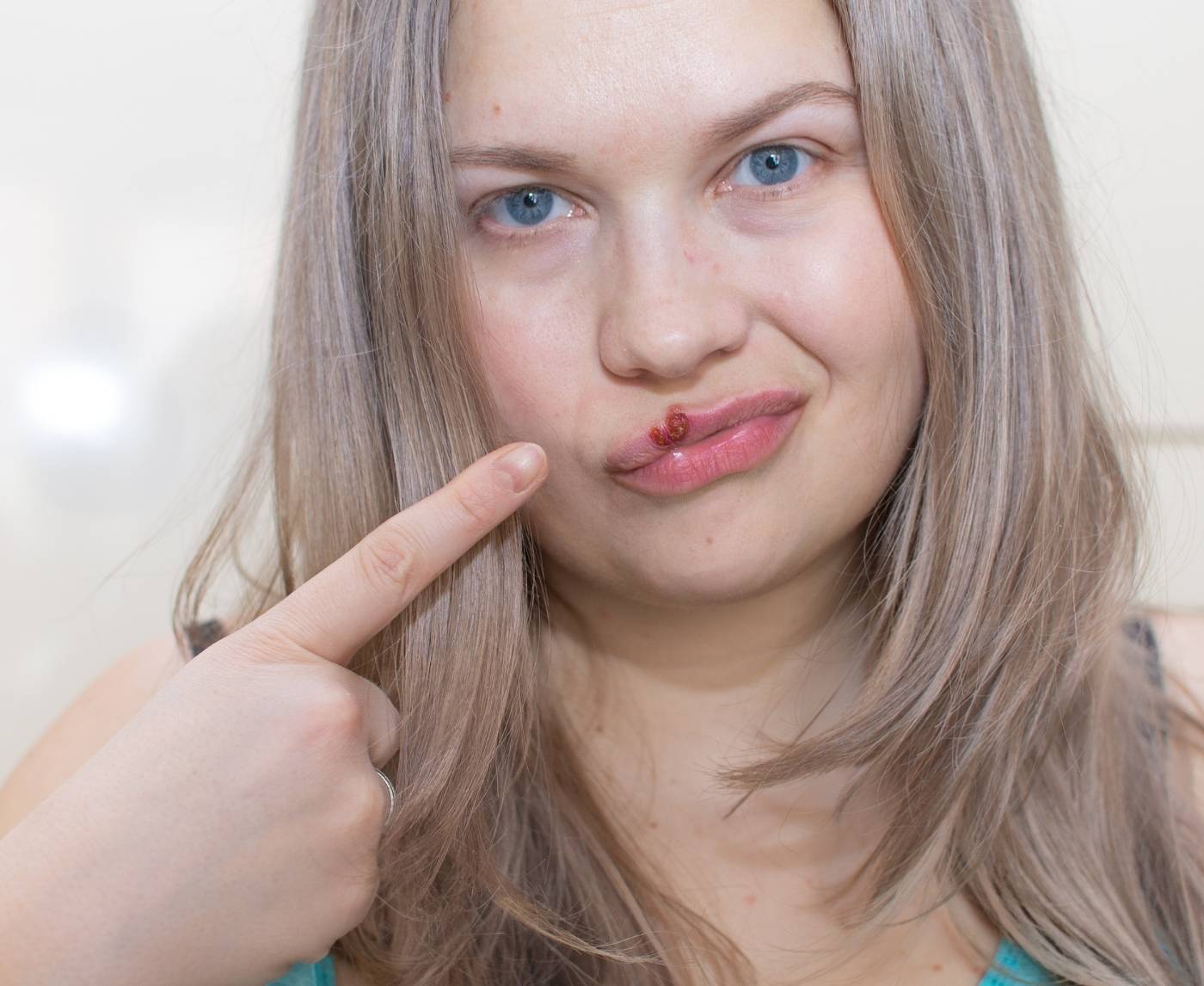
Syphilis ignores that script. The first sign of a primary syphilis infection is a chancre, which the CDC describes as a firm, round, painless sore that appears at the spot where the bacterium entered the body. After oral exposure that spot can be the lip, the tongue, the gums, the inner cheek, or the tonsils. The sore can be a single ulcer or, less often, a few sores in the same area. It does not blister, does not weep, and does not itch the way a cold sore typically does.
The lack of pain is the part that catches people off guard. A cold sore announces itself; a chancre does not. People often only notice it because the bump is still there a week later, then two weeks later, with no scab and no resolution. By the time they think to investigate, the sore may already be quietly resolving on its own, even though the infection continues underneath.
What a Syphilis Chancre Actually Looks Like
A primary syphilis chancre is the body's first visible response to Treponema pallidum, the bacterium that causes syphilis. It appears at the entry site, which after oral sex can be anywhere the bacterium reached mucous membrane or a tiny break in the skin. The CDC notes that the chancre typically develops within about three weeks of exposure, with a known range running from roughly 10 to 90 days.
The classic appearance has four reliable features:
- Painless. Touching it produces no soreness, no sting, and no itch. This alone separates it from most cold sores and canker sores.
- Firm. The base feels indurated, like cartilage under the skin, rather than soft or tender.
- Round and well-defined. The edges are clean and slightly raised, not ragged or jagged.
- Single, usually. One sore is the most common pattern, though a small number of chancres can appear together.
Color varies from pink to red to slightly purple, with a smooth base that may look slightly indented but is not crusted. There is sometimes mild swelling of the lymph nodes under the jaw on the same side as the sore, which is another quiet clue.
The chancre will heal on its own within 3 to 6 weeks. The CDC is explicit that healing of the sore does not mean the infection has cleared. Untreated syphilis simply moves to the next stage, often without obvious symptoms for months.
Cold Sore vs Chancre: A Side-by-Side
The differences read more clearly when laid out side by side. The table below summarizes how an HSV-1 cold sore typically presents alongside a primary syphilis chancre. Real cases can blur these distinctions, especially in the first day or two of either lesion, but most of the time at least two or three of these features will tilt the answer one way.
| Feature | Cold sore (HSV-1) | Primary syphilis chancre |
|---|---|---|
| Typical location | Outside lip border, edge of mouth | Lip, tongue, gums, inner cheek, tonsils |
| Pain | Painful or itchy, often with prodromal tingling | Painless |
| Number of sores | Cluster of small grouped vesicles | Usually a single sore |
| Appearance | Fluid-filled blisters that rupture and crust | Firm round ulcer with raised rolled edges, clean base |
| Time on the skin | 7 to 10 days | 3 to 6 weeks (heals on its own) |
| Recurrence | Recurs at the same site under stress or illness | One-time at primary stage |
| What it means | Existing oral HSV-1 infection, no further stages | Active syphilis that progresses if untreated |
How Syphilis Reaches the Mouth
Syphilis transmits through direct contact with a syphilitic sore, most often during vaginal, anal, or oral sex. The bacterium enters through tiny breaks in the skin or through mucous membranes that line the inside of the mouth. The CDC's surveillance reports describe oral sex as a meaningful route of transmission, and the visible sores from oral-acquired syphilis often appear on or near the lips, tongue, or tonsils (CDC, About Syphilis).
A few practical points are worth understanding:
- The exposure does not need to involve fluids. Skin-to-skin contact with a chancre, anywhere on the body, can be enough.
- Condoms and dental dams reduce risk but do not eliminate it. A chancre on the base of the penis, on the scrotum, or on the labia can still be exposed during oral sex even when a condom is in place.
- The infectious period for syphilis includes the primary stage (when the chancre is present) and the secondary stage (which often shows up as a body rash). Many public-health programs also treat early latent syphilis as transmissible within the first year.
This is why a sore on the mouth following recent oral contact warrants attention even when the partner felt or looked completely fine. Syphilis chancres can sit on parts of the body that neither person sees, and people in the early stages of infection often have no idea they are carrying it.
The Testing Window for Syphilis
Antibody-based tests for syphilis (the kind used in most rapid blood tests) detect the body's immune response to the bacterium, not the bacterium itself. That response takes time to build. Public-health and laboratory references describe the syphilis seroconversion window as roughly 3 to 6 weeks after exposure, with most infections producing detectable antibodies by 12 weeks (CDC, About Syphilis).
Two consequences follow from that biology:
- A test taken in the first two weeks after exposure can miss an infection that is genuinely present, because the antibody level is still below the detection threshold.
- A test at 6 weeks or later catches the large majority of infections, and a confirmation test at 12 weeks closes the small remaining gap.
The table below summarizes the at-home rapid blood test alongside the lab-based path that clinics typically use. Both rely on antibody chemistry. Clinics add a confirmatory treponemal test, such as TPPA (the Treponema pallidum particle agglutination test) or FTA-ABS (the fluorescent treponemal antibody absorption test), to distinguish active from previously treated infections. Non-treponemal tests like RPR (rapid plasma reagin) and VDRL (venereal disease research laboratory) measure antibody titers and are useful for tracking response to treatment.
| Test type | Sample | Earliest detection | Best time to test |
|---|---|---|---|
| At-home rapid syphilis test (lateral-flow antibody) | Fingerstick blood | 3 to 6 weeks after exposure | 6 to 12 weeks for peak sensitivity |
| Clinic blood draw (RPR or VDRL plus confirmatory treponemal test) | Venous blood | About 3 to 4 weeks | 6 to 12 weeks |
Testing for Syphilis at Home
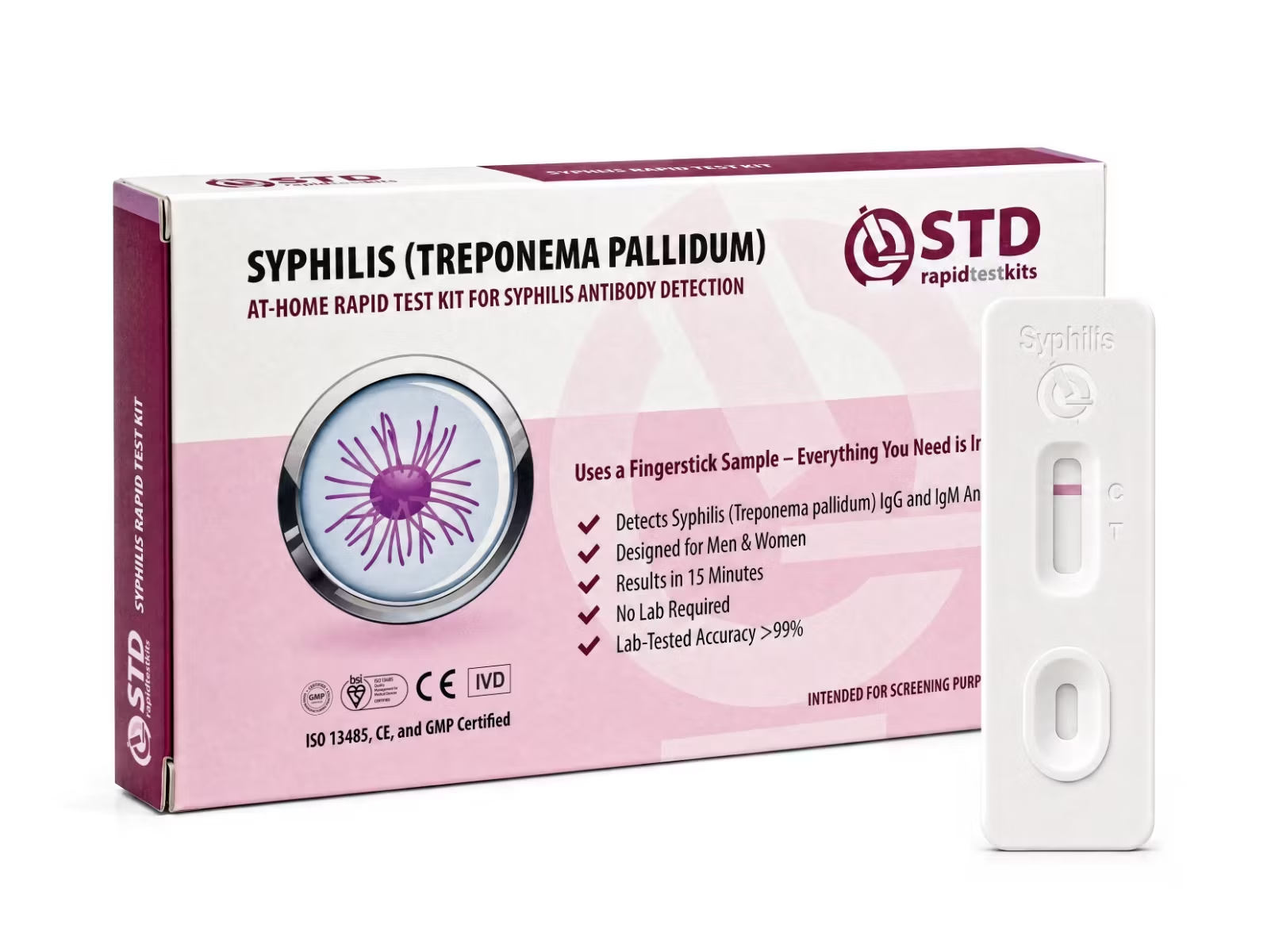
Our at-home syphilis test is a lateral-flow blood test that takes a small fingerstick sample and shows a result in about 15 minutes. It detects antibodies to Treponema pallidum, the same biology a clinic blood draw relies on. The trade-off versus a lab test is screening sensitivity: a positive at-home result should be confirmed at a clinic with a treponemal-specific test before treatment is started, and a negative result inside the window period should be repeated.
For a sore on the mouth that may or may not be syphilis, the at-home blood test answers one specific question: has the body started building antibodies to syphilis? It does not look at the sore itself. The clinic option for sampling the sore directly is dark-field microscopy or PCR of a swab, which we do not currently sell. For a follow-up of an oral-throat exposure, a clinic-administered pharyngeal swab is the right tool there too.
What If Your Test Comes Back Negative
A negative result on a syphilis blood test means one of three things, depending on when the test was taken.
- You do not have syphilis. Most negatives at 6 weeks or later fall in this category.
- You tested too early. Antibody levels were still below the detection threshold. The result reflects your antibody status at that moment, but does not yet rule out infection from a recent exposure.
- You have been treated successfully in the past. Some treponemal-specific tests stay positive for life even after cure; rapid lateral-flow tests vary, so a clinic confirmation may be appropriate when there is a history of past treatment.
If your sore appeared less than 3 weeks ago and your test is negative, the practical step is to retest at 6 weeks. If your sore appeared more than 6 weeks ago, your test is negative, and the sore is healing or gone, the result is more reassuring; many clinicians still suggest a 12-week confirmation for full coverage (CDC, About Syphilis).
If the sore is still present after the 6-week mark and tests remain negative, that argues against syphilis as the cause and toward one of the other possibilities discussed below. A clinic visit at that point can examine the sore directly and consider non-STI causes such as autoimmune mouth ulcers or oral lichen planus.
Treatment Is Quick and Effective
If a syphilis test comes back positive, the news is unsettling but the treatment is one of the simplest in modern medicine. The CDC's 2021 STI Treatment Guidelines describe a single intramuscular injection of benzathine penicillin G as the standard treatment for primary, secondary, and early latent syphilis. The drug clears the active infection within days. People who cannot take penicillin (typically because of severe allergy) are usually treated with doxycycline for 14 days, though penicillin desensitization is preferred during pregnancy.
A Jarisch-Herxheimer reaction (fever, headache, and muscle aches as the bacteria die off) is common in the first 24 hours after the first dose. It is not an allergic response and resolves within a day. Treatment also calls for follow-up: quantitative non-treponemal tests (RPR or VDRL) are repeated at 6 and 12 months to confirm the antibody titer is falling. That step happens through a clinic, not at home.
Sexual contacts within the prior 90 days of a primary syphilis diagnosis are typically offered presumptive treatment regardless of their own test result, because antibodies may not yet be detectable in someone exposed only days earlier.
Left untreated over years, syphilis can reach the tertiary stage, with damage to the heart, large blood vessels (aortitis), the brain, and the nervous system. Those outcomes are rare today precisely because primary infection is so straightforward to treat early.
Fever, headache, or muscle aches in the first 24 hours after a benzathine penicillin G injection are most often a Jarisch-Herxheimer reaction caused by bacterial die-off, not an allergy. It usually resolves within a day. Severe allergy symptoms (facial swelling, difficulty breathing, hives) are different and need urgent care.
How to Tell a Partner Without It Becoming a Crisis
Telling a current or recent partner about a possible syphilis exposure is harder than telling them about a positive flu test, but it is usually not as hard as the imagined version feels. A direct, calm message that names the facts and makes a specific ask tends to land better than anything apologetic.
For example: "I noticed a sore on my lip that has not healed and I am getting it tested for syphilis. The window for the blood test is 3 to 6 weeks. If you are willing, you should also get tested. Any clinic or our at-home test can do it." That structure (what you found, what you are doing, what they could do) skips the apology spiral and treats the conversation like any other piece of health information.
Most people who receive this kind of message respond with thanks. The version they would have hated is the one where a sore is hidden and only discovered later.
- Look back at least 3 months. For a primary syphilis diagnosis, the CDC's contact-tracing window covers the 3 months before symptom onset.
- Use anonymous notification if needed. If a partner is unwilling or unreachable, many state health departments offer anonymous partner-notification services on your behalf.
- Treatment stays private. Treatment is short, the diagnosis stays in the partner's medical record privately, and most U.S. states do not require disclosure of a treated infection to future partners.
When It Is Not Herpes or Syphilis
Plenty of mouth sores are unrelated to sexually transmitted infections. The most common alternatives are easy to overlook and worth ruling in or out before testing escalates. The NHS overview of mouth ulcers covers most of these.
- Aphthous ulcers (canker sores) are the most common cause of recurring inner-mouth sores. They are painful, round, with a yellow-white center and red border, and they sit on non-keratinized tissue (inside the lip, side of the tongue, soft palate). Cold sores and chancres tend to favor the lip border and other keratinized areas.
- Friction injuries from a bitten cheek, a sharp tooth, or orthodontic hardware can mimic an early ulcer and resolve once the cause is removed.
- Vitamin deficiencies, especially of B12, folate, or iron, can produce recurrent oral ulcers, sometimes accompanied by a smooth or burning tongue.
- Autoimmune conditions such as lichen planus and Behcet disease can produce mouth ulcers that recur or persist; these usually come with other clues elsewhere on the body.
- Allergic and irritant reactions to toothpaste ingredients (notably sodium lauryl sulfate), mouthwashes, or some foods can cause recurrent superficial ulcers in the same area.
None of these explanations replace testing when there has been a recent unprotected oral exposure. A careful approach rules in the most concerning possibility first, then turns to the more common explanations if testing is clean and the sore persists.
Syphilis is sometimes called 'the great imitator' because it has so many possible symptoms, many of which look like symptoms from other diseases.
When a Combination Test Makes Sense
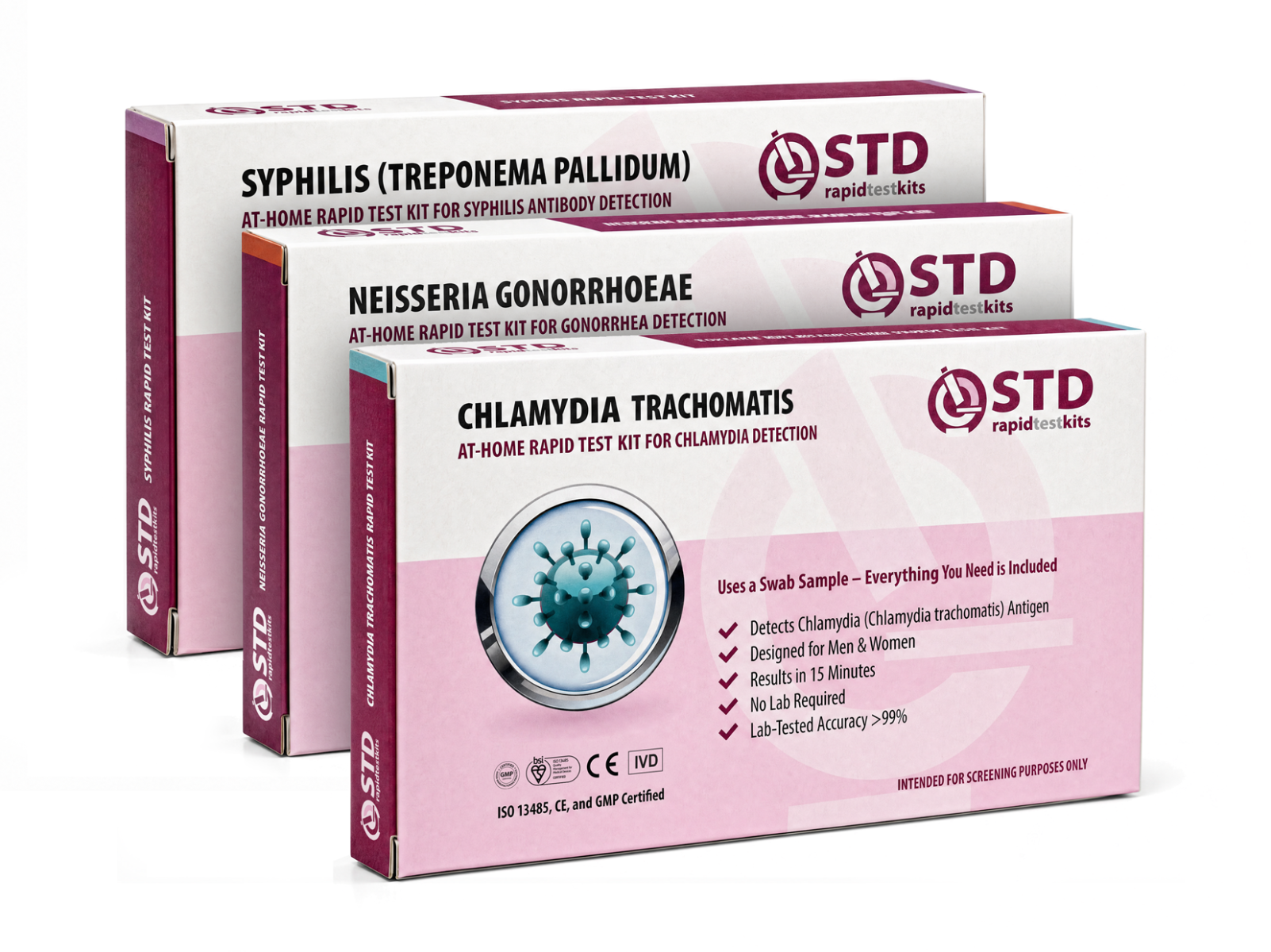
An oral exposure concerning enough to warrant a syphilis test is often concerning enough to warrant testing for the other infections that share the same routes. Chlamydia and gonorrhea can also be acquired during sexual contact and frequently travel together with syphilis exposure. Our at-home swab is validated for genital self-collection (a clinic-administered pharyngeal swab is the right tool for a throat-only test), so a combination kit makes most sense when there has been genital exposure around the same time as the oral exposure that prompted the syphilis question.
FAQs
- Can a syphilis sore really look exactly like a cold sore?
- Close enough that a quick mirror check is not reliable. The strongest distinguishing feature is pain: a syphilis chancre is typically painless, while a cold sore is painful or itchy. Chancres are also single, firm, and round with rolled edges, while cold sores appear as a cluster of small fluid-filled blisters that crust over.
- How long does a syphilis chancre stay visible?
- Three to six weeks is typical, longer than a cold sore (7 to 10 days). The chancre will heal on its own without treatment, but the infection continues silently and progresses to later stages if not treated. A lip sore lingering past the second week is reason to test.
- Can syphilis spread through oral sex?
- Yes. Skin-to-skin contact with a syphilitic sore during oral sex can transmit the infection. Ejaculation is not required, and condoms or dental dams reduce but do not eliminate the risk because chancres can sit outside the area covered by a condom.
- I tested negative for syphilis right after I noticed the sore. Am I in the clear?
- Not yet. Antibody-based syphilis tests can miss recent infections that have not yet produced enough antibodies. If the test was within the first two to three weeks after exposure, retest at 6 weeks. If the sore continues or new symptoms appear, retest at 12 weeks for full coverage.
- Is there any reliable way to tell a chancre from a cold sore by sight alone?
- Not reliably. Pain level, lesion shape, and how the sore evolves over a week or two give strong clues, but several conditions overlap visually. The only definitive answer comes from a blood test for syphilis at the right point in the testing window.
- What if it is not syphilis or herpes, just a random sore?
- That is common. Canker sores, friction injuries, vitamin deficiencies, autoimmune conditions, and allergic reactions to oral hygiene products all cause mouth sores. Testing helps rule out the more concerning causes first; if the sore persists past 4 to 6 weeks with negative testing, a clinician can examine it directly.
- How quickly can syphilis be treated if I test positive?
- Primary syphilis is usually cured by a single intramuscular injection of benzathine penicillin G, often given in one telehealth-arranged clinic visit. People who cannot take penicillin can usually take doxycycline for 14 days. Follow-up blood tests at 6 and 12 months confirm the cure.
- Can someone have syphilis without ever knowing?
- Yes, especially after the chancre heals. Syphilis is sometimes called the great imitator because later stages can look like many other diseases or stay silent for years (latent syphilis). The only way to know is to test, which is why screening is recommended for anyone with new or multiple sexual partners and during pregnancy.
- U.S. Centers for Disease Control and Prevention. About Syphilis: signs and symptoms of primary, secondary, latent, and tertiary stages, including the painless chancre, the typical 3-week incubation, and the natural history of untreated infection.
- U.S. Centers for Disease Control and Prevention. Sexually Transmitted Infections Treatment Guidelines, 2021 (Syphilis): benzathine penicillin G as standard therapy, alternative regimens for penicillin allergy, and follow-up serology.
- World Health Organization. Syphilis fact sheet: global epidemiology, transmission routes, and clinical stages.
- World Health Organization. Herpes simplex virus fact sheet: HSV-1 prevalence in people under 50 worldwide, oral and genital presentation, and recurrence.
- NHS. Mouth ulcers: common non-STI causes of recurring or persistent oral sores, including aphthous ulcers, friction injuries, deficiencies, and irritants.
