







Quick Answer: Chlamydia symptoms may appear within 1 to 3 weeks, but sometimes show up as early as 48 hours. Many people have no symptoms at all, which is why testing after any risk is critical, even if you feel fine.
Why This Matters: Sex Feels Good, but Uncertainty Doesn’t
We’re not here to scare you. We’re here to tell the truth, and offer relief. Whether it was a Tinder meet-up, a drunken night with an ex, or a planned weekend away with your partner, sex can come with risks, even when you’re careful. And nothing messes with your post-sex glow like an unexpected discharge, weird cramping, or a sudden itch that won’t go away.
This guide is for anyone spiraling into late-night searches, anyone too embarrassed to call a clinic, and anyone silently asking: “Could I have chlamydia?” Whether you’re queer, straight, poly, monogamous, or figuring things out, your questions are valid. We’ll walk you through:
• The timeline of early chlamydia symptoms
• How symptoms show up differently in men vs women
• What “nothing” might mean, and why it’s still serious
• When to test, retest, and what tests to trust
Remember, testing isn’t a punishment. It’s care. And if you’re ready to take control, the tools are in your hands.

People are also reading: The Chlamydia Vaccine Is Coming, But How Soon Can You Get It?
What Are the First Signs of Chlamydia (If Any)?
Here’s the uncomfortable truth: up to 70% of women and 50% of men with chlamydia show no symptoms at all. That silence is what makes it dangerous. When symptoms do show, they’re often subtle, mild burning, light discharge, or pelvic discomfort that could be mistaken for a UTI, yeast infection, or even dehydration.
Some common early symptoms (if they appear) include:
| Symptom | How It Might Feel | Who It Affects |
|---|---|---|
| Burning sensation when urinating | Similar to a mild UTI or dehydration | All genders |
| Unusual vaginal or penile discharge | May be cloudy, yellowish, or odorless | All genders |
| Pelvic or lower abdominal pain | Cramping or ache, often mistaken for period pain | Mostly women |
| Spotting between periods or after sex | Light bleeding outside of menstruation | Women |
| Testicular pain or swelling | Dull ache or tenderness in one testicle | Men |
| Itchy or irritated urethra | Feels like something’s “off” but not painful | All genders |
Table 1. Early symptoms of chlamydia are often mistaken for everyday discomfort or ignored entirely.
So, if you’re 48 hours out and feeling something, not pain, but weirdness, it might be your body waving a red flag. Or it might be nothing. But here’s the kicker: you won’t know unless you test.
Take the guesswork out. Try the STD Risk Checker Quiz for personalized insight based on your recent exposure.
How Soon Can Chlamydia Symptoms Appear?
The CDC notes that chlamydia symptoms usually show up within 1 to 3 weeks, but some people report changes in as little as 48 hours. While rare, it’s not impossible, especially if your immune system reacts quickly or if there was a high bacterial load during exposure. Still, many people feel nothing until complications develop.
Let’s break this down in plain terms. Chlamydia doesn’t operate like a cold, it doesn’t always “flare up” overnight. But if you’re noticing irritation, changes in discharge, or unusual feelings just two days after sex, it might still be related. Or it might not. What matters is your risk profile and timing.
If you had unprotected sex (or even protected sex with condom slippage), and you’re now feeling off, it’s worth noting and tracking. Early signs often blend in with:
- UTIs (especially in women)
- Vaginal infections like yeast or BV
- Prostate irritation or inflammation
- Post-sex friction and irritation
The overlap can be maddening. But waiting too long, just because symptoms are mild, lets chlamydia spread to places like the uterus (causing PID) or the epididymis (causing testicular pain).
Check Your STD Status in Minutes
Test at Home with RemediumChlamydia Test Kit
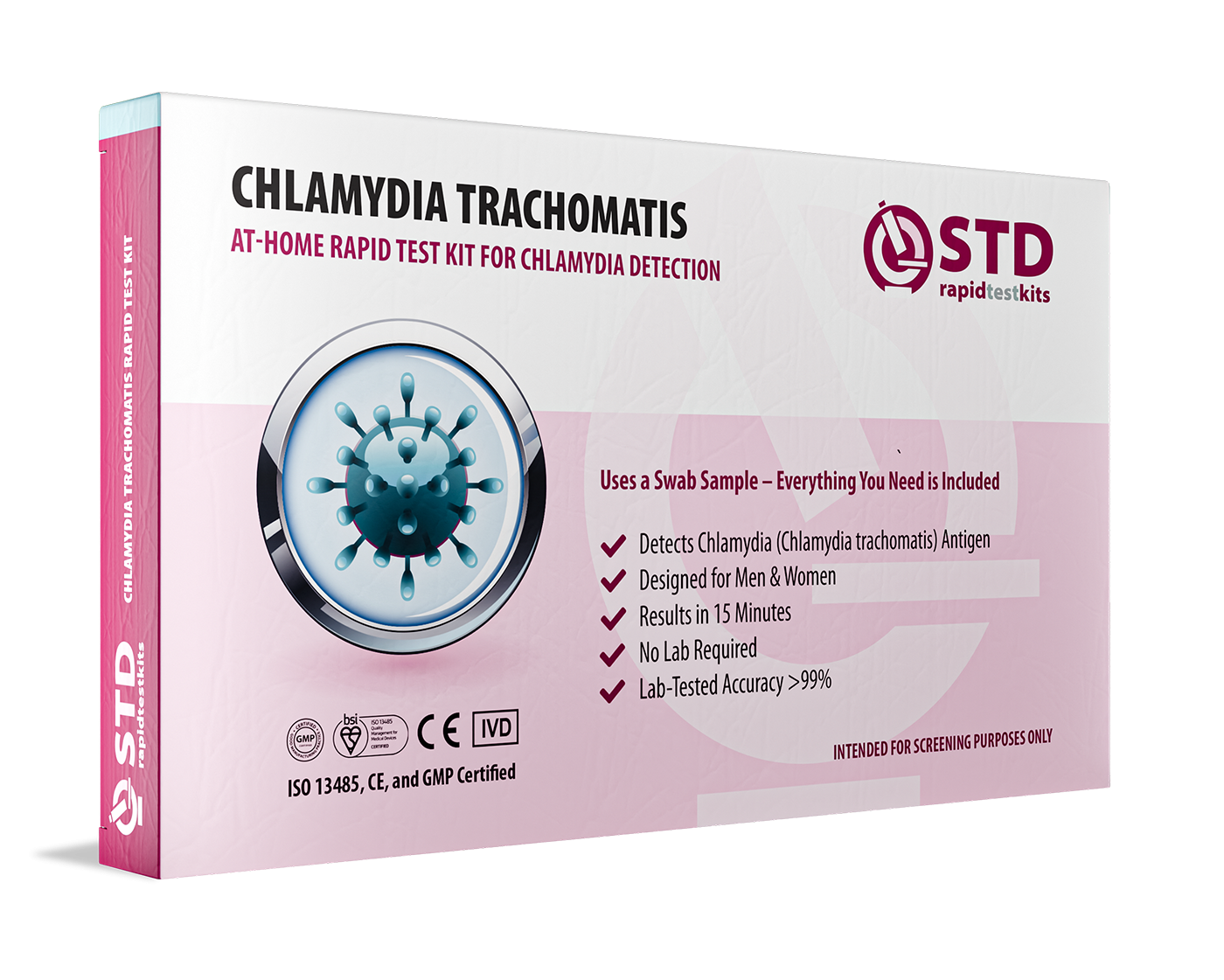
 For Men & Women
 Results in Minutes
 No Lab Needed
 Private & Discreet
Order Now $33.99 $49.00
What It Feels Like 48 Hours After a Risk
Let’s get specific. Here’s a composite of real scenarios based on clinic reports and patient interviews:
Dana, 27, had protected sex with a new partner and noticed a watery discharge the next morning.
“I figured it was just lube or leftover arousal fluid. But two days later, I felt a weird pressure in my lower belly. Not pain, just... weird.”
She got tested on day 5. It was positive.
Leo, 31, thought he had a mild rash from shaving.
“There was no burn, no smell. But I just felt off, like my urethra was slightly irritated.”
He almost skipped testing because his clinic said it was “too soon.” Instead, he used an at-home test on day 7 and got clarity fast.
These stories aren’t rare. In fact, they’re common. What unites them isn’t pain, it’s a feeling of something being slightly off. That’s why you don’t wait for the “classic” signs. Chlamydia rarely makes a dramatic entrance.
If your instinct says something’s wrong, trust it. You can order a discreet chlamydia rapid test kit and get results from home, fast.
When “Nothing” Is Actually Something
What if there are zero symptoms? No itching, no discharge, no pain, but something still feels off emotionally. Anxiety, guilt, or just a gut feeling after a one-night stand. Should you still test?
Yes. Always.
Not because you're paranoid, but because chlamydia spreads silently. In women, untreated chlamydia can lead to Pelvic Inflammatory Disease (PID), which damages fertility. In men, it can lead to scarring of the reproductive tract. Neither of these require symptoms to take root. You might be symptom-free and still contagious, or already experiencing internal damage.
Silence isn’t safety. Testing isn’t just about treatment, it’s about protecting future you. And your partners.
For a full guide on when to test based on your timeline, check out the STD Testing Window Periods Guide.
What to Do If You’re 48 Hours Out and Worried
If it’s only been a day or two since the hookup, you might be feeling stuck. Too soon to test? Too late to undo it? Here’s the thing: you can take action now without panicking. Testing too early might lead to a false negative, but that doesn’t mean you have to wait in silence.
This is where a multi-step plan comes in handy:
| Timing | Recommended Action | Why It Matters |
|---|---|---|
| Day 1–3 | Track symptoms, hydrate, avoid new partners | Allows time for symptoms to emerge; reduces spread |
| Day 4–7 | Consider initial testing; monitor for changes | Some early infections can be caught; sets a baseline |
| Day 10–14 | Test for chlamydia using NAAT or rapid kit | This is the sweet spot for accurate detection |
| Day 21+ | Retest if symptoms persist or risk continues | Confirms earlier result and rules out coinfections |
Table 2. A practical testing timeline to follow after a potential chlamydia exposure.
If you’re in that anxious limbo and need answers, the best move is a discreet at-home test around day 10. Then follow up as needed. This combo STD home test kit screens for multiple infections at once, and lets you test from the privacy of your space, no waiting rooms, no side-eyes.
And if you're not sure what kind of test to use? That’s normal too. Chlamydia testing options include:
- NAAT swab or urine test: Gold standard; used in clinics and labs
- At-home rapid tests: Offer fast results, ideal for privacy and speed
- Mail-in lab kits: Balance privacy with lab-grade accuracy
The best choice depends on your budget, access, and timeline. But any test is better than none. Ignoring symptoms, or lack thereof, lets chlamydia thrive.

People are also reading: Yes, You Used Protection. No, That Doesn’t Mean You’re Clear
How to Talk to a Partner (Even If You’re Not Sure Yet)
One of the hardest parts of STD exposure isn’t the testing, it’s the talking. What do you say when you're not even sure you’re positive? How do you explain a gut feeling without sounding accusatory?
Start here:
“Hey, I’ve been feeling off since we hooked up. It might be nothing, but I’m going to get tested to be safe. You don’t need to panic, I just wanted to be transparent.”
This opens the door to mutual care. And if they react badly? That tells you something too. Caring about your health is never a red flag.
You can also recommend anonymous notification tools if needed, or send them resources like the Window Period Guide.
What If You’ve Already Tested Negative?
Let’s say you got tested immediately after the hookup, and it came back negative. Can you relax?
Not necessarily. Testing too soon, especially before day 7, can miss infections still incubating in your body. Chlamydia needs time to build up detectable levels of bacteria. That’s why many providers recommend retesting after two weeks, especially if you had symptoms, were exposed to a new partner, or had a condom mishap.
False negatives happen. But so do real negatives that become positives later. If anything changes, discharge, spotting, discomfort, or even just your mental peace, it’s worth retesting. You deserve certainty, not just a rushed result.
For guidance on retest windows, check our full article on testing timelines.
Check Your STD Status in Minutes
Test at Home with Remedium3-in-1 STD Test Kit
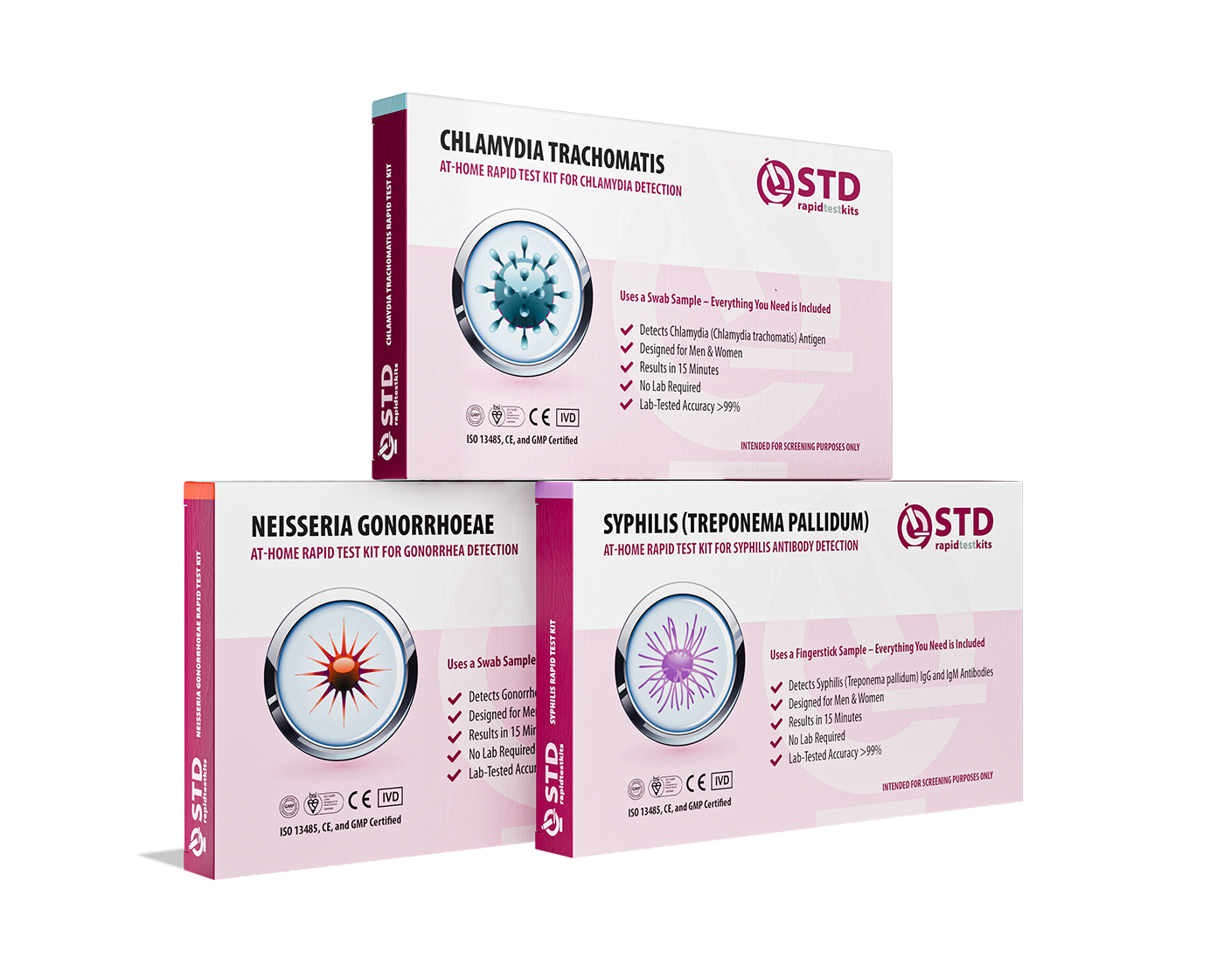 For Men & WomenResults in MinutesNo Lab NeededPrivate & Discreet
Order Now $69.00 $147.00
For all 3 tests
FAQs
1. Can you really feel chlamydia just two days after sex?
Sometimes, yes, but it’s rare. Think of chlamydia as more of a slow mover. Most people won’t feel anything until a week or two in. But if your body’s ultra-sensitive or the exposure was high-risk, you might notice things early, like a weird pressure in your pelvis, mild irritation when you pee, or discharge that just doesn’t feel “normal.” The bottom line: if something feels off, trust that feeling. You know your body better than Google does.
2. I feel totally fine. Should I still get tested?
Absolutely. Chlamydia doesn’t always announce itself. In fact, most people who have it feel nothing at all. It’s like a ghost, quiet, sneaky, and capable of wrecking your reproductive health without leaving obvious clues. Testing isn’t just for when something hurts. It’s for peace of mind, prevention, and protecting your partners too.
3. Does chlamydia always mean burning or discharge?
Nope. That’s the Hollywood version. In real life, chlamydia might show up as light spotting, lower belly cramps, or even back pain. Or nothing at all. Some people get itchy; others feel a little swollen or sore. But burning during urination and strange discharge are two of the most common symptoms, so if those pop up, don’t ignore them.
4. I tested negative right after the hookup. Am I in the clear?
Not yet. Testing within the first 48–72 hours might feel proactive, but it’s often too early to catch an infection. That first test gives you a snapshot, but not the full picture. Retest around day 10 to 14 for real peace of mind. And if symptoms pop up in between? Test again. Your timeline matters.
5. Is this like a UTI? It kinda feels the same.
You’re not wrong, chlamydia and UTIs love to cosplay as each other. Burning, urgency, pelvic pressure, even low-back pain, they share the stage. But the treatments are different, and chlamydia needs a very specific kind of antibiotic. If you’ve been treated for a UTI and the symptoms hang around, it's time to test for STDs.
6. Can chlamydia affect your throat?
Yep. Oral sex can pass chlamydia to the throat, where it usually chills without causing obvious symptoms. Some people get a sore throat that lingers or a scratchy feeling that won’t quit. If you’ve had unprotected oral sex and your throat feels weird, it’s worth checking out, especially if you also have genital symptoms.
7. What if my partner says they’re “clean”?
Oof. We hear that one a lot. Being “clean” isn’t a test result, it’s a vibe, and vibes aren’t diagnostic tools. Unless someone’s been tested recently and knows their window periods, they could be carrying something without knowing. Trust the test, not the talk.
8. Can I get chlamydia from protected sex?
You can, though the risk is much lower. Condoms work great, when they stay on, don’t break, and cover the right areas. But chlamydia can still slip through if there’s contact with infected fluids before or after sex, or if you’re engaging in activities not covered by the condom (like oral). So yes, testing is still smart, even if you were careful.
9. Do I need to tell my partner if I’m positive?
Look, it’s your health, but this is one of those moments where honesty matters. Chlamydia is treatable, but only if your partner knows to get treated too. Otherwise, you risk ping-ponging the infection back and forth. If a face-to-face convo feels too intense, there are anonymous notification tools you can use. Being brave doesn’t mean being loud, it just means being real.
10. How soon can I get treated if I’m positive?
Fast. Like, same-day-if-you-want fast. Chlamydia is typically treated with antibiotics like doxycycline, and most pharmacies can fill it quickly once you have a script. Some telehealth services can even send meds straight to your door. No hospital stays. No scary procedures. Just pills, and healing.
You Deserve Answers, Not Assumptions
If your body is telling you something, even if it’s subtle, you owe it to yourself to listen. Chlamydia doesn’t always scream; sometimes it whispers. And sometimes it stays completely silent while causing long-term harm.
The good news? You have options. You have privacy. You have power. And it starts with testing. Don’t wait and wonder, get the clarity you deserve. This at-home combo test kit checks for the most common STDs discreetly and quickly.
How We Sourced This Article: We combined current guidance from leading medical organizations with peer-reviewed research and lived-experience reporting to make this guide practical, compassionate, and accurate. In total, around fifteen references informed the writing; below, we’ve highlighted some of the most relevant and reader-friendly sources.
Sources
1. Planned Parenthood – What Is Chlamydia?
2. NHS – Chlamydia Overview and Symptoms
3. Verywell Health – Chlamydia Overview
5. Chlamydia: Symptoms, Treatments, Causes & More | Healthline
About the Author
Dr. F. David, MD is a board-certified infectious disease specialist focused on STI prevention, diagnosis, and treatment. He blends clinical precision with a no-nonsense, sex-positive approach and is committed to expanding access for readers in both urban and off-grid settings.
Reviewed by: S. Martin, RN, MPH | Last medically reviewed: November 2025
This article is for informational purposes and does not replace medical advice.


