Published: November 2025 | Last updated: May 2026 | Editorial review and quality control: Martina N.
PrEP changed what HIV prevention looks like. A daily pill, an injection every other month, or an event-based dose can block HIV transmission better than almost any other tool we have. But that protection is HIV-specific. The bacteria that cause chlamydia, gonorrhea, and syphilis, and the viruses that cause herpes and HPV, all move through the same encounters PrEP makes safer for HIV. They simply do not respond to it.
If you are on PrEP and want a clear picture of what it actually covers, what it does not, and how to keep the rest of your sexual-health checks in shape, this is the breakdown.
Key Takeaways
- PrEP is HIV-specific. It does not prevent chlamydia, gonorrhea, syphilis, herpes, HPV, or trichomoniasis.
- Routine STI screening every three months is the standard while you are on PrEP, and that schedule includes the throat, rectum, and genitals, not just blood work.
How PrEP Actually Works (and Where Its Protection Ends)
PrEP, short for pre-exposure prophylaxis, is a daily or event-based regimen most often built around tenofovir disoproxil fumarate with emtricitabine (TDF/FTC) or tenofovir alafenamide with emtricitabine (TAF/FTC). A long-acting injectable form, cabotegravir (CAB-LA), is also approved. Used consistently, oral PrEP reduces the risk of getting HIV from sex by about 99% per HIV.gov's PrEP overview.
The mechanism is narrow on purpose. PrEP medications interfere with reverse transcription, the step HIV uses to copy itself into a host cell's DNA. If the virus enters the body, it cannot establish infection because that step is blocked.
Other sexually transmitted infections work entirely differently. Chlamydia and gonorrhea are bacterial. Syphilis is bacterial too, caused by a spiral-shaped organism called Treponema pallidum. Herpes is a DNA virus that hides in nerve cells between flares. HPV is a different family of viruses that infects skin and mucosal cells, with strains that range from genital-wart causing to cancer-precursor. Trichomoniasis is a parasite. None of these pathogens depend on the same enzymes PrEP targets, so PrEP cannot stop any of them.
A perfectly adherent PrEP user can still pick up gonorrhea, syphilis, or herpes from a single condomless encounter. PrEP blocks HIV reverse transcription; it has no mechanism for stopping bacterial infection or skin-to-skin viral transmission, which is why those infections need their own prevention plan.
Does PrEP protect me from any STD other than HIV?
No. PrEP is built specifically to block HIV. Chlamydia, gonorrhea, syphilis, herpes, HPV, and trichomoniasis all spread through different mechanisms PrEP cannot reach. If you are on PrEP and sexually active, plan to test for the rest every three months at minimum, and include throat and rectal swabs if you have oral or anal sex.
STIs PrEP Doesn't Cover, and How They Typically Show Up
Most STIs PrEP does not prevent share one inconvenient feature: they often produce no symptoms at all, or symptoms so mild they get explained away as something else. Here is what each looks like when symptoms do appear, and how often the infection moves silently. The CDC's STI fact sheets are the source for these patterns.
| STI | Blocked by PrEP? | Typical Symptoms (when present) | Often Asymptomatic? |
|---|---|---|---|
| Chlamydia | No | Discharge, burning urination, pelvic or testicular pain | Yes (most cases) |
| Gonorrhea | No | Thick discharge, sore throat, painful urination, rectal pain | Yes (especially throat and rectal) |
| Syphilis | No | Painless sore (chancre), later rash on palms and soles, neurological symptoms | Yes in early and latent stages |
| Herpes (HSV-1, HSV-2) | No | Tingling, blisters, ulcers, flu-like symptoms during first outbreak | Yes between outbreaks |
| HPV | No | Genital warts (some strains); most strains are silent but can cause cancer over time | Yes |
| Trichomoniasis | No | Itching, frothy discharge, odor, discomfort during urination | Yes (especially in men) |
Why STI Rates Climbed During PrEP's Growth
Since PrEP became widely available, HIV diagnoses among the populations most likely to use it have fallen significantly. Fewer HIV diagnoses in those populations is exactly what the program was built to deliver. At the same time, rates of bacterial STIs (chlamydia, gonorrhea, and especially syphilis) climbed steadily through the late 2010s and early 2020s. CDC surveillance data show U.S. syphilis cases at their highest reported level in decades.
Why? Several factors layered together. Condom use dropped as PrEP confidence grew. Routine three-month testing meant more cases were caught and reported, which raised the visible numbers. And in some networks, asymptomatic infections circulated through reinfection loops where one untreated partner reseeded the group.
PrEP did not cause the increase on its own. Bacterial STI rates were rising before PrEP became common. The drop in condom use that accompanied PrEP's rise contributed to the increase in non-HIV STIs, particularly syphilis and gonorrhea.
Although PrEP is highly effective in preventing HIV infection, it does not protect against other sexually transmitted infections. CDC continues to recommend regular STI screening, condom use, and behavioral counseling alongside PrEP.
How Often to Test, and What to Test For
The standard guidance for adults on PrEP is full STI screening at every three-month follow-up. The CDC's PrEP clinical guidelines and the U.S. Preventive Services Task Force align on this schedule for people with ongoing risk. If exposure patterns are higher (multiple partners, condomless sex with partners of unknown status, group sex), some clinics test more frequently.
What "full screening" means matters more than the timing. A blood test alone misses most cases of pharyngeal and rectal gonorrhea or chlamydia. Modern screening for sexually active people on PrEP looks like this:
| Infection | Recommended Frequency | Test Type and Sample |
|---|---|---|
| HIV | Every 3 months (PrEP follow-up) | Blood test (4th-gen Ag/Ab); confirms PrEP is working |
| Chlamydia and Gonorrhea | Every 3 months | Urine plus throat/rectal NAAT swabs if relevant |
| Syphilis | Every 3 months | Blood test (RPR or treponemal antibody) |
| Hepatitis B and C | At baseline, then as exposure changes | Blood panel |
| HPV | Cervical screening per age guidelines | Cervical cytology (Pap) or HPV test for women; visual exam for genital warts |
| Herpes (HSV) | If symptoms or known exposure | PCR swab of lesion or blood antibody test |
Two Practical Things People Miss
First, throat and rectal swabs are not optional add-ons. If you have oral or anal sex, the swabs at those sites are how chlamydia and gonorrhea actually get caught. A urine sample by itself can miss them entirely.
Second, your PrEP follow-up labs are not the same thing as full STI screening. The blood draw your provider does every three months covers HIV, kidney function, and creatinine. STI screening has to be ordered separately. If your provider does not bring it up, ask for it.
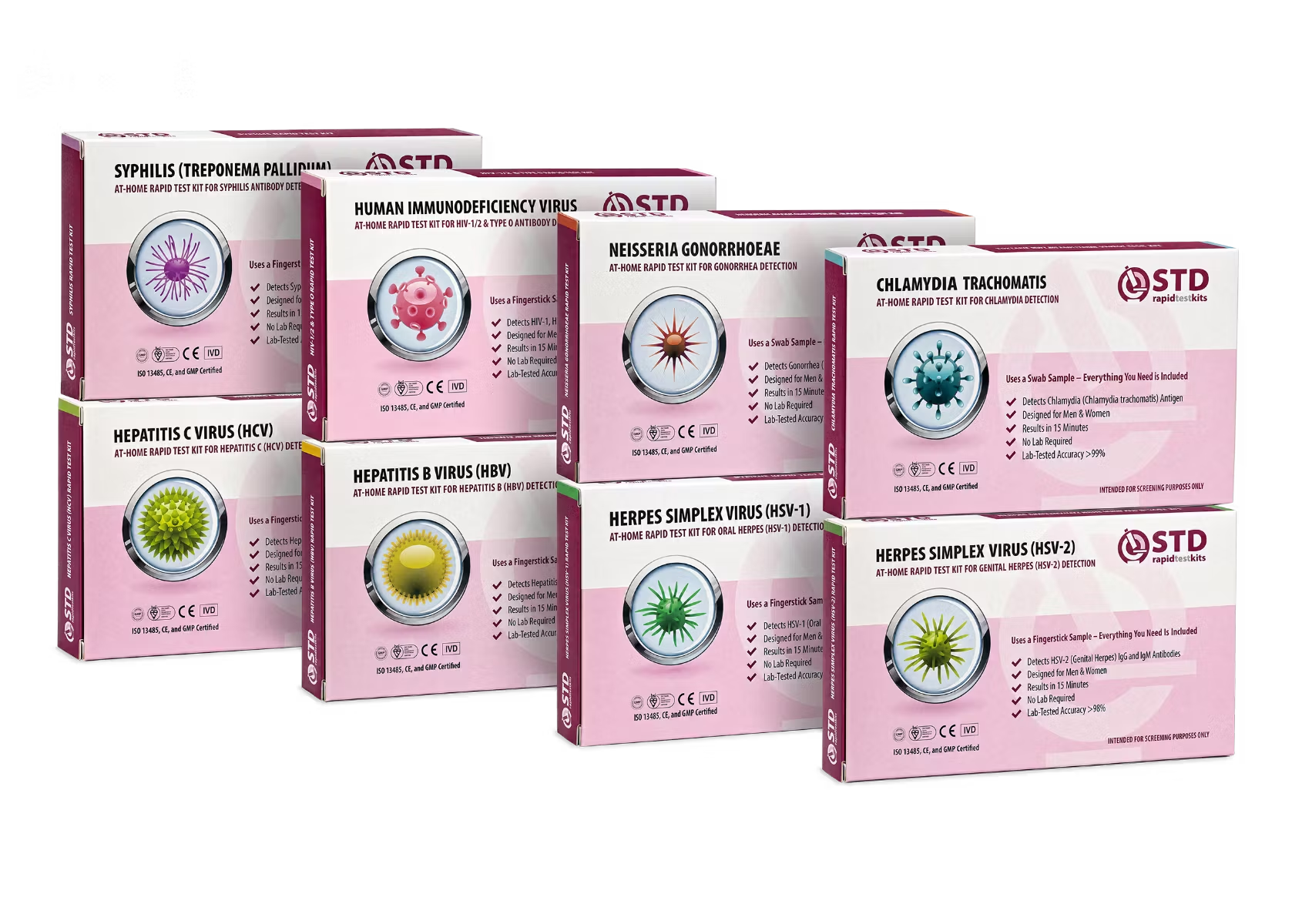
stdrapidtestkits.com sells rapid lateral-flow STI test kits, including combination panels useful for routine screening between clinic visits. We recommend products based on fit-for-purpose for the reader's concern, not commercial benefit.
Reinfection Cycles and Partner Notification
A common pattern: someone on PrEP gets diagnosed with chlamydia, takes the prescribed antibiotic course, feels fine, returns to dating. A few weeks later, the same infection comes back. The reason is usually simple: an untreated partner.
Untreated chlamydia and gonorrhea can move through tightly connected sexual networks repeatedly, especially when most cases are asymptomatic. Most state health departments will do partner notification anonymously through partner-services programs if you do not want to make the call yourself. In many states, expedited partner therapy lets your provider write a prescription for partners you cannot get into a clinic, so they can be treated without an in-person visit.
The CDC also now recommends doxycycline post-exposure prophylaxis (doxy-PEP) for some people at high risk of bacterial STIs, particularly cisgender men who have sex with men and transgender women on PrEP. Doxy-PEP is not a substitute for testing; it is an additional layer a clinician may add to a prevention plan.
- Notify partners from the relevant exposure window so they can test and treat.
- Where available, ask your clinician about expedited partner therapy, which lets a partner start treatment without a separate clinic visit.
- Retest a few weeks after treatment, especially in tightly connected sexual networks.
Why Symptoms Are an Unreliable Guide
Most bacterial STIs are silent for most of their early course. The single biggest reason chlamydia and gonorrhea spread so widely is that the carrier feels fine. Syphilis ulcers (chancres) are typically painless and heal on their own in three to six weeks even without treatment. The infection then enters a latent phase where it continues to damage the body internally with no outward sign.
If something does feel off, including burning when you urinate, unusual discharge, a sore that appears and disappears, a rash on the palms or soles, or a sore throat that will not clear, that is a reason to test, not to wait. But the absence of symptoms is not a clean bill of health. The only thing that confirms you do not have an STI is a negative test from the right sites at the right time.
Layered Protection: What Actually Works
Sexual health on PrEP is not one tool. It is a stack:
- PrEP, used correctly, for HIV prevention.
- Condoms when they fit your situation, particularly with new partners or partners whose status you do not know. Condoms reduce (though do not eliminate) transmission of HSV, HPV, and syphilis, all of which can spread through skin-to-skin contact in areas a condom does not cover.
- Routine STI screening at three-month intervals at all relevant sites (genital, throat, rectal).
- Honest conversation with each partner about their last test, what was tested, and any current symptoms.
- Vaccination where available. The HPV vaccine is recommended through age 26 by ACIP, with shared clinical decision-making for ages 27 through 45 (see CDC HPV vaccination information). Hepatitis A and hepatitis B vaccines complete the picture if not already done.
- Doxy-PEP for some high-risk groups, on a clinician's recommendation.
Which combination makes the most sense depends on your exposure pattern and what your clinician recommends at your next PrEP follow-up.
The Language Problem with "Clean"
Dating-app shorthand like "DDF," "clean," and "disease-free" reads as a status check, but it does not function like one. Someone can be honest about their last test and still be carrying an asymptomatic infection picked up since then. Someone can use the word "clean" without ever having been tested at all. The word implies a moral judgment (clean vs. dirty) that does not match how STIs actually move.
A better question, on a profile or in person, is concrete: when did you last test, what did you test for, and where (genital, throat, rectal)?
The shift matters because shame keeps people from testing. The longer an STI sits untreated, the more likely it is to spread, cause complications, or develop antibiotic resistance. Talking about testing the way we talk about brushing teeth, as routine maintenance, is the easiest way to take the stigma out of it.
Instead of "clean": "I tested two weeks ago for chlamydia, gonorrhea, syphilis, and HIV, including a throat swab." Date, panel, sample sites. That is the answer that actually tells you something.
When to Test at Home, and When to See a Clinician
At-home rapid tests work well for routine three-month screening, post-exposure check-ins after a new partner, or peace-of-mind testing during any waiting window. They use lateral-flow chemistry that screens for the same antibodies or antigens used in many clinic settings, with a faster turnaround and no waiting room. A positive result is worth confirming with a lab test through a clinician.
For most people on PrEP, the right rhythm is a mix: routine rapid screens at home between clinic visits, and clinic-based testing at the three-month PrEP follow-up where the full panel (including pharyngeal and rectal swabs if relevant) gets done.
A note on what we sell: stdrapidtestkits.com offers rapid lateral-flow kits for the major bacterial and blood-borne STIs. We do not sell pharyngeal or rectal swab kits. If your clinician has not ordered throat or rectal screening as part of your PrEP follow-up and you have oral or anal sex, ask for it. The at-home test cannot stand in for that.
- Visible lesions or sores you cannot identify. Some need direct visual diagnosis or a swab from the lesion itself.
- Symptoms that are worsening or that include fever, severe pain, or systemic signs.
- A confirmed positive result that requires treatment, follow-up testing, and partner notification.
- Pharyngeal or rectal NAAT testing, which most at-home rapid kits do not replicate.
FAQs
- Does PrEP prevent gonorrhea or chlamydia?
- Gonorrhea and chlamydia are bacterial infections. PrEP's antiviral mechanism (blocking HIV reverse transcription) has no effect on them. The standard recommendation is to pair PrEP with full STI screening every three months, and to include throat and rectal swabs if you have oral or anal sex.
- How often should I test for STIs while I'm on PrEP?
- Every three months is the standard for sexually active adults on PrEP, aligning with the routine PrEP follow-up schedule. People with higher exposure may benefit from more frequent screening; talk with your prescriber about what fits your situation.
- Does my PrEP follow-up blood work include STI screening?
- Not automatically. The labs your prescriber orders at PrEP follow-up cover HIV, creatinine, and kidney function. STI screening for chlamydia, gonorrhea, and syphilis is ordered separately and often requires throat and rectal swabs in addition to blood and urine. Ask for the full panel by name.
- Does PrEP protect against herpes or HPV?
- No. Herpes (HSV-1 and HSV-2) and HPV spread through skin-to-skin contact in areas a condom or PrEP cannot reach. PrEP has no effect on either virus. The HPV vaccine is the most effective HPV prevention tool available; it is recommended through age 26, with shared clinical decision-making for ages 27 through 45.
- Can I still get syphilis if I'm on PrEP?
- Yes. Syphilis cases have risen sharply in the same populations that use PrEP most widely, including men who have sex with men. PrEP does not block the bacteria that cause syphilis. Three-month screening with a blood test (RPR or treponemal antibody) is how it gets caught early.
- What is doxy-PEP, and is it a substitute for testing?
- Doxy-PEP is a single dose of doxycycline taken within 72 hours of sex, used to reduce the risk of bacterial STIs in some high-risk groups. The CDC has issued clinical guidance recommending it primarily for cisgender men who have sex with men and transgender women at high risk. It is not a substitute for routine screening and is offered through a clinician.
- Can I use at-home tests instead of clinic visits while on PrEP?
- For most routine screens, yes. At-home rapid tests can supplement clinic visits. But the three-month PrEP follow-up itself still needs a clinician for the HIV test, kidney labs, and prescription continuation, and is the natural time to get throat and rectal swabs done if you have oral or anal sex. Most at-home kits do not include those swabs.
- If I test positive for an STI on PrEP, what's the next step?
- Confirm the result with your clinician, start treatment (most bacterial STIs clear with a short antibiotic course), and notify recent partners so they can be tested and treated too. Many state health departments offer anonymous partner-notification services. Continue your PrEP unless your prescriber tells you otherwise.
How We Sourced This Article: Our article was constructed based on current advice from the most prominent public health and medical organizations, including the CDC, WHO, and U.S. Preventive Services Task Force, then molded into plain language for the situations people actually face. Specific clinical recommendations on PrEP and STI screening reflect published guidelines as of the article's revision date.
- HIV.gov. Pre-Exposure Prophylaxis (PrEP) overview, including the about-99% sex-transmission risk-reduction figure when PrEP is taken as prescribed.
- U.S. Centers for Disease Control and Prevention. STD homepage and STI fact sheets covering chlamydia, gonorrhea, syphilis, herpes, HPV, and trichomoniasis (transmission, symptoms, asymptomatic patterns, and current U.S. surveillance trends).
- World Health Organization. Sexually transmitted infections fact sheet covering global STI burden and screening recommendations.
- U.S. Centers for Disease Control and Prevention. STI treatment guidelines, including doxy-PEP clinical recommendations and partner-services guidance.
- U.S. Centers for Disease Control and Prevention. HPV vaccination information, including ACIP recommendations on routine vaccination through age 26 and shared clinical decision-making for ages 27 through 45.
- U.S. Centers for Disease Control and Prevention. StopHIVTogether: Talk PrEP Together, with PrEP clinical-use guidance for providers and patients.
