

Published: October 2025 | Last updated: April 2026 | Editorial review and quality control: Martina N.
Can you really carry an STD for years and never know?
Yes. Chlamydia, herpes (HSV-2), HPV, and HIV all commonly cause no symptoms for months or years while remaining transmissible. The CDC reports that most people with chlamydia and most people with HSV-2 have no idea they are infected. Symptom-watching is not a screening tool. The only reliable way to know your status is to test on a schedule that fits your sexual activity, and to retest after a new partner.
Key Takeaways
- Most cases of chlamydia, gonorrhea, herpes, and HPV cause no symptoms at all, and you can transmit them without ever feeling sick.
- Window period and latency are different things. A negative test taken too soon after exposure can miss an active infection; retest if your timing was tight.
Most people picture a sexually transmitted infection as a loud event: pain, discharge, sores, a moment in front of the mirror. The reality is almost the opposite. The most common STIs are quiet by default. The CDC's chlamydia overview explains that most people with the infection notice nothing, and the pattern repeats for HPV, early HSV-2, and the first years of untreated HIV. If you are reading this because something feels off, or because nothing feels off and that worries you, both reactions are reasonable. This guide walks through what silent really means, why your body might stay quiet, and how to translate that into a smart testing plan.
When "no symptoms" doesn't mean "no infection"
Silent does not mean inactive. A chlamydial infection of the cervix or urethra can scar tissue and trigger inflammation while the person carrying it feels nothing. HSV-2 spends most of its time inside nerve cells doing nothing visible, then sheds virus from skin without any sore present. HPV can sit in basal skin cells for years before any cellular change shows up on a Pap, if it ever does. Untreated HIV slowly depletes CD4 immune cells through a chronic phase that can last close to a decade with no outward sign, per the CDC's HIV overview.
What does silent look like in real life? It is a partner from two years ago who tested positive at a routine screen and reached out. It is a fertility consult that finds blocked fallopian tubes from chlamydia the person never had symptoms of. It is a herpes diagnosis that arrives long after the original exposure, with no outbreak to pin it on. None of these stories are unusual; they are the most common way people learn they have something.
So when someone says "I would know if I had something," that confidence is misplaced. Whether you ever feel anything depends on which infection it is, where it landed, your immune response, and your anatomy.
This article is published by stdrapidtestkits.com, which sells at-home STI testing kits. We recommend products based on fit-for-purpose for the reader's concern, not commercial benefit. Throughout this guide, our at-home rapid lateral-flow tests are described accurately: they are screening tools, useful and convenient, and a positive result is worth confirming with a clinic NAAT (nucleic acid amplification test) or laboratory test when possible.
How common are silent STIs? More common than you think
According to the WHO sexually transmitted infections fact sheet, more than one million curable STIs are acquired worldwide every day, and most of them go unreported, partly because most cause no symptoms. In the United States the CDC's STI overview places annual new infections in the tens of millions, with chlamydia, HPV, and HSV-2 dominating the silent end of the spectrum.
The table below pulls together the asymptomatic ranges most often reported by CDC and WHO surveillance. Treat them as orders of magnitude, not promises. The exact figure for any one person depends on the infection site, partner exposure, and how long the infection has been present.
| Infection | How often it stays silent | How long it can stay undetected |
|---|---|---|
| Chlamydia | Most cases in women, around half in men | Months to years |
| Gonorrhea | Most cases in women, smaller share in men; throat and rectal infections often silent | Weeks to months |
| Trichomoniasis | Majority of cases in women | Months |
| HPV | Almost all infections start without symptoms | Years; some clear, some persist |
| Herpes (HSV-2) | Most carriers do not know they have it | Lifetime, with or without outbreaks |
| HIV (untreated) | Mild or no symptoms after the brief acute phase | Up to about 10 years on average without treatment |
| Syphilis (latent stage) | By definition no symptoms | Years between active stages |
Why bodies stay quiet
Different infections behave differently, but a few mechanisms explain most of the silence.
Internal anatomy hides the lesion. A chlamydial or gonococcal infection of the cervix or rectum produces inflammation in tissue you cannot see and rarely feel. There is no surface for irritation to register the way it would on the glans or vaginal opening. By the time scarring or pelvic inflammatory disease appears, the original infection may have been cleared on its own or moved on, leaving the damage behind.
Viruses go dormant. HSV-1 and HSV-2 retreat into sensory ganglia after the initial infection. The virus is genuinely there, just not actively replicating in the skin. The CDC's herpes overview notes that most people with HSV-2 do not know they have it because their first episode was so mild it was mistaken for an ingrown hair, a yeast infection, or razor irritation. HPV is similar: high-risk strains can persist quietly in basal skin cells for years before driving cellular change a clinician would catch on a Pap or HPV co-test.
Symptoms get blamed on something else. Spotting between periods, a faint odor change, a vague pelvic ache, an odd discharge after a workout. Each of these has half a dozen non-STI explanations, and most people will reach for the friendliest one first. Tight jeans, new soap, hormonal shifts, a yeast infection. Sometimes the gentle explanation is right. Sometimes it isn't.
The immune system holds the line, briefly. Even HIV produces only mild flu-like symptoms during its acute phase for many people. Then it settles into a chronic phase that the immune system can keep partly in check for years before depletion of CD4 immune cells starts producing visible illness. Latent syphilis behaves similarly between its primary, secondary, and tertiary stages: the body suppresses outward signs while internal damage continues.
Most people who have genital herpes do not know they have it because they have no signs or symptoms, or their symptoms are very mild.
Dormant vs window period: two things people mix up
This is where a lot of false reassurance happens. "I tested negative" can mean very different things depending on when the test was taken.
The window period is the gap between exposure and when a test can reliably detect the infection. A test taken inside the window can come back negative even though the infection is real and growing. The window depends on the infection and the assay. A nucleic acid amplification test (NAAT) for HIV can detect the virus much earlier than an antibody test, for example.
The latency period is different. Latency is how long an infection can stay quiet inside you after it is detectable. A latent infection will register on the right test; it just is not producing symptoms. People who confuse these two end up either testing too soon and walking away with a false-negative or assuming "no symptoms" means "no infection." Both errors are common.
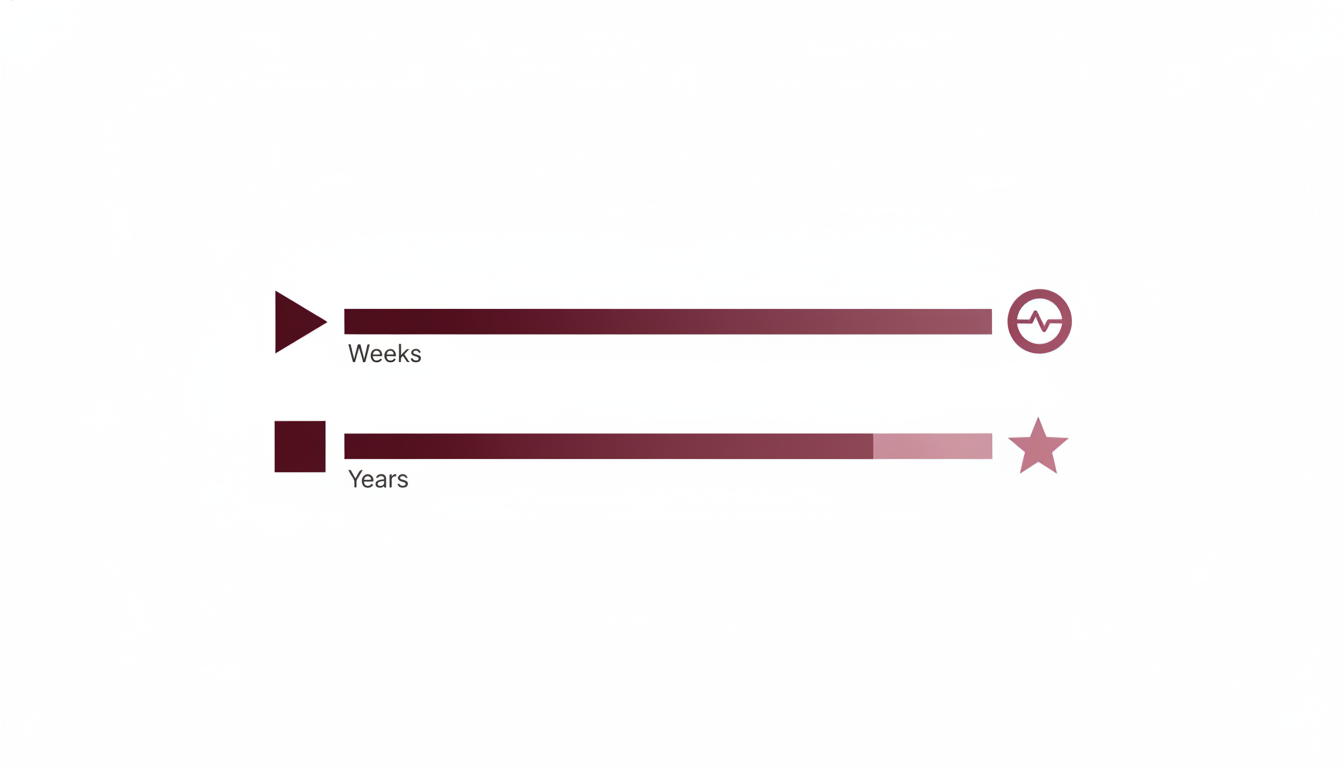
| Infection | Typical window period before a test detects it | How long it can stay silent after detection |
|---|---|---|
| Chlamydia | About 1 to 2 weeks | Months to years |
| Gonorrhea | About 2 to 7 days | Weeks to months |
| Syphilis | About 3 to 6 weeks | Years (latent stage) |
| HIV (NAAT) | About 10 to 33 days | Up to around 10 years untreated |
| HIV (4th-generation antigen/antibody) | About 18 to 45 days | Up to around 10 years untreated |
| HSV-2 antibody | Around 6 to 12 weeks (some labs cite up to 16) | Lifetime, with intermittent shedding |
| HPV | Test detects DNA shortly after acquisition | Months to years; some persist long-term |
Yes, you can transmit without knowing
This is the part nobody wants to think about. The biology does not care whether you know.
Herpes is the textbook example. People with no visible sores can shed virus from skin in the genital area, the perianal area, and around the mouth. Studies of asymptomatic HSV-2 shedding have repeatedly shown that detectable virus turns up on the skin a meaningful fraction of days, even between recognizable outbreaks. That is why HSV-2 spreads so efficiently in long-term partnerships where neither person has ever seen a sore.
HPV behaves similarly. Skin-to-skin contact transmits the virus, and a partner can pass it long after any visible warts have cleared, or without warts ever appearing. Chlamydia and gonorrhea can settle in the throat or rectum from oral or receptive anal sex, produce no symptoms, and still pass to a new partner during the next encounter. HIV is paradoxically most transmissible during the acute phase that produces only mild flu-like symptoms or none at all, before most people have any reason to test.
The honest takeaway is uncomfortable but simple: assuming a partner is fine because they look fine, feel fine, or tested negative once is not the same as actually knowing. Tests in window periods miss things. Bodies do not announce silent infections.
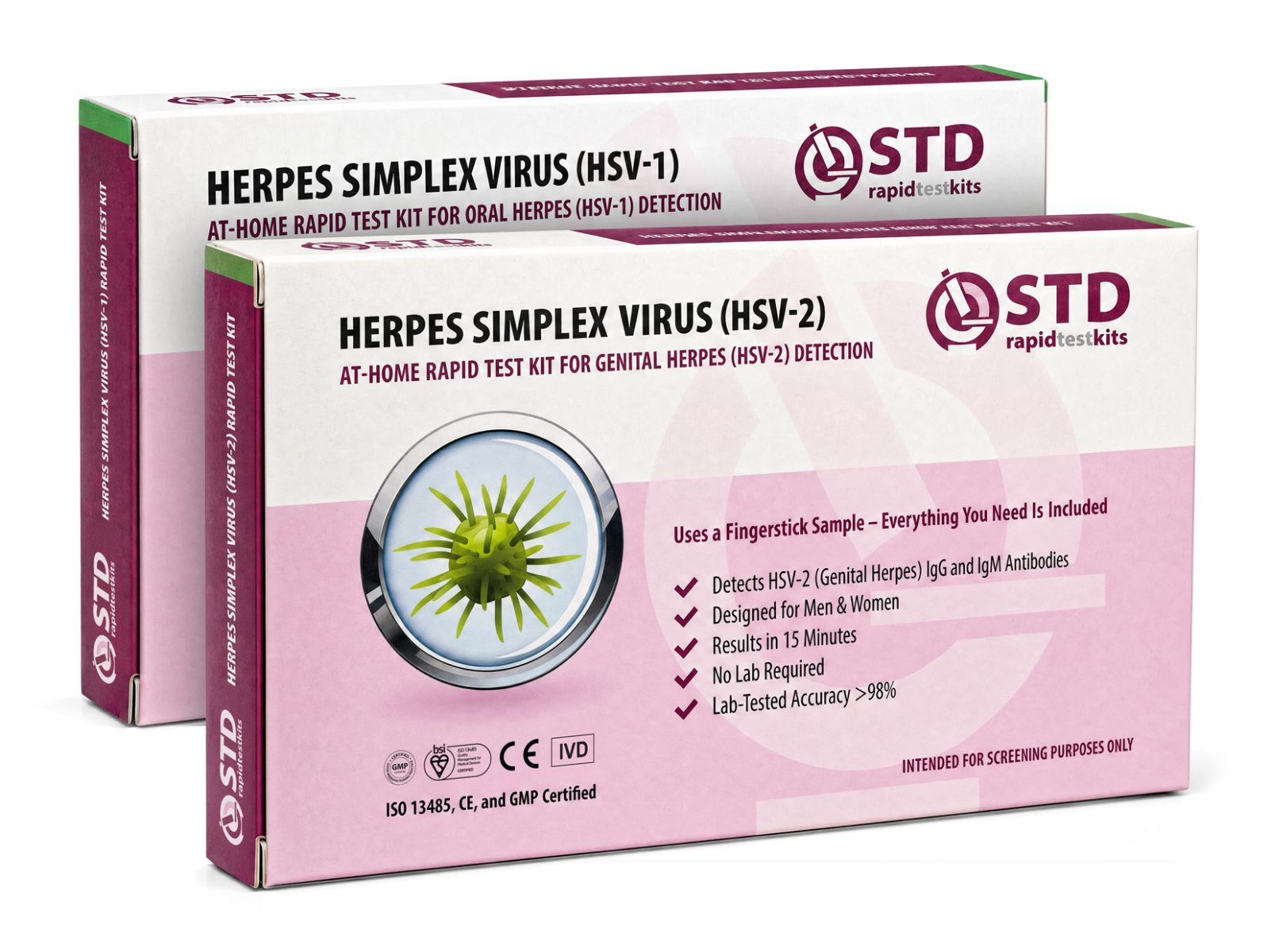
Herpes can shed virus from skin on days when no sore is visible. This is the primary route of HSV-2 transmission in long-term partnerships where neither partner has ever had a recognizable outbreak. Daily antiviral suppression therapy and consistent condom use both reduce, but do not eliminate, this risk.
What silent infections cost you long-term
The damage from an undiagnosed STI is rarely dramatic in the moment. It builds. By the time it shows up, it has had years to do its work.
Untreated chlamydia and gonorrhea are the leading infectious causes of pelvic inflammatory disease, which scars the fallopian tubes and is a major contributor to tubal-factor infertility and ectopic pregnancy. Many women only find out about the original infection during a fertility workup, often because the chlamydia itself was painless and brief. The CDC's chlamydia overview emphasizes this consequence as one of the strongest reasons for routine screening even in the absence of symptoms.
For men, untreated gonorrhea or chlamydia can produce epididymitis (testicular inflammation) and, in rare cases, infertility. Untreated syphilis progresses through stages that can eventually involve the cardiovascular and nervous systems. Untreated HIV depletes the immune system and produces opportunistic infections after years of being mostly silent. Persistent high-risk HPV is the cause of nearly all cervical cancers and of a meaningful share of throat, anal, and penile cancers.
Herpes is in a different category. It is not life-shortening, and most people manage it without much trouble. The cost is mostly emotional: a diagnosis years after the fact, in a long relationship, with no clear story of when or where. Plain information and a calm clinician helps; the panic is usually worse than the infection itself.
Who misses the signs most often
Not all bodies and not all healthcare experiences produce the same chance of catching an early symptom. A few patterns:
Internal anatomy hides early signs. Cervical chlamydia, rectal gonorrhea, and pharyngeal gonorrhea live in places that do not register the way an external rash or sore does. People with vaginas are systematically more likely to carry chlamydia and trichomoniasis without symptoms than people with penises, partly for this reason.
Stigma delays testing. A study in WHO-cited public-health literature consistently finds that fear of judgment is a stronger barrier to STI testing than lack of knowledge. Younger adults, LGBTQ+ patients, and people with prior negative experiences in clinical settings are more likely to delay until something goes badly wrong.
Mild symptoms get explained away. Itching, mild dysuria (painful or burning urination), an unfamiliar discharge, a faint pelvic ache. Each of these has plausible non-STI explanations: laundry detergent, a UTI, hormonal shifts, friction. The first guess is often the gentlest one. That is reasonable; it is also the reason silent infections stay silent so long.
Tested-once, never-again. Couples who tested at the start of a relationship sometimes treat that as a permanent clearance. Tests have window periods. Bodies acquire new infections. A single test from the start of a relationship is not a lifetime certificate, especially if either person had partners shortly before.
Why silent infections stay silent
- Internal anatomy hides early signs. Cervical, rectal, and pharyngeal infections often produce no surface symptom until something downstream goes wrong.
- Stigma delays testing. Fear of judgment is consistently a stronger barrier to STI testing than lack of knowledge.
When to test if you feel fine
The point of routine screening is to catch the silent infections that symptom-watching cannot. The schedule below pulls together CDC screening guidance with what makes practical sense for at-home testing.
| Your situation | Reasonable testing approach |
|---|---|
| Sexually active with new or multiple partners | Test for chlamydia, gonorrhea, HIV, and syphilis every 3 to 6 months |
| Single recent unprotected encounter | Test about 2 to 4 weeks after for chlamydia and gonorrhea; retest at 3 months for HIV and syphilis |
| Long-term monogamous relationship, never tested together | Baseline test for both partners covering chlamydia, gonorrhea, HIV, syphilis, and HSV antibodies |
| Mild symptom you suspect is something else (UTI, yeast, irritation) | Rule out chlamydia, gonorrhea, and trichomoniasis if symptoms persist beyond a few days |
| No new partners but it has been over a year | Annual screening covering at least chlamydia, gonorrhea, HIV |
| Pregnancy or planning pregnancy | Follow your prenatal screening protocol; STIs in pregnancy carry vertical-transmission risk to a newborn |
If your concern is a single recent exposure, give the test enough time. Testing the morning after a Saturday hookup is too early for almost everything. Wait two to three weeks for chlamydia, gonorrhea, and trichomoniasis; up to about 6 weeks for syphilis; up to about 12 weeks for HSV antibodies.
If your concern is general peace of mind after a long stretch without testing, a single round of broad-coverage testing now, plus a planned retest in 3 months, gives you a reasonable map of your status. Anything sooner can be misleading because of window periods.
What an at-home rapid test can and cannot tell you
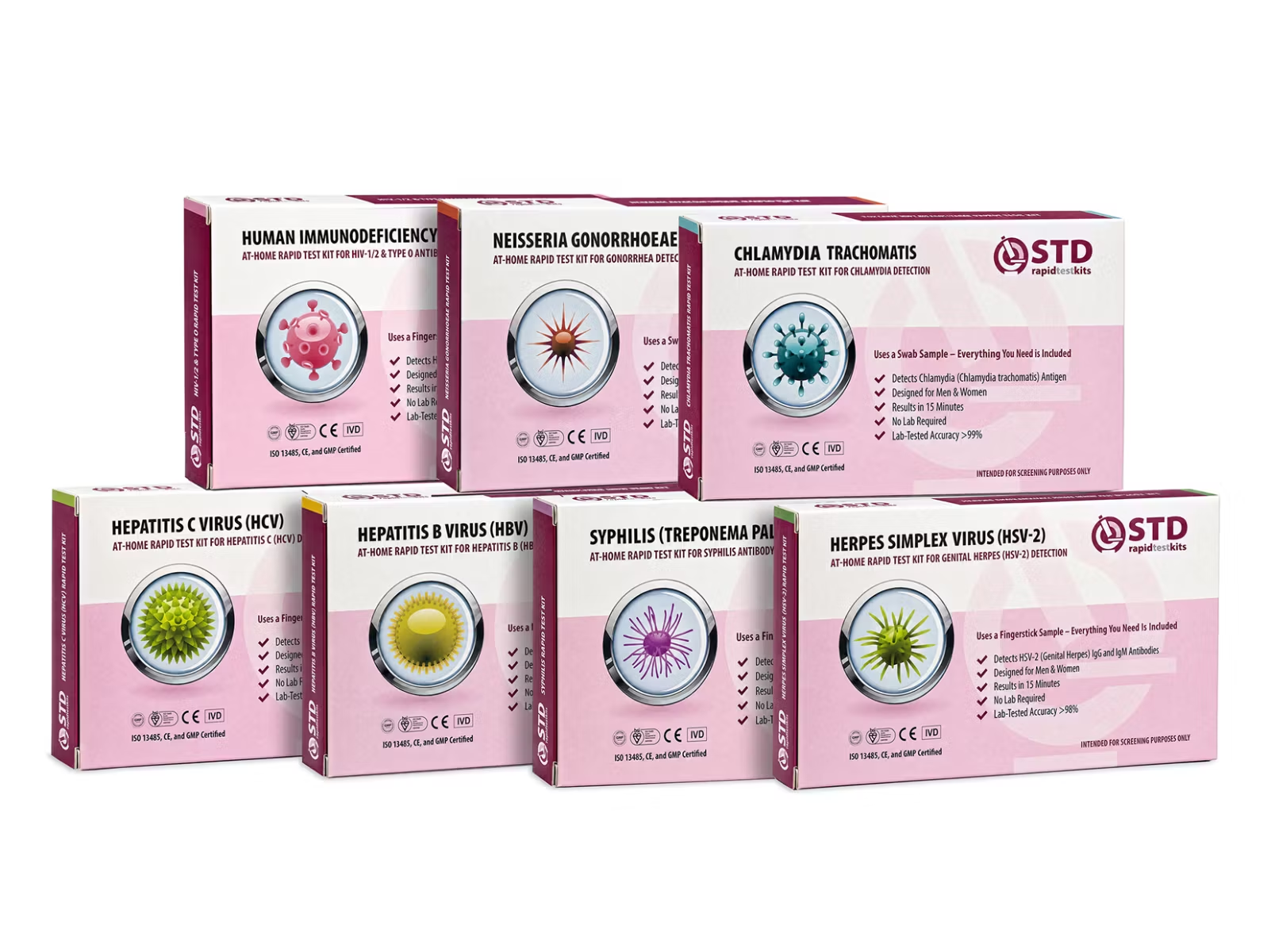
Our at-home kits are lateral-flow rapid tests. They are not laboratory NAAT or PCR tests, and being honest about that distinction is part of using them well.
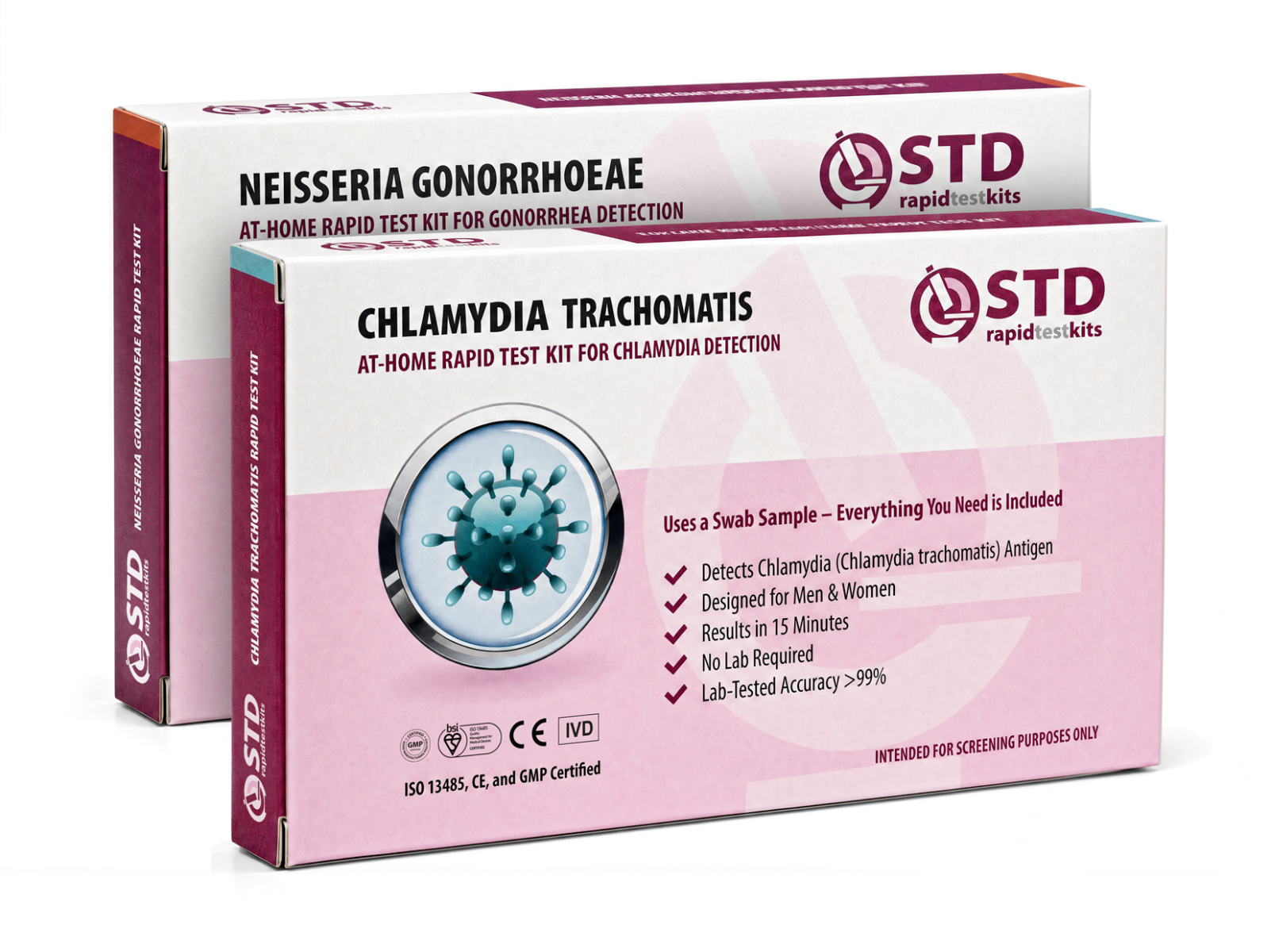
What the rapid test does well: gives you a fast, private screen at home, on a sample type that matches what a clinic would use (self-collected swab for the bacterial swab tests, fingerstick blood for the antibody tests). Sensitivity is high enough for screening when used after the right window period, and a clearly positive result is a strong signal to seek confirmation and treatment.
What the rapid test does not do: outperform a laboratory NAAT for analytical sensitivity, especially in very early infections close to the window period. A negative rapid test on a sample taken too soon after exposure does not rule out infection. A positive rapid test should be confirmed at a clinic before any partner-notification or treatment decisions, both because confirmation is best practice and because clinic treatment is part of how the public-health system tracks and contains the spread of curable STIs.
HIV is the clearest example of where this technology distinction matters. The fingerstick antibody screen below gives you a reliable answer once you are past the antibody window of roughly 18 to 45 days after exposure, which is the after-window use case it is built for. Very early HIV in the acute phase, however, is more sensitively caught by a clinic NAAT, which is why timing your test correctly matters as much as the test technology you choose.
If you live in the US and a positive screen is making you anxious, a federally qualified health center, a Planned Parenthood, or any sexual health clinic can confirm the result and treat the infection, often on a sliding scale.
Product: STD-1-HIV
Most people with sexually transmitted infections have no symptoms or only mild symptoms that may not be recognized as an STI. Testing is the only way to know for sure.
Frequently asked questions
- Can I really have an STI for years without knowing?
- Yes. The most common pattern is a chlamydia, HPV, or HSV-2 infection acquired years before any conversation about it. Most people only find out at a routine screen, a fertility workup, or when an old partner reaches out. It is not rare. It is the default for most STIs.
- Which STIs are most likely to stay silent?
- Chlamydia and trichomoniasis in women, HPV in everyone, and HSV-2 in most carriers are the standouts. Throat and rectal gonorrhea are also commonly silent. HIV is often silent for years after the brief acute phase, especially without treatment.
- If I have no symptoms, can I still pass an STI to a partner?
- Yes. HSV-2 can shed virus from skin between outbreaks. HPV can transmit through skin-to-skin contact without visible warts. Chlamydia, gonorrhea, and trichomoniasis can transmit during silent infection. HIV in the acute phase is highly transmissible before most people know they have it.
- I tested negative last week. Am I in the clear?
- Maybe. It depends on when you were exposed. Every test has a window period: a stretch of time after exposure when the infection is real but not yet detectable. If your exposure was within the window, you can test negative and still have the infection. The fix is to retest after the window has passed for the infection you are worried about.
- My partner tested negative, do I still need to test?
- Yes. Their test does not cover you. They might have tested in their own window period, tested for a different set of infections, or have an infection they cleared but passed to you first. STI testing is individual, not couple-shared.
- How often should I test if I am sexually active and feel fine?
- Most guidelines suggest every 3 to 6 months for sexually active adults with new or multiple partners, and at least annually for everyone else who is sexually active. After a specific exposure that worries you, plan two tests: one a few weeks after for bacterial infections, one at three months for HIV and syphilis.
- Can an STI go away on its own?
- Some HPV infections clear on their own over a year or two, and some immune systems suppress HSV-2 to the point of rare outbreaks. Most others (chlamydia, gonorrhea, syphilis, HIV) do not clear without treatment, and the longer they stay untreated the more downstream damage they can cause.
- I tested positive but feel completely fine. What now?
- Take a breath. Confirm the result with a clinic NAAT or laboratory blood test. Get treatment if it is a bacterial infection (chlamydia, gonorrhea, syphilis, trichomoniasis). For viral infections, get linked to care; modern HIV treatment, HSV antiviral suppression, and HPV monitoring all have good outcomes. Tell recent partners so they can test. Millions of people have been here and come out fine.
- U.S. Centers for Disease Control and Prevention. Sexually transmitted infections overview, including general statements on asymptomatic transmission and screening recommendations.
- U.S. Centers for Disease Control and Prevention. Chlamydia overview, including statements on the predominantly asymptomatic course of infection and downstream complications such as pelvic inflammatory disease and infertility.
- U.S. Centers for Disease Control and Prevention. Genital herpes overview, including statements on most people with HSV-2 being unaware of their infection and on asymptomatic viral shedding.
- U.S. Centers for Disease Control and Prevention. HPV overview, including statements on the predominantly asymptomatic course of HPV and the link between persistent high-risk HPV and cervical and other cancers.
- U.S. Centers for Disease Control and Prevention. About HIV overview, including the natural history of untreated HIV through the acute phase, the chronic phase that can last a decade or longer without treatment, and AIDS.
- World Health Organization. Sexually transmitted infections (STIs) fact sheet, including global incidence estimates and the statement that most STIs cause no symptoms or only mild symptoms.
