
Published: July 2025 | Last updated: May 2026 | Editorial review and quality control: Martina N.
If you felt fine through the relationship and then noticed burning, itching, a strange rash, or pelvic pain a few days after the breakup, the timing is not random and you are not imagining it. The post-breakup window catches a lot of people off guard because the body finally lets a quiet STI (sexually transmitted infection) speak up. Sometimes the cause is stress lowering the defenses that had been keeping symptoms suppressed. Sometimes the timing is coincidence: an incubation period that started weeks ago finally ran out. Often it is both.
This article is for anyone asking why now, and what to do next, when the relationship is already over and there is no one easy to ask. We will work through what stress actually does to your body, which STIs it can unmask, how long common infections can hide before symptoms appear, and how soon a home test will give you a reliable answer. None of it requires you to call your ex.
Key Takeaways
- Stress does not create new STIs, but it can lower immune defenses and let dormant infections like herpes flare into visible symptoms.
- If symptoms started after a breakup, testing is the only reliable way to separate stress-driven irritation from an actual STI, and window periods vary by infection.
Why Your Body Might Be Speaking Up Right Now
Breakups land in the body, not just the head. Sleep gets worse. Eating gets erratic. Stress hormones stay elevated for longer than usual. All of those changes touch the same immune system that keeps low-level infections in the background. When the immune signal dips, the infection signal gets relatively louder, which is when blisters, rashes, discharge, or burning become noticeable.
There is also a perception piece. After a breakup people pay closer attention to their bodies. A small itch you would have ignored on a normal Tuesday now feels significant. Sensations that were always there finally register, and both mechanisms can run at the same time.
One: stress can lower the immune defenses that keep some infections quiet, especially herpes and HPV. Two: heightened body awareness makes mild sensations register more strongly than they would have a month ago. Either mechanism can make symptoms feel new when the underlying biology is older.
How Stress Can Unmask an STI You Already Have
One thing to settle up front: you cannot catch herpes, chlamydia, gonorrhea, or any other STI from crying, heartbreak, or emotional pain. These infections are caused by viruses or bacteria that need a transmission event. The stress comes in afterwards, in how the body responds to an infection it already has.
Herpes is the clearest example. The herpes simplex virus settles into nerve tissue after the first infection and can stay quiet for long stretches. Emotional stress, illness, fatigue, and sun exposure are among the factors commonly associated with herpes flare-ups in patient education materials from NIH MedlinePlus. The CDC's overview of genital herpes separately notes that many people who carry the virus do not know they have it, because outbreaks can be mild, infrequent, or absent for long periods. For many people, the first outbreak they ever notice comes during a rough patch rather than the week of the original exposure. Other infections behave differently. HPV can flare into more visible warts when immunity dips. Chlamydia and gonorrhea do not have a direct stress link, but stress can amplify how aware you are of mild symptoms that were already developing.
Can stress trigger STD symptoms after a breakup?
Yes for some infections, no for others. Herpes outbreaks are well known to be triggered by emotional stress, and HPV symptoms can become more visible when immunity is low. Chlamydia, gonorrhea, syphilis, and HIV are not caused or worsened by stress itself, but their incubation periods can overlap with the breakup window, so symptoms appearing now does not mean stress invented them. Testing is the only way to separate the two.
When Symptoms Feel Like Punishment
A lot of people describe post-breakup symptoms as feeling targeted, like the body is reacting to guilt or to the end of a relationship by digging up evidence. That feeling is understandable and almost universal. Viruses and bacteria, however, track immune status and incubation windows, not break-up timelines.
What does change post-breakup is attention. A tingle in the genitals that would have been background noise becomes the entire focus of an evening. Discharge that was always slightly off becomes a 2 a.m. crisis. Clinicians who see anxious patients post-breakup commonly find one of three things: an actual STI that was already incubating, a stress-related skin reaction or yeast imbalance, or pure body hypervigilance. All three are real and all three deserve a clear answer rather than guesswork, which is where a properly timed test comes in.
| STI | Typical Incubation Period | Stress-Triggered Flare-Ups? | Common Symptoms |
|---|---|---|---|
| Herpes (HSV-1 and HSV-2) | 2 to 12 days for first outbreak; recurrences vary | Yes. Outbreaks are commonly triggered by stress | Blisters, itching, burning, tingling |
| Chlamydia | 1 to 3 weeks | No direct link to stress | Often silent. Sometimes discharge or pelvic pain |
| HPV | 1 month to several years | Possible immune-suppression effect | Warts, abnormal Pap results |
| Syphilis | About 3 weeks (sometimes longer) | Stress may delay detection, not cause infection | Painless sore, then later rash and flu-like signs |
| Gonorrhea | 2 to 14 days | No known stress link | Burning urination, discharge, or no symptoms |
When Symptoms Surface After the Relationship Ended
One of the hardest parts of post-breakup symptoms is the silence around them. There is no obvious person to ask. Reaching out to an ex can feel impossible, especially after a difficult or contested ending. People who have never had symptoms before start wondering if the infection was there the whole time, whether they passed it on, or whether their ex did. Memory rewrites itself: did I miss this earlier?
Most STIs are asymptomatic for most people most of the time. The CDC states clearly that many sexually transmitted infections cause no symptoms, which is why screening is recommended even when nothing feels wrong. The late appearance of symptoms after a breakup is therefore not unusual and does not prove anything specific about who exposed whom or when. It is a signal to test, not a verdict on the past relationship.
Per the CDC, many sexually transmitted infections cause no symptoms at all. Routine screening is recommended for sexually active people, even when nothing feels wrong, because most onward transmission happens from people who do not know they are infected.
How Long STIs Can Sit Quietly Before You Notice
The clinical term is incubation period: the time between exposure and the first symptoms. For viral infections, the more important concept is latency, when the virus is present in the body but not producing visible signs. Both windows are longer than most people assume.
For example, herpes virus can stay inactive in nerve tissue for years between outbreaks. The typical primary-infection window after first exposure is 2 to 12 days, and the first episode is often mild or unnoticed. Reactivation after latency is a different phenomenon: the virus can settle dormant after that first quiet episode and flare years later under stress or other triggers. So a person can move through an entire relationship, or several, without ever noticing symptoms, then have a first visible flare after a major life stressor. HPV can be present for months or years before warts appear or a Pap test shows abnormal cells. Chlamydia and gonorrhea can sit silently for weeks. Syphilis can be invisible during the early primary stage if the painless sore is in a place you cannot see. Which infection to screen for, and when, depends on the longest plausible exposure window in your history.
How long common STIs can stay invisible
- Herpes simplex virus can remain dormant in nerve tissue for years between outbreaks once the initial infection is past.
- HPV can be present for months or years before warts appear or a Pap test shows abnormal cells.
- Chlamydia and gonorrhea routinely stay silent for one to three weeks, and can remain asymptomatic for longer while still transmissible.
- Syphilis can be missed during the primary stage if the painless sore is in a hidden anatomical location.
"But I Haven't Had Sex in Weeks" Does Not Rule It Out
Many people assume that if their last sexual encounter was a month ago and they felt fine then, anything happening now must be unrelated to an STI. That assumption is wrong often enough that it is the single most common reason people delay testing.
Chlamydia and gonorrhea routinely take one to three weeks to produce symptoms, when they produce symptoms at all. Herpes can take 2 to 12 days for a first outbreak, with reactivations possible months or years later. HPV may take months or years to show anything visible. Per the CDC STI Treatment Guidelines, the first stage of syphilis usually shows up as a painless sore appearing about three weeks after exposure, though the window can be longer in some cases. If your last contact was ten or more days ago and symptoms are showing up now, the incubation timeline often explains the timing more directly than the breakup does.
Testing before the window period closes can produce a false negative. A negative result before that window only means the infection has not yet produced detectable markers, not that no infection is present. If you tested very soon after possible exposure, plan a retest at the window for the specific infection you're concerned about.
When to Test After a Breakup, Even If You Feel Fine
Timing matters because tests have window periods. Test too soon and the result can be negative even when you are infected. Test at the right moment and home rapid tests are reliable for most common STIs.
A general rule of thumb: if it has been less than 5 days since the last sexual contact, most tests are too early. From day 7 onward, chlamydia and gonorrhea become detectable on most platforms. HIV antibody tests need longer windows, typically 18 to 45 days. Syphilis antibodies and herpes antibodies usually need about three weeks to develop reliably. If you tested negative very early and still have symptoms or doubts, a retest at six weeks resolves most uncertainty. The WHO fact sheet on sexually transmitted infections gives a useful map of which infections produce which symptoms and how common they are globally.
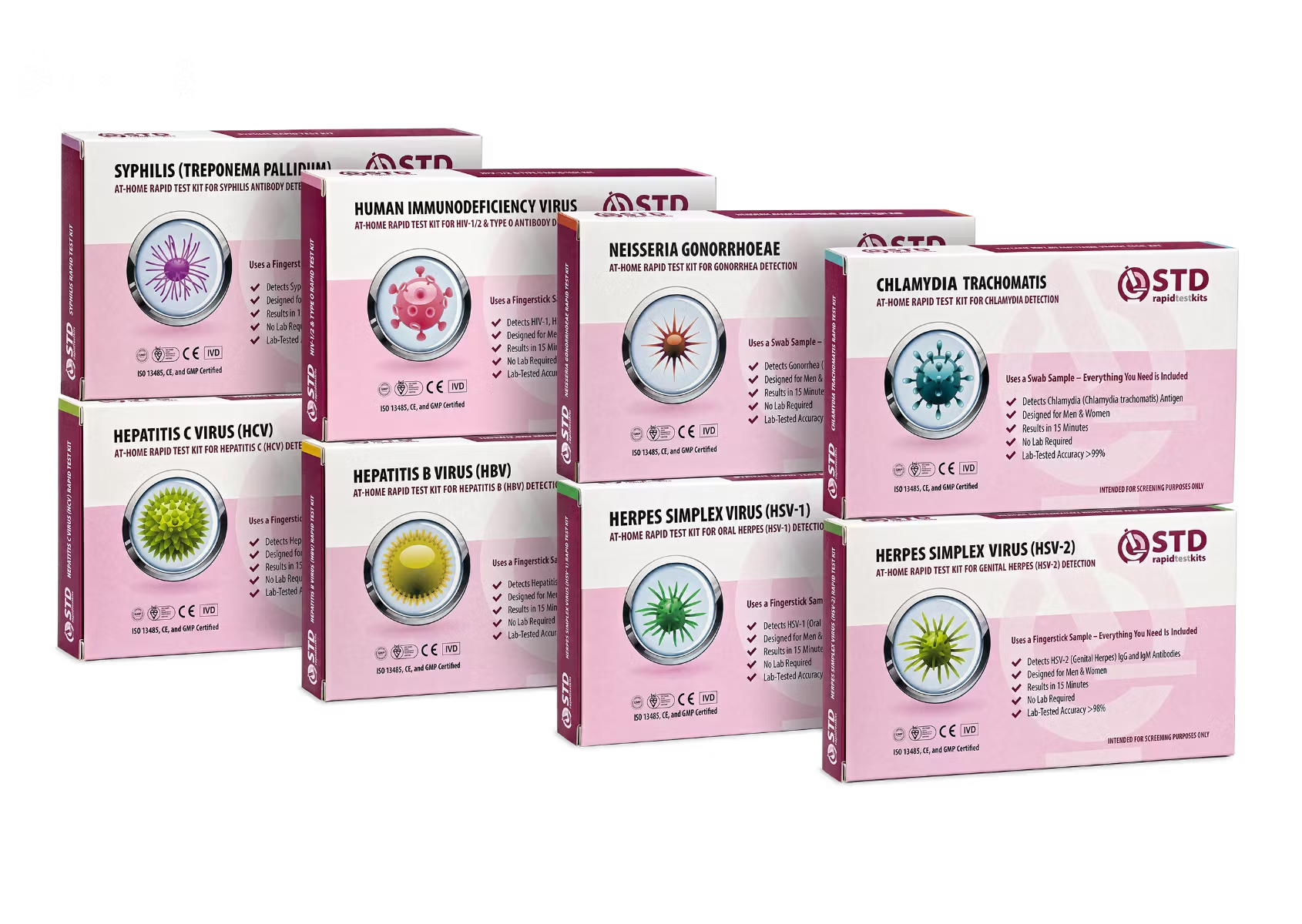
One note before the product recommendations below: this article is published by stdrapidtestkits.com, which sells the at-home rapid kits referenced. Product suggestions follow test-type fit for your situation, not commercial benefit, and a clinic visit is always a reasonable alternative if you prefer one.
| STI | Earliest Reliable Test Time | Best Retest Timing | Why This Matters Post-Breakup |
|---|---|---|---|
| Chlamydia | About 7 days | 14 to 21 days | Often silent. Late symptoms can overlap with stress signs |
| Gonorrhea | About 7 days | 14 days | Symptoms can feel like a UTI or vague irritation |
| Herpes (HSV-2 antibody) | About 3 weeks | 6 to 12 weeks if asymptomatic | Stress is a recognized flare-up trigger |
| Syphilis | About 3 weeks | 6 weeks | Painless early sore can be missed entirely |
| HIV (antibody rapid test) | 18 to 45 days | 6 to 12 weeks for full confidence | Acute infection symptoms can mimic flu or stress |
You Can Test Without Telling Your Ex
The fear of confrontation is one of the biggest reasons people delay testing post-breakup. There is no rule that says you have to disclose first. The first step is private. You can order an at-home kit, collect the sample on your own timeline, and read the result without anyone else involved.
If a result comes back positive and you want to inform former partners, many public health departments offer anonymous partner notification services. These tools send a notice that one of the recipient's recent partners has tested positive for a specific infection, without naming you. You do not need to make a phone call, and notification does not have to come first; you can start with your own treatment and revisit partner contact later.

If Your Result Comes Back Positive While You Are Already Raw
A positive result during or after a breakup will trigger a flood of meaning-making. It is easy to read the result as confirmation that the relationship was a mistake, that your ex lied, or that you should have known. Those feelings are real, but they are not clinical facts. What is clinically true: STIs are common, often silent, and in most cases treatable or manageable.
Chlamydia, gonorrhea, and syphilis are bacterial infections that resolve with a single course of antibiotics, per the CDC STI Treatment Guidelines. Trichomoniasis is treatable with a short oral regimen. HIV is now a chronic, manageable condition. Daily antiretroviral therapy suppresses viral load to undetectable levels in most people who start treatment promptly, and per current public health consensus (Undetectable equals Untransmittable, or U=U, as summarized by HIV.gov), an undetectable viral load eliminates the risk of sexual transmission. Early diagnosis has the largest impact on long-term outcomes, which is why testing after a possible exposure matters even when no symptoms are present. Herpes does not go away, but daily antiviral therapy can suppress outbreaks and reduce transmission risk, and most people with herpes lead unremarkable sexual and relational lives once they understand their pattern.
You Are Not Crazy. You Are Not Unclean. You Just Want Answers
There is nothing irrational about anxiety in a body that suddenly feels off, especially right after a breakup. Physical signs deserve attention even when emotions are running high, and a clear result is what lets the worry settle. If you are noticing symptoms, trust the signal enough to test at the right time window, and trust the result enough to act on it whether it is positive or negative.
Stress can amplify what is already there. Testing turns down the volume on the part of your brain that has been running worst-case scenarios for days. Whatever the result, it is yours, and it does not belong to your ex, your friends, or the version of yourself that is grieving the relationship.
Many people who have an STI have no symptoms. The only way to know for sure if you have one is to get tested.
FAQs
- Can stress really make STD symptoms show up?
- Herpes and HPV are the two infections where stress plays a documented biological role. Stress hormones suppress the immune cells that keep HSV dormant between outbreaks, so a high-stress week can trigger a flare that would otherwise have stayed quiet. For chlamydia, gonorrhea, syphilis, and HIV, stress does not affect the infection itself, but their incubation windows can overlap with the post-breakup period in ways that feel causal.
- I have not had sex in weeks, so why are symptoms starting now?
- Most STIs take longer to produce symptoms than people expect. Chlamydia and gonorrhea commonly take one to three weeks. Herpes can take 2 to 12 days for a first outbreak, with reactivations possible months or years later. HPV may take months to years. So a sexual contact from earlier in the relationship can produce symptoms long after the relationship has ended, and the breakup is just the moment you happen to notice.
- How do I tell if it is stress or an actual infection?
- By symptom pattern and by testing. Stress-related sensations tend to be diffuse, come and go with mood and sleep, and improve when you rest. STI symptoms tend to be more specific (a sore that does not heal, persistent burning with urination, a rash that progresses, unusual discharge), and they do not resolve with a nap and water. When in doubt, test at the right window rather than guessing.
- Could I have given someone an STI without knowing?
- It is possible and it is common. Most people with chlamydia, for instance, have no symptoms, which means they can transmit without any sign anything is wrong. This is part of why public health agencies emphasize routine screening for sexually active people. Testing now is how you stop the chain forward and get clarity for yourself.
- Do I have to tell my ex if I test positive?
- Telling former partners helps stop onward transmission, but you are not obligated to make a personal call. Many public health departments offer anonymous partner notification: they send a message that one of the recipient's recent contacts tested positive for a specific infection, without naming you. Your own treatment and follow-up come first.
- What kind of test should I use if I am not sure what I have?
- A combination panel is a reasonable starting point because it covers the most common infections at once. If symptoms strongly suggest one specific infection (clustered blisters point toward herpes, painless sore toward syphilis, burning urination with discharge toward chlamydia or gonorrhea), a single-infection test is fine. You can always follow up with a targeted test after a broad screen.
- Is it true that herpes can sit quietly for years?
- Yes. Herpes simplex virus settles into nerve tissue after the first infection and can remain inactive for long stretches. The CDC notes that many people with genital herpes do not know they have it because outbreaks are mild, infrequent, or absent. A first noticeable outbreak during or after a major stressor like a breakup is a recognized reactivation pattern; the virus has been present since an earlier, often unnoticed exposure.
- I had unprotected sex and I am panicking. Should I test today?
- If it has been less than five days, most tests are still too early to be reliable. Mark a date about 7 to 14 days out for chlamydia and gonorrhea testing, and a longer window (about three weeks for herpes and syphilis, and 18 to 45 days for HIV antibody tests) for the remaining infections. Testing too early and trusting a negative result is the most common reason people miss an actual infection.
How we sourced this article: We combined current guidance from leading public health organizations (CDC, WHO, NIH MedlinePlus) with the CDC STI Treatment Guidelines. Where specific incubation windows, test windows, or treatment notes appear, we cite the source inline so you can verify the figure on the original page. This article is published by stdrapidtestkits.com, which sells at-home rapid STI testing kits. Product recommendations are based on fit for the reader's concern, not commercial benefit.
- U.S. Centers for Disease Control and Prevention. About Genital Herpes (basics, transmission, asymptomatic infection patterns).
- U.S. Centers for Disease Control and Prevention. About Sexually Transmitted Infections (overview, asymptomatic infections, screening rationale).
- U.S. Centers for Disease Control and Prevention. Sexually Transmitted Infections Treatment Guidelines (incubation windows, syphilis primary stage timing, treatment regimens, partner notification).
- World Health Organization. Sexually Transmitted Infections Fact Sheet (global prevalence, common pathogens, asymptomatic infection rates).
- U.S. National Library of Medicine, MedlinePlus. Genital Herpes (patient-facing overview, recurrence triggers, symptom management).
- U.S. National Library of Medicine, MedlinePlus. Sexually Transmitted Infections (consumer-facing overview, symptom and test information).
