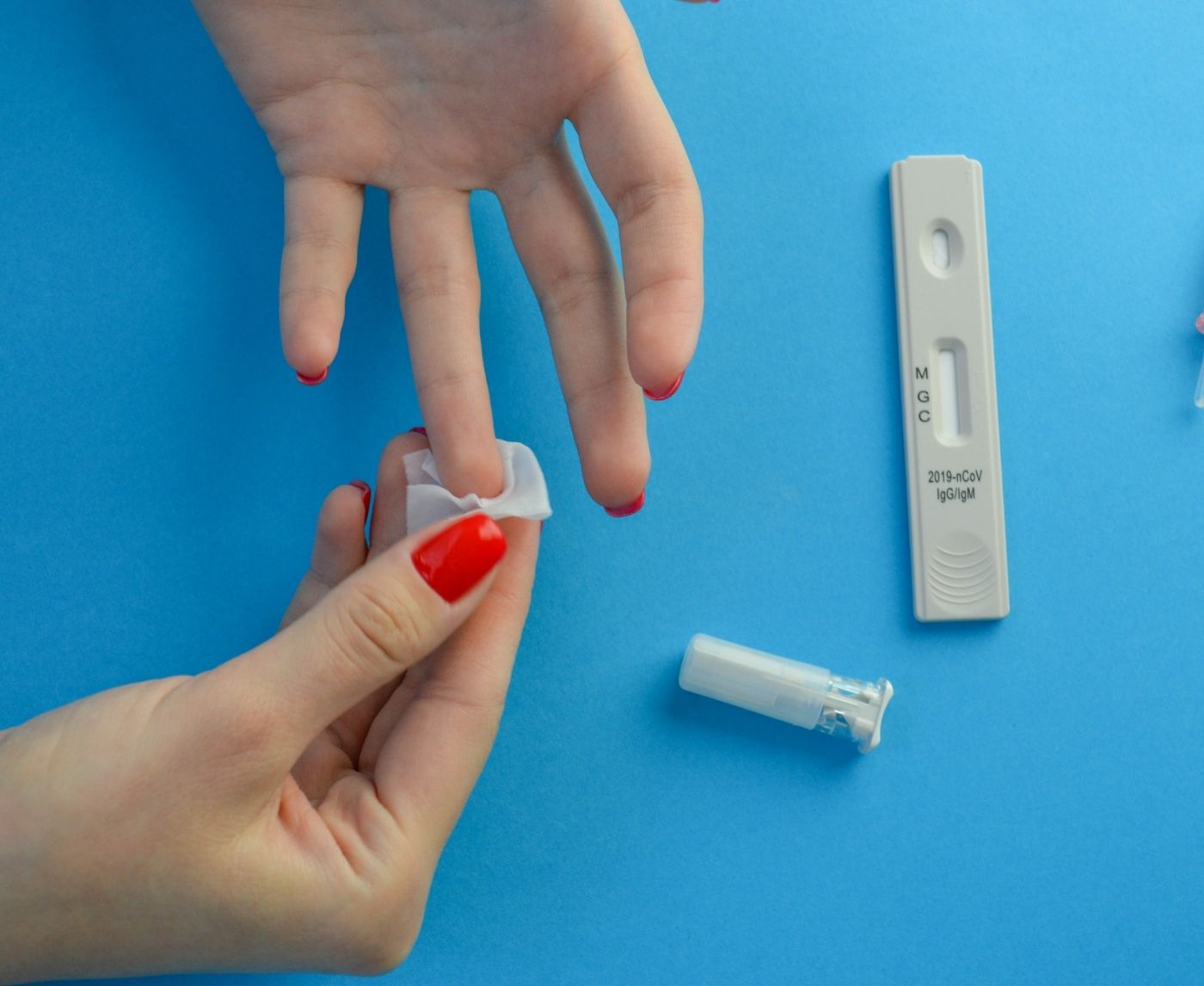
Published: October 2025 | Last updated: May 2026 | Editorial review and quality control: Martina N.
Why did my STD test come back positive after I was treated?
Most repeat positives come down to one of three things: reinfection from an untreated partner (the usual cause for chlamydia, gonorrhea, and trichomoniasis), a test taken inside the window period before the infection was detectable, or a viral STI like herpes or HPV reactivating after going dormant.
You finished the antibiotic course, waited the days your clinician specified, retested, and the second line still showed up. Now you are sitting with the same diagnosis a second (or third) time, and the question circling your head sounds something like: what is wrong with me?
Nothing is wrong with you. Repeat sexually transmitted infections (STIs) are common, and the reasons behind them are mostly mechanical: timing, partner status, asymptomatic carriage, viral reactivation, and the limits of any single test. This guide walks through why repeat positives happen, when to retest, and how to break the loop without spiraling.
Key Takeaways
- Repeat positive results after treatment are usually reinfection from an untreated partner, not antibiotic failure. The CDC recommends rescreening three months after treatment for chlamydia, gonorrhea, and trichomoniasis specifically because reinfection is common.
- Each STI has its own window period, the gap between exposure and the moment a test can detect the infection. Testing too early produces false negatives that can feel like reassurance and accidentally drive onward transmission.
Who this article is for
This article is for the people quietly searching "can you get chlamydia again?" at 1 a.m. It is for the readers who followed the antibiotic instructions to the letter and still saw a second positive result, and for the partners who are afraid to say out loud what their second test showed.
Repeat STIs are not a personal failing. They are a predictable outcome of how these infections work, how testing windows interact with exposure, and how often partners fall outside the testing system entirely. The Centers for Disease Control and Prevention (CDC) tracks STI surveillance data showing that millions of people are diagnosed each year, and a meaningful share of those diagnoses are repeats in the same person within twelve months (CDC STI surveillance).
If you have tested positive more than once, this guide focuses on what to do next: when to retest, what to ask a partner, and which tests, including at-home STI test kits, are likely to actually catch the infection that came back.
The CDC publishes dedicated clinical guidance recommending rescreening three months after treatment for chlamydia, gonorrhea, and trichomoniasis. The fact that the guidance exists at all is the signal: repeat infections are common enough that the public-health system has built routine follow-up into the treatment pathway.
The hidden science of repeat infections
Treating an STI and then testing positive again does not necessarily mean the treatment failed or that you did something wrong. There are a few common explanations, and they often overlap.
One is reinfection. You cleared the original infection but were exposed again, often by the same partner who never got treated. Trichomoniasis is the textbook case: it is frequently asymptomatic in men, and reinfection rates within three months of treatment in women are well documented (CDC: about trichomoniasis). You feel better, you resume sex with someone who looks fine, and the cycle restarts.
Another is the window period. Most STI tests detect bacterial DNA, viral antigen, or antibodies your body has produced in response to infection, and none of those signals appear instantly. If you test before the relevant signal has had time to build, the result will be a false negative. The infection was there; the test could not see it yet.
A third is persistence. Some viral infections, including HIV, herpes simplex (HSV-1 and HSV-2), and human papillomavirus (HPV), do not disappear after the body fights the initial wave. They go quiet. A test taken during dormancy may read negative for the same infection that flares months or years later.

Reinfection vs reactivation: two different events
These two words sound similar and feel identical to the person experiencing them. Biologically they are different events with different implications, and the practical response to each is different too.
Reinfection means the original infection was cleared, and a fresh dose of the same pathogen has entered the body again. This is the typical pattern with bacterial STIs (chlamydia, gonorrhea, trichomoniasis) and almost always points to a partner who was not treated, was treated incompletely, or was reinfected from another source. The bacteria have to come from somewhere; in a monogamous pair, that somewhere is usually the partner.
Reactivation means the body has been carrying the pathogen the whole time, with the immune system holding it in check, until something (stress, illness, a hormonal shift, a course of immunosuppressive medication) lets it surface again. Herpes simplex (both HSV-1 and HSV-2) is the classic example. The CDC's herpes overview notes that herpes is a lifelong infection and that people who experience an initial outbreak can have repeated outbreaks, especially with HSV-2. A reactivation episode can surface years after a primary infection, with no new exposure involved.
The fix for each is different. Reinfection calls for coordinated retesting and simultaneous treatment of both partners. Reactivation calls for symptom management, trigger awareness, and antiviral suppression when outbreaks are frequent.
| Scenario | Typical pathogens | Mechanism | What it suggests |
|---|---|---|---|
| Reinfection | Chlamydia, gonorrhea, trichomoniasis | New exposure to the same pathogen after the prior infection was cleared | A partner may have been untreated, treated incompletely, or carrying asymptomatically |
| Reactivation | HSV-1, HSV-2, hepatitis B, HIV | A pathogen the body was already carrying becomes active again under a trigger | Not a new exposure; the virus has been present and silent, often for years |
When test timing fails you
The anxiety after a possible exposure pushes people to test fast. That impulse is human, but it conflicts with how diagnostic tests work. Each test type has a window period: the gap between exposure and the moment the test can reliably detect the infection.
A negative result inside that window does not prove you are uninfected. It only proves the test could not yet detect what was there. If you act on that false reassurance, by skipping condoms with a new partner or stopping the conversation early, you can spread an infection you genuinely believed you did not have.
The window length depends on what the test measures. Bacterial DNA tests (NAAT) for chlamydia and gonorrhea become reliable about one to two weeks after exposure. Antibody-based blood tests for syphilis usually require three to six weeks before the body has produced detectable antibodies. Fourth-generation HIV antigen/antibody tests detect most infections by 18 to 45 days after exposure, while antibody-only rapid tests can take 23 to 90 days (CDC HIV testing). HSV-2 antibody testing requires the immune system to produce detectable IgG antibodies, which can take 12 weeks or longer after a primary infection.
The same exposure event that brought one bacterial infection can bring others, including HIV. A combined retest panel at the three-month mark addresses all of this in a single step.
When you stack window periods on top of treatment timelines and partner-notification gaps, the picture gets messy fast.
| STI | Typical window period | When to retest after treatment |
|---|---|---|
| Chlamydia (NAAT) | 1 to 2 weeks | 3 months |
| Gonorrhea (NAAT) | 1 to 2 weeks | 3 months |
| Trichomoniasis (NAAT) | 1 to 4 weeks | 3 weeks to 3 months |
| Syphilis (blood antibody) | 3 to 6 weeks | 6 and 12 months |
| HIV (4th-gen Ag/Ab, lab) | 18 to 45 days | 3 months if first test was inside the window |
| HIV (rapid, antibody-only) | 23 to 90 days | Confirm with a lab test at 3 months |
| HSV-2 (antibody) | 12 weeks or longer | Only if symptoms recur |
Still feeling off after a negative test?
If your test came back negative but you are still dealing with unusual discharge, pelvic pain, burning urination, or genital irritation, the result does not automatically settle the question.
The test may have been taken too early. If exposure was within the past one to two weeks and you tested for a bacterial STI using a NAAT, the result may be a true negative for now but a missed positive on a follow-up test taken at the appropriate interval. The panel may also have missed the specific infection causing your symptoms; many "full panel" workups exclude trichomoniasis, herpes, and HPV unless the patient or clinician specifically requests them, which means a negative result for chlamydia and gonorrhea is not a negative result for everything. The NHS makes the same broad point: many STIs produce no symptoms at all, so a person can carry and transmit one without knowing (NHS: sexually transmitted infections).
Symptoms can also have non-STI causes. Bacterial vaginosis, urinary tract infections, yeast infections, and irritation from soaps, lubricants, or laundry detergent all produce symptoms that overlap with STI presentations. Hormonal shifts (perimenopause, post-pill, IUD changes) can alter vaginal pH and tissue sensitivity in ways that mimic infection. In men, recurrent burning with urination or unusual discharge can come from non-gonococcal urethritis caused by mycoplasma or ureaplasma, or in older men from undiagnosed prostatitis. Allergic reactions to latex condoms or spermicides are another commonly missed cause. A clinician can sort these with a swab, urine test, or wet mount; reaching for another round of antibiotics without identifying the actual cause tends to disrupt the protective microbiome further and prolong the cycle.
- Window-period miss: the test was taken too soon after exposure for the assay to detect the infection.
- Panel exclusion: the specific infection causing symptoms was not on the panel that was run.
- Non-STI mimic: BV, yeast, UTI, mycoplasma or ureaplasma urethritis, hormonal shifts, or contact irritation can all look like an STI.
When treatment does not end the story
You took the medication. You did your part. The symptoms cleared. And then they came back. At this point many people stop asking what is wrong with the infection and start asking what is wrong with them.
Here is the more useful framing. Treatment is the start of a sequence, not the end. After treatment for chlamydia or gonorrhea, the CDC's clinical guidance is to retest at three months, regardless of whether your symptoms resolved or your partner promised they were tested. The reason is the math: reinfection rates are high enough that follow-up testing catches a meaningful share of cases that would otherwise progress silently.
Some symptom flare-ups after treatment are not reinfection at all. Antibiotics can disrupt the vaginal microbiome and trigger bacterial vaginosis or yeast overgrowth, both of which produce discharge changes. Pelvic pain after a chlamydia course can reflect post-infection inflammation rather than active bacterial infection. A clinician can sort the difference; so can a follow-up test paired with an honest symptom review.
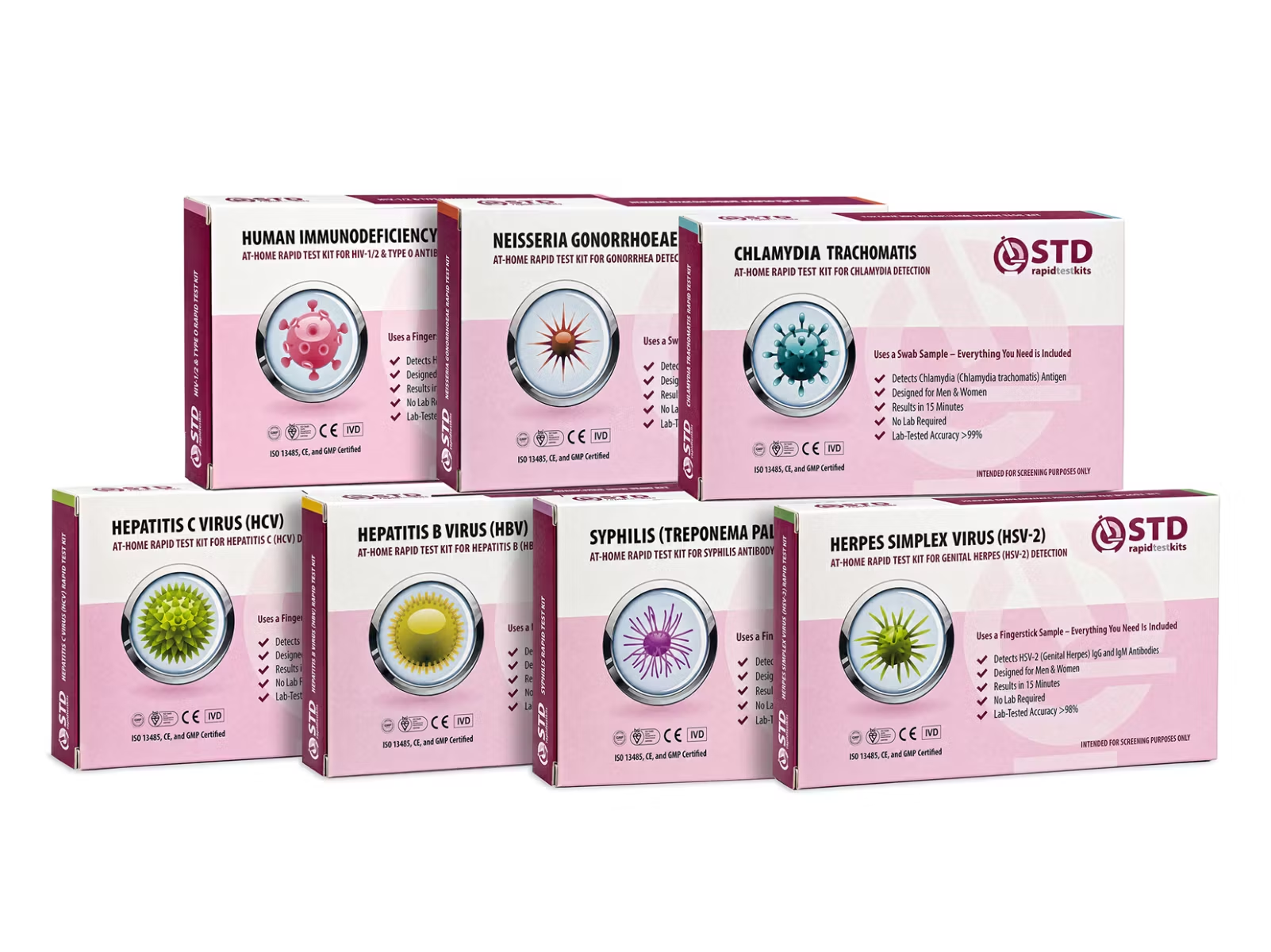
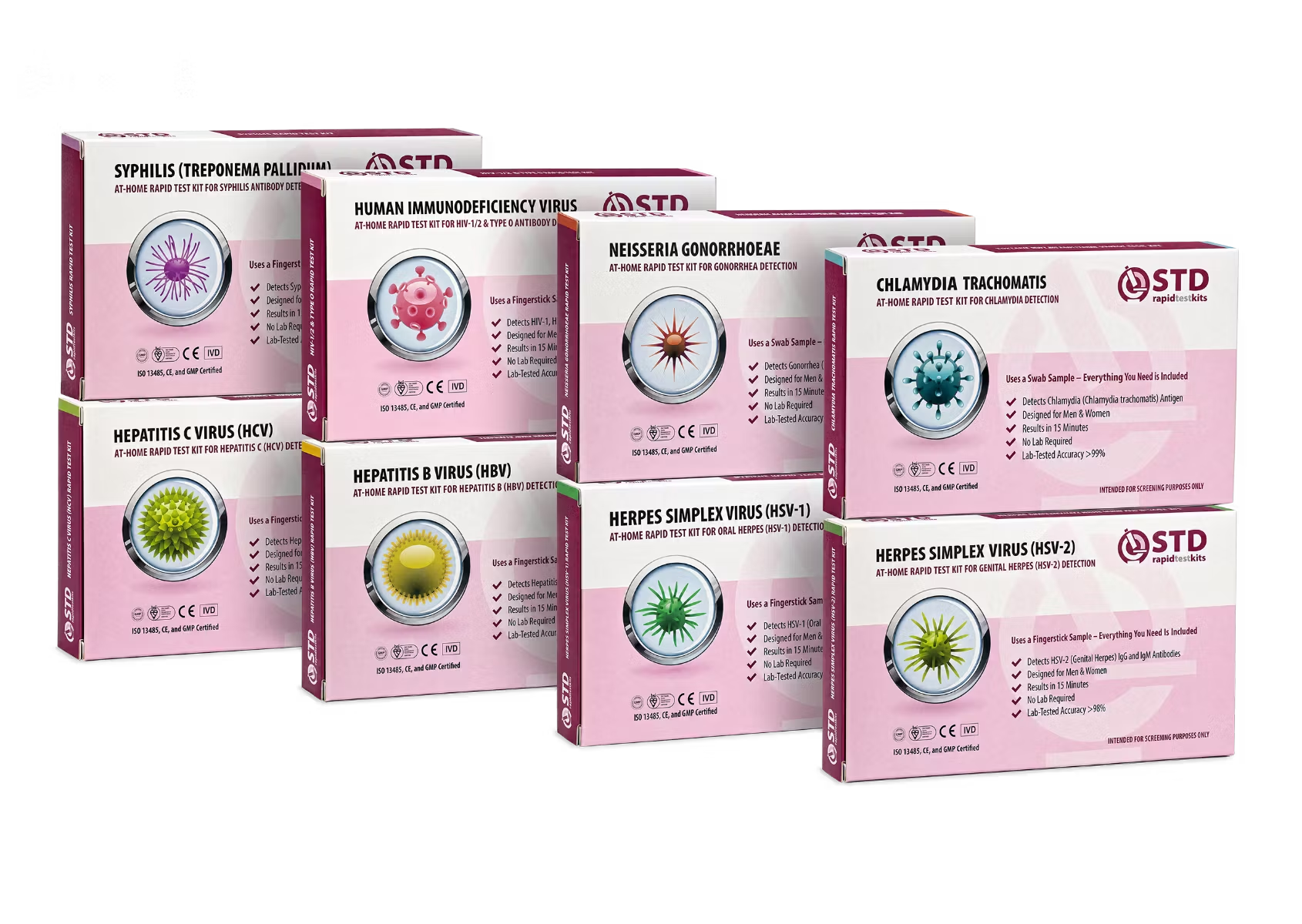
One brief note before the kits below: stdrapidtestkits.com sells the at-home rapid panels referenced in this article, and we choose products based on fit-for-purpose for the specific concern, not commercial benefit.
Why partner treatment is not optional
A treated person plus an untreated partner is the textbook setup for reinfection. The math is simple. Antibiotics cleared the infection from your body, but the same bacteria are still present in someone you share fluids with. Within weeks of resuming sex, the infection moves back across the same path it took the first time. The CDC's chlamydia guidance is blunt about timing: you should not have sex again until you and your partner(s) complete treatment (CDC: about chlamydia).
The classic "ping-pong" pattern in monogamous couples is straightforward: partner A is diagnosed, takes antibiotics, feels better, and resumes sex. Partner B was untreated, finished treatment at a different time, or skipped doses. The infection bounces between them indefinitely. From the outside this can look like cheating; from a clinic's perspective it is a coordination failure that the guidelines explicitly warn against. A common real-world version: a couple completes treatment a week apart because of scheduling, resumes sex midway, and one partner is reinfected within days.
CDC clinical guidance recommends partner treatment for anyone diagnosed with chlamydia, gonorrhea, syphilis, or trichomoniasis, even when the partner has no symptoms (CDC STI treatment guidelines). In many U.S. states, this is operationalized through Expedited Partner Therapy (EPT), which lets a clinician prescribe medication for a sexual partner the clinician has not personally examined. EPT is legal in most states and explicitly permitted by CDC guidance for chlamydia and gonorrhea.
For the partner conversation itself, the fewer assumptions you bring, the better. People who test positive for an STI often did not know they had it. They were not necessarily lying or cheating. They may have tested negative inside a window period, or skipped a test for the specific infection in question.
The majority of posttreatment infections do not result from treatment failure but rather from reinfection caused by failure of sex partners to receive treatment.
The emotional toll of repeat positives
Multiple positive results stack a particular kind of weight on the person who keeps getting them. The first positive feels like a problem to solve. The second feels like a verdict. By the third, many people stop telling their friends, stop telling new partners, and sometimes stop testing altogether to avoid hearing the answer again.
That last move is the most damaging. Untreated bacterial STIs do not stay still. Chlamydia and gonorrhea can ascend from the cervix or urethra to the upper reproductive tract and trigger pelvic inflammatory disease (PID), which is infection of the uterus, fallopian tubes, and ovaries. PID is the mechanism behind the long-term fertility consequences people associate with chlamydia: scarring of the fallopian tubes raises the risk of infertility and ectopic pregnancy in subsequent years (MedlinePlus: pelvic inflammatory disease). The risk is concentrated in repeated or prolonged untreated infections rather than a single episode that gets caught and treated promptly, which is exactly why retesting and partner treatment matter as much as the antibiotic course itself.
If you are reading this after a third or fourth positive result, the emotional response is real and worth sitting with. It is also separable from the medical question. The medical question is straightforward: confirm the diagnosis, take the prescribed treatment, get partners treated, and retest at the right interval.
Catching repeat chlamydia or gonorrhea infections at the recommended three-month rescreen prevents most progression to pelvic inflammatory disease. The fertility risk is concentrated in untreated or repeatedly untreated infection, not a single treated episode.
Why "full panel" tests may miss things
The phrase "full STI panel" is loose. Different clinics and labs include different tests under that umbrella, and many standard panels do not test for everything most readers assume they do.
A typical clinic panel might cover chlamydia, gonorrhea, syphilis, HIV, and sometimes hepatitis B and C. That leaves out trichomoniasis (one of the most common curable STIs worldwide; the CDC notes that about 70 percent of people with trich have no signs or symptoms at all, and the WHO counts it among the four curable STIs responsible for hundreds of millions of new infections each year), HSV-1 and HSV-2, and HPV (WHO STI fact sheet). None of those exclusions are negligent on the clinic's part; they reflect screening guidelines that limit testing to what is most clinically useful in a given context. But the gap matters when a partner says "I got tested, I'm clean," and you have no idea what was actually on their panel.
Sampling technique adds another layer of variation. A vaginal or urethral swab that misses the colonized site, or a self-collected sample handled outside the validated window, can read negative when the infection is genuinely present. This is part of why CDC guidance recommends that sex partners of a person diagnosed with chlamydia receive treatment regardless of their own test result; the false-negative risk in the partner is higher than the cost of a short antibiotic course.
Two practical moves close the gap. Ask a clinician (or read the lab report) for the specific list of infections covered by your most recent test. And if a particular infection is on your mind because of a symptom, an exposure, or a partner's diagnosis, request that specific test directly rather than accepting the standard panel.
| Infection | On a typical clinic "full panel"? |
|---|---|
| Chlamydia | Yes |
| Gonorrhea | Yes |
| Syphilis | Yes |
| HIV | Yes |
| Hepatitis B and C | Sometimes |
| Trichomoniasis | Often excluded |
| HSV-1 and HSV-2 | Excluded unless requested |
| HPV | Excluded unless requested |
Retesting at three months is how the system is designed to work
Retesting after treatment is built into the clinical pathway because reinfection rates spike in the months that follow. The CDC's retesting guidance for chlamydia, gonorrhea, and trichomoniasis is a three-month follow-up after the initial diagnosis, separate from a "test of cure" that some guidelines recommend three to four weeks after treatment for specific cases (CDC retesting guidance). For trichomoniasis specifically, the CDC's three-month rescreen recommendation is evidence-based for women who test positive; male partners should ask a clinician about appropriate follow-up timing.
Most repeat positives represent a fresh infection from an untreated partner, not the original bacteria still active in the body. Retesting at the right interval catches those before they cause complications and breaks the back-and-forth loop with a partner.
For viral STIs the rules differ. There is no test of cure for herpes or HPV. The goal with herpes is symptom management and reducing transmission probability with antiviral suppression. With HPV, persistent infection by high-risk strains, not a single exposure, drives cervical cancer risk over years, which is why Pap smears and HPV co-testing on a routine schedule (typically every three to five years for adults at average risk) are how progression is caught early, when precancerous cell changes are still treatable. For HIV, follow-up testing depends on whether the original test was inside the window period for the assay used.
Antibiotic resistance is a smaller but growing concern, especially for gonorrhea. The CDC has updated its first-line gonorrhea treatment regimens multiple times in the past decade in response to resistance trends. If a couple has followed every protocol (simultaneous treatment, completed full courses, observed abstinence window, retested at the recommended interval) and the infection still recurs, asking the clinician about a culture and susceptibility test is reasonable. Most recurrences will turn out to be missed coordination, not resistance, but when the standard protocol fails, escalating the diagnostic workup is appropriate.
| STI | Retest recommendation | Why it matters |
|---|---|---|
| Chlamydia | 3 months post-treatment | High reinfection rates per CDC clinical guidance |
| Gonorrhea | 3 months post-treatment | High reinfection rates and rising antibiotic resistance |
| Trichomoniasis | 3 weeks to 3 months (women) | High reinfection rates; CDC 3-month rescreen is evidence-based for women |
| Syphilis | 6 and 12 months | Track non-treponemal antibody titers to confirm response |
| HIV | Per assay window if first test was early | Confirms a window-period false negative |
| Herpes (HSV-2) | Only if symptoms recur | No cure available; goal is symptom management |
How to stop the cycle without losing your mind
Breaking out of a repeat-positive loop is mostly a strategy question. The partner-treatment gap is where most cycles begin, so closing it is usually the highest-leverage move. Most U.S. states allow Expedited Partner Therapy for chlamydia and gonorrhea, which lets your clinician prescribe medication for a partner without an in-person visit, removing the most common excuse for skipping treatment.
Once partners are treated, retesting at the three-month interval (rather than immediately) gives a result you can actually trust. A test taken four days after treatment because the anxiety is loud usually produces a false negative on the bacterial DNA assays, or a misleading positive from residual non-viable bacterial DNA on a too-early test of cure. When the interval is up, an at-home chlamydia and gonorrhea test can be self-collected at home, which makes it easier for both partners to retest on the same day. Condoms in the meantime shift the math significantly for chlamydia and gonorrhea, even though they are imperfect for HSV and HPV transmission, which can occur through skin contact outside the area covered.
- Get every recent partner tested and treated, using EPT if your state allows it.
- Retest at the recommended interval, not the moment anxiety spikes.
- Use condoms consistently between treatment and the next clean retest result.
What to say when you have had an STI before
Telling a new partner you have had an STI in the past, especially one that came back, can feel impossible. The conversation gets easier when you uncouple the disclosure from a request for permission or a confession of wrongdoing.
A simple structure works for most situations: name the infection, name what you do about it, and invite a parallel disclosure.
That phrasing trades shame for shared protocol. It also reveals very fast which partners are safe to be honest with and which ones are not. A partner who responds with judgment to a basic disclosure is showing you something important about how they will handle harder conversations later.
For viral STIs that do not clear, like HSV-2, the conversation involves more (suppressive medication options, transmission probabilities, condom use during outbreaks) and is worth rehearsing once before the moment arrives.
"I had chlamydia about a year ago. I tested clear at the three-month follow-up, and I get tested before and between partners. Where are you with testing?"
What if you are in a monogamous relationship?
A repeat STI inside a relationship that both partners describe as monogamous is one of the harder situations to sit with. The first instinct is usually to suspect infidelity, and sometimes that is the explanation. But it is rarely the most likely one. Monogamy narrows where a new infection can come from. It does not make either body immune to a dormant virus flaring or an incompletely treated infection cycling back between two people.
The most common reason one partner keeps testing positive while the other tests negative is asymptomatic carriage. The CDC notes that chlamydia often causes no symptoms even while it is doing internal damage, and the NHS makes the same point across STIs generally. A long-asymptomatic infection can sit in either partner from before the relationship began and only get caught at a later screening. Trichomoniasis and HPV in particular can persist for months or years undetected. HSV-1 (oral herpes) can move between partners through non-sexual contact, including kissing during an outbreak. A reactivation of HSV-2 years after a primary infection can surface without any fresh exposure at all.
Test discrepancies between partners also come from panel mismatch and sampling. Most baseline screens cover chlamydia, gonorrhea, HIV, and syphilis, and skip herpes, trichomoniasis, and HPV unless asked. A swab that misses the colonized site, or a sample taken inside the window period, can read negative when the infection is genuinely present. This is part of why CDC guidance recommends treating the partner of a person diagnosed with a bacterial STI regardless of the partner's own result.
It is worth being precise about what a positive result can prove. It establishes that an exposure occurred at some point in the detectable window. It does not date that exposure precisely, and it does not name the source. Before treating the result as evidence of infidelity, both partners should retest, ideally where the specific infections on the panel are confirmed. If both are positive, partner treatment is the priority regardless of the source. If one is negative, that result only means something when it comes from a test taken outside the relevant window period.

Why you deserve a reset, not regret
The frame matters. Repeat positive results signal that the system around you (testing access, partner-treatment workflows, public-health education) did not catch something the first time.
If you are reading this after a second or third diagnosis, the next move is mechanical. Confirm the result, take the prescribed treatment if applicable, and notify recent partners (EPT is available in most U.S. states for chlamydia and gonorrhea). Set a calendar reminder for the three-month retest and use protection until that result is clean.
What moves the outcome from here is the follow-up test, the partner notification, and waiting for the right retest interval before judging whether the cycle is closed.
The power of a second test
A second test, taken at the right interval, does two specific things that a first test cannot. It catches reinfections that occurred after the original treatment finished. And it confirms (or rules out) whether your original test was a true negative or a window-period false negative.
For most readers, the cleanest schedule looks like this: test soon after a possible exposure, treat if positive, retest at three months for chlamydia, gonorrhea, or trichomoniasis. For HIV, retest at three months after the last exposure if the initial test was within the window period for the assay used. For syphilis, follow-up titers at six and twelve months document successful response to treatment.
A second test reflects how reliable diagnosis is designed to work, and skipping it is what creates most of the surprise repeat positives that show up six or twelve months later.
- Chlamydia, gonorrhea, trichomoniasis: three months after treatment.
- Syphilis: antibody titers at six and twelve months.
- HIV: rescreen at three months if the original test was inside the assay's window period.
- Herpes (HSV-2): only if symptoms recur.
Your next steps after a repeat positive
If you are staring at a second or third positive result, the path forward is mechanical, not mysterious. Work through the checks below in order. Each one closes off one of the common reasons a repeat positive keeps showing up.
What to do after a repeat positive result
Did you and every recent partner complete a full course of treatment, finishing within the same week?
Yes: Good. Hold off on sex until the abstinence window your clinician set has passed, then move on to the retesting check.
Has it been three months since you finished treatment for chlamydia, gonorrhea, or trichomoniasis?
Yes: Retest now. Three months is when a fresh reinfection becomes reliably detectable, and it is the CDC-recommended rescreen point for bacterial STIs.
No: Set a reminder for the three-month mark and use condoms until then. A test taken earlier can miss a new infection or pick up residual non-viable DNA from the old one.
Guidance only; a clinician can advise based on your specific situation and local rules.
FAQs
- Can you really get the same STI twice?
- Yes. Most bacterial STIs do not produce lasting immunity. A treated chlamydia or gonorrhea infection clears the bacteria from your body, but a new exposure (often from the same untreated partner) can restart the infection. The CDC builds rescreening at three months into routine care for exactly this reason.
- What is the difference between reinfection and reactivation?
- The difference determines the response. Reinfection (typical for chlamydia, gonorrhea, trichomoniasis) means the bacteria returned via a partner. The response is simultaneous retreatment of both people. Reactivation (typical for HSV-2) means a virus you already carry flared up. The response is symptom management and, if outbreaks are frequent, antiviral suppression.
- I took the antibiotics. Why did my test come back positive?
- The most common reason is reinfection from an untreated partner, not antibiotic failure. Other possibilities include resuming sex before the recommended seven-day post-treatment interval, an unrelated new exposure since the last test, or a too-early test of cure picking up residual non-viable bacterial DNA. True antibiotic resistance is rare for chlamydia but a rising concern for gonorrhea.
- Could I have given my partner an STI without cheating?
- Yes. If you were infected before the relationship started and that infection was not detected at baseline (no test was done, the panel did not include it, or the test was inside its window), you could transmit it later. This is common with asymptomatic infections that go unnoticed for months or years before a partner's test happens to catch them.
- My test came back negative, but I still have symptoms. Now what?
- Consider whether the test was taken inside the window period for the infection in question. Bacterial STI tests (NAAT) become reliable about one to two weeks after exposure; antibody tests for syphilis and HIV need longer. Also check whether the panel covered the specific infection causing your symptoms. Trichomoniasis, HSV, and HPV are often excluded from default panels. Non-STI causes like BV, yeast, UTI, mycoplasma or ureaplasma urethritis, and contact irritation are also worth ruling out.
- How soon after treatment should I retest?
- The urge to retest immediately is understandable but usually counterproductive. For chlamydia, gonorrhea, and trichomoniasis, waiting three months lets reinfection become detectable and avoids a false negative or a too-early test of cure picking up residual non-viable bacterial DNA. Syphilis needs titer checks at 6 and 12 months; HIV follow-up depends on which assay was used and whether the first test fell inside its window.
- What if my partner says they tested negative?
- Ask which specific infections their test covered. Many clinic panels exclude trichomoniasis, HSV, and HPV by default. A negative chlamydia and gonorrhea result is not a clean bill of health for every infection. If their test was inside the relevant window period, or if sampling missed the colonized site, the negative may also be a false negative.
- Do condoms prevent reinfection?
- Condoms substantially reduce transmission risk for chlamydia, gonorrhea, HIV, and most other STIs, but they do not eliminate it. They are less protective against herpes and HPV, which spread through skin-to-skin contact in areas a condom may not cover. During the abstinence window after treatment for a bacterial STI, even condoms are not considered fully protective; the CDC recommends waiting until both partners have completed treatment before resuming sex.
- Can a herpes outbreak after years of no symptoms mean my partner cheated?
- Almost certainly not. HSV-2 is a lifelong infection that can stay dormant for years and then reactivate due to stress, illness, hormonal changes, or no identifiable trigger at all. A first noticeable outbreak in a long-term relationship is more commonly the person's own dormant virus surfacing for the first time than a sign of new exposure.
- Are at-home rapid tests reliable for retesting?
- At-home rapid lateral-flow tests are useful screening tools when used at the right interval and according to instructions. They are not the same technology as lab-processed NAAT, which has higher analytical sensitivity, especially for asymptomatic infections. A positive result on a rapid test should be confirmed with a lab test before starting treatment; a negative result inside a window period should be repeated at the recommended interval.
How we sourced this article: We combined current guidance from leading public-health bodies (the CDC, the WHO, the NHS, and NIH MedlinePlus) with clinical guidance on reinfection rates, viral reactivation, and window periods, then translated it into plain-English action items. Every quantitative claim in this article was checked against its cited source page on the date of this update. This article is editorial summary, not personal medical advice; for symptoms or treatment decisions, see a licensed clinician.
- U.S. Centers for Disease Control and Prevention. STI surveillance and incidence data for the United States.
- U.S. Centers for Disease Control and Prevention. About Chlamydia: chlamydia often has no symptoms, partners should not resume sex until both complete treatment, and retesting is advised about three months after treatment.
- U.S. Centers for Disease Control and Prevention. STI Treatment Guidelines: clinical retesting recommendations for chlamydia, gonorrhea, and trichomoniasis (three-month rescreen evidence-based for women with trichomonas).
- U.S. Centers for Disease Control and Prevention. About Trichomoniasis: prevalence, asymptomatic carriage (about 70% have no symptoms), and reinfection.
- U.S. Centers for Disease Control and Prevention. About Genital Herpes: lifelong nature of HSV infection and recurrent outbreak patterns.
- U.S. Centers for Disease Control and Prevention. HIV testing: window periods for fourth-generation antigen/antibody assays and rapid antibody-only tests (23 to 90 days).
- World Health Organization. Sexually Transmitted Infections (STIs) fact sheet: global burden of curable STIs (chlamydia, gonorrhea, syphilis, trichomoniasis), HSV-2 prevalence, and antimicrobial resistance in gonorrhea.
- UK National Health Service. Sexually transmitted infections (STIs): many STIs have no symptoms, and testing timing guidance for accurate results.
- U.S. National Library of Medicine (MedlinePlus). Pelvic Inflammatory Disease: PID is often caused by gonorrhea and chlamydia and can scar the fallopian tubes, leading to infertility and ectopic pregnancy.
