
Published: October 2025 | Last updated: May 2026 | Editorial review and quality control: Martina N.
Yes, you can pick up HPV again from a partner you have already been with. Sometimes it is reinfection from a strain they still carry. Sometimes it is a different strain neither of you knew about. And sometimes it is the same virus you cleared years ago waking up after a stretch of stress, illness, or pregnancy. None of those scenarios mean someone broke a promise.
HPV is the most common sexually transmitted infection in the world. The CDC estimates that nearly every sexually active person who does not get the HPV vaccine will catch it at some point (CDC, About HPV). It keeps showing up in faithful relationships for predictable reasons once you understand how the virus actually moves between people, what your immune system does (and does not) lock in, and where home and clinic testing draw the line.
Key takeaways
- HPV can return in a monogamous relationship through three routes: your old strain reactivating, your partner still carrying the strain you cleared, or a different HPV type entering the picture. None of them require infidelity.
- The Gardasil 9 vaccine still helps after a past infection because it covers nine HPV types, and U.S. guidance allows shared clinical decision-making about vaccination through age 45.
Why HPV does not always stay gone
Most HPV infections do clear on their own. Per the CDC, about 9 out of 10 HPV infections go away by themselves within two years (CDC, About HPV; NHS, HPV overview). Cleared in this context usually means the virus has dropped to a level no available test can detect.
Clearing is not the same as developing lifelong immunity. Unlike chickenpox or measles, where one infection trains your body for the next attack, HPV does not always leave behind a strong, lasting immune memory. The vaccine produces long-lasting protection: CDC documents effectiveness persisting beyond 10 years, which is one reason ACIP recommends vaccination even for people who have already had HPV (CDC vaccine effectiveness data).
The virus itself is also good at hiding. HPV lives in the basal layer of skin and mucous cells. Once an infection has been controlled, fragments of viral DNA can stay in those cells in a low-activity state. Stress, a new pregnancy, an unrelated illness, or anything that briefly dampens the immune system can let the virus replicate again. Whether that counts as a fresh infection or a reactivation is genuinely hard to tell with current testing, and researchers are still mapping the boundary.
Nearly everyone who is not vaccinated will get HPV at some point in their lives.
The “we both tested negative” paradox
This is the part that catches monogamous couples off guard. You both tested clear last year. You have been exclusive. One of you turns up HPV-positive at a routine pap visit. It feels like betrayal, but the explanation is usually testing limits, not infidelity.
HPV testing in the U.S. is built around cervical screening. There is no FDA-approved routine HPV test for people without a cervix. Per the CDC, men are not screened for HPV outside of specific high-risk situations (such as anal screening for some men who have sex with men), and even when a clinician swabs an external lesion, the test mostly answers “is there a wart here?” rather than “are you a carrier?” (CDC STI Treatment Guidelines, HPV). A male partner can feel fine, look fine, and still carry the virus the entire time you have been together.
Even for women, a single pap and HPV co-test catches what is shedding right now in the cervix. It does not see oral, anal, or skin-area infection. So a “negative test” is a snapshot of one site at one moment, not a clean bill of health for HPV across the whole body.
| Path back to a positive result | What is happening | Can it look like reinfection? |
|---|---|---|
| Reactivation | The same HPV type you cleared starts replicating again, often during a period of immune stress, hormonal change, or pregnancy. | Yes |
| New exposure, same strain | Your partner still carries the strain you previously cleared. Because clearing does not guarantee lasting immunity, you can be reinfected. | Yes |
| New exposure, different strain | Per the U.S. National Cancer Institute, HPV is a group of more than 200 related viruses, with 12 types considered high-risk for cancer. You may be encountering a type neither of you tested for before. | Yes |
Skin contact, not just penetration
Condoms cut the risk of HPV transmission, and they remain one of the better tools we have, but they do not eliminate it. The reason is mechanical. Unlike HIV or hepatitis, HPV does not spread only through fluids. It spreads through direct skin and mucous-membrane contact in the genital area, including the inner thighs, base of the penis, scrotum, vulva, perineum, and pubic mound. None of those areas are reliably covered by a condom.
Per the CDC's STI Treatment Guidelines, HPV can be transmitted through contact with infected skin or mucous tissue, including oral sex and genital-to-genital contact without penetration (CDC STI Treatment Guidelines, HPV). That is why a couple can practice consistent condom use, never have penetrative sex without one, and still find HPV in the relationship.
Condoms still belong in the toolkit. They reduce the chance of transmission and lower the risk of cervical lesions in partners of people with HPV. The realistic framing is that they are risk-reducing for HPV, with some residual risk that comes from skin contact a condom does not cover.
The HPV vaccine after a past infection
One of the most useful and most underused facts about HPV is that the vaccine still helps after you have been infected. The current vaccine, Gardasil 9, protects against nine HPV types, including the strains responsible for the majority of cervical, anal, throat, and other HPV-related cancers, plus the two types that cause most genital warts (CDC vaccine safety and effectiveness data).
If you have been exposed to one or two of those types, the vaccine still trains your immune system against the other seven or eight you have not encountered. That matters because the strain you cleared is unlikely to be the only HPV type circulating in your sexual network. Vaccination after infection does not cure an active infection, but it lowers the risk of picking up additional types and reduces the chance that future immune dips translate into new lesions.
The current ACIP recommendation, mirrored by the CDC, is routine HPV vaccination through age 26 and shared clinical decision-making about catch-up vaccination through age 45. The decision after 26 weighs likelihood of new exposure against the likelihood that you have already been exposed to the types the vaccine covers. A clinician familiar with your sexual-health history is the right person to walk you through that math.
What Gardasil 9 covers
- Nine HPV types: seven high-risk strains responsible for the majority of HPV-related cancers, plus two strains that cause most genital warts.
- ACIP and CDC guidance: routine vaccination through age 26 and shared clinical decision-making about catch-up vaccination through age 45.
When to retest, and what you are actually testing for
Once HPV has appeared in your relationship, the natural question becomes: how often should you check? The answer depends on which body you are asking about and what triggered the concern.
If you have a cervix, the CDC recommends following the routine cervical-cancer screening schedule from your provider. Pap testing typically begins at 21, with HPV co-testing offered from age 30 onward. After an abnormal result, providers often repeat testing in 6 to 12 months to see whether the virus persists or clears, and whether any cell changes resolve on their own (CDC STI Treatment Guidelines, HPV). If you have had a procedure for abnormal cells (LEEP, cryotherapy, cone biopsy), follow-up testing is typically scheduled in that same window.
If you do not have a cervix, retesting is murkier because no routine HPV test exists for you. Watch for visible signs (genital warts, persistent irritation, or unusual changes in the throat after oral sex) and bring any of those to a clinician promptly. Couples often choose to do a broader STI panel together at the same time, less because that panel detects HPV in male partners (it does not), and more for peace of mind on the rest of the picture.
One disclosure for the products linked below: this site, stdrapidtestkits.com, sells at-home rapid lateral-flow tests for HPV and other STIs. We recommend products only when they fit the reader's situation, not for commercial benefit.
| Your situation | When to retest | Is the vaccine still worth discussing? |
|---|---|---|
| You cleared HPV; your partner now tests positive | Stay on your normal pap/HPV co-testing schedule, and bring it forward if symptoms appear or your next pap is abnormal | Yes if you have not yet been vaccinated against all nine types |
| You had an abnormal pap after past clearance | Follow your provider's specific follow-up timeline, typically 6 to 12 months | Yes if you are unvaccinated |
| Your partner is HPV-positive and your last pap was years ago | Schedule pap and HPV co-testing within 6 to 12 months | Yes if you are under 45 and have not completed the full series |
| Entering a new relationship, no prior vaccination | Baseline pap if it has been more than 1 to 3 years (per your provider) | Yes, especially if you are under 27 |
Why your immune system matters more than the relationship math
HPV outcomes are dominated by immune response. Two people exposed to the same strain, on the same day, can have completely different trajectories. One clears the infection in months. The other carries it for years, sometimes with intermittent reactivation that produces visible warts or abnormal cells, and sometimes with no symptoms at all.
That variability is not random in the long run. Smoking, chronic stress, poor sleep, immunosuppressive medication, untreated HIV, and pregnancy all change the way the immune system handles HPV. They can extend the time the virus stays detectable and increase the chance that low-grade cell changes progress rather than resolve. None of those factors make HPV a moral issue; they make it a predictable virology issue.
The same person can clear HPV in one decade and have it reappear in another. Hormonal shifts during pregnancy and the postpartum period are known to coincide with new HPV detection in people who tested negative the year before. So is the immunosuppression that comes with certain medications. None of that requires a new partner.
- Smoking
- Chronic stress
- Poor sleep
- Immunosuppressive medication
- Untreated HIV
- Pregnancy and the postpartum period
Testing at home: what you can check, and what you cannot
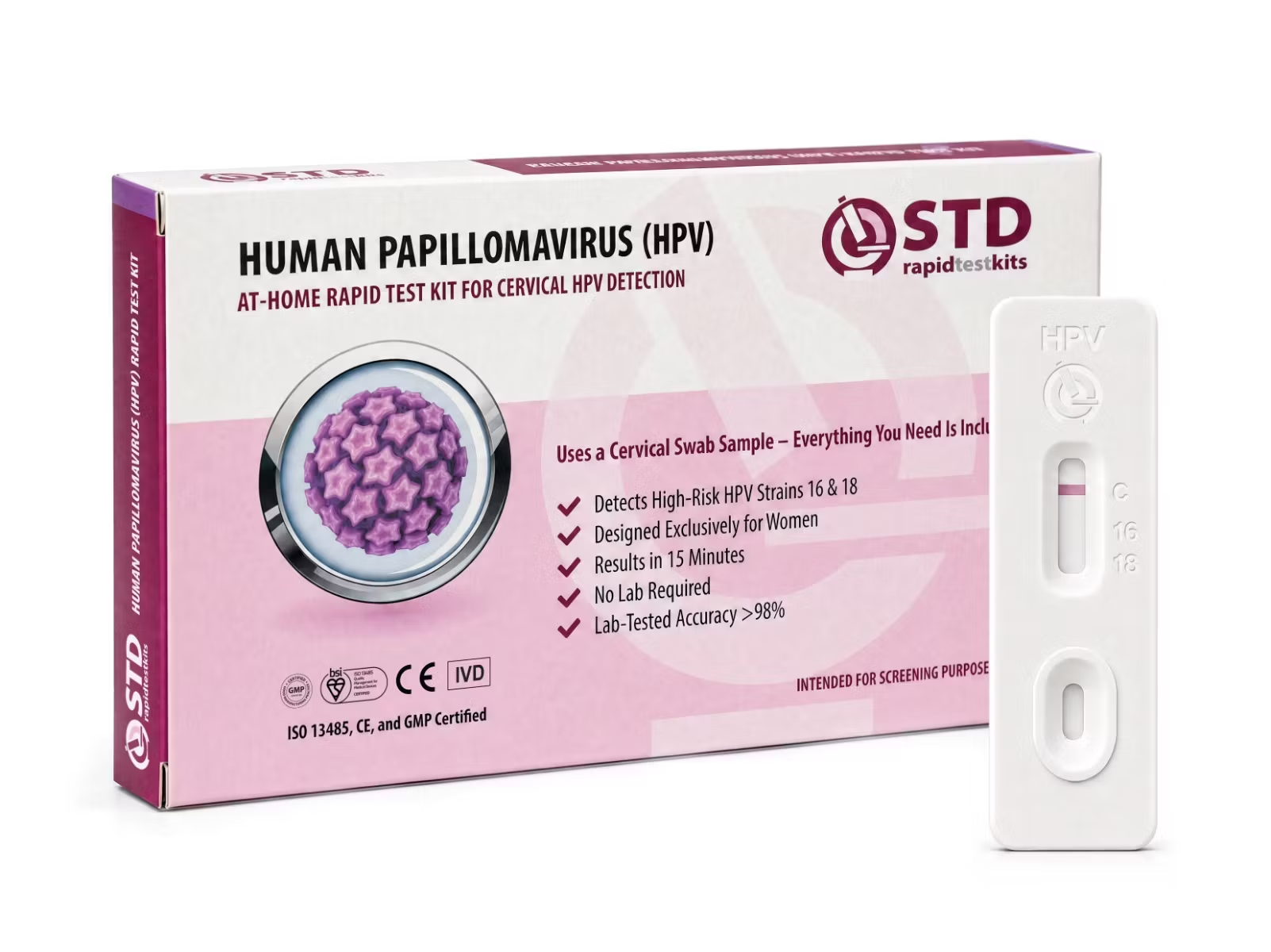
Home testing has gotten meaningfully better at giving people an answer without the wait, the office visit, or the disclosure conversation at a clinic desk. For HPV specifically, the picture is narrower than for STIs that can be detected by blood or urine. HPV detection requires a tissue or cell sample from the affected site, which is why home tests for HPV are vaginal swabs and why no equivalent kit exists yet for routine male HPV screening.
For people with a cervix, an at-home swab can give you a starting answer between scheduled pap appointments, especially if you have a history of abnormal results and want to keep an eye on whether the virus is still detectable. It does not replace the pap smear that looks at cervical cells under a microscope; the two tests answer different questions, and your provider needs the cell-level view for cancer screening. If your provider has already recommended colposcopy after a high-grade abnormal result, an at-home rapid swab is not a substitute for that procedure.
For couples who want to test together, a broader panel that covers chlamydia, gonorrhea, syphilis, HIV, hepatitis B and C, and herpes is often the more practical choice for the partner who cannot test for HPV directly. It does not solve the HPV question, but it does answer the rest of the “let's get a baseline together” conversation.
The emotional fallout, and why it is not your fault
An HPV diagnosis after years of monogamy is rarely a calm experience. Most people cycle through several common reactions before settling, and recognising the cycle helps you ride it out instead of acting on the worst of it.
None of those reactions mean anything is wrong with you or your partner. HPV is unusually good at producing relationship friction precisely because it can hide for years and reappear without warning. Couples who do best with this generally make two changes. They learn enough about how the virus works that they stop interpreting a positive test as proof of cheating. And they treat HPV as a shared health issue, like managing high blood pressure together, rather than as one person's problem.
If you find yourself stuck in the spiral, naming the feelings to your partner directly often works better than trying to manage them alone. So does talking to a clinician who handles HPV-positive patients regularly; they have heard every version of the conversation you are about to have, and they can usually defuse the most catastrophic interpretations within a single visit.
- Suspicion, even when the science clearly explains a path that does not require infidelity.
- Shame, even though HPV is one of the few infections genuinely close to universal among people who have ever had sex.
- Fatigue, especially if it is not the first round of testing or follow-up.
Your action plan after a positive result in the relationship
Whether the positive result was yours or your partner's, the same short list of steps tends to apply. None of them are emergencies. All of them help.
Start with a screening check-in. If you have a cervix and your last pap was more than a year or two ago (or your provider's recommended interval has lapsed), book one. If your partner has just tested positive at their visit, mention that to whoever you book with so the visit can include HPV co-testing.
Talk to a clinician about the vaccine. If you are under 27 and unvaccinated, vaccination is straightforward. If you are between 27 and 45, your clinician can help you weigh whether the strains you might still catch make the series worth doing. If you are vaccinated already, you are done; the vaccine series does not require boosters at this time.
Then, have one direct conversation with your partner. Focus it on what comes next: timing of follow-up tests, whether either of you wants the vaccine, what you plan to tell future partners if the relationship changes, and how you want to handle visible warts if they appear. The conversation is short. The relief afterwards is usually large.

FAQs about HPV reinfection from the same partner
- Can I really catch HPV again from a partner I already cleared the virus with?
- Yes. Clearing HPV does not guarantee that your immune system locks in lasting protection against that strain. If your partner still carries the virus, you can be reinfected. You can also encounter a different HPV type entirely. None of those routes require either of you to have been with someone else.
- Doesn't my body remember the HPV strain it cleared the first time?
- Sometimes, but the immune memory after natural HPV infection is often weaker and shorter-lived than the immunity the vaccine produces. That is one of the reasons ACIP recommends vaccination even for people who have already had HPV.
- If we both tested negative last year, how is one of us positive now?
- HPV testing has real limits. Cervical pap and HPV co-testing only see what is shedding from the cervix at the moment of the test. There is no FDA-approved routine HPV test for men, so a male partner can carry the virus indefinitely without a test detecting it. A negative test is a useful snapshot, not a guarantee that HPV is absent from the relationship.
- Is this the same strain coming back, or a new infection?
- Current testing usually cannot tell the difference. A genotyped HPV test can show that the same type is present, but it cannot prove whether that type stayed dormant or was reintroduced. For follow-up care the answer is the same in both cases: monitor with your provider on the timeline they recommend, and consider whether the vaccine still has value for your remaining strain coverage.
- We always use condoms. How is HPV still possible?
- Condoms reduce HPV transmission but do not eliminate it. HPV spreads through direct skin contact in the whole genital area, including the parts a condom does not cover (inner thighs, base of the penis, scrotum, vulva, pubic mound). Oral sex and non-penetrative genital contact can also transmit it.
- Should I get the HPV vaccine if I have already had HPV?
- Often yes, because the vaccine covers nine HPV types and most people have not been exposed to all nine. The CDC recommends routine vaccination through age 26 and shared clinical decision-making about catch-up vaccination through age 45. A clinician who knows your sexual-health history can help you weigh it for your situation.
- Can HPV reappear years after a clear test?
- Yes. Stress, illness, immunosuppressive medication, hormonal change, and pregnancy can all be associated with HPV becoming detectable again after a period of clearance. That does not mean a recent transmission event happened; it can mean the virus that was already present at low levels began replicating again.
- Do I need to disclose HPV to future partners?
- There is no universal legal disclosure rule for HPV the way there is for some other infections, but disclosure is a respectful default if you have an active high-risk HPV infection or a current outbreak of warts. HPV is extremely common, so this conversation does not need to be dramatic. Calm, factual, and short tends to work best.
How we sourced this article: Our editorial team summarized current guidance from the CDC, NHS, and the U.S. National Cancer Institute on HPV transmission, vaccination, and screening, and then translated it into plain English for the situations couples actually run into. We do not provide individualized clinical advice. For symptoms, abnormal results, or vaccination decisions, please see a licensed provider.
- U.S. Centers for Disease Control and Prevention. About HPV, including prevalence, lifetime infection risk in unvaccinated populations, and the 9-out-of-10 two-year clearance figure.
- U.S. Centers for Disease Control and Prevention. Sexually Transmitted Infections Treatment Guidelines, HPV section, including transmission routes, screening recommendations, and the lack of routine HPV testing for men.
- U.S. Centers for Disease Control and Prevention. HPV vaccination considerations: safety and effectiveness data, including documented protection persisting beyond 10 years from Gardasil 9.
- U.S. National Cancer Institute. HPV and Cancer, including the 200+ HPV type count and the 12 HPV types classified as high-risk for cancer.
- NHS (United Kingdom). Human papillomavirus (HPV) overview, including typical clearance within two years and the role of immune response.
