Published: September 2025 | Last updated: May 2026 | Editorial review and quality control: Martina N.
A scratchy throat that will not quit after a new encounter, or a friend asking quietly over coffee whether oral sex really "counts" for STI purposes. If either sounds familiar, you are in the right place.
The short answer: yes, people over 50 can get chlamydia from oral sex. The bacteria pass between an infected person's genitals or anus and another person's mouth or throat, no penetration required. CDC STI surveillance shows rising rates among adults over 50, and oral exposure is a quietly common route that many couples assume is "safer" than penetrative sex.
This article walks through how oral chlamydia spreads, what symptoms to look for (often there are none), how testing works, and what at-home kits actually cover, including the parts where a clinic visit is the right call.
Key takeaways
- Oral sex can spread chlamydia in either direction: mouth to genitals, or genitals to mouth. Most cases produce no symptoms, so testing is the only way to know for sure.
- Standard urine STI panels and at-home rapid kits do not cover the throat. Detecting pharyngeal chlamydia requires a specifically requested throat swab at a clinic or sexual-health center.
What oral chlamydia actually is
Chlamydia is caused by the bacterium Chlamydia trachomatis. Most people associate it with the genitals, but it can also infect the rectum, the eyes, and the throat. When the throat is involved, clinicians call it pharyngeal or oropharyngeal chlamydia.
Pharyngeal chlamydia happens when the mouth or throat comes into contact with an infected person's genitals or anus, usually during oral sex. Transmission flows in both directions: giving oral sex to a partner with genital chlamydia can deposit bacteria in your throat, and receiving oral sex from a partner with throat chlamydia can deposit bacteria on your genitals.
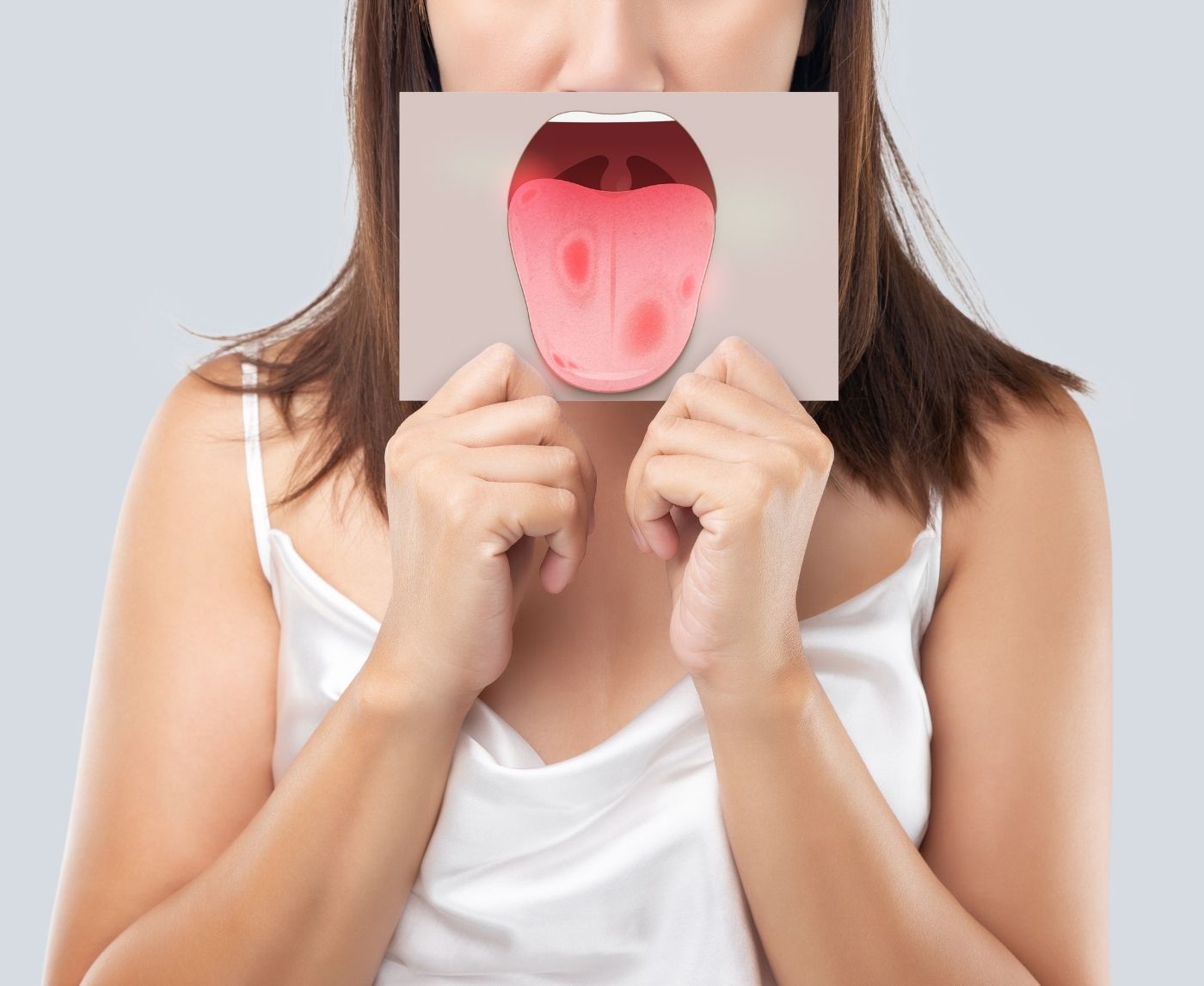
Here is the part that catches people off guard: oral chlamydia is often silent. The CDC's chlamydia overview notes that most chlamydial infections cause no symptoms in either site. When throat symptoms do appear, they tend to be mild: a dry, scratchy throat, mild rawness on swallowing, possibly some redness on inspection. The pattern looks like the tail end of a cold.
The CDC notes that the majority of chlamydia cases (genital, rectal, and pharyngeal) cause no symptoms at all, or symptoms so mild they get dismissed. That is the central reason routine testing matters more than waiting for a sign something is wrong, and why pharyngeal infection in particular tends to persist undetected.
"We didn't have sex": why oral still counts
One of the most common framings clinicians hear at older-adult sexual-health visits is some version of "we didn't really have sex, just oral." In medical terms, oral sex is sexual activity, and it can transmit several STIs. Bacterial STIs that travel this way include chlamydia, gonorrhea, and (less commonly) syphilis. Viral STIs that can spread through oral contact include herpes (HSV-1 most often, HSV-2 in some cases), HPV, and rarely HIV.
Chlamydia does not check IDs. It cares whether infected secretions reach a mucous membrane: throat, urethra, cervix, or rectum. The shift after 50 is more about behavior than biology. Many older couples skip condoms and dental dams during oral sex because pregnancy is no longer a concern, and STI conversations were not part of the cultural script when they came of age. Yet CDC has documented rising STI rates among adults over 50 across its annual STI surveillance reports.
The everyday picture is recognizable: a first weekend away with someone new, kissing and touching and oral sex but no penetration, both partners assuming the encounter was "safe." Chlamydia does not require penetration to find a mucous membrane, and that gap between assumption and biology is how a quietly hoarse throat ten days later turns into a 2 AM search-engine query.
Where the bacteria settles, and what symptoms to watch for
Chlamydia favors moist, soft tissues: the throat, urethra, cervix, and rectum. During oral sex, if either partner has an active infection, bacteria can transfer between surfaces with everyday contact. Being older does not protect those tissues. If anything, age-related changes that often come with menopause or lower testosterone (thinner mucous membranes, reduced lubrication, more easily formed microtears) can subtly increase the chance bacteria find a foothold.
The breakdown below maps how oral exposure routes typically present, by body site:
| Exposure type | Site of infection | Common symptoms | Test method |
|---|---|---|---|
| Receiving oral sex from an infected partner | Genitals (penis, urethra, vagina, cervix) | Burning when urinating, unusual discharge, or no symptoms | Urine sample (NAAT) or genital swab |
| Giving oral sex to an infected partner | Throat (pharynx) | Mild sore throat, scratchiness, often no symptoms | Pharyngeal swab, requested specifically |
| Oral-anal contact (rimming) | Rectum | Discomfort, bleeding, often no symptoms | Rectal swab (NAAT), on request |
Symptoms: throat versus genitals
If chlamydia is living in the throat, expect some combination of these signals, or none at all:
- A persistent low-grade sore throat that does not improve with lozenges or rest.
- Mild rawness or irritation, especially after swallowing.
- A scratchy tickle that lingers for weeks.
- Possible mild redness on inspection, possibly nothing visible at all.
People often write these off as seasonal allergies, post-nasal drip, or the leftover edge of a cold. Because the picture is so muted, very few patients connect it to a recent oral encounter, and most clinicians do not ask about oral sex on routine throat-complaint visits.
Genital chlamydia presents with a different set of clues, when it presents at all: burning during urination, unusual discharge, pelvic pain, or testicular swelling. The CDC chlamydia overview notes that most chlamydia infections (oral or genital) produce no symptoms. The bacteria can persist for weeks or months, slowly inflaming tissue or transferring to partners, with no warning sign.
Why oral chlamydia gets missed at the doctor's office
The standard "STI panel" most people imagine is not actually one fixed test. In US primary care, "screen me for STIs" usually triggers a urine NAAT for chlamydia and gonorrhea (genital site only), plus blood work for HIV and syphilis. Hepatitis B and C are sometimes added. The pharyngeal swab is almost never included unless the patient or clinician asks for it, and most exam-room conversations skip questions about oral sex entirely.
That gap matters more for older adults than younger ones for two reasons. First, providers more often assume a 60-year-old in a long-term marriage is not at risk, and they skip the sexual-history questions. Second, older adults more often minimize their own risk for the same reason. The infection sits quietly in the throat, the symptoms read like a long cold, and nobody thinks to swab the right site.
A negative urine chlamydia test does not rule out a throat infection. If you only had oral exposure (giving) and you want to be sure, ask your clinician explicitly for a pharyngeal NAAT swab. The wording that works: "I would like a chlamydia and gonorrhea throat swab, please." This is a routine collection at any sexual-health center and most primary-care offices.
The window period: when a test can actually find it
Even if you swab the right site, testing too early can produce a false sense of security. The window period is the gap between exposure and the point when bacteria have multiplied enough that a test reliably picks them up. For chlamydia, that window is typically 1 to 2 weeks after exposure, with peak detection from 14 days onward.
Test too soon after oral sex and the bacterial load may not yet be detectable, especially in the throat where colonization can build slowly. The CDC STI Treatment Guidelines name NAAT (nucleic acid amplification test) as the gold-standard chlamydia diagnostic, and a sensible practice is to retest at the 14-day mark if your first test was earlier or if symptoms persist.
The detection-window pattern by site:
| Infection site | Recommended sample type | Earliest detection window | Peak accuracy |
|---|---|---|---|
| Throat (pharyngeal) | Throat swab (NAAT) | About 7 to 14 days after exposure | 14+ days |
| Genitals | Urine sample or genital swab (NAAT) | About 7 to 10 days | 14+ days |
| Rectum | Rectal swab (NAAT) | About 7 to 14 days | 14 to 21 days |
Testing options for older adults (and where home kits stop)
For oral chlamydia specifically, you have three good options, in order of accuracy for the throat site:
- Clinic or sexual-health center pharyngeal NAAT swab. The most accurate way to detect throat chlamydia. Most STI clinics, Planned Parenthood centers, and many primary-care offices can collect this. Tell the front desk or clinician: "I need a pharyngeal swab for chlamydia and gonorrhea." The collection takes a few seconds and is essentially painless.
- Telehealth mail-in lab kit with a throat-swab option. Some mail-in services (for example, Everlywell or LetsGetChecked) offer panels that include a self-collected pharyngeal swab mailed to a certified lab. Slower than rapid testing but accurate and private.
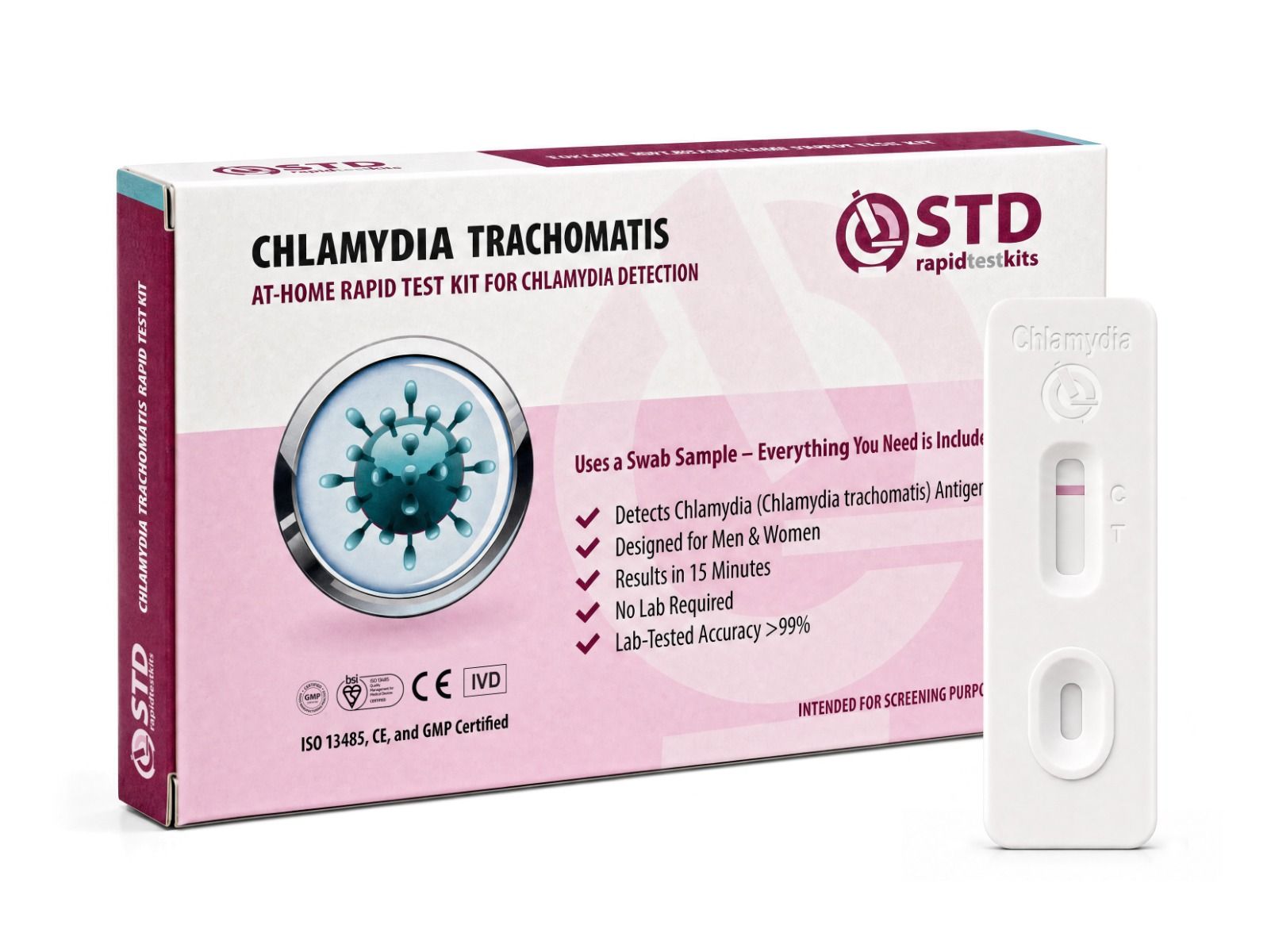
- At-home rapid lateral-flow tests for genital exposure. Useful when oral contact could have transmitted to your genitals from a partner's throat. Our chlamydia rapid test is a self-collected genital swab; it is not validated for throat samples. If your only worry is the throat site, the home rapid kit cannot answer that question on its own.
The honest framing: at-home rapid testing is excellent for screening genital chlamydia privately and quickly, especially when oral contact may have transmitted bacteria from a partner's throat to your genitals. For pharyngeal infection, a clinic swab is the right tool. We do not sell a home throat-swab kit, and we will not pretend otherwise.
What treatment looks like
Oral chlamydia is curable. Per the CDC STI Treatment Guidelines, the recommended first-line regimen for uncomplicated chlamydia (genital, rectal, or pharyngeal) is doxycycline 100 mg orally twice a day for 7 days. Azithromycin 1 g as a single dose is an alternative when doxycycline is contraindicated, although CDC notes lower efficacy at the rectal site.
Most people start to feel better within several days, but the full course matters even if symptoms vanish. Stopping early can let the infection persist or rebound. For pharyngeal infections specifically, some clinicians follow up with a test-of-cure NAAT around 4 weeks after treatment to confirm the throat site cleared (the CDC guidelines do not recommend routine test-of-cure for nonpregnant adults who complete the doxycycline regimen; this is a clinical-judgment practice some providers apply to throat infections, where eradication can be slightly less reliable than at the genital site).
Refrain from oral or genital sex during the treatment course and for 7 days after the last dose. Any partners from the past 60 days should be notified and offered testing and treatment to prevent ping-pong reinfection.
Treatment at a glance
- First-line: doxycycline 100 mg orally twice a day for 7 days (CDC STI Treatment Guidelines).
- Alternative when doxycycline is contraindicated: azithromycin 1 g as a single dose.
- No oral or genital sex during treatment and for 7 days after the last dose.
- Notify partners from the past 60 days so they can be tested and treated.
How to bring it up with a partner
The hardest part is rarely the symptoms or the test. It is the conversation. Older adults often assume STIs are for "other people," and many are dating after divorce or loss, navigating new relationships with vulnerability and hope. Disclosing a positive test feels exposing.
The medical case for partner notification is simple: untreated chlamydia can persist and reinfect both of you, and it can also damage tissues over time. Frame it as health information, not confession. Two phrasings that land well:
- Before testing: "I have been reading about oral STIs and I want to test, just to know where we stand. Would you want to do it together?"
- After a positive: "I tested positive for chlamydia. The good news is it is treatable. You should get tested and treated too, so we do not pass it back and forth."
If naming yourself feels too exposed, most state and county health departments offer anonymous partner notification at no cost; they contact your past partners without sharing your name.
Most people who have chlamydia have no symptoms. If you do have symptoms, they may not appear until several weeks after you have sex with an infected partner.
Prevention isn't just for younger people
If you came of age in the 1970s, 1980s, or 1990s, condoms for oral sex were not part of the standard sex-ed menu. Add the cultural assumption that older adults do not need to worry about STIs, and the result is the steady upward trend in older-adult infection rates that CDC surveillance reports have tracked for over a decade.
Prevention still works at every age. Practical options:
- Condoms during oral sex on a penis reduce chlamydia and gonorrhea transmission substantially. Latex or polyurethane both work.
- Dental dams during oral-vaginal or oral-anal contact create a similar barrier. A condom cut lengthwise and laid flat can serve as an improvised dental dam.
- Periodic STI screening if you have new partners or non-monogamous relationships. Yearly is a reasonable baseline; more often if you have multiple partners.
- Open partner conversations. Many older couples report that talking about sexual health together (last test, last partner, what feels safe) actually deepens intimacy rather than damaging it.

Discreet at-home testing for older adults
For many older adults, the clinic itself is the barrier. Small-town life, a familiar receptionist, anxious memories of waiting rooms, or just the sense that "this is for younger people" can keep someone from going at all.
At-home rapid tests close that gap for the genital site. Kits ship in plain unmarked packaging. You self-collect a swab, run the test, and read the result yourself. No appointment, no intake form, no encounter with anyone you might bump into at the grocery store.
The trade-off is honest: home rapid kits cover what they cover. Our genital chlamydia rapid test screens for the most common chlamydia exposure pattern (a partner's throat or genitals to your urethra, vagina, or cervix). It does not screen the throat. If your only worry is pharyngeal infection from giving oral sex, a home swab will not answer that question, and a clinic visit is the right next step.
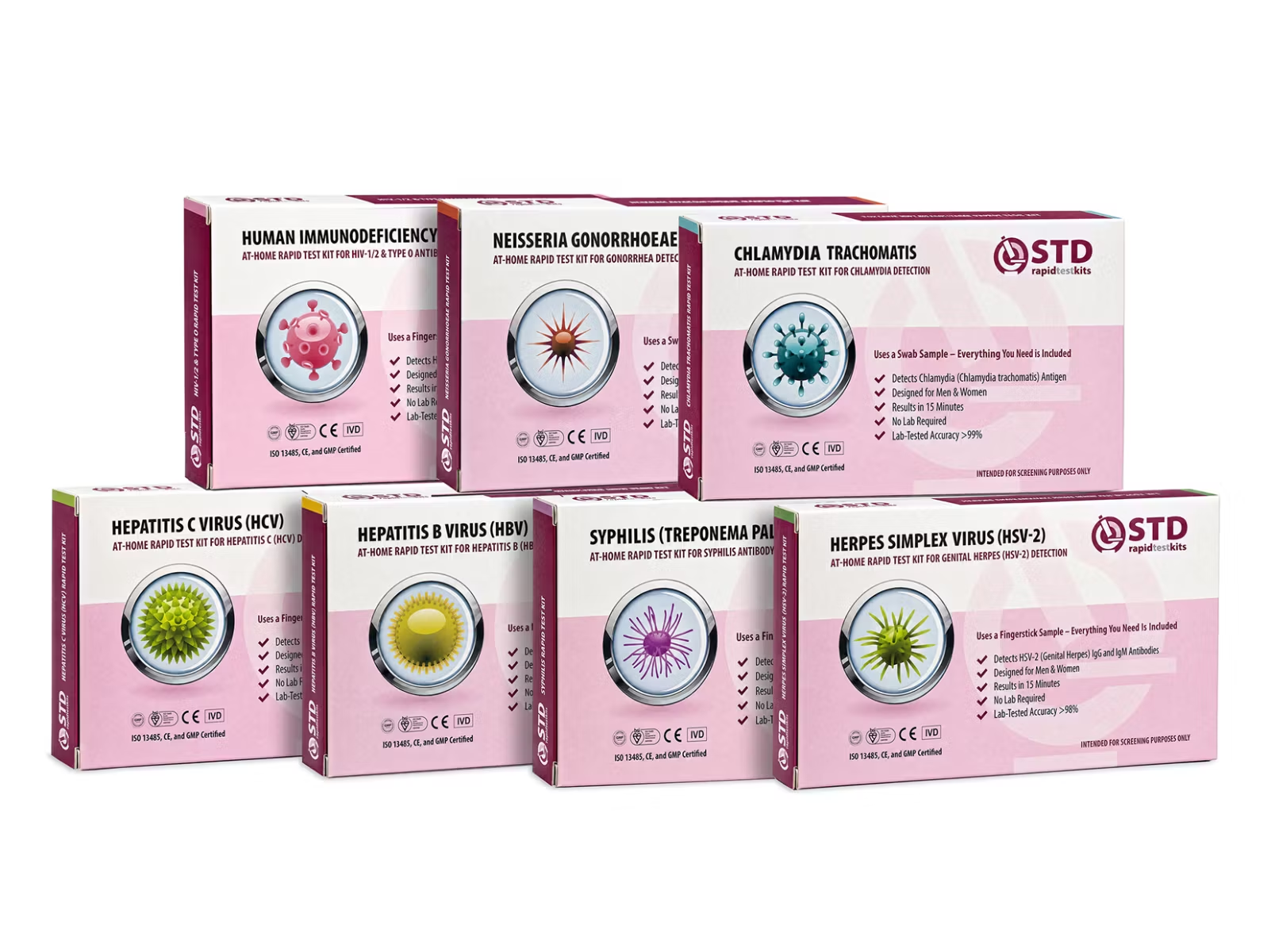
For broader screening (HIV, syphilis, hepatitis B, hepatitis C, plus chlamydia and gonorrhea swabs), combination kits cover several common STIs in a single shipment. They are a sensible baseline if you have a new partner or are returning to dating after a long break.
Why testing protects more than just you
If you are still uncertain whether testing is worth the time, especially without symptoms, consider the broader picture. Untreated chlamydia in the body can lead to pelvic inflammatory disease, urethritis, epididymitis, and (rarely) reactive arthritis. The risk of long-term tissue damage rises with each month the infection persists.
Beyond your own body, untreated infection ripples outward. Couples who do not test the throat site can volley pharyngeal chlamydia back and forth without knowing, each treatment course followed by re-exposure. The pattern can persist for months. The only way to interrupt it is for both partners to test the right sites and treat together.
Testing is information, not punishment. The biggest barrier for older adults is often the cultural assumption that STIs belong to younger people, and honest conversations between partners and with clinicians chip away at that assumption.
FAQs
- Can you really get chlamydia from oral sex after 50?
- Yes. Age does not change the underlying biology of how chlamydia transmits. The bacteria pass between an infected person's genitals or anus and another person's mouth or throat, no penetration required. CDC surveillance shows STI rates in older adults have risen for more than a decade, and oral exposure is part of that picture.
- What does oral chlamydia feel like?
- Pharyngeal chlamydia is usually completely silent; most people notice nothing. When a symptom does appear, it is typically a mild scratchy throat persisting for more than two weeks after oral contact, sometimes with a bit of rawness on swallowing. The pattern looks more like a long cold than an STI.
- How long after oral sex can chlamydia show up on a test?
- 14 days is the reliable mark. NAAT can detect from roughly 7 days post-exposure but misses a fraction of early infections before bacterial load builds. If you tested earlier and got a negative result, retest at the 14-day mark, especially if you had pharyngeal exposure.
- Will a regular STI panel catch oral chlamydia?
- Usually no. The standard urine-based STI panel screens the genital site only. The throat site requires a separate pharyngeal swab, which is almost never included by default. Ask your clinician explicitly: "I would like a chlamydia and gonorrhea throat swab."
- Can you spread chlamydia by kissing alone?
- Saliva-only contact (kissing) is generally considered very low risk for chlamydia. Transmission is much more reliably tied to oral-genital contact. Throat-to-throat spread via deep kissing is theoretically possible if one partner has pharyngeal infection, and gonorrhea throat-to-throat transmission has been documented. The conservative answer: test if there has been any oral-genital exposure.
- How is oral chlamydia treated?
- The CDC-recommended regimen is doxycycline 100 mg orally twice a day for 7 days. Azithromycin 1 g as a single dose is an alternative when doxycycline is not appropriate. The full course must be completed even if symptoms clear early. CDC does not recommend routine test-of-cure for adults who finish the doxycycline regimen, though some clinicians follow up at 4 weeks for pharyngeal sites specifically.
- Do I have to tell my partner if I test positive?
- Telling your partner is the right move both ethically and practically: they need to be tested and treated to avoid reinfecting you. If a direct conversation feels impossible, most state and county health departments offer anonymous partner-notification services that contact past partners on your behalf without naming you.
- Is the at-home chlamydia rapid test a substitute for a clinic throat swab?
- No. Our at-home rapid test is a self-collected genital swab and is not validated for pharyngeal samples. If your worry is oral chlamydia in your throat (from giving oral sex), book a clinic appointment for a pharyngeal NAAT swab. The home kit is the right tool for genital exposure (a partner's mouth or genitals to your urethra, vagina, or cervix).
You deserve clear answers, not assumptions
Whether you are newly dating after divorce, exploring intimacy after loss, or just curious about your own health, the message is the same: age does not make you immune to STIs, and it does not make you irresponsible for asking. Testing after oral sex is straightforward care.
If something feels off, or if you simply want a baseline before a new relationship, do not wait. For genital chlamydia screening, a private at-home rapid kit can settle the question in about 15 minutes. For pharyngeal exposure, a quick clinic visit for a throat swab is the right call. Both are straightforward, and both beat waiting.
Genital exposure (a partner's mouth or genitals to your genitals): a self-collected at-home rapid swab gives a result in about 15 minutes. Best window for testing is 14 days after exposure.
Pharyngeal exposure (you gave oral sex and are worried about your throat): book a clinic, sexual-health center, or telehealth mail-in NAAT pharyngeal swab. Same 14-day window applies.
How we sourced this article: We combined current guidance from leading public-health organizations (CDC STI Treatment Guidelines, the CDC chlamydia and STI surveillance pages, and NHS) into plain-English explanations for older adults navigating sexual health after 50. We do not provide clinical diagnosis. For symptoms that concern you, see a licensed clinician.
- U.S. Centers for Disease Control and Prevention. About chlamydia: transmission, symptoms, and the high rate of asymptomatic infection.
- U.S. Centers for Disease Control and Prevention. About STI risk and oral sex: which infections can transmit through oral contact.
- U.S. Centers for Disease Control and Prevention. STI Treatment Guidelines: chlamydial infections (recommended doxycycline regimen, test-of-cure guidance).
- U.S. Centers for Disease Control and Prevention. STI surveillance hub: trends in chlamydia, gonorrhea, and syphilis across age groups.
- UK National Health Service. Chlamydia: symptoms, testing, and treatment.
