







Quick Answer: You can get an STD from oral sex, including herpes, gonorrhea, syphilis, and HPV. Talking about STI risk before oral sex helps reduce transmission and gives both partners clarity about testing, timing, and protection.
“Wait… Oral Counts?”, The Risk Most People Underestimate
There’s a reason this question keeps coming up: oral sex doesn’t always feel like something that carries consequences. No pregnancy risk, no obvious symptoms right away, and culturally, it’s often treated like a “safer” option. But safer doesn’t mean safe.
Infections like Herpes, Gonorrhea, Syphilis, and HPV can all be transmitted through oral contact. That includes mouth-to-genital and mouth-to-anus contact, even when there are no visible symptoms. In fact, a lot of oral infections, especially in the throat, don’t feel like anything at all.
“I thought I was being careful because we didn’t have sex,” one patient shared. “It never crossed my mind that oral could be the thing I needed to think about.”
This is where things get complicated. Because when something doesn’t feel risky, people don’t talk about it. And when people don’t talk about it, they rely on assumptions instead of actual information.
What Can Actually Spread Through Oral Sex?
Let’s ground this in reality, not fear. Different infections carry different levels of risk through oral sex, and understanding that spectrum helps you have a more honest, less panicked conversation.
| STD | Can It Spread Through Oral? | Where It Shows Up | Common Symptoms |
|---|---|---|---|
| Herpes (HSV-1 & HSV-2) | Yes (very common) | Lips, mouth, genitals | Blisters, sores, tingling |
| Gonorrhea | Yes | Throat, genitals | Sore throat, often no symptoms |
| Syphilis | Yes | Mouth, genitals | Painless sores, rash later |
| HPV | Yes | Throat, genitals | Often none, sometimes warts |
Notice the pattern here: a lot of these don’t come with obvious warning signs. That’s why people who feel “fine” can still pass something along. And it’s why asking “Do you have symptoms?” isn’t enough.
The more useful question becomes: “When was your last test, and what did it include?”

People are also reading: Risk Reduction That Actually Works: Condoms, Vaccines, and Real Talk
The Moment Before It Happens (And Why It Feels So Hard to Speak)
Most STI conversations don’t fail because people don’t care. They fail because timing is awkward, and nobody wants to break the mood. There’s a very human fear sitting underneath it: if you ask, will it ruin everything?
That fear is real. But so is the alternative, moving forward without clarity and then dealing with anxiety later. The irony is that the discomfort you’re trying to avoid often just shows up later, louder and harder to ignore.
“I almost asked. I literally had the words in my head,” someone once said. “But I didn’t want to seem paranoid.”
This is where reframing matters. Talking about STI risk isn’t a mood killer, it’s a signal. It tells the other person you’re aware, respectful, and paying attention to both of your health.
What You’re Really Asking (Even If You Don’t Say It That Way)
When people think about “the STI talk,” they imagine some formal, clinical interrogation. But in reality, it’s usually just a few simple questions wrapped in normal conversation.
You’re not asking for someone’s entire sexual history. You’re asking for enough context to make a decision together. That might include things like testing history, recent partners, or whether protection is something you both want to use.
And importantly, you’re also offering your own information. Because this isn’t about putting someone on the spot, it’s about mutual clarity.
| Instead of Saying | Try This | Why It Works |
|---|---|---|
| “Are you clean?” | “When was your last test?” | More accurate, less judgmental |
| “Do you have anything?” | “What do you usually test for?” | Opens a real conversation |
| Nothing at all | “I like to check in about this stuff first” | Normalizes the topic |
Language matters here. Words like “clean” carry stigma and don’t actually tell you anything useful. Someone can feel completely fine and still have an infection. That’s not dishonesty, it’s biology.
Before You Even Ask Them, Know Your Own Status
There’s a quieter part of this conversation that often gets skipped: your own testing history. It’s a lot easier to ask someone else about their status when you’re clear on yours. It also shifts the tone from interrogation to exchange.
That might mean knowing when you were last tested, what infections were included, and whether you’ve had any new partners since then. If you’re not sure, that’s not a failure, it’s just a sign it might be time to check in.
This is where having access to something simple and private can change the dynamic. Instead of guessing or relying on memory, you can actually know. If you want that kind of clarity without a clinic visit.
Because at the end of the day, the strongest conversations come from a place of shared awareness, not uncertainty.
“They Said They’re Clean”, Why That’s Not the Reassurance It Sounds Like
This phrase comes up all the time, and it feels comforting in the moment. But medically, it doesn’t actually mean anything specific. “Clean” isn’t a test result. It’s not tied to timing, and it doesn’t tell you what infections were tested, or when.
Someone can say they’re “clean” and still be within a window period, where an infection doesn’t show up yet on a test. Or they may have only been tested for a few STDs, not all of them. None of this makes them dishonest, it just means the language we use is often vague.
“He told me he was clean, and I believed him,” one patient shared. “Later I found out he hadn’t been tested in over a year. He genuinely thought that counted.”
This is why shifting the conversation slightly makes such a difference. Instead of relying on labels, you’re grounding things in actual timelines and facts. That’s where real safety comes from, not assumptions.
Check Your STD Status in Minutes
Test at Home with Remedium6-in-1 STD Test Kit
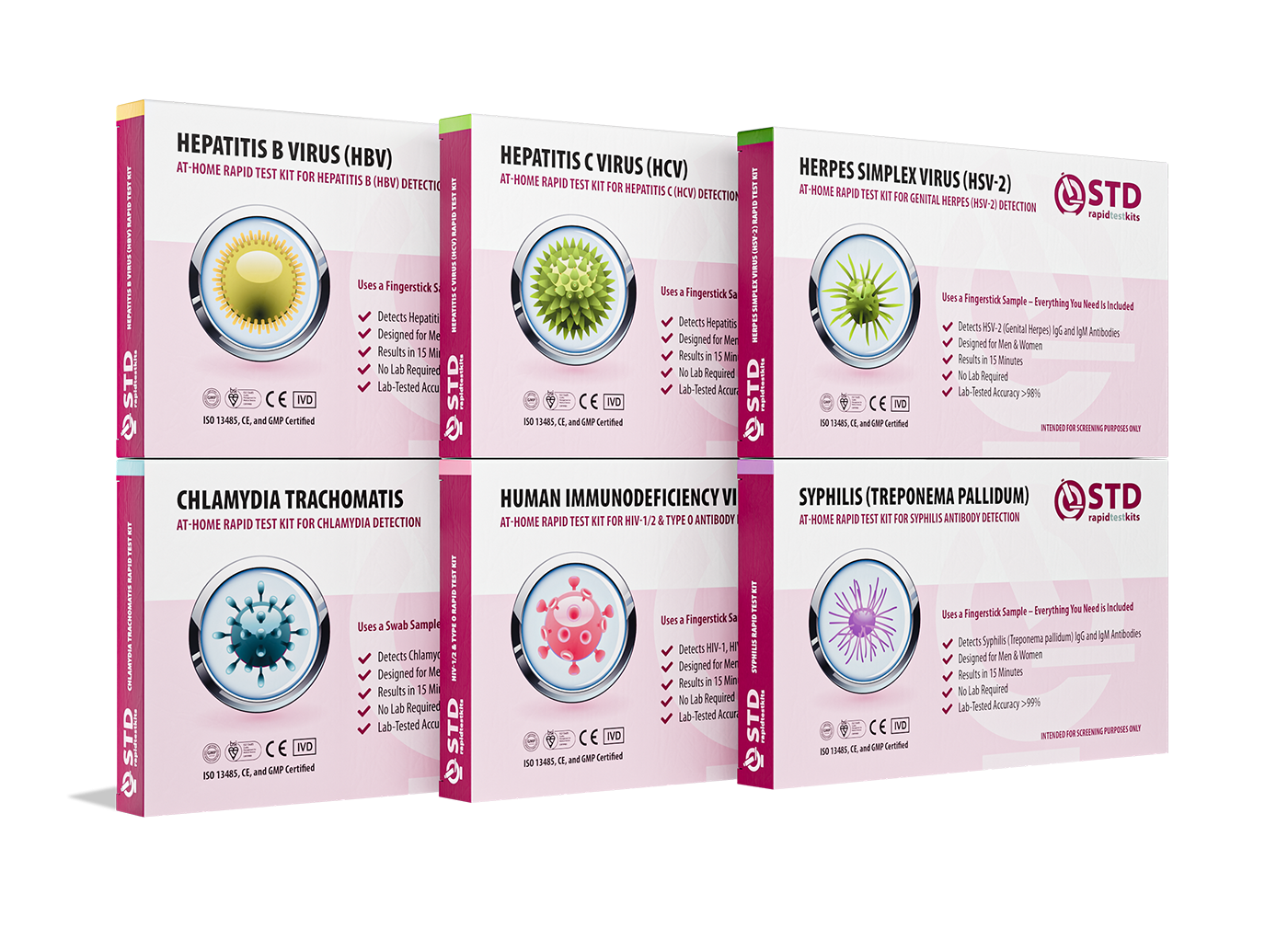
 For Men & Women
 Results in Minutes
 No Lab Needed
 Private & Discreet
Order Now $119.00 $294.00
For all 6 tests
Timing Matters More Than People Think (The Window Period Problem)
Even when someone has been tested, there’s another layer people rarely talk about: timing. Every STD has a window period, the stretch of time after exposure when a test might still come back negative even if an infection is present.
This is one of the biggest gaps in casual conversations about sexual health. Someone might say, “I just got tested,” and that sounds reassuring. But if that test was only a few days after a new partner, it may not reflect their current status.
| STD | Earliest Detection | Recommended Testing Window |
|---|---|---|
| Gonorrhea | 2–5 days | 1–2 weeks after exposure |
| Chlamydia | 3–7 days | 1–2 weeks after exposure |
| Syphilis | 3 weeks | 3–6 weeks after exposure |
| HIV | 10–14 days (RNA) | 3–6 weeks (standard tests) |
| Herpes | 2–12 days (symptoms) | Testing varies, often symptom-based |
This doesn’t mean testing isn’t useful, it absolutely is. It just means the question isn’t only “Have you been tested?” but also “When?”
That single follow-up question can completely change how you both understand risk.
How to Bring It Up Without Making It Weird
This is the part people stress about the most. Not the science, not the risk, the actual moment of saying something out loud. But in practice, it doesn’t need to be a big, dramatic pause. It can be simple, casual, and part of the flow.
What matters more than the exact wording is the tone. If you approach it like something normal, it tends to land that way. If you treat it like a confession or accusation, it can feel heavier than it needs to be.
Here are a few ways people naturally bring it up in real life:
- During flirting: “Hey, random but I like to check in about testing before things go further.”
- Before things escalate: “When was your last test? I got mine a couple months ago.”
- Light but direct: “I’m into this, I just like to be on the same page about sexual health.”
None of these are perfect scripts. They’re just starting points. The real goal is to normalize the idea that this is something adults talk about, not something to avoid.
Protection During Oral Sex: Real Options, Not Just Theory
Once the conversation happens, the next question becomes practical: what do you actually do with that information? For some people, the answer is timing, waiting until both partners have recent test results. For others, it’s using protection during oral sex.
Barriers like condoms or dental dams can reduce risk, especially for infections like Gonorrhea and Syphilis. They’re not always used, and they don’t eliminate risk entirely, but they do create an added layer of protection.
What matters is that the decision is intentional. Not something you skip because it feels awkward or because “no one really does that.”
“We actually talked about it, and it made everything feel more relaxed,” one person said. “It didn’t kill the mood, it made it feel safer.”
Turning the Conversation Into Action (Not Just Talk)
At some point, the conversation leads somewhere practical. Maybe you both feel comfortable moving forward. Maybe you decide to wait until you’ve both been tested recently. Either way, the goal isn’t perfection, it’s informed choice.
If testing is part of that decision, access matters. Not everyone wants to go to a clinic, wait in a room, or explain their situation out loud. That’s where at-home options can make a real difference.
You can check multiple infections discreetly with something like a combo STD home test kit, which covers common infections and gives you a clearer baseline before you’re navigating these conversations in real time.
Because the goal isn’t just to talk about risk, it’s to actually understand it.

People are also reading: Retest or Relax? STD Retesting Timelines You Can Trust
What No One Teaches You: The Emotional Side of the STI Conversation
Most guides focus on what to say. Very few talk about what it feels like. Because underneath the words, there’s usually something else going on, fear of rejection, fear of being judged, or fear of hearing an answer you weren’t expecting.
That’s what makes this conversation different from others. You’re not just asking for information, you’re exposing a boundary. And that vulnerability can feel risky in its own way.
“I didn’t want to seem like I didn’t trust them,” one person explained. “But I also didn’t want to ignore that feeling in my gut.”
Here’s the reality: asking about STI risk isn’t a sign of distrust. It’s a sign of awareness. It says, “I care about what we’re doing enough to talk about it.” And the right partner doesn’t shut that down, they meet you there.
If They React Badly, That’s Information Too
Not every conversation goes smoothly. Sometimes people get defensive, dismissive, or uncomfortable. And when that happens, it can throw you off, especially if you were already nervous about bringing it up.
But reactions matter. If someone avoids the question, jokes it off, or pressures you to move forward without clarity, that tells you something important. Not just about their health status, but about how they handle communication and boundaries.
This doesn’t mean they’re a bad person. It just means you’re not on the same page right now. And that’s worth paying attention to.
Healthy conversations don’t require perfect answers. They require openness. Even something like, “I’m not sure, I haven’t been tested recently,” is more useful than vague reassurance.
Different Situations, Different Conversations
Not every sexual encounter looks the same, and the conversation shifts depending on context. A long-term partner, a new relationship, and a one-time hookup all carry different expectations, but the core idea stays the same: clarity over assumption.
Here’s how that can play out in real life:
| Situation | What Matters Most | Example Approach |
|---|---|---|
| New relationship | Testing history, exclusivity | “Maybe we should both get tested before we stop using protection.” |
| Casual hookup | Recent testing, protection use | “When was your last test? I like to check before anything happens.” |
| Long-term partner | New exposures, retesting | “Should we check in again since it’s been a while?” |
There’s no one script that fits every situation. What matters is that the conversation actually happens, even if it looks a little different each time.
Myths That Keep People Silent (And Why They Stick Around)
There are a few persistent beliefs that quietly shut these conversations down before they even start. They’re rarely questioned, but they shape how people think about oral sex and STI risk.
- “Oral is basically safe.” It’s lower risk than some activities, but not risk-free.
- "You can tell if someone has something." Most infections don't show any clear signs.
- “Asking ruins the vibe.” In reality, it often builds trust and reduces anxiety.
- “If they got tested, we’re good.” Timing and test type matter just as much as the test itself.
These ideas stick because they’re convenient. They let people skip an uncomfortable step. But skipping that step doesn’t remove the risk, it just delays the moment you have to deal with it.
After the Moment: When the Questions Start Catching Up
Sometimes the conversation doesn’t happen. Things move fast, or it feels too awkward to interrupt. And then later, maybe hours, maybe days, the questions show up anyway.
That’s when people start searching things like “oral sex STD risk no symptoms” or “when to get tested after oral sex.” Not because something is definitely wrong, but because there’s uncertainty.
“I felt fine, but I couldn’t stop thinking about it,” someone shared. “I just wished I had asked beforehand.”
If you’re in that place, the next step isn’t panic, it’s information. Understanding timing, knowing when to test, and giving yourself a clear path forward can shift things from anxiety to action.
Check Your STD Status in Minutes
Test at Home with Remedium7-in-1 STD Test Kit
 For Men & WomenResults in MinutesNo Lab NeededPrivate & Discreet
Order Now $129.00 $343.00
For all 7 tests
Testing After Oral Sex: What Actually Makes Sense
If you’ve had oral sex and you’re unsure about risk, testing can help, but timing still matters. Testing too early may not give you reliable answers, especially for infections with longer window periods.
For throat-based infections like oral Gonorrhea, testing can often be done within a week or two. For others, like Syphilis or HIV, you may need to wait longer for accurate results.
The key is not guessing. If you’re unsure what to test for or when, using a structured option that covers multiple infections can simplify things and reduce missed gaps.
And just as important, if symptoms do show up later, even something mild like a sore throat that won’t go away, that’s worth checking. Not because it definitely means something serious, but because it’s better to know than to wonder.
FAQs
1. Can you really get an STD from oral sex even if nothing “happened”?
Yeah, this is where a lot of people get tripped up. Oral sex doesn’t feel like “full sex,” but infections don’t really care about labels. If there’s mouth-to-genital contact, things like herpes or gonorrhea can still pass, even if everything seemed quick, casual, or low-risk in the moment.
2. Is oral sex actually risky, or are people just being overly cautious?
It’s not about panic, it’s about accuracy. Oral sex is lower risk than some other types of sex, but it’s not zero, and that “it’s basically safe” idea is what gets people into trouble. Think of it like this: the risk is lower, but it’s still very real depending on the situation.
3. How do I bring this up without sounding like I’m accusing them of something?
The trick is to make it about you, not them. Saying something like, “Hey, I like to check in about testing before things go further, when was your last one?” keeps it grounded and mutual. You’re not interrogating, you’re just setting a baseline.
4. What if they say they’re clean and seem confident about it?
This is super common, and it usually comes from a good place, but it’s still vague. Someone can feel totally fine and still have something, or they may not realize their last test didn’t cover everything. A gentle follow-up like “Do you remember what you were tested for?” usually clears things up fast.
5. Do people actually use protection for oral sex in real life?
Some do, most don’t, and that’s the honest answer. But using condoms or dental dams does lower the risk, especially with things like gonorrhea or syphilis. It doesn’t have to be all-or-nothing either; some people use protection in certain situations and not others.
6. Can you get something in your throat and not feel it at all?
Yes, and this is the part that surprises people. Oral gonorrhea, for example, often has zero symptoms, so you wouldn’t know just by how you feel. That’s why “I feel fine” isn’t a reliable check, it’s just one piece of the picture.
7. When should I get tested if I’m worried after oral sex?
Not immediately, that’s the key. Most infections need a little time before they show up on a test, usually around 1–2 weeks for some, longer for others. If you test too early, you might get a false sense of relief, which is honestly more frustrating than helpful.
8. What if I didn’t ask anything and now I’m overthinking it?
That’s more normal than people admit. The brain tends to replay those moments afterward, especially if you skipped a conversation you almost had. The best move now is simple: check timing, consider testing, and give yourself actual information instead of guessing.
9. Is it okay to ask for proof of someone’s test results?
It can feel intense, but it’s not out of line, it just depends on how you approach it. If you’re sharing your own results or being open about your status, it naturally makes space for that kind of exchange. It’s less about “prove it” and more about “let’s both be clear.”
10. Will this conversation always feel this awkward?
At first, yeah, probably a little. But like anything else, it gets easier the more you do it. Eventually, it stops feeling like a big moment and starts feeling like a normal part of getting to know someone.
You Deserve Clarity Before the Moment, Not Questions After
That split second where you almost ask, but don’t, that’s where most of the uncertainty starts. Not because you did something wrong, but because you moved forward without the information you actually needed to feel grounded. And afterward, that silence tends to fill up with questions.
This isn’t about turning every interaction into a checklist. It’s about knowing where you stand. If you’re unsure, ask. If you didn’t ask, you can still test. If something feels off later, follow it instead of brushing it aside. Each step replaces guesswork with something more solid.
You don’t need perfect timing or perfect wording. You just need enough clarity to make a decision that feels right in your body, not just in the moment. And if you’re not sure where you stand right now, start there: Combo STD Home Test Kit. Private, direct, and built for moments exactly like this.
How We Sourced This Article: This article combines the most up-to-date clinical advice on how STIs spread through oral sex with research on how people talk about sex. We examined data from the CDC, WHO, and NHS, in conjunction with peer-reviewed studies on asymptomatic infection and oral transmission patterns, while integrating real-world communication dynamics observed in sexual health counseling. The goal: accurate science, delivered in language people actually use.
Sources
1. NHS – Sexual Activities and Risk
2. Fact sheet from the World Health Organization about sexually transmitted infections
3. Mayo Clinic: Signs and Symptoms of STDs
4. Fact Sheet from the CDC on Genital Herpes
6. CDC – Human Papillomavirus (HPV) Fact Sheet
7. MedlinePlus – Sexually Transmitted Diseases Overview
8. NHS – Sexually Transmitted Infections (STIs)
About the Author
Dr. F. David, MD is a board-certified infectious disease specialist focused on STI prevention, diagnosis, and treatment. He writes with a direct, stigma-free approach that prioritizes clarity, privacy, and real-world decision-making.
Reviewed by: Board-Certified Infectious Disease Specialist | Last medically reviewed: March 2026
This article is only meant to give you information and should not be used as medical advice.


