Published: October 2025 | Last updated: May 2026 | Editorial review and quality control: Martina N.
This is for anyone who did everything right and still ended up scared. For the teenager staring at a positive result they can't explain. For queer couples figuring out protection beyond condoms. For long-term partners renegotiating safety after one of them had a what-if moment. And for everyone who ever said 'I was careful' and later wondered what careful actually meant.
Being careful is not the same as being protected. Protection covers more than the act itself; it includes what happens before, after, and in between. Risk reduction is a mix of tools, habits, timing, and honest conversations. Most sex-ed lessons skipped how to combine them. This guide walks through condoms, vaccines, testing, and communication, and shows where each one earns its place in a real-life plan.
Key Takeaways
- Condoms sharply lower the risk of fluid-route infections like HIV, chlamydia, gonorrhea, and hepatitis B, but they don't fully cover skin-to-skin infections like herpes, HPV, and syphilis. Other layers close those gaps.
- The HPV and hepatitis B vaccines keep protecting you even when condoms slip. Per current CDC guidance, HPV vaccination is recommended through age 26 and is a shared clinical decision through age 45 for adults who haven't completed the series.
Condoms Help, but Latex Has Limits
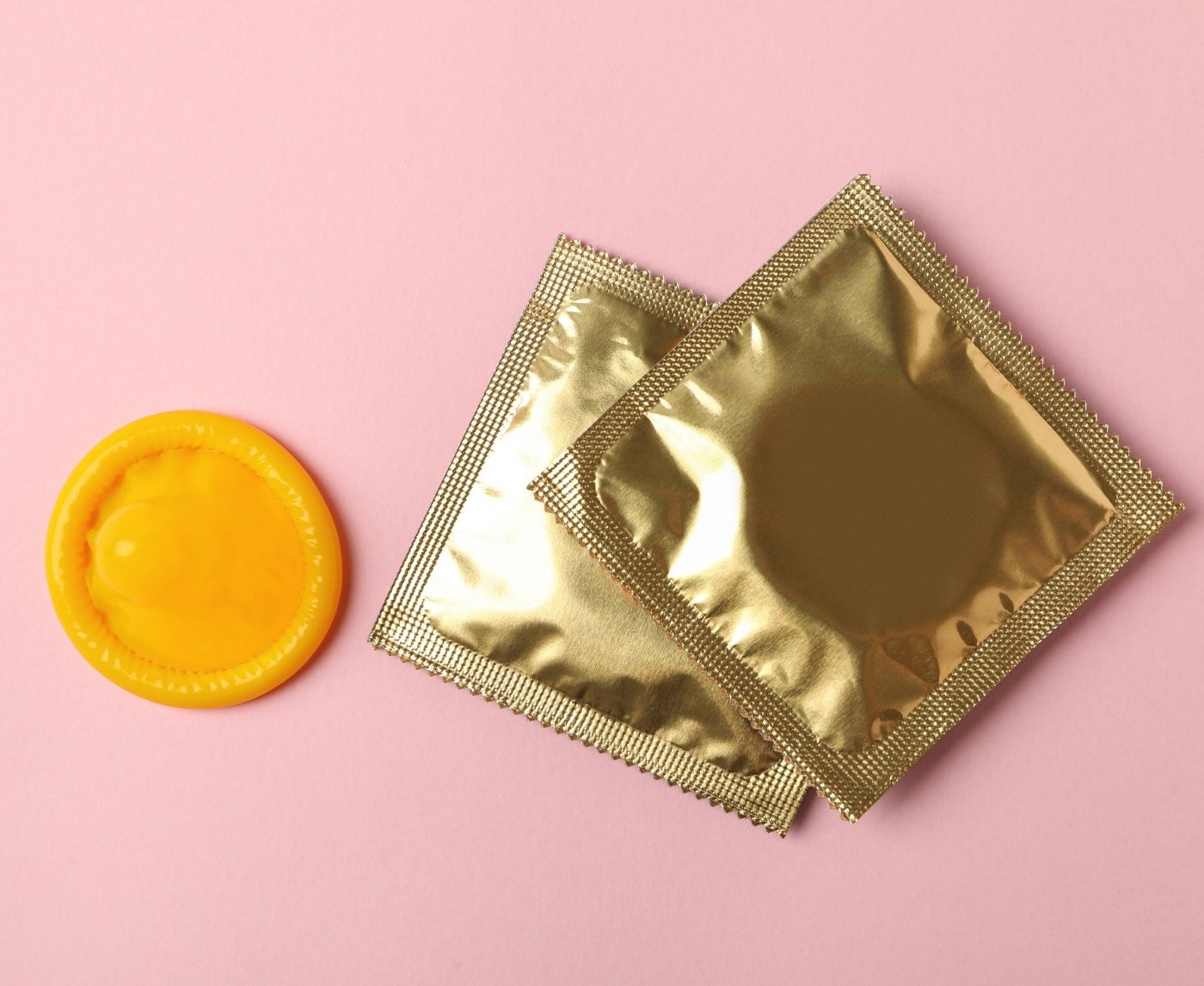
Condoms work. That part is true, and the data is solid. The CDC's condom-effectiveness guidance reports that consistent and correct use of external latex condoms substantially reduces the sexual transmission of HIV and lowers the risk of other fluid-borne infections, including chlamydia, gonorrhea, and hepatitis B. Lab and observational studies place HIV risk reduction in the 80 to 95 percent range when condoms are used every time, applied before any genital contact, and intact for the duration. Fluid-route protection is where latex earns its reputation.
Two things complicate the picture in real life. The first is consistency. The headline figure assumes the condom is on before any contact, fits correctly, and stays intact. Real use looks messier. Late application, slippage, breakage, oil-based lubricants that degrade latex, and 'just for a second' interruptions all chip away at effectiveness. The second is what condoms can't block. Herpes, HPV, and syphilis spread through skin-to-skin contact, and any infected area not covered by the latex barrier remains exposed.
Take a familiar pattern. The condom tears partway through. You don't notice until the moment is over. Weeks later you're sitting with a chlamydia diagnosis. Nothing in that sequence makes you careless. It means latex is one part of a system. Friction causes tears in cheap or expired condoms, old condoms stored in a hot wallet lose elasticity, and skin contact outside the covered area carries herpes and HPV even when the condom did its fluid-blocking job. Chemistry and physics interact with bodies, and small failures compound.
Condoms are a strong single layer that works best when other layers back them up. They block most fluid-route transmission. They give only partial protection against skin-route transmission. They do nothing about an infection contracted weeks before the condom went on. The next sections walk through each layer that fills those specific gaps.
What condoms cover versus what they miss
- Strong protection against fluid-route infections: HIV, chlamydia, gonorrhea, and hepatitis B.
- Partial protection for skin-route infections: herpes, HPV, and syphilis can transmit from any infected area not covered by latex.
- No retroactive coverage: a condom used tonight does nothing about an infection acquired before tonight.
Vaccines Build Protection Into Your Body
Vaccines work differently from condoms. They don't stop exposure at the moment of contact. They train your immune system to neutralize specific viruses before infection takes hold. Two sexually transmitted viruses currently have effective vaccines on the U.S. market: human papillomavirus (HPV) and hepatitis B.
HPV is the bigger story. The vaccine prevents the strains responsible for almost all cervical cancers and a large share of anal, oropharyngeal, vulvar, vaginal, and penile cancers. CDC surveillance shows that infections with cancer-causing and wart-causing HPV strains dropped about 88 percent among teen girls in the years after routine vaccination began. Cervical pre-cancer rates have followed the same downward curve, and population-level cancer numbers are projected to follow.
If you missed the routine window, you can still benefit. CDC HPV vaccination guidance recommends routine HPV vaccination through age 26 and shared clinical decision-making for adults aged 27 through 45 who haven't completed the series. The vaccine doesn't undo a past infection, but most adults haven't been exposed to every HPV type the vaccine covers, so it still protects against the strains you haven't met yet. Talk with your clinician about whether catch-up vaccination fits your situation.
Hepatitis B has been part of routine childhood immunization in the United States since 1991, so many U.S. adults under 35 are already covered. The World Health Organization describes hepatitis B as a bloodborne and sexually transmitted virus that can become chronic, leading to liver scarring and liver cancer in some carriers. The vaccine series (two or three doses depending on the formulation) gives durable protection. Since 2022, ACIP recommends hepatitis B vaccination for all adults through age 59, not only those with identified exposure risk, so even readers who consider themselves low-risk should ask whether they completed the series.
A practical move: ask your provider what's on file. If you can't confirm hepatitis B immunity, you can request a serology test or simply start the series. If you got an early HPV vaccine that covered fewer strains, ask whether the broader nine-valent shot would be useful. Most clinics can pull your vaccination record with a phone call.
Why One Layer Isn't Enough
Picture preparing for a storm. A windbreaker keeps most of the rain off, and that's your condom. An umbrella shields from another angle, and that's your vaccine. A roof catches what slips through both, and that's testing and early detection. Each layer covers what the others miss.
Most people only buy the windbreaker. Or they treat one tool used once as permanent coverage. Real-world protection runs on redundancy. No single method is flawless, and the plan that holds is the one with more than one layer working at once. No single method covers every exposure route, every infection, or every personal risk profile. The plan that works is the one tuned to your life and updated as your life changes.
That's especially true for people with changing partners, queer relationships where some infections travel different routes than the textbooks assume, and anyone whose partner isn't fully forthcoming about their status.
Condoms block most fluid-route transmission at the moment of contact, but they don't cover everything skin can carry.
Vaccines (HPV, hepatitis B) keep working in the background even when condoms slip or aren't used.
Routine testing catches the asymptomatic infections the first two layers missed, before they spread further.
Why Routine Testing Catches What Symptoms Miss
Even with consistent condom use and full vaccination, you can still pick up an STD. Biology is unpredictable, partners aren't always candid, and methods occasionally fail. Testing closes the loop. It catches the asymptomatic infections that would otherwise spread quietly, and it gives you a clean baseline that makes future decisions easier.
CDC STI testing guidance recommends that all sexually active women under 25 be tested for chlamydia and gonorrhea every year, and that sexually active gay or bisexual men, and other men who have sex with men, be tested for syphilis, chlamydia, and gonorrhea at least once a year, with screening every three to six months for people with multiple or anonymous partners. People taking PrEP, pregnant people, and people living with HIV follow additional schedules tied to their care. If you're outside those groups and in a settled monogamous arrangement, annual screening usually fits, with extra tests added when circumstances change.
Timing matters as much as frequency. Most STDs have a window period: the gap between exposure and when a test can reliably detect the infection. Test too early and you can return a false negative even when you're infected. The window varies by infection and by test technology. Nucleic-acid (NAAT) tests for chlamydia and gonorrhea become reliable about one to two weeks after exposure. Antibody-based blood tests for HIV, syphilis, and hepatitis take longer because your body needs time to seroconvert. The right move when you have a recent exposure is to test now for a baseline, then retest after the window closes.
Until the retest, keep using protection with new partners so a quiet infection doesn't spread further. If something comes back positive, notify anyone potentially exposed. A single negative result inside the window is a snapshot taken before the infection would have time to show. Retesting after the window closes is what gives you an actual cleared status. People who treat testing as routine self-care catch problems earlier, treat them faster, and pass them on less often. Here's how the common windows break down:
| STD | Earliest Reliable Test | Peak Accuracy Window |
|---|---|---|
| Chlamydia (NAAT) | 7–14 days | 14+ days |
| Gonorrhea (NAAT) | 5–14 days | 14+ days |
| Syphilis (treponemal) | 3–6 weeks | 6–12 weeks |
| HIV (Ag/Ab 4th gen) | 18–45 days | 45 days (most adults) |
| HIV (NAAT/RNA) | 10–33 days | 33 days |
| Hepatitis B (surface Ag) | 3–6 weeks | 6–12 weeks |
| HSV-2 (antibody) | 6–8 weeks | 12 weeks |
Talking About Sexual Health Without Killing the Mood
Bringing up STIs is often harder than using a condom. It's harder than walking into a clinic. It's harder than a multi-dose vaccine series. Communication asks for vulnerability, and that scares more people than needles do.
Here's what happens when you skip the talk. You assume your partner has been tested recently. They assume the same of you. Neither of you actually has. Trust kicks in. Connection happens. Weeks later, one of you gets a text that reframes the whole thing. Nobody lied. Nobody planned, either.
Now the alternative. Things are heading somewhere physical and you say something like, 'Hey, I test every few months. My last panel was clear, and I'm vaccinated for HPV and hep B. How about you?' Maybe they're surprised. Maybe they stammer through an answer. You've still built a bridge. You've opened space for an honest reply. You've set a tone where protection is shared rather than imposed.
That conversation isn't always smooth. Sometimes it ends a connection. Sometimes it surfaces information that's hard to hear. It always gives you something silence doesn't: information you can act on. With it, you can decide whether to continue, what protection to use, what tests to add. Without it, you're guessing in the dark.
A slightly more specific version of that opening line tends to land even better, because it makes routine testing feel like ordinary self-maintenance:
'I tested last month and came back clear on chlamydia, gonorrhea, syphilis, and HIV. I'm vaccinated for HPV and hep B. What does your recent testing look like?'
This phrasing is specific, normalizes routine testing, and frames the question as a check-in rather than an accusation. If someone bristles at being asked a calm, specific question, that response is itself useful information about how they handle accountability.
What to Do After a Possible Exposure
If you think you've been exposed to an STD, breathe first. Most STDs are treatable, many are curable, and almost all are easier to manage when caught early. Panic burns energy that's more useful elsewhere.
The next step depends on what you might have been exposed to and how recently. For potential HIV exposure within the last 72 hours, post-exposure prophylaxis (PEP) is a 28-day antiretroviral course that can prevent infection if started fast. The earlier the better. Get to an urgent care, an emergency department, or a sexual-health clinic the same day you can. PEP works best within the first 24 hours and becomes less effective the longer you wait.
For everything else, plot your testing schedule against the window periods above. Test now to capture anything pre-existing. Retest after the window closes for the specific infections in play: roughly two weeks for chlamydia and gonorrhea, about six weeks for HIV using a fourth-generation antigen/antibody test, twelve weeks for HSV-2 antibody and for a confirmatory HIV negative. Keep using condoms with any new partner during this window so a quiet infection doesn't spread further.
Tell partners who were potentially exposed. The wording can stay short: 'I had a possible exposure and I'm testing. You might want to do the same.' Keeping the message factual gives the other person information they can act on. Many U.S. jurisdictions offer anonymous partner notification services if face-to-face feels too hard.
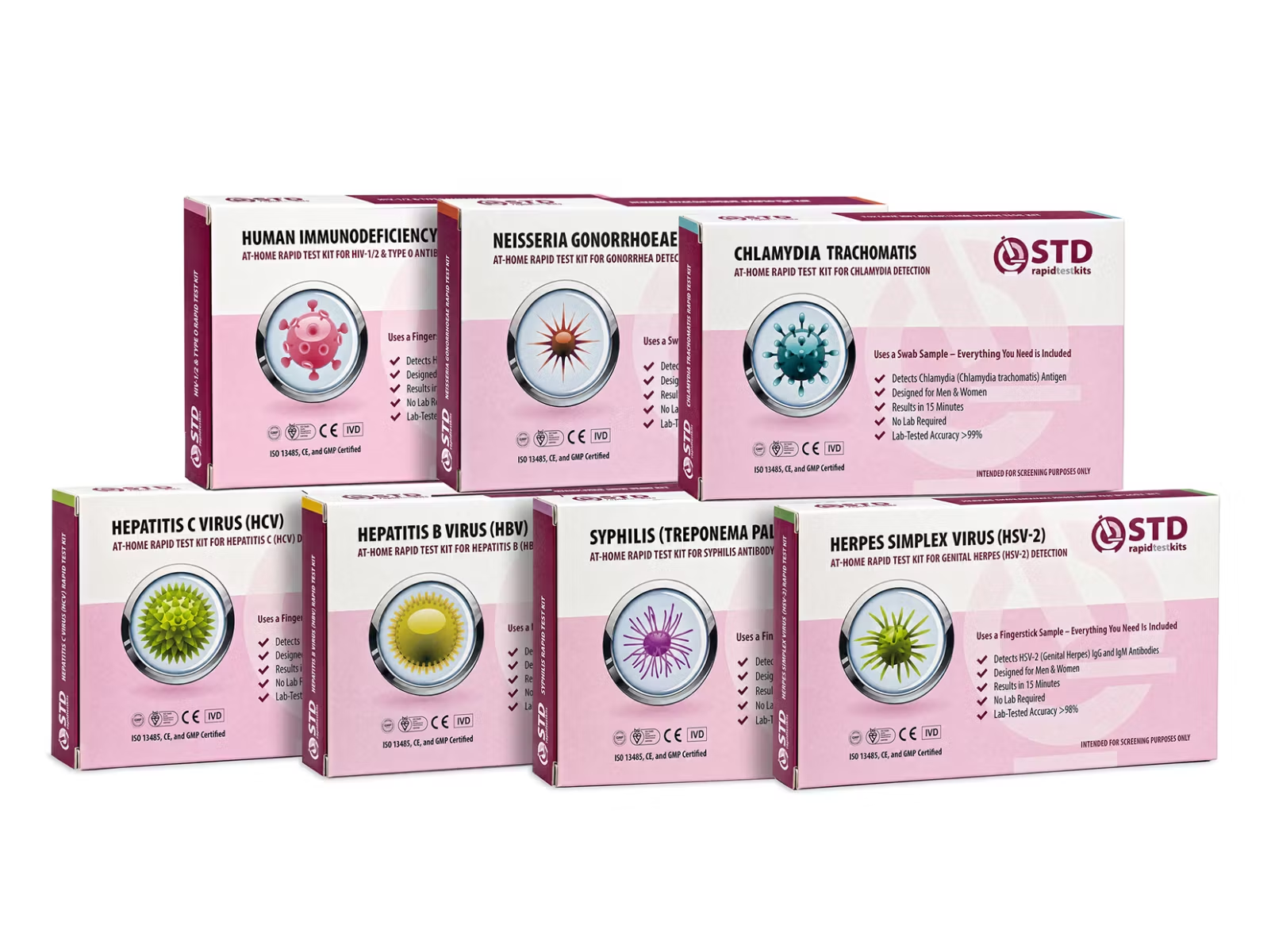
Then look at the prevention plan with fresh eyes. Was vaccination current? Were condoms in use consistently? Was testing on a schedule, or sporadic? You're not building a punishment ledger. You're upgrading the protocol. This site sells rapid at-home STI test kits, including the multi-infection panel linked below, which can establish a private baseline while you wait out the window period before a confirmatory lab test.
Living With a Positive Result
A positive test result gives you information about what your body has been exposed to. Most people who test positive for an STD aren't reckless; they're navigating dating, intimacy, and imperfect protection like everyone else. The infection found a path. Now you work the next step.
Treatment depends on the infection. Chlamydia and gonorrhea clear with antibiotics, typically a single regimen or a short course. Trichomoniasis clears with a different antibiotic. Syphilis responds to penicillin at any stage, with the regimen scaling to how long the infection has been present. Herpes is managed long-term with antivirals that reduce outbreak frequency and lower transmission risk. HIV is treated with daily antiretrovirals; people on effective treatment can reach an undetectable viral load, which means the virus cannot be sexually transmitted. The CDC, the World Health Organization, and major HIV-research bodies have endorsed this principle as Undetectable equals Untransmittable.
Notifying partners is the harder lift. Keep the message short and factual: 'I tested positive for [X]. You might want to get checked.' No timeline, no apology, no explanation owed. If face-to-face feels impossible, anonymous notification through your state or local health department works in most U.S. jurisdictions. You're giving the other person agency, which is what you'd want in the reverse situation.
Then rebuild the prevention plan. If you weren't vaccinated against HPV or hep B, this is the right time. If condoms broke and there was no backup, look at adding PrEP if HIV is a concern, or adjusting your testing cadence. If you put off testing for months because you 'felt fine,' set a calendar reminder.

Stigma Is the Quiet Risk Multiplier
Plenty of people who get diagnosed with an STD did everything they were told. They used condoms, they had a small number of partners, they were honest. The infection still found them. Common STIs spread efficiently, and sometimes they meet a person who used every safeguard available and still found a way through.
The CDC estimates that roughly 572,000 new genital herpes infections occurred in the U.S. in 2018 among people aged 14 to 49, and most people with herpes don't know they have it. HPV is even more common; the CDC describes it as so prevalent that nearly all sexually active people will get it at some point. World Health Organization data places more than a million curable STI infections globally per day in people aged 15 to 49. None of those numbers reflects a moral failure across millions of people. They reflect a class of pathogens that spread efficiently and often quietly.
Stigma makes the public-health problem worse. It pushes people away from testing, away from treatment, away from telling partners. It turns a positive result into a private shame instead of a routine medical event. And it lands hardest on the communities already navigating barriers to care: queer and trans people, young people, people in under-resourced areas, people whose first conversation about sex was a lecture about consequences.
The shift that helps is naming an STD the way you'd name strep throat or a flu: an infection that responded to a specific treatment or that needs ongoing management. People who get diagnosed and treated promptly are doing exactly what the system is designed to do. The ones who hide a diagnosis because they're scared are the ones at higher risk for complications and for passing the infection to people who could have used the warning.
More than 1 million curable sexually transmitted infections are acquired every day worldwide in people 15 to 49 years old, the majority of which are asymptomatic.
Building a Strategy That Evolves
A long-term prevention plan isn't one decision. It's a set of habits that adjust to changes in your relationships, your health, and your priorities. The protocol you used at 18 may not fit at 30. Monogamy and polyamory carry different testing rhythms. Plans built for cisgender heterosexual sex may need adjustment for other configurations. Upgrading is normal.
Start by gathering current information. What vaccines have you completed? When did you last get tested, and what was on the panel? What protection do you and your partners currently use? Those answers give you a baseline. If you can't answer one of them quickly, that's the first thing to fix.
Add communication. Don't assume a new partner has the same testing cadence or vaccination status. Ask, share your own, and adjust. If they aren't willing to discuss it, you've gathered information: this is a person who treats your protection as optional, and you can decide what to do with that.
Add behavior. Keep condoms on hand and accessible. Schedule testing into your calendar even when nothing feels off. If you're at higher risk for HIV (multiple partners, partners with unknown status, injection drug use, condomless sex with a partner whose viral load isn't suppressed), talk to a provider about PrEP. The CDC describes PrEP as up to 99 percent effective at preventing HIV from sex when taken as prescribed. If you got an older HPV vaccine that covered fewer strains, ask whether the nine-valent shot would be useful for you.
Then revisit on a cadence. A new partner warrants a test before or shortly after the first encounter. A shift in relationship structure warrants resetting the testing schedule. A symptom outside your usual pattern warrants getting it checked early rather than waiting it out.
Frequently Asked Questions
- Can I still get an STD if I used a condom?
- Yes, in some cases. Condoms are highly effective against fluid-route infections like HIV, chlamydia, gonorrhea, and hepatitis B when used consistently. They give partial protection against skin-route infections like herpes, HPV, and syphilis because those can transmit from any infected area not covered by latex. Stacking vaccines and routine testing with condom use closes most of the remaining gap.
- I'm not a teenager anymore. Is the HPV vaccine still worth getting?
- Often yes. CDC guidance recommends routine HPV vaccination through age 26 and shared clinical decision-making for adults aged 27 through 45. The vaccine doesn't undo past infections, but most adults haven't been exposed to every strain it covers, so meaningful protection remains. Talk to your clinician about your specific exposure history.
- How often should I test?
- If you have new or multiple partners, every three to six months on a routine panel is reasonable, per CDC screening guidance for higher-risk groups. In a settled monogamous arrangement where both partners tested at the start, annual screening usually fits. Add a test any time something changes: a new partner, a possible exposure, a symptom that doesn't match your usual pattern, or a partner who tells you they tested positive.
- Can I have an STD and feel nothing?
- Yes, this is common. Chlamydia, gonorrhea, trichomoniasis, HSV, and HIV can all be asymptomatic for long periods, especially in their early stages. The CDC specifically notes that most chlamydia infections in women are silent. Lack of symptoms is the main reason routine testing exists; you can't rely on your body to flag what's there.
- I forgot to finish my vaccine series. Do I have to start over?
- Usually not. For HPV and hepatitis B vaccination, current guidance allows you to pick up where you left off rather than restart. Talk to your clinician about your specific gap and the right next dose. The series gives the most reliable protection when completed, so it's worth getting back on schedule.
- How do I bring up testing without making my partner feel accused?
- Lead with your own status and habits, then invite theirs. Something like: 'I test every few months and my last panel was clear. I'm vaccinated for HPV and hep B. What does your recent testing look like?' That frames the question as a routine check-in, not a verdict. If they react badly to a calm, specific question, that response is useful information.
- The condom broke. What should I do?
- First, don't douche or use harsh soaps; gentle warm-water rinsing is fine. Plan testing against the window periods: roughly two weeks for chlamydia and gonorrhea, six weeks for HIV with a fourth-generation antigen/antibody test, twelve weeks for HSV-2 antibody. If HIV exposure is plausible and it's within 72 hours, ask a clinic about PEP (post-exposure prophylaxis) the same day. Tell your partner so they can plan their own testing.
- I've never had a herpes outbreak. Could I still have it?
- Yes, this is common. Many people with HSV-1 or HSV-2 never get noticeable sores, or get one and mistake it for a razor bump, ingrown hair, or yeast irritation. HSV-2 can be confirmed with a type-specific blood antibody test, but the CDC does not recommend routine HSV testing in people without symptoms. Talk to your provider about whether testing fits your situation; sometimes a confirmed answer helps, and sometimes it just adds stress without changing care.
How we sourced this article: This guide was built from current public-health guidance and peer-reviewed clinical literature, including U.S. Centers for Disease Control and Prevention (CDC) screening and vaccination recommendations and World Health Organization (WHO) fact sheets on hepatitis B and sexually transmitted infections. We translate those sources into plain-English action items for at-home decisions and link directly to root pages so readers can verify each claim.
- U.S. Centers for Disease Control and Prevention. HPV vaccination overview for adults and adolescents, including the routine recommendation through age 26 and shared clinical decision-making through age 45.
- U.S. Centers for Disease Control and Prevention. HPV vaccination-impact surveillance data, including the 88 percent drop in cancer-causing and wart-causing HPV strain prevalence among teen girls since routine vaccination began.
- U.S. Centers for Disease Control and Prevention. STI testing recommendations, including annual chlamydia and gonorrhea screening for sexually active women under 25 and for men who have sex with men, and screening every three to six months for people with multiple or anonymous partners.
- World Health Organization. Hepatitis B fact sheet covering sexual transmission, chronic infection risk, vaccine availability, and global prevention strategy.
- World Health Organization. Sexually transmitted infections fact sheet, including the figure of more than one million curable STI infections acquired worldwide per day in people aged 15 to 49.
- U.S. Centers for Disease Control and Prevention. Genital herpes overview, including the estimate of 572,000 new infections in 2018 among U.S. people aged 14 to 49 and the note that most people with herpes don't know they have it.
