







Quick Answer: Yes, you can get an STD from kissing, oral sex, or grinding. Infections like herpes, gonorrhea, chlamydia, HPV, and syphilis can spread through skin-to-skin contact, saliva, and mucous membranes, even without penetration.
“I Only Gave Him Head. Then I Got a Call from the Clinic.”
Jessie, 23, had never had penetrative sex. That was her line. She was careful, intentional, “not like other people.” She gave oral a few times, sure. But when her throat started to burn and a white patch showed up on her tonsil, she assumed it was strep. She went to urgent care thinking she’d get antibiotics and a pat on the head.
Instead, they tested her for gonorrhea. The result came back positive.
“I literally sobbed in the Walgreens parking lot. I thought there was no way. I hadn’t even had sex.”
Jessie isn’t alone. We hear from people every day who feel blindsided by a diagnosis they didn’t think was even possible. According to the CDC, oral sex is a common, but under-discussed, way that STDs spread, especially among young people and queer populations. Yet most sex ed curriculums barely mention it. Kissing is portrayed as harmless. Grinding is a punchline, not a health risk. The problem? Bodies don’t care about semantics. STDs pass through skin and fluids, not definitions.
People are also reading: Nervous About Getting an STD Test? Here's How to Change That.
What That Sore, Rash, or Burn Might Really Be
Let’s talk about symptoms, because this is usually when the Googling begins. You kissed someone new and now you’ve got a tingle on your lip. You had oral sex and now your throat feels raw. Maybe there’s a rash near your underwear line after a night of grinding. Most people chalk it up to shaving, allergies, even stress. But if you’re reading this, something is nagging at you. Let’s unpack what it might be.
Herpes is the big one here. HSV-1, often called “oral herpes,” is usually spread through kissing, yes, even those sweet, casual makeouts. But it can also travel to the genitals through oral sex. That tingle on your lip could be the start of a cold sore. That cluster of bumps near your pubic hair? Also herpes. The same virus, moving through different doors. And here’s the kicker: you don’t need an active sore to pass it on. The virus can shed invisibly. You could have gotten it from someone who looked “clean.”
Then there’s gonorrhea and chlamydia, both of which can infect the throat. We don’t talk about oral gonorrhea enough, but it's becoming more common, especially among people who believe condoms aren't necessary for oral. Symptoms can include sore throat, swollen glands, or a white coating at the back of the throat. But sometimes, there are no symptoms at all. Silent doesn’t mean safe.
Grinding, aka dry humping, can transmit HPV and herpes if there’s skin-to-skin contact with an infected area. Think: thigh-to-thigh, pubic mound to pubic mound, sweat and friction and heat. Clothes don’t always block it. Underwear shifts. Shorts ride up. And STDs like HPV live on the surface of the skin, not deep inside. Grinding may be “non-penetrative,” but it’s not zero-risk. Especially if one of you has a sore, even a tiny one, that you didn’t notice.
Even syphilis, the great imitator, can spread through kissing or oral if a sore is present. A painless bump in your mouth that vanishes after a week? It could be the first stage of an infection that quietly moves through your bloodstream if untreated. If that sounds dramatic, it’s because it is. And still: no one talks about it until it’s too late.
If any of this sounds like what you’re going through, don’t panic. But don’t ignore it either. The next step is clarity. Keep reading.
“We Didn’t Even Take Our Clothes Off, But I Still Got It”
Marcus, 20, was a freshman in college when it happened. He and his hookup had been drunk, fooling around on a dorm room futon. No penetration. Just grinding. Sweat. Skin. A little oral. No big deal. He thought he was being responsible by not “going all the way.”
Two weeks later, he noticed a painful blister on his groin. He panicked. He blamed himself. But mostly, he was confused. There had been no condom because there had been no “sex.”
“I didn’t think herpes was even possible unless there was penetration. I felt tricked. Like I missed a rule in the playbook.”
This misunderstanding is wildly common, and it’s not your fault if you didn’t know either. Most STD awareness campaigns and high school sex ed programs skip over the realities of oral, skin contact, and outercourse. The public health language we use is often dated and heterosexual by default, built around penis-in-vagina penetration as the defining sexual act. If you’re queer, curious, celibate, a virgin, or just doing what felt “safer,” the education gap can leave you vulnerable.
Let’s make this clear: STDs do not require intercourse to spread. They require vulnerable tissue. Skin. Saliva. Friction. Moisture. A micro-tear you can’t even see. If those things are happening, and they often are, even during the most “PG-13” encounters, then transmission is possible.
This is why we see cases of gonorrhea in the throat, herpes on the mouth or groin, syphilis from a single kiss, and HPV passed during grinding. A 2023 peer-reviewed study in the Journal of Sexually Transmitted Diseases found that up to 30% of new STD cases in college students occurred after non-penetrative contact. The infections didn’t care if it “counted” as sex. They just needed access.
The stigma comes after. People like Marcus are left feeling ashamed, like they did something wrong. But there’s no shame in not knowing what no one told you. The shame would be letting silence win. That’s why you’re here. That’s why we’re writing this. To close the gap between what people think is safe and what actually is.
Check Your STD Status in Minutes
Test at Home with Remedium7-in-1 STD Test Kit

 For Men & Women
 Results in Minutes
 No Lab Needed
 Private & Discreet
Order Now $129.00 $343.00
For all 7 tests
“But They Looked Healthy”, Why That Doesn’t Mean Anything
Here’s another common line: “But they didn’t look like they had anything.” Trust us, this thought crosses every mind the first time symptoms show up. It’s also deeply flawed. Many STDs can be present without visible symptoms. In fact, according to the CDC, up to 90% of people with genital herpes don’t know they have it. That’s not a typo. Ninety percent.
Someone can be carrying and shedding the virus without ever having had a single visible sore. The same goes for HPV, which is often symptomless and passed through casual skin-to-skin contact. Gonorrhea and chlamydia? Silent in the throat. No cough, no redness. Just there. Waiting.
So unless someone has recently been tested, and many people haven’t, you cannot tell whether they’re infectious just by looking. This doesn’t mean everyone is a threat. It means everyone is human. Most people aren’t hiding an infection. They just don’t know they have one.
And if this makes you anxious, know this too: there is power in knowledge. Getting tested isn’t just about finding out what’s wrong. It’s about knowing what’s right. Your body. Your status. Your peace of mind.
This isn’t about shame. It’s about clarity. You could be totally fine. You might just have a razor burn or a canker sore or an irritation from too much tongue. But if your gut says something’s off, or you’re just tired of not knowing, there’s a better way forward.
At-home STD testing has made it easier than ever to take control without clinic lines, awkward conversations, or waitlist anxiety. You can swab your throat, collect a small sample, and ship it discreetly to a certified lab. Results come back fast, and you’ll know for sure whether it’s time to seek treatment or breathe easy.
Peace of mind is one test away.
What Testing Actually Looks Like (and Why It’s Not as Scary as You Think)
There’s a lot of anxiety wrapped up in the word “testing.” Some of it comes from the stigma, this idea that getting tested means you’ve done something bad. The rest comes from bad clinic experiences, horror stories, or plain old fear of the unknown. So let’s unpack what modern testing actually looks like.
If you go to a clinic, you’ll typically fill out a short intake form, talk to a provider about your symptoms or risk factors, and get samples taken. These might include a throat swab (if you’ve had oral contact), a urine test, or a blood draw. For throat infections like oral gonorrhea or chlamydia, swabs are critical. If your provider doesn’t offer it, you have every right to ask. Your mouth isn’t invisible, and your pleasure shouldn’t be either.
If you’re not ready to go to a clinic, or if access is a barrier, you can order a lab-grade test online. Kits like the 6-in-1 STD At-Home Rapid Test Kit let you screen for multiple infections with simple instructions and fast results. No one needs to know unless you want them to. Your test. Your timeline. Your truth.
And if something does come back positive? There’s a plan. Every major STD has a treatment path. Gonorrhea and chlamydia are curable with antibiotics. Herpes and HPV are manageable with medication and monitoring. Syphilis? Curable, if caught early. What’s dangerous isn’t the diagnosis, it’s the delay.
Here’s something that doesn’t get said enough: intuition matters. If you’ve had a sore throat that won’t go away after oral, or a lip bump that doesn’t feel like your usual cold sore, or irritation in your groin after dry humping, pay attention. You know your body better than anyone else. Even if the symptom is mild. Even if your partner said they were clean. Even if you feel like you’re making something out of nothing.
We’ve been trained to doubt ourselves, especially when it comes to sex. We’re taught to believe that unless there’s penetration, it doesn’t “count.” That unless there’s pain, it’s not worth testing. That unless you see blood or pus or a giant red flag, you’re fine.
But the truth is, early symptoms can be subtle. That tickle in your throat. That barely-there sore. That itch that seems to come and go. These are whispers, not screams, but they matter. Listening is not overreacting. It’s honoring your health.
If something feels off, get checked. You don’t need to justify it to anyone. You don’t need to feel ashamed. You just need to know.
People are also reading: How HIV Affects Your Risk of Other STDs, And Vice Versa
FAQs
1. Can I really get an STD just from kissing?
Yeah, especially herpes. One kiss from someone shedding the virus (even if they don’t have a visible sore) can pass it to your mouth, lips, or even genitals later through oral. It’s sneaky like that.
2. What about dry humping, like, with clothes on?
Surprisingly, yes. Herpes and HPV don’t need full nudity to make contact. If there’s grinding, sweat, and thin fabric? There’s still risk. One guy messaged us saying he got a sore on his inner thigh after a dance floor makeout. Turns out? It was herpes.
3. My throat hurts after giving oral. Should I be worried?
Not necessarily. It could be irritation or strep. But if you gave unprotected oral recently, it’s worth getting tested for oral gonorrhea or chlamydia. Those can live in your throat with zero symptoms, or just a persistent tickle.
4. How long do I need to wait before testing?
Depends on the infection. For most bacterial STDs (like chlamydia and gonorrhea), you can test within 1–2 weeks. Herpes and syphilis take a bit longer to show up. But if you’re having symptoms? Test now. Don’t wait it out in panic mode.
5. Can someone “look clean” and still give me something?
1000% yes. The majority of people with herpes, HPV, or oral STDs have no idea they’re carriers. No bumps, no burning, nothing to give it away. That’s why relying on “they looked healthy” is risky AF.
6. Is oral sex safer than regular sex?
Safer? Usually. Safe? Not completely. Oral can still transmit herpes, gonorrhea, chlamydia, syphilis, HPV, especially if there are cuts, sores, or no barriers involved. Using condoms or dental dams helps. But “just oral” doesn’t mean “zero risk.”
7. How do I even test for an STD in my throat?
Great question, because a lot of people don’t know this. You need a throat swab, not just a urine test. If you’re doing at-home testing, make sure the kit includes oral sample collection like the Combo STD Home Test Kit. If you go to a clinic, ask for it. Don’t let them skip it.
8. Is a cold sore always herpes?
Pretty much, yeah. Most cold sores = HSV-1. And yes, that’s herpes. It’s super common, half the world has it. Doesn’t mean you’re gross. But it does mean you can pass it to someone else’s mouth or junk if you’re not careful.
9. I’ve never had sex. Am I still at risk?
If you’ve kissed, grinded, or had any kind of oral contact? Yep. Virginity isn’t armor. STDs don’t care about technicalities. They care about contact. We’ve talked to people who got herpes after their first-ever kiss.
10. Do I really need to get tested even if I feel fine?
Honestly? Yes. Many STDs don’t cause symptoms right away, or ever. Especially oral infections. Just because you feel okay doesn’t mean your results will be. Testing isn’t overreacting. It’s taking care of yourself and your partners.
One Hookup Doesn’t Define You. But Knowing Your Status Can
You might be reading this because you’re scared. Because you kissed someone last weekend and now something feels weird. Because you had a hookup that didn’t involve “real sex,” but your lip or throat or groin is acting up. Maybe your symptoms are physical. Maybe they’re just the gnawing questions in your chest.
Here’s what you need to hear: you are not ruined. You are not reckless. You are not broken. You are a person who wants to understand what’s happening in their body, and that is one of the most powerful things you can be.
If you’ve never tested before, let this be your first. If you’ve tested but never for oral or skin-contact exposures, now’s the time. If you’re in a situationship, or exploring new boundaries, or just ready to stop guessing, there’s a test for that.
Don’t wait and wonder, get the clarity you deserve. This at-home combo test kit checks for the most common STDs discreetly and quickly.
Check Your STD Status in Minutes
Test at Home with Remedium3-in-1 STD Test Kit
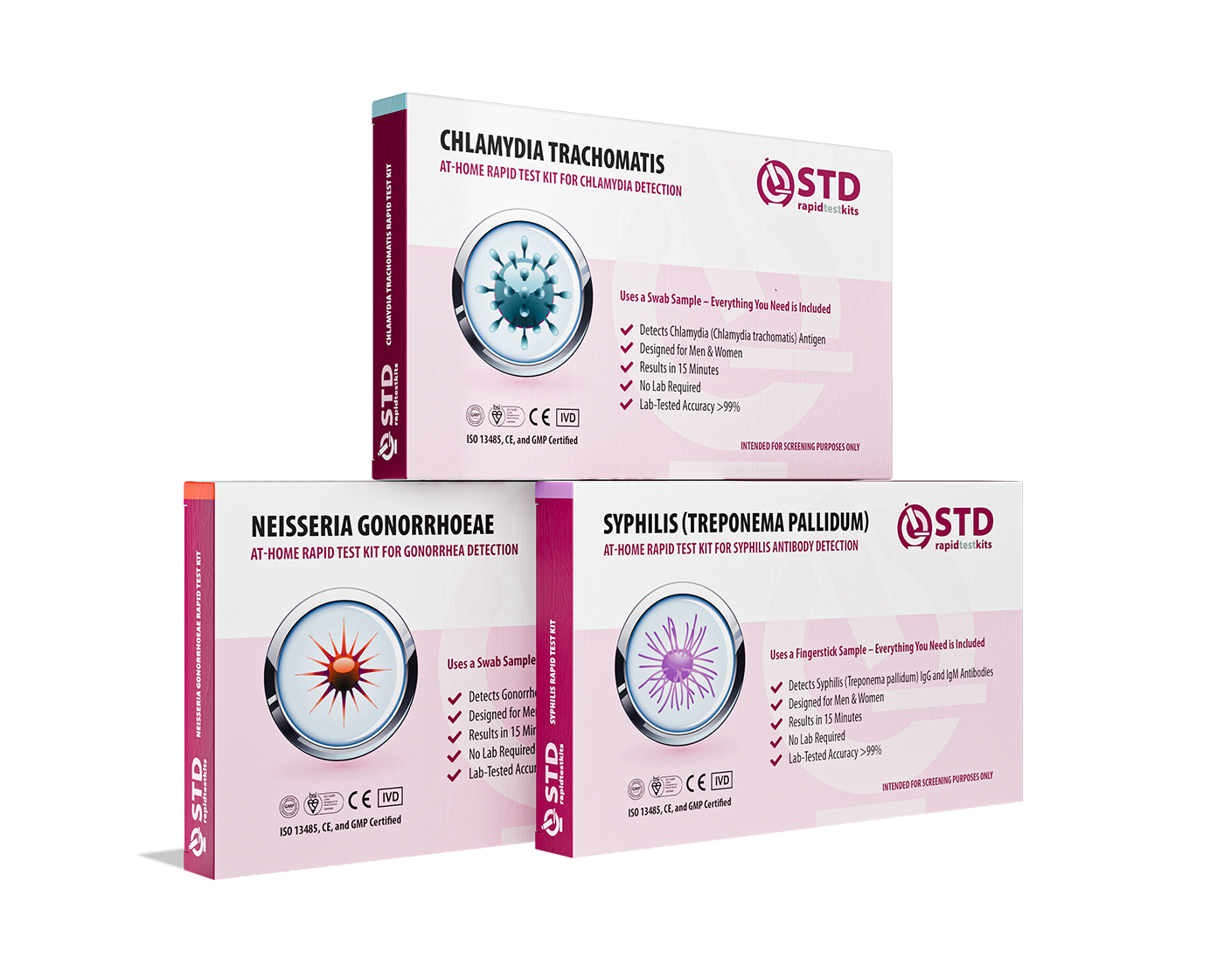 For Men & WomenResults in MinutesNo Lab NeededPrivate & Discreet
Order Now $69.00 $147.00
For all 3 tests
Sources
1. CDC: Many STIs can be spread through oral sex
2. CDC: Genital Herpes—Fact Sheet (HSV‑1 and HSV‑2)
3. PubMed: Epidemiology of HSV‑1 (oral vs. genital prevalence)
4. VICE: Even before your first hookup, many get herpes from kissing


