







I Only Had Oral Sex, Do I Still Need an STD Test?
Last updated: April 2026
The short answer: Yes, you can get an STD from a virgin. Herpes and HPV spread through skin-to-skin contact and do not require penetrative sex. Gonorrhea, chlamydia, and syphilis can all be transmitted through oral sex. In rare cases, infections like hepatitis B and HSV-1 can be acquired through entirely non-sexual contact. A partner's virginity status is not a reliable indicator of their STD status; only recent testing is.
The longer answer explains why the concept of virginity is a lot less useful for gauging STD risk than most people assume. It's not a knock on anyone's sexual history. It's just that STDs don't follow the same rules as the traditional definition of virginity. Some of the most common infections in the United States, herpes, HPV, and hepatitis B, spread through routes that have nothing to do with penetrative intercourse. Understanding those routes is the only way to actually assess your risk.

People are also reading: Do You Need a Follow-Up STD Test After Treatment? What Each Infection Actually Requires
What Does "Virgin" Actually Mean for STD Risk?
Here's where things get complicated quickly. The word "virgin" typically refers to someone who hasn't had penetrative vaginal intercourse. But that definition doesn't cover oral sex, anal sex, skin-to-skin genital contact, kissing, or any number of other intimate activities. And several STDs spread efficiently through all of those routes.
Someone can have given or received oral sex dozens of times, had anal sex, engaged in heavy petting, shared needles, or received a blood transfusion, and still technically identify as a virgin by the classic definition. None of that history would necessarily come up unless you asked directly. This isn't about dishonesty on anyone's part; it's about a cultural definition of virginity that was never designed to capture STD risk.
The more relevant question isn't "are they a virgin?" but "what sexual or intimate contact have they had, and when were they last tested?" Those two questions tell you something useful. Virginity, on its own, tells you very little.
According to the CDC's 2024 provisional STI surveillance report, there were still more than 2.2 million reported cases of chlamydia, gonorrhea, and syphilis in the United States in 2024 alone, and that's counting only the infections people know about. The vast majority of STDs circulate silently, in people who have no idea they're carrying them. That pool includes people of every sexual history.
Which STDs Can Be Transmitted Without Penetrative Sex?
The list is longer than most people expect. The infections below don't require vaginal intercourse to pass from one person to another, which means a partner with no experience of penetrative sex could still carry and transmit any of them.
| STD | How It Can Spread Without Intercourse |
|---|---|
| Herpes HSV-1 | Kissing, oral sex, skin-to-skin contact during an active outbreak or asymptomatic shedding |
| Herpes HSV-2 | Skin-to-skin genital contact, oral sex, genital-to-genital contact without penetration |
| HPV | Skin-to-skin contact during sexual activity, oral-genital contact, hand-to-genital contact |
| Syphilis | Direct contact with a syphilitic sore (chancre) via kissing, oral sex, or skin contact |
| Gonorrhea | Oral sex (to or from), anal contact, sharing sex toys, eye contact with infected fluid |
| Chlamydia | Oral sex, anal contact, genital-to-genital contact without penetration, shared sex toys |
| Hepatitis B | Sharing needles, blood-to-blood contact, mother to child at birth |
| HIV | Sharing needles, blood transfusion (rare), mother to child, not just penetrative sex |
The infections that demand particular attention here are herpes and HPV. Both are transmitted primarily through skin contact rather than bodily fluids, which means condoms offer only partial protection, and penetrative sex is not required. According to the CDC, HPV spreads through close skin-to-skin contact during sex, and a person can pass the infection on even when they have no signs or symptoms whatsoever.
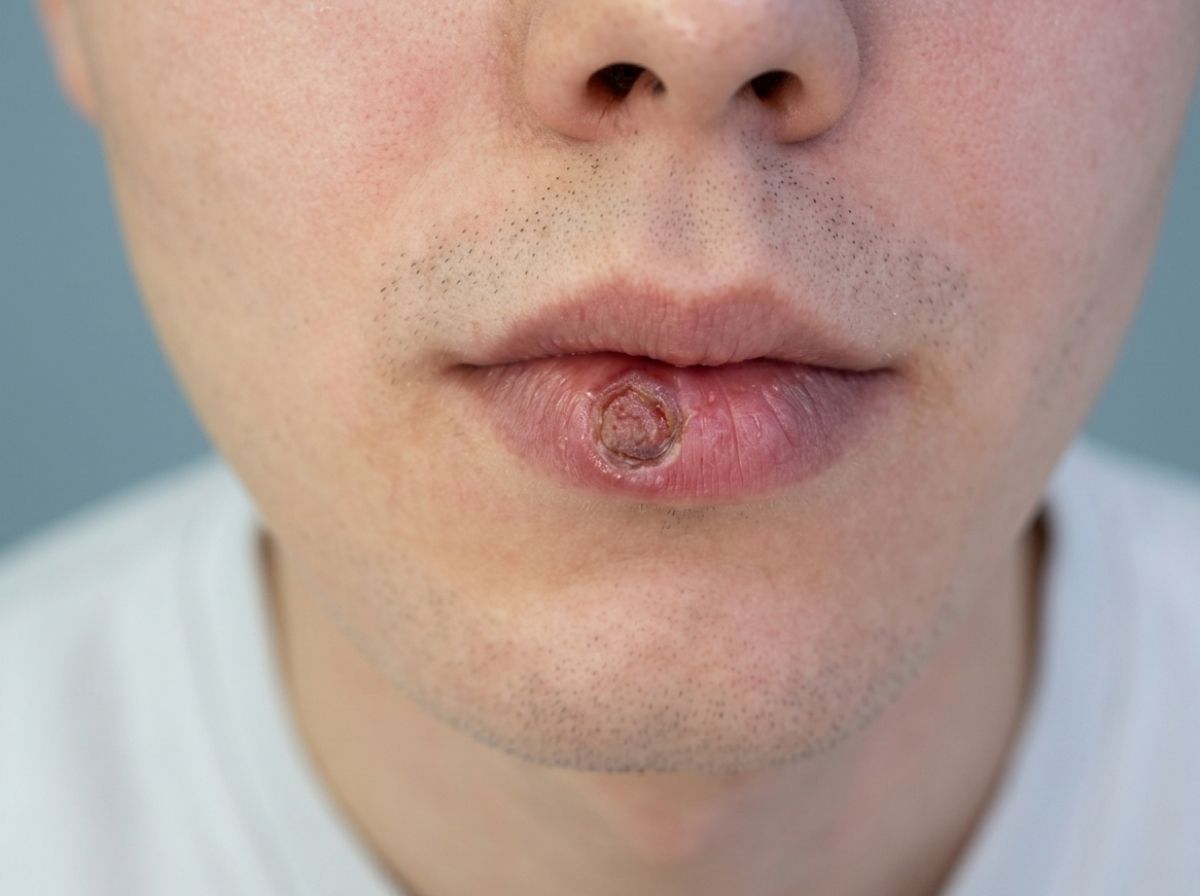
Herpes operates the same way. HSV-1, the strain most people associate with cold sores, can be passed through a kiss. If someone with an oral HSV-1 infection gives oral sex, they can transmit herpes to their partner's genitals. If someone receives oral sex from a partner with a cold sore, they can end up with genital herpes. None of that involves penetration. None of it requires a non-virgin partner. It just requires contact.
The Oral Sex Problem Nobody Talks About Enough
Oral sex is probably the biggest blind spot in how people think about STD risk with virgin partners. A lot of people, including people who have never had vaginal sex, have given or received oral sex. And oral sex is a genuinely effective transmission route for several infections.
Gonorrhea, for example, has no problem living in the throat. You can acquire a throat gonorrhea infection from a partner who has never had vaginal intercourse in their life, simply by receiving oral sex from them. The World Health Organization notes that gonorrhea can infect the genitals, rectum, and throat, making oral transmission a well-documented route of spread. Chlamydia behaves similarly, it can establish itself in the throat after oral sex, and most throat infections produce no symptoms at all. The infection can sit there, transmissible, invisible, without the person or their partner ever knowing it's there.
Syphilis takes a slightly different approach. Syphilitic sores, the painless chancres that characterize early syphilis, can appear anywhere on the body where the bacteria entered: the genitals, yes, but also the lips, the tongue, and the inside of the mouth. Someone with an oral syphilitic sore can pass the infection through kissing or oral sex. The sore itself is often so painless that neither person notices it.
It's worth pausing on that for a moment. Imagine you're about to be intimate with someone for the first time. They've never had vaginal sex. You feel genuinely reassured. But if they've had oral sex before, even once, there's a real, non-trivial pathway for herpes, gonorrhea, chlamydia, or syphilis to enter the equation. The reassurance wasn't false, exactly, but it was incomplete.
People are also reading: Can You Get an STD from a Public Toilet?
Skin-to-Skin Contact and the Infections That Don't Need Anything More
Some STDs are so efficient at spreading that they don't even need fluid exchange. HPV and herpes are the clearest examples. Both viruses live on and just beneath the skin surface, which means they can be transmitted when infected skin touches mucous membranes, the soft tissue of the genitals, mouth, or anus, regardless of whether penetration occurred.
HPV is the most common STD in the United States. A study published in JAMA Oncology found that approximately 40% of Americans between the ages of 15 and 59 carry an active HPV infection. Most of those people have no idea, because the vast majority of HPV infections produce no symptoms. The immune system clears most HPV infections on its own within two years, but during that time, the virus can spread freely through skin contact. Someone can have HPV and have never had penetrative sex, and they can pass it on through genital touching, oral sex, or any contact between an infected area and a mucous membrane.
Herpes follows the same logic. According to the CDC, HSV-2, the strain most commonly associated with genital herpes, affects roughly one in six people in the United States between the ages of 14 and 49. Transmission can happen even when no sores are visible, a phenomenon called asymptomatic shedding, where the virus sheds from the skin without any outward sign. A virgin partner who has had genital-to-genital contact, even without penetration, could carry HSV-2 and not know it.
Non-Sexual Routes: What a Virgin Partner Might Not Know About Themselves
Here's a scenario that surprises most people: a partner who has truly had no sexual contact of any kind whatsoever can still, in rare circumstances, carry certain STDs. The routes are non-sexual, but they're real.
Hepatitis B and HIV can be transmitted through shared needles, relevant for anyone who has used intravenous drugs, even once, or who received a tattoo or piercing with unsterilized equipment. Both viruses can also be passed from mother to child during birth, which means someone could carry hepatitis B from the moment they were born, years before they had any sexual contact at all.
HSV-1 is another one. Most adults carry oral HSV-1. The majority of people were exposed to it in childhood, from a kiss from a relative, sharing a cup, or other completely ordinary non-sexual contact. If they develop cold sores as adults, they can pass HSV-1 to a sexual partner through oral sex, regardless of their own sexual history. Their virginity is entirely irrelevant to whether they're carrying the virus.
This is not meant to be alarming. It's meant to reframe how you think about risk. The question isn't "did they have sex before?", it's "have they been tested recently, and for what?"
How to Actually Assess Your Risk After Contact with a Virgin Partner
If you've had intimate contact with someone who identifies as a virgin, your next step depends on what kind of contact occurred and how recently. Here's how to think about it clearly:
| Type of Contact | Key Risk | What to Consider |
|---|---|---|
| Kissing only | Herpes HSV-1, rarely syphilis | Lower risk overall; higher if visible sores present |
| Oral sex given | Herpes, HPV, gonorrhea, syphilis | Real risk, especially gonorrhea and herpes |
| Oral sex received | Herpes, HPV, chlamydia, gonorrhea | Depends on partner's oral STD history |
| Skin-to-skin genital contact | Herpes HSV-1 and HSV-2, HPV, syphilis | No penetration needed for transmission |
| Anal sex (receptive or insertive) | All major STDs | Higher risk than vaginal sex; anal tissue tears more easily |
| Shared needles or equipment | HIV, Hepatitis B, Hepatitis C | Relevant regardless of sexual history |
The honest takeaway is that several of these scenarios carry meaningful risk. Oral sex with a virgin partner isn't no-risk sex. Skin-to-skin genital contact without penetration isn't no-risk contact. Herpes and HPV in particular don't care about the technical definition of virginity, they care about contact with skin and mucous membranes.
At-Home STD Testing: When to Test and What to Test For
If you've had any of the contact types described above and you're now wondering about your status, the most useful thing you can do is test. Not because you definitely have something, but because testing is how you stop guessing. The anxiety of not knowing is almost always worse than the result itself, and most people who test after low-risk exposures get the all-clear they were hoping for.
At-home rapid STD test kits make this easy. You don't need to book a clinic appointment, explain your situation to a receptionist, or wait in a waiting room. The kits ship discreetly, the process takes minutes, and results are available quickly. If you had oral sex with a new partner who identifies as a virgin, testing for herpes and gonorrhea is a reasonable call. If there was skin-to-skin genital contact, adding HPV (for women) and herpes makes sense. If you're unsure what happened or just want comprehensive coverage, a multi-panel kit covers all the major bases at once.
Testing windows matter; testing too early can produce a false negative even if an infection is present, because the body needs time to produce enough detectable markers. Use these exact timing guidelines:
- Chlamydia: test from 14 days after exposure.
- Gonorrhea: test from 3 weeks after exposure.
- Syphilis: test from 6 weeks after exposure.
- HIV: test at 6 weeks for a first indicator result, then retest at 12 weeks for certainty.
- Herpes HSV-1 and HSV-2: test from 6 weeks after exposure.
- Hepatitis B: test from 6 weeks after exposure.
- Hepatitis C: test from 8–11 weeks after exposure.
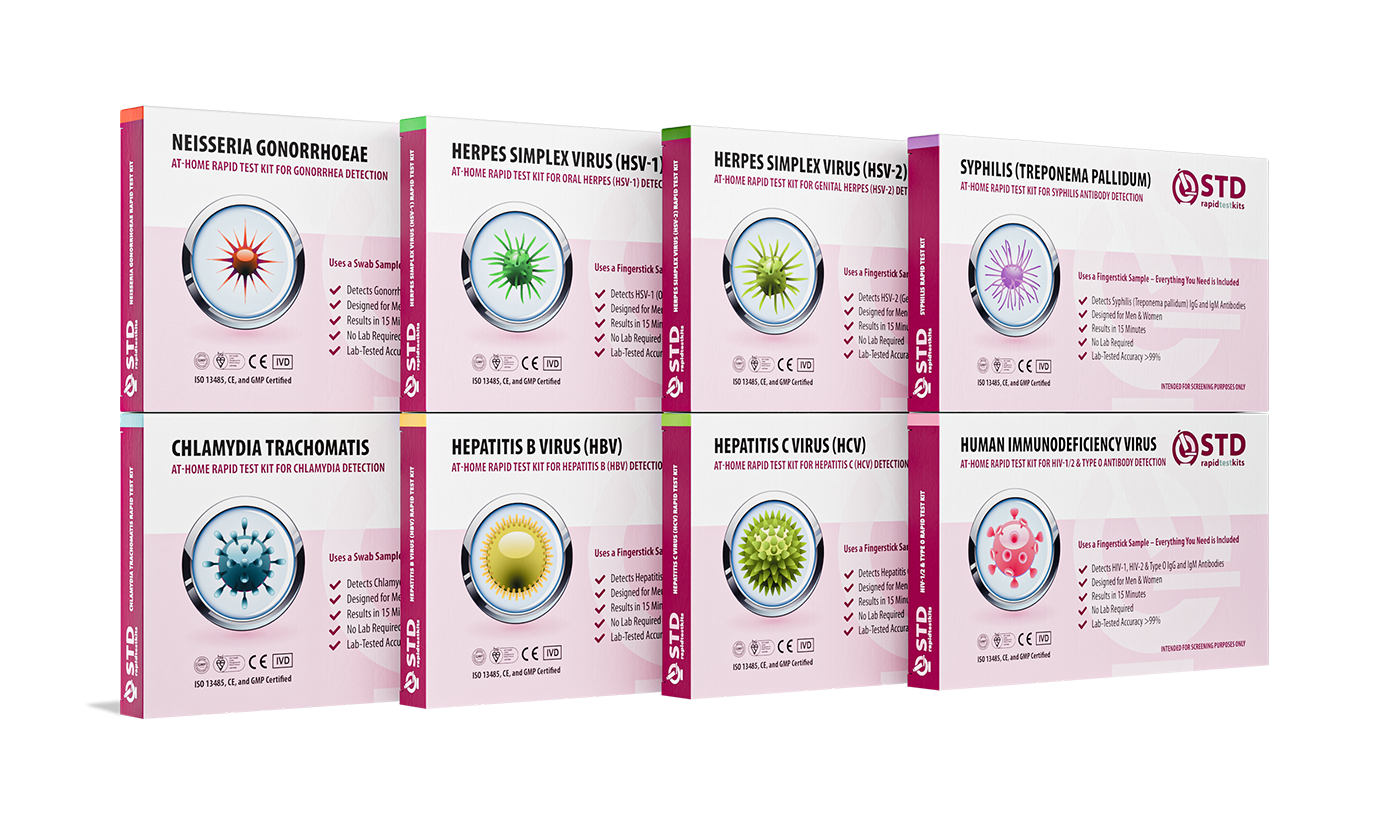
For coverage across the most common concerns after exposure with a new partner, the 7-in-1 Complete STD Home Test Kit screens for HSV-2, chlamydia, gonorrhea, syphilis, HIV, hepatitis B, and hepatitis C, all from home, with results in minutes. For women who also want HPV and trichomoniasis coverage, the Women's 10-in-1 Complete STD Home Test Kit is the most comprehensive option available. Testing is the fastest way to stop the guessing game.
Check Your STD Status in Minutes
Test at Home with Remedium8-in-1 STD Test Kit
Claim Your Kit Today
Save 62%
 For Men & Women
 Results in Minutes
 No Lab Needed
 Private & Discreet
Order Now $149.00 $392.00
For all 8 tests
The Myth That "Less Experience" Means "Safer"
There's an underlying assumption behind the original question that deserves direct attention: the idea that a partner with less sexual experience is inherently safer. It's an understandable assumption, intuitively, fewer partners means less exposure, which should mean lower risk. And in many cases, that's true. But it's not the whole picture.
First, even one prior sexual encounter is enough to acquire and transmit herpes or HPV, both of which can remain asymptomatic for years. Someone who had oral sex once, two years ago, might carry an infection they've never known about and wouldn't show up on any test they've thought to take. Second, the infections that travel routes other than penetrative sex, HSV-1 most prominently, can be acquired through completely non-sexual contact. The number of prior sexual partners has no bearing on whether someone carries oral herpes.
Third, and perhaps most importantly, asymptomatic transmission is the norm rather than the exception for most common STDs. The CDC notes that the majority of genital herpes infections are transmitted by people who don't know they're infected because they have no symptoms or don't recognize them. The same pattern holds for HPV, chlamydia, and gonorrhea. The person who looks and feels completely healthy can be just as capable of passing an infection as someone with visible symptoms.
None of this is cause for panic. It's cause for sensible habits: honest conversations with partners, regular testing if you're sexually active, and knowing that testing, not assumptions about someone's history, is the only way to actually know your status.
Reducing Risk Without Eliminating Contact
Knowing the risk isn't the same as needing to avoid intimacy altogether. The goal is informed decision-making, not abstinence as the only option. Several practical measures can meaningfully reduce your exposure to STDs in any sexual context, including with partners who identify as virgins:
Condoms and dental dams reduce transmission risk substantially for fluid-borne infections like gonorrhea, chlamydia, HIV, and hepatitis B. They're less effective for skin-based infections like herpes and HPV, because they don't cover all the skin that might shed the virus, but they still help. Correct, consistent use matters more than occasional use.
Communication before contact is genuinely useful. Asking a partner whether they've been tested recently, and for what, gives you real information rather than inferences from their self-reported sexual history. Someone can be a virgin by traditional definition and have never been tested for anything, which means you have no information at all about their status, not reassuring information.
Vaccination covers two major STDs. The HPV vaccine (Gardasil 9) is highly effective against the strains most likely to cause genital warts and cancer. Hepatitis B vaccination is recommended for all adults who haven't been vaccinated. Both are available through healthcare providers and are most effective when received before first exposure, but they provide meaningful protection even for sexually active adults.
Regular testing is the single most effective habit for people who are sexually active. You can't manage a status you don't know about. Testing once a year, or more frequently with multiple partners, gives you current, accurate information rather than assumptions.

People are also reading: Do You Need STD Testing After Sex With a Condom? What Your Risk Actually Looks Like
FAQs
1. Can a virgin give me herpes?
Yes, quite easily. Herpes HSV-1 can be passed through kissing or oral sex, and most people carry it without ever knowing, many acquired it in childhood through non-sexual contact. HSV-2 can also be transmitted through skin-to-skin genital contact without penetration. Being a virgin offers no protection against herpes transmission.
2. Can you get chlamydia from a virgin?
Yes, if there has been oral sex or genital-to-genital contact. Chlamydia can establish itself in the throat after oral sex and produce no symptoms. It can also spread through genital contact without full penetration. Test from 14 days after exposure if you're concerned.
3. Is the risk of an STD lower with a virgin partner?
In many cases, yes, statistically, fewer prior partners means fewer opportunities for exposure. But it's not zero, and several infections (herpes, HPV) can be present with zero prior penetrative sexual contact. Lower risk is not the same as no risk, especially with skin-transmitted infections.
4. Can you get HPV from skin-to-skin contact alone?
Yes. HPV spreads through direct skin and mucous membrane contact during sexual activity. You don't need penetrative sex, fluid exchange, or even visible symptoms in your partner. Someone with no history of penetrative sex can carry and transmit HPV through genital touching or oral-genital contact.
5. Can you get an STD if you're both virgins?
It's unlikely but not impossible. If both partners have truly had zero intimate contact of any kind, no oral sex, no skin-to-skin genital contact, no kissing, the risk of STD transmission between them is extremely low. However, HSV-1 can be present in either partner from childhood exposure with no sexual contact at all, and it can be transmitted through kissing or oral sex even in two people who consider themselves virgins. If there is any doubt, testing before becoming intimate removes the guesswork entirely.
6. Should I get tested if I only had oral sex with a virgin?
If there was any genital contact during that oral sex, testing for herpes and gonorrhea is reasonable, especially if you're not sure of your partner's full intimate history. Wait 3 weeks for gonorrhea and 6 weeks for herpes before testing to get an accurate result.
7. Does syphilis spread without penetrative sex?
Yes. Syphilitic sores (chancres) can appear on the lips, tongue, or inside the mouth, and the infection can be passed through kissing or oral sex with an infected person. The sores are typically painless, which means neither person may notice them. Test from 6 weeks after any exposure that could have involved contact with an open sore.
8. Can you get gonorrhea in your throat from a virgin partner?
Yes. Throat gonorrhea is a real and increasingly common infection, transmitted through oral sex. A partner who has never had vaginal sex can carry gonorrhea in their genitals and transmit it to your throat during oral sex, and vice versa. Most throat gonorrhea infections produce no symptoms.
9. Can you get an STD from a virgin if you use a condom?
Condoms significantly reduce, but don't eliminate, STD transmission risk, including with a virgin partner. For infections spread through bodily fluids (gonorrhea, chlamydia, HIV, hepatitis B), correct condom use provides strong protection. For skin-based infections like herpes and HPV, protection is partial because the virus can shed from skin the condom doesn't cover. The most reliable way to know you're protected is for both partners to test before becoming intimate.
10. If my partner is a virgin, do I still need to use protection?
Yes, unless you've both tested recently and know each other's status. Herpes and HPV in particular can be present even with no prior penetrative sex, and condoms significantly reduce (though don't eliminate) transmission risk for most STDs. Testing is the more reliable safety measure, it tells you what you're actually working with.
Know Your Status, Test at Home with Confidence
Whether you've just had a first encounter with a new partner or you're simply overdue for a status check, there's no substitute for knowing your actual results. An STD rapid test doesn't require a clinic visit, a prescription, or an explanation to anyone. You collect your sample at home, and results are ready in minutes.
For broad coverage after any type of exposure, the 7-in-1 Complete STD Home Test Kit (98.5% accuracy) screens for HSV-2, chlamydia, gonorrhea, syphilis, HIV, hepatitis B, and hepatitis C in one fast session. If the exposure specifically involved oral or genital contact and you want to focus on the highest-probability risks, the Genital and Oral Herpes HSV-1+2 2-in-1 Test Kit (98.2% accuracy) is a targeted option for herpes specifically. For women wanting the most comprehensive panel available, including HPV and trichomoniasis, the Women's 10-in-1 Complete STD Home Test Kit covers all ten of the most common infections at once.
Testing is the one thing that replaces assumption with certainty. Visit STD Rapid Test Kits to find the right kit for your situation.
How We Sourced This: Our article was constructed based on current advice from the most prominent public health and medical organizations, and then molded into simple language based on the situations that people actually experience, such as treatment, reinfection by a partner, no-symptom exposure, and the uncomfortable question of whether it "came back." In the background, our pool of research included more diverse public health advice, clinical advice, and medical references, but the following are the most pertinent and useful for readers who want to verify our claims for themselves.
Sources
1. Centers for Disease Control and Prevention, About Genital HPV Infection
2. Centers for Disease Control and Prevention, STI Treatment Guidelines: Genital Herpes
4. Mayo Clinic, HPV Infection: Symptoms and Causes
5. MedlinePlus, Herpes (HSV) Test
6. Washington State Department of Health, Frequently Asked Questions About STDs
About the Author
Dr. F. David, MD is a board-certified infectious disease specialist focused on STI prevention, diagnosis, and treatment. He writes with a direct, sex-positive, stigma-free approach designed to help readers get clear answers without the panic spiral.
Reviewed by: Rapid STD Test Kits Medical Review Team | Last medically reviewed: April 2026
This article is for informational purposes and does not replace medical advice.


