
Published: June 2025 | Last updated: May 2026 | Editorial review and quality control: Martina N.
Can you be sex-positive and still terrified of STDs?
Yes. Sex-positivity is a framework of consent, honesty, and informed choice, not a requirement to feel fearless about health risks. Many people who use protection, communicate with partners, and test regularly still experience anxiety. Managing both feelings together, with a consistent testing rhythm and open conversations, works better than pretending fear disqualifies you from being sex-positive.
You can hold two truths at once. You can believe that people deserve pleasure, autonomy, and a body that belongs only to them. You can still feel your stomach drop the morning before a clinic visit, refresh a results email with a tight chest, or replay a recent encounter at 2 a.m. wondering whether you missed something important. Being sex-positive does not require being fearless about sexually transmitted infections (STIs). Both feelings coexist in most people who think honestly about their sex lives, even if the sex-positive corner of the internet rarely says so out loud.
This piece is for the reader who feels that tension. It explains why STI anxiety is so common, even in informed and empowered people, where the shame underneath it tends to come from, when fear is useful and when it stops being useful, and what to do with it. The goal is not to talk you out of caring. The goal is to make caring feel less like punishment and more like part of how you take care of yourself and the people you sleep with.
If you have ever closed your laptop after reading a sex-positive thread and then Googled “do herpes bumps itch,” this article is written for you. The next few minutes are tools, not lectures.
Key Takeaways
- Sex-positivity and STI anxiety are not contradictions. Both can coexist, and managing them together works better than pretending one cancels the other.
- Routine testing and direct conversations are the two most reliable ways to turn STI worry into action that protects you and your partners.
What "Sex-Positive" Actually Means
Sex-positivity is often described in shorthand as being comfortable with sex. That description is incomplete. The framework, as outlined by public-health organizations and educators, is closer to a set of values: consent matters, pleasure is valid, people get to make their own informed choices, and no one's body or sexuality should be judged for not matching someone else's expectations.
Notice the gaps. Sex-positivity is silent on whether you should feel relaxed about every sexual encounter, unbothered by health risk, or comfortable in a clinic chair. A person can identify deeply with sex-positivity and still feel a knot of worry in the days after a new partner. Those experiences are not in conflict. They are both part of being a thinking, feeling human who takes their body seriously.
What sex-positivity does ask is that you carry your fear without dumping it on other people. That means not slut-shaming a partner who tested positive for something. It means not treating a friend's STI diagnosis as evidence of moral failure. It means not assuming that a person who asks for testing before sex is being insulting. And it means not using your anxiety as a weapon against someone else's choices, including your own.
It asks for: consent, honest communication, respect for other people's choices, and informed decisions about your own body.
It is silent on: whether you feel calm about every health risk, whether testing is comfortable, and whether you can read a results email without your stomach dropping.
Why STI Fear Persists, Even in Empowered People
You can read every CDC fact sheet, take every precaution, and still feel that pang. That is not a failure of your education. It is a feature of the cultural soup most of us grew up in. The CDC's 2018 prevalence estimates put the figure at about 1 in 5 people in the United States having an STI on any given day, and yet shame still shows up in clinic conversations, dating apps, and the small private moments when you are checking yourself in the mirror (CDC).
STI fear is rarely pure infection fear. It is tangled with shame, identity, partner rejection, and the worry of being seen as "dirty." For many people, the imagined consequence of a positive test is social, not medical. The fear of having to tell a future partner often runs hotter than the fear of the treatment itself.
Two scripts are usually running at the same time. The public-health script frames STI testing as a routine medical check, similar to a blood-pressure reading. The older cultural script most adults learned as teenagers framed sex as something that gets punished. Both scripts are still playing. Information slowly turns down the volume on the second one, but it does not delete the recording.
A few reasons the fear lingers, even for people who consider themselves informed:
- Abstinence-only and fear-based sex ed left a generation associating sex with disease, secrecy, and punishment. That conditioning does not vanish just because the textbook changes.
- Cultural stigma still falls unevenly. Women, queer and trans people, and anyone with more than a couple of partners face heavier judgment, both internal and external.
- Anxiety and OCD can amplify health worries beyond what the actual risk warrants. STIs sit at a particularly sticky intersection of contamination fears, social shame, and body uncertainty.
- Misinformation spreads faster than correction. A single confident-sounding TikTok claim can outweigh a paragraph of cautious public-health guidance, especially at 1 a.m.
None of that is your fault. All of it is yours to work with. When you notice an anxiety spike that is bigger than the situation, the first useful question is usually "where did I learn this?" followed by "is that source someone I would still trust today?"
| Logic says | Fear says |
|---|---|
| You used protection and discussed testing history. | What if the condom broke and you did not notice? |
| You have no symptoms and you get tested regularly. | What if you are asymptomatic and contagious right now? |
| You tested negative last month for everything. | What if something did not show up yet? |
| Your partner shared a recent negative test. | What if they were dishonest about their last exposure? |
The Fear Spectrum: Overtesting and Avoiding
STI fear tends to push people in one of two directions, and both come from the same anxious place.
The first is overtesting. After a low-risk encounter, someone orders four rapid kits in two weeks, cannot focus at work, and spends evenings reading symptom forums. The testing is not producing peace; it is producing the next round of panic. Each negative result buys roughly 36 to 48 hours of relief before the loop starts again. The kits are not faulty. The underlying anxiety is asking a question that a kit cannot answer.
The second is avoidance. Someone has not tested in over a year because the act of testing feels too vulnerable to face. The internal reasoning runs: if I do not test, I cannot confirm something bad, so I just will not look. The fear stays present but unnamed, and it tends to leak into every new sexual decision, often pushing the person away from intimacy they would otherwise want.
Both responses are valid emotional reactions, and neither has to be permanent. The practical move that works for both is concrete: set a calendar reminder for the next test before you leave this page, and tell one person you trust that the date is on the books.
Are your decisions about sex moving toward what you want, or away from what you are afraid of? Both can show up in the same week. The goal is to notice which one is driving on any given night.
When Fear Is Useful, and When It Is Not
Fear is not the enemy. A small, well-tuned amount of fear is exactly what gets a person to use protection, ask questions, and book the test. The trick is recognizing when the dial has moved past "useful caution" into "avoidance dressed up as concern."
Useful STI fear sounds like: "I should probably get tested before this new relationship gets serious." It leads to action. Unhelpful STI fear sounds like: "I cannot bring myself to check the results, so I will pretend I never tested." It leads to delay. Delay is what lets a treatable infection grow into something with lasting consequences. Untreated chlamydia and gonorrhea are among the leading preventable causes of pelvic inflammatory disease and the fertility complications that can follow. Caught early, both infections clear with a single short course of antibiotics in most cases. Untreated syphilis can progress to cardiovascular and neurological damage years later, even after the original symptoms vanish.
The World Health Organization emphasizes that most bacterial STIs are curable with a course of antibiotics and that the viral ones (herpes, HIV, hepatitis B) are manageable with modern care. Avoidance is the variable that turns a small problem into a bigger one, more often than the infection itself does.
If you notice fear pushing you toward avoidance, three reset moves usually help:
- Make testing a routine, not a reaction. Annual screening, or every three to six months if you have multiple partners, takes the emotional weight off any single event.
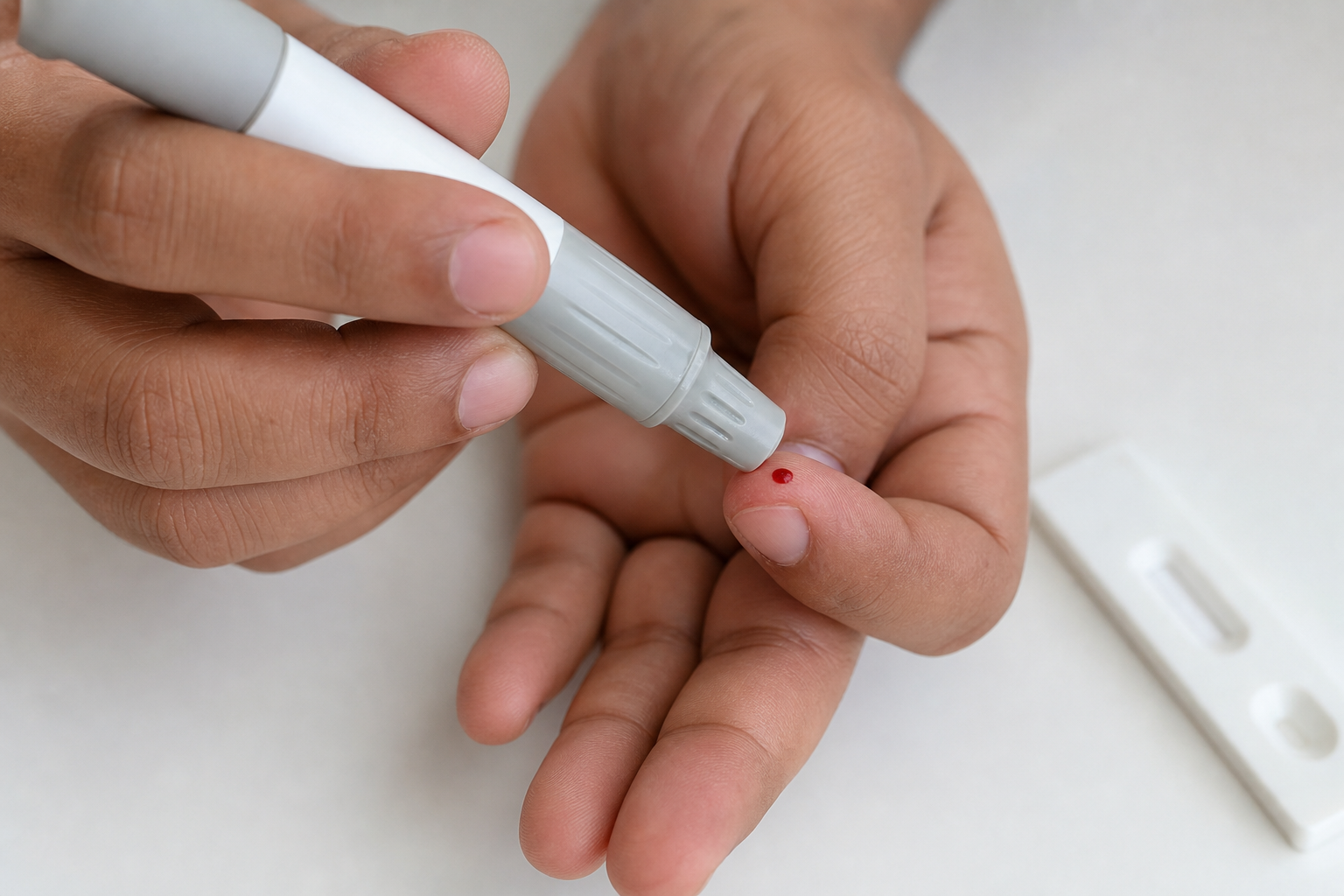
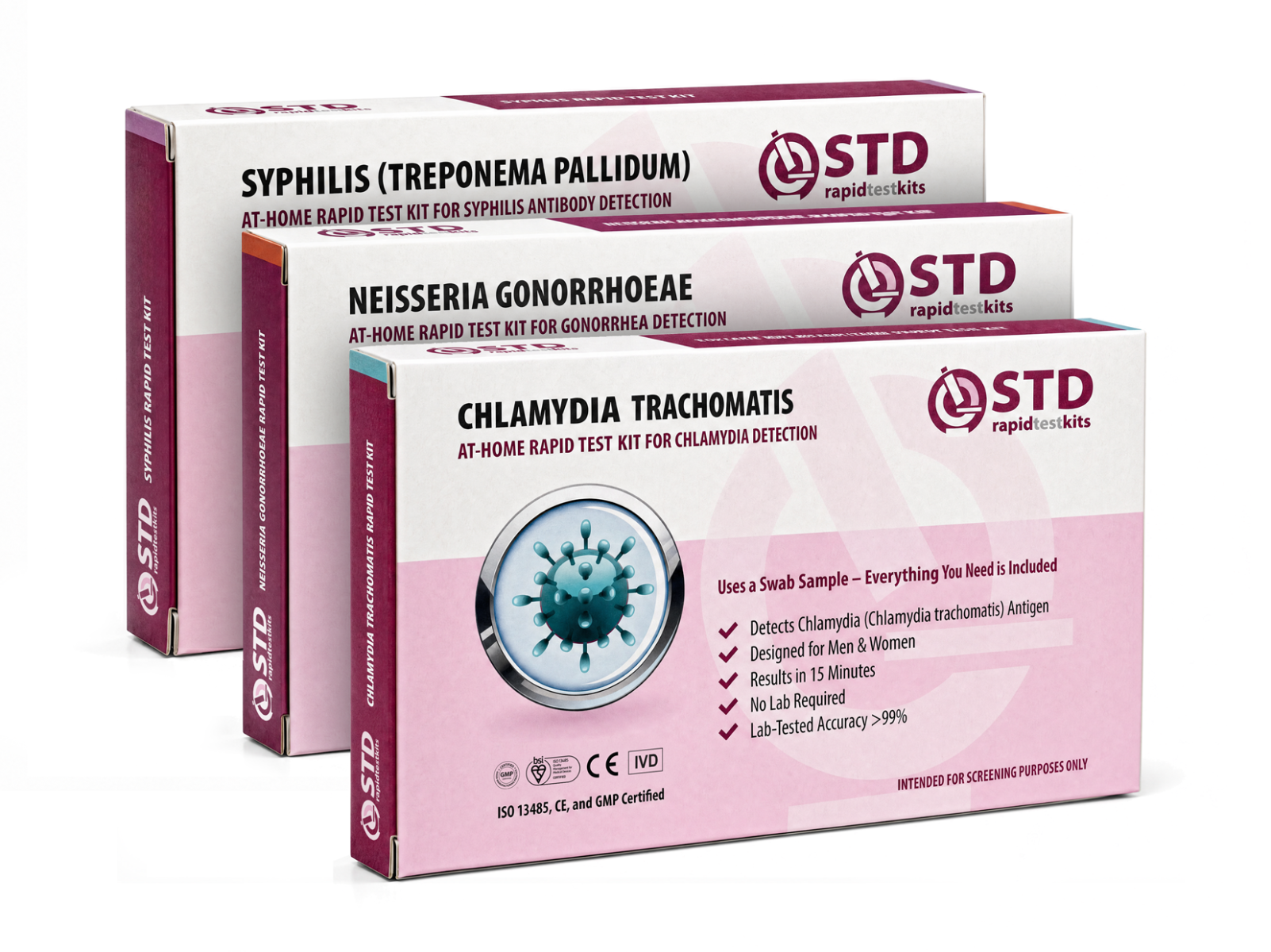
- Use a test method that fits your nervous system. If a clinic waiting room is what stops you, an at-home STI test kit removes that barrier and still gives you a credible screening answer.
- Tell one person you trust before you test, so the plan is not something you can quietly drop.
This article is published by stdrapidtestkits.com, which sells the at-home rapid kits linked below. We recommend products based on fit for the reader's concern, not commercial benefit. If the right test for your situation is something we do not sell (urine NAAT, throat or rectal swabs, lab-processed panels), we will say so plainly.

Why Sex Positivity Alone Does Not Erase Fear
Sex-positivity is a framework that hands you permission and vocabulary. It gives you language to explore safety, pleasure, and communication on your own terms. What it does not do, on its own, is delete trauma, cultural programming, or a bad past experience in a clinic waiting room. Reading every sex-positive book on the shelf will not override a body that learned years ago to associate desire with consequence.
There is also performative sex-positivity, which is its own trap. Some communities prize appearing unfazed, like asking about testing is a buzzkill or an admission of paranoia. The pressure to "look chill" can stop someone from asking the questions they want to ask before sex, or from booking a test they want to take. Silence in the name of coolness produces worse outcomes than the awkward question would have. The worry does not go away. It just goes underground.
Honest sex-positivity makes room for the fear. It lets the worry sit in the room and be named out loud, while the real decisions still get made on the basis of testing and conversation.
Pretending to be unfazed when you are not is a different form of silence. People who feel pressured to look chill about testing tend to ask fewer questions before sex, then spiral harder after. Research on the psychology of STI testing has consistently found that shame and self-conscious emotions are a routine part of the experience for many adults, regardless of how informed they are.
The Morning-After Spiral
Picture a morning that started fine. A small good mood from a night of consenting, careful sex. Then a flicker of doubt. Did the condom go on cleanly? Was that little bump on the thigh always there? Did the partner pause for a second when asked about their last test?
Within an hour, the brain has built a small horror movie. Googling symptoms, ordering a kit, then a second kit, cancelling a date, waiting two weeks for a test that statistically would not even detect a fresh exposure, since most STI window periods run longer than that. Two weeks later, the test comes back negative. The relief lasts about a day. Then the next "just to be sure" kit goes in the cart.
This is an anxiety loop, and it deserves support rather than silence. The way out is to build a routine that takes the urgency out of any single encounter, so the next morning-after does not have to carry the entire weight of a verdict. The table below shows realistic testing windows, which alone can short-circuit the panic.
| Timing after exposure | What a test can tell you |
|---|---|
| Within 3 days | Almost always too early. Most pathogens have not reached detectable levels yet; high risk of a false negative. |
| 10 to 14 days | Useful for many bacterial STIs like chlamydia and gonorrhea. Still early for HIV, syphilis, and herpes antibody tests. |
| 4 to 6 weeks | Catches most syphilis seroconversions. Lab-based fourth-generation antigen/antibody tests may detect HIV by this point. Rapid antibody-only home kits can take up to about 90 days. |
| About 3 months | Standard window for full reassurance across most common STIs, including HIV with antibody-only kits. |
Trauma, Shame, and the Sexual Body
For many people, STI anxiety is not just about microbes. It is layered over earlier experiences that taught the body to brace. That can include sexual trauma, a dismissive medical encounter, a religious upbringing that framed desire as a moral risk, or a previous partner who lied about their status. Any of those can make a routine swab feel like a confrontation with old wounds.
This is also where the limits of standard sex education show up. "Use protection" is correct advice. It is also nowhere near enough for someone whose body says "I do not want to be touched right now" the moment a clinician picks up a swab kit. Trauma-informed care, in which the provider explains every step, asks for consent at each touch, and does not push past hesitation, is not a luxury. It is the baseline that should have been standard everywhere a long time ago.
You do not have to explain your trauma to deserve gentle care. Asking for the pace that lets you stay present is enough, and most providers worth your time will adjust without needing the backstory.
Use self-collection options. At-home kits and self-collected swabs at clinics keep the most vulnerable part of the process in your own hands.
Bring a script. Write down what you want to ask before the appointment. If your nervous system goes quiet under stress, having the words on a phone screen is a real intervention.
The Emotional Side of Getting Tested
Every time you swab, draw a drop of blood, or open a results email, you are doing more than checking for a bacterium or a virus. You are confronting whatever your culture taught you to associate with sex, and you are putting your own well-being above a story that said your body would be punished for wanting things.
Research on health-care avoidance and STI testing keeps finding the same pattern: a large share of people delay testing because they are bracing for judgment from the clinician or themselves, even when they understand the risk perfectly well. The infection itself is often not what they fear most. The conversation around it is.
The framing changes what good testing behavior looks like. It is less about being brave and toughing out a waiting room, and more about picking the environment that lets you go through with it. For some readers, that is a familiar clinic with a known provider. For others, it is a fully private at-home kit shipped in plain packaging, which the NHS lists among the standard ways to get tested. Neither route is more virtuous than the other.
Patterns Worth Recognizing in Yourself
- First-time testers often feel unprepared and assume everyone else found it easy. They did not.
- People testing because of a new partner sometimes worry that asking for a test reads as accusation. It does not, to anyone worth sleeping with.
- People with symptoms often spiral into worst-case thinking before they have any data. Naming the loop ("I am catastrophizing") is half the work of breaking it.
Real Tools to Balance Pleasure and Protection
Tools beat theory when anxiety is in the room. A few practices that consistently lower anxiety while keeping your sexual life intact:
- Build a testing rhythm. The CDC recommends annual chlamydia and gonorrhea screening for sexually active women under 25, opt-out HIV screening at least once for every adult between 13 and 64, and more frequent screening (every 3 to 6 months) for men who have sex with men and people with multiple partners. Pick a calendar reminder and stop debating it event by event.
- Use the privacy tools that exist. At-home rapid tests give you control over where, when, and with whom you process a result. They are a screening layer, not a substitute for medical care if you test positive, but they remove the highest-friction part of the process for many people.
- Have the conversation before the bedroom. "When were you last tested, and for what?" said in a normal voice on a couch is a thousand times easier than the same question whispered at 1 a.m. with clothes already off.
- Disclose your own status first. Saying "I test every six months and last tested in [month]" invites the reciprocal answer without making your partner feel interrogated.
- Decouple shame from outcome. A positive result is medical information rather than a moral verdict. The infections caught by routine screening are either curable with a short course of antibiotics or manageable with daily medication, and either result points to the same next step: getting treated.
Partner Conversations Without the Performance
"Hey, before we hook up, when was your last STI test?" is rarely the line anyone dreams of whispering in the dark. It does not have to feel like a clinical interruption. It can sound more like a request for closeness than a customs check.
The tone of curiosity does most of the work. The question itself is almost always less awkward than the silence that would have followed. Two example openers are in the callout below, both designed to feel like an invitation rather than an interrogation.
If a partner reacts to a testing question with shame or accusation, pay attention to what the reaction tells you about whether this person is ready for the conversation you want to have. If a partner admits their own anxiety in return, that is not a turn-off. It is the start of a more honest connection. Two people saying "I worry too" often deepens intimacy rather than killing it.
Opener 1: “I am into this. I also feel best when I know where we both stand on testing.”
Opener 2: “I get in my head sometimes after sex, even when we are careful. Can we talk about what helps us both feel solid going in?”
Both lead with your own feelings, which makes the testing question land as honesty rather than suspicion.
Myths That Keep the Fear Alive
Misinformation is the fuel that turns reasonable concern into spiraling anxiety. A few of the most common beliefs worth dismantling:
“You can always tell if someone has an STI.” You cannot. Most STIs are asymptomatic for long stretches, especially in early stages. Chlamydia is the textbook example: it commonly causes no visible signs in either men or women for months. Eye-balling a partner, or yourself, is not a screening method.
“Getting an STI means you were irresponsible.” You can use barriers, test regularly, communicate openly, and still get exposed. STIs are a possibility of being a sexual human, not a personal failing. Treating them as moral evidence makes everyone less likely to test, which is the opposite of what helps.
“Monogamy means you do not need to test.” Monogamy reduces exposure dramatically, but it does not eliminate it. Infections from before the relationship can sit silently for months or years, and the only way to know is to test, ideally at the start of the relationship. Trust is a relationship choice. A baseline test gives you actual information.
“PrEP covers everything.” PrEP, per CDC clinical guidance, is highly effective at preventing HIV (about 99% reduction in sexual transmission risk when taken as prescribed). It does not prevent chlamydia, gonorrhea, syphilis, hepatitis, or herpes. PrEP users screen every three months because the medication covers only one virus; quarterly testing fills the gap for the rest.
Common Misconceptions About STIs
Myth: You can tell if a partner has an STI by looking.
Fact: Most STIs are asymptomatic for long stretches. Visual inspection is not a screening method; only a test can confirm status.
Myth: An STI diagnosis means you were careless.
Fact: Consistent barriers, routine testing, and honest communication still leave a real exposure window. STIs are a risk of being sexually active, not a moral failing.
Myth: Monogamous people do not need to test.
Fact: Pre-relationship infections can sit silently for months or years. A baseline test early in the relationship is the only way to know.
Myth: PrEP protects against everything.
Fact: PrEP covers HIV only. Quarterly screening for chlamydia, gonorrhea, syphilis, and other STIs is the standard companion.
The Culture Is Shifting, Slowly
Even five years ago, talking openly about a chlamydia diagnosis or a herpes positive would have been treated as a confession. That is starting to change. Public figures occasionally disclose their status. Sex educators on TikTok and YouTube treat STI testing the same way they treat dental checkups: routine, unremarkable, sometimes inconvenient. The World Health Organization frames STIs as a major global public-health concern that requires destigmatized, accessible testing, not punishment-based messaging.
The stigma has not evaporated. Plenty of clinics still treat patients like suspects. Plenty of dating-app conversations still go silent the second testing comes up. For every person posting a candid update about their status, hundreds of others are quietly carrying a positive diagnosis they have not told anyone. The gap between public normalization and private silence is why explicit conversations still matter.
You do not need to disclose anything publicly to be part of this shift. Telling one friend, asking one partner directly, or choosing one test over avoidance: each of those normalizes the act for the people around you, whether they realize it or not.
On any given day in 2018, 1 in 5 people in the U.S. had a sexually transmitted infection. Nearly 68 million STIs were present on any given day in 2018, and 26 million newly acquired STIs occurred that year.
Holding Both: Fear and Freedom
If you have ever thought "I should be over this fear by now," you are working from the wrong rubric. Trying to feel nothing is the wrong target. What works is showing up anyway, scared and informed, instead of pretending the worry does not exist or that it does not matter.
Being sex-positive and being anxious about STIs fit together more often than the internet admits. They are two pieces of the same honest position: caring about sex enough to take it seriously, and caring about yourself enough to keep testing, talking, and learning. Most people manage both with a regular testing schedule and a few honest conversations.
Test often, talk honestly with the people you sleep with, and keep showing up to your sexuality even when the worry has not gone away.
At-Home Kit or Clinic? A Quick Way to Decide
Do you have symptoms right now, such as sores, unusual discharge, pelvic pain, or a new rash?
Yes: Book a clinic visit. Active symptoms need a physical exam, and some need sample types we do not sell, like a urine NAAT or a throat swab.
Has it been long enough since the exposure you are worried about (about two weeks for chlamydia and gonorrhea, three months for full HIV reassurance)?
Yes: An at-home rapid kit is a credible, private screening choice. Treat any reactive result as preliminary and confirm it with a lab.
Is the panic itself the loudest part, even on weeks when you know you are low risk?
Yes: A therapist or counselor who handles health anxiety will usually help more than another kit.
No: Set a routine testing date now, annual for most people or quarterly if you have multiple partners or take PrEP, and keep it on the calendar.
Guidance only. A healthcare provider can advise based on your specific situation.
What to carry out of this article
- Test on a schedule, not just after a scare. A fixed cadence takes the emotional weight off any single encounter.
- Emotional honesty, with yourself and with the people you sleep with, is a sexual-health tool, not a sign of weakness.
- If testing consistently fails to produce lasting relief, the anxiety may need a different tool than another kit. A therapist or counselor familiar with health anxiety usually helps where retesting does not.
FAQs
- Can you be sex-positive and still hate getting tested?
- Many people who test regularly still dread the process. The dread says nothing about how much they value their health or their partners. Testing is a behavior; anxiety is a feeling. The two can coexist, and the behavior is what protects you.
- Why do I feel dirty even when my STI test comes back negative?
- That “dirty” feeling is usually shame talking, not infection. Our culture has wired most of us to associate sex, especially casual or spontaneous sex, with guilt. A negative result clears the medical question; it does not always clear the emotional one. Give the feelings time. Working through what you feel about them usually takes longer than the test result itself. You are working through some heavy conditioning, not an infection.
- How often should I get tested for STIs?
- Annual testing covers most sexually active people. Quarterly is the recommended cadence if you have multiple partners or are on PrEP, because exposure frequency changes the math. The CDC also recommends at least one HIV test for every adult between 13 and 64. Pick a calendar date and keep it; the rhythm matters more than the exact interval.
- How soon after sex should I get tested for STIs?
- Testing the morning after almost always produces a false negative. For bacterial infections like chlamydia and gonorrhea, wait at least 10 to 14 days. For HIV and syphilis, the 3-month mark gives full reassurance across all test types. If you test sooner than that, treat any negative result as preliminary and plan a confirmatory retest at the 3-month line.
- I keep testing even when I know I am low risk. Is that a problem?
- Compulsive retesting is similar to checking a locked door five times: the body trying to feel safe, which is valid. If the pattern is draining you, interfering with intimacy, or never producing lasting relief, the testing is not doing the work the underlying fear actually needs. Talking it through with a therapist or counselor who handles health anxiety usually helps more than another kit.
- What if I am terrified of getting herpes but have no symptoms?
- Herpes fear runs unusually high, often fueled by myth and outdated stigma. Most people who have HSV do not know they have it because most carriers have mild or no symptoms. HSV is common, manageable with daily antiviral medication, and far less catastrophic than internet forums suggest. If the worry is taking up real estate in your head, a blood antibody test gives you a real answer. Knowledge tends to be more calming than the imagined version.
- I Googled a bump for three hours and now I am convinced I am dying. Help?
- Put the phone down. Google is a rabbit hole, not a diagnostic tool. Bodies are weird in lots of harmless ways. Not every bump is an STI, and even when something is an STI, you have real options. Many images online show severe or rare cases that do not match a typical presentation, and image-quality and skin-tone bias make symptom matching unreliable. If you are truly worried, schedule a test or see a provider.
- What does trauma-informed STI care look like?
- A trauma-informed provider explains every step before it happens, asks consent at each touch, lets you stop or pause without justification, and avoids loaded language about your sexual history. If you cannot find a clinic that meets that bar, at-home testing keeps the most vulnerable parts of the process under your control. You are allowed to choose your environment, and the test you take is the one that works.
- U.S. Centers for Disease Control and Prevention. CDC estimates 1 in 5 people in the U.S. have a sexually transmitted infection: press release on 2018 STI prevalence and incidence estimates, published January 2021.
- U.S. Centers for Disease Control and Prevention. STI screening recommendations by population: annual chlamydia and gonorrhea screening for sexually active women under 25, opt-out HIV screening for adults 13-64, and at least annual screening for sexually active MSM with quarterly screening for those at elevated risk.
- U.S. Centers for Disease Control and Prevention. PrEP for HIV prevention (HIV Nexus clinical guidance): about 99% reduction in HIV transmission risk when taken as prescribed, no protection against other STIs, and STI screening at least every 3 months for oral PrEP users.
- World Health Organization. Sexually transmitted infections (STIs) fact sheet: global incidence, asymptomatic prevalence, curable versus manageable infections, and the public-health case for destigmatized testing.
- U.K. National Health Service. Sexually transmitted infections overview, including patient-facing guidance on symptoms, home testing kits, and stigma reduction.
- MedlinePlus, U.S. National Library of Medicine (NIH). Sexually transmitted infections overview: STIs often cause no symptoms, bacterial and parasitic STIs are treatable with antibiotics, and viral STIs are manageable with antiviral medicines.
