Published: October 2025 | Last updated: May 2026 | Editorial review and quality control: Martina N.
Can you be infertile and not know it?
Yes. Most chlamydia and gonorrhea infections cause no symptoms, so the bacteria can quietly scar fallopian tubes or the sperm-transport tubes for months or years. A current STI test rules out an active infection but not past damage; tubal imaging and semen analysis cover what testing alone cannot.
If the question 'could I be infertile and not know it?' has been weighing on you, the short answer is yes, it is possible. Years can pass between an undetected sexually transmitted infection and the moment a fertility evaluation reveals the consequences. Chlamydia trachomatis and Neisseria gonorrhoeae, the bacteria behind the two most common bacterial STIs, frequently produce no symptoms at all, especially in women. They can quietly travel into the upper reproductive tract and leave behind scar tissue that blocks fallopian tubes, alters sperm transport, or disrupts implantation, without a fever, an obvious discharge, or a single visit to a clinician. For most people who were treated in time, fertility is not permanently affected, but the only way to know your current status is to test and, if needed, get the right imaging.
This guide explains how silent infections cause fertility damage, what current testing can confirm or rule out years after exposure, how access barriers (distance, privacy, insurance) shape the problem in real life, and the practical next steps that turn worry into a plan. It synthesizes current CDC, WHO, NHS, and Mayo Clinic guidance, and has been reviewed for clinical accuracy by a licensed physician. It is not a diagnosis, and it is not a substitute for a clinician's evaluation. It is the context that makes the next test, conversation, or appointment more useful.
Key Takeaways
- Most chlamydia and gonorrhea infections cause no symptoms. They can quietly damage the fallopian tubes or sperm-transport system long before fertility problems become noticeable.
- A negative STI test today rules out a current infection, not damage from a past one. If you are planning a pregnancy and have not been screened, current testing plus targeted reproductive imaging or semen analysis is the fastest way to a real answer.
How a Quiet Infection Turns Into Long-Term Damage
Most people picture an STI as something they would notice, like a burning sensation while urinating, an unmistakable discharge, or pelvic pain that sends them straight to a clinic. Many infections look nothing like that. According to the CDC's chlamydia overview, most people with chlamydia have no symptoms at all, particularly women. The CDC's gonorrhea page describes the same pattern: many infections in women cause no symptoms, and even when they do, signs are often mild enough to mistake for a urinary tract infection or a yeast infection.
When an infection goes undetected at the cervix or urethra, the bacteria can slowly ascend into the upper reproductive tract. In women that means the uterus, fallopian tubes, and ovaries. The immune system responds with inflammation: white blood cells flood the area, and tissue is damaged in the process. The body then heals by laying down scar tissue. In sensitive structures like the fallopian tubes, scar tissue narrows the passage that an egg or sperm needs to travel through. In some cases it blocks the tube entirely.
In men, the same bacteria can inflame the epididymis, the coiled tube that stores and transports sperm. The condition is called epididymitis. The CDC notes that untreated chlamydia and gonorrhea are common causes. When inflammation persists, the result can be a scarred or partially obstructed sperm pathway, lower sperm motility, or in rarer cases reduced sperm count.
The damage builds gradually rather than overnight. A single week of mild symptoms might be the only outward sign, or there may be no signs at all. Antibiotics clear the active infection; they cannot undo scarring once it has formed, which is why screening within the first weeks or months of exposure makes such a difference downstream.
Subtle Signs an Untreated STI May Be Doing Damage
Most silent infections cause none of these. When they do appear, signs are often mild enough to dismiss as a UTI, yeast infection, or gym soreness. Any of them in someone with a recent new partner, or someone who has not been screened in the last year, is worth a test.
- Mild burning or stinging when urinating Common
- Unusual or slightly heavier vaginal discharge Common
- Spotting or light bleeding between periods or after sex Less common
- Dull pelvic ache or pain during deep penetration Less common
- Mild testicular ache or vague groin discomfort easily mistaken for a pulled muscle Less common
- Lower abdominal pain plus fever (possible acute PID; see a clinician the same week) Rare
The Silent-Infection Numbers and Why Symptoms Are Not a Signal
The figures below are the most consistent ones from public-health agencies, with the caveat that exact percentages vary by population and study design. Per the CDC chlamydia fact sheet, most people with chlamydia experience no symptoms, and women are the most likely to carry an undetected infection. The WHO global STI fact sheet places chlamydia and gonorrhea among the most prevalent curable STIs worldwide, with hundreds of millions of new cases each year, many of them undiagnosed. The CDC's pelvic inflammatory disease page attributes a large share of PID cases to untreated chlamydia or gonorrhea, and notes that PID can develop without recognizable symptoms.
The table below summarizes how four common infections present clinically and where the fertility risk sits.
| Infection | Common Symptom Status | Possible Fertility Impact |
|---|---|---|
| Chlamydia | Asymptomatic in most women, about half of men | Tubal scarring, PID, ectopic pregnancy, tubal-factor infertility |
| Gonorrhea | Often mild or absent, especially in women | PID, blocked tubes, epididymitis, chronic pelvic pain |
| Trichomoniasis | Often unnoticed in men; mild symptoms in some women | Higher PID risk; in pregnancy, association with preterm birth |
| Mycoplasma genitalium | Usually asymptomatic | Emerging evidence links it to PID and tubal-factor infertility |
Pelvic Inflammatory Disease: The Loud Version and the Quiet One
Pelvic inflammatory disease, often shortened to PID, is the bridge between an untreated STI and lasting fertility damage. The classic image of PID is acute: severe lower-abdominal pain, fever, abnormal discharge, an emergency-room visit. That version is real and serious. The Mayo Clinic's PID page lists pain, fever, unusual discharge, and pain during sex or urination as common symptoms.
What is less widely understood is that PID also exists in a silent form. The CDC's PID page notes that symptoms may be mild or absent, which means many women have no idea they have had PID until a fertility evaluation reveals tubal scarring. The damage accumulates from low-grade, ongoing inflammation rather than a single dramatic episode. Adhesions form between organs. Tubes can become kinked or partially blocked. The endometrium can become a less hospitable environment for implantation.
Why does silent PID matter so much for fertility? Because the routine tools used in primary care do not pick it up. A Pap smear screens for cervical cell changes, not for chlamydia or gonorrhea. Standard blood work does not measure tubal scarring. Unless a clinician specifically orders an STI panel or imaging like a hysterosalpingogram, the story stays under the surface. The NHS PID resource notes that fertility problems are a recognized complication of untreated PID.
This matters most for readers who have never had STI symptoms but also have not been screened in the last year. Both statements can be true at once, and the second one is what shapes the next step.
In women, untreated chlamydia can cause pelvic inflammatory disease (PID). Some of the complications of PID are: formation of scar tissue that blocks fallopian tubes, ectopic pregnancy, infertility, and long-term pelvic and abdominal pain.
Men Matter Too: How STIs Affect Male Fertility
STI-related infertility is often discussed as a women's issue. The biological mechanisms in men are less visible, but they are equally real. Untreated chlamydia and gonorrhea can both cause epididymitis, an inflammation of the coiled tube that stores and transports sperm. The CDC's gonorrhea page lists pain or swelling in the testicles as a possible sign, though many men have no symptoms at all. The NHS chlamydia page separately notes that untreated chlamydia can cause infection in the testicles, and lists reactive arthritis as a recognized but rare complication.
When epididymitis is mild and persistent, it can leave behind scar tissue that narrows or blocks the path sperm travels. The result, when conception is later attempted, can show up as low sperm count, reduced motility, or unexplained obstructive infertility on a semen analysis. Some men also experience reduced sperm function from the inflammatory environment itself, even without a full obstruction. There is growing research interest in how persistent low-grade infection may affect sperm DNA integrity, though those findings are still being characterized.
The diagnostic problem mirrors what happens in women. A man might write off vague testicular discomfort as a pulled groin or gym soreness. A clinician who is not given a relevant sexual-health history may not order an STI panel. By the time a urologist or fertility specialist is on the case, tracing the original infection can be guesswork.
Regular STI testing makes sense for men too, particularly anyone with new partners or who has not been screened in the last year. Semen analysis is a standard piece of any fertility workup, faster, less invasive, and less expensive than most female-factor tests.

What Testing Can and Cannot Tell You Years Later
Many readers want one test that will say 'you are fine' or 'this is what happened.' Reality is more layered.
A standard STI panel detects current infections. A negative chlamydia or gonorrhea result today means there is no active infection in the sample collected. It does not say anything about whether you were infected three years ago, whether that infection cleared on its own, or whether it left structural damage behind.
If the question is fertility damage from a past infection, the diagnostic tools are different:
- Hysterosalpingogram (HSG): an X-ray that uses contrast injected through the cervix to confirm whether the fallopian tubes are open.
- Transvaginal ultrasound: assesses uterine shape, ovarian reserve markers, and visible structural concerns.
- Saline infusion sonography: a quicker ultrasound-based check of the uterine cavity.
- Semen analysis: measures sperm count, motility, morphology, and volume; first-line for male-factor evaluation.
- Hormone panels and AMH: assess ovarian reserve and ovulatory function.
Each of these answers a different question. Together with a current STI screen, they replace guesswork with data.
For current-infection testing, three practical paths exist. Mail-in laboratory kits use the same nucleic acid amplification testing (NAAT) chemistry that clinical labs use; the sample is self-collected at home and shipped back, with results in a few business days. At-home rapid lateral-flow kits read a visible result on the test cassette in about 15 minutes at home, with no shipping step. Clinic-based NAAT is the traditional path, with the sample collected by a clinician and processed in a CLIA-certified lab.
Editorial disclosure: stdrapidtestkits.com publishes this article and sells the at-home rapid lateral-flow kits referenced below. Product recommendations match the clinical topic at hand, and any positive at-home result should be confirmed and treated by a clinician.
| Testing Option | How It Works | Privacy | Typical Turnaround |
|---|---|---|---|
| At-home mail-in NAAT | Self-collected swab or urine, shipped to a CLIA-certified lab | Very high, no in-person visit | About 2 to 5 business days after the sample is received |
| At-home rapid lateral-flow | Self-collected sample, read on test cassette at home | Very high, nothing leaves the house | Around 15 minutes |
| Clinic-based NAAT | Sample collected at a clinic, lab-processed | Moderate, in-person visit required | Same day to about a week |

When the Nearest Clinic Is Far Away
For readers in rural counties, this whole problem has an extra layer. Same-day STI testing is often an hour or more away. The U.S. Health Resources and Services Administration designates large parts of rural America as Health Professional Shortage Areas, which translates into longer waits for appointments, fewer same-day testing options, and higher odds of being routed to a regional center for confirmation. Distance is only half of it.
In a small town, walking into the local health department is also a social act. Surveys of rural sexual-health attitudes consistently find that fear of being recognized, gossip, and provider judgment are top reasons people delay testing. Insurance adds a third pressure, with a disproportionate share of rural adults uninsured or carrying high-deductible plans that make a single sexual-health visit feel expensive. The result is a population in which infection runs longer before it is found, and the fertility-damage timeline plays out further along the curve.
At-home testing closes much of that access gap, and the same logic applies to anyone with a privacy concern, not only rural readers. Discreet shipping, plain outer packaging, and no in-person check-in are practical advantages that make the difference between testing and not testing. An at-home chlamydia test is one of the lowest-friction first steps. A combination panel covers more infections in one round. Either way, the at-home result is what triggers the clinical follow-up that leads to treatment; if no initial test happens, the follow-up sequence has nothing to start from.
The federal Health Professional Shortage Area designation reflects a measured gap between local population health needs and the supply of clinicians available to meet them. For sexual-health screening, that shows up as longer waits, fewer same-day testing options, and a higher likelihood that a rural patient will be told to drive to a regional center for confirmation testing.
Trying to Conceive After a Past STI
A past STI does not equal infertility. Many people who were treated for chlamydia or gonorrhea, even with delays, go on to conceive without intervention. The reproductive system has more redundancy than a worst-case framing suggests. One open tube can be enough. Sperm parameters can recover after inflammation resolves. Implantation can succeed in a uterus that has weathered earlier infection.
When conception is not happening on schedule, an STI history is one of the more useful threads to pull. Reproductive specialists often follow this approximate order:
- Confirm any prior infection was fully treated with the appropriate antibiotic regimen, ideally with a test of cure if recommended.
- Repeat STI testing for both partners now, to rule out current infection or reinfection.
- Order tubal-patency imaging (HSG or saline sonography) for the partner with female anatomy.
- Order semen analysis for the partner with male anatomy as the first male-factor test.
- Pursue targeted intervention if a finding is identified, ranging from ovulation tracking to intrauterine insemination (IUI) to in vitro fertilization (IVF).
Sometimes the issue is reduced fertility rather than absolute infertility. Pregnancy may still happen, just over a longer timeline or with assistance. In other cases, the workup uncovers a fixable structural issue: a tube that can be unblocked, an active infection that can be treated, or an underlying hormonal pattern that can be optimized. Acting earlier expands the menu of options.
Running both partners' tests in the same week often shortens the workup considerably. Semen analysis is faster, less invasive, and less expensive than most female-factor evaluations, yet the initial framing of fertility trouble typically lands on the woman alone, while the simpler male-factor test waits in line.
If you have unexplained pelvic pain, abnormal vaginal discharge, pain during sex, fever, or pain in the lower abdomen, do not wait for an at-home screen. These can be signs of acute PID and need clinical evaluation today, not next month. A delay of even a few weeks can be the difference between a full antibiotic recovery and long-term scarring.
Treatment, Retesting, and the Partner Conversation
A short course of doxycycline or azithromycin clears chlamydia in most uncomplicated cases; gonorrhea is treated with a ceftriaxone injection per current guidelines. The harder work happens after treatment, in making sure the infection is actually gone and does not come back.
The CDC STI treatment guidelines recommend retesting approximately three months after treatment for all patients diagnosed with chlamydia or gonorrhea. The primary reason is reinfection from untreated partners rather than antibiotic failure. Antibiotic treatment itself is highly reliable on the first round, which is why current guidelines emphasize partner-level treatment alongside the index patient. A separate test of cure approximately four weeks after completing treatment is recommended in specific situations, particularly during pregnancy.
Partner treatment carries as much weight as personal treatment. In states that allow it, expedited partner therapy lets a clinician prescribe antibiotics for a sexual partner without requiring the partner's separate visit. That policy was designed for cases where a partner won't or can't see a provider themselves. Where expedited partner therapy isn't available, anonymous notification services can fill the gap.
Partners who refuse to test, relationships where bringing up testing feels like an accusation, and exes who are impossible to reach are all common scenarios. Framing testing as a routine step before becoming exclusive, or before stopping condoms, helps. So does ordering two kits at once so both people test on the same schedule. Reinfection itself is not evidence of infidelity: chlamydia can persist for months without symptoms, so a positive result months into a relationship is just as likely to reflect an infection one partner brought in unknowingly.
Services like TellYourPartner.org and inSPOT let you send a partner an anonymous heads-up that they may have been exposed to an STI, with a link to local testing resources. The partner does not learn who sent it. Neither service guarantees the partner will follow through, but both options are more useful than silence.
A Timeline of Damage
Damage from an untreated STI does not happen overnight. The progression is gradual, and that gradient is what makes early detection so high-leverage. The figure below sketches a general timeline; it is an average rather than a guarantee, and individual cases vary widely depending on immune response, anatomy, co-infections, and how often the person is reexposed.
How Damage Builds After an Untreated Infection
- Week 0 Days 0 to 14
Bacteria establish on cervical or urethral cells. Usually no symptoms. Most rapid tests cannot reliably detect infection this early.
- Week 4 Weeks 2 to 6
Local inflammation; possible mild discharge or burning. Testing is highly effective; antibiotics clear the infection and stop further damage.
- Week 9 Weeks 6 to 12
Infection can ascend into the upper reproductive tract. PID in women or epididymitis in men may begin.
- Week 30 3 to 12 months
Scar tissue may form in fallopian tubes or the sperm pathway. Active infection may have cleared spontaneously, but structural damage often persists.
- Week 60 12+ months
Risk of tubal infertility and ectopic pregnancy rises with each additional untreated episode.
Treatment within the first weeks or months prevents most long-term harm. Scarring that has already formed cannot be reversed by antibiotics.
How to Take the Next Useful Step
If you are weighing whether to test now, the most realistic frame is this: testing today either rules out a current infection (information that buys you peace of mind) or identifies one that can be treated before more damage accrues. Either outcome is better than not knowing.
The right starting point depends on the question you are actually asking. If the question is 'do I have an active STI right now,' an at-home rapid panel for the most common infections is the lowest-friction option, with a clinic visit as the gold standard for confirmation if anything is positive. If the question is 'has past exposure affected my fertility,' the right tools are reproductive imaging and semen analysis ordered by a clinician, with current STI status confirmed in parallel. If the question is 'should both partners be screened before trying to conceive,' the answer is yes, and doing it together avoids the long detour of one-sided workups.
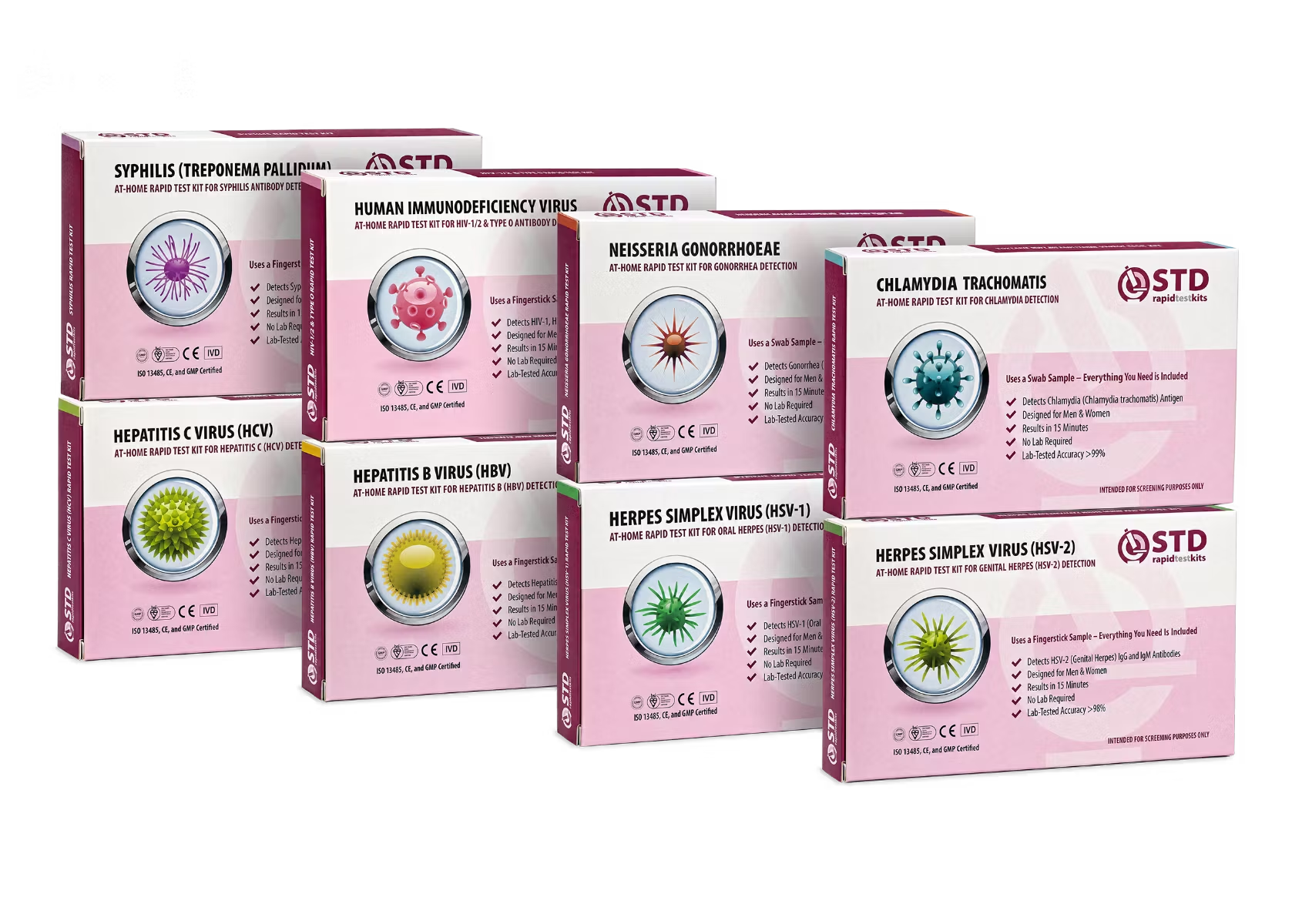
For broader screening that covers more silent infections in one round, browse the at-home combination STI kits. None of this requires perfect knowledge of your sexual history. It requires one decision to test, and a follow-up plan if anything comes up positive.
- If you have not been screened in the last year: start with an at-home rapid panel for the most common silent infections.
- If you and a partner are planning a pregnancy: screen both partners, then layer in tubal-patency imaging and semen analysis if conception does not happen within 12 months (or 6 months if the female partner is over 35).
- If you have unexplained pelvic pain, abnormal discharge, or fever: see a clinician this week, not next month, and bring up STI testing during the visit.
Frequently Asked Questions
- Can I really be infertile and not know it?
- The damage often happens silently. Chlamydia and gonorrhea can travel into the fallopian tubes or epididymis without any obvious symptoms, trigger an immune response, and leave behind scar tissue. By the time a fertility workup is ordered, the original infection may be long gone, but the structural damage it caused is not.
- What if I had an STI years ago and never got tested?
- It is worth testing now, and worth considering a fertility-focused workup if you are trying to conceive. A current at-home or clinic test rules out an active infection. Reproductive imaging like a hysterosalpingogram and a partner semen analysis can show whether earlier exposure left structural damage. Past exposure is not a guarantee of infertility, and many people conceive without intervention even after delayed treatment.
- I have never had any symptoms. Does that mean I am safe?
- Not necessarily. Per CDC data, most chlamydia infections in women and roughly half in men cause no symptoms, and gonorrhea is similarly silent in women. The absence of symptoms is one of the main reasons silent infertility is possible. The only way to know your STI status is to test.
- I just tested negative. Am I in the clear for fertility?
- Mostly. A negative result rules out a current infection in the sample collected. It does not rule out damage from an infection you may have had years ago. If you are concerned about fertility specifically, ask a clinician about tubal-patency imaging or semen analysis in addition to current STI screening.
- Can men become infertile from an untreated STI?
- Yes. Chlamydia and gonorrhea can cause epididymitis, an inflammation of the tube that stores and transports sperm. When inflammation persists, it can leave scar tissue that narrows or blocks the sperm pathway. Some men have no symptoms at all and only learn there is a problem from a semen analysis.
- If I take antibiotics, will my fertility return to normal?
- Antibiotics clear the active infection. They do not undo scar tissue that has already formed. That is why timing matters so much. Treating an infection within the first weeks or months prevents most long-term damage. Treating it after structural changes have set in clears the bacteria but cannot reverse the scarring.
- Do I need to retest after treatment?
- Generally yes. Set a reminder for about three months after finishing antibiotics. The main reason to recheck is reinfection risk from a partner who was not treated at the same time, not antibiotic failure (which is rare in uncomplicated cases). In pregnancy specifically, your clinician will also order a separate test of cure around four weeks after you complete treatment.
- How accurate are at-home STI tests?
- It depends on the test type. Mail-in NAAT kits use the same chemistry as clinical labs and have sensitivity in the high 90s when the sample is collected correctly. At-home rapid lateral-flow kits are easier to use at home and have somewhat lower sensitivity, particularly in early or low-bacterial-load infections. Either is best treated as a screening step: confirm any positive result with a clinician who can prescribe treatment and assess complications.
This article synthesizes current public-health guidance from the U.S. Centers for Disease Control and Prevention, the World Health Organization, the U.K. National Health Service, and the Mayo Clinic, alongside peer-reviewed clinical literature on sexually transmitted infections and fertility. It has been reviewed for clinical accuracy by a licensed physician. It is informational and not a substitute for personalized medical advice from a licensed clinician.
- U.S. Centers for Disease Control and Prevention. Chlamydia overview, including symptom prevalence in women and men, complications, and the link to PID and infertility.
- U.S. Centers for Disease Control and Prevention. Pelvic inflammatory disease (PID) overview, including silent PID and long-term complications such as tubal infertility and ectopic pregnancy.
- U.S. Centers for Disease Control and Prevention. Gonorrhea overview, including symptom prevalence in men and women and complications such as epididymitis and PID.
- U.S. Centers for Disease Control and Prevention. Sexually Transmitted Infections Treatment Guidelines (chlamydia chapter), including the three-month post-treatment retesting recommendation, the four-week test-of-cure recommendation in pregnancy, and partner-management guidance.
- World Health Organization. Global fact sheet on sexually transmitted infections, including chlamydia and gonorrhea prevalence, symptoms, and complications.
- Mayo Clinic. Pelvic inflammatory disease symptoms, causes, risk factors, and complications including infertility.
