
Published: November 2025 | Last updated: May 2026 | Editorial review and quality control: Martina N.
The morning after a new sexual encounter, the body becomes loud. A small twinge of burning, a faint itch, a slightly scratchy throat: any of these can flip your brain straight to one word. STD. The encounter was only hours ago. Could it really be that fast?
The honest answer is no, it cannot. Sexually transmitted infections run on biological clocks that are slower than 24 hours, and the worry you feel the next morning is almost never a fresh infection making its first appearance. It is, much more often, friction, an allergic reaction, an early urinary tract infection, or anxiety amplifying sensations you would otherwise ignore. This guide walks through what actually happens in those first 24 hours after exposure, the real incubation periods for the most common STIs, and the testing window when a result starts to mean something. The aim is to replace next-day panic with a plan you can follow without spiraling.
Key Takeaways
- Most STDs need days to weeks before they cause symptoms; next-day discomfort is almost always friction, allergic reaction, or an early UTI rather than a fresh infection.
- Wait 1 to 2 weeks before testing for chlamydia and gonorrhea, and 4 to 12 weeks for herpes antibody panels. HIV testing starts earlier: RNA from about 10 days, fourth-generation antigen-antibody from about 18 days.
The Morning-After Worry Is Real, But Infections Move Slowly
Picture the scene most readers come here from. You wake up the day after a new partner and something feels different. Maybe it stings a little when you go to the bathroom. Maybe your throat is dry in a way it was not yesterday. Maybe there is faint redness where there was none before. The mind does what anxious minds do: it stacks the encounter and the symptom into a story.
The story usually skips the biology. When chlamydia, gonorrhea, or herpes simplex virus enters the body, the pathogen does not immediately make you sick. It has to settle into the tissue, divide, and reach a population large enough that the immune system mounts a response strong enough for you to feel. That whole sequence takes days, sometimes weeks, depending on the organism.
This delay is called the incubation period. The U.S. CDC's STI guidance lists incubation windows in days and weeks for nearly every common infection. Twenty-four hours is shorter than the lower bound of every one of them.
Every common STI needs at least 2 days, and most need a week or more, before the immune system produces detectable symptoms. Twenty-four hours simply is not enough time for a pathogen to multiply, settle into tissue, and trigger inflammation you can feel.
How Long STDs Actually Take to Show Symptoms
The most useful way to settle next-day anxiety is to look at the incubation periods in days. These are typical ranges drawn from public health surveillance and clinical experience. Bodies vary, immune responses vary, and some infections stay quiet entirely, but these windows reflect what physicians see most of the time.
Even the fastest infection on the standard list, gonorrhea, generally takes a minimum of 2 days before symptoms begin. The bacterial STIs cluster around 2 to 21 days. The viral ones spread further out: HIV often produces its earliest flu-like phase 2 to 4 weeks after exposure, and primary syphilis shows its first sore around 3 weeks in, with a wide range that public health guidance describes from roughly 10 days to 3 months. The numbers below give the typical ranges side by side.
| Infection | Typical Incubation Period | Common Early Symptoms |
|---|---|---|
| Chlamydia | 7 to 21 days | Painful urination, discharge, pelvic discomfort |
| Gonorrhea | 2 to 10 days | Burning when urinating, discharge |
| Herpes (HSV-1 or HSV-2) | 2 to 12 days | Tingling, then painful blisters or sores |
| Syphilis | 10 to 90 days | Painless sore at the infection site |
| HIV | 2 to 4 weeks | Flu-like illness, fever, swollen lymph nodes |
What Next-Day Symptoms Usually Are Instead
If something feels off less than 24 hours after sex, the timeline alone makes a brand-new STI a very poor explanation. That does not mean the discomfort is imaginary. It almost always has a different cause.
Sex is mechanical. It applies friction to tissues that are thin, sensitive, and rich in nerve endings. When lubrication runs low or an encounter is longer or more vigorous than usual, micro-abrasions form. Those tiny tears can sting during urination for a day or two and feel uncannily like an early STI symptom.
Allergic and irritant reactions are another underrated culprit. Latex condoms, spermicide-coated condoms, flavored lubricants, and partner-side soap or body wash residue can all cause redness, itching, or mild swelling within hours. The reaction looks like an infection but is chemistry, not microbiology.
Then there is the urinary tract infection. Sexual activity can push bacteria, usually E. coli from the skin and gut, into the urethra (see the NHS guide on UTIs for the patient-facing overview). UTI symptoms commonly emerge within 24 to 48 hours of a trigger, which overlaps with the post-sex window most readers are anxious about. Burning when peeing, urgency, and cloudy urine all overlap with chlamydia and gonorrhea symptoms, but a UTI is not sexually transmitted and clears on its own course of treatment.
Anxiety also belongs on the list. After a high-stakes encounter, the brain runs a slower scan of the body than usual. Sensations you would normally ignore (a faint itch, a slight ache, a dryness) suddenly register as evidence. Hyper-awareness is not imaginary discomfort, but it is not infection either.
Can an STD show up the next day?
Almost never. The shortest incubation period of any common STI is about 2 days (gonorrhea), and most are 5 to 21 days. Symptoms within 24 hours of sex are far more likely to be friction irritation, an allergic reaction to latex or lubricant, the start of a UTI, or anxiety amplifying normal sensations. Reliable STI testing starts about 1 to 2 weeks after exposure for bacterial infections and 4 to 12 weeks for viral antibody tests; HIV RNA testing can detect infection as early as 10 days.
Incubation Period vs Window Period: Two Clocks, Easy to Confuse
Two timelines get tangled in online forums. The first is the incubation period, the wait between infection and symptoms. The second is the testing window period, the wait between infection and the moment a lab test can reliably detect it.
These two clocks are related but not the same. A person can be infected and even contagious before any test can detect it, and many people stay symptom-free long after a test would turn positive. That is why "negative test" and "no symptoms" do not mean the same thing, and why timing your test matters.
The testing windows below come from current CDC and NHS testing guidance. They reflect when a result starts to be trustworthy, and the table that follows breaks them down per infection.
| STD | Earliest Reliable Test Window | Best Time for Accurate Testing |
|---|---|---|
| Chlamydia | 5 to 7 days | 2 weeks |
| Gonorrhea | 5 to 7 days | 2 weeks |
| Syphilis | 3 weeks | 6 weeks |
| HIV (RNA test) | 10 to 33 days | Around 33 days |
| HIV (4th-gen Ag/Ab) | 18 to 45 days | 45 days |
| Herpes (HSV-2 antibody) | 4 to 6 weeks | 12 to 16 weeks |
How Each Common STI Unfolds Over Time
Testing the day after sex rarely produces meaningful results, as the table above shows. Even the fastest assays need several days for bacterial or viral material to reach detectable levels. Different infections move at different speeds, though, and knowing roughly when each one tends to surface helps you read your body more accurately and decide when to act.
Chlamydia and gonorrhea are the two most diagnosed bacterial STIs in most surveillance data. The CDC chlamydia fact sheet notes that symptoms, when they appear, can take approximately several weeks; gonorrhea typically becomes symptomatic faster, within a few days to a week or two. Even then, only a fraction of infections cause obvious symptoms. The WHO fact sheet on STIs notes that the majority of STIs are asymptomatic, which is the main reason routine screening is recommended even when nothing feels wrong.
Herpes: The Infection People Fear Most the Morning After
Of all the next-day fears, herpes generates the loudest ones. The mental image of waking with visible sores is vivid and frightening. Biology, again, slows the story down.
When herpes simplex virus enters the body, it travels into nerve cells near the site of contact and replicates there before producing the characteristic blisters. That round trip takes between 2 and 12 days according to CDC STI guidance. Many people experience prodrome sensations (tingling, itching, light sensitivity) one to two days before any visible lesion. Almost none of those sensations register within 24 hours of exposure.
Most adults already carry HSV-1 from childhood, often as the virus behind a cold sore. A stress or illness flare-up can look timed to a recent encounter even when the virus has lived quietly in the body for years.
Syphilis and HIV: Slower Than People Expect
Syphilis is the slowest opener in the common-STI lineup. Its first sign, a painless ulcer called a chancre, usually appears around 3 weeks after exposure, with a wide range that runs from roughly 10 days to 3 months. Because the sore is painless and often hidden, many people miss it entirely. The infection then moves into a secondary stage with a rash, often on the palms and soles, weeks to months later.
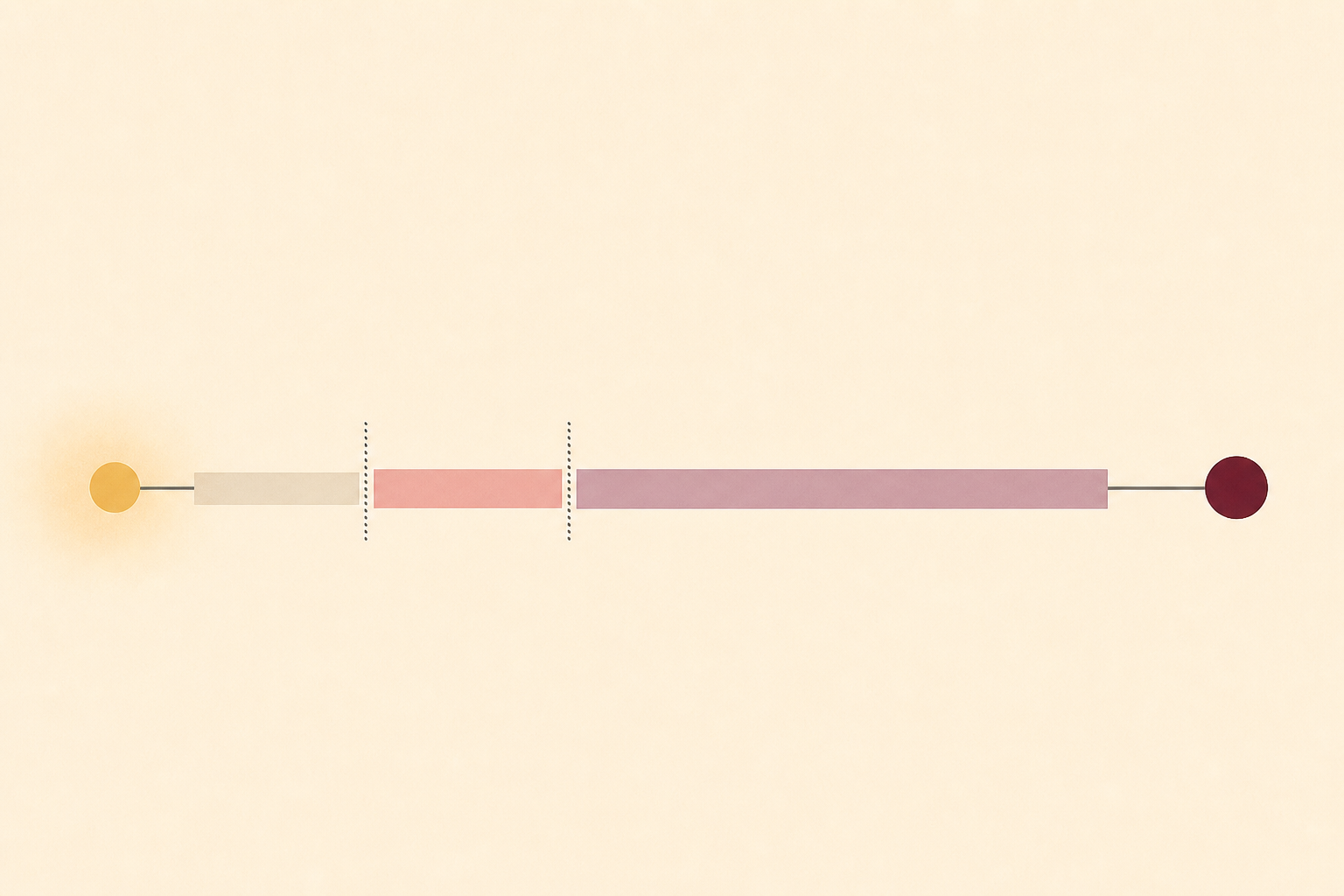
HIV follows a similar slow rhythm. About 2 to 4 weeks after exposure, some people experience a flu-like phase with fever, sore throat, tiredness, and swollen lymph nodes. The CDC HIV testing guidance notes that fourth-generation antigen-antibody tests typically detect HIV by about 45 days after exposure, and HIV RNA tests can detect infection earlier, around 10 to 33 days. A test taken in the first 48 hours after exposure cannot yet pick up the virus.
The Right Time to Test After Exposure
The most common testing mistake after a worrying encounter is going too soon. A test at 24 or 48 hours feels reassuring when it comes back negative, but the result is meaningless. There has not been enough viral or bacterial material in the body for the kit to detect.
The practical timeline, drawing from CDC, NHS, and WHO testing guidance, looks like this:
- Chlamydia and gonorrhea: 1 to 2 weeks after exposure is generally when nucleic acid amplification tests (NAATs) and rapid lateral-flow swabs become reliable.
- Syphilis: About 3 weeks for the earliest reliable serology, with re-testing at 6 weeks and 3 months if exposure risk was high.
- HIV: Around 10 to 33 days for RNA testing, 18 to 45 days for fourth-generation antigen-antibody tests, and up to 90 days for older antibody-only tests.
- Herpes (HSV-2) blood antibody panels: 4 to 12 weeks for reliable seroconversion, with some assays needing up to 16 weeks.
One exception to the wait. If your exposure was high-risk and you cannot delay, the right move is a clinic visit for an RNA-based HIV test or for post-exposure prophylaxis (PEP), which is most effective within 72 hours of exposure.
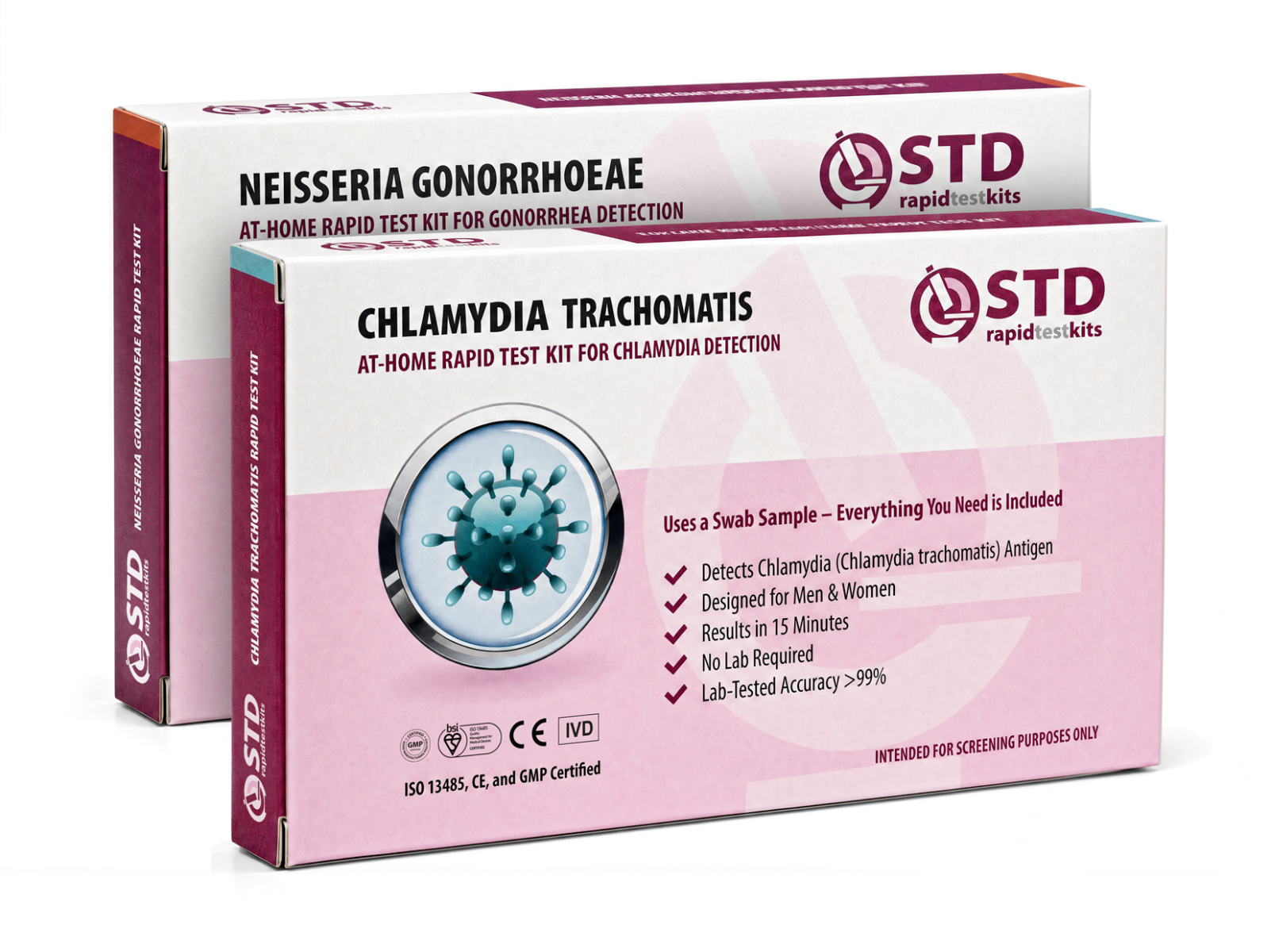
We sell at-home rapid STI tests; the kits below are from our own catalog, recommended based on what each product is validated to detect, not commercial benefit.
When Symptoms Should Send You to a Clinic Sooner
Some symptoms warrant attention before any window period has passed. The biology might not fit a fresh STI, but the discomfort itself deserves care.
See a clinician promptly if you notice unusual or heavy discharge, pelvic or testicular pain, fever, a sore that does not heal, a rash spreading on palms or soles, urinary symptoms that worsen instead of fading over 48 hours, or any genital lesion you cannot account for. These can be STI-related, but they can also point to UTIs, bacterial vaginosis, yeast overgrowth, or unrelated infections that need their own care plan. A clinic visit early in a worrying symptom is faster than waiting two weeks to test at home.
If the exposure carried high HIV risk (a known HIV-positive partner with an unsuppressed viral load, a needle-sharing event, or a condom failure with an unknown-status partner from a high-prevalence group), a same-day clinic visit for PEP is the right move. PEP works best within 72 hours and is no longer effective after that window.
Most sexually transmitted infections cause no symptoms at all, and many that do cause symptoms take days or weeks to appear. Testing remains the only way to know your status with confidence.
Managing the Morning-After Spiral
The biology is reassuring, but biology alone does not turn off anxiety. The hours after a worrying encounter are emotionally loud, and "the timeline does not fit a new infection" is the kind of fact a calm mind accepts and an anxious one shrugs off.
Three practical moves help bridge the gap between worry and the testing window.
First, observe rather than react. Most next-day symptoms (friction, mild irritation, a faint sting when peeing) fade within 24 to 48 hours when you hydrate, leave the area alone, and avoid harsh soaps or scented products. Symptoms that improve quickly were almost certainly never an infection.
Second, write down the dates. Note the exposure date, the date symptoms started (if any), and the earliest reliable test date for each infection that worries you. Having those three dates on paper is more grounding than rechecking your body every hour.
Third, plan the test rather than rushing it. A reliable test at 14 days beats a meaningless one at 24 hours, and the calendar is the only way to get there. At-home swab and blood kits exist for exactly that reason. You collect the sample privately when the timing is right, instead of waiting weeks for a clinic appointment.

A Realistic Plan for the Day After
If you are reading this the morning after, here is the version that fits the science.
What you are feeling right now is almost certainly not a brand-new STI. The incubation periods do not allow it. Treat the next 48 hours as observation. Hydrate, keep the area gently clean, skip harsh products. If symptoms fade, they were not infection.
Mark the calendar. Day 14 from exposure is your earliest reliable date for chlamydia and gonorrhea. Day 45 is the standard window for fourth-generation HIV testing. Day 90 closes the older HIV antibody window and approaches the herpes seroconversion window. If you test at the 14-day mark and the result is negative but your exposure risk was high, plan a follow-up: syphilis at 6 weeks, fourth-generation HIV at 45 days, HSV-2 antibody at 12 weeks.
If you have high-risk exposure indicators, do not wait for an at-home kit. A clinic visit within 72 hours opens the door to PEP and to expedited bacterial testing, which can save weeks of worry.
The morning-after panic is real, but biology is on your side. Most of the time, what you feel is the body recovering from a vigorous night, and the timeline tells you to wait a couple of weeks before a test result becomes meaningful.
Frequently asked questions
- Can any STD show up within 24 hours of sex?
- Almost always, what people notice the next morning is friction irritation, a latex or lubricant reaction, or the start of a UTI rather than a new infection. The incubation floors back this up: gonorrhea needs at least 2 days, chlamydia 7 to 21 days, herpes 2 to 12 days, syphilis around 3 weeks, and HIV 2 to 4 weeks for its earliest flu-like phase. None of those windows fit a brand-new infection causing symptoms overnight.
- Then what is the burning when I pee the morning after sex?
- Usually friction irritation or the start of a UTI. Sex applies friction to a sensitive area, and small abrasions in the urethra can sting for a day or two. Sexual activity can also push gut bacteria into the urethra, kicking off a UTI within 24 to 48 hours. UTI burning and STI burning feel similar, but UTIs are not sexually transmitted and have their own treatment course.
- Could the symptom I notice the next day be an older infection I didn't know about?
- Yes. Chlamydia, gonorrhea, herpes, and HPV can sit in the body for weeks, months, or longer without symptoms. A new encounter draws attention to the area, and a sensation that was already there suddenly registers. The timing feels causal but is not. This is one reason regular screening matters even when nothing seems wrong.
- What about herpes? Can blisters appear the next morning?
- Not from an exposure the night before. HSV needs 2 to 12 days to enter nerve cells, replicate, and produce visible lesions. If sores appear within 24 hours of sex, they are almost always a reactivation of a herpes infection acquired earlier, often years earlier, or they are a different skin condition entirely (an ingrown hair, folliculitis, or contact dermatitis).
- If I test the day after exposure and it comes back negative, can I trust that?
- This is where the two clocks matter. The incubation period (when symptoms start) and the window period (when a test can detect infection) are not the same. A negative result the day after exposure does not mean you are clear; it means the test has not had time to work. Reliable testing starts at 1 to 2 weeks for bacterial STIs and 4 to 12 weeks for viral antibody panels, with HIV RNA detection possible from about 10 days.
- What's the right testing schedule after an unprotected encounter?
- For chlamydia and gonorrhea, test at 1 to 2 weeks. For syphilis, test at 3 weeks and re-test at 6 weeks if exposure was high-risk. For HIV, test at 18 to 45 days with a fourth-generation antigen-antibody test, or 10 to 33 days with an RNA test. For HSV-2 antibodies, test at 4 to 12 weeks. If you are using an at-home kit, follow the kit's stated window period.
- I'm worried about HIV. Is there anything I can do besides waiting to test?
- Yes. Post-exposure prophylaxis (PEP) is a 28-day course of HIV medications that, when started within 72 hours of high-risk exposure, dramatically reduces the chance of HIV transmission. PEP requires a clinic or emergency-room visit, not an at-home option. After 72 hours it is no longer effective, so this is one of the few situations where same-day action matters.
- Can I have an STD even though I feel completely fine after sex?
- Yes, and it is more common than most people expect. The WHO and CDC both note that the majority of STIs are asymptomatic, and that this is the main reason routine screening matters. HIV, hepatitis B, hepatitis C, and HPV can also be silent for years. Routine screening with a new partner is the only way to know your status with confidence.
- U.S. Centers for Disease Control and Prevention. STI surveillance, treatment, and testing guidance, with condition-specific fact sheets covering chlamydia, gonorrhea, herpes, syphilis, and screening recommendations.
- U.S. Centers for Disease Control and Prevention. HIV testing guidance covering window periods for RNA, fourth-generation antigen-antibody, and antibody-only assays, plus post-exposure prophylaxis (PEP) within 72 hours.
- World Health Organization. Sexually transmitted infections fact sheet, including the note that the majority of STIs are asymptomatic.
- National Health Service (UK). Patient-facing guidance on sexually transmitted infections, symptom presentation, and testing access.
- National Health Service (UK). Patient-facing guidance on urinary tract infections, covering symptoms, common triggers, and when to seek care.
- U.S. Centers for Disease Control and Prevention. Chlamydia fact sheet covering transmission, symptom timing, and routine screening recommendations.
