Published: November 2025 | Last updated: May 2026 | Editorial review and quality control: Martina N.
A negative HPV test feels like good news. After a new partner, after a worrying conversation, after spotting something that turned out to be nothing, the relief is real. The catch is that HPV has a window period like every other infection, and an early negative does not always mean what readers think it means. This guide walks through what HPV tests actually detect, how soon they reach peak accuracy, why false negatives happen even after the window has closed, and what to do with a result that still leaves questions. It is written for people who want honest answers, not vague reassurance.
Key Takeaways
- HPV DNA tests are typically reliable from about 6 to 12 weeks after exposure. A negative result in the first three weeks is often too early to trust.
- Routine at-home HPV testing in the United States is validated for vaginal self-collection only. There is currently no FDA-approved at-home or routine clinical HPV test for men.
Why a Negative HPV Result Can Mislead You
HPV is the most common sexually transmitted infection in the United States, and most people who have it never know. The virus often sits in epithelial cells without producing warts, abnormal Pap results, or anything else a person can feel. That silence is what makes the window period dangerous: someone tests, gets a negative, and assumes they are clear when the virus is simply not yet detectable, or is hiding in a different anatomical area than the swab reached.
There is a second layer to this. The HPV tests sold at home and used in clinics are not interchangeable. Clinic HPV tests are usually DNA-based assays run on a cervical sample collected by a clinician. At-home options most commonly involve either a self-collected vaginal swab that ships to a lab for DNA analysis, or a rapid lateral-flow cassette that returns a result in about 15 minutes. The two technologies have different sensitivities, different sample requirements, and different reliable detection windows.
For a reader, that means the answer to “is this negative real?” depends on three things that are easy to overlook: how recently the exposure happened, what kind of test was used, and whether the sample collection actually captured cells from the infected tissue. Each of these can independently produce a false negative, and stacking two or three at once is how someone tests negative twice and still has a high-risk strain that surfaces months later in a Pap result. The rest of this article unpacks each of those failure modes and explains the smart way to time a retest.
Three reasons a negative HPV test can be wrong
- Timing: the test was taken before the virus replicated to detectable levels (usually inside the first 3 weeks after exposure).
- Test type: a rapid lateral-flow cassette is less sensitive than a lab DNA test at low viral loads.
- Collection site: the swab sampled the cervix or vagina, but the infection had settled in tissue the test never reached (vulva, anus, or oropharynx).
What At-Home and Clinic HPV Tests Actually Look For
There are three test categories worth distinguishing.
HPV DNA test (clinic, cervical swab). This is the standard cervical-cancer screening tool in current U.S. guidelines. The CDC's cervical cancer screening guidance lists primary HPV testing and HPV/Pap co-testing as the standard screening approaches for people aged 30 to 65. A clinician collects cells from the cervix during a pelvic exam, and a lab runs PCR or hybrid-capture chemistry (lab methods that copy and detect viral DNA in the sample) to find genetic material from high-risk HPV strains, the ones associated with cervical cancer such as HPV 16 and HPV 18. It does not detect the low-risk types that cause genital warts.
HPV self-collected vaginal swab (mailed to a lab). Several at-home kits now allow vaginal self-collection, ship the swab to a lab, and run the same DNA-based analysis. Validation studies show good agreement with clinician-collected samples when collection technique is correct, though sample adequacy can be lower for first-time self-collectors.
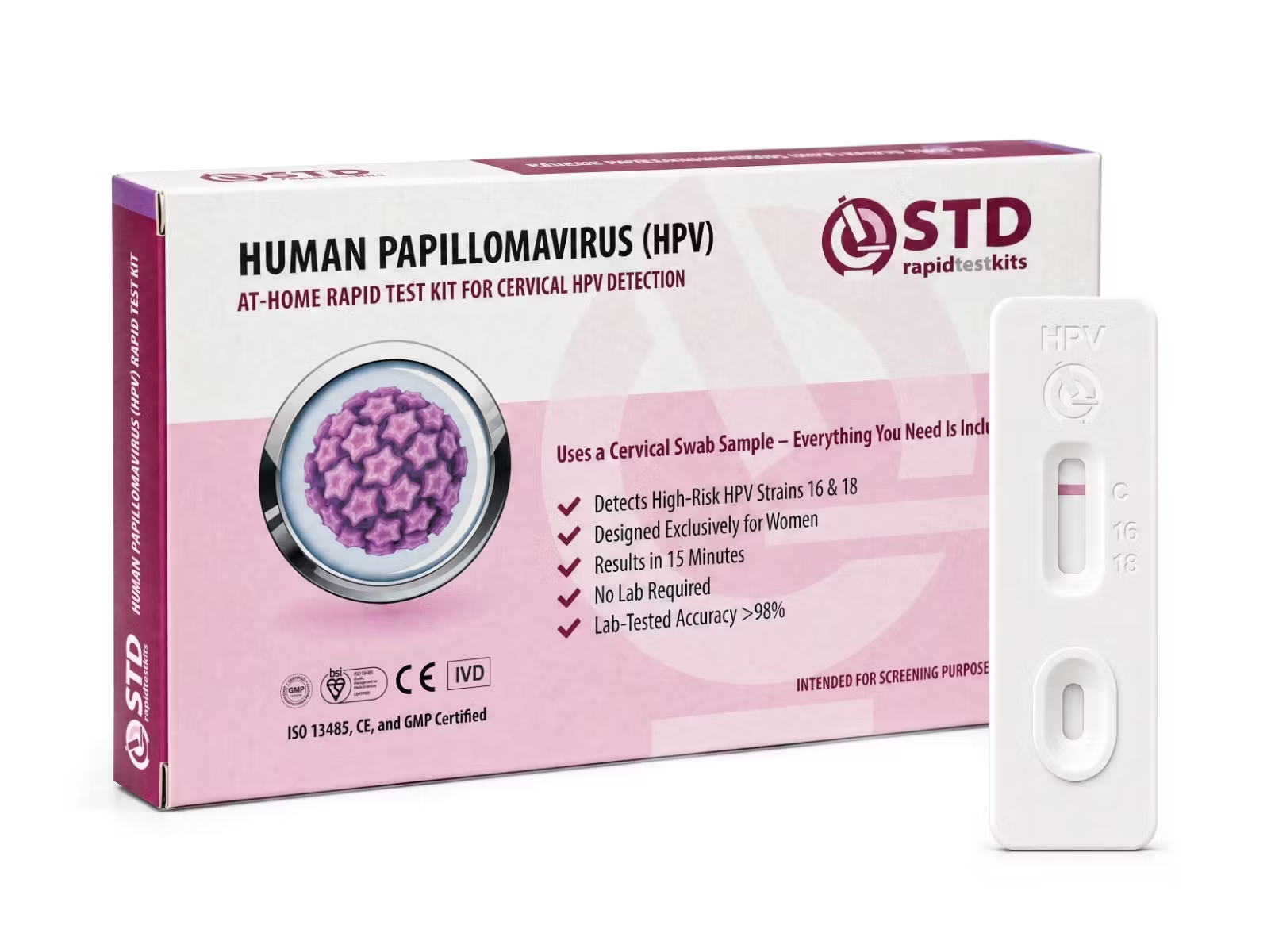
Rapid lateral-flow HPV test (at-home, 15-minute result). This is a different technology. Rather than DNA amplification, the cassette uses antibodies to detect viral antigens on a strip. Results are available at home in minutes. The trade-off is that lateral-flow chemistry generally has lower analytical sensitivity than lab DNA testing for low viral loads, so a positive lateral-flow result is worth confirming with a lab DNA test when possible.
For visible warts, no DNA test is needed at all. Genital warts are diagnosed by visual inspection, not by a swab. The warts themselves are caused by low-risk HPV types (typically HPV 6 and HPV 11), which most cervical screening assays are not designed to detect. Someone can have a perfectly normal Pap and HPV DNA result and still develop warts from a low-risk strain they were not screened for.
Window Period vs Incubation: Why Early Testing Misses
Two timelines matter for HPV, and they are not the same.
The incubation period is how long it takes for the virus to start causing symptoms, if it ever does. For HPV, that ranges from a few weeks to many months, and most people never develop symptoms at all. The window period is something narrower: the time it takes for the virus to reach a level a test can detect.
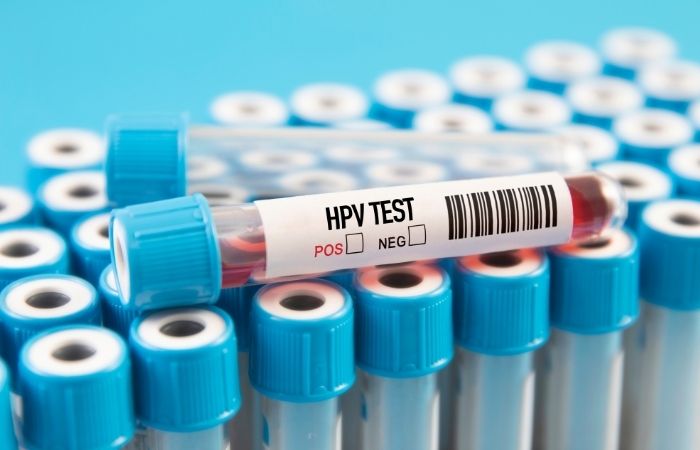
For HPV DNA tests, peak reliability is typically reached around 6 to 12 weeks after exposure, with detection sometimes possible from 2 weeks onward depending on viral load and which strain is involved. A negative result inside the first three weeks should be treated as inconclusive rather than reassuring. The virus may already be establishing itself in cells the test simply cannot find yet.
This delay happens because HPV infects basal epithelial cells (the deepest layer of the skin-like tissue that lines the cervix and vagina) and only sheds detectable amounts of DNA once those cells turn over and reach the sample surface. Until the infection produces enough viral material on the area being swabbed, the test sees nothing. The lag is built into the biology of how HPV settles in, rather than a flaw in the assay.
For visible warts, the timeline is longer and more variable. Warts can appear weeks to many months after exposure, or never. Relying on the appearance of warts as an HPV indicator misses the asymptomatic high-risk infections that matter most for cancer prevention. The table below summarizes the typical timing windows for each test type.
| HPV Test Type | Typical Window Period | When Accuracy Peaks |
|---|---|---|
| HPV DNA Test (Clinician Cervical Swab) | 2 to 12 weeks | 6 to 12 weeks after exposure |
| HPV Self-Collected Vaginal Swab (Mail-In Lab DNA) | 2 to 10 weeks | 8 to 12 weeks after exposure |
| Rapid Lateral-Flow Cassette (At-Home, 15 min) | Variable, lower sensitivity at low viral loads | Best paired with lab confirmation |
| Visual Inspection for Genital Warts | Weeks to several months | Only once visible symptoms appear |
Why False Negatives Happen Even After the Window
Even after the window has closed, three things can produce a false negative.
Collection technique. Self-collected swabs depend on the user reaching the right area, rotating the swab to gather enough cells, and following storage and shipping instructions. Validation studies for self-sampling routinely show good detection when technique is correct, but first-time users miss the target area more often than experienced clinical samplers. If a swab does not reach cells from infected tissue, even a sensitive DNA assay has nothing to amplify.
Viral load fluctuation. HPV does not shed continuously. Viral DNA on the surface of cells rises and falls based on cell turnover, immune activity, hormonal cycles, and other variables. A sample taken on a low-shedding day can come back negative while the underlying infection is still established in the basal layer. This is one reason cervical screening guidelines from the CDC recommend periodic retesting rather than a single-test verdict.
Sample type mismatch. The standard clinic HPV test screens the cervix. It does not screen the vagina, vulva, anus, or oropharynx. Someone whose infection has settled in tissue the test never sampled can produce a negative result while remaining infected at a different site. This matters especially for anal HPV, which is not part of routine screening for most people, and for oral HPV, which has no validated screening test at all in routine practice.
Most negatives are correct; these failure modes describe the minority of cases where timing, site, or low shedding produces a false result. A single negative test is one data point, and retesting 6 to 12 weeks later or pursuing a clinical follow-up after a worrying exposure is rational rather than paranoid.
Disclosure: stdrapidtestkits.com publishes this article and sells the at-home HPV and STI test kits referenced below. Product recommendations are based on fit for the reader's specific concern rather than on commercial benefit.
At-Home vs Clinic Testing: Which Is More Reliable
The honest comparison comes down to what each tool is actually good at.
A clinician-collected cervical swab analyzed by a hospital or commercial lab is the highest-sensitivity routine option for high-risk HPV. The collection captures cells from the exact tissue most associated with cervical cancer, the laboratory assay uses validated DNA chemistry, and the result is interpreted alongside Pap cytology when co-testing is performed. For people aged 30 and above with access to a clinic, CDC screening guidance treats this as the screening backbone.
A self-collected vaginal swab mailed to a lab is the next tier. The collection target is the vagina rather than the cervix, but validation studies show acceptable performance when the swab reaches deep enough and is processed promptly. The privacy and access advantages are significant: people who would otherwise delay screening can complete a test at home and avoid the appointment, exam, and cost of an in-clinic visit.
A rapid lateral-flow at-home cassette is a different category. It returns a result in minutes, requires no lab, and uses antigen detection instead of DNA amplification. The trade-off is lower analytical sensitivity for low viral loads. A negative on a rapid lateral-flow test is best read as “no detectable HPV antigen in this sample at this moment,” and confirmation by a lab test is recommended when symptoms persist, exposure is recent, or a partner has tested positive. The table below maps each method to the situations it serves best.
| Method | Sample Collection | Strengths | Best Fit For |
|---|---|---|---|
| At-Home Rapid Lateral-Flow Cassette | Self-collected vaginal swab | Fast, private, no lab, no appointment | First-pass screening after the window period closes |
| At-Home Mail-In Lab DNA Test | Self-collected vaginal swab | Lab-grade DNA analysis with home convenience | Routine screening when clinic access is limited |
| Clinic HPV DNA Test (Solo) | Clinician-collected cervical swab | Highest sensitivity for cervical high-risk HPV | Routine screening for people 25+ in many guidelines |
| Clinic Pap with HPV Co-Testing | Clinician-collected cervical cells | Detects both cell changes and the virus together | People aged 30+ on routine screening intervals |
When You Should Retest
A common situation: someone tests two weeks after an unprotected encounter, gets a negative, and then a partner discloses an HPV-positive result. The first test was almost certainly too early.
For an HPV DNA test in this situation, the practical recommendation is to retest 6 to 12 weeks after the exposure. Retesting earlier produces results that are too easy to over-interpret in either direction; retesting later catches infections that did not yet shed enough viral material at the first sample.
Retesting also matters in three other contexts.
After a positive Pap or HPV result. If a clinician has identified low-grade cell changes or detected HPV during a routine screen, the standard follow-up is a repeat HPV test (and sometimes Pap cytology) at 6 or 12 months, depending on age and findings. The immune system clears most HPV infections within one to two years, so repeat testing tracks whether the infection has resolved or persisted.
After new partners or unknown partner status. If sexual exposure history has changed since the last test, the previous result no longer covers the new exposures. A repeat test 6 to 12 weeks after the most recent new partner is reasonable.
When symptoms appear later. A negative result from months ago does not exclude a current infection. Visible warts, abnormal bleeding, or new pelvic discomfort should be evaluated by a clinician regardless of any prior negative test. According to the CDC, HPV is the most common sexually transmitted infection in the United States. Reinfection and new acquisition are common, particularly as sexual exposure history changes over time.
For pregnant readers, anyone on immunosuppressive medication, or anyone living with a condition that affects immune function, the timing of retesting is best discussed with a provider directly. Standard window-period rules still apply, but the threshold for follow-up is usually lower because clearance is slower and high-risk infections persist longer.
Genital HPV is the most common sexually transmitted infection in the United States.
What to Do If You Test Positive
A positive HPV result is the starting point for a follow-up plan, not a cancer diagnosis or a verdict on anyone's sexual history. HPV is the most common viral STI in the United States, and according to the CDC nearly everyone who is not vaccinated will get HPV at some point in their lives.
The first question after a positive result is what was actually detected. Was it a high-risk strain (HPV 16 or HPV 18 carries the strongest cancer association), a different high-risk type, or a strain group? Are there abnormal cell changes on cytology? Is a colposcopy or biopsy needed? Most of the time, the immediate clinical answer is “not yet.” A positive HPV DNA test in the absence of high-grade cell changes typically leads to watchful follow-up with a repeat test in 6 to 12 months, because most infections clear naturally.
When visible genital warts are present, treatment options target the warts themselves and do not eliminate the underlying infection. Cryotherapy, prescription creams such as imiquimod or podofilox, and minor surgical removal can reduce symptoms and transmission risk. The immune system does the work of clearing the virus over time.
Sex remains on the table after a positive result. With protection, communication, and well-timed retesting, most people stay sexually active while protecting their partners. Most adults are already carrying or have already cleared an HPV strain at some point, and condoms, dental dams, and vaccination of partners (where they are still eligible) reduce transmission risk for future exposures. The CDC's HPV vaccination guidance recommends Gardasil 9 (which covers nine HPV types) for everyone through age 26 if not adequately vaccinated when younger, and shared clinical decision-making for ages 27 through 45. The vaccine cannot clear an existing infection. It does extend protection against the strains a person has not yet acquired.
For high-grade cell changes (such as CIN 2 or CIN 3 findings), follow-up is more proactive and typically involves colposcopy with directed biopsy, and sometimes a procedure to remove the affected cells before they progress. None of this is an emergency; all of it is routine clinical practice with strong evidence behind it.
Talking to Partners About HPV
A common reader question is whether a positive HPV result needs to be disclosed to partners. The short answer: it depends on the relationship and the level of ongoing exposure, but disclosure is generally an act of care rather than a confession.
For current partners, sharing the result allows shared decision-making about screening, vaccination eligibility, and protective measures. For partners from a recent exposure period, a heads-up helps them decide whether and when to test or to talk to their own provider. For long-past partners, the calculus is different; HPV is common enough that historical disclosure to every prior partner rarely changes anyone's outcome.
The script that tends to land well is short and matter-of-fact. It is information, not an apology.
Partners without a cervix face a structural problem here. Because there is no FDA-approved routine HPV test for men, a partner often cannot confirm or rule out infection in themselves. The practical response is to encourage vaccination if they are eligible, watch for visible warts or any unusual lesions, and consider clinical evaluation if any symptoms appear. For men who have sex with men, especially anyone living with HIV or otherwise immunocompromised, anal Pap testing may be offered by some clinics and is worth asking about directly.
“I tested positive for HPV. It is extremely common, and most people clear it on their own. I wanted you to know so you can make decisions for yourself.”
HPV Testing Gaps for Men and People Without a Cervix
For people without a cervix, HPV testing in the United States is genuinely limited. There is no FDA-approved routine HPV test for penile tissue. There is no widely available oral HPV screen outside of research settings. Anal HPV screening exists but is mostly used in specific higher-risk groups, not as a general population screen.
This gap has clinical consequences. High-risk HPV in men can persist silently for years and is implicated in penile, anal, and oropharyngeal cancers. The CDC and several specialty societies acknowledge the lack of routine screening as a limitation rather than an indicator that risk is absent.
What men can do, in practical terms:
- Get vaccinated if eligible. The Gardasil 9 vaccine covers nine HPV types including the most carcinogenic ones. Per CDC vaccination guidance, vaccination is recommended through age 26 if not adequately vaccinated, with shared clinical decision-making for ages 27 to 45.
- Watch for visible warts and unusual lesions. Visual inspection is the only routine screen, and visible warts should be evaluated by a clinician regardless of how minor they seem.
- Discuss anal Pap testing with a provider if higher-risk. People living with HIV, men who have sex with men, and immunocompromised individuals may be candidates for anal cytology depending on clinic practice and individual history.
- Test for the rest of the STI panel. Even when HPV itself cannot be tested at home, the other infections that often share an exposure event (HIV, syphilis, hepatitis B, hepatitis C, herpes, chlamydia, and gonorrhea) absolutely can be. An exposure that raised an HPV concern almost always raises others, and ruling those in or out is concrete information instead of indefinite worry.
Vaccination, vigilance, and concrete testing for the infections that do have validated home tests is the realistic answer until HPV screening for men becomes routine.

Frequently Asked Questions
- How long after exposure should I wait to test for HPV?
- Six weeks is the practical minimum for an HPV DNA test, and twelve weeks is the safer mark. Anything inside the first three weeks is too early to lean on. If a partner later discloses a positive result, retest at the full window even if an earlier sample came back negative.
- Can a negative HPV test still mean I have HPV?
- Yes. False negatives happen for three reasons: testing too early, sample collection that misses the infected tissue, or sampling a site (such as the cervix) when the infection is actually elsewhere (such as the vulva, anus, or oropharynx). A single negative test is one data point rather than a final verdict.
- Are at-home HPV tests as accurate as clinic tests?
- It depends on the technology. A self-collected vaginal swab analyzed by a laboratory has high agreement with clinician-collected cervical samples when collection technique is correct. Rapid lateral-flow at-home cassettes are easier and faster, but generally have lower analytical sensitivity than lab DNA testing for low viral loads, so a positive lateral-flow result is worth confirming.
- What is the difference between an HPV test and a Pap smear?
- A Pap smear looks at cervical cells under a microscope for abnormal changes. An HPV DNA test looks for the genetic material of high-risk HPV strains in those same cells. Co-testing uses both together and is the most informative single screening visit for people aged 30 and above.
- Why is there no FDA-approved HPV test for men?
- The HPV tests on the market were validated for cervical samples, where HPV has the clearest cancer association. Validation for penile, anal, or oral tissue in general-population men has not produced a widely accepted screening protocol. As of this writing, the practical alternatives for men are HPV vaccination, visual inspection for warts, and discussion of anal cytology with a provider for higher-risk groups.
- Can the body clear HPV on its own?
- Most HPV infections are cleared by the immune system within one to two years. A small subset persists, and persistent high-risk infections are what carry cancer risk over the long term. Routine screening identifies the infections that have not cleared so that follow-up can prevent progression.
- If a previous test was negative, can I still transmit HPV now?
- A previous negative result describes the past rather than the present. HPV can be acquired between tests, can re-emerge from a previously suppressed state, or can shed at levels too low for the prior test to detect. Transmission risk depends on current infection status, which changes over time.
- Does the HPV vaccine help after I have already been infected?
- The vaccine works best when given before exposure to the targeted strains. After an existing infection it cannot clear the virus already present. It does still protect against other HPV strains the person has not encountered yet. CDC guidance recommends routine vaccination through age 26 and shared clinical decision-making through age 45.
How We Sourced This Article: We combined current guidance from leading public-health and medical organizations (CDC, WHO, NHS) with the published validation literature on cervical and self-collected HPV testing. Clinical interpretation has been reviewed by a licensed medical doctor. We do not provide individual diagnosis or treatment; for symptoms or results that concern you, contact a licensed provider.
- U.S. Centers for Disease Control and Prevention, Genital HPV Infection Fact Sheet. Transmission, common strains, asymptomatic prevalence, and the role of vaccination.
- U.S. Centers for Disease Control and Prevention, About HPV. Page that states nearly everyone who is not vaccinated will get HPV at some point in their lives; supports the lifetime-acquisition claim.
- U.S. Centers for Disease Control and Prevention, Cervical Cancer Screening. Current guidance on Pap and HPV co-testing intervals and follow-up after abnormal results.
- World Health Organization, Cervical Cancer Fact Sheet. Global epidemiology and the link between persistent high-risk HPV and cervical cancer.
- National Health Service (UK), Genital Warts. Patient-facing overview of HPV-related genital warts, transmission, and treatment options.
- U.S. Centers for Disease Control and Prevention, HPV Vaccine Recommendations. ACIP guidance on routine HPV vaccination through age 26 and shared clinical decision-making for ages 27 to 45.
