Published: December 2025 | Last updated: May 2026 | Editorial review and quality control: Martina N.
Who this article is for
This article is for anyone who opened their lab results and felt the floor drop out when the word “positive” appeared next to HPV. It is for the people who were told to “wait twelve months” without any real explanation. For the late-night Googlers wondering if they are contagious forever, whether a negative result is even possible again, and what the next year is supposed to look like.
If that is you, waiting is not the same as doing nothing. Retesting for HPV runs on timing, context, and clarity. The next sections walk through the typical retest timelines, what your result does and does not mean, and how to advocate for yourself between now and your follow-up appointment.
Key Takeaways
- Most providers recommend retesting for high-risk HPV about 12 months after a first positive result when your Pap smear is normal.
- Testing earlier than that often picks up lingering viral DNA from an infection your body is already clearing, leading to a falsely scary “still positive” result.
Why HPV retesting is not immediate
Unlike infections that clear with a course of antibiotics and a quick follow-up swab, HPV does not play by those rules. It is slow, often invisible, and the DNA-based tests used to detect it can pick up viral fragments even after your immune system has effectively dealt with the active infection.
That is why clinical guidelines do not recommend retesting in the weeks after a positive HPV result. Most providers suggest waiting a full year unless your Pap smear (cytology) also shows abnormal cell changes. Retesting too soon can lead to unnecessary panic, false positives, and, in some cases, overtreatment of cell changes that would have resolved on their own.
According to the CDC, in about 9 out of 10 cases HPV goes away on its own within two years without causing health problems (CDC, About Genital HPV Infection). That is your immune system doing what it does, with no medication, no procedures, and no lasting effects. But the technology used to detect HPV is sensitive enough to flag viral DNA fragments for weeks or months after the active infection has already started to clear.
DNA-based HPV tests detect viral fragments, which can remain in cervical tissue for weeks or months after the immune system has started clearing the infection. A positive result taken too soon often reflects old signal, not current status.
The 12-month rule: what the guidelines say
If your HPV test came back positive but your Pap smear was normal, the standard recommendation in U.S. clinical practice is to wait 12 months before retesting. Cleveland Clinic advises patients to return for another test within a year to confirm whether the infection has cleared (Cleveland Clinic, HPV Test). That interval is consistent across the major national bodies that publish cervical cancer screening guidance, including the American Society for Colposcopy and Cervical Pathology (ASCCP).
The reason is not bureaucratic. The studies behind these guidelines show that a large fraction of positive HPV results clear within a year, and that shortening the wait does not improve outcomes. It mostly increases anxiety, follow-up costs, and the chance of biopsies that would not have been needed.
Here is what the standard follow-up structure looks like in practice:
| HPV Result | Pap Smear Result | Recommended Next Step | Clinical Reason |
|---|---|---|---|
| Positive for high-risk HPV | Normal | Repeat co-test in 12 months | Most infections clear naturally; watchful monitoring preferred |
| Positive for high-risk HPV | ASC-US or LSIL | Repeat co-test in 6 to 12 months, or colposcopy | Closer monitoring is warranted; risk is moderate |
| Positive for high-risk HPV | HSIL or worse | Colposcopy with directed biopsy promptly | Possible precancerous or cancerous changes need evaluation |
How long should I wait to retest for HPV after a positive result?
For high-risk HPV with a normal Pap smear, most U.S. guidelines say 12 months. If your Pap was abnormal, your provider may shorten that to 6 months or recommend a colposcopy right away. Retesting earlier on your own usually does not give a clearer answer, since the same viral DNA the first test detected often remains detectable for weeks while your immune system is still working.
When the 12-month wait does not apply
Two situations change the timeline. The first is an abnormal Pap that shows cellular changes alongside the positive HPV. The second is symptoms that suggest progression, like persistent abnormal bleeding or new visible growths.
If your Pap came back as ASC-US (atypical squamous cells of undetermined significance), LSIL (low-grade squamous intraepithelial lesion), HSIL (high-grade squamous intraepithelial lesion), or any other “atypical” or “abnormal” finding, your provider will likely move faster. Common next steps include a 6-month repeat co-test, a colposcopy with directed biopsy, or referral to a colposcopy clinic. Those decisions follow risk-based algorithms that weigh the HPV strain, the Pap result, your age, and your screening history.
If you are living with HIV, on immunosuppressive medication, or pregnant, the timeline may also change. These groups often get closer surveillance because persistent HPV behaves differently when the immune system is dampened. The WHO points out that in people with weakened immunity, the progression from persistent HPV to precancerous changes can be measured in 5 to 10 years rather than the usual 15 to 20 (WHO, Cervical Cancer Fact Sheet).
Pap result categories at a glance
- Normal: no abnormal cervical cells detected. Routine screening continues.
- ASC-US (atypical squamous cells of undetermined significance): mild, often inconsequential changes. Typically managed with a repeat co-test in 6 to 12 months.
- LSIL (low-grade squamous intraepithelial lesion): mild cell changes commonly linked to active HPV infection. Closer follow-up or colposcopy is recommended.
- HSIL (high-grade squamous intraepithelial lesion): more significant cell changes. Colposcopy with directed biopsy is the usual next step.
Persistent HPV: what it actually means
One of the most confusing parts of HPV is how it lingers, or seems to. After a second positive test, many readers ask the same question: “Does this mean I will always have it?”
Persistent high-risk HPV does need closer monitoring, but it does not mean you are headed toward cancer, infectious in a dramatic way, or stuck with a label for life. The WHO notes that it typically takes 15 to 20 years for HPV-driven precancerous changes to develop into cancer in people with normal immune systems, which is exactly why regular screening can catch and treat changes well before they advance.
HPV is also unusually common. The WHO phrases it as “almost all sexually active people will be infected at some point, usually without symptoms.” The majority clear it within one to two years. A smaller fraction do not, and when the virus persists past about 12 to 24 months, providers start watching cervical or anal cells more closely. Even at that point, monitoring is the action, not panic.
What makes HPV tricky is that even after the body suppresses the virus to undetectable levels, it can reactivate later under immune stress. So a new positive does not automatically mean you were reinfected by a new exposure, and it does not point to a partner having cheated. It can simply be the same strain returning to detectable levels when your immunity dips. Retesting too soon usually picks up the same lingering DNA the first test flagged, not a meaningful update on clearance.
In most cases (9 out of 10), HPV goes away on its own within two years without health problems. When HPV does not go away, it can cause health problems like genital warts and cancer.
Can you retest for HPV at home?
Yes, but timing still matters. People who avoid clinics, or who prefer self-collection, now have several at-home HPV options. Many use a self-collected vaginal swab to detect high-risk strains: the same sample type the lab tests use, just collected at home.
The catch is that home tests are most useful when timed correctly. Retesting at home only four to six weeks after a positive result is unlikely to give you new or useful information. The virus may still be present in detectable quantities, and your immune system may still be in the middle of clearing it.
If you are choosing an at-home test, aim for 12 months after your last positive result, unless your provider has advised otherwise based on symptoms or Pap changes. That timing aligns with what an in-clinic provider would recommend. Below is a simple comparison of the testing methods most readers will see:
| Testing Method | Sample Type | Best Use Case | Retest Timing After a Positive |
|---|---|---|---|
| Clinic HPV plus Pap co-test | Cervical swab collected by clinician | Routine screening, especially over age 30 | 12 months if Pap is normal; sooner if Pap is abnormal |
| At-home HPV rapid test | Vaginal swab, self-collected | Follow-up retest or privacy-driven screening | Wait 12 months after a positive before retesting |
| Anal HPV screening | Anal swab, in clinic | Higher-risk groups (some MSM, immunocompromised) | Guideline-dependent, set with a specialist |
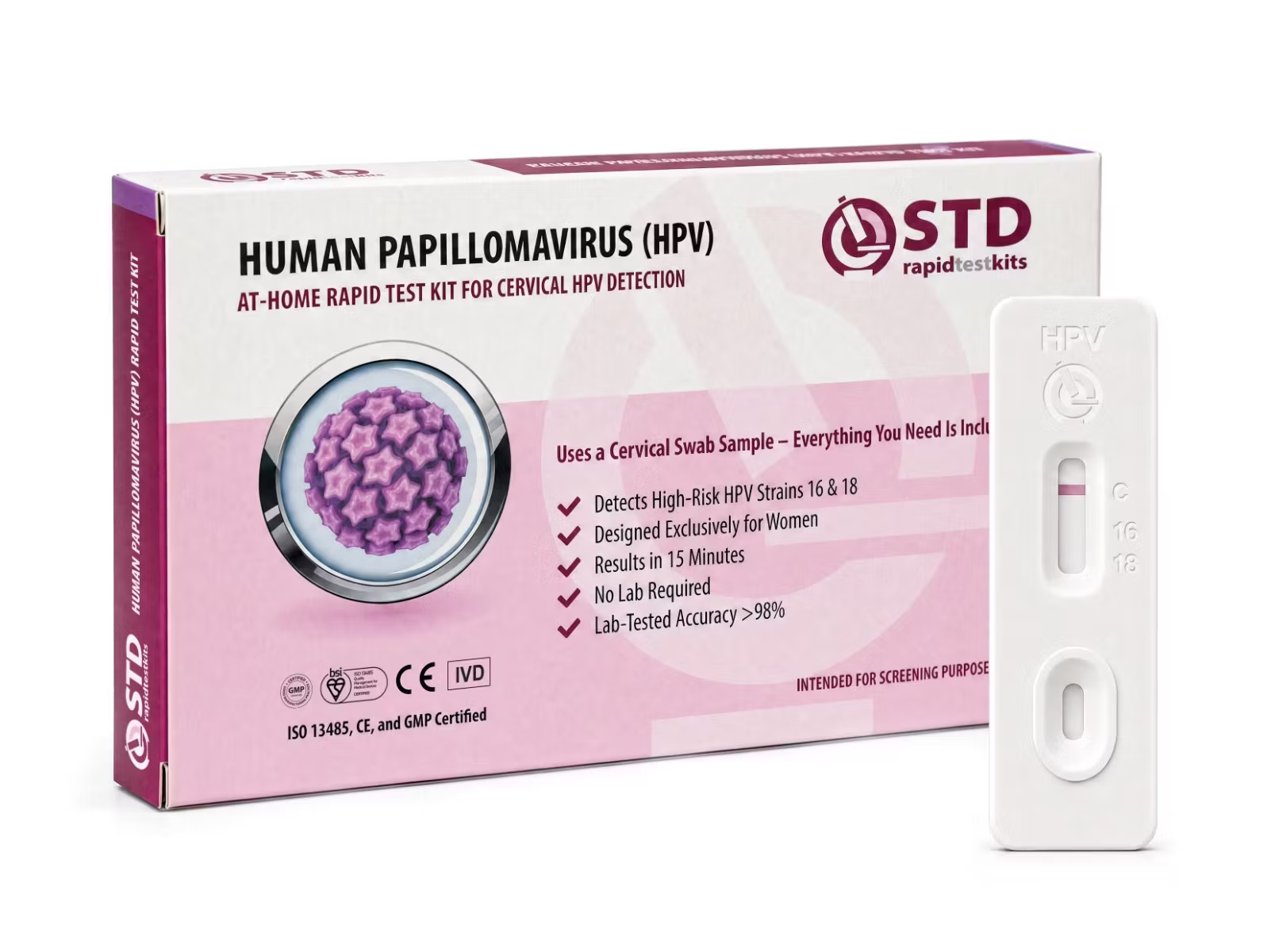
Our at-home HPV test is a rapid lateral-flow swab validated for vaginal self-collection, so it is for female anatomy only. We do not currently sell a male-compatible HPV test. Male readers whose partners are HPV-positive should see the section below on the testing gap for men.
HPV testing for men: a frustrating gap
HPV testing is not standardized for everyone. For people with a cervix, the pathway is clear: routine Pap and HPV screening from around age 21 to 25 onward, depending on the guideline. For people without a cervix, especially men, there is no routine HPV screening, even though they can carry and transmit the virus.
That gap leaves real situations awkward. Many men whose partners test positive expect that they can walk into a clinic and get a penile or oral swab. In practice, no FDA-approved HPV test exists for penile, oral, or anal use outside of research or specific high-risk contexts (for example, anal cytology in some MSM care settings). The CDC's STI treatment guidelines note that HPV tests are FDA-cleared only for cervical specimens, which is why no routine HPV testing pathway exists for men (CDC, HPV STI Treatment Guidelines).
If you are a man whose partner has tested positive, the meaningful actions are practical: use condoms with new partners, get the HPV vaccine if you are still eligible, watch for symptoms like genital warts, and support your partner through her follow-up. Most HPV-related changes stay silent and never need treatment.
Partners often feel guilt, blame, or confusion around HPV because of this testing gap. The framing that actually helps: this is a virus most sexually active people encounter at some point, not a moral failing on either side.
If your partner tested positive and you are a man
- Get vaccinated if you are still eligible. The HPV vaccine is routinely recommended through age 26 and available through shared clinical decision-making up to age 45.
- Use condoms with new partners. They lower but do not eliminate HPV transmission risk.
- Watch for visible symptoms like genital warts, and see a clinician if any appear.
- Support your partner's follow-up schedule rather than trying to chase a test that does not exist for you.
Retesting after treatment for cell changes
HPV itself is not “treated” the way bacterial STIs are. There is no antiviral pill that clears it. When HPV causes abnormal cell changes, like cervical dysplasia, those cell changes can be treated through procedures: colposcopy with directed biopsy, cryotherapy, or a LEEP (loop electrosurgical excision procedure). The question that comes up after a procedure is whether you need to retest right away.
The short answer is yes, but on your provider's schedule. Most follow-up testing after a treatment procedure happens 6 to 12 months later, not immediately. The reason: the cervix needs time to heal and local HPV levels need time to drop into a stable range. Testing in the first few months can show lingering virus even after the abnormal cells are gone, which leads to confusing results that mean less than they seem to.
If you panic-test at month three and the result is still positive, that does not mean the procedure failed. It often means your body is still clearing residual virus from tissue that has not yet fully re-stabilized. Retesting at your scheduled six-month or twelve-month appointment will give a more meaningful read, and the cell-change result (the Pap or biopsy) is the more important data point for whether the procedure worked.
Most providers schedule the first follow-up co-test 6 to 12 months after a LEEP or cryotherapy procedure. Testing sooner usually shows residual viral signal rather than a meaningful update on whether the abnormal cells have resolved.
Reinfection, or the same one returning?
One of the most emotionally loaded questions after a second positive: “Did I get it again, or did it just never leave?”
HPV does not behave like chlamydia or gonorrhea. It does not cause acute symptoms that flare and resolve. Instead, it lives in skin and mucous-membrane cells, often silently. Once your immune system suppresses the virus, it can stay dormant, sometimes undetectable, but not necessarily gone. Years later, it can reactivate under stress, illness, or immune suppression.
This reactivation is often mistaken for reinfection, especially in long-term monogamous relationships. Unless you have had a new exposure, or your partner is actively carrying a different high-risk strain, the more likely explanation is the same virus returning to detectable levels, not a brand-new infection.
Here is the part most guides skip: your immune system can clear HPV more than once. Reactivation is not failure; it is biology. Retesting every 12 months gives a realistic window to track meaningful changes without being thrown by every small fluctuation in viral load.
The table below shows what common retest scenarios usually mean, and what generally comes next:
| Retest Timing | Possible Result | Likely Interpretation | Common Next Step |
|---|---|---|---|
| Within 3 months | Still positive | Lingering virus or DNA fragments from the original infection | Wait, retest at the 12-month mark |
| After 12 months | Still positive | Persistent infection or reactivation | Closer monitoring, possibly colposcopy if Pap also abnormal |
| After 12 months | Negative | Virus cleared or suppressed to undetectable | Return to routine screening schedule |

Your immune system matters more than you think
Why do some people clear HPV in a year, while others test positive for several? It mostly comes down to immune response. Smoking, high stress, sleep deprivation, chronic illness, and certain medications can all affect how your body handles HPV.
This is not a call to overhaul your life or panic about your habits. It is context. Supporting your immune system, through sleep, stopping smoking, managing stress, and eating roughly the way a doctor would describe a balanced diet, may help your body do what it does naturally. Think of it as gardening: you cannot force a seed to sprout, but you can give it a better environment.
For people who are immunocompromised, including those living with HIV or on immunosuppressive therapy, HPV can persist longer and pose a higher risk. In these cases, more frequent monitoring and sometimes anal HPV testing may be appropriate, especially for men who have sex with men in higher-risk groups. The right surveillance interval is set with a specialist who knows your immune status, not a general checklist.
- Sleep: aim for the 7 to 9 hours most adults need; chronic short sleep dampens immune response.
- Stop smoking: cervical tissue exposure to tobacco byproducts is independently linked to slower HPV clearance.
- Manage stress: long-running stress suppresses the immune signalling your body uses to clear viruses.
- Balanced diet: plenty of vegetables, fruit, and whole foods. No miracle supplement is needed.
Coping with the in-between
The part most guides skip is the emotional middle: the months after a positive test, before your retest. The uncertainty that creeps in when you have no new data, only time. People describe feeling “contagious” even when they have no symptoms, or worrying about a partner getting cancer from a routine kiss. Most of that worry is not supported by what HPV actually does, but the worry itself is real.
That waiting is not empty space. Use it. Get more information from sources you trust. Strengthen communication with current or future partners. Get the HPV vaccine if you have not yet (yes, even if you have already been exposed to one strain; the vaccine still covers high-risk strains you have not encountered). Consider broader STI screening to rule out anything else.
For partner conversations, you do not need to be a microbiologist. Honest framing works: “I tested positive for HPV. It is common. I am following up at the 12-month mark. Here is what that means.” Most people respond to that better than to anxious silence.
If no one else has said it: showing up for your health is not a punishment. It is care.
- Get the HPV vaccine if you are still eligible. It still protects against high-risk strains you have not yet encountered.
- Schedule a broader STI screen to rule out anything else; an at-home combo kit can cover this discreetly.
- Have one honest partner conversation now rather than holding it in for 12 months.
- Stop self-testing on a short cycle. Pick a calendar date 12 months out and book it.
Frequently Asked Questions
- Do I really have to wait a whole year to retest for HPV?
- In most cases, yes. When your Pap smear is normal, U.S. guidelines recommend retesting at 12 months. Testing sooner usually does not give new or useful information because the same viral DNA the first test detected often stays detectable while your immune system is still working. The 12-month interval is the point at which a second result actually means something.
- If my retest is still positive, does that mean I was reinfected?
- Not necessarily. HPV can stay dormant in skin and mucous-membrane cells and reactivate later, especially under stress or immune suppression. This reactivation is often mistaken for reinfection. Unless you have had a known new exposure, the more likely explanation is the same strain returning to detectable levels. That is not a sign your partner cheated or that anything went wrong; it is how this virus behaves.
- Can I use an at-home HPV test instead of going back to the doctor?
- Yes, an at-home HPV test using a self-collected vaginal swab is a reasonable option if clinic access is hard for you. Just time it right. Wait the full 12 months after your positive result unless your provider has advised otherwise based on symptoms or an abnormal Pap. Testing sooner often produces a result that is hard to interpret.
- Will my HPV ever go away completely?
- For most people, yes. In about 9 out of 10 cases the immune system clears HPV within two years. After clearance, the virus can sometimes go quiet rather than gone, which means it can reactivate later under stress or illness. That is not the same as never clearing it; it is part of how persistent viruses behave.
- I got the HPV vaccine. Why did I still test positive?
- The vaccine protects against the high-risk HPV strains you have not yet been exposed to. If you encountered a strain before vaccination, the shot cannot retroactively clear it. The vaccine is still worth getting, since it covers the strains responsible for most HPV-related cancers and can protect you from future infections.
- My partner tested positive. Should I get tested too?
- If you have a cervix, talk with your provider about timing your next Pap and HPV co-test. If you do not have a cervix, there is currently no FDA-approved routine HPV test for men. Practical actions instead: use condoms with new partners, consider the HPV vaccine if you are still eligible, and watch for symptoms like genital warts. Most HPV exposures in men stay silent and clear on their own.
- What does a “persistent” HPV infection mean exactly?
- Persistent HPV means the virus is still detectable 12 months or more after your first positive test. That is the point at which providers start watching cervical or anal cells more closely. It does not mean cancer is imminent. The WHO estimates 15 to 20 years from persistent HPV to cancer in people with normal immune systems. The follow-up plan is monitoring, not crisis.
- Do I need to tell every past partner I had HPV?
- There is no public-health requirement to notify past partners about HPV the way you would for syphilis or gonorrhea. HPV is common, often asymptomatic, and clears on its own in most people. Sharing with current or future partners is reasonable and can build trust. A simple line is usually enough: “I tested positive for HPV once. It is common. I follow up on it.”
When you are ready, you deserve clarity
If you tested positive for HPV, the next step is not racing the clock. It is understanding the timeline your body and your provider are working with. Whether you are approaching the 12-month mark or just got your first positive last week, what you do in between matters, but it does not have to be dramatic.
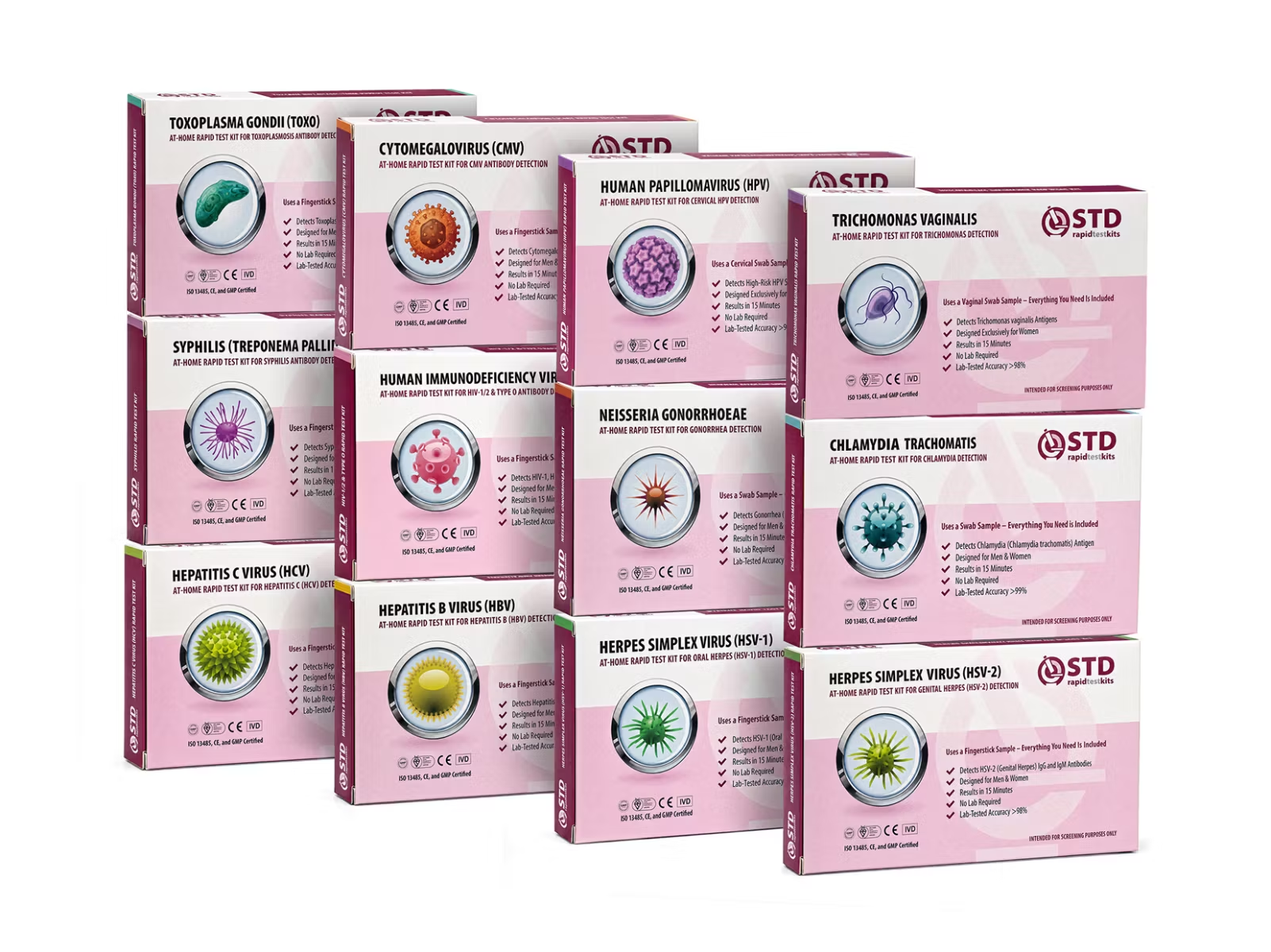
Get informed. Make a plan. And when the retest window comes, choose a setup that fits your life. If you want a broader at-home screen alongside your HPV retest, the 10-in-1 women's panel below covers HPV plus the most common STIs in a single discreet kit, validated for vaginal self-swab.
- U.S. Centers for Disease Control and Prevention. About Genital HPV Infection: clearance rate of 9 out of 10 within two years, prevalence framing, and persistent infection risks.
- U.S. Centers for Disease Control and Prevention. Cervical Cancer Screening: screening intervals for HPV co-testing and what a positive HPV result means at the population level.
- U.S. Centers for Disease Control and Prevention. STI Treatment Guidelines, HPV section: HPV tests are FDA-cleared only for cervical specimens, which is why no routine HPV testing pathway exists for men.
- Cleveland Clinic. Human Papillomavirus (HPV) Test: 12-month retest recommendation after a positive result and procedural details for HPV testing.
- World Health Organization. Cervical Cancer Fact Sheet: 15 to 20 year typical timeline from persistent HPV to cancer in people with normal immune systems, accelerated to 5 to 10 years with weakened immunity.
- U.S. Centers for Disease Control and Prevention. HPV (root landing page): general HPV overview, vaccination context, and cancer-prevention framing, used as a cross-reference for plain-language background.
