Published: September 2025 | Last updated: May 2026 | Editorial review and quality control: Martina N.
Can HIV enter through broken skin, even without bleeding or ejaculation?
Yes. "Broken skin" means any barrier compromise, including microtears too small to see and inflamed mucous membranes. Ejaculation is not required: pre-ejaculate, vaginal fluids, and rectal fluids can all carry HIV when they contact compromised tissue. Actual risk depends on the partner's viral load and the exposure type. Within 72 hours of a possible exposure, PEP is the priority over testing.
You didn't see blood. There wasn't pain. Maybe nobody even finished. But something feels off, and now you're wondering whether the smallest contact could have changed something. Those are the worries this article is built around.
When clinicians talk about "broken skin" in the context of HIV risk, they don't mean a wound that bleeds. They mean any compromise to the body's barrier, including damage too small to see. And ejaculation isn't the dividing line between safe and unsafe; pre-ejaculate, vaginal fluids, and rectal fluids can all carry HIV when other conditions line up. Most minor abrasions and friction events during sex do not result in HIV transmission, since infection requires both a compromised barrier and contact with infected bodily fluid from a partner with a detectable viral load at that specific site. The point isn't that every shaving nick is dangerous. It's that the mental model most people carry, where HIV needs a gaping wound and a full load of semen to cross over, is wrong in ways that matter when something has actually happened.
Key Takeaways
- "Broken skin" includes microscopic damage you cannot see: shaving nicks, friction abrasions, hangnails, and inflamed mucous membranes. Pre-ejaculate, vaginal fluids, and rectal fluids can carry HIV through these tiny openings, even when nobody bled and nobody climaxed.
- Testing timing depends on the test type. Fourth-generation lab tests can detect HIV around 18 to 45 days post-exposure per CDC guidance, while at-home rapid antibody tests are most reliable from 23 to 90 days. If you are within 72 hours of a possible exposure, PEP can prevent infection from establishing itself.
What "Broken Skin" Actually Means to Doctors
When clinicians use the phrase "broken skin," they aren't picturing a gaping wound. They mean that the body's natural barrier has been compromised in any way that allows pathogens to bypass it. That can be a shaving nick smaller than a pinhole. It can be a scrape from teeth during oral sex. It can be the diffuse irritation of dry skin stretched during friction-heavy intercourse without enough lubrication. It can be a hangnail you forgot was there.
The barrier in question isn't only the outer skin. It includes mucous membranes, the soft, permeable tissue that lines the inside of the mouth, the foreskin, the inner labia, the vaginal canal, and the rectum. Mucosal tissue is thinner than external skin, kept moist, and more easily disrupted by stretching, abrasion, or inflammation.
You don't need to see blood for the barrier to be compromised. Most microtears are invisible to the naked eye, close within 24 to 48 hours, and never produce noticeable symptoms. The four images below show everyday examples of barrier compromise: a shaving nick, a friction abrasion, gum inflammation, and a hangnail tear. None of them look dramatic. All of them count as broken skin for the purposes of how a clinician would assess transmission risk.
Why a Tear You Can't Feel Still Matters for HIV
HIV needs a route into the body, and the intact skin barrier blocks that route effectively. Once the barrier is compromised, the virus can reach the immune cells concentrated in mucosal tissue throughout the genital, rectal, and oral areas (CDC: How HIV Spreads). The size of the opening matters less than its presence. A tear measured in fractions of a millimeter is enough if the exposure involves bodily fluids that carry HIV in sufficient concentration: blood, semen, pre-seminal fluid, vaginal secretions, rectal fluids, or breast milk (HIV.gov: How HIV Is Transmitted). Saliva, sweat, urine, and tears do not transmit HIV under normal conditions.
Inflammation amplifies the risk further. When tissue is inflamed from another sexually transmitted infection, gingivitis, or chronic irritation, the body draws more immune cells to the site, giving HIV more potential targets. This is one reason untreated STIs are associated with elevated HIV transmission probability.
Whether you saw blood and whether sex hurt are not reliable tests for whether your tissue was damaged. Microtears are typically silent. The relevant question after an encounter is whether the lining of your rectum, vagina, mouth, or urethra came into contact with a fluid that could carry HIV, not whether you noticed a visible injury at the time.
How HIV Enters the Body: Step by Step
HIV is a bloodborne virus, but transmission isn't only a matter of blood-on-blood contact. The virus crosses from the bodily fluid of an infected partner into a recipient's body when three conditions line up:
- the fluid carries enough virus,
- that fluid contacts a viable entry route, and
- the recipient's immune system has cells the virus can infect at the site of contact.
The bodily fluids that can carry transmissible HIV include blood, semen, pre-seminal fluid, vaginal fluids, rectal fluids, and breast milk. The virus needs to reach immune cells in mucosal tissue to start replicating, which is why genital, rectal, and oral exposures dominate HIV transmission. Intact skin offers strong protection against contact-only exposure. When the barrier is broken, even microscopically, fluid-borne virus can reach the susceptible tissue layer underneath, and inflammation in that tissue raises per-act transmission probability. The table below maps these conditions onto risk levels for common exposure types.
| Skin or Mucosal Condition | Contact Type | HIV Risk Level | Why It Matters |
|---|---|---|---|
| Healthy, intact skin | Surface contact (touching, grinding) | Negligible | No entry point; skin barrier blocks the virus |
| Microtears (shaving, friction, dryness) | Vaginal, anal, or oral sex | Low to moderate | Tiny openings let HIV reach target immune cells |
| Visible cuts or sores | Unprotected sex or blood contact | High | Direct, faster access to bloodstream |
| Inflamed mucosa (active STI, gingivitis) | Oral, vaginal, or anal exposure to fluids | Moderate to high | Inflammation concentrates more target cells at the site |
The "Nobody Finished" Myth and Why Viral Load Matters More
Some of the most anxious questions to sexual-health helplines start with the same line: nobody came, so it should be fine. The reasoning sounds intuitive, and it falls apart for two reasons. First, pre-ejaculate is not a sterile fluid. It is produced from the same anatomy as semen and can carry HIV in someone whose viral load is detectable. Second, transmission does not require a large bolus of fluid; it requires viable virus reaching susceptible tissue. A drop of pre-ejaculate sitting on the lining of the rectum, vagina, or front of the urethra has access to the bloodstream through that thin, absorbent tissue. Add friction that disturbs the surface, even a little, and the access becomes easier.
Viral load is the single biggest modifier of per-act risk. Someone living with HIV who is on consistent treatment and has an undetectable viral load does not transmit HIV sexually, a principle public-health authorities summarize as U=U: undetectable equals untransmittable (HIV.gov: Preventing Sexual Transmission of HIV). At the other end, someone in the acute infection window has an extremely high viral load and is meaningfully more transmissible per act, even though their own antibody test will still read negative for several weeks. That is why a partner's sincere "I tested negative six months ago" is genuinely useful information and yet not a substitute for testing on your own timeline; the four to eight weeks after someone catches HIV are both the most infectious window and the period when their own test is still negative.
The four to eight weeks immediately after HIV infection are when viral load is highest and the partner's own antibody test will still read negative. This is the window when unknowing transmission is most likely, even from partners who have recently tested negative and believe their status with full sincerity. Per HIV.gov, the six fluids that can transmit HIV are blood, semen, pre-seminal fluid (pre-cum), rectal fluids, vaginal fluids, and breast milk. Transmission requires the fluid to reach a mucous membrane, damaged tissue, or the bloodstream. Saliva, sweat, tears, and urine do not transmit HIV.
What Makes Microtears More Likely
Microtears are more likely whenever any of the following are present: a dry surface, inadequate lubrication, hard or fast motion, prolonged friction, recently shaved or waxed skin, substances that dull pain perception (alcohol, poppers), or insertion of fingers or toys without preparation. The receptive partner during anal sex is especially exposed because the rectum does not self-lubricate and the surrounding tissue is delicate. The cervix, the urethra, and the inside of the vaginal canal are similarly vulnerable when sex is dry or rough. The table below maps the most common scenarios to their microtear risk profile.
| Scenario | Microtear Risk | Why Risk Rises |
|---|---|---|
| Dry sex without lube (vaginal or anal) | High | Direct mucosal abrasion from friction with no glide |
| Rough or prolonged friction | Moderate to High | Repeated stress disturbs the surface layer of tissue |
| Sex within hours of shaving or waxing | Moderate | Existing skin microabrasions are already open |
| Insertion of fingers or toys without prep | Low to Moderate | Sharp edges, nails, or rigid toys can scrape lining |
| Anal sex with alcohol or poppers | High | Lower pain awareness leads to more aggressive motion |
When Should You Test? The Window-Period Rules
If something happened (friction, a shaving cut earlier that day, an encounter without protection, or any unprotected exposure where ejaculation may or may not have occurred), the testing question follows immediately. Which test is appropriate depends entirely on how long ago the exposure was. HIV tests look for one of three things: the virus's genetic material (RNA), a specific viral protein called p24 antigen, or antibodies your immune system makes in response to the virus. Each has a different earliest-detection window.
Per CDC HIV testing guidance: most antibody-based tests, including at-home rapid tests, can detect HIV between 23 and 90 days after exposure. Fourth-generation antigen/antibody lab tests typically detect infection between 18 and 45 days. Nucleic acid (NAT/RNA) tests, which are lab-only and more expensive, can detect HIV between 10 and 33 days. A negative rapid test at one week means nothing on its own, because the body hasn't produced detectable antibodies yet. If you test early for reassurance, plan a follow-up at the 90-day mark using the same method. The CDC underlines the same point: no HIV test detects the virus immediately after infection, and anyone within 72 hours of a possible exposure should talk to a clinician about post-exposure prophylaxis (PEP) right away, before relying on a test result.
| Test Type | Earliest Detection | Most Reliable At | How It Works |
|---|---|---|---|
| 4th-Gen Antigen/Antibody (lab) | 18 to 45 days | 45+ days | Detects HIV antigen (p24) plus antibodies in blood |
| 3rd-Gen Antibody (lab or rapid) | 23 to 90 days | 90 days | Detects antibodies to HIV-1 and HIV-2 |
| HIV RNA / NAT (lab) | 10 to 33 days | 33+ days | Detects viral RNA directly; high sensitivity |
| At-Home Rapid Antibody (fingerstick) | 23 to 90 days | 90 days | Fingerstick blood; result in 15 minutes |
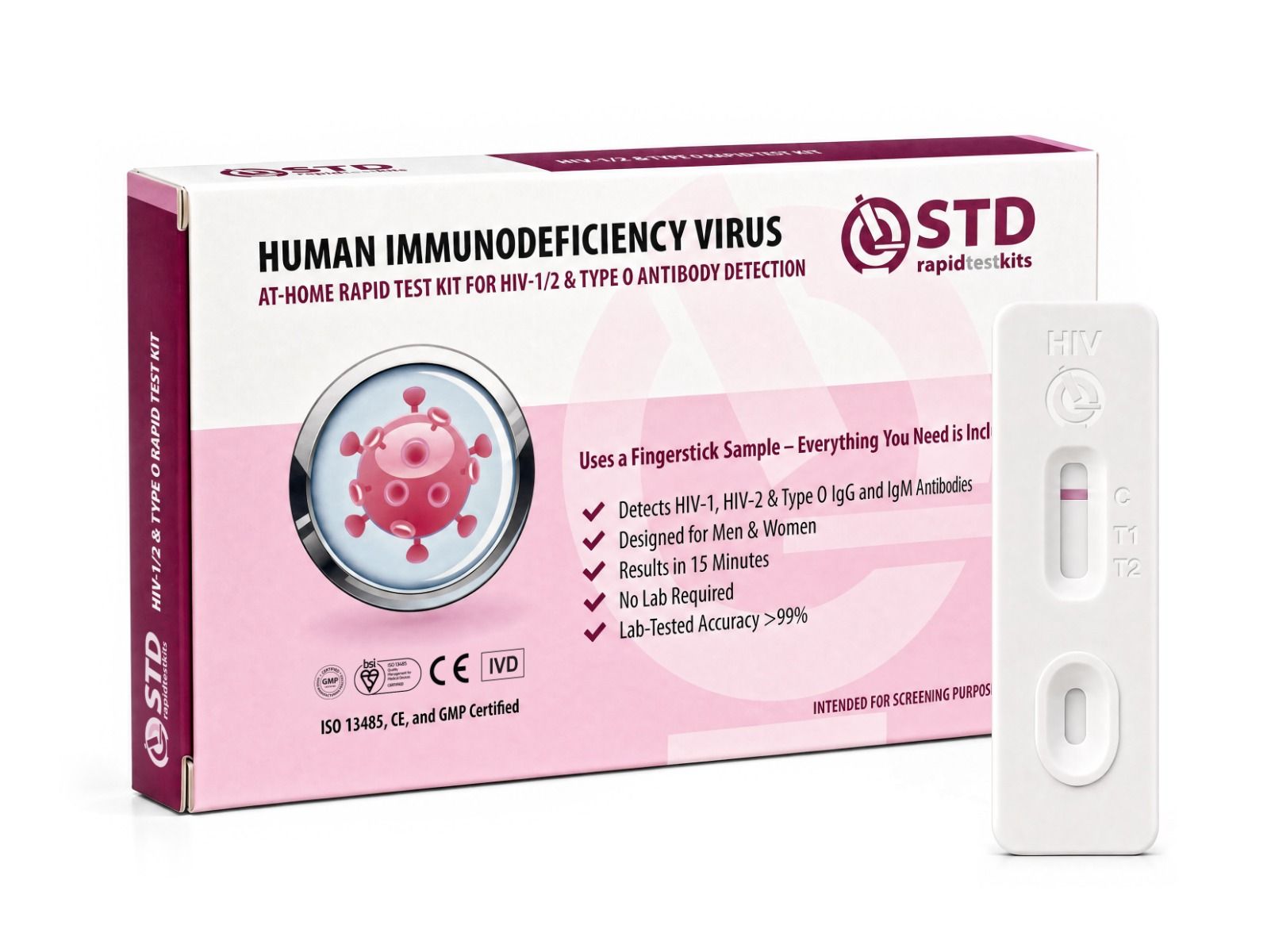
stdrapidtestkits.com publishes this article and sells the at-home rapid kits referenced below. Rapid home tests are screening tools; a positive result should always be confirmed with a clinician. We recommend products based on fit-for-purpose for the reader's concern, not commercial benefit.
How to Reduce Microtear Risk in the First Place
You can't eliminate microtears entirely; they're a normal feature of how thin tissue responds to friction. Three changes meaningfully reduce how often they happen and how big they get.
Lubrication
Lube is the single most effective change. Friction is the dominant driver of mucosal microtears, and the right lube reduces it. Water-based lubes work with all condom types; silicone-based lubes last longer and are also condom-safe. Oil-based products such as lotion, baby oil, or petroleum jelly degrade latex condoms and shouldn't be used with them.
Grooming timing
Shaving creates fresh microscopic cuts at the follicle level, especially against the grain. These cuts close within a day or two, but during the first several hours they're still open. If you shave the genital area, doing so the day before sex rather than minutes before reduces the overlap between fresh cuts and exposure.
Condoms and PrEP
Condoms, used correctly and consistently from start to finish, reduce HIV transmission risk substantially. Latex and polyurethane condoms work; lambskin condoms do not protect against HIV. The most common real-world failure mode reported in user surveys is partial coverage and silent slippage during intense or fast motion, rather than the catastrophic tear. Condoms also degrade if stored hot, applied with sharp fingernails, or paired with oil-based lube on latex.
For people with regular potential exposure, PrEP (pre-exposure prophylaxis) is a separate, ongoing layer of protection. HIV.gov reports that PrEP reduces the risk of getting HIV from sex by about 99% when taken as prescribed (HIV.gov: Pre-Exposure Prophylaxis (PrEP)). It comes as a daily pill or a bimonthly injectable (cabotegravir, brand name Apretude). If a condom slips or breaks, treat that as a real exposure event; decide in advance how you'd respond, including whether you'd seek post-exposure prophylaxis, so you're not making that decision under pressure at 2 a.m.
Lube compatibility at a glance
- Water-based lube: compatible with all condom types (latex, polyurethane, polyisoprene, lambskin). Safe default for any encounter.
- Silicone-based lube: condom-safe and longer-lasting than water-based. Avoid with silicone toys (degrades them).
- Oil-based products (lotion, baby oil, petroleum jelly, coconut oil): degrade latex condoms within minutes. Use only with polyurethane condoms or no condom at all.
Three changes that meaningfully reduce microtear risk
- Use plenty of water- or silicone-based lube. Never use oil-based products with latex condoms; they degrade the latex.
- Shave the day before sex, not minutes before. Fresh follicle-level cuts are still open for the first several hours.
- Use a latex or polyurethane condom from start to finish, with a fresh one for each partner and each orifice. Lambskin condoms do not block HIV.
If You're Within 72 Hours: PEP Changes the Math
Post-exposure prophylaxis (PEP) is a 28-day course of antiretroviral medication that, when started within 72 hours of a possible HIV exposure, can prevent infection from establishing itself. The earlier it starts, the better it works. Per CDC HIV prevention guidance, PEP is for emergency situations: a condom break with a partner whose status is unknown or HIV-positive, a needle-stick injury, sexual assault, or a known high-risk exposure. You do not need a confirmed exposure to qualify; a credible high-risk possibility is enough for most providers to prescribe. Don't wait until day three of the 72-hour window to start asking; the time to call is the same hour you realize an exposure may have happened.
After the 28-day course, you will still need follow-up testing at four to six weeks and at three months to confirm the outcome. PEP is the emergency option for an exposure that has already occurred. For routine prevention going forward, the relevant medication is PrEP, taken daily or by injection every two months by people with ongoing HIV risk.
Window: within 72 hours of exposure. Earlier is better; ideally within the first few hours.
Where: emergency room, urgent care, sexual health clinic, or your primary care provider. Most clinics carry the starter dose on-site, and some telehealth services can start PEP same-day.
Cost: many state health departments fund PEP for people without insurance. Ask about emergency-access programs when you call.
Course: 28 days of antiretroviral medication, taken on schedule for the full course.
Broken Skin and Other STIs, Not Just an HIV Issue
HIV is the diagnosis people fear most when they search "broken skin," but it isn't the only infection that exploits compromised tissue. Syphilis enters through any break in the skin or mucous membrane and is often transmitted from an active chancre (a painless ulcer) that the infected partner doesn't know is there. Per CDC syphilis guidance, the chancre is the entry point, and the recipient's microtears are the receiving site.
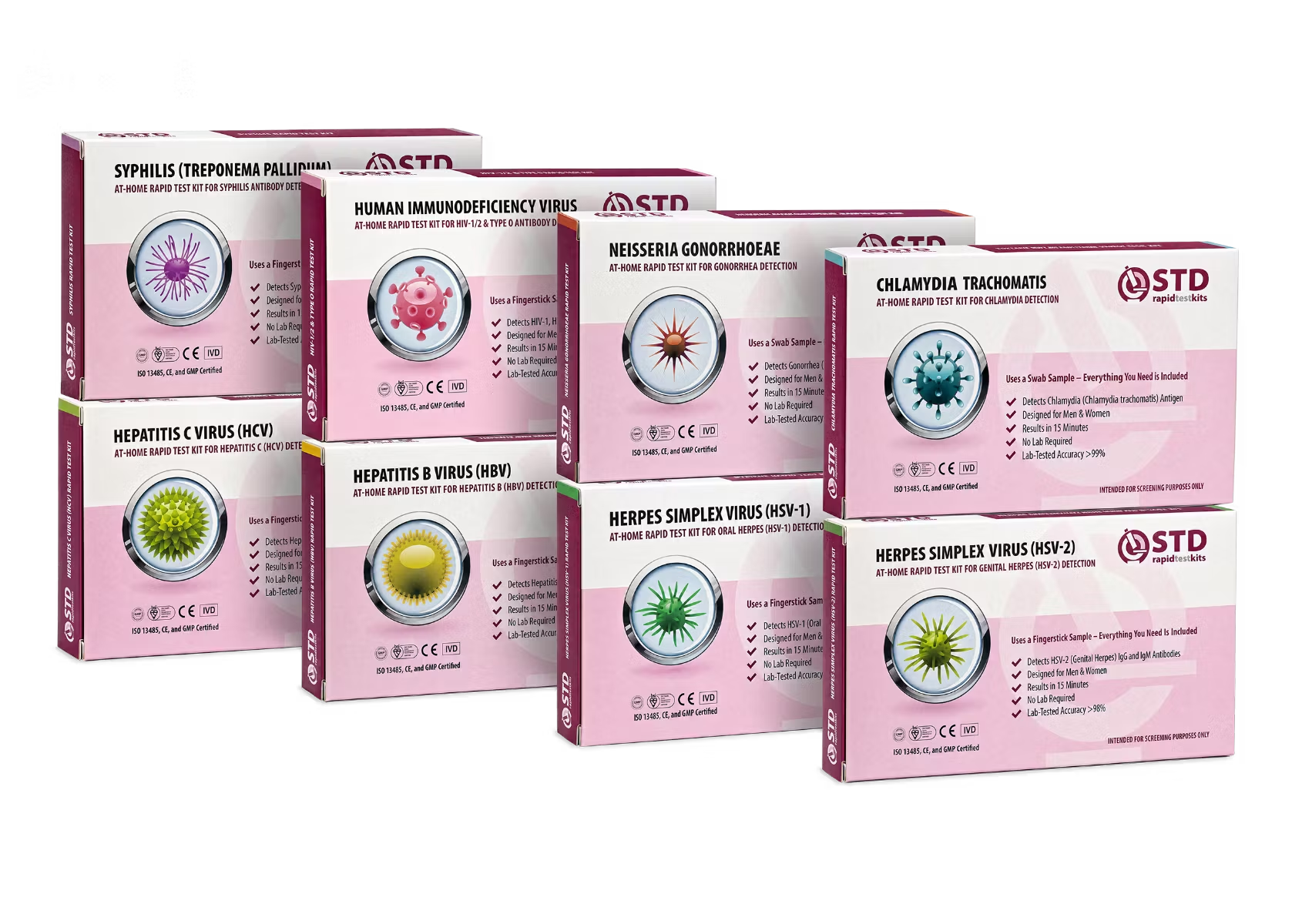
Herpes simplex (HSV-1 and HSV-2) is even more flexible: the virus can transmit during shedding episodes when the infected partner has no visible sore at all. Direct skin-to-skin contact with the affected area is enough (NHS: Genital herpes). The same friction-driven microtears that matter for HIV matter here, because they reduce the dose of viral exposure required to establish infection. Hepatitis B is bloodborne but transmits sexually through the same broken-skin route as HIV, with a higher per-exposure transmission probability; the hepatitis B vaccine is the strongest preventive tool (WHO: Hepatitis B fact sheet). Chlamydia, gonorrhea, and trichomoniasis transmit primarily through mucosal contact rather than requiring a tear, but the inflammation those infections cause raises HIV vulnerability for the same reason: more target cells drawn to the surface. If a single broken-skin event has you weighing an HIV-only test against a broader screen, the 8-in-1 panel below covers all of those exposures in a single fingerstick-and-swab session.
How other STIs use broken skin
| STI | How broken skin matters | Prevention focus |
|---|---|---|
| Syphilis | Enters through any break in skin or mucous membrane; transmitted from active chancre that partner may not know is there | Test new partners; condom use; treat early with penicillin |
| Herpes (HSV-1 / HSV-2) | Skin-to-skin contact during shedding; microtears reduce the viral dose needed to establish infection | Suppressive antiviral therapy reduces shedding; condom use; disclose status |
| Hepatitis B | Bloodborne; same broken-skin route as HIV with higher per-exposure transmission probability | Hepatitis B vaccination is the strongest preventive tool; condom use |
| Chlamydia & Gonorrhea | Mucosal contact rather than requiring a tear; inflammation they cause raises HIV vulnerability | Routine screening every 3 to 6 months for multiple partners; antibiotic treatment |
All of the above are easier to transmit when the recipient has broken skin or inflamed mucosa at the contact site.
What to do next
Was the possible exposure within the last 72 hours?
Yes: Contact an ER, urgent-care clinic, sexual health clinic, or telehealth service today about PEP. Every hour counts; do not wait for symptoms or a test result.
Has it been at least 18 days since the exposure?
Yes: A 4th-generation antigen/antibody lab test is reliable now. At-home rapid antibody tests become reliable from 23 days. Retest at the 90-day mark for full confirmation.
Could the exposure have involved more than one STI (syphilis, hepatitis B, herpes, chlamydia, gonorrhea)?
Yes: A combined panel like the 8-in-1 screens for all of these in one session, so you aren't testing one infection at a time.
No: An HIV-only home test fits; if a result is reactive, confirm with a clinician before drawing conclusions.
Guidance only; a clinician can advise on your specific exposure.
Frequently asked questions
- Can a shaving cut really raise HIV risk?
- Yes, when the cut is fresh and exposed to HIV-positive bodily fluids. A small nick near the genitals or mouth that's a few hours old is still an open route to underlying tissue. The cut alone doesn't cause transmission; it's the cut plus a fluid carrying the virus, plus contact with that fluid. Shaving the genital area the day before sex rather than the same day reduces this overlap window.
- There wasn't any blood. How could I be at risk?
- Microtears in mucous membranes from friction, dryness, or stretching are typically too small to bleed visibly. They also typically close within 24 to 48 hours, which means the session that created the tear is the exposure window of concern. If those microtears are present and the partner's bodily fluids carry HIV, the virus can still cross. Most receptive sex involves microtears; most receptive sex does not result in HIV transmission, because the virus and a compromised barrier need to coincide for transmission to occur.
- Can HIV transmit if nobody ejaculated?
- Yes. Pre-ejaculate is produced from the same anatomy as semen and can carry HIV in someone with a detectable viral load. Vaginal and rectal fluids carry HIV the same way. Ejaculation increases the volume of fluid exchange and therefore raises per-act probability, but it is not the dividing line between safe and unsafe. The presence of any HIV-carrying fluid at compromised tissue is what creates risk.
- We used a condom. Doesn't that cover the risk?
- Condoms reduce per-act HIV risk substantially when used correctly and consistently, though they leave the base of the penis, scrotum, and inner thigh skin exposed, and can slip during fast or intense motion. They can also be compromised by oil-based lube on latex. If your encounter involved fast or dry motion or you noticed any slippage, the risk is reduced though not zero. The most common real-world failure mode is partial coverage and silent slippage, rather than the catastrophic tear.
- Does my partner's viral load matter?
- Enormously. At an undetectable viral load sustained on consistent treatment, a partner living with HIV does not transmit the virus through sex; this is the U=U principle. The highest-risk window is the opposite end of the spectrum: the first few weeks after someone newly catches HIV, when viral load spikes sharply and their own antibody test still reads negative. That gap is why your testing timeline should run on its own schedule, independent of a partner's last result date.
- I feel completely normal. Doesn't HIV cause symptoms right away?
- Some people develop a flu-like acute retroviral syndrome 2 to 4 weeks after infection (fever, sore throat, rash, swollen lymph nodes), though many people have no noticeable symptoms at all in the early months. Feeling fine is not evidence that you were not exposed. Testing on the right schedule is the only reliable way to know.
- Can HIV be transmitted through oral sex?
- It can, though the per-act risk is much lower than for vaginal or anal sex. The risk rises with mouth ulcers, gum disease, recent dental work, or any inflammation of the oral mucosa. Receptive oral sex performed on a male partner with detectable viral load is a documented but uncommon route. Receptive oral sex on a female partner is lower-risk but not zero. CDC categorizes oral sex as 'low risk' rather than 'no risk.'
- How soon after a possible exposure can I test for HIV?
- It depends on the test. A NAT (nucleic acid) lab test can detect HIV around 10 to 33 days post-exposure. A 4th-generation antigen/antibody lab test detects from 18 to 45 days. Antibody-only tests, including at-home rapid tests, typically detect from 23 to 90 days. A negative test taken before the relevant window has elapsed is not a final answer; it just means your body hasn't yet produced enough markers for the test to read.
How we sourced this article: We pulled HIV transmission, testing, PrEP, and PEP guidance from the U.S. Centers for Disease Control and Prevention (CDC), HIV.gov (U.S. Department of Health and Human Services), the UK National Health Service (NHS), and the World Health Organization (WHO). Where authorities differed on detection windows or risk framing, we noted the more conservative figure. Specific quantitative claims (window-period ranges, the 72-hour PEP window, the 99% PrEP effectiveness figure) link inline to the source page that states that figure. The reference list below names the root pages we relied on. This article was reviewed for clinical accuracy by Aikaterini Maragkou, MD. We do not provide clinical diagnosis; for an individual situation, see a licensed provider.
- U.S. Centers for Disease Control and Prevention. How HIV Spreads, covering which body fluids transmit HIV and the role of mucosal versus skin barriers.
- U.S. Centers for Disease Control and Prevention. HIV testing overview, including window-period ranges for antibody, antigen/antibody, and NAT tests.
- U.S. Centers for Disease Control and Prevention. HIV prevention overview, including PEP (post-exposure prophylaxis) and the 72-hour window for emergency use.
- U.S. Centers for Disease Control and Prevention. About Syphilis, covering chancre formation as the entry/transmission point for primary syphilis.
- HIV.gov (U.S. Department of Health and Human Services). How HIV Is Transmitted, with the full list of transmissible body fluids including pre-seminal fluid (pre-cum).
- HIV.gov. Preventing Sexual Transmission of HIV, including the U=U (undetectable equals untransmittable) principle and relative-risk estimates by sexual activity type.
- HIV.gov. Pre-Exposure Prophylaxis (PrEP), stating PrEP reduces the risk of getting HIV from sex by about 99% when taken as prescribed.
- UK National Health Service. Genital herpes, covering asymptomatic viral shedding and skin-to-skin transmission of HSV-1 and HSV-2.
- World Health Organization. Hepatitis B fact sheet, covering bloodborne and sexual transmission routes and the role of hepatitis B vaccination.
