
Published: August 2025 | Last updated: April 2026 | Editorial review and quality control: Martina N.
A new bump near the bikini line. A patch of redness on the inner thigh. Discharge that looks different than usual. Your brain runs straight to the worst case, an STD, while your body might be reacting to a new laundry detergent, a tight pair of leggings, or a stretch of antibiotics that nudged your microbiome out of balance. Most of the time, the explanation is mundane. Sometimes it is not, and that is what testing is for.
This guide walks through the most common non-STD causes of genital and skin symptoms, the specific patterns worth watching, and a calm framework for deciding when to wait and when to screen. It applies the same basic triage logic clinicians use, translated into plain language and without the alarm.
My rash, itch, or discharge feels alarming. Is it an STD?
Most of the time, no. Razor bumps, contact dermatitis, yeast overgrowth, bacterial vaginosis, jock itch, eczema, hormonal cycle changes, and mild urinary tract irritation all cause symptoms that look and feel similar to common STIs. Testing is the only reliable way to rule out infection. Screen now if you had unprotected sex with a new partner in the last 2 to 6 weeks, if symptoms are worsening or persistent past a week, or if a partner reports an infection. Otherwise, a 48 to 72 hour observation window with the obvious triggers removed (new soap, tight fabric, fresh shave) is reasonable before testing.
Key Takeaways
- Most genital rashes and unusual discharge episodes are not STDs; common culprits include yeast, bacterial vaginosis, contact dermatitis, folliculitis, eczema, and ovulation-related cycle changes.
- Skip the wait and screen now if you had unprotected sex in the last 2 to 6 weeks, symptoms are worsening or spreading, or you have multiple symptoms together such as discharge plus pelvic pain or rash plus fever.
Why Skin and Genital Symptoms Send Us Spiraling
The skin around the groin, perineum, and vulvar or scrotal areas does double duty. It is a barrier, but it is also one of the most exposed surfaces on the body when you add up sweat, friction, soaps, lubricants, latex, fabric dyes, menstrual products, and the trace ingredients in laundry detergent. Add in a natural microbiome that lives in folds and crevices, and you get a region that flares easily.
That sensitivity matters because it scrambles diagnosis-by-symptom. A patch of redness from contact dermatitis can look like the prodrome of genital herpes. The thick, itchy discharge of a yeast infection can read as trichomoniasis. The burning of a urinary tract infection can mimic gonorrhea or chlamydia. The World Health Organization notes that STIs are often asymptomatic, which means visual self-diagnosis is unreliable in both directions: you can have symptoms that are not an STI, and an STI without symptoms.
Two people with rashes that look identical can have different conditions and need different treatments. Lab testing answers the question that visual inspection cannot.
Self-diagnosis goes wrong in both directions. A benign rash from a fragrance reaction can mimic the early prodrome of genital herpes, and a bacterial STI like chlamydia or gonorrhea often produces no visible symptoms at all in early infection. A laboratory test, not appearance, is what answers the question.
STD-Like Symptoms That Often Are Not STDs
Here are the most common non-STD causes of the symptoms that typically send people searching:
- Yeast infection (vulvovaginal candidiasis or, in men, balanitis from Candida). Thick, cottage-cheese-like discharge plus intense itch is the classic vaginal pattern. In men, especially uncircumcised men or those who recently took antibiotics, yeast can produce redness, soreness, and a whitish film under the foreskin. Mayo Clinic notes that vaginal yeast infections affect most women at some point and are not classified as a sexually transmitted infection.
- Bacterial vaginosis (BV). A thin gray or white discharge with a noticeable fishy odor, often stronger after sex. BV is a shift in vaginal bacteria, not an STI, though sexual activity, douching, and new partners can disrupt the balance.
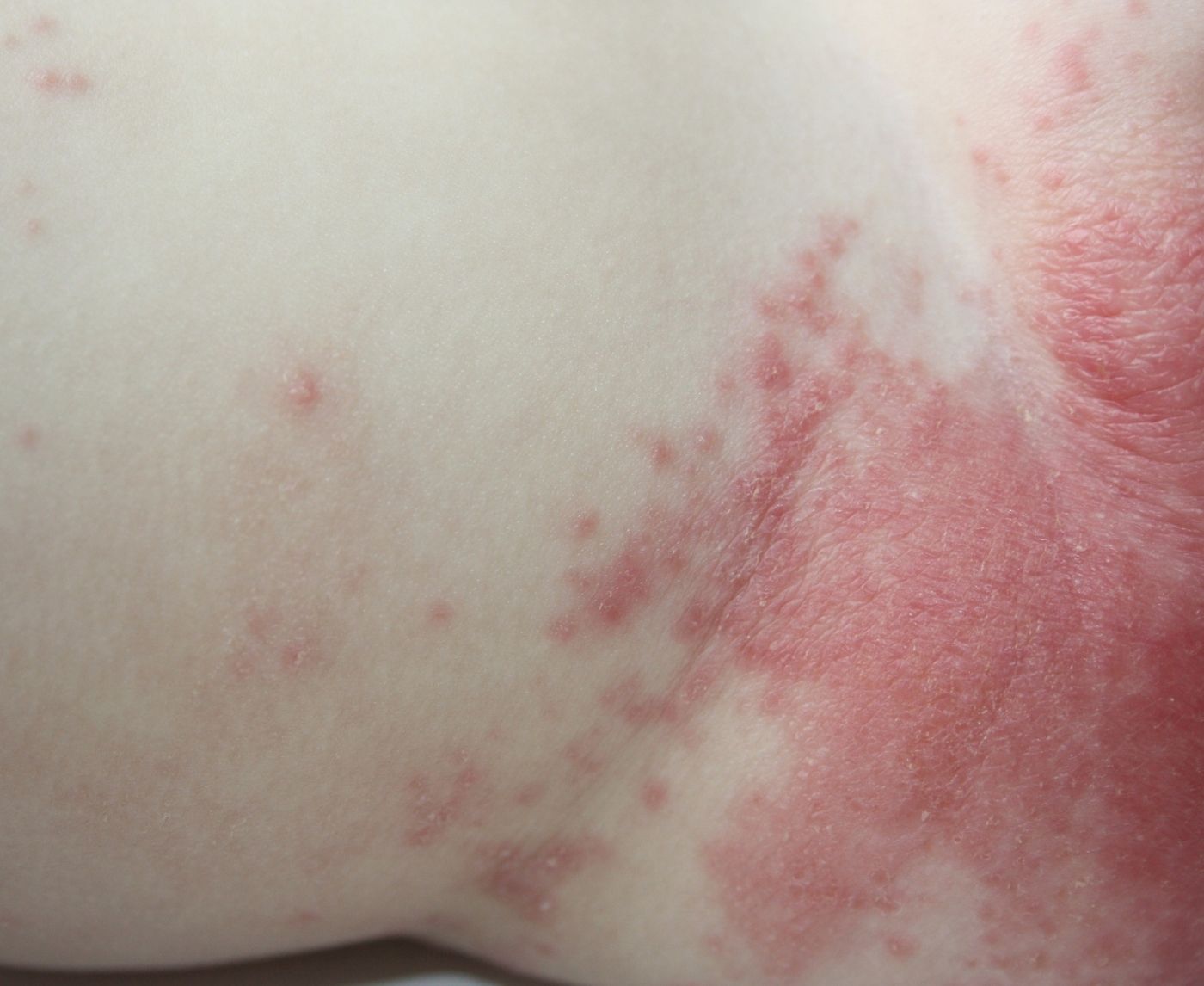
- Contact dermatitis. Red, itchy patches or tiny blisters that map exactly to where a product touched the skin. The trigger is usually a new soap, a fragranced wipe, a different brand of pad or condom, or a laundry detergent change. Mayo Clinic notes that symptoms typically improve within days of removing the irritant.
- Folliculitis and razor bumps. Tender, pimple-like bumps centered on hair follicles, appearing 12 to 48 hours after shaving or waxing. They cluster along hair-bearing areas and resolve as friction and irritation settle.
- Jock itch (tinea cruris). An itchy, scaly, ring-edged rash in warm folds (groin, inner thigh, under the scrotum). It loves humidity, snug fabric, and prolonged sweat. Antifungal creams typically clear it.
- Eczema and psoriasis. Both can flare on genital skin, often as patches of dry, sensitive, or salmon-colored plaques that do not match the lesion pattern of an STI. They respond to gentle skincare and, when needed, prescription topical treatment.
- Urinary tract infection (UTI). Burning with urination, urgency, and going small amounts often. UTIs are not classified as sexually transmitted infections, though sexual activity can introduce bacteria that trigger one.
- Heat rash and friction. Small, even red bumps where sweat collects, common after a workout in tight gear. Resolves once the area dries and breathes.
- Hormonal cycle changes. Around ovulation, cervical mucus becomes clear, stretchy, and slippery. Hormonal contraception, pregnancy, and stretches of stress all shift discharge. None of this is infection.
One trickier reality worth keeping in mind: yeast, BV, or a UTI can occur in the same person at the same time as an STI. A textbook yeast pattern does not rule out chlamydia; it only adds context.
Discharge Decoder: What Is Normal, What Is Not
Vaginal discharge changes across the menstrual cycle by design, not malfunction. Around ovulation, mucus turns clear and stretchy, like raw egg white. Right after menstruation, discharge can be sparse and thick. Hormonal birth control flattens these patterns. Pregnancy increases overall volume. Semen mixed with mucus after sex can look clumpy or watery for up to a day.
For people with penises, a small amount of clear pre-ejaculate fluid throughout the day is normal. So is a small amount of prostate secretion at the start of urination. What is not normal: a steady drip of cloudy white, yellow, or greenish fluid, pus-like discharge, or any persistent discharge accompanied by burning, testicular pain, or rash. Those patterns merit testing for chlamydia and gonorrhea promptly.
The table below summarizes the discharge patterns that point away from an STI versus those that should prompt testing.
| Discharge pattern | Likely cause |
|---|---|
| Cottage-cheese consistency plus intense itch | Yeast (vulvovaginal candidiasis), not an STI |
| Thin gray-white discharge with a fishy odor (stronger after sex) | Bacterial vaginosis, not an STI |
| Mid-cycle clear, stretchy mucus without itch or pain | Ovulatory cervical mucus, normal |
| Clumpy or watery mix for up to a day after sex | Semen mixed with mucus, normal |
| New yellow or green discharge, or pus-like flow | Test for chlamydia, gonorrhea, or trichomoniasis |
| Discharge with pelvic pain, bleeding after sex, fever, or burning urination | Test promptly; see a clinician same-week |
| Any discharge after a partner's confirmed STI diagnosis | Test regardless of how the discharge looks |
Burning Urination: UTI, STI, or Just Irritation?
Burning when you pee is one of the most ambiguous symptoms in sexual health. It can be a UTI, a sexually transmitted infection (chlamydia and gonorrhea are the usual suspects), or simple irritation from soap, friction, dehydration, or a workout in tight fabric.
Some patterns to read:
- Leans UTI. Urgency every few minutes, cloudy or strong-smelling urine, pelvic pressure, lower-abdominal discomfort, no genital sores or unusual discharge.
- Leans STI. Burning plus colored discharge, testicular or pelvic pain, bleeding after sex, symptoms starting 1 to 3 weeks after a new sexual exposure, or a partner with a confirmed infection.
- Leans irritation. Burning that started after a soapy shower, a long bike ride, a vigorous sex session, or switching to a new lubricant. Usually resolves within a day or two with hydration and removing the trigger.
When the picture is not clear, the cleanest path is testing for both. A urine culture (clinic or telehealth) catches UTIs. A swab or rapid antigen test catches the most common bacterial STIs. The two are complementary; they answer different questions, and both can be true at once.
Editorial disclosure: stdrapidtestkits.com publishes this article and sells the at-home rapid tests linked below. We recommend products based on fit-for-purpose for your concern, not on commercial benefit.
| Clue | What it might be |
|---|---|
| Urgency every few minutes, cloudy urine, pelvic pressure, no sores or unusual discharge | Urinary tract infection (UTI) |
| New partner in past 1 to 3 weeks, colored discharge, testicular or pelvic pain | Possible chlamydia or gonorrhea |
| Started right after a workout in tight gear, new body wash, or vigorous sex; resolves in a day or two | Friction or chemical irritation |
| Painful blisters or shallow ulcers in the same area, recurring | Possible genital herpes (lesion swab) |
| Single firm painless ulcer with a clean base, on genitals, mouth, or anus | Possible primary syphilis (clinic visit) |
Itch and Rash: Reading Your Skin
Itch is the smoke alarm of skin: loud, urgent, and not very specific. The same nerve fibers that fire from a herpes outbreak fire from a fragrance reaction or a heat rash. Reading the pattern is what separates them.
Patterns that lean irritation or non-STI:
- The rash maps to where a product or fabric touched (the seam of new underwear, the contour of a pad, the strap of a swimsuit).
- It started within hours to a day of a new soap, wipe, or detergent.
- It is mostly itchy rather than painful.
- It improves once the trigger is removed.
- It looks scaly, dry, or ring-edged in a warm fold (jock itch, tinea).
When skin pain is severe, when ulcers are open or weeping, when fever and swollen glands accompany the rash, or when symptoms keep returning, move testing to the front of the line and consider an in-person clinic visit instead of waiting.
Move testing to the front of the line if you see any of the following:
- Painful clustered blisters or shallow ulcers, especially recurring in the same area (genital herpes pattern; confirmed by lesion swab).
- A single firm, painless ulcer with a clean base anywhere on the genitals, in the mouth, or on the anus (the chancre of primary syphilis).
- A widespread rash on the trunk, palms, or soles weeks to months after a possible exposure (secondary syphilis can present this way).
- Cauliflower-shaped, soft, painless growths around the genitals or anus (genital warts, HPV).
A syphilis chancre can heal on its own while the underlying infection persists, so a sore that disappeared does not mean the infection did.
The 48 to 72 Hour Watchful Waiting Window
Not every symptom warrants an immediate test. If your symptoms are mild, tied to a clear non-sexual trigger, and your last potentially risky exposure was a long time ago, a brief observation window is reasonable.
What that looks like in practice:
- Pause the suspected trigger. Switch to fragrance-free soap and detergent. Skip shaving and waxing for a few days. Wear loose, breathable cotton. Keep skin folds dry.
- Avoid sexual contact during the window so that, if it does turn out to be contagious, you are not spreading anything.
- Treat the skin gently. Cool compresses, bland fragrance-free moisturizer on intact skin. Skip steroid creams unless a clinician has evaluated you, since steroids can mask infection.
- Track changes. Note the start date, what you tried, and whether things are improving, worsening, or staying the same.
If the symptoms resolve or improve clearly within 48 to 72 hours and your risk picture is low, you have probably found your answer. If they do not, or if anything new shows up, move to testing without further delay.
Skip the watchful waiting window and test (or see a clinician) right away if any of the following apply:
- You had unprotected sex with a new or unknown-status partner in the past six weeks.
- A current or recent partner has been diagnosed with an STI.
- Your symptoms include fever, swollen glands, severe pain, ulcers, body-wide rash, or pelvic or testicular pain.
- You are pregnant, immunocompromised, or breastfeeding.
- Symptoms have already lasted more than a week.
In any of these situations, waiting risks complications and onward transmission.
When to Test, Without Hesitation
Testing is not only for obvious symptoms. The World Health Organization notes that STIs are often asymptomatic and that, when symptoms occur, they can be non-specific. That is why screening is recommended based on risk, not on how you feel.
Test now if:
- You had unprotected vaginal, anal, or oral sex with a new partner in the past 2 to 6 weeks.
- A partner discloses a positive diagnosis.
- Symptoms are worsening, spreading, or persistent past a week despite removing obvious irritants.
- You have fever, body-wide rash, ulcers, swollen lymph nodes, or pelvic or testicular pain.
- You are sexually active and overdue for a routine screen. The CDC recommends at least annual chlamydia and gonorrhea screening for sexually active women under 25 and for higher-risk adults of any gender.
Window-period figures vary by test class and manufacturer labelling; the table below reflects typical CDC and FDA-cleared assay guidance. If symptoms are present at the time of testing, swab-based tests of an active lesion can confirm or rule out the most common pathogens directly.
Screening early matters most for chlamydia, the infection most strongly tied to long-term fertility risk. Untreated chlamydia in people with a uterus can ascend into the reproductive tract and cause pelvic inflammatory disease (PID), with roughly 10 to 15 percent of untreated cases progressing to PID over months. PID is the leading preventable cause of tubal-factor infertility and ectopic pregnancy. Antibiotic treatment at any stage before PID develops is curative and removes that long-term risk almost entirely. Catching chlamydia early is the most effective way to protect future fertility.
| Pathogen | Test type | Detectable from |
|---|---|---|
| Chlamydia, gonorrhea | Swab or urine NAAT (lab); rapid lateral-flow swab (home) | 1 to 2 weeks after exposure |
| Syphilis | Blood antibody test | 3 to 6 weeks after exposure |
| HIV | 4th-generation antigen-antibody blood test | 18 to 45 days after exposure |
| Herpes (HSV-1 / HSV-2) | Blood antibody test | 6 to 12 weeks after exposure (sometimes longer) |
| Active lesion (any pathogen above) | Lesion swab or PCR | Same visit, while the lesion is present |
What Real Decisions Look Like
Three composite scenarios, drawn from common clinical patterns rather than personal anecdote:
Sarah, mid-twenties, finds bumps near the bikini line the morning after shaving. Symptoms are limited to the shaved area, painless, tender to touch, and they appeared within a day of shaving. She also has not had any new sexual partners in months. The pattern fits folliculitis. She switches to a sharper razor with shaving cream, skips shaving for a week, and the bumps resolve. No test needed.
Daniel, early thirties, notices an itchy patch on his thigh that has stuck around for ten days. He recently switched gym brands and the patch sits exactly where his new shorts sit. He also had unprotected sex with a new partner four weeks ago. Even if contact dermatitis is the most likely cause, the recent exposure means screening is warranted. He tests for chlamydia, gonorrhea, syphilis, and HIV. The screen is negative, the rash clears once he changes shorts, and he has the peace of mind of certainty.
Asha and Jordan have been dating for two months when Jordan notices a faint rash that he suspects is laundry-related. Rather than spiral, they treat the rash and screening as a shared step. Both test, both come back negative, both shift to fragrance-free detergent. The conversation strengthens trust instead of straining it.
The pattern across these examples is the same. Removing obvious triggers is reasonable when risk is low, testing is reasonable when risk is present or symptoms persist, and shared decisions tend to be calmer than solo spirals.
STIs are often asymptomatic. When symptoms occur, they can be non-specific.
Modern Testing Options
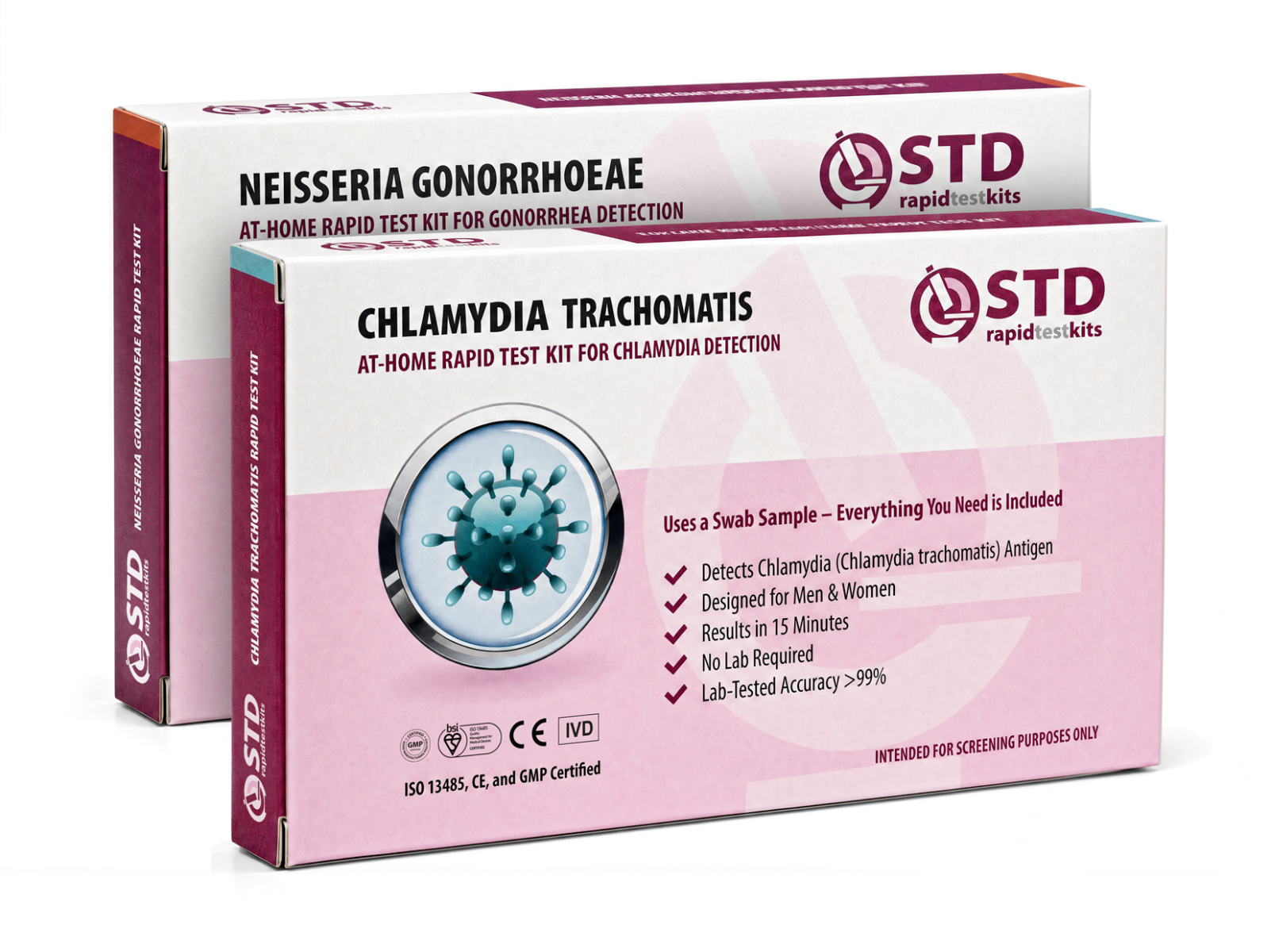
Testing is more accessible than it used to be. Most clinics offer rapid tests with same-visit results for chlamydia, gonorrhea, syphilis, and HIV. Telehealth providers can order labs and route prescriptions without an in-person appointment. And at-home rapid lateral-flow tests let you collect a sample privately and read results within minutes.
A few things to know about how home rapid tests work:
- They use lateral-flow chemistry, the same general approach as a pregnancy test or a COVID-19 antigen test, tuned for specific STI antigens or antibodies.
- They are screening tools. A positive result is best confirmed by a laboratory NAAT or follow-up clinical workup.
- They depend on testing within the right window. A negative result a few days after exposure is not reassuring; the pathogen may not yet be detectable.
- They are most useful for the questions they are designed to answer: bacterial STIs that produce detectable antigens (chlamydia, gonorrhea), or blood-borne infections with established antibody timelines (HIV, syphilis, hepatitis B, hepatitis C, HSV).
A combination kit covers multiple infections from one sample collection session, which is often the right choice when symptoms are nonspecific and you want to rule out the most common culprits at once. NHS guidance notes that STIs can take up to several weeks to show up on a test and advises waiting about 7 weeks before testing if you have no symptoms; if symptoms are present, test sooner.
Home rapid STI tests use lateral-flow chemistry, the same general approach as a COVID-19 antigen test. They are screening tools: a positive result is a strong signal worth confirming with a laboratory NAAT (nucleic acid amplification test), and a negative result early in the window period should be repeated once you reach the recommended detection window. The two technologies are complementary; the home test offers speed and privacy, and the lab NAAT offers higher analytical sensitivity for confirmation.
FAQs
- Can a genital rash be something other than an STD?
- Yes. Razor bumps and folliculitis, contact dermatitis, yeast, jock itch, eczema, psoriasis, heat rash, and bacterial vaginosis (in vulvar areas) are all common non-STI causes. Testing is the only way to rule out infection definitively.
- How can I tell razor bumps from herpes?
- Razor bumps appear in hair-bearing areas within 1 to 2 days of shaving, are tender and pimple-like, and resolve with friction reduction. Herpes lesions cluster as painful blisters or shallow ulcers that may recur in the same area, often preceded by tingling or burning. A swab of an active lesion is the surest way to confirm or rule out herpes.
- What does normal vaginal discharge look like?
- Clear, white, or pale yellow with a mild scent and a consistency that shifts across the menstrual cycle (stretchy and clear around ovulation, sparse and thick after menstruation). Cottage-cheese discharge with intense itch suggests yeast. Thin gray-white discharge with a fishy odor suggests bacterial vaginosis. Yellow, green, or foul-smelling discharge warrants STI testing.
- How long after a possible exposure should I test?
- The short version: chlamydia and gonorrhea become detectable on most tests by 1 to 2 weeks; syphilis blood tests turn positive by 3 to 6 weeks; an HIV fourth-generation antigen-antibody test detects from 18 to 45 days after exposure, with 45 days considered reliably accurate; herpes antibody tests typically open at 6 weeks and are considered reliable by 12 weeks, so test at 6 weeks if symptoms are present and retest at 12 weeks to confirm a negative result. If you have an active lesion, a clinic swab or PCR can be analyzed the same visit while the lesion is still present.
- My symptoms cleared up on their own. Should I still test?
- If you removed an obvious trigger (new soap, tight clothing, fresh shave) and you have not had unprotected sex with a new partner in the relevant window, testing may not be necessary. If you did have a recent exposure or any uncertainty remains, screen anyway. Some STIs clear initial symptoms while the underlying infection persists, syphilis being the most notable example.
- Can stress cause itching or a rash?
- Yes. Stress can amplify skin sensitivity, trigger or worsen eczema, and lower the threshold for itch perception. It can also disrupt sleep and immunity in ways that nudge yeast or BV into a flare. The rash is real; stress can amplify the inflammation behind it.
- Are at-home rapid tests accurate?
- When used within the recommended window after exposure and following the kit's instructions, FDA-cleared and CE-marked rapid lateral-flow tests have high agreement with laboratory results. They are screening tools, so positives should be confirmed by a clinic or lab, and a negative result early in the window period should be repeated.
- Do I need to see a doctor if I test positive at home?
- Yes. A positive home test result calls for clinical confirmation, treatment (most bacterial STIs need prescription antibiotics), and partner notification. Many infections can also be retested after treatment to confirm clearance. A clinician visit is also the right step if symptoms include severe pain, fever, ulcers, body-wide rash, or pregnancy.
Product: STD-8
- U.S. Centers for Disease Control and Prevention. STDs overview, asymptomatic infection patterns, and screening recommendations for chlamydia, gonorrhea, syphilis, and HIV.
- World Health Organization. Sexually Transmitted Infections fact sheet: source for the asymptomatic-presentation pull-quote and global burden context.
- UK National Health Service. Sexually transmitted infections overview: source for the recommendation to wait about 7 weeks before testing if you have no symptoms, and to test sooner when symptoms are present.
- Mayo Clinic. Contact dermatitis: symptom pattern, common triggers (soaps, fragranced products, fabric, latex), and timeline for resolution after the irritant is removed.
- Mayo Clinic. Vaginal yeast infection: prevalence, classic discharge and itch pattern, and clarification that it is not classified as a sexually transmitted infection.
- DermNet. Genital skin problems: differential diagnosis covering both STI and non-STI causes of genital rashes, including folliculitis, dermatitis, tinea, and herpes simplex.
