Published: August 2025 | Last updated: May 2026 | Editorial review and quality control: Martina N.
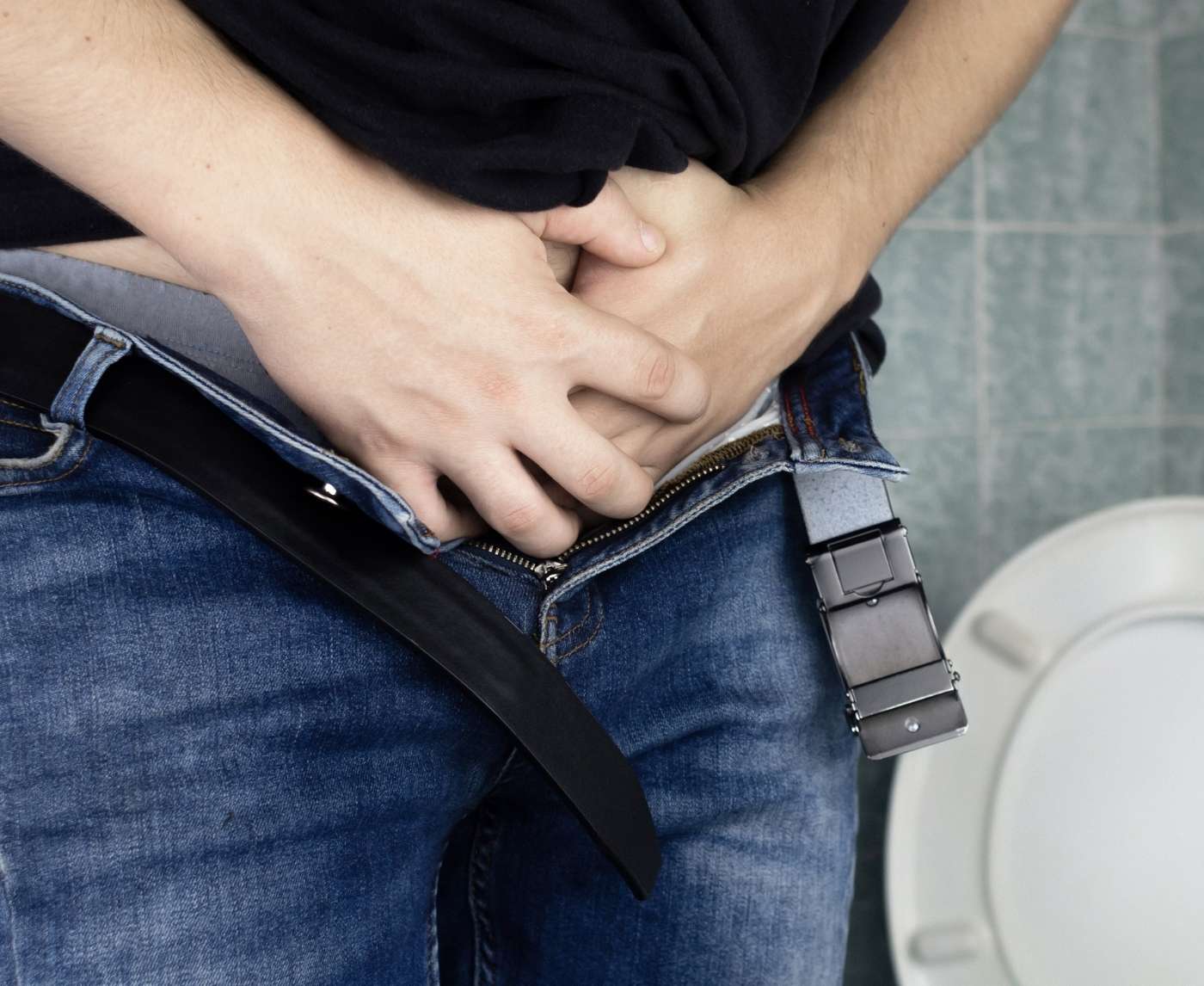
The same burning sensation when you pee can come from very different sources. A bladder infection from ordinary gut bacteria. An early chlamydia infection that started a week ago. Gonorrhea picked up after a recent encounter. Even a reaction to a new soap, spermicide, or lubricant. From the outside, all of these feel similar. From the inside, the body has only a small handful of ways to flag irritation in the urinary tract, and several very different infections can press the same alarm.
This guide walks through what burning urination usually means, when a urinary tract infection is the most likely explanation, when sexually transmitted infections deserve a closer look, and how a simple test sequence moves you from guessing to a confirmed answer. If you have a kit at home or you are deciding which one to order, the same logic helps you choose what to test for first.
Key Takeaways
- Burning urination can come from a UTI, chlamydia, gonorrhea, trichomoniasis, or non-infectious irritation. Symptoms alone rarely tell you which.
- A negative UTI test plus persistent burning is the most common reason people end up testing for STIs. If symptoms started within a few weeks of new sexual contact, STI testing is the next reasonable step.
Why UTIs and STIs Feel So Similar
The urethra is a short tube that carries urine out of the body. In people with vaginas, it sits just above the vaginal opening. In people with penises, it runs the length of the shaft. In both cases, it shares space and nerves with the reproductive tract. When anything inflames the lining of the urethra, the nerves there fire the same way regardless of what caused the inflammation: a stinging, scratching, or hot sensation as urine passes through.
Urinary tract infections are usually caused by bacteria from the gut, most often Escherichia coli, that travel up the urethra and multiply in the bladder. The result is cystitis: inflamed bladder lining, frequent urination, urgency, and a deep pelvic pressure that does not fully resolve after peeing.
Sexually transmitted infections that cause burning urination work through a different door. Chlamydia (Chlamydia trachomatis) and gonorrhea (Neisseria gonorrhoeae) infect the urethra itself, a condition clinicians call urethritis. Trichomoniasis is caused by a parasite that irritates the urethra and the surrounding tissues. The pathogen is different in each case, but the urethra responds the same way: inflammation, swelling, and burning during urination.
That is the core of the confusion. Two infections with completely different organisms, different transmission, and different treatments produce a nearly identical first symptom. Per the CDC's overview of sexually transmitted infections, urethritis from chlamydia or gonorrhea is frequently misattributed to a UTI when the actual cause is sexually transmitted. The body simply does not have a distinct signal for each pathogen.
Another wrinkle: many people, especially women, can have both possibilities on the table at the same time. A urinary tract infection is more common in people with shorter urethras, but the same person can also have a recent sexual exposure that introduces a different organism. The two are not mutually exclusive, and the symptom map overlaps almost completely. That is why clinicians often resist guessing from symptoms alone and lean on testing to separate the causes.
Urethritis from chlamydia or gonorrhea is frequently misread as a urinary tract infection on the first clinic visit. A negative urine culture in someone who still has burning urination is the textbook moment to broaden testing to chlamydia, gonorrhea, and trichomoniasis.
Where the Confusion Starts: Symptom Overlap
If burning was the only symptom, the diagnostic question would be nearly impossible to answer without a test. In reality, a UTI and an STI often bring along a few extra clues. The trouble is that the most useful ones, like the presence of discharge or pelvic pressure, also appear in both groups. Some symptom combinations lean more toward bacterial cystitis. Others lean more toward sexually transmitted urethritis. None are conclusive.
Pelvic or bladder pressure that sits behind the pubic bone is more typical of a UTI. Pain during sex, lower abdominal aching that radiates rather than localizes, or unusual discharge from the urethra or vagina shifts suspicion toward an STI. The table below shows how the same symptoms occur in both categories with different frequencies.
| Symptom | More Common With UTIs | More Common With STIs |
|---|---|---|
| Burning during urination | Very common | Very common |
| Frequent urge to urinate | Very common | Sometimes present |
| Pelvic or bladder pressure | Common | Occasional |
| Unusual genital discharge | Rare | Common with chlamydia or gonorrhea |
| Pain during sex | Occasional | More common |
| Symptoms after a new sexual partner | Possible | Strongly suggestive of STI exposure |
Is burning when I pee a UTI or an STI?
It can be either. A urinary tract infection is the most common cause, but chlamydia, gonorrhea, and trichomoniasis produce the same urethral burning. The most reliable way to tell them apart is timing (a UTI typically appears within a day or two of exposure, an STI usually a week or more later) and a short test sequence: rule out a UTI first with a urine sample, then test for STIs if the urine test is negative or the symptoms persist.
What Timing Sometimes Tells You
Each infection has its own typical incubation period, the gap between exposure and the first noticeable symptoms. Timing does not prove a diagnosis, but it narrows the field.
A typical UTI develops fast. Bacteria enter the urethra, multiply in the bladder, and produce symptoms within roughly a day or two. People often connect the dots: a long road trip, less water than usual, fewer bathroom breaks, then burning the next morning.
Sexually transmitted infections move on a slower clock. Gonorrhea typically produces symptoms in the days after exposure when it produces symptoms at all. Chlamydia is the trickier one: the CDC's chlamydia overview notes that when symptoms do occur, they may not appear for several weeks after sex, and many people never develop noticeable symptoms before complications begin. Trichomoniasis can take a few days to nearly a month to surface.
If burning started within a day of a long flight or after holding your bladder all day, a UTI is the simpler explanation. If burning started a week or two after a new sexual partner, the math leans the other way. If you have neither narrative, testing is the cleanest way through.
| Condition | Typical Symptom Timing | Common Signs |
|---|---|---|
| UTI (bacterial cystitis) | 1 to 3 days after bacteria enter the urinary tract | Burning urination, urgency, bladder pressure |
| Chlamydia | Often several weeks after exposure (frequently asymptomatic) | Mild urethral burning, discharge, pelvic discomfort |
| Gonorrhea | 2 to 7 days after exposure | Burning urination, discharge, genital irritation |
| Trichomoniasis | 5 to 28 days after exposure | Irritation, frothy discharge, itching, burning |
When Symptoms Follow a New Partner
One of the most common ways people end up confused between UTI and STI is the timing right after a new sexual relationship. Sex itself can cause a UTI: friction, bacterial transfer from the genital area to the urethra, even dehydration during a long weekend. So burning a day or two after sex is not automatically an STI signal.
The same sexual exposure can also introduce chlamydia or gonorrhea, though. If burning starts in the first 24 to 48 hours, a UTI is more likely. If burning starts a week or more after the encounter and does not respond to drinking more water, the picture shifts. If discharge from the urethra or vagina starts at the same time as the burning, especially with no urgency or bladder pressure, urethritis from chlamydia or gonorrhea moves up the list.
This is pattern recognition, not blame. Many sexually transmitted infections produce no symptoms at all in the first weeks, which is why the CDC recommends regular screening for sexually active adults under 25 and for anyone with new or multiple partners.
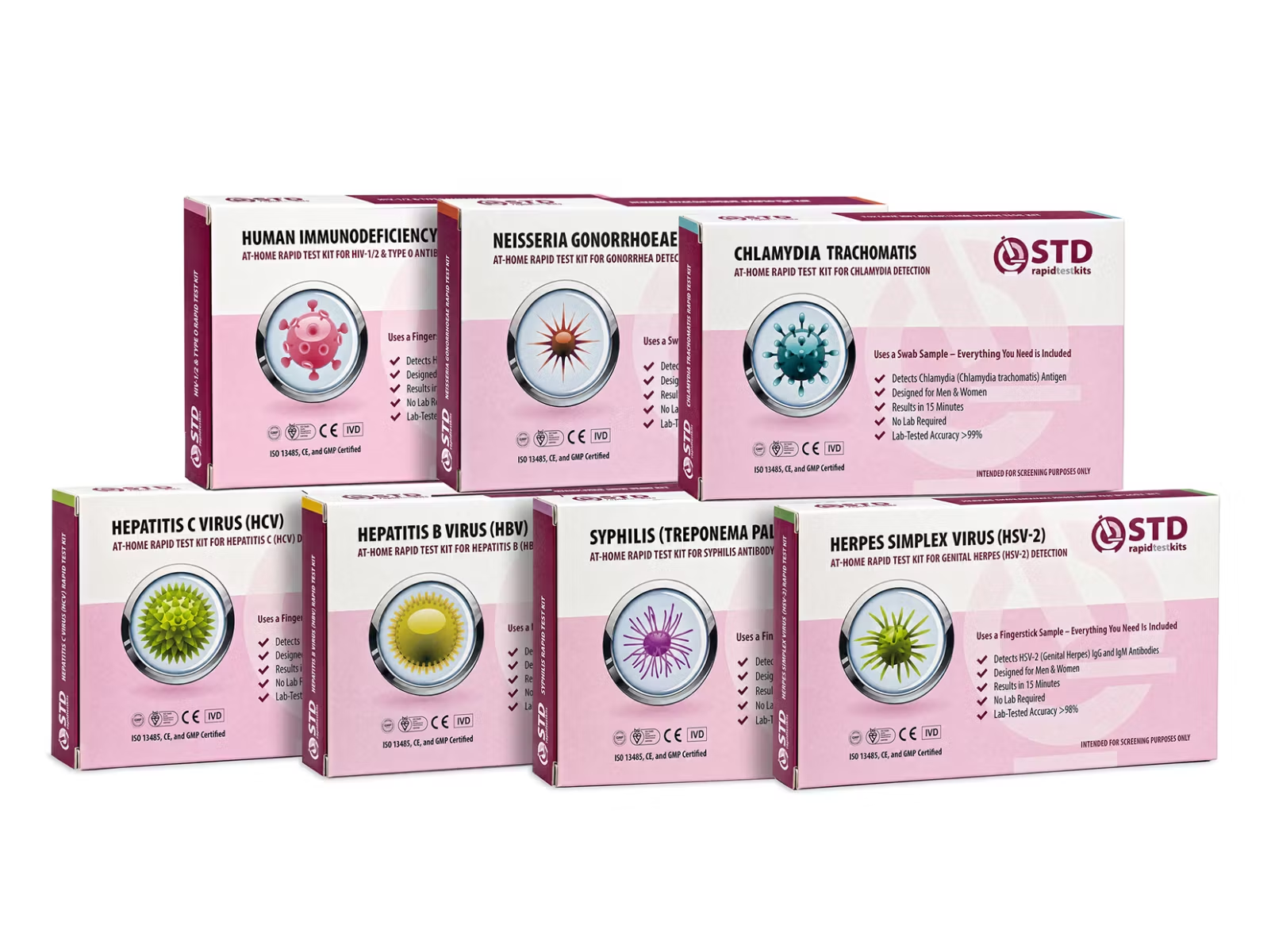
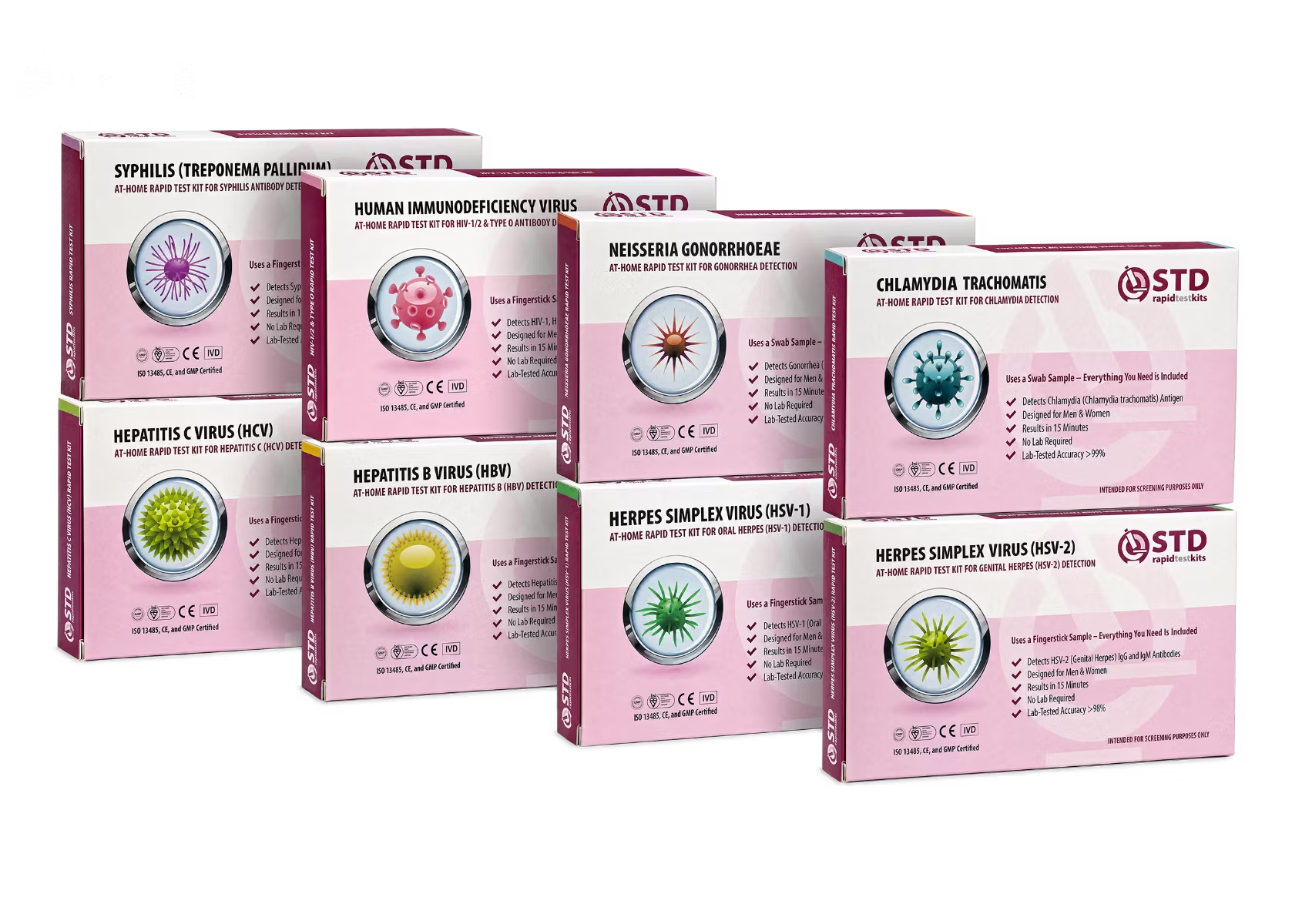
Note: this site sells at-home rapid STI test kits, and the products linked in this article are from our own catalog. They are recommended only where the kit's actual sample type and target infections fit the reader's concern.
When a Negative UTI Test Leaves You Searching
One of the most disorienting clinical moments is a negative UTI test with ongoing symptoms. The urine dipstick or urine culture comes back clean, but the burning has not faded. This is one of the strongest signals that something else, often an STI, deserves a look.
A standard urine culture grows the bacteria that cause classic UTIs. It does not look for chlamydia, gonorrhea, or trichomoniasis. Those need separate molecular tests, typically a NAAT (nucleic acid amplification test) run in a lab. So a clean urine culture does not rule out an STI as the source of urethral burning. It only rules out the most common UTI bacteria.
A negative UTI test plus persistent burning prompts most clinicians to widen the investigation. Other possibilities worth considering: irritation from soaps, spermicides, or lubricants; vaginal infections like yeast or bacterial vaginosis in people with vaginas; urethral irritation from a recent procedure or catheterization; and rarely, interstitial cystitis or other non-infectious conditions. The most common single resolution, though, is an STI that the urine culture did not look for.
If you have already had a UTI test come back negative and the burning is still there a few days later, that is the right time to add STI testing, ideally for chlamydia, gonorrhea, and trichomoniasis at minimum.
How Testing Actually Sorts It Out
Different infections need different tests. Urinary tract infections are typically diagnosed with a urine sample: a dipstick check at the clinic for nitrites and leukocyte esterase, then a culture if needed to identify the specific bacteria and the antibiotic that will treat them.
Chlamydia and gonorrhea are diagnosed with molecular tests. The clinical gold standard, per the CDC's STI treatment guidelines, is a NAAT performed on a urine sample, vaginal swab, or urethral swab. NAATs detect the genetic material of the pathogen directly and are highly sensitive even when symptoms are mild or absent.
At-home rapid test kits use a different chemistry. They are lateral-flow immunoassays that detect either pathogen antigens (for chlamydia and gonorrhea swab tests) or antibodies the immune system produces (for blood-based tests like HIV or syphilis). A positive home rapid test is informative, and most sexual-health clinics still recommend confirming a positive at-home result with a lab NAAT before starting treatment, because the lab test is more sensitive and feeds into partner notification and treatment workflows.
If burning urination is your only symptom and you want to triage the cause without a clinic visit, the practical sequence is: rule out a UTI first with a urine dipstick (available at most pharmacies), and if negative, screen for the two STIs most likely to produce urethritis (chlamydia and gonorrhea). An at-home rapid kit that covers both is usually enough to get you to a confirmed diagnosis and the right treatment.

What Clinicians Actually Watch For
Even though symptoms alone rarely settle the diagnosis, experienced clinicians use a few subtle patterns to decide which tests to order first. These patterns shape the workup without replacing it.
Bladder pressure that sits low in the pelvis and pairs with strong, frequent urgency is more typical of cystitis. Burning that occurs with visible discharge from the urethra or vagina shifts the picture toward gonorrhea or chlamydia. Symptoms that develop within a week of a new sexual partner raise the index of suspicion for an STI even when the urine test is clean. Symptoms that improve quickly with a first-line UTI antibiotic confirm bacterial cystitis after the fact.
These observations are clinical starting points, not substitutes for a test result. The confirmed answer still comes from a urine culture, a swab NAAT, or a verified rapid test.
| Observation | What It Often Suggests |
|---|---|
| Strong bladder pressure with frequent urination | More typical of a UTI |
| Burning paired with visible discharge | Often linked to chlamydia or gonorrhea |
| Symptoms beginning within a week of a new sexual partner | Raises suspicion of STI exposure |
| Symptoms improving fast on a UTI antibiotic | Consistent with bacterial cystitis |
| Persistent burning despite a negative urine culture | Prompts STI testing |
Why Waiting and Guessing Often Backfires
Most people try to solve burning urination themselves before they test. Cranberry juice, more water, avoiding caffeine, hoping the symptom passes in a day or two. For a mild UTI caught early, these comfort measures sometimes help while the body resolves a borderline infection.
Two things make waiting riskier than people expect. First, an untreated UTI can climb the ureters and reach the kidneys, where it becomes pyelonephritis: fever, flank pain, and a serious infection that usually requires IV antibiotics. Second, sexually transmitted infections like chlamydia frequently produce no symptoms after the initial irritation resolves, but the infection itself does not resolve. The CDC notes that untreated chlamydia in people with vaginas can progress to pelvic inflammatory disease, which carries a real risk of long-term fertility consequences. Untreated gonorrhea behaves similarly and can spread beyond the reproductive tract.
Mild burning that fades within a day, responds to hydration, and never returns is usually self-limiting. Burning that persists more than two or three days, gets worse, or comes back is the point where guessing becomes the more expensive option. A urine dipstick result takes minutes, and an at-home rapid STI kit typically returns a result in about 15 minutes.
Chlamydia is known as a silent infection because most infected people have no symptoms. If symptoms do occur, they may not appear until several weeks after exposure.
From Confusion to Clarity
The hardest part of burning urination is rarely the burning itself. It is the uncertainty. Not knowing whether the cause is a routine bladder infection that resolves with three days of antibiotics, or a sexually transmitted infection that needs a different treatment and a partner conversation, drives most of the late-night anxiety around this symptom.
Testing closes that gap quickly. A urine sample identifies UTI bacteria. A swab or rapid kit identifies the most common urethral STIs. The combination usually returns a clear answer within a day. Once you know whether the cause is a UTI or an STI, the treatment path is straightforward, and most cases resolve fully within one to two weeks of starting the right antibiotic.
Step 1. Rule out a UTI first. A pharmacy urine dipstick or a clinic urine culture checks for the common bladder-infection bacteria.
Step 2. If the urine test is negative or the burning persists, add an STI panel. At minimum: chlamydia, gonorrhea, and trichomoniasis. An at-home rapid kit covering both swab and blood markers is enough for most readers; confirm any positive result with a lab NAAT before starting treatment.
FAQs
- How do I know if the burning is a UTI or an STI?
- Most people cannot tell from the sensation alone. Burning urination is one of the body's most generic distress signals: a UTI can cause it, and so can chlamydia, gonorrhea, trichomoniasis, or non-infectious irritation. The takeaway is that symptoms are clues, not verdicts. A short test sequence is what separates the possibilities reliably.
- Should I worry if it burns when I pee but I feel fine otherwise?
- It is worth paying attention. Burning sometimes appears as the very first signal of an infection, before discharge, fever, or any other change. Many chlamydia infections produce only mild urethral burning before becoming silent again, which is why screening guidelines push for testing even when the rest of the body feels normal.
- Why do clinicians test for STIs when I think I have a UTI?
- Because experience and CDC guidance both warn against guessing. Burning urination is shared by several infections, and treating the wrong one wastes a course of antibiotics while the real cause keeps progressing. Asking about STIs is not a judgment, it is a way to cover the possibilities so nothing slips through.
- Can dehydration actually make it burn when you pee?
- Yes. Concentrated urine is more acidic and contains more solutes, which can sting on its way past sensitive urethral tissue. If hydration improves the burning within a day and no other symptoms appear, dehydration is often the explanation. Persistent burning despite drinking enough water deserves testing.
- What if my UTI test came back negative but it still burns?
- It usually means the cause is something the urine culture did not look for. Standard UTI tests do not detect chlamydia, gonorrhea, or trichomoniasis. A clean urine result with ongoing symptoms is the textbook moment to add STI testing, whether through a clinic visit or an at-home rapid kit.
- Is burning after sex always a sign of an STI?
- No. Friction during sex, condom lubricants, spermicides, or a new soap can irritate the urethra and cause one or two days of mild burning. If the burning resolves on its own within 48 hours, friction or irritation is the more likely cause. Burning that lasts longer, intensifies, or pairs with discharge is where testing matters.
- Can someone have a UTI and an STI at the same time?
- Yes, and it happens more often than people expect. Sex itself can introduce both gut bacteria (UTI) and an STI organism (chlamydia, gonorrhea, trichomoniasis) within the same exposure window. When the symptoms are intense or do not respond to UTI antibiotics, clinicians often test for both at once rather than assuming a single cause.
- How quickly should I test if symptoms appear?
- Burning that lasts more than 48 hours, intensifies, or pairs with discharge, fever, flank pain, or pelvic pressure is the threshold for testing. Earlier is fine if the burning is severe or if a recent sexual encounter raises specific questions. Most STIs are caught earliest when the first symptom prompts a test rather than a wait-and-see approach.
How we sourced this article: This guide synthesizes current guidance from major public-health authorities including the U.S. Centers for Disease Control and Prevention, the World Health Organization, the NHS, and the Cleveland Clinic. Symptom descriptions, incubation periods, and testing recommendations are cross-checked against the most recent published clinical references from those organizations.
- U.S. Centers for Disease Control and Prevention. STD overview, transmission and screening guidance for the most common sexually transmitted infections.
- U.S. Centers for Disease Control and Prevention. About Chlamydia: symptoms (may not appear until several weeks after sex), asymptomatic infection, and complication risk.
- U.S. Centers for Disease Control and Prevention. About Gonorrhea: symptoms, testing samples, and follow-up after treatment.
- National Health Service (UK). Urinary tract infection overview: common causes, symptom presentation, and treatment principles.
- Cleveland Clinic. Urinary tract infection (UTI): symptoms, causes, diagnostic tests, and complications including pyelonephritis.
- World Health Organization. Sexually transmitted infections fact sheet: global epidemiology, transmission, and prevention guidance.
