






Quick Answer: Testicle pain without discharge can be caused by STDs like chlamydia and gonorrhea, but also by non-STD conditions like epididymitis or torsion. Testing is key to getting the right answer and treatment.
When There’s No Discharge, But Something Still Feels Off
For many men, STD anxiety hinges on one thing: visible symptoms. If there’s no pus, no burning, no classic “it hurts when I pee,” it must be fine, right? Not exactly. Some infections, especially chlamydia and gonorrhea, can work their way silently into the epididymis, a small coiled tube at the back of each testicle that stores and carries sperm. When that gets inflamed, it’s called epididymitis. And it can show up as pain, swelling, or a feeling of heaviness in the testicle, often without any discharge at all.
One Reddit user wrote, “I had this dull ache in my left testicle for a week. I was convinced it was nothing. Then my doctor told me it was epididymitis from untreated chlamydia. I didn’t even know I had an STD.” Stories like that aren’t rare. In fact, an estimated 50% of men with chlamydia don’t show any symptoms at all, but can still develop complications like testicular pain.
The problem? That same pain could also be a pulled muscle, a hernia, or even something more serious like testicular torsion, a medical emergency where the spermatic cord twists, cutting off blood flow. That’s why you need to know when to test, when to wait, and when to get immediate care.
What Infections Can Cause Testicle Pain Without Discharge?
Here’s where it gets tricky: several different conditions can produce the same symptom. You might feel a mild ache, a sudden stab, or just a lingering heaviness. The discharge may be absent, but that doesn’t mean you’re in the clear. Below is a breakdown of the most common causes and whether they’re linked to STDs.
| Condition | STD-Related? | Other Symptoms? | Urgency Level |
|---|---|---|---|
| Chlamydia | Yes | Mild pain, possible swelling, burning may occur later | Test within 7–14 days of exposure |
| Gonorrhea | Yes | Can cause epididymitis, pain in groin or scrotum | Test within 7–14 days of exposure |
| Epididymitis | Sometimes | Swollen testicle, tender to touch, fever possible | Needs medical evaluation if pain worsens |
| Testicular torsion | No | Sudden, severe pain; swelling; nausea | Emergency, go to ER immediately |
| Hernia | No | Bulge in groin, worsens with lifting/coughing | Schedule medical exam |
Table 1. Conditions that may cause testicle pain without discharge, with STD and non-STD origins.
If you're experiencing pain and have had recent sexual contact, especially unprotected, it’s worth ruling out infections first. Many at-home STD tests now include chlamydia and gonorrhea, which are two of the most common culprits.
People are also reading: When It Burns but Your Gonorrhea Test Is Negative
Real Talk: A Case That Could Be You
Marcus, 28, had been celibate for a while. Then came a vacation, a new fling, and a few drinks too many. “We used condoms, but not the whole time,” he admitted. A few days later, he noticed a dull ache in his right testicle. No discharge. No redness. Just discomfort that wouldn’t go away. He waited another three days before deciding to test, using an at-home combo kit he ordered online.
The result? Positive for chlamydia. “I didn’t even know that could be a thing without any other symptoms,” Marcus said. His doctor confirmed it had likely settled in his epididymis. A short round of antibiotics cleared it up, but the experience left him rattled. “If I’d waited any longer, I could’ve messed up my fertility.”
That’s the danger of relying on “classic” STD symptoms to tell you when something’s wrong. Not all infections make a dramatic entrance. Some slip in silently, and do their damage behind the scenes.
Check Your STD Status in Minutes
Test at Home with Remedium7-in-1 STD Test Kit
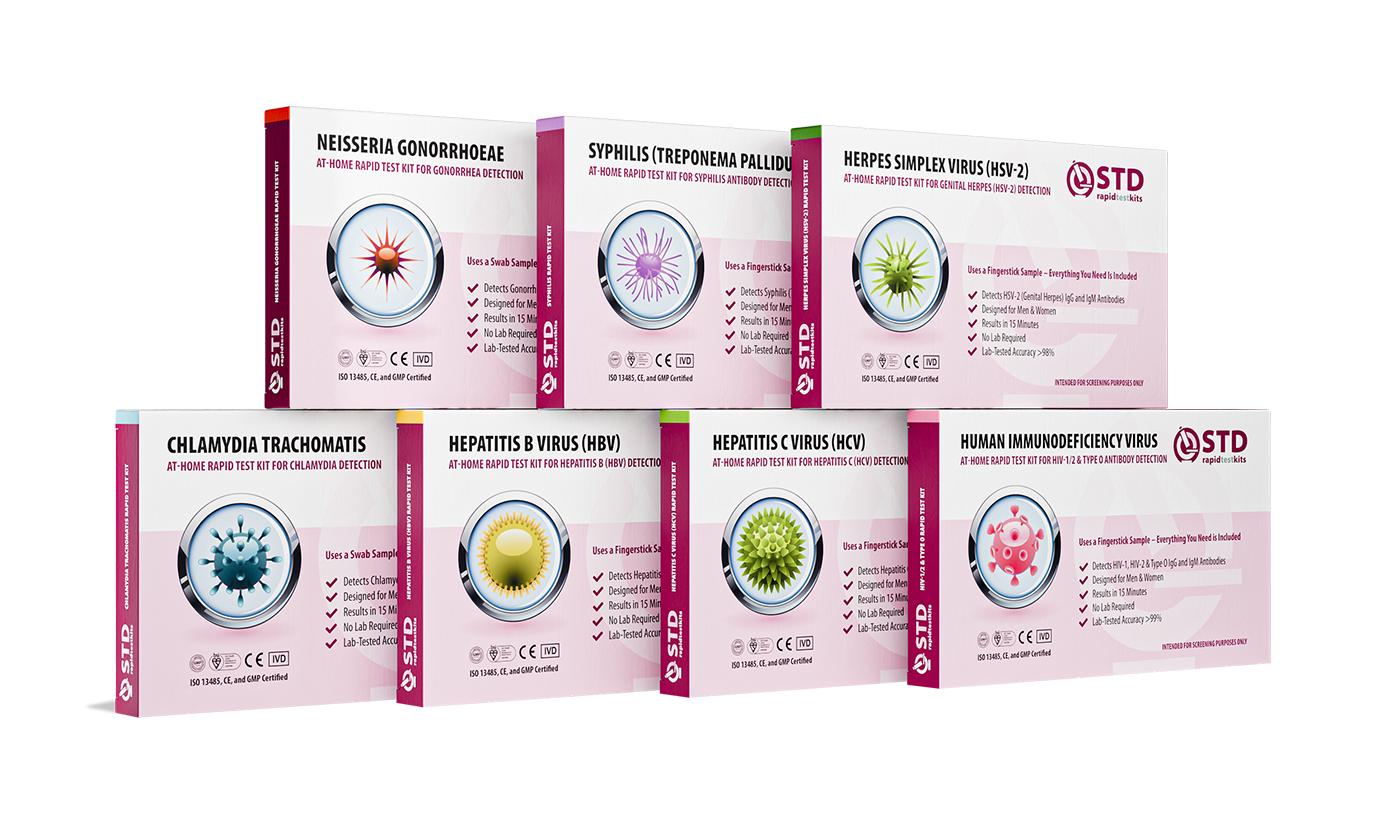
 For Men & Women
 Results in Minutes
 No Lab Needed
 Private & Discreet
Order Now $129.00 $343.00
For all 7 tests
How Testing Works When Symptoms Are Vague
If your testicle hurts but there's no discharge or visible sign, you might wonder: will an STD test even work? The answer is yes, but the timing matters. Most STD tests check for the presence of the bacteria or virus itself (NAAT, antigen tests), or for antibodies your body produces in response. Here’s what you need to know:
For infections like chlamydia and gonorrhea, a urine sample or a swab is enough. At-home kits like the Combo STD Test Kit can pick up these infections as early as 7 days post-exposure, though testing after 14 days gives more reliable results. If the cause is herpes, blood or swab-based testing may be needed, but herpes is rarely the cause of isolated testicle pain unless lesions are present.
Other causes, like torsion or hernias, require physical exams and imaging, not swabs. That’s why testing is just one part of the process. If the test is negative but pain continues or worsens, a doctor visit is still essential.
If you’re stuck in the “wait and see” window, testing at home can offer clarity while avoiding the stress of urgent care. And if the pain is getting worse fast? Skip the test for now and go straight to a provider.
Negative Test but Still in Pain? Here's What to Know
So let’s say you did everything right. You took an at-home test, followed the instructions, waited the appropriate number of days after exposure, and the result came back negative. But your testicle still hurts. That gap between “negative” and “not okay” can feel like psychological torture.
The truth is that timing matters. If you tested within a week of exposure, you may have caught the infection too early. Most STDs have what's called a “window period”, the time between infection and when a test can reliably detect it. During that window, your body may not have built up enough markers for the test to find, especially if it's an antibody test or if you used a test outside its optimal timing.
We’ve seen this play out many times. Take Julien, 33, who tested on day 5 after an unprotected encounter. “It was negative,” he said, “so I relaxed. But the testicle ache came back even stronger a week later.” When he retested on day 16, both chlamydia and gonorrhea came back positive. His first test wasn’t wrong, it was just early.
That’s why most sexual health clinics and test kit providers recommend retesting around 14 days after exposure, even if you’ve already tested once. It’s not about second-guessing yourself, it’s about catching what may have been missed the first time.
Table: STD Test Timing vs Onset of Testicle Pain
| Scenario | Time Since Exposure | Ideal Test Timing | Retest Needed? |
|---|---|---|---|
| Unprotected sex, pain begins within 3 days | 0–3 days | Too early, wait at least 7–10 days | Yes, after 14 days |
| Protected sex, pain begins 1 week later | 7 days | Test now, but retest in 7 more days | Yes |
| Previous STD, pain returned after treatment | 14+ days | Test immediately | Maybe, based on provider advice |
| Tested negative on day 5, pain worsened | 5–7 days | Retest on day 14+ | Yes |
Table 2. When to test and retest if testicle pain develops after sexual activity.
Testing is a snapshot in time, not a crystal ball. Symptoms that persist or worsen deserve another look, even if your results were negative the first time. Especially when fertility or long-term health is on the line.
Why At-Home Testing Is a Gamechanger for Pain + Privacy
There’s something uniquely vulnerable about trying to explain testicle pain to a stranger in a clinic waiting room. And if your symptoms are vague, no discharge, no rash, some providers may downplay your concerns. That’s where at-home testing can be a literal relief.
For someone like Darius, 25, testing from home meant the difference between knowing and spiraling. “I was too embarrassed to go to urgent care. I didn’t have a fever or anything, but I couldn’t ignore the ache.” He ordered an at-home combo kit that tested for chlamydia, gonorrhea, and trichomoniasis. “It gave me peace of mind fast, and I followed up with my doc when I had results in hand.”
Today’s kits are discreet, accurate, and designed for situations exactly like this, when something feels off, but you’re not sure what. The Combo STD Test Kit is one of the most comprehensive options, screening for multiple infections at once using simple urine or blood samples you collect yourself.
And no, you don’t need to wait for a dramatic discharge to justify using one. Pain itself is enough of a reason.
If It’s Not an STD, What Else Could It Be?
Sometimes, the test comes back negative. Twice. You’ve waited the right amount of time, tested for all the common infections, and still, your testicle doesn’t feel right. In these cases, you’re likely dealing with a non-STD issue. But that doesn’t mean you can ignore it.
Inguinal hernias are surprisingly common in men under 40, especially those who do manual labor or weightlifting. They don’t always present with a visible bulge. Instead, you might feel a dull ache in the testicle or groin that worsens with movement. These need surgical correction, not antibiotics.
Testicular torsion is rarer, but critical to rule out. It usually causes sudden, severe pain and swelling, and often occurs in teens or young adults. If you ever feel intense, stabbing testicle pain that comes on quickly, especially with nausea, skip the test and go straight to the ER.
Then there are varicoceles (enlarged veins in the scrotum), hydroceles (fluid buildup), or even nerve entrapment. These are medical conditions that STD tests won’t detect, but that a urologist can help diagnose. Pain deserves an answer, even if it’s not an infection.
This is where dual care comes in: start with an STD test to rule out common infections. If the results are clear and the pain doesn't go away, see a doctor who can look for structural causes. It's not wrong to stand up for your own body.
Preventing Future Pain and Infections
Once you’ve been through this kind of scare, you’re probably not eager to repeat it. That’s a good thing, because pain is a powerful motivator for prevention. The simplest way to avoid repeat issues? Use protection consistently, get tested with new partners, and don’t ignore mild symptoms just because they seem minor.
Remember that chlamydia and gonorrhea are incredibly common, especially in men under 30, and they don’t always present with obvious signs. Even if your last partner seemed healthy, STDs can live quietly in the body and spread during oral, anal, or vaginal sex.
Testing regularly and talking about it with your partners isn’t overkill, it’s care. And if something feels off, you deserve answers without shame. Whether it’s a testicle ache or just an uneasy feeling in your gut, trust your instincts. Your health is worth investigating.
If your head keeps spinning, peace of mind is one test away. You can order a discreet Combo STD Test Kit here and get answers in minutes, not weeks.
People are also reading: Can You Have an STD and Not Know It? Here’s What to Watch For
Why Testicle Pain Feels So Private, And So Terrifying
No one wants to talk about their balls hurting. Not to friends, not to doctors, and definitely not on a first date. That silence can lead people to delay care, sometimes for weeks, hoping the ache will just go away. But the truth is, pain in your genitals hits differently. It’s not just physical. It’s tied to masculinity, fertility, confidence, and fear.
Many men grow up thinking they should “tough it out,” especially if the pain isn’t excruciating. But when it’s your testicles, silence can be costly. Left untreated, some STDs can cause long-term damage to the epididymis or lead to chronic pelvic pain. Others, like torsion, can permanently damage the testicle within hours if ignored.
Andre, 30, said it best: “I felt like talking about it made me weak. Like, what kind of guy complains about a little ache down there? But it didn’t go away. It got worse. I finally saw someone and they told me it was epididymitis, probably from gonorrhea. I felt like an idiot for waiting, but also relieved to just have an answer.”
We get it. Pain in this area carries shame, fear, and more questions than answers. That’s why we write these articles the way we do, blunt, non-judgmental, and filled with stories from people who’ve been where you are.
Check Your STD Status in Minutes
Test at Home with Remedium6-in-1 STD Test Kit
 For Men & WomenResults in MinutesNo Lab NeededPrivate & Discreet
Order Now $119.00 $294.00
For all 6 tests
What Privacy Really Means When Testing from Home
One of the most common barriers to testing isn’t access, it’s embarrassment. The idea of peeing in a cup at a clinic, making small talk with a nurse, or waiting in a lobby where someone might recognize you… it’s enough to keep a lot of people silent. That’s where at-home testing becomes more than convenient, it becomes powerful.
With kits from sites like STD Rapid Test Kits, everything is mailed in discreet packaging. No labels. No pharmacy pickups. No awkward eye contact. You follow the instructions, collect your sample, and either read the results yourself or send it in for lab analysis, depending on the test type.
Even the billing is discreet, most providers use generic business names on your credit card statement. If you're living at home, traveling, or just not ready to tell anyone yet, this matters. Your health decisions should stay yours.
And if the result is positive? You’re not alone. Many infections are easily treated with a simple round of antibiotics. You can follow up with a provider, often via telehealth, and take action fast, without waiting for symptoms to get worse.
FAQs
1. Can you really have an STD with zero discharge?
Absolutely. Discharge is one possible sign, not a requirement. Infections like chlamydia and gonorrhea can hang out quietly in the body, especially in men, causing nothing more than a nagging ache or testicle pain. Think of it like your body trying to warn you in whispers before it starts shouting.
2. My testicle hurts a little after sex, but it’s not unbearable. Should I still test?
If it’s new, persistent, and you’ve had recent sex (even with a condom), yes, testing is smart. STDs don’t always come crashing in like a flu. Sometimes they show up as “huh, that’s weird” for days. That low-level ache could be your only clue before things escalate.
3. I tested negative, so why does it still hurt?
If you tested too soon after exposure (under 7 days), you might’ve missed the infection’s detectable window. Or your pain might not be from an STD at all. Could be a hernia, nerve issue, even a pulled groin. Either way, pain that lingers deserves a closer look.
4. How fast can testicle pain show up after a risky hookup?
Sometimes within 48 hours. Other times, it takes a week or more. It depends on the infection and your body. If it’s from something like gonorrhea, symptoms can pop up fast. But if you have chlamydia, it might take longer to notice, if you feel anything at all.
5. Is epididymitis always caused by an STD?
Nope. It can be, especially in younger guys. But older men or those who haven’t had recent sexual contact might get it from bladder issues, UTIs, or even heavy lifting. That’s why a proper test, and sometimes a physical exam, is so key.
6. Should I be freaking out about testicular torsion?
If the pain is sudden, sharp, and intense, yes, drop everything and go to the ER. Torsion is time-sensitive. But if the pain crept in slowly and doesn’t come with major swelling or nausea, it’s less likely. Still, don’t try to play doctor alone. Get checked if you're unsure.
7. Do I have to tell someone if I test positive?
Legally, maybe. Ethically, definitely. But that doesn’t mean you have to do it alone or awkwardly. There are anonymous text services, health departments that will notify for you, and even telehealth clinics that help you write the script. You’re not the first person to deal with this, and it doesn’t make you a bad partner.
8. Can I make this pain worse if I ignore it?
Short answer? Yes. If it’s an infection, it can move deeper into your reproductive system. Untreated chlamydia or gonorrhea has been linked to infertility and chronic pain. If it’s not an STD, ignoring it still risks nerve issues or permanent damage. Waiting rarely helps.
9. Is at-home testing even legit for this kind of thing?
100%. Especially for infections like chlamydia, gonorrhea, and trich. The NAAT testing methods used in most at-home kits are the same as those used in clinics. Just make sure to test at the right time, which is usually 7 to 14 days after being exposed. Privacy and accuracy are both good things.
10. I’m scared to find out. What if it’s something serious?
Being scared is okay. Normal, even. But not knowing won’t make it less serious. The best move is to get information, not play roulette with your health. Whatever’s going on, there’s a next step. And most of the time, it’s way simpler and more treatable than your brain is making it out to be.
You Deserve Answers, Not Assumptions
If you’re still reading, chances are you’re in that uncomfortable middle space, worried something’s wrong but unsure what to do. Pain, especially in a private area like your testicles, isn't just physical. It brings with it fear, shame, and even doubt about yourself. But here's the thing: you don't have to keep your pain to yourself.
Whether it's chlamydia, a pulled muscle, or something you can’t name yet, you deserve clarity. And it starts with a test. You can skip the awkward clinic wait, the side-eyes, the what-ifs, and get answers at home.
Don’t wait and wonder, get the clarity you deserve. The most prevalent STDs can be swiftly and covertly detected with this at-home combo test kit.
How We Sourced This Article: We combined current guidance from leading medical organizations with peer-reviewed research and lived-experience reporting to make this guide practical, compassionate, and accurate.
Sources
1. How Planned Parenthood Tests and Treats Chlamydia
2. CDC’s Guide to Treating Epididymitis from STIs
3. What You Should Know About Chlamydia Symptoms (CDC)
4. Epididymitis – Symptoms and Causes (Mayo Clinic)
5. Sexually Transmitted Infections (STIs) – Overview (WHO)
6. Testicle Pain – MedlinePlus Medical Encyclopedia (NIH)
7. Epididymitis – Symptoms and Causes (NHS.uk)
8. Epididymitis – StatPearls (NIH/NCBI Bookshelf)
9. Epididymitis – Diagnosis & Treatment (Mayo Clinic)
About the Author
Dr. F. David, MD is a board-certified infectious disease specialist focused on STI prevention, diagnosis, and treatment. He blends clinical precision with a no-nonsense, sex-positive approach and is committed to expanding access for readers in both urban and off-grid settings.
Reviewed by: K. Anwar, PA-C | Last medically reviewed: December 2025
This article is only for information and should not be used as medical advice.


