







Quick Answer: STD symptoms are often mild, delayed, or completely absent. Many people test positive for infections like chlamydia or gonorrhea even when they feel perfectly healthy. That’s why regular testing, not symptoms, is the only reliable way to know.
What Makes This Epidemic “Silent”?
At 24, Jordan thought he was doing everything right. He used protection most of the time, got tested once a year, and felt fine. It wasn’t until his partner tested positive for chlamydia that he found out he had it too, and had likely been carrying it for months without a clue. No pain, no discharge, no rash. Just a quiet infection that could have cost him his fertility if left unchecked.
This is the silent epidemic public health experts have been warning about: STDs that linger without triggering alarms. The most common culprits? Chlamydia, gonorrhea, and HPV, all capable of doing long-term damage while flying under the radar. By the time symptoms show up, if they ever do, the infection may already be spreading to others or causing complications like pelvic inflammatory disease or urethritis.
The problem is made worse by stigma. Many people avoid testing because they assume that "if something was wrong, I’d know." But bodies don’t always behave in textbook ways. Your immune system might suppress symptoms, or the infection might be localized in a way that’s hard to notice, like rectal or oral gonorrhea, which often show zero signs.
The Myth of “I’d Feel It If I Had Something”
Let’s say you have a mild cough. Would you immediately assume it’s pneumonia? Probably not. But we often treat sexual health differently, expecting fireworks-level signals before considering a test. In reality, many STDs begin like a whisper, if they say anything at all.
Here’s how that myth plays out: Someone gets a UTI diagnosis after sex and never considers it might be trichomoniasis. Or someone assumes irritation is from shaving, not from herpes entering a dormant phase. These moments of mislabeling are easy to understand, and easy to overlook, but they can delay treatment for months or even years.
Below is a breakdown of the most commonly “silent” STDs and their average symptom onset (if any):
| STD | Chance of No Symptoms | When Symptoms May Appear | Risks If Untreated |
|---|---|---|---|
| Chlamydia | ~70% in women, ~50% in men | 1–3 weeks (if at all) | Fertility loss, PID, epididymitis |
| Gonorrhea | ~50% in women, ~10% in men | 2–7 days | Infertility, joint infection |
| HPV | Most people show no symptoms | Months to years (if ever) | Cervical/anal/throat cancer |
| Trichomoniasis | ~70% asymptomatic | 5–28 days | Increased HIV risk, preterm birth |
Figure 1. Estimated symptom rates and complications of asymptomatic STDs. Based on CDC and WHO reports.
Symptoms are not the signal to wait for, they’re the wake-up call you want to avoid. Testing regularly is how you catch infections before they lead to complications or spread to partners.

People are also reading: How to Tell a Partner You Might Have Given Them an STD
Case Study: “I Only Got Tested Because of Him”
Aliyah, 32, hadn’t been tested since her last long-term relationship ended. “I just didn’t think I needed to,” she said. “I didn’t have any symptoms. I wasn’t sleeping around.” It was only after her new partner insisted they both get screened that she found out she had gonorrhea. She was shocked. “I hadn’t even had sex in months when we got together. I felt healthy.”
Aliyah’s story is heartbreakingly common, and highlights how relationship dynamics and trust can create blind spots. Even people in monogamous relationships can unknowingly carry infections from years prior. Or from a partner who wasn’t entirely truthful. This isn’t about blame, it’s about biology, and the unpredictability of transmission.
If you’ve ever told yourself “I’m not the type to have an STD,” consider this: STDs don’t discriminate. They don’t care about your relationship status, gender identity, number of partners, or lifestyle. They only care about opportunity, and biology gives them plenty.
Testing isn’t an accusation. It’s a form of care, for yourself, your partners, and your future health.
Check Your STD Status in Minutes
Test at Home with Remedium7-in-1 STD Test Kit

 For Men & Women
 Results in Minutes
 No Lab Needed
 Private & Discreet
Order Now $129.00 $343.00
For all 7 tests
At-Home Testing: Fast, Private, and Designed for Moments Like This
Picture this: It’s Sunday night. Clinics are closed. Your stomach is in knots. You don’t want to explain anything to a doctor yet, you just want clarity. This is exactly the moment at-home STD tests are built for.
Modern kits use the same collection methods as clinics: urine samples, vaginal swabs, and fingerstick blood for HIV or syphilis. They come in discreet packaging, require no appointments, and deliver results in minutes (for rapid kits) or days (for mail-in lab options). Accuracy for many at-home options, especially NAAT-based tests, rivals that of clinic diagnostics when used at the correct time post-exposure.
| Test Type | Speed | Privacy | Best For |
|---|---|---|---|
| At-Home Rapid | 10–20 minutes | Very High | Immediate peace of mind |
| Mail-In Lab | 2–5 days | High | Comprehensive screening |
| Clinic Test | Same-day to 1 week | Moderate | Complex symptoms or treatment |
Figure 2. Comparing STD test options based on speed, privacy, and purpose.
If your head keeps spinning and your search history keeps expanding, peace of mind may be just one discreet test away. Order a combo STD home test kit to screen for the most common infections, even if you feel fine.
Why Timing Matters More Than You Think
Let’s go back to that moment in the car, the night you panicked, Googled “STD test near me,” and drove to a late-night pharmacy. You took the test the next morning, it came back negative, and you breathed a sigh of relief. But then, two weeks later, something changed. A dull ache. A weird twinge. Maybe even a phone call from a past partner. You test again, and this time it’s positive.
This isn’t a fluke. It’s biology. Every STD has a window period, the time between infection and when a test can reliably detect it. Testing too early can lead to false reassurance, especially with rapid tests. That doesn’t mean the test is bad, it means the timing wasn’t ideal. Think of it like checking a pregnancy test an hour after sex, it’s simply too soon for your body to register what’s happening.
Here’s a simplified view of how those window periods look for common infections:
| STD | Earliest Test Window | Best Testing Time | Can You Be Asymptomatic? |
|---|---|---|---|
| Chlamydia | 5–7 days | 14+ days | Yes, often |
| Gonorrhea | 5–7 days | 14+ days | Yes, sometimes |
| Syphilis | 3 weeks | 6–12 weeks | Yes, especially early |
| HIV (4th gen) | 18–45 days | 30+ days | Yes |
| Trichomoniasis | 5–7 days | 14–21 days | Yes, ~70% of the time |
Figure 3. Window period ranges and ideal testing times. Testing too early can miss infections that haven’t yet triggered detectable markers.
This doesn’t mean you have to wait weeks in anxiety before doing anything. It means that if you test early and it’s negative, you should plan to retest at the optimal window. Especially if you had unprotected sex, your partner is showing symptoms, or you’re experiencing anything unusual, even if it feels minor.
How “Feeling Fine” Can Delay Everything
Let’s say you wait. Months go by. You still don’t feel anything. You assume everything’s fine, and then a partner comes forward: they’ve tested positive. Now you’re in damage control mode, backtracking timelines, wondering if you passed something to someone else without knowing. This scenario is one of the most emotionally heavy, and avoidable, paths people find themselves in.
Asymptomatic STDs don’t just affect you. They affect the people you care about, even if no one meant any harm. That’s the heart of the silent epidemic: it’s not about fault, it’s about knowledge. And too often, people delay getting tested simply because they assume they’re in the clear until proven otherwise.
This creates a domino effect in communities, especially among populations with limited healthcare access, LGBTQ+ communities where stigma is high, or teens and young adults who fear judgment. The infection spreads in the background, sometimes for years, before it shows up as a fertility issue, chronic pelvic pain, or a partner’s diagnosis.
And in that time, the infection may have changed the course of multiple lives.
From Panic to Plan: What to Do If You’re Unsure
So you had a hookup. Or maybe your partner cheated. Or maybe you just haven’t been tested in a while and now you’re wondering why you didn’t think about it sooner. Whatever brought you here, this part matters: you’re thinking about testing now, and that’s a step in the right direction.
Here’s what a no-drama, no-shame plan looks like:
1. If it’s been less than 7 days, take a breath. Testing now won’t hurt, but know that results may not be reliable yet. Consider testing again at the 2-week mark.
2. If it’s been 2 weeks or more, you’re in the ideal window. Most infections will show up on tests now, especially with high-sensitivity options like NAAT or combo kits.
3. If you’re feeling any new symptoms, test as soon as you can. Even mild irritation or discharge can be a sign. The absence of symptoms doesn’t mean wait forever, but new symptoms are always a “go now” signal.
If you're ready, discreet testing kits are available now. Explore our full range of STD home test kits, each one designed for clarity, privacy, and peace of mind.
Retesting: When One Test Isn’t Enough
Remember Aliyah from earlier? After treating her gonorrhea, she got tested again three months later, not because she had symptoms, but because she started dating someone new. That decision saved her a second round of infection. Her partner didn’t know he had chlamydia. Aliyah didn’t feel any different, but the test told a different story.
Retesting is especially important if:
– You’ve been treated recently (some infections need clearance confirmation). – You’ve had unprotected sex with a new partner. – You tested early and want to confirm results. – You or your partner are non-monogamous. – You're pregnant or trying to conceive.
Some clinics and providers now recommend a 3-month rescreening protocol for sexually active people under 30 or those with multiple partners. Not because they assume risk, but because silent STDs are so common, and because catching them early changes outcomes completely.
You’re not being paranoid. You’re being informed.
This combo test kit can be used for follow-up screening from home, no appointment required.
Privacy Isn’t Just a Perk, It’s a Prerequisite
What holds most people back from getting tested? It’s not time. It’s not even money. It’s privacy. People worry about someone seeing the box, about being judged by a doctor, about ending up in a medical database somewhere. That fear is real, and completely valid.
That’s why discreet shipping, no-logo packaging, and anonymous results matter. You should be able to care for your health without explaining yourself to anyone. Whether you live in a shared house, a small town, or just don’t want to deal with receptionists, your health decisions are yours alone.
Our testing kits are built with that in mind: discreet delivery, fast results, and zero required conversations. You control your timeline. You control your follow-up. And you get answers without anyone peeking over your shoulder.
What If You Test Positive? (And Why It’s Not the End)
Here’s the part nobody talks about: what happens when the test is positive. The silence is deafening. Most people imagine shame, regret, rejection. But that’s not the reality. The truth? Most STDs are treatable, common, and manageable, and you're not the only one dealing with this.
Marcos, 29, remembers the moment he saw the faint positive line on his at-home test. “I sat there staring at it, like it had betrayed me,” he said. “I hadn’t felt sick. I’d only been with two people all year.” He almost didn’t follow up. But he did, and the clinic confirmed it was chlamydia. He got treated that week. No complications. “Honestly, the scariest part was not knowing. Once I had the info, I knew what to do.”
This is the arc we see again and again: panic → clarity → action. It’s okay to feel stunned. It’s okay to feel angry or confused. But don’t stay in that space. Get treated. Tell partners. Ask for support if you need it. You’re not dirty. You’re not damaged. You’re doing what responsible people do, you’re caring for your health and breaking the silence.
If you’re not sure what to do after a positive result, read our full guide: Tested Positive for Chlamydia: What to Do Next.

People are also reading: Still Worried After Treatment? When to Retest for Every STD
“But I Trust My Partner…”: Trust, Assumptions, and Silent Spread
Love doesn’t protect against STDs. Monogamy doesn’t cancel biology. And trust, while beautiful, can’t replace testing. One of the most common stories we hear is from people who delayed testing because they “trusted” their partner. But the issue isn’t deception, it’s unawareness.
Serena, 41, was married for over a decade. Her first-ever STD test came during a routine wellness panel, and it came back positive for HPV. “I was floored,” she said. “My doctor told me I could have had it for years without knowing. My husband was devastated. But neither of us cheated. We just didn’t know.”
HPV, herpes, and even some cases of chlamydia can persist for months or years without symptoms. That doesn’t mean someone was unfaithful. It just means no one got tested. And unfortunately, waiting for symptoms is like waiting for your car to break down before checking the oil.
Testing doesn’t mean mistrust. It means care. You and your partner deserve to know, not guess. Even if everything feels “normal.”
How to Talk to Partners Without Shame
If you’ve tested positive, or even if you just want to get tested before becoming sexually active with someone new, talking about it can feel scary. But this is how we change the culture. This is how we stop silent infections from spreading in silence.
Try something like: “Hey, I’ve been thinking about our health, and I’d like to get tested before we go further. Would you be open to doing it together?” Or if you’ve already tested positive: “I found out I tested positive for [infection]. I’m getting treated, and I wanted you to know so you can take care of yourself too.”
Most people respond with respect. And if they don’t? That tells you a lot about their readiness for sexual responsibility. Your health matters. So does theirs. Normalize this. Break the pattern.
We’ve even written scripts to help.
Check Your STD Status in Minutes
Test at Home with Remedium8-in-1 STD Test Kit
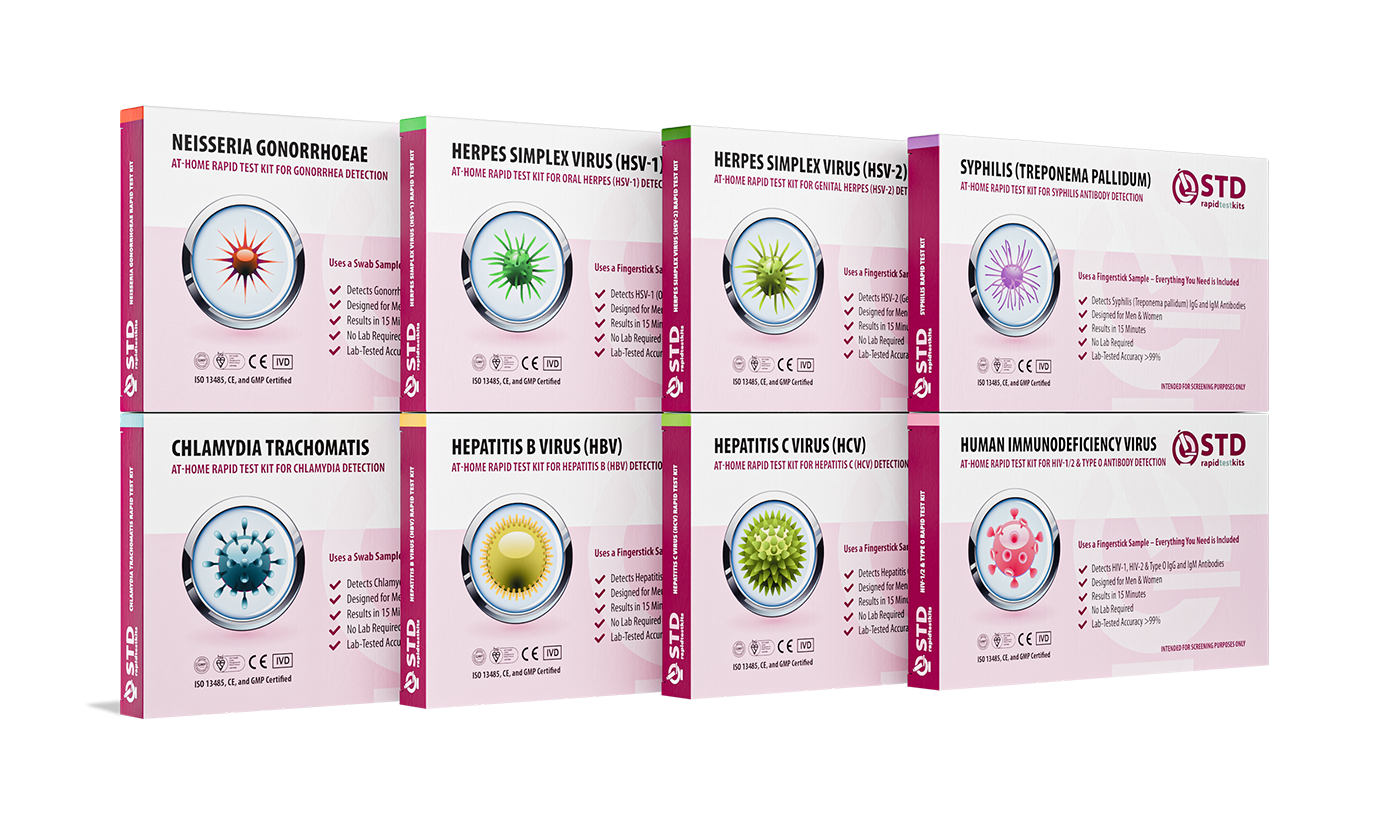 For Men & WomenResults in MinutesNo Lab NeededPrivate & Discreet
Order Now $149.00 $392.00
For all 8 tests
Testing Is Care, Not Confession
Let’s reframe this. STD testing isn’t a punishment. It’s not a sign you’ve done something wrong. It's a regular health check, like getting a pap smear, brushing your teeth, or taking care of your mental health. It says: I care about myself. I care about the people I’m intimate with. I want to be safe, informed, and free from fear.
This shift in mindset changes everything. When we see testing as normal, we break shame. When we offer to test with partners, we create trust. When we stop waiting for symptoms to tell us what’s wrong, we start making decisions based on truth, not luck.
If you’ve been putting off testing, this is your sign: there’s no perfect time, but now is always better than later. You deserve peace of mind. You deserve to know. Get started with a discreet test today.
FAQs
1. Can I really have an STD and feel completely fine?
Yes, and it happens all the time. Some of the most common infections, like chlamydia and HPV, are often totally silent in the beginning. You might feel 100% normal while your body is carrying something that can still be passed on. That’s the whole reason this epidemic is called “silent”, you can’t always trust your body to raise a red flag.
2. Is it too late to test if months have passed since the hookup?
Nope. It’s never too late to get clarity. In fact, if you didn’t test right after and still haven’t had any symptoms, now is actually a great time. Infections like syphilis or HPV can linger for months or even years without obvious signs. Testing can end the guessing game, but time doesn't make the risk go away.
3. I took a test last week and it was negative. Am I good?
It depends. If you tested too soon after exposure (say, within just a few days), your body might not have built up enough markers yet for the test to catch it. That’s why window periods matter. If it’s been more than two weeks and your exposure risk was low, you're likely in the clear. A follow-up test can put your mind at ease if you're still not sure.
4. If I don't have any symptoms, what's the best STD test?
A combo test kit is your best bet, it screens for multiple infections in one go, even if you feel totally fine. If you’re looking for discretion and speed, an at-home rapid test is a great place to start. If you want full-panel lab-grade results, go with a mail-in kit. Either way, you’re making a solid move.
5. Do I need to test if I only had oral sex?
Yup. You can absolutely get gonorrhea, chlamydia, syphilis, and even herpes through oral sex, even if no one had visible symptoms. It’s way more common than most people realize. If your mouth was involved, testing still counts.
6. How do I talk to a partner about testing without it getting awkward?
Start from a place of shared care. Try: “Hey, I’ve been thinking, it might be smart for both of us to get tested before things go further.” It’s not about accusing anyone. It’s about building trust and showing you care enough to have the real convo. You’d be surprised how many people are relieved you brought it up.
7. What if I test positive? Do I have to tell my exes?
Short answer: It’s the right thing to do, but how you do it is your choice. Some people text, some use anonymous partner notification tools, some don’t reach out at all if it’s been a long time. But if there’s someone who may still be at risk, giving them the heads-up is a powerful way to stop the spread and give them a chance to get checked too.
8. Can untreated STDs really affect fertility?
Unfortunately, yes. Chlamydia and gonorrhea are two infections that can hurt your reproductive system over time, and you might not even know it. That's why getting it early is so important. Testing isn't just for the present; it also protects your future.
9. Do I still need to test if I’m in a monogamous relationship?
If you’ve both been tested and agreed to exclusivity, the risk is lower, but life is messy, and sometimes people don’t test before coupling up. If either of you skipped that initial check, it's worth doing now just to be sure. Trust is important. So is clarity. You can have both.
10. I'm nervous to test. What if it changes how I see myself?
That’s real. And it’s okay to feel that. But getting tested doesn’t define you, it empowers you. You’re not your result. You’re someone taking control of your health. And if it’s positive? That doesn’t mean you’re reckless or broken. It means you’re human, and you’ve got options. You’re allowed to be scared and still do the thing anyway.
You Deserve Answers, Not Assumptions
Maybe you've read this entire article without feeling a single symptom. Maybe you’re still not sure if you should test. That’s okay. But the truth is: not knowing doesn’t protect you. Only testing does.
You’re not overreacting. You’re not being dramatic. You’re being proactive. Whether you’re dating again after a long break, just had a new partner, or simply haven’t tested in a while, this moment matters. You have the power to step out of uncertainty and into knowledge. That’s how you break the cycle. That’s how you protect your future self.
Don’t wait and wonder, get the clarity you deserve. This at-home combo test kit checks for the most common STDs discreetly and quickly.
How We Sourced This Article: To make this guide useful, kind, and accurate, we used the most up-to-date advice from top medical groups, peer-reviewed research, and reports from people who have lived through the issues.
Sources
1. CDC – Sexually Transmitted Infections Prevalence 2022
3. How to Get Tested for STIs (Even If You Don’t Have Symptoms) | CDC
4. Who Should Get STI Screened, and How Often? | CDC
5. Sexually Transmitted Infections Prevalence, Incidence, and Cost Estimates in the U.S. | CDC
6. Guidelines for the Management of Asymptomatic Sexually Transmitted Infections | WHO
7. Sexually Transmitted Infections (STIs) Overview | Cleveland Clinic
8. Sexually Transmitted Disease (STD) Symptoms | Mayo Clinic
9. STI Treatment Guidelines, 2021 | CDC
10. Sexually Transmitted Infections: What You Need to Know | Northwestern Medicine
About the Author
Dr. F. David, MD is a board-certified infectious disease specialist who works to stop, diagnose, and treat STIs. He blends clinical precision with a no-nonsense, sex-positive approach and is committed to expanding access for readers in both urban and off-grid settings.
Reviewed by: Rachel Min, FNP-BC | Last medically reviewed: December 2025
This article is only for informational purposes and should not be taken as medical advice.


