Published: August 2025 | Last updated: May 2026 | Editorial review and quality control: Martina N.
Your UTI test came back clean. The dipstick was negative, the urine culture grew nothing useful, and the urgent-care provider sent you home with reassurance and perhaps a course of antibiotics “just in case.” Days later, the burning is still there. The urgency hasn't faded. And now you're wondering if your body knows something the lab missed.
That gap between a normal urine result and the symptoms you're actually feeling is where a lot of sexually transmitted infections quietly live. Chlamydia, gonorrhea, trichomoniasis, herpes, and a category of urethral inflammation called NGU can each produce burning urination, urgency, and pelvic pressure that look almost identical to a urinary tract infection on the surface. Standard UTI testing is not designed to detect any of them. If your urine result was negative and the discomfort persists past three or four days, the reasonable next step is broader testing for STIs, ideally before another round of antibiotics that won't address the actual problem.
Key Takeaways
- A negative UTI test does not rule out an STI. Standard urine cultures look for E. coli and similar bladder bacteria, not chlamydia, gonorrhea, trichomoniasis, or herpes.
- If burning, urgency, or pelvic pressure persists more than a week after a clean UTI result, an STI screen is the next reasonable step, especially after a new partner or unprotected sex.
Why STIs Get Mistaken for UTIs
STIs and urinary tract infections share an unfortunate amount of biology. Both inflame tissue close to the urethra. Both can cause burning during urination, a frequent urge to go, and a vague pelvic ache. Your nervous system reacts to inflammation in much the same way regardless of the cause; what differs is what your immune system is fighting and how a lab test detects it.
A typical UTI starts when bacteria, usually E. coli from the gut, climb into the bladder. The infection grows in urine and shows up clearly on a dipstick (nitrites, leukocyte esterase) and on a urine culture. STIs work differently. Chlamydia and gonorrhea attach to mucosal cells lining the urethra, cervix, and rectum. Trichomonas vaginalis is a single-celled parasite that prefers the vagina and male urethra. Herpes simplex virus settles into nerve endings near the genitals and reactivates intermittently. None of these pathogens consistently appear in a routine urine culture, and most won't trip a dipstick at all. Your symptoms can be identical; the lab tools required to find the cause are not.
A urine dipstick checks for nitrites and leukocyte esterase, both signs of bacterial activity in the bladder. A NAAT (the lab test used for chlamydia, gonorrhea, and trichomoniasis) looks for genetic material from those specific pathogens in a swab or a specially prepared urine sample. Same patient, same urine, different question, different answer.
Which Infections Most Often Mimic a UTI
The CDC's STI treatment guidelines list chlamydia and gonorrhea as the leading bacterial causes of urethritis (urethral inflammation) in sexually active adults. Trichomoniasis is among the most common curable non-viral STIs worldwide. Herpes can cause urethral pain even without visible sores. Non-gonococcal urethritis (NGU) is the catch-all term for urethritis not caused by gonorrhea, often from chlamydia or organisms like Mycoplasma genitalium. The table below summarizes how these infections present and what testing approach catches them.
| Condition | Common Symptoms | UTI-Like Overlap? | Test Type Needed |
|---|---|---|---|
| Chlamydia | Burning urination, spotting, pelvic pressure (often silent) | High | Lab NAAT on urine or vaginal swab; rapid swab kits screen at home |
| Gonorrhea | Painful urination, urethral discharge, urgency | High | Lab NAAT on urine or swab; rapid swab kits screen at home |
| Trichomoniasis | Vaginal irritation, frothy discharge, painful urination (dysuria) | Moderate | Lab NAAT on vaginal swab; rapid antigen swab screens at home |
| Genital Herpes | Burning, tingling, intermittent painful sores | Moderate | Lesion swab PCR if active; HSV blood antibody test otherwise |
| Non-Gonococcal Urethritis (NGU) | Urethral burning, itching, mucoid discharge in men | High in men | Diagnosis after gonorrhea is excluded; chlamydia and Mycoplasma genitalium NAAT |
Why a Standard UTI Test Misses STIs
Standard UTI testing has two parts. The dipstick checks for nitrites and leukocyte esterase, both signs of bacterial activity in urine. The urine culture grows whatever bacteria are present so the lab can identify the organism and pick an antibiotic. Both look at urine in the bladder. Mayo Clinic's urinary tract infection overview describes this clearly: a UTI is a bacterial bladder or kidney infection, and the workup is built to find that.
STIs colonize different real estate. Chlamydia and gonorrhea live in the urethral and cervical lining. Trichomoniasis lives in vaginal secretions or the male urethra. Herpes lives in nerves and reactivates at the surface. None of these pathogens reliably grow in a UTI culture or trigger nitrite-positive urine. A clean dipstick result tells you the bladder probably isn't seeing E. coli; it tells you nothing about whether you have an STI.
This mismatch is why so many people end up cycling through antibiotics that only partially address the problem. Some UTI antibiotics, like doxycycline (sometimes prescribed for complicated or recurrent cases), do treat chlamydia. Most first-line UTI agents (nitrofurantoin, trimethoprim-sulfamethoxazole, fosfomycin) do not touch chlamydia, gonorrhea, or trichomoniasis at all. Symptoms may briefly improve and then return, which is the cue most people interpret as “recurring UTI” when the real story is an untreated STI.
UTI test was negative but it still burns. What now?
Get tested for STIs, especially chlamydia, gonorrhea, trichomoniasis, and herpes. Standard UTI tests don't screen for any of them. Window periods vary: chlamydia and gonorrhea become detectable about 7 to 14 days after exposure, trichomoniasis around 1 to 4 weeks, and herpes type-specific blood tests typically take 6 to 12 weeks to turn positive after a first infection.
What If You Don't Have Discharge?
Most early-stage chlamydia and gonorrhea cases produce no noticeable discharge at all. The CDC's chlamydia overview describes the infection as often silent in both women and men; symptoms, when they appear, can be limited to mild urethral irritation, a slight stinging during urination, or pelvic discomfort. Trichomoniasis is similar: most people with it don't notice symptoms, and those who do may report only itching or vague discomfort. Herpes can flare with no visible sores, presenting as tingling, burning, or a feeling of internal irritation that comes and goes.
The popular mental model of an STI as something loud and obvious does not match how these infections actually behave. If something feels wrong but the visible signs you expected aren't there, that is exactly when it makes sense to test, not when to dismiss the discomfort.
For chlamydia, trichomoniasis, and a large share of gonorrhea cases, no symptoms or mild symptoms are the most common presentation. “I don't have any of the textbook signs” is precisely when screening matters most, not when it can be skipped.
NGU: When the Cause Is Inflammation, Not E. coli
NGU stands for non-gonococcal urethritis: urethral inflammation that is not caused by gonorrhea. The most common identified cause is chlamydia. Other documented causes include Mycoplasma genitalium, Ureaplasma urealyticum, Trichomonas vaginalis, and herpes simplex virus. The CDC treatment guidelines for urethritis classify NGU as a clinical pattern (urethral discharge, dysuria (painful or burning urination), or urethral itching) confirmed when gonorrhea is excluded but inflammation is documented.
NGU is most commonly diagnosed in men, where urethral pain or burning is hard to overlook. It is less commonly named in women, but the same organisms can cause urethral irritation in women too, often misread as “recurring UTI” when bladder bacteria are absent. A clinic encountering urethral symptoms with negative urine cultures will typically test for chlamydia, gonorrhea, and Mycoplasma genitalium next; trichomoniasis screening is added when the patient has anatomy and risk factors that warrant it. Treatment is targeted to whichever pathogen is identified, with empiric doxycycline a common starting point when the workup is delayed.
NGU at a glance
- Clinical pattern: urethral discharge, dysuria (painful or burning urination), or urethral itching, with gonorrhea ruled out.
- Most common identified cause: Chlamydia trachomatis.
- Other documented causes: Mycoplasma genitalium, Ureaplasma urealyticum, Trichomonas vaginalis, herpes simplex virus.
- Standard NGU workup: NAAT for chlamydia and gonorrhea first; Mycoplasma genitalium NAAT added when symptoms persist after first-line treatment.
- Invisible on a basic UTI dipstick or urine culture; testing has to be ordered specifically.
When You Have Both an STI and a UTI
Sometimes the answer is not “one or the other,” it is both. Sex can mechanically introduce gut bacteria into the urethra and trigger a true UTI at the same time as exposing you to an STI. Existing STIs disrupt the local immune environment in ways that may make UTIs more likely, and active UTIs can mask STI symptoms by giving everyone (you, the urgent-care provider) a tidy explanation that doesn't require further questions. The reverse-direction case, a recurring UTI that masks an undertreated STI, is common enough that several primary-care guidelines recommend STI testing whenever a young, sexually active patient has more than one UTI in a year.
One common timeline for people who turn out to have both a UTI and an STI:
| Day | Typical Scenario | Action Taken | What's Missed |
|---|---|---|---|
| 1 to 2 | Burning starts after sex | Over-the-counter UTI remedies, hydration | STI not considered |
| 3 to 4 | Doctor visit, urine sample taken | Antibiotics prescribed for presumed UTI | Only bacterial bladder test done |
| 5 to 7 | Symptoms improve slightly, then return | Confusion or worry increases | STI continues untreated |
| 8+ | Retest or additional symptoms appear | STI testing finally ordered | Weeks of discomfort and delayed care |
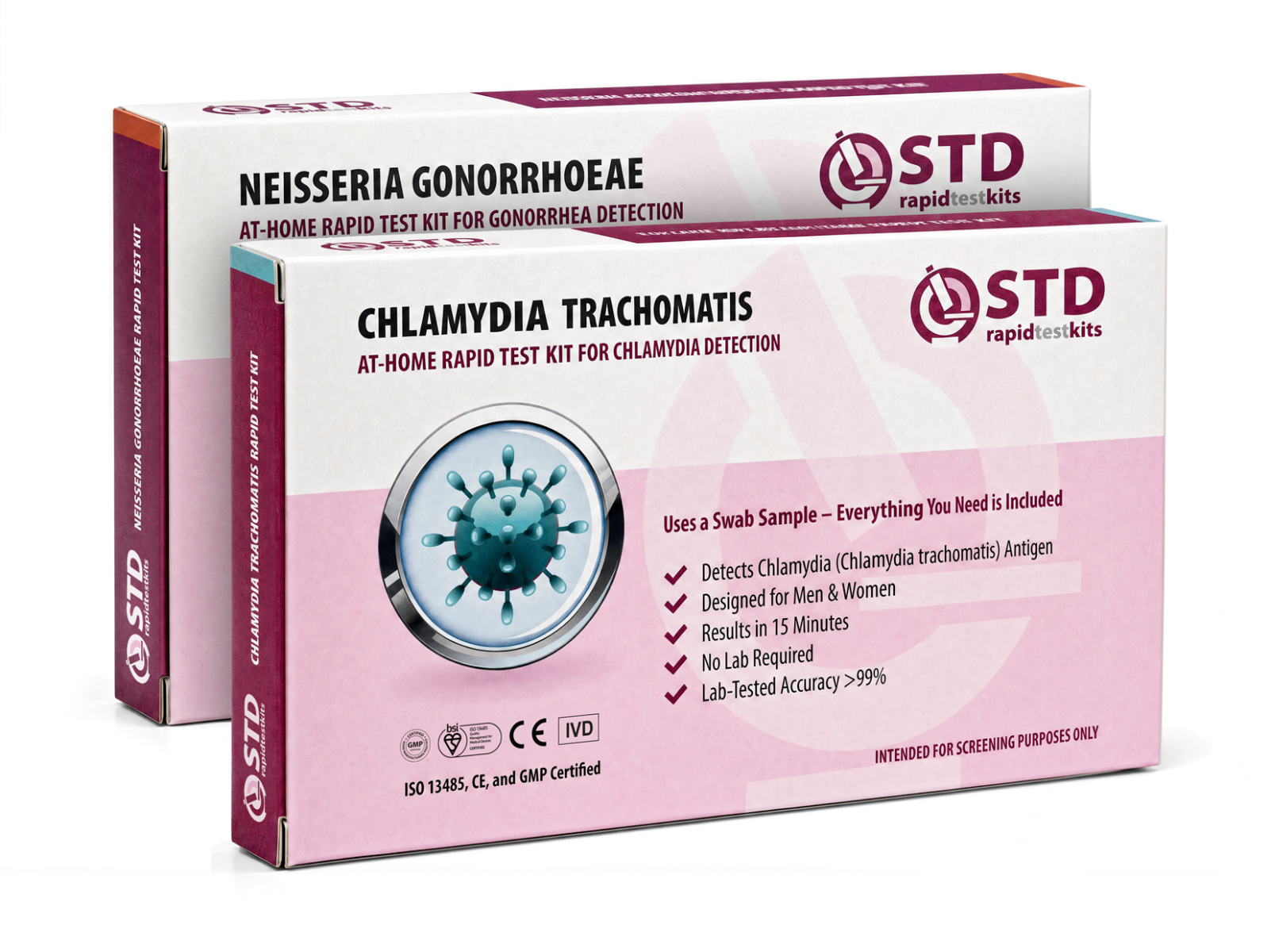
This article is published by stdrapidtestkits.com, which sells at-home STI testing kits. Products mentioned below are recommended based on how well they fit the symptoms described, not commercial benefit.
Herpes Without Visible Sores
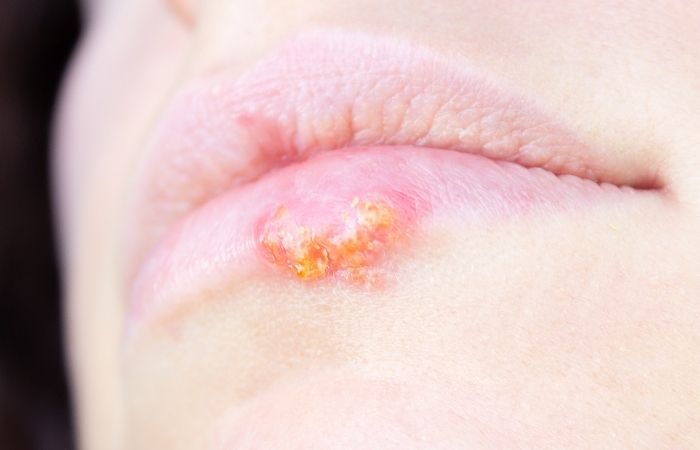
Genital herpes does not always look like the textbook picture. First infections can produce only a tingle, a localized burning sensation, or a few painless red spots that resolve in days. Later flares can be even subtler: a brief urethral sting when urinating, an ache deep in the pelvis, an itchy patch that comes and goes. The CDC's genital herpes overview notes that many people who carry HSV-2 never notice an outbreak distinct enough to send them to a clinic, and that mild symptoms may go unnoticed or be mistaken for other skin conditions like a pimple or ingrown hair.
Standard STI panels do not always include herpes. Lesion-swab PCR is the most accurate test, but it requires an active lesion to swab. Type-specific blood tests detect HSV-1 and HSV-2 antibodies, which appear weeks to months after infection. A blood test does not localize where the virus lives (oral, genital, or both); it only confirms that an antibody response has formed against one or both serotypes. If burning urination flares and resolves on a roughly cyclical pattern, with no clear trigger and a clean urine culture each time, herpes is reasonable to add to the workup.
When Retesting Makes Sense
A negative UTI result does not close the case. It narrows the diagnostic field. Retesting (this time looking for STIs) is appropriate when any of the following apply:
- You completed antibiotics for a presumed UTI but symptoms remain or return within days
- You had unprotected sex in the last 2 to 3 weeks, with any partner whose status you don't know
- You never had an STI test alongside the UTI test, even though you were sexually active
- A current or recent partner has new symptoms or has disclosed an infection
- You have recurrent UTIs and your provider can't identify a clear urological cause
Window-period rules matter here. Testing too early in the exposure window can produce a false negative even when the infection is real. Chlamydia and gonorrhea are usually detectable about 7 to 14 days after exposure. Trichomoniasis becomes detectable in about 1 to 4 weeks. Herpes type-specific antibody tests typically need 6 to 12 weeks to turn positive after a first infection. If your timing is uncertain, a single negative test is not a reliable “all clear”; retest at the appropriate window.
Chlamydia often has no symptoms, but it can cause serious health problems, even without symptoms. If symptoms occur, they may not appear until several weeks after having sex with a partner who has chlamydia.
Burning Urination in Men
UTIs in men are uncommon, especially in healthy men under 50. When a man has burning urination and a negative UTI test, the differential shifts heavily toward urethritis: gonorrhea, chlamydia, NGU. The CDC gonorrhea overview describes a burning sensation when peeing and white, yellow, or green discharge from the penis as the typical male symptoms, with painful or swollen testicles noted as less common. Treatment guidelines recommend treating sexually active men with urethral symptoms as having an STI until lab results say otherwise.
Visible discharge is not required for the diagnosis. Many cases of NGU and early gonorrhea cause urethral burning with no obvious discharge, or only a small amount of clear or mucoid fluid first thing in the morning. Stigma and the “men don't get UTIs” reflex frequently delay diagnosis: people get reassured, sent home, then return weeks later with the same complaint when the infection has had time to spread.
The practical implication: if you are a man with burning urination and your provider's first instinct is reassurance, push for STI testing. The standard workup for a man with urethral symptoms is a NAAT (urine or urethral swab) for chlamydia and gonorrhea, with Mycoplasma genitalium added if symptoms persist after first-line treatment. At-home rapid swab kits cover chlamydia and gonorrhea screening when a clinic visit is delayed; a positive rapid result should still be confirmed with a clinic-ordered NAAT before treatment.
Trust the Pattern, Then Test
If something feels wrong and a basic UTI screen came back clean, the right next step is to widen the lens, not to wait it out. Sexual-health symptoms get dismissed routinely because the visible signs people expect are absent. The infections that most often hide behind UTI-like symptoms are also the ones with the simplest screening paths once you ask for the right test.
For a clinic visit, ask explicitly for a NAAT for chlamydia and gonorrhea. If you have anatomy that supports it, ask about trichomoniasis testing. Bring up herpes if symptoms come and go in flares. For at-home screening, a swab-based rapid test for chlamydia and gonorrhea covers the two most likely culprits, and a multi-panel kit is a reasonable choice when you want broader coverage at once. Home rapid tests are lateral-flow chemistry, not the same technology as clinic NAATs, so a positive rapid result should be confirmed at a clinic, and persistent symptoms after a treatment course warrant retesting at the appropriate window. The goal is to get to a real answer, not to settle for a clean dipstick that doesn't explain how you actually feel.
FAQs
- Can chlamydia really feel like a UTI?
- Yes, often. Chlamydial urethritis produces burning during urination, urgency, and a vague pelvic ache that can be hard to distinguish from a bladder infection by symptom alone. The CDC notes that most chlamydia cases are silent or near-silent, and even the symptomatic cases often present with what people describe as “a UTI that won't quit.” If your urine culture is clean and the symptoms persist, ask for a chlamydia NAAT.
- Why did my UTI test come back normal but I still feel off?
- Standard UTI tests look for bacteria like E. coli growing in urine. They don't screen for chlamydia, gonorrhea, trichomoniasis, herpes, or the organisms that cause non-gonococcal urethritis. A “normal” UTI result tells you the bladder probably isn't infected with the usual culprits; it tells you nothing about whether an STI is responsible. If the discomfort is real and the urine is clean, an STI screen is the next step.
- I'm a man with burning urination. Could this still be an STI?
- In most cases, yes. UTIs in men under 50 are uncommon. The CDC's urethritis guidelines recommend treating sexually active men with urethral symptoms as having an STI (chlamydia, gonorrhea, or NGU) until proven otherwise. You don't need visible discharge for the diagnosis. If a provider has dismissed the symptoms as “not really a UTI,” ask specifically for chlamydia and gonorrhea NAAT testing.
- Can I have a UTI and an STI at the same time?
- Yes, and it happens more than you would think. Sexual activity can introduce gut bacteria into the urethra (causing a UTI) at the same time as exposure to an STI. Antibiotics that resolve the UTI may not touch the STI, which is why some people feel better briefly and then have symptoms return. If a recent UTI was followed by lingering or recurrent symptoms, ask for a full STI panel.
- Do STIs show up on a regular urine test?
- Not on a standard UTI screen. Some labs can run a chlamydia and gonorrhea NAAT on a urine sample, but it has to be specifically ordered. The default urine culture and dipstick that come with a UTI workup look for bladder bacteria only. If you want STI screening from urine, you have to ask for it by name (NAAT for chlamydia and gonorrhea) or use an at-home swab kit designed for it.
- How soon after exposure can I get tested?
- A test taken before the window closes can return a false negative even when the infection is real, which is the single biggest reason “I tested and it was clear” turns into “it was actually positive a month later.” The practical timing: chlamydia and gonorrhea need roughly 7 to 14 days post-exposure to become reliably detectable, trichomoniasis around 1 to 4 weeks, and HSV type-specific antibody tests usually 6 to 12 weeks for a first infection (occasionally longer). If your timing is uncertain or symptoms persist past an early result, plan a second test at the right window rather than treating the first negative as a final answer.
- Can herpes cause burning without visible sores?
- Yes. Genital herpes often presents subtly, especially in recurrences and in some first infections. Tingling, burning during urination, or a flu-like ache without obvious blisters are documented presentations. Lesion-swab PCR works only when there is an active lesion to swab; otherwise a type-specific HSV blood antibody test is the next option, with the caveat that antibodies take weeks to months to appear after a new infection.
- Are at-home STI tests as accurate as a clinic test?
- At-home rapid tests use lateral-flow chemistry, which is a different technology from the NAAT testing that most clinics use as the gold standard. Lateral-flow tests are useful for fast, private screening at home and perform well when used after the appropriate window period. They are not equivalent to a lab NAAT in analytical sensitivity, especially for asymptomatic infections. A reasonable plan: screen at home if a clinic visit is hard to access, and confirm any positive result (or any negative result that doesn't match your symptoms) at a clinic.
- U.S. Centers for Disease Control and Prevention. About chlamydia: symptoms, transmission, and screening guidance.
- U.S. Centers for Disease Control and Prevention. About gonorrhea: symptoms, complications, and treatment.
- U.S. Centers for Disease Control and Prevention. STI Treatment Guidelines: urethritis and cervicitis.
- U.S. Centers for Disease Control and Prevention. About genital herpes: symptoms, testing, and management.
- Mayo Clinic. Diseases and conditions resource on urinary tract infection.
- U.K. National Health Service. Sexually transmitted infections (STIs) overview.
