
Published: October 2025 | Last updated: May 2026 | Editorial review and quality control: Martina N.
Noticing some fluid after sex is one of the most common things people quietly Google. Most of the time it's your body doing exactly what it's supposed to do: semen can drain out for hours, natural lubrication thins as arousal fades, and a bit of leftover lube mixes with the rest. None of that is a sign of infection.
What's worth paying attention to is what doesn't fit your usual pattern. A new color. An odor that lingers past a shower. Itching that won't quiet down. Burning when you pee. This guide walks through what counts as normal, what color and texture changes can suggest, and when at-home testing makes sense. The information here draws from current CDC STI treatment guidelines, WHO STI guidance, and clinical references from the NHS.
Key Takeaways
- Clear, milky, or stretchy discharge that's odorless and resolves within a day is almost always normal post-sex fluid, not infection.
- Yellow, green, gray, or foamy discharge, especially paired with a fishy or strong odor, itching, or burning, warrants STI and bacterial-vaginosis testing.
What counts as normal post-sex discharge
After vaginal or anal sex, fluid coming out of your body is the rule rather than the exception. Several different things can show up, sometimes mixed together, and none of them mean something is wrong:
- Residual semen. Semen can leak out for several hours after ejaculation. It tends to be cream-colored or slightly clear and may have a faint bleach-like smell from its natural alkalinity.
- Arousal fluid and natural lubrication. The vagina produces a clear-to-whitish, stretchy or egg-white-textured fluid during arousal. Some of it stays behind after sex.
- Lubricant residue. Silicone, water, and warming lubricants all linger on tissue. They can mimic discharge in volume and feel.
- Cervical mucus shifts. Where you are in your menstrual cycle changes how much discharge you produce. Mid-cycle ovulatory mucus is often heavier and more elastic than discharge later in the cycle.
- Female ejaculate. Some people release fluid from the urethra during orgasm. It's a normal physiological response and can mix with everything else.
Even without ejaculation, arousal alone signals the Bartholin and Skene glands to release fluid, so a small amount of clear odorless fluid showing up shortly after sex is usually background physiology rather than a problem.

Colors, textures, and what they may signal
Color is a useful first signal, even though it doesn't pin down a single cause on its own. Consistency, smell, and how long the discharge lingers all add information. The CDC's vaginal-discharge guideline groups the most common causes into three buckets: bacterial vaginosis (BV), trichomoniasis, and vulvovaginal candidiasis (yeast). Two of those are not STIs in the strict sense, and one is. STIs like gonorrhea and chlamydia can also cause discharge changes, often with cervicitis or urethritis as the underlying picture.
The table below is a starting point for narrowing what might be going on. Multiple causes can overlap, and persistent change usually deserves a real test rather than a guess.
| Color or texture | Possible cause | Worth testing? |
|---|---|---|
| Clear, slippery, stretchy | Normal arousal fluid or residual semen | No, unless it persists or changes |
| Thick, white, cottage-cheese-like | Yeast (vulvovaginal candidiasis) | Yes if itching, burning, or a first episode |
| Thin, grayish-white, fishy odor | Bacterial vaginosis | Yes, BV often co-occurs with STIs |
| Yellow, green, sometimes frothy | Trichomoniasis or gonorrhea | Yes, these are STIs |
| Pink or blood-tinged | Light bleeding, cervical irritation, or infection | Yes if persistent or unexplained |
| Cloudy or pus-like (urethral) | Gonorrhea or chlamydia (any gender) | Yes |
Should I test if I noticed unusual discharge after sex?
If the discharge is yellow, green, gray, or foamy, smells fishy or strong, or comes with itching, burning, or pelvic pain that lasts more than 24 to 48 hours, yes. Trichomoniasis, gonorrhea, chlamydia, and bacterial vaginosis can all cause discharge changes. Most STIs are detectable on tests 7 to 14 days after exposure, with trichomoniasis sometimes needing up to 28 days.
When discharge points to an STI
Three STIs most commonly show up as a discharge change:
Trichomoniasis. Caused by the parasite Trichomonas vaginalis, trich is one of the most common curable STIs in the U.S. and globally. The classic finding is yellow-green, sometimes frothy discharge with a strong odor, often with itching or irritation. The CDC notes that about 70% of people with trich have no signs or symptoms at all, and women self-treating for yeast infections sometimes have trich underneath.
Gonorrhea. Cervical or urethral gonorrhea can produce yellow or greenish discharge, sometimes with painful urination or pelvic discomfort. The WHO estimates roughly 82 million new gonorrhea infections globally each year, and a meaningful share of cases in women are asymptomatic, so a discharge change is sometimes the only clue.
Chlamydia. Often called silent because most women and many men have no symptoms, chlamydia can cause cloudy or yellowish vaginal or penile discharge, urethral irritation, and post-coital spotting. Untreated chlamydia is a leading preventable cause of pelvic inflammatory disease (PID), where the infection ascends from the cervix into the uterus and fallopian tubes. PID can scar the tubes, raise the risk of ectopic pregnancy, and contribute to tubal-factor infertility, which is why early detection and treatment matter even when symptoms feel mild. CDC surveillance data place a meaningful share of preventable infertility in women on this exact pathway.
Color and smell narrow the list of suspects, while a swab or rapid test names the actual cause.
Trichomoniasis is the STI most often misread as a recurring yeast infection. The discharge can look thick and pale, the smell can be subtle, and over-the-counter antifungals will quiet the itch without touching the parasite. If a yeast treatment seems to work for a week and then symptoms return, retest with a swab that includes trich, gonorrhea, and chlamydia.
Could it be your condom, lube, or spermicide?
Not every change in discharge after sex is an infection. Genital tissue is sensitive, and three categories of products are common irritants:
- Latex. True latex allergy is uncommon but real. Symptoms range from mild itching and watery discharge to swelling and hives.
- Spermicide and warming or flavored lubes. Nonoxynol-9 spermicide is a known mucosal irritant. Glycerin, fragrance, and warming agents can disrupt the vaginal pH balance and trigger thin watery discharge or burning.
- Soaps, douches, and scented wipes. The vagina is self-cleaning. Fragranced products often cause more discharge changes than they prevent.
If you recently switched products and symptoms appeared shortly after, eliminating one variable at a time is reasonable. The table below pairs common reactions with what to try next.
| Reaction after sex | Likely product cause | What to try |
|---|---|---|
| Watery discharge with itching or swelling | Latex sensitivity or spermicide irritation | Switch to non-latex condoms or a glycerin-free, unscented lube |
| Burning and thin discharge | Fragrance, flavor, or warming-agent sensitivity | Use unscented, body-safe products only |
| Thicker discharge with no odor | Residual silicone or water-based lube mixing with fluids | Observe; test if it persists past 24 to 48 hours |
| Repeat irritation despite product changes | Possible BV, yeast, or STI | Test |
When to test and what to test for
The quick rule: if the discharge is unexplained, smells off, or comes with itching, burning, or pelvic pain that lasts more than 24 to 48 hours, test. The exact timing matters because every infection has a window period, the time after exposure when the test becomes reliable.
Testing too early can give a false negative. The table below summarizes the most common windows for STIs that show up as discharge changes. These follow the CDC's STI treatment guidelines.
| Infection | Best time to test | Why timing matters |
|---|---|---|
| Chlamydia | 7 to 14 days after exposure | Lab NAAT tests are highly sensitive in this window; rapid lateral-flow swab tests perform best from day 14 |
| Gonorrhea | 7 to 14 days after exposure | Often detected from the same swab as chlamydia |
| Trichomoniasis | 5 to 28 days after exposure | Symptoms can start fast, but some carriers stay asymptomatic for weeks |
| Bacterial vaginosis | When symptoms appear | Diagnosed by smell, discharge, and pH rather than a window period |
| HIV (4th-gen test) | 18 to 45 days after exposure | Window varies by test technology; rapid antibody tests need closer to 90 days |
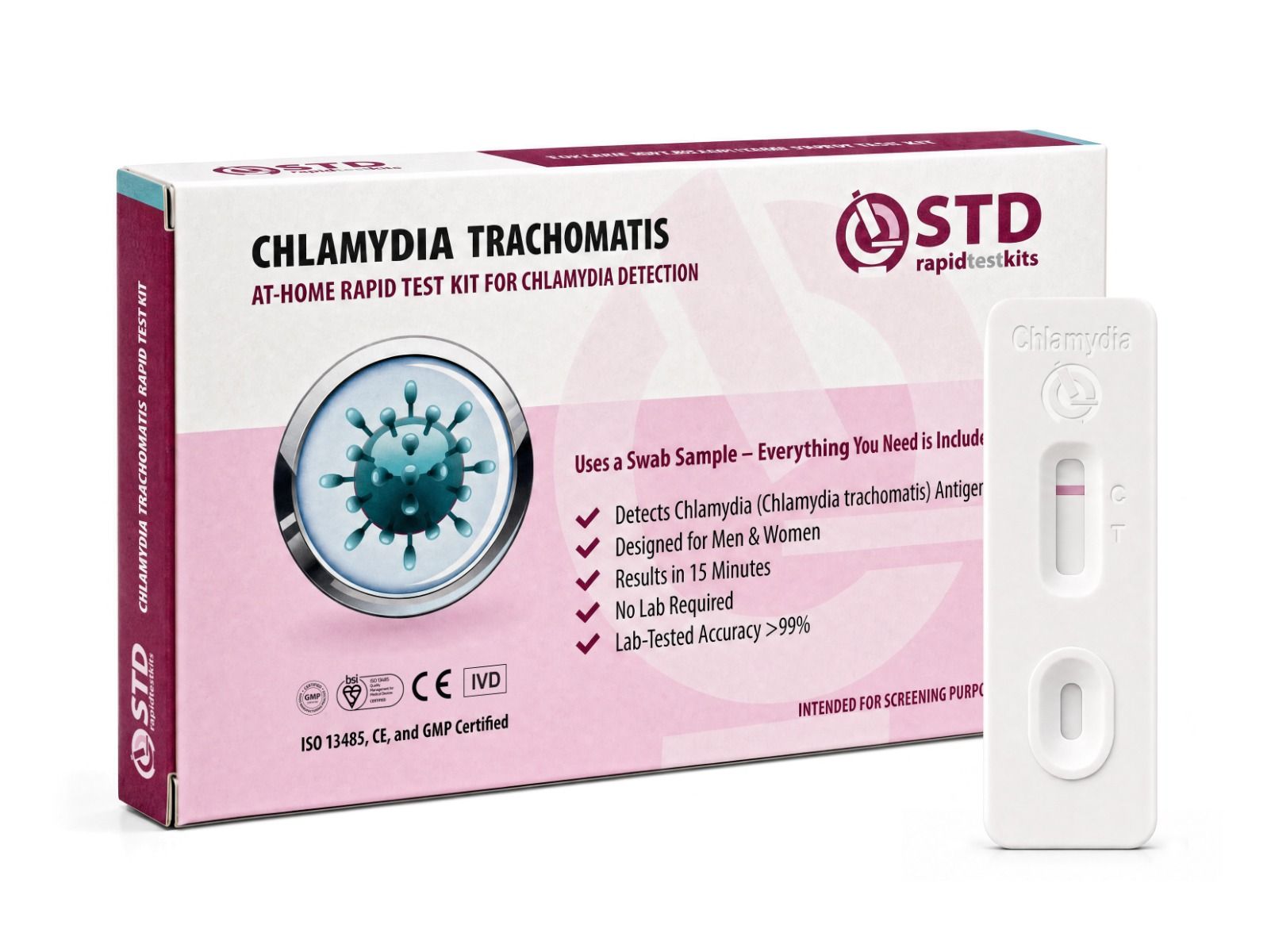
Why a yeast-infection product doesn't always solve it
One of the most common patterns clinicians see is a person treating themselves for yeast, getting a week of relief, and then watching symptoms return in a slightly different form. The discharge that comes back is thinner. The smell is new. The itching shifts location.
Recurring symptoms after antifungal treatment usually mean a different infection was driving them from the start. Over-the-counter antifungals only treat Candida. They don't touch trichomoniasis, BV, gonorrhea, or chlamydia, and the symptoms of all four can mimic yeast in the early days. The CDC's BV resources warn that BV and trich often coexist and that treating BV-like symptoms as yeast leaves the actual infection in place.
The fix is straightforward: if symptoms come back after treatment, change in character, or never fully go away, test for STIs as well as BV before reaching for another antifungal. Untreated chlamydia, gonorrhea, and trichomoniasis are all linked to pelvic inflammatory disease and long-term reproductive complications.
If antifungal cream or pills helped for a few days and symptoms came back, plan a swab that covers trichomoniasis, BV, chlamydia, and gonorrhea before reaching for another over-the-counter treatment. Most STI tests are reliable from 7 to 14 days after exposure, and BV is diagnosed clinically once symptoms are present.
Discharge in men can be subtle, and worth checking
Penile discharge gets less airtime than vaginal discharge, but it shows up with the same infections. Chlamydia and gonorrhea both cause urethritis, which can present as a small amount of cloudy or whitish fluid at the tip of the penis, sometimes only visible first thing in the morning, occasionally paired with burning during urination. Trichomoniasis in men is usually silent or causes mild urethral irritation.
Symptoms in men can be intermittent and easy to dismiss; even a drip in the morning that's gone by lunchtime is reason enough to test rather than wait. Asymptomatic partners are also a major route of spread, since many male chlamydia and gonorrhea carriers have no symptoms while their partner is the one who notices the visible discharge change first. If a partner tests positive, both people need to be tested and treated even if only one had symptoms.
The same testing windows apply: 7 to 14 days post-exposure for chlamydia and gonorrhea, longer for trichomoniasis.
The majority of women will have a vaginal infection, characterized by discharge, itching, burning, or odor, during their lifetime.

Why discharge shouldn't carry stigma
Discharge is your reproductive system communicating. It changes with hormones, with arousal, with infections, and with products you put on or near genital tissue. There's nothing dirty about it, no moral signal in it, and no reason to hide it from a clinician or a partner.
That framing matters because shame is one of the biggest reasons people delay testing. Surveys by the WHO and national STI programs consistently find that embarrassment, fear of judgment, and worry about clinic exposure all drive people to wait weeks or months past the point where testing would have helped them. At-home tests exist partly to remove that friction. So does plain-English health information.
You're allowed to ask questions. You're allowed to test without symptoms. You're allowed to not know what your discharge means and still get answers.
National STI programs and the WHO consistently identify embarrassment and fear of judgment as the top reasons people delay sexual-health testing. Private rapid tests at home remove the clinic-exposure barrier so the test happens at all, which matters more for outcomes than where it happens. A positive home result is still worth confirming with a lab through a clinic.
Bottom line: when to act
If post-sex discharge is clear, milky, or stretchy, has no odor, and resolves within a day, the most likely explanation is the most boring one: semen, lubrication, or arousal fluid doing what they normally do. Watch and move on.
If discharge is yellow, green, gray, or foamy, smells fishy or strong, comes with itching, burning, pelvic pain, or unusual bleeding, or persists past 48 hours, testing is the right call. Untreated chlamydia and gonorrhea both ascend into the upper reproductive tract in a meaningful share of women, where they can scar fallopian tubes and contribute to ectopic pregnancy and infertility. Bacterial vaginosis, while not an STI, disrupts the vaginal mucosal barrier and elevates pH, which the CDC links to higher risk of acquiring HIV and other STIs during exposure. All of these conditions are easy to treat once identified, which is why catching them early is the goal.
For an exposure event you're worried about, aim for the testing window: 7 to 14 days for chlamydia and gonorrhea, up to 28 days for trichomoniasis, longer for HIV depending on test type. If you test early and still feel off, retest in two weeks. A combo panel that screens for several infections at once removes the guesswork about which test to order.
FAQs
- Is discharge after sex always a bad sign?
- Not at all. Most post-sex discharge is some mix of semen, natural lubrication, residual lube, and arousal fluid. If it's odorless, not itchy, and gone within a day, it's almost always normal. The flags worth noticing are color (yellow, green, gray, frothy), smell (fishy or strong), and timing (lingering past 24 to 48 hours).
- How do I tell the difference between semen and STI-related discharge?
- Semen is usually whitish or clear, leaks out gradually for a few hours, and has a faint bleach-like smell. STI-related discharge tends to be thicker, often yellow or greenish, sometimes frothy, and can smell fishy or sour. If the discharge has color you don't recognize and a smell that doesn't fade after washing, that's a reason to test rather than to wait.
- I used a condom. Can I still have an STI?
- Yes. Condoms reduce the risk of fluid-transmitted infections like HIV, gonorrhea, chlamydia, and trichomoniasis but don't eliminate it, and they offer less protection against skin-to-skin infections like herpes and HPV in areas the condom doesn't cover. They can also slip or break. If you have new symptoms after condom-protected sex, testing is still the right call.
- Why does my discharge smell different after sex?
- Semen is alkaline and temporarily raises vaginal pH, which can amplify the smell of bacteria already present. Bacterial vaginosis is the most common reason for a fishy odor that shows up a few hours after sex. If the smell keeps recurring or comes with itching, burning, or gray discharge, test for BV and STIs together since they often coexist.
- Can men have discharge from an STI?
- Yes. Chlamydia and gonorrhea both commonly cause urethritis in men, which presents as a small amount of cloudy or whitish fluid at the tip of the penis, sometimes only visible in the morning. Trichomoniasis in men is usually silent or mild. Any unexplained drip is worth testing for, especially if a partner has symptoms or has tested positive.
- I treated a yeast infection but the discharge came back. What's going on?
- Yeast treatments only work on Candida. They don't touch trichomoniasis, bacterial vaginosis, chlamydia, or gonorrhea, and any of those can mimic yeast in the first few days. If treatment helps for a week and then symptoms return, or if the discharge changes character, retest with a panel that covers BV and STIs. This is a common pattern.
- Is clear, stretchy discharge after sex normal?
- Yes. That's typically a mix of arousal fluid, cervical mucus, and residual lube. It often looks like raw egg white. If it's odorless, not itchy, and goes away on its own, your body is doing what it's supposed to. Watch for changes in color or smell rather than the presence of fluid alone.
- How soon can I test if I think I have an STI?
- Most chlamydia and gonorrhea tests are reliable from 7 to 14 days after exposure. Trichomoniasis can take up to 28 days. HIV testing windows vary by test type, with 4th-generation lab tests detecting infection from about 18 to 45 days. If you test early and still feel off, retest in two weeks.
- Can lube cause weird discharge?
- It can. Flavored, scented, warming, and spermicidal lubes are common irritants. They can shift vaginal pH or inflame tissue, producing watery discharge, burning, or thin white residue. If you recently switched products, eliminate that variable first. If symptoms persist past a couple of days, move to testing.
- I'm too embarrassed to go to a clinic. What are my options?
- Embarrassment is one of the most common reasons people delay STI testing, which is exactly why at-home rapid tests exist. They use the same sample types (swab or fingerstick blood) as clinic-administered rapid tests, ship discreetly, and produce a lateral-flow result in about 15 minutes. A positive result is worth confirming with a lab through a clinic, but the home test gets you to a yes-or-no answer privately.
How we sourced this article: Our editorial team summarized current guidance from leading public-health bodies (CDC, WHO, NHS) into plain-English explanations for at-home health decisions. We do not provide clinical diagnosis. The references below are the primary public sources behind the claims in this guide. For symptoms that concern you, see a licensed provider.
- U.S. Centers for Disease Control and Prevention. STI Treatment Guidelines (root). Used for testing-window guidance and infection-by-infection symptom descriptions.
- U.S. Centers for Disease Control and Prevention. Vaginal Discharge in the STI Treatment Guidelines. Used for the BV, trichomoniasis, and candidiasis classification of vaginitis and the lifetime-prevalence quote.
- U.S. Centers for Disease Control and Prevention. About Trichomoniasis. Used for the asymptomatic-rate (about 70%) and yeast-misdiagnosis statements.
- U.S. Centers for Disease Control and Prevention. About Bacterial Vaginosis. Used for BV-STI co-occurrence, BV symptoms, and HIV-risk context.
- World Health Organization. Sexually transmitted infections (STIs) fact sheet. Used for global incidence figures (including the 82-million-new-gonorrhea figure) and barrier-method effectiveness context.
- NHS. Vaginal discharge overview. Used for plain-English descriptions of normal versus abnormal discharge and when to seek medical attention.
