
Published: October 2025 | Last updated: May 2026 | Editorial review and quality control: Martina N.
Burning during urination is one of the most-searched health symptoms online, and most people start with the same assumption: it must be a urinary tract infection. When the urine culture comes back negative, the question shifts. If it isn't a UTI, what is it?
For a large share of people, the answer turns out to be an infection of the urethra or nearby reproductive tissue. Several common sexually transmitted infections produce the same sharp sting, sometimes alongside discharge and sometimes with almost no other warning sign. This guide walks through the most likely causes, how clinicians tell them apart, and how to decide when testing is the right next step.
Key Takeaways
- When a UTI test is negative, burning urination most often traces back to an infection of the urethra. Chlamydia, gonorrhea, and trichomoniasis are the three most common culprits, and all three are treatable once diagnosed.
- Symptoms alone rarely identify the cause. If burning appears alongside discharge, irritation, or symptoms that started after sexual contact, testing is the fastest way to swap guesswork for a clear answer.
Why Burning Happens (Even Without a UTI)
The sensation comes down to inflammation. When the urethra or surrounding reproductive tissues become irritated, urine passing through the area produces a sharp sting, pressure, or burning feeling. The bladder is one possible source. The urethra itself is another, and that is where most non-UTI cases land.
Clinicians use the term urethritis for inflammation of the urethra. It can be caused by infection, by irritation from products or friction, or in rare cases by an autoimmune condition. According to the NHS, sexually transmitted infections are one of the most common triggers, and they often produce symptoms that overlap with bladder infections so closely that a first guess almost always lands on a UTI.
Timing is the most useful clue. UTIs typically appear within a day or two and bring a constant urge to urinate even when the bladder is nearly empty. Chlamydia and gonorrhea usually take several days, sometimes a couple of weeks, to produce noticeable symptoms after exposure, and discharge often becomes the giveaway sign.
- Is there discharge? Discharge alongside burning shifts the differential toward STIs rather than a bladder infection.
- Did symptoms start after sexual contact? A clear exposure timeline raises the likelihood of chlamydia, gonorrhea, or trichomoniasis.
- How quickly did the burning develop? UTIs land within a day or two. STI symptoms typically build over several days to a few weeks.
When Burning Comes With Discharge
Discharge is the clue that shifts clinical thinking away from UTIs and toward infections that target the urethra and reproductive tract directly. When both symptoms appear together, sexually transmitted infections move higher on the list of possibilities, and screening tends to become the next step rather than the last resort.
Color, consistency, and smell can provide hints, though none of these is reliable enough to confirm a diagnosis on its own. What matters more is the overall pattern. Certain combinations show up repeatedly with specific infections, and clinicians use those patterns to decide which tests to order first.
For many people, recognizing the combination of burning plus unusual discharge is the moment testing stops feeling optional. Even mild symptoms can reflect an active infection that is transmissible to partners, which is part of why clinicians treat the combination seriously.
| Possible Cause | Typical Discharge | Other Clues |
|---|---|---|
| Chlamydia | White or cloudy, sometimes none | Mild symptoms, pelvic discomfort, frequently asymptomatic |
| Gonorrhea | Yellow or green, thicker | Stronger burning, may also affect throat or rectum |
| Trichomoniasis | Foamy yellow-green (women) | Vaginal irritation, itching, fishy odor; men often have no symptoms |
| Yeast infection | Thick, white, clumpy | Intense itching, redness, not sexually transmitted |
| Bacterial vaginosis | Thin gray-white | Fishy odor, often without burning |
The STDs Clinicians Check First
When the UTI test is negative and discharge enters the picture, three infections sit at the top of the differential: chlamydia, gonorrhea, and trichomoniasis. All three are common, all three are treatable, and all three can produce the same urethral sting that initially looked like a UTI.
Chlamydia is the most frequently reported bacterial STI in the United States. The CDC chlamydia fact sheet notes that most people with chlamydia have no symptoms at all, and when symptoms do appear they may not show up for several weeks after exposure. That delay is the main reason screening, rather than symptom-watching, is the standard recommendation.
Gonorrhea often produces a more pronounced burn during urination and thicker discharge, frequently yellow or green. The CDC gonorrhea fact sheet describes the most common male symptom as a painful or burning sensation when urinating, sometimes with discharge from the penis. Like chlamydia, gonorrhea can also infect the throat or rectum without producing local symptoms, which complicates clinical guesswork.
Trichomoniasis is caused by a parasite rather than a bacterium. It tends to cause irritation, itching, and a frothy yellow-green discharge in women. Men with trichomoniasis often have no symptoms at all but can still pass it to partners, which is one reason the infection circulates widely without being noticed.
A rapid swab result can return a clear answer in about 15 minutes; waiting out symptoms without testing typically stretches into weeks and risks passing the infection to a partner during that window.
At a glance: the three infections clinicians check first
- Chlamydia: often mild or fully asymptomatic; cleared with a short course of antibiotics.
- Gonorrhea: thicker yellow-green discharge and sharper burning; cleared with antibiotics, sometimes a combination regimen.
- Trichomoniasis: caused by a parasite; cleared with a single dose of an antiparasitic medication.
UTI vs STD: How the Patterns Differ
From the outside, burning urination caused by a bladder infection and burning caused by an STI can feel nearly identical. The difference becomes clearer when clinicians look at the full symptom picture rather than the burning in isolation.
A urinary tract infection usually starts in the bladder. People often feel constant pressure, frequent urges to urinate, and sometimes cloudy or strong-smelling urine. Genital discharge is uncommon. STIs like chlamydia and gonorrhea affect the urethra and reproductive organs instead, which is why discharge becomes a key signal. Irritation after sex, pelvic discomfort, or bleeding between periods may also appear.
According to the CDC chlamydia fact sheet, painful urination and abnormal discharge are two of the most reliable chlamydia warning signs in both men and women, and the combination is what often pushes a clinician toward STI testing even when the initial complaint sounded like a routine UTI.
| Symptom | More Common With UTI | More Common With STD |
|---|---|---|
| Burning during urination | Yes | Yes |
| Frequent urge to urinate | Very common | Less common |
| Lower-belly pressure or pain | Common | Sometimes |
| Cloudy or strong-smelling urine | Common | Uncommon |
| Genital discharge | Rare | Common |
| Symptoms triggered after sex | Possible | Common |
| Itching or genital irritation | Rare | Common |

Early Signs People Often Overlook
One of the most confusing things about urethral infections is that burning rarely appears on its own out of nowhere. Most people notice smaller clues first, and those clues are easy to dismiss: mild irritation, a little discharge in the morning, maybe a faint smell that seems different than usual.
Clinicians describing patient timelines tend to hear a similar story. A few days after sexual contact, something feels off. There might be a subtle tingling sensation, or urination might feel slightly warmer than usual. The burning sensation tends to appear only after the urethra has been irritated for a while. Early symptoms are not dramatic; they are small changes that slowly build until the discomfort becomes obvious.
That progression is extremely common with chlamydia and gonorrhea. Understanding these early signs helps people recognize when something deserves attention instead of waiting until symptoms become more uncomfortable. The table below summarizes the early changes clinicians frequently hear about before a diagnosis is confirmed.
| Early Clue | How People Describe It | Why It Happens |
|---|---|---|
| Morning discharge | A drop or two when first waking up | Inflammation inside the urethra produces fluid overnight |
| Mild urethral tingling | Not pain, just irritation | Early irritation of the urethral lining |
| Change in discharge color | Cloudy, yellow, or slightly green | Immune response and bacterial activity |
| Gradual onset of burning | Starts mild, becomes sharper over days | Inflammation increases over time |
| Itching or sensitivity | Especially after sex or in tight clothing | Irritation of inflamed tissue |
Why People Wait Longer Than They Should
If there is one pattern that recurs in clinic encounters, it is hesitation. People notice symptoms but delay testing because they are hoping the problem will resolve on its own. Sometimes the hesitation is practical: traveling, busy schedules, or simply not knowing where to start. More often the delay comes from uncertainty and stigma.
Many people feel embarrassed about the possibility of an STI. Others worry about what a positive result might mean for a current relationship. And some convince themselves that the symptom must be something minor, like dehydration or product irritation.
Sometimes that is true. Friction or a new soap can cause temporary burning that resolves within a day or two. When symptoms persist beyond two or three days, though, testing becomes the most reliable way to protect both your own health and a partner's. Sexual health clinics see these situations every day. What feels embarrassing to one person is routine medical care to a clinician.
STDRapidTestKits.com publishes this article and sells at-home rapid tests for the infections discussed here. Product recommendations below are based on fit for the reader's concern, not commercial benefit.
Why Testing Early Changes the Path Forward
Testing early is not only about preventing complications. It is also about removing uncertainty quickly. Many infections that cause burning urination respond well to treatment when caught early, and bacterial infections like chlamydia and gonorrhea can usually be cleared with a short course of antibiotics, often resolving symptoms within days.
Early testing also protects partners. If an infection is identified, treatment and an honest conversation can happen before the infection silently spreads further. Waiting too long, on the other hand, can allow infections to move deeper into the reproductive system. Complications are not common, and they are far easier to avoid when infections are treated promptly.
The World Health Organization reports more than 1 million new curable STI cases each day worldwide among people aged 15 to 49, which puts the scale of the problem in context. Most of those cases are detected and treated routinely, but only when people get tested.
Modern testing options have made the process simpler. At-home rapid kits rely on a self-collected vaginal or urethral swab or a fingerstick blood draw, depending on the infection being screened. Lab-based clinical testing may also use a urine sample for NAAT assays, which is a different technology than the lateral-flow rapid tests used at home. Either way, results are typically available quickly, and treatment can begin immediately if needed. Clarity changes everything; once the cause is identified, the situation moves from uncertainty into a clear medical plan.

When Symptoms Don't Follow a Clean Script
One of the most frustrating things about symptoms like burning urination is that they rarely follow a predictable script. Medical guides describe clear symptom lists, but real bodies often behave in messier ways. Some people experience intense burning with no discharge at all. Others notice discharge first and only develop irritation days later.
Clinicians see these uneven patterns constantly. Someone may report that the burning only happens in the morning, or only after sex, or only when they have not had enough water during the day. These differences do not mean the underlying cause is different; they reflect how the body responds to urethral inflammation under varying conditions.
Hydration, recent sexual activity, and even the acidity of urine can all affect how strong the burning feels. Someone who is dehydrated may notice more pain because concentrated urine irritates already inflamed tissue. Friction or temporary swelling around the urethra after sex can make symptoms feel worse for a short time.
This variability is precisely why symptoms alone seldom yield a dependable diagnosis. Two people with the same infection may describe completely different experiences. Instead of trying to interpret every symptom detail like a puzzle, clinicians focus on a simpler approach: if burning persists, if discharge appears, or if symptoms follow sexual exposure, testing provides the clearest answer.
Most people who have chlamydia have no symptoms. If you do have symptoms, they may not appear until several weeks after you have sex with an infected partner.

What to Do When You're Not Sure Why It Burns
Feeling that sting when urinating can be unsettling, especially when a UTI test rules out the obvious explanation. The next step is not panic, it is clarity. Testing is the safest move when discharge, irritation, or recent sexual contact is part of the picture. Early testing helps prevent complications and reduces the chance of passing an infection to a partner.
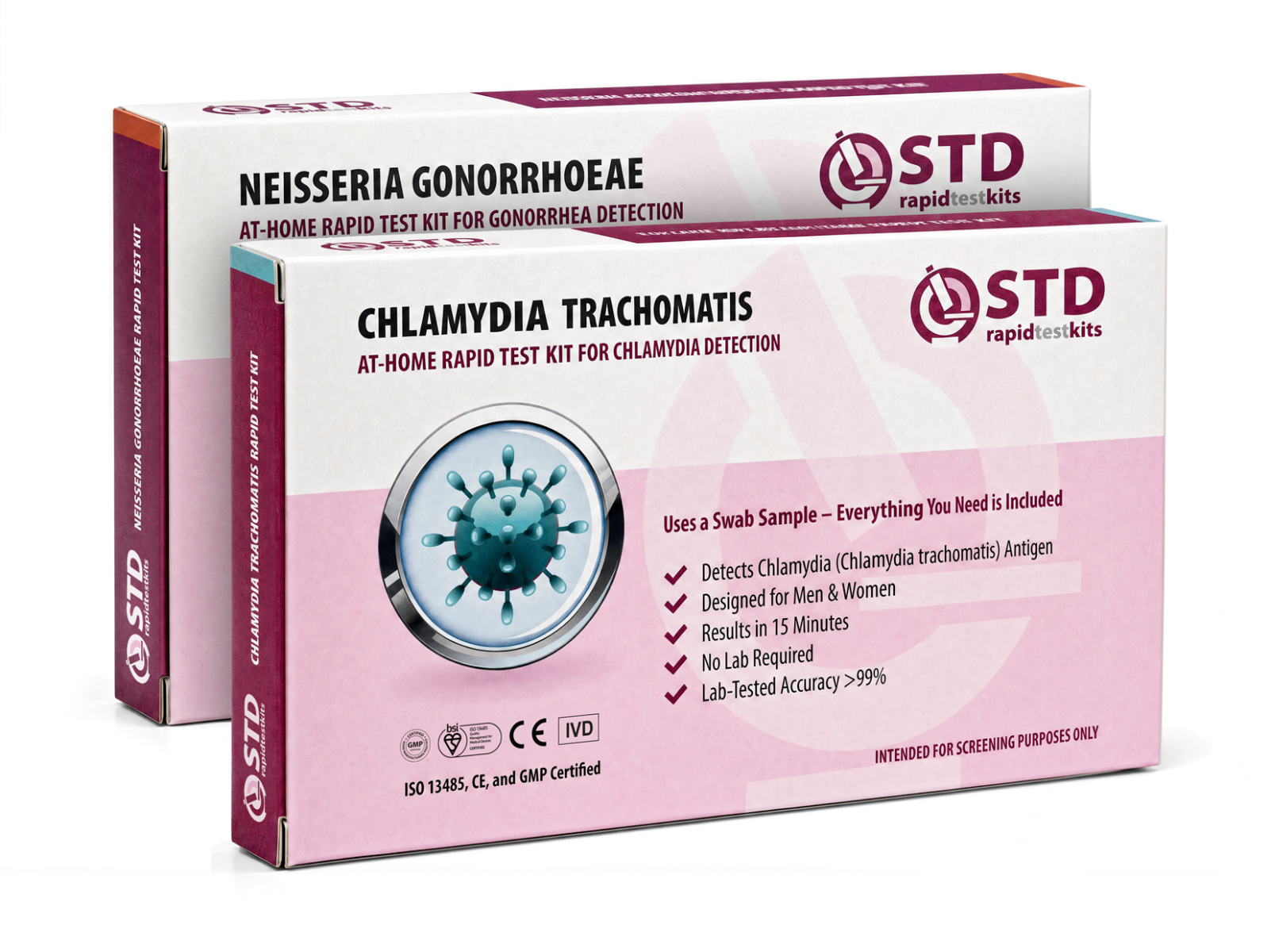
Privacy is a common concern, which is one reason at-home testing has become more popular. Self-collected swab samples or a fingerstick blood draw can be processed without anyone else knowing, which removes one barrier for people who feel anxious about a clinic visit. For symptoms that point toward chlamydia and gonorrhea specifically, a dedicated swab test for those two infections often makes the most sense. For broader peace of mind, a multi-infection screening kit covers the most common causes in a single pass.
The reassuring part is that most infections that cause burning urination are highly treatable. Antibiotics clear bacterial infections like chlamydia and gonorrhea, and trichomoniasis responds to a short course of antiparasitic medication. Once the underlying cause is identified, symptoms typically resolve quickly and partner notification can be handled in the way that fits each relationship best.
If symptoms persist beyond a few days, or if they are paired with fever, severe pelvic pain, or visible sores, it is worth seeing a clinician in person rather than relying on a home test alone. At-home tests work well for routine screening; they are not a substitute for clinical evaluation when the situation is more complex.
FAQs
- Burning when I pee but my UTI test was negative. Could it still be an STI?
- Yes, and it is one of the most common follow-up scenarios in sexual-health clinics. A negative urine culture rules out a bladder infection but does not rule out urethritis. Chlamydia and gonorrhea are the two infections clinicians screen for first when this pattern shows up, especially if there is any discharge, recent sexual contact, or pelvic discomfort alongside the burning.
- If I have discharge along with the burning, does that mean it has to be an STI?
- Not automatically, but it does shift STIs higher on the list. Yeast infections, bacterial vaginosis, and irritation after rough sex can all cause discharge too. The combination clinicians watch for is burning plus unusual or new discharge, because that is when chlamydia, gonorrhea, and trichomoniasis become more likely. Testing is the fastest way to tell which of those it is.
- What kind of discharge should make me think I need to test?
- Anything new, unusual, or persistent is worth checking. Thick white discharge with itching often points toward yeast. Yellow or green discharge shows up frequently with gonorrhea. Foamy yellow-green discharge with a fishy smell is more characteristic of trichomoniasis. Color alone cannot diagnose anything, which is why testing is usually the fastest way to stop guessing.
- Can men get burning urination from STIs too?
- Yes. In men, one of the classic early signs of gonorrhea or chlamydia is a sharp burn when urinating, sometimes followed by cloudy or yellow discharge from the penis. Some men brush it off as irritation for a few days, but if it persists, especially with discharge, it is worth getting tested rather than waiting it out.
- I only had oral sex. Could that still lead to burning when I pee later?
- Yes, it can. Oral sex can spread infections like gonorrhea or chlamydia to the urethra even when no vaginal or anal sex is involved. Clinicians see it often enough that they routinely ask about oral exposure during sexual-health assessments. Symptoms can take days to appear, so the connection is not always obvious in the moment.
- How soon after sex would symptoms like burning show up?
- Chlamydia and gonorrhea: typically one to three weeks. Trichomoniasis: five to twenty-eight days. Many people notice nothing at all, which is why screening after any new exposure is recommended regardless of how someone feels. If symptoms do appear, they tend to build gradually rather than hitting all at once.
- Can irritation from sex cause burning without an infection?
- Yes, especially when there has been a lot of friction, insufficient lubrication, or a new condom or product that irritated the skin. That kind of burning usually fades within a day or two. If it sticks around, gets worse, or is followed by discharge, testing becomes the safer choice rather than waiting to see what happens.
- If it does turn out to be an STI, what usually happens next?
- Most of the infections that cause burning urination are very treatable. Chlamydia and gonorrhea are cleared with a short course of antibiotics. Trichomoniasis is treated with a single-dose antiparasitic. After treatment, symptoms typically improve quickly, and a follow-up test confirms the infection has cleared. Partner notification and treatment are part of the standard plan to prevent reinfection.
How We Sourced This Article: This guide draws on current public-health guidance from the U.S. Centers for Disease Control and Prevention, the U.K. National Health Service, and the World Health Organization. We reviewed authoritative literature on urethritis, common sexually transmitted infections that cause burning urination, and the diagnostic patterns clinicians use to distinguish UTIs from STIs. The aim is to keep the medical content accurate while remaining easy to act on without a clinical background.
- U.S. Centers for Disease Control and Prevention. Chlamydia Basic Fact Sheet, used here to support claims about asymptomatic chlamydia, the timing of symptom onset after exposure, and the painful-urination-plus-discharge pattern.
- U.S. Centers for Disease Control and Prevention. Gonorrhea Basic Fact Sheet, used here to support the description of typical gonorrhea symptoms in men and the asymptomatic profile in many women.
- U.K. National Health Service. Sexually Transmitted Infections overview page, used here to support the general framing of STI testing when UTI symptoms are present.
- World Health Organization. Sexually Transmitted Infections fact sheet, used here for the global figure of more than one million new curable STI cases each day among adults aged 15 to 49.
