How Accurate Are At-Home HPV Rapid Tests Compared With a Lab Test?
A lab HPV test and a rapid home cassette can both start with a swab, but the evidence behind them is very different. Here is what each test has been measured against, what the published numbers for rapid HPV tests show, why our kit has no figure to quote, and how to use a home result without letting it stand in for cervical screening.
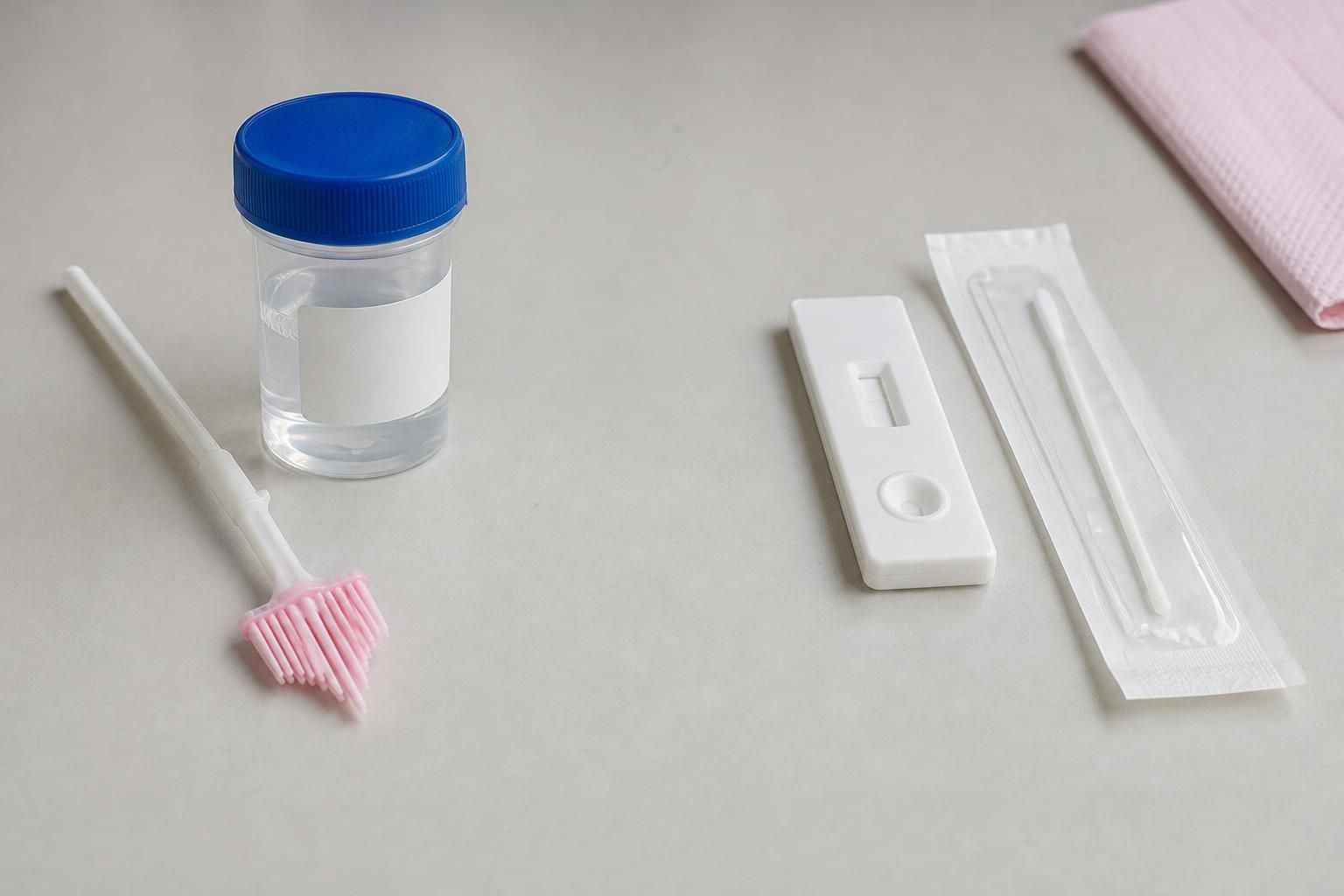



- Lab HPV tests used for cervical screening have approved, published performance. The manufacturer of our home HPV kit publishes no sensitivity or specificity figures.
- Treat a home HPV result as a preliminary screen only: a positive needs a clinician, and a negative does not replace your regular cervical screening.
Published: October 2026 | Last updated: October 2026 | Editorial review and quality control: Martina N.
Are at-home HPV rapid tests as accurate as a lab test?
We found no published evidence that they are. Lab HPV tests used in cervical screening are approved and measured by how well they find precancer. In one study, a rapid test for HPV types 16 and 18 was positive in about half of high-grade precancers, against about two-thirds for a lab HPV-DNA test. Our kit's manufacturer publishes no sensitivity or specificity figures.
A lab HPV test and a rapid HPV cassette can both start with a swab, but only the lab test has an approved, published record for cervical screening. Our guide to how accurate the HPV rapid test is explains how the cassettes work and the handling mistakes that skew a reading. This article compares the two tests directly: what each is measured against, what the published numbers show, and which situations call for the lab version.
The comparison is uneven because the evidence is uneven. Lab HPV testing is the first-line test in the NHS program and one of the CDC-listed screening options in the US. Rapid lateral-flow HPV tests have been studied far less, and our kit has no published performance figures at all. That gap is the main finding here.
What a lab HPV test is measured against
In screening, the lab HPV test “checks cells for infection with high-risk HPV types that can cause cervical cancer,” according to the National Cancer Institute. Finding the virus isn't the goal in itself. The NHS program checks every sample for high-risk HPV first, and looks for changes in the cervical cells only if the virus is found (NHS).
Screening research typically measures a test by how well it finds biopsy-confirmed precancer, not just the virus. The CDC says that for people aged 30 to 65, a doctor may tell you that after a normal HPV-only result you can wait five years before the next screening.
Self-collection is part of the lab-test evidence too. On May 14, 2024, the FDA expanded the approvals of two lab HPV tests, BD Onclarity and Roche cobas, so that people can collect their own vaginal sample with a swab or brush. Collection still has to happen in a health care setting such as a clinic or pharmacy, and the NCI notes there is “no change” to how the tests detect HPV (NCI, 2024).
Cervical screening from the age of 30 (25 years in women living with HIV) can detect cervical precancer, and when coupled with timely treatment can prevent progression to cervical cancer.
What the published numbers show for rapid HPV tests
Few lateral-flow HPV tests have published performance data that we could find. One of the clearer studies evaluated OncoE6, a lateral-flow test for the E6 protein of HPV types 16 and 18. Researchers in Brazil tested it in 448 women already referred after an abnormal Pap, using clinician-collected cervical samples in liquid-based (ThinPrep) vials, with a trained technician running every test. OncoE6 was positive in 49.2% of women with CIN2+ and 59.2% of women with CIN3+, the grades of precancer that screening aims to find, against 63.6% and 73.2% for the lab HPV-DNA test. Part of that gap likely comes from scope: OncoE6 looks only for types 16 and 18.
Used as a triage step after a positive HPV-DNA test, OncoE6's specificity was 91.8% for CIN2+ and 88.6% for CIN3+. The authors reported “significantly lower sensitivity” than the lab HPV-DNA test (Mariano et al., PLoS ONE, 2016).
Those numbers belong to OncoE6, run in a lab setting on a high-risk group. They are not our kit's numbers. Lateral-flow tests don't share performance just because they share a format. For kits whose inserts do report figures, our comparison of rapid STD test kits and lab testing lines up the numbers infection by infection.
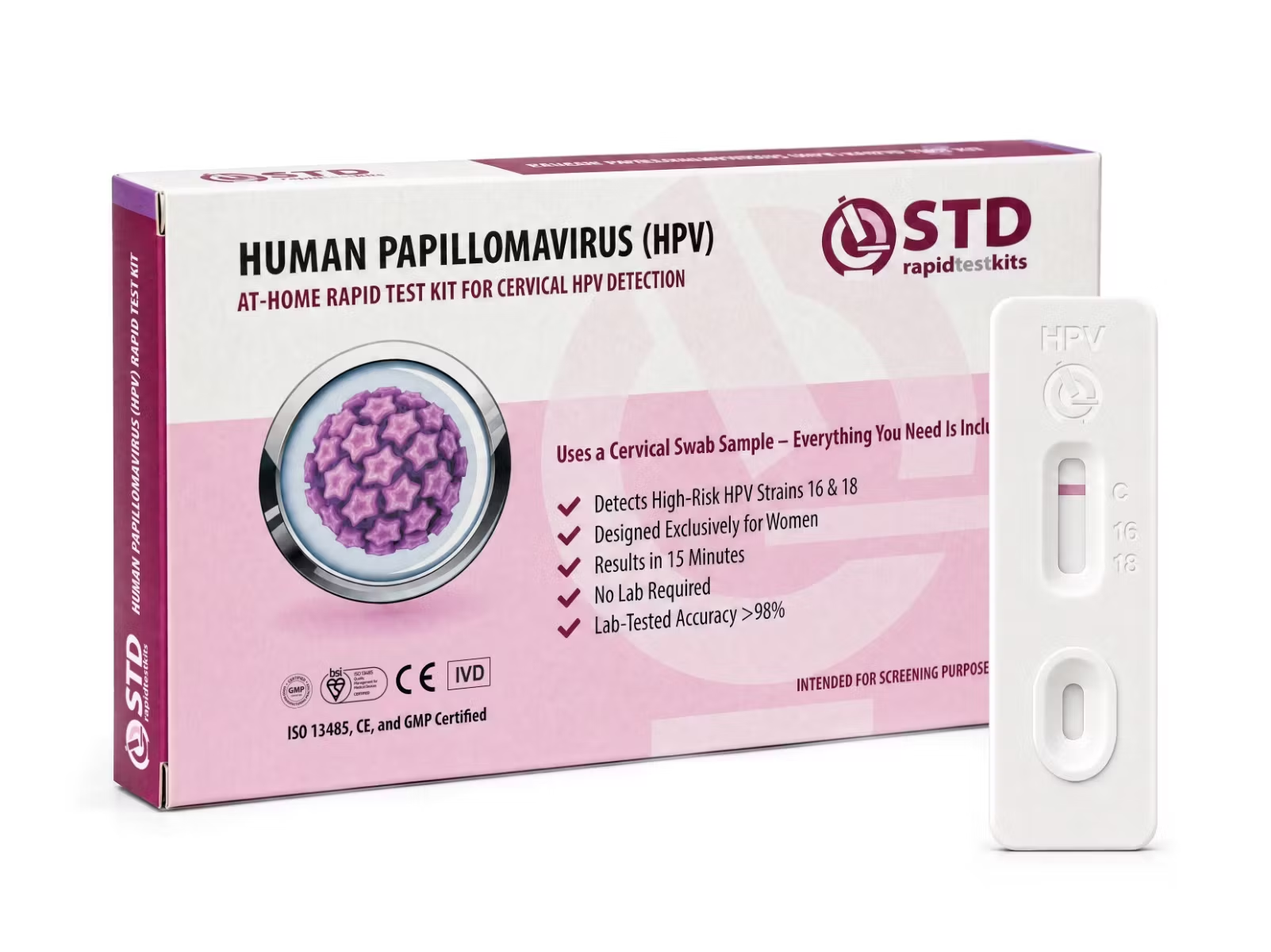
This site, stdrapidtestkits.com, sells an at-home HPV rapid test, and its manufacturer publishes no sensitivity or specificity figures. The approved lab self-collection described above is a vaginal sample taken in a health care setting. Our kit is different: according to the manufacturer's instructions, it is intended for a cervical swab from the endocervical canal. The manufacturer publishes no figure for self-collected swabs or results read at home.
Lab HPV Test vs Our At-Home HPV Rapid Kit
| Feature | Lab HPV test (cervical screening) | Our at-home HPV rapid kit |
|---|---|---|
| What it looks for | High-risk HPV types linked to cervical cancer | HPV, read as lines on a lateral-flow cassette |
| Sample | Cervical sample, or a self-collected vaginal sample in a health care setting for two approved tests | Cervical swab from the endocervical canal, according to the manufacturer's instructions |
| Published sensitivity and specificity | Evaluated in screening trials, typically against biopsy-confirmed precancer | None published by the manufacturer |
| Evidence for self-collected samples | Yes, for the approved lab tests | No figure published for self-collected or home-read results |
| What a positive leads to | A defined follow-up pathway, starting with a cell check on the same sample | See a clinician for a lab HPV test or cervical screening |
| Timing | Follows the age-based screening schedule, not a recent partner | Not tied to a new partner: no agency defines a post-exposure HPV window or recommends HPV testing after a new partner |
| Where it is done | Clinic or pharmacy visit; the sample is processed in a lab | At home, read the same session, privately |
The lab test's advantage is documented performance; the home kit's is privacy and speed.
Why any HPV result needs careful reading
Even a perfect HPV test would answer a narrower question than most people think. HPV is very common, and the CDC reports that in 9 out of 10 cases it goes away on its own within two years without causing health problems.
The cancer risk comes from infection that persists. The WHO says it usually takes 15 to 20 years for abnormal cells to become cancer, or 5 to 10 years in women with weakened immune systems, such as those with untreated HIV. That long timeline is why screening works, and why a single positive result, from any test, is a reason for follow-up, not a cancer finding.
A positive result's meaning also depends on how common HPV is among people like you, not on specificity alone. For a kit with no published figures, nobody can estimate how often its positives are true or how often its negatives miss an infection.
Three Misreadings of an HPV Result
Myth: A positive HPV test means I have cancer.
Fact: It means HPV was detected. Screening programs handle a positive by checking the cervical cells, and most infections clear on their own.
Myth: A negative home HPV result means I can skip my next screening.
Fact: A negative from a rapid kit with no published performance figures does not rule HPV out and does not reset your screening schedule.
Myth: Lab tests accept self-collected samples, so any rapid cassette does too.
Fact: The self-collection evidence comes from lab HPV tests. Each test needs its own data, and the manufacturer of our rapid kit publishes no figure for self-collected swabs.
Where a home HPV kit fits, and what you trade for privacy
The trade-off is simple. A home kit gives you a flat price, no appointment, no insurance paperwork and an answer in private. A lab test gives you documented performance and a follow-up pathway built around the result.
The home kit makes most sense as a private preliminary check for a woman aged 30 or older with no symptoms who is up to date on cervical screening and wants an extra look between visits. If you are under 30, HPV testing is not routinely recommended (see the age guidance below), so ask a clinician instead. If a home result is positive, book a clinician for a lab HPV test or cervical screening. If it is negative, that does not rule HPV out, and your next scheduled screening still goes ahead.
The kit is for women only: the manufacturer intends it for a cervical swab. There is no version for men, and the CDC does not recommend HPV tests to screen men.
When to skip the home kit and book the lab test
In the situations below, a home result adds uncertainty without changing what you need to do next, so go straight to a clinic. Age matters as well. The CDC does not recommend HPV tests to screen women under 30, while the American Cancer Society starts HPV screening at 25, as the NCI summarizes. A clinician can tell you which schedule applies to you.
Book a Clinic Instead of Testing at Home If…
Any one of these is reason enough to see a clinician.
- You are under 30 (CDC) or under 25 (American Cancer Society): HPV testing is not routinely recommended, so ask a clinician
- You are due or overdue for cervical screening
- You have new symptoms such as unusual bleeding, pelvic pain or unusual discharge
- You have had an abnormal Pap or HPV result and are under follow-up
- You are pregnant
- You have a weakened immune system, including HIV
- You are a man or do not have a cervix (this kit does not apply)
This article summarizes current guidance from cancer.gov, the NHS, the U.S. Centers for Disease Control and Prevention (CDC) and the World Health Organization (WHO) and the other sources listed below. Each specific figure or recommendation links to the page that states it, and every page used is listed under Sources with what it supports. It is general health information written by our editorial staff, not a diagnosis or a treatment plan; how we choose topics and use sources is described in our editorial policy.
- National Cancer Institute. Cervical Cancer Screening: what the HPV test checks for, USPSTF screening intervals, and the American Cancer Society's age-25 HPV start.
- NHS. What is cervical screening: samples are checked for high-risk HPV first, then for cell changes if HPV is found.
- U.S. Centers for Disease Control and Prevention. Cervical cancer screening: primary HPV testing for ages 30 to 65 with a five-year interval after a normal result.
- National Cancer Institute, Cancer Currents (2024). FDA approval on May 14, 2024 of self-collected vaginal samples for two lab HPV tests, collected in a health care setting.
- World Health Organization. Cervical cancer fact sheet: screening from age 30 (25 for women living with HIV) detects precancer; 15 to 20 years (5 to 10 with weakened immunity) for abnormal cells to become cancer.
- Mariano VS et al. A Low-Cost HPV Immunochromatographic Assay to Detect High-Grade Cervical Intraepithelial Neoplasia. PLoS ONE, 2016: OncoE6 positivity rates in CIN2+ and CIN3+ compared with an HPV-DNA test, and OncoE6 triage specificity.
- U.S. Centers for Disease Control and Prevention. About genital HPV infection: 9 in 10 infections clear within two years; HPV tests not recommended to screen men, adolescents or women under 30.