
Published: November 2025 | Last updated: May 2026 | Editorial review and quality control: Martina N.
The short answer is yes, and also no. STD tests can look different on paper for males and females, but the difference is rarely about the infection itself. The underlying biology is identical; what shifts is where the infection lives, which sample type a provider collects, and which routine screening guidelines apply at different ages.
If you have been wondering whether you are getting the right test, or whether your partner is, the gap between the two starts with anatomy and ends with timing. Both matter, and neither is about blame.
Key Takeaways
- Bacterial STIs like chlamydia and gonorrhea use the same lab science for everyone. What changes is the sample: urine, swab, or blood.
- The right test depends on three things, none of them gender identity: which body parts were involved, what type of exposure happened, and how long ago.
Same Infection, Different Entry Points
Chlamydia is the same bacterium whether it infects a cervix, urethra, throat, or rectum. Gonorrhea does not change based on gender. HIV behaves the same in every human body. The science underneath is consistent.
What shifts is where those infections live. A cervix sits internally, where mild discharge or irritation can blend into normal monthly variation. A urethra in someone with a penis is more exposed, so inflammation often shows up sooner as discharge or burning when urinating. That visibility changes how quickly someone seeks care, and how providers decide which sample to collect.
Picture two people exposed on the same night. One develops noticeable discharge within a week. The other feels completely fine for months, because the inflammation patterns that follow exposure are shaped by tissue type, not by who was more careless.
Urethral inflammation in a penis often produces visible discharge or burning within a week or two of exposure. Cervical infection often produces no noticeable change at all. The bacteria are the same; the local tissue response is different, which is why screening recommendations lean more proactive for people with cervixes.
Urine vs Swabs vs Blood: What Actually Changes
When people ask whether STD tests are different for males and females, what they really mean is: will the testing process feel different? Sometimes, yes.
For bacterial infections like chlamydia and gonorrhea, nucleic acid amplification tests (NAATs) detect the bacterium's DNA. The lab method is the same for everyone. The difference is where the sample comes from. CDC screening recommendations note that vaginal swabs (provider or self collected) are the preferred specimen in people with vaginas, while first-catch urine works well in people with penises.
Vaginal tissue provides the more reliable sample for cervical-site infections, which is why the collection route differs even when the lab assay underneath is identical.
| Infection | Person with Penis | Person with Cervix | Other Possible Sites |
|---|---|---|---|
| Chlamydia | First-catch urine or urethral swab | Vaginal or cervical swab (often preferred) | Throat and rectal swabs if exposed |
| Gonorrhea | Urine or urethral swab | Vaginal or cervical swab | Throat and rectal swabs if exposed |
| Syphilis | Blood test | Blood test | Lesion swab if a sore is present |
| HIV | Blood or oral fluid | Blood or oral fluid | Same method across genders |
| Trichomoniasis | Urine (less sensitive) | Vaginal swab (preferred) | Rare outside the genital tract |
Are STD tests different for males and females?
The infections are identical. What differs is the sample. People with a cervix typically use a vaginal swab. People with a penis typically use first-catch urine or a urethral swab. Blood tests for HIV, syphilis, and hepatitis are the same across anatomy. Screening guidelines also differ by age and anatomy, reflecting how often each infection runs silent in each body.
The Pap Smear Myth That Causes So Much Confusion
A common assumption is that a Pap smear tests for all STDs. It does not. A Pap smear screens for cervical cell changes, most of which are caused by persistent high-risk strains of HPV. It is not an STI panel. The Mayo Clinic describes a Pap smear as a cervical cell health screen; it does not test for chlamydia, gonorrhea, or other bacterial STIs unless a provider specifically orders those tests alongside.
Imagine someone leaving their annual exam thinking, "I'm good. They tested everything." Months later, they discover untreated chlamydia. The Pap was never designed to detect it.
HPV screening exists primarily for people with cervixes because persistent high-risk strains can lead to cervical cancer. CDC notes there is currently no routine HPV screening test for people with penises who have no symptoms. That difference can make it seem like women get "more tests," but what they are actually getting is cancer prevention screening, not a fuller STI workup.
A Pap smear screens cervical cells for HPV-related changes. It does not test for chlamydia, gonorrhea, trichomoniasis, HIV, syphilis, or hepatitis unless your clinician separately ordered those tests alongside the Pap. If you want STI coverage at your annual exam, ask explicitly which tests were added to the panel.
Why Silent STDs Affect People with Cervixes More
Here is where things feel unfair. Many bacterial STDs are more likely to be asymptomatic in people with cervixes, with no discharge, no burning, and no obvious red flags. The infection simply sits there, sometimes for months.
Picture a 22-year-old who feels completely fine after a new relationship begins. Routine screening reveals an infection that has been quietly present for weeks. That silence is exactly why CDC guidance recommends annual chlamydia and gonorrhea screening for sexually active women under 25 even when they have no symptoms. People with a penis often notice discharge or pain sooner, which leads them to test earlier on their own.
Feeling fine is not the same as being infection-free. CDC notes that most chlamydia infections in people with cervixes cause no symptoms at all. If you have had a new partner, a condom failure, or any exposure event, testing at the right window is the only reliable way to know.
Behavior Matters More Than Gender
Testing decisions are driven more by sexual behavior than by gender identity.
If someone has receptive anal sex, rectal swabs may be recommended regardless of gender. If someone gives oral sex, throat testing can be important. A heterosexual man who only gives oral sex can still carry gonorrhea in his throat. A lesbian woman can still transmit infections through skin contact and shared fluids. The right test sites follow anatomy and exposure history rather than identity labels.
| Exposure Type | Potential Testing Sites | Who It Applies To |
|---|---|---|
| Vaginal intercourse | Urine, vaginal or cervical swab | All anatomies involved |
| Oral sex (giving) | Throat swab | All genders |
| Receptive anal sex | Rectal swab | All genders |
| Skin-to-skin genital contact | Visual exam, HPV evaluation if needed | All genders |
At-Home STD Testing: Is There a Male Version and a Female Version?
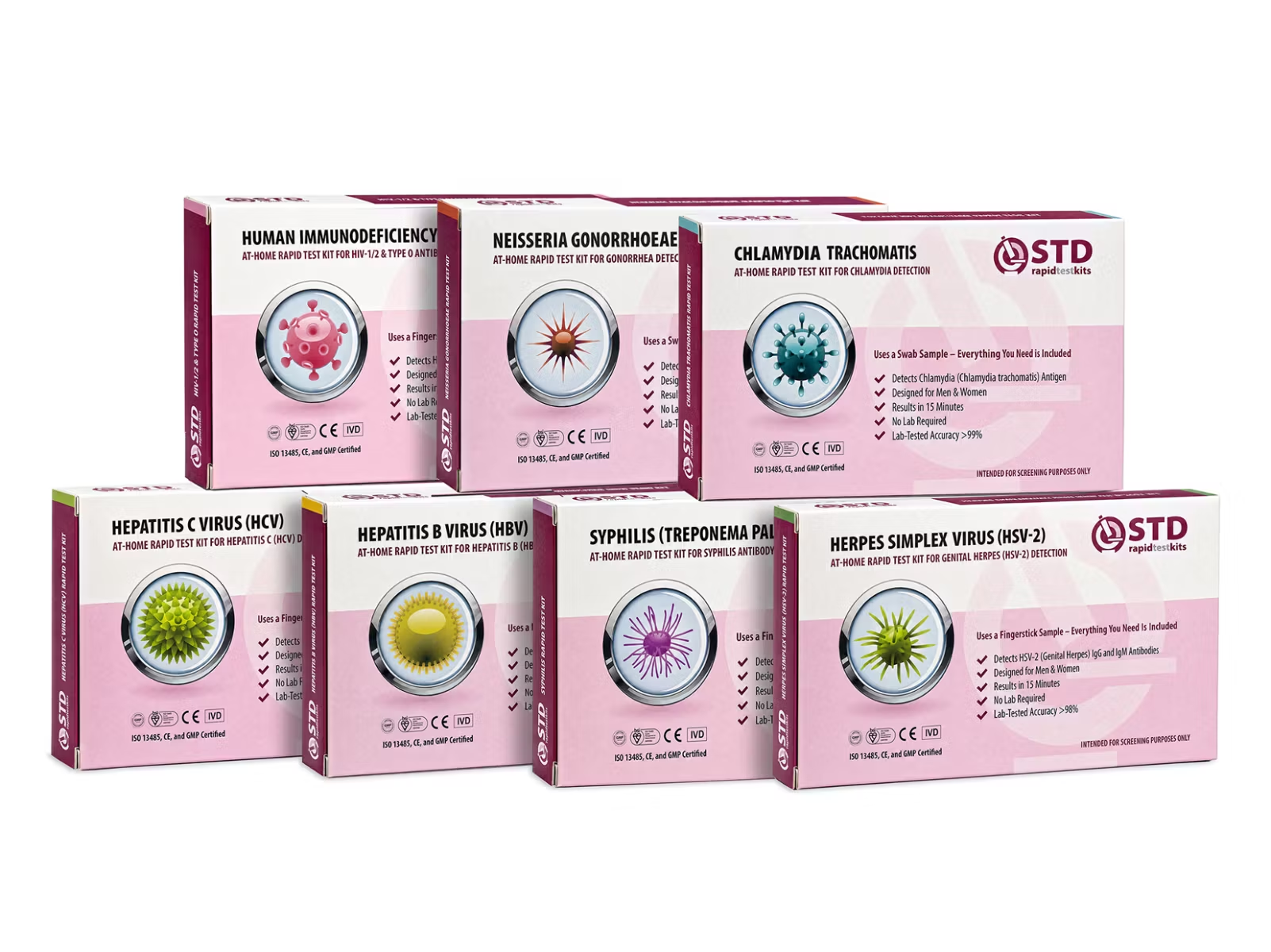
At-home STD tests follow the same logic as clinic tests, with one difference: privacy and control sit with you. Some kits include urine collection for people with penises. Others include vaginal swabs for people with cervixes. Blood-based fingerstick tests work the same across all anatomies.
If you are unsure which test you need, start with your anatomy and your exposure history. A comprehensive panel can simplify the process. Many people prefer ordering discreetly to skip waiting rooms and awkward conversations.
Our at-home rapid tests are lateral-flow immunoassays, not laboratory NAATs. They use the same sample types as lab tests, but they are screening tools. A positive result is worth confirming with a lab, especially for HIV and syphilis where follow-up treatment depends on confirmatory testing.
Do Both Partners Get the Same Tests?
Couples often assume they will receive identical test panels. Sometimes they overlap, especially for blood tests like HIV and syphilis. But one partner may need a vaginal swab while the other provides urine.
This difference reflects tissue biology, not trust. Cervical tissue requires specific screening protocols because of the cervical cancer link. Penile tissue does not have an equivalent cancer-screening test in routine practice. Different sample types reflect anatomy, not any judgment about whose testing burden is greater.
What overlaps and what differs between partners
- Blood tests are the same for both partners: HIV, syphilis, hepatitis B and C all use a fingerstick or venous blood sample regardless of anatomy.
- Bacterial sample collection differs: vaginal or cervical swab for people with a cervix, first-catch urine or urethral swab for people with a penis.
- Cancer-related screening is anatomy-specific: routine HPV/Pap screening is recommended for cervixes; there is no equivalent routine HPV screen for penises.
Timing Matters More Than Gender
Accuracy is rarely about sex differences. It is about timing. Testing too early can produce false reassurance. Waiting until the appropriate window period increases reliability.
The CDC screening guidance describes typical window periods for the most common STIs. The numbers below reflect ranges for laboratory testing; home rapid tests may have slightly different windows depending on the assay technology, so always check the product insert.
| Infection | Estimated Window Period | Common Test Type |
|---|---|---|
| Chlamydia | 7 to 14 days | Urine or swab NAAT |
| Gonorrhea | 7 to 14 days | Urine or swab NAAT |
| Syphilis | 3 to 6 weeks | Blood antibody test |
| HIV (antigen/antibody) | 2 to 6 weeks | Blood or oral fluid |
| Trichomoniasis | 5 to 28 days | Swab or urine |
Why It Feels So Uneven (Even When It Isn't)
When someone asks whether STD tests are different for males and females, what they are often really asking is, "Is this going to be harder for me?" Or worse, "Am I going to be blamed?"
Historically, sexual health conversations have landed heavier on women. More routine appointments, more pelvic exams, more conversations about fertility risk. Meanwhile, men are often told to show up only when something burns.
That imbalance creates a psychological illusion that women carry more responsibility. In reality, the bacteria do not care who society blames. They respond to tissue, not cultural narratives.
Most people who have a sexually transmitted infection do not know it. Testing is the only way to know for sure.
Where Infections Hide When No One Is Looking
Some of the biggest testing mistakes happen when people assume symptoms will guide them. Symptoms are unreliable narrators.
A throat infection with gonorrhea may feel like nothing at all, with no pain and no fever. Just bacteria quietly existing. Rectal infections can produce mild irritation that gets mistaken for hemorrhoids or friction. Cervical infections may produce discharge so subtle it blends into normal variation.
Now picture a man who tests negative via urine after oral sex. He relaxes. Weeks later, a partner develops symptoms traced back to a throat infection he did not know he had. The issue was not gender. It was incomplete site testing. Comprehensive panels and honest exposure conversations matter because testing based only on "male" or "female" categories misses the complexity of real sexual behavior.

Screening Guidelines: Why They Read Differently
Public health recommendations are shaped by patterns seen across millions of cases. When CDC chlamydia guidance recommends routine annual testing for sexually active women under 25, it is because silent cervical infections are statistically common and can cause long-term complications like pelvic inflammatory disease or infertility if untreated.
Men are not exempt from infection. They are simply less likely to be screened proactively unless symptoms appear or a clinician notes risk factors. That difference reflects epidemiology, not a value judgment about who should be tested.
The nuance is important. Screening guidelines are population-based. Your own risk profile depends on behavior, partners, and timing, so the population-level recommendation is a starting point rather than the whole picture.
| Infection | Routine Screening More Common In | Why |
|---|---|---|
| Chlamydia | Sexually active women under 25 | High rates of asymptomatic cervical infection |
| HPV | People with cervixes | Cervical cancer prevention screening |
| HIV | All adults at least once | Universal one-time screening recommended |
| Syphilis | Pregnant individuals and high-risk groups | Severe complications if untreated |
The Quiet Mental Spiral After Exposure
The moment after a potential exposure has its own rhythm: the mental replay, the searching, the scroll through symptom pages. "Do men and women need different STD tests?" becomes shorthand for something deeper: "Did I miss something?"
There is a specific kind of anxiety that shows up after sex when uncertainty creeps in. You start inventorying every detail. Was that normal discharge? Is this itch new? Should I wait? Should I test tomorrow?
The grounded answer is that testing too early reduces accuracy, testing at the right window increases reliability, and choosing the right sample type based on anatomy increases detection. Those are controllable variables. Clarity reduces spiraling, and concrete data tends to quiet panic in a way that more searching does not.
Three controllable variables when you are spiraling
- Wait for the right window period before testing; results before that window can produce false reassurance.
- Use the sample type that matches your anatomy and exposure history (vaginal swab, urine, blood, or throat or rectal swab as appropriate).
- Treat a positive home rapid result as a screen, not a diagnosis; confirm with a lab for HIV, syphilis, and other infections where treatment depends on confirmation.
What Actually Determines the Right Test for You
Strip away the noise and it comes down to three variables. What body parts were involved. What type of exposure occurred. And how long ago it happened.
If you have a cervix and had vaginal intercourse two weeks ago, a vaginal swab and possibly urine testing are appropriate. If you have a penis and engaged in receptive oral sex, throat screening might matter more than urine alone. If blood exposure is possible, blood tests apply universally.
Why Men Often Under-Test (And Why That's Changing)
Many men were socialized to equate healthcare with weakness unless something is visibly wrong. If nothing hurts, they assume nothing is wrong. The problem is that many STDs do not hurt; they persist quietly and transmit without warning.
Public health messaging historically targeted women because of reproductive consequences, but that unintentionally reinforced the idea that sexual health monitoring was "her job." That historical framing is shifting as public health messaging moves toward shared testing responsibility regardless of anatomy. If two people share risk, both share testing responsibility.
The CDC recommends that everyone aged 13 to 64 get tested for HIV at least once as part of routine healthcare, regardless of perceived risk. That baseline applies equally to men and women and reflects the broader shift toward shared screening responsibility across anatomies, not just for groups historically singled out.
You Deserve Clarity, Not Guesswork
If you are reading this because you are worried, take a breath. Testing differences exist, but they are logical and manageable. They are based on anatomy and science, not stigma.
Start with anatomy, exposure type, and timing, then choose a method that fits. If discretion matters to you, order privately, test at home, and move forward with facts instead of fear. Confirm a positive home result with a clinician so any needed treatment can begin without delay.
Next steps
- Identify your anatomy and exposure type (vaginal, oral, anal, or skin-to-skin contact, plus any specific sites involved).
- Choose the sample type that matches: vaginal or cervical swab, first-catch urine or urethral swab, blood, or a throat or rectal swab if those sites were exposed.
- Test at the correct window for the infection of concern, and confirm any positive home result with a clinician.
FAQs
- Are STD tests actually different for males and females, or is this overblown?
- It is real, but it is not dramatic. The infections are the same. What changes is where they can hide and how the sample is collected. A person with a cervix may need a vaginal swab. A person with a penis may provide urine. The science underneath is identical. The collection method shifts because bodies are built differently.
- If I had a Pap smear, does that mean I was tested for everything?
- No. A Pap smear checks cervical cells for changes often linked to HPV. It does not automatically screen for chlamydia, gonorrhea, or HIV unless your provider specifically ordered those tests. Plenty of people walk out of an annual exam thinking they are fully tested. Always ask what was actually included.
- Why do women seem to get tested more often than men?
- Two reasons: silence and consequences. Bacterial STDs are more likely to be symptom-free in people with cervixes, and untreated infections can affect fertility or cause pelvic inflammatory disease. That is why screening guidelines lean proactive. It is about prevention, not blame.
- Do men need HPV testing too?
- There is no routine HPV screening test for people with penises who have no symptoms. That does not mean HPV is not present, only that medicine does not yet have an approved, widely recommended screening tool for that anatomy. If there are visible warts or other concerns, evaluation happens differently.
- If we are a couple, can we just get the same STD panel?
- You can overlap a lot, especially with blood tests like HIV and syphilis. But one partner may need a vaginal swab while the other provides urine. Same destination, slightly different fit.
- I only had oral sex. Do I really need throat testing?
- Possibly, yes. Gonorrhea and chlamydia can live in the throat without symptoms, with no sore throat or warning. If oral exposure happened, it is worth asking about throat swabs. This applies to everyone, regardless of gender.
- Are at-home STD tests less accurate than clinic tests?
- Most at-home rapid tests are lateral-flow immunoassays, while clinic chlamydia and gonorrhea screening typically uses a lab NAAT. The two are complementary, not equivalent. Home rapid tests are useful for fast screening; a positive home result is worth confirming with a lab, and the biggest accuracy factor is testing at the right window after exposure.
- If I feel fine, do I still need testing?
- Feeling fine is not the same as being infection-free. Many STDs are asymptomatic, especially early on. If you have had a new partner, a condom failure, or unprotected sex, testing gives you answers instead of guesses.
How We Sourced This Article: This article summarizes current advice from the U.S. Centers for Disease Control and Prevention, the World Health Organization, Mayo Clinic clinical summaries, and the UK National Health Service on STI screening, sample collection, and detection windows. Where specific figures appear in the body, the relevant guidance is linked inline.
- U.S. Centers for Disease Control and Prevention. STI treatment guidelines, including screening recommendations for chlamydia, gonorrhea, HIV, and syphilis by anatomy and risk group.
- U.S. Centers for Disease Control and Prevention. About chlamydia, including asymptomatic infection rates and recommended sample types.
- U.S. Centers for Disease Control and Prevention. About gonorrhea, including site-specific testing for genital, throat, and rectal infections.
- U.S. Centers for Disease Control and Prevention. About genital HPV infection, including the absence of routine HPV screening for people with penises.
- World Health Organization. Sexually transmitted infections fact sheet covering global STI epidemiology and core testing principles.
- Mayo Clinic. General consumer health reference for screening procedures including the Pap smear and STI testing.
- UK National Health Service. Sexually transmitted infections overview, including site-specific testing and partner notification.
