Published: November 2025 | Last updated: May 2026 | Editorial review and quality control: Martina N.
U.S. syphilis cases peaked at a 70-year high in 2023 and then dropped sharply in 2024, with primary and secondary cases falling nearly 22 percent year over year according to provisional CDC surveillance data published in September 2025. Congenital syphilis (an infection passed from a pregnant person to the fetus) is the painful exception, hitting nearly 4,000 cases in 2024 and marking the 12th consecutive year of increase. Most readers landing on this page want one of three answers: whether a recent rapid test result can be trusted, what a faint line actually means, and how long to wait between exposure and a meaningful test.
This guide walks through each, using current CDC and WHO numbers, plain-English window-period math, and clear next steps when a result is ambiguous. You will also find honest framing on what at-home rapid lateral-flow tests can and cannot answer. A lab-based RPR plus a confirmatory treponemal test still anchors a syphilis diagnosis, and we explain when to escalate from a home result to a clinic visit.
Key Takeaways
- Antibody-based rapid syphilis tests typically become reliable around six weeks after exposure; testing earlier carries a real risk of a false negative because antibody levels may still be below the cassette's detection threshold.
- Any visible test line, even a faint one, is read as reactive on most rapid kits; reactive results should be confirmed with a lab RPR plus treponemal test before any treatment decision.
What U.S. Syphilis Numbers Actually Look Like in 2026
The 2024 surveillance data, published by the CDC in September 2025, marks the first meaningful break in years of rising primary and secondary syphilis cases. According to the CDC's annual STI surveillance summary, overall STI cases fell about 9 percent year over year, with primary and secondary syphilis down nearly 22 percent. Globally, the World Health Organization estimates that 8 million adults aged 15 to 49 acquired syphilis in 2022 alone, illustrating how recent the U.S. peak is in a much larger global picture.
The exception, and it is a serious one, is congenital syphilis. The CDC's 2025 surveillance release reported nearly 4,000 congenital cases in 2024, marking a 12th consecutive year of increase. So the headline is a split: adult primary and secondary syphilis are finally bending downward, while the most preventable form (mother-to-fetus transmission) keeps rising.
The drivers behind the multi-year rise that produced today's still-elevated baseline are layered. Barrier-method use dropped after PrEP made HIV manageable, which lowered the practical incentive for condoms even for non-HIV STIs. Methamphetamine use, especially among reproductive-age women, correlates with higher-risk sexual networks and lower testing access. Public-health funding for STI prevention has trended down for years, leaving fewer free clinics, fewer outreach workers, and longer test-result delays. Public-health researchers at the Johns Hopkins Bloomberg School of Public Health have described the combined effect as a system that no longer catches infections early enough to interrupt transmission.
Demand for at-home rapid testing has grown alongside the surge. When clinic access is hard, mailed kits and lateral-flow rapid tests close part of the gap, particularly for first-pass screening.
Primary and secondary syphilis: down nearly 22 percent from 2023.
Overall STIs: down about 9 percent year over year.
Congenital syphilis: nearly 4,000 cases, a 12th consecutive year of increase. Source: CDC 2025 surveillance release.
Reported syphilis cases in the United States are at their highest annual total in more than seven decades, and congenital syphilis remains among the fastest-rising categories of sexually transmitted infections.
How Rapid Syphilis Tests Work, and What They Miss
Rapid syphilis tests are lateral-flow immunoassays, the same chemistry family as a home pregnancy test or a COVID antigen test. You take a fingerstick blood sample, drop it onto the cassette, add buffer, and wait for the control and test lines to develop. Most read in 10 to 20 minutes.
What the test is detecting is your immune system's reaction to Treponema pallidum, the bacterium that causes syphilis. It is looking for treponemal antibodies, the proteins your body produces in response to the infection. That is a critical detail, because antibodies do not appear immediately. Per the CDC's syphilis overview, primary syphilis typically begins with a painless sore (chancre) at the site of exposure that lasts 3 to 6 weeks before healing on its own, with or without treatment. Because the sore is painless and often heals before testing happens, antibody-based tests are the workhorse for primary detection, and they typically need several weeks after exposure to register the infection reliably. Test on day five and you may simply be testing too early for any antibody-based assay to detect the infection.
Lab-based testing splits into two categories: non-treponemal screens (RPR, or Rapid Plasma Reagin, and VDRL, or Venereal Disease Research Laboratory), which measure a more general immune response associated with active infection; and treponemal confirmatory tests (TPPA, FTA-ABS, or treponemal EIA), which confirm specific exposure to Treponema pallidum. The current CDC algorithm uses one of each: a screen plus a confirmatory test. Rapid at-home cassettes are screening tools; a reactive home result is a strong reason to escalate to a confirmatory lab workup, not the end of the diagnostic process.
One more thing the rapid format cannot answer on its own: whether your infection is current or historical. Treponemal antibodies often persist for life after exposure. The next sections explain what this means for reading and trusting your result.
| Test type | What it detects | Sample | Best window |
|---|---|---|---|
| Rapid antibody test (at-home) | Treponemal antibodies | Fingerstick blood | 6+ weeks after exposure |
| Lab non-treponemal (RPR or VDRL) | Non-specific antibodies tied to active infection | Venous blood | 3 to 6 weeks post-exposure, then for monitoring |
| Lab treponemal confirmatory (TPPA, FTA-ABS, treponemal EIA) | Specific antibodies to T. pallidum | Venous blood | Used to confirm a reactive screen |
What a Faint Line on a Syphilis Rapid Test Actually Means
Few things mess with your head like a half-visible second line. You stare at the cassette under different lights, you tilt it, you take a phone photo to check later. The good news is that the manufacturers have a clear answer: on most rapid kits, any visible test line, no matter how faint, is read as reactive. The complication is that some lines are faint enough to be confused with evaporation marks, background staining, or shadow.
If you have a faint test line that fits inside the read window, treat it as a reactive screen and confirm with a lab. False reactivity does happen, especially in people with autoimmune conditions, recent vaccinations, or a prior treated syphilis infection, so the lab confirmatory test is what tells you whether the result reflects current infection or a historical antibody response.
Read inside the printed window. If the kit says read at 10 to 15 minutes, anything that appears at minute 30 is not a valid result.
Use even, neutral lighting. Yellow incandescent bulbs and harsh phone flashlights both distort the colors cassettes were designed to show.
Re-check the control line. If the control did not develop a clean line, the test is invalid regardless of what the test region looks like, and you should run a fresh kit.
Why Test Timing Matters More Than Test Brand
Within the lateral-flow rapid test category, the kits sold for at-home use perform within a relatively narrow accuracy band. The single biggest variable in whether you get a reliable answer is when you test relative to the exposure event, not which brand you bought.
The window-period math is straightforward. Antibody production after a syphilis exposure is gradual. By two weeks, only a small fraction of infected people have measurable antibodies. By three weeks, many people are producing treponemal antibodies, but concentrations are often still below the lateral-flow detection threshold, which is why a negative rapid test at three weeks is not yet trustworthy. The six-week mark is when antibody levels are typically high enough for the cassette's chemistry to reliably flag the infection. Test before three weeks, and a negative result should be treated as inconclusive rather than reassuring.
Symptom timing is a separate variable. Primary syphilis often appears as a single painless sore (a chancre) at the site of exposure. Per the CDC's syphilis overview, the sore typically lasts 3 to 6 weeks before healing on its own, regardless of whether you receive treatment, which is part of why so many primary infections go unnoticed. Many people miss the chancre entirely because it is painless and may sit somewhere not easily visible (vagina, anus, mouth). Secondary syphilis, with rash on the trunk, palms, or soles, typically follows weeks later. If you notice either, do not wait for a calendar threshold to test. Reach out to a clinician for both rapid testing and clinical evaluation.
The final timing risk is the false-positive trap with non-treponemal screens. Pregnancy, autoimmune disease, recent vaccinations, and certain other infections can produce a reactive RPR or VDRL without active syphilis. This is why a positive screen is always paired with a treponemal confirmatory test before treatment decisions.

Congenital Syphilis: Why Timing in Pregnancy Is Non-Negotiable
Of every category in the CDC's surveillance summary, congenital syphilis (an infection passed from a pregnant person to the fetus) is the one still rising and the one with the highest stakes. The CDC's 2025 surveillance release reported nearly 4,000 congenital cases in 2024, marking a 12th consecutive year of increase even as adult primary and secondary syphilis cases declined.
Untreated maternal syphilis transmits to the fetus in a high percentage of cases. Severe outcomes (stillbirth, neonatal death, or lifelong disability including bone deformity, blindness, deafness, and neurologic disease) occur in a meaningful share of untreated infections. Treatment with appropriately timed penicillin during pregnancy interrupts transmission with very high efficacy, which is the basis for current CDC screening guidance.
Current CDC guidance recommends syphilis screening at the first prenatal visit for every pregnancy, with repeat screening in the third trimester (around 28 weeks) and again at delivery for people who live in higher-prevalence areas, who have new partners during pregnancy, or who have other risk factors. If you got tested early in pregnancy and assumed you were done, that is the most important place to push back: late-pregnancy exposure is one of the most common reasons congenital syphilis still occurs in the U.S.
If you are pregnant and reading this, the action item is concrete: confirm with your prenatal provider that you have had syphilis screening at the first visit, ask whether a third-trimester repeat is indicated for you, and ask again at delivery. The conversation is brief and the test is bundled into routine prenatal blood work.
Untreated syphilis in pregnancy is one of the highest-stakes preventable causes of stillbirth and neonatal disability. CDC guidance recommends a first-trimester syphilis screen for every pregnancy, with repeat screens at 28 weeks and at delivery for people in higher-risk circumstances. An at-home rapid test does not replace the lab-based prenatal screen built into routine prenatal care, but it can flag a problem worth raising at your next prenatal visit.
How Accurate Are Rapid Syphilis Tests, Really?
FDA-cleared and CE-marked rapid syphilis tests typically report sensitivity in the 85 to 98 percent range and specificity in the 92 to 99 percent range against laboratory reference testing. A peer-reviewed systematic review and meta-analysis of point-of-care treponemal antibody tests, published in Clinical Infectious Diseases, found pooled prospective sensitivity of 87.7 percent (95% confidence interval 71.8 to 97.2 percent) and pooled specificity of 96.7 percent (95% confidence interval 91.9 to 99.2 percent), with sensitivity rising to 98.5 percent in laboratory evaluations. The exact figures vary by manufacturer and by the population the test was validated in. Where you fall inside that band depends on three factors: timing relative to exposure (already covered above), specimen handling, and how the user reads the result. For manufacturer-specified accuracy on the kit you actually buy, check the product page (for our kit, that's the rapid syphilis home test product page).
What this means in plain math: in the right window and with proper handling, the test will correctly identify roughly nine of every ten true positives and correctly rule out the large majority of true negatives. Outside the window, both numbers drop. In real-world studies of self-administered rapid tests, user error contributes to a meaningful share of false negatives, with the most common errors being insufficient blood sample, reading the result outside the printed window, and storing or running the test in a hot environment.
The honest comparison is this: a lab-based RPR plus treponemal confirmatory algorithm is the diagnostic gold standard. A rapid at-home test is a screening tool with privacy and speed advantages, designed to flag results worth confirming. Both have their place in a sound testing strategy. The at-home test answers "is this worth a clinic visit right now"; the lab test answers "is this an active infection that needs treatment". When the two agree on a positive, treatment can move quickly; when they disagree, the lab result generally wins.
How accurate is a rapid syphilis test at home?
Rapid syphilis lateral-flow tests typically report sensitivity in the 85 to 98 percent range and specificity in the 92 to 99 percent range when used at least six weeks after exposure, consistent with pooled figures from a peer-reviewed systematic review of point-of-care treponemal antibody tests. Below three weeks, accuracy drops sharply because antibody levels may still be below the cassette's detection threshold. A reactive home result should be confirmed with a lab RPR plus a treponemal test before any treatment decision.
Home Test vs Clinic Test: Choosing What Fits Your Situation
A home rapid kit and a clinic visit are not in competition; they answer different questions. Use this rough sorting:
A home rapid syphilis test fits well when you want fast, private screening after a recent exposure (waiting until you are at least three to six weeks past the encounter), when you are doing routine multi-STI checks at home and want syphilis included in the bundle, or when clinic access is limited (rural area, scheduling conflicts, cost barriers, privacy concerns about your medical record).
A clinic visit fits well when you have visible symptoms (a painless sore, a body rash, swollen lymph nodes), when you are pregnant, when a partner has tested positive and you need confirmed lab results to coordinate treatment, or when a home test came back reactive or with a faint line. In any of these scenarios, the lab confirmatory algorithm gives you a clear treatment-grade answer plus same-visit access to penicillin treatment when indicated.
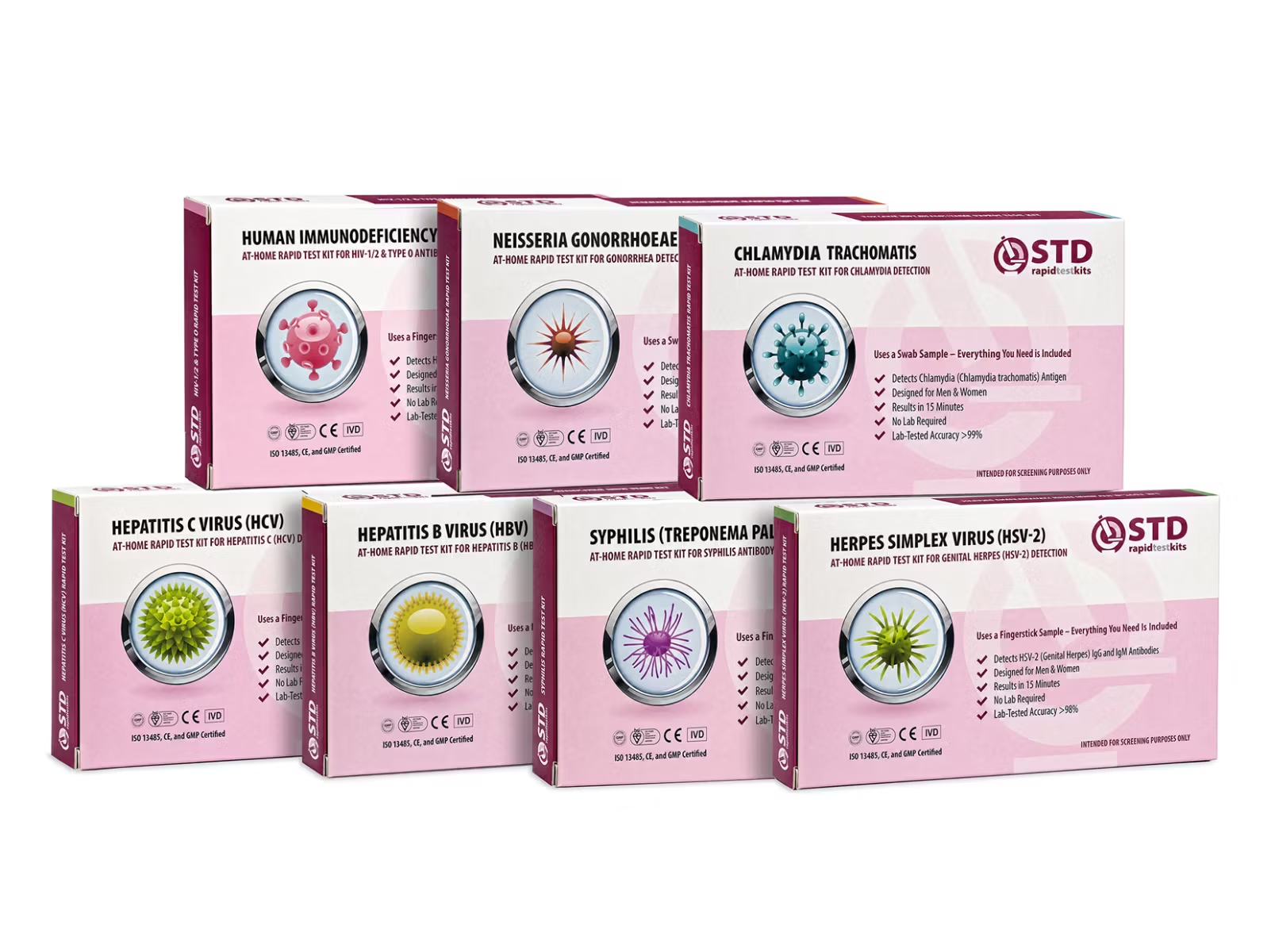
You can also bundle the two: use a home rapid test as a first pass, and treat any reactive or faint-line result as a clinic referral, which matches what the technology was designed to do. This site sells rapid lateral-flow at-home STI tests; the kits below are screening immunoassays, not lab NAATs, and reactive results should always be confirmed with a clinician-ordered confirmatory test.
When To Retest If a Result Doesn't Add Up
Retesting is not a sign that the first test failed; it is a built-in part of how antibody testing works. Antibody levels rise over weeks, so a single negative early after exposure tells you less than a follow-up negative weeks later.
Plan to retest if any of these apply:
- Your first test was inside the three-week window after exposure.
- You had short-lived symptoms (a sore that healed on its own, a rash that came and went) regardless of the first test result.
- A partner tested reactive or positive after your initial test.
- Your first test was negative but you were unable to be certain about exposure timing (substance use during the encounter, multiple recent partners, an exposure event you only learned about later).
- You are pregnant and your first-trimester screen was negative; CDC recommends a third-trimester repeat for higher-risk circumstances and at delivery in many U.S. jurisdictions.
For sexually active people with multiple partners or partners with unknown status, a three-to-six-month testing rhythm covers both new exposures and the antibody-window gap. For people in mutually exclusive partnerships with both partners recently tested, annual or risk-event-triggered testing is generally enough.
Reinfection: Yes, You Can Catch Syphilis Twice
One of the most common misconceptions about syphilis is that successful treatment provides lasting immunity. It does not, despite a stubborn cultural assumption otherwise. Past infection followed by treatment leaves your treponemal antibody status positive for life in most cases, but you remain susceptible to a fresh infection from any new exposure. CDC surveillance data documents reinfection as a routine feature of the current outbreak, particularly among people whose social or sexual networks have higher background prevalence.
The diagnostic wrinkle this creates is real: because treponemal antibody tests (the kind most rapid kits use) often stay positive after treatment, a positive rapid test in someone with a prior treated infection cannot, on its own, distinguish historical antibody response from active reinfection. Lab-based RPR titers are the workhorse for telling these apart. A four-fold rise in RPR titer versus a previous post-treatment baseline suggests active reinfection; a stable low-level titer usually does not. This is why your prior test history matters and why bringing it to your clinician is worth doing.
Practical takeaway: if you have been treated for syphilis before, a future rapid-test reactive result is not inherently surprising and does not on its own confirm a new infection. It is, however, a strong reason to get an RPR done and compared against your treatment-era baseline. Your clinician can then determine whether you need a second course of penicillin.

Common At-Home Testing Mistakes That Skew Results
The same rapid test, run two different ways, can give two different answers. The most common at-home errors that produce false negatives or unreadable results are listed below.
If a test fails or gives an ambiguous result, the safest move is to repeat with a fresh kit 24 to 48 hours later, and to escalate to clinic-based testing if the second result is also unclear.
Insufficient blood sample. A faint or absent control line is the most common signal that the sample volume was too small. Re-prick and run a fresh cassette rather than guessing at the existing one.
Reading outside the printed window. Lines that appear at 30 minutes when the kit window closes at 20 are not valid results. Set a phone timer when you start.
Skipping the buffer step. Many cassettes need a buffer drop after the blood. Skipping or shorting the buffer step prevents the chemistry from running.
Heat exposure. Lateral-flow chemistry is sensitive to temperature. Cassettes left in a hot car, in direct sun, or in a steam-filled bathroom can give distorted results.
Expired or improperly stored kits. Check expiration dates before use and keep cassettes at room temperature.
Testing during an active fever or recent vaccination. These can transiently affect non-treponemal screens; for rapid treponemal tests, the effect is smaller but worth flagging to a clinician interpreting the result.
Is It Ever Too Late to Test for Syphilis?
Short answer: no. Syphilis without treatment does not always disappear; it often enters a latent phase that can last for years before progressing to the tertiary stage, which can damage cardiovascular, neurologic, and visual systems. A test today is meaningful even for an exposure you only half-remember from years ago, because antibody-based testing will still detect the immune signature of an old infection.
Reasons to test now even after a long delay include: a partner from any past relationship who later disclosed a positive status, an unexplained sore, rash, or eye or neurologic symptom that never got followed up, a previous reactive screen that you never confirmed, or pregnancy planning. Treatment with the appropriate penicillin regimen is highly effective at any stage, and the trade-off (a course of injections versus the long-tail risks of untreated late-stage disease) is heavily in favor of testing.
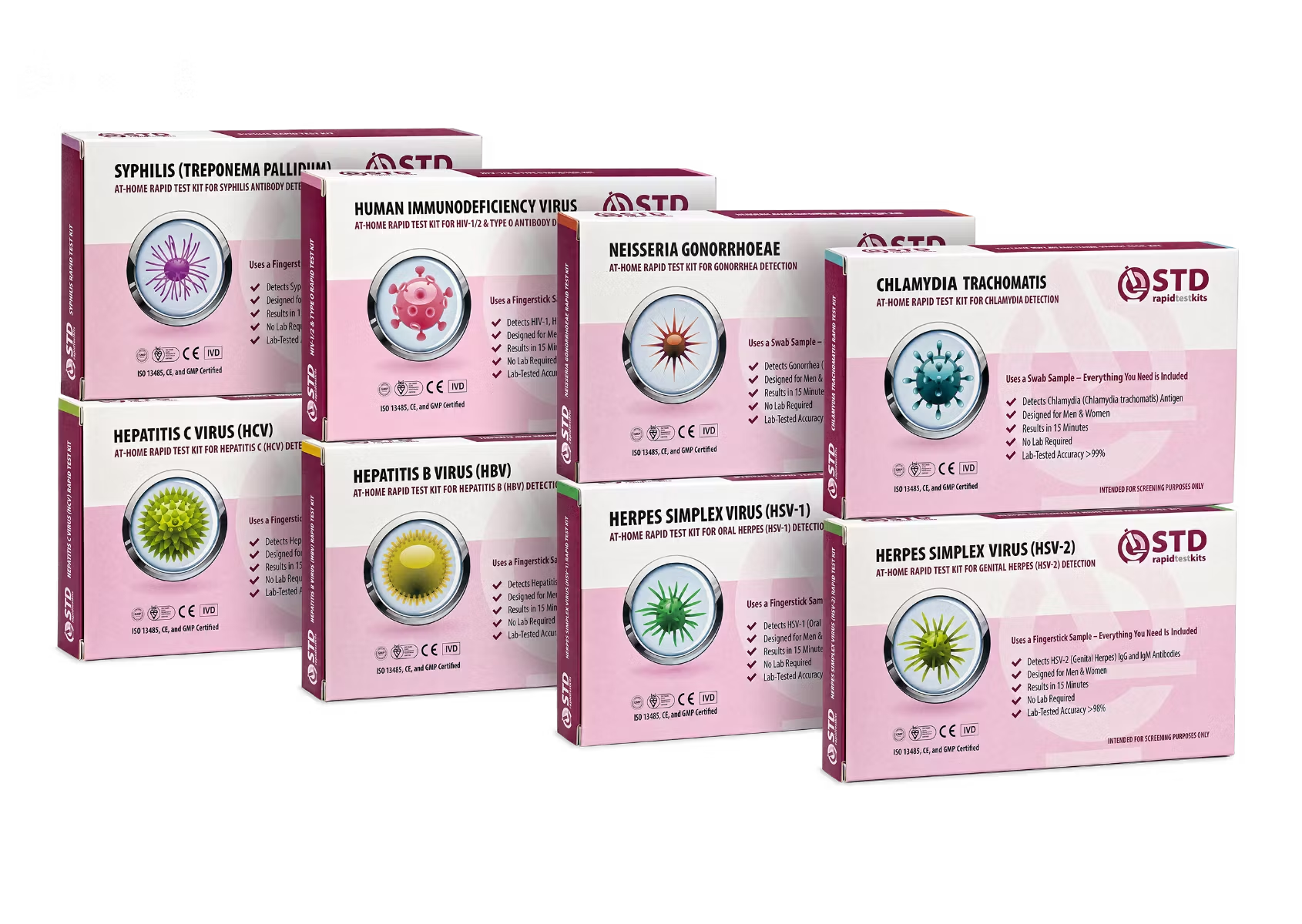
If you are already planning routine STI screening, bundling syphilis into the same session is the simplest approach. Many at-home combo kits include syphilis alongside HIV, hepatitis, herpes, and the common bacterial STIs. The result is a one-session snapshot of your status across the most common infections.
Frequently asked questions
- How long after exposure should I wait to test for syphilis?
- Six weeks is the reliable threshold for an antibody-based rapid syphilis test. Earlier results, especially before three weeks, often miss true infections because antibody concentrations are still below the cassette's detection limit. If symptoms appear inside the first three weeks (a painless sore, an unexplained rash on the trunk or palms), test anyway and ask a clinician about adding a non-treponemal lab screen to bridge the window-period gap.
- What does a faint line on a rapid syphilis test mean?
- If the line appears within the kit's printed read window, treat it as reactive and book a confirmatory lab test. Manufacturer instructions for most rapid kits make no distinction between bold and faint test lines; both are read as positive screens. Lines that develop after the window closes are not valid results and should not change your interpretation.
- Can I get syphilis again after I have been treated?
- Yes. Past infection and treatment do not provide lasting immunity to syphilis. You can be reinfected from any new exposure, and CDC surveillance documents reinfection as common in the current outbreak. Treponemal antibody tests usually remain positive after treatment, so reinfection is generally diagnosed by a four-fold rise in lab RPR titers versus your post-treatment baseline.
- Will I always test positive on a treponemal test after a past syphilis infection?
- In most cases, the answer is yes. Treponemal antibodies (the type most rapid tests detect) often remain detectable for life after exposure, even years after successful treatment. This is not a sign of active disease. Lab RPR titers are the test used to track whether a current infection is active or whether the antibody signal is historical.
- Can someone have syphilis with no symptoms at all?
- Yes. Syphilis has been called The Great Pretender for a reason. The primary chancre is painless and can sit somewhere not easily visible (inside the vagina, anus, or mouth), so many people never notice it. Latent syphilis can persist for years without symptoms while remaining transmissible during the early latent phase. Routine testing is the only reliable way to detect asymptomatic infection.
- Should I test more than once during pregnancy?
- Yes. CDC guidance recommends syphilis screening at the first prenatal visit for every pregnancy, with repeat screening around 28 weeks and again at delivery for people in higher-risk circumstances or in geographic areas with elevated congenital syphilis rates. Late-pregnancy exposure is one of the most common reasons congenital syphilis still occurs.
- Is syphilis included in standard at-home STD panels?
- Not always. Some at-home combo kits include syphilis; others do not. Before buying, check the panel composition. Multi-test kits like our 7-in-1 and 8-in-1 panels include syphilis alongside HIV, hepatitis, herpes, chlamydia, and gonorrhea, which is the simpler way to make sure it is covered.
- How often should I retest if I have multiple partners?
- For sexually active people with multiple or unknown-status partners, a three-to-six-month testing rhythm catches both new exposures and the antibody-window gap. For people in mutually exclusive partnerships where both partners have recently been tested, annual or risk-event-triggered testing is generally enough. Retest sooner if a partner discloses a positive result or if you develop any concerning symptom.
- U.S. Centers for Disease Control and Prevention. Sexually Transmitted Infections Surveillance, annual summary. National data on syphilis case counts, congenital syphilis rates, and 2024 trend reversal in primary and secondary cases.
- U.S. Centers for Disease Control and Prevention. 2025 surveillance release on syphilis and congenital syphilis trends in newborns and adults; reports nearly 4,000 congenital syphilis cases in 2024 (12th consecutive year of increase).
- World Health Organization. Syphilis fact sheet. Global incidence (estimated 8 million adult acquisitions in 2022), transmission, screening, and treatment guidance.
- U.S. Centers for Disease Control and Prevention. About syphilis: stages, symptoms (including primary chancre lasting 3 to 6 weeks), transmission, and screening recommendations.
- Clinical Infectious Diseases (Oxford Academic). Clinical Test Performance of a Rapid Point-of-Care Syphilis Treponemal Antibody Test: A Systematic Review and Meta-analysis. Pooled prospective sensitivity 87.7% (95% CI 71.8 to 97.2) and specificity 96.7% (95% CI 91.9 to 99.2) for treponemal lateral-flow tests against laboratory reference algorithms.
- Johns Hopkins Bloomberg School of Public Health. Public-health analysis of the multi-year U.S. syphilis rise, including PrEP-era barrier-method decline, methamphetamine correlation, and STI prevention funding cuts.
