Published: November 2025 | Last updated: May 2026 | Editorial review and quality control: Martina N.
Herpes is one of the most common viral infections worldwide and one of the most misunderstood. Most of the confusion comes from the fact that herpes simplex virus is two close cousins, HSV-1 and HSV-2, with overlapping habits but slightly different preferences. Both pass through skin contact. Both can settle in the lips, the genitals, the buttocks, the inner thighs, or the area around the anus. Once the virus is in the body, it tucks itself into the nerve roots that feed those zones and travels back along the same pathway when it reactivates, which is why outbreaks tend to recur in roughly the same spot.
That last part trips people up. A blister on the lip after a stressful week, a sore on the inner thigh after a flare-up at the gym, a crack near the anus that did not show up immediately after sex but instead a year later: all of these can be the same virus reactivating along the nerve where it first set up shop. Knowing where herpes likes to surface, what the early warning feels like, and which look-alike conditions get mistaken for it is the first step toward calmer, more accurate decisions about testing and care.
Where can herpes actually appear?
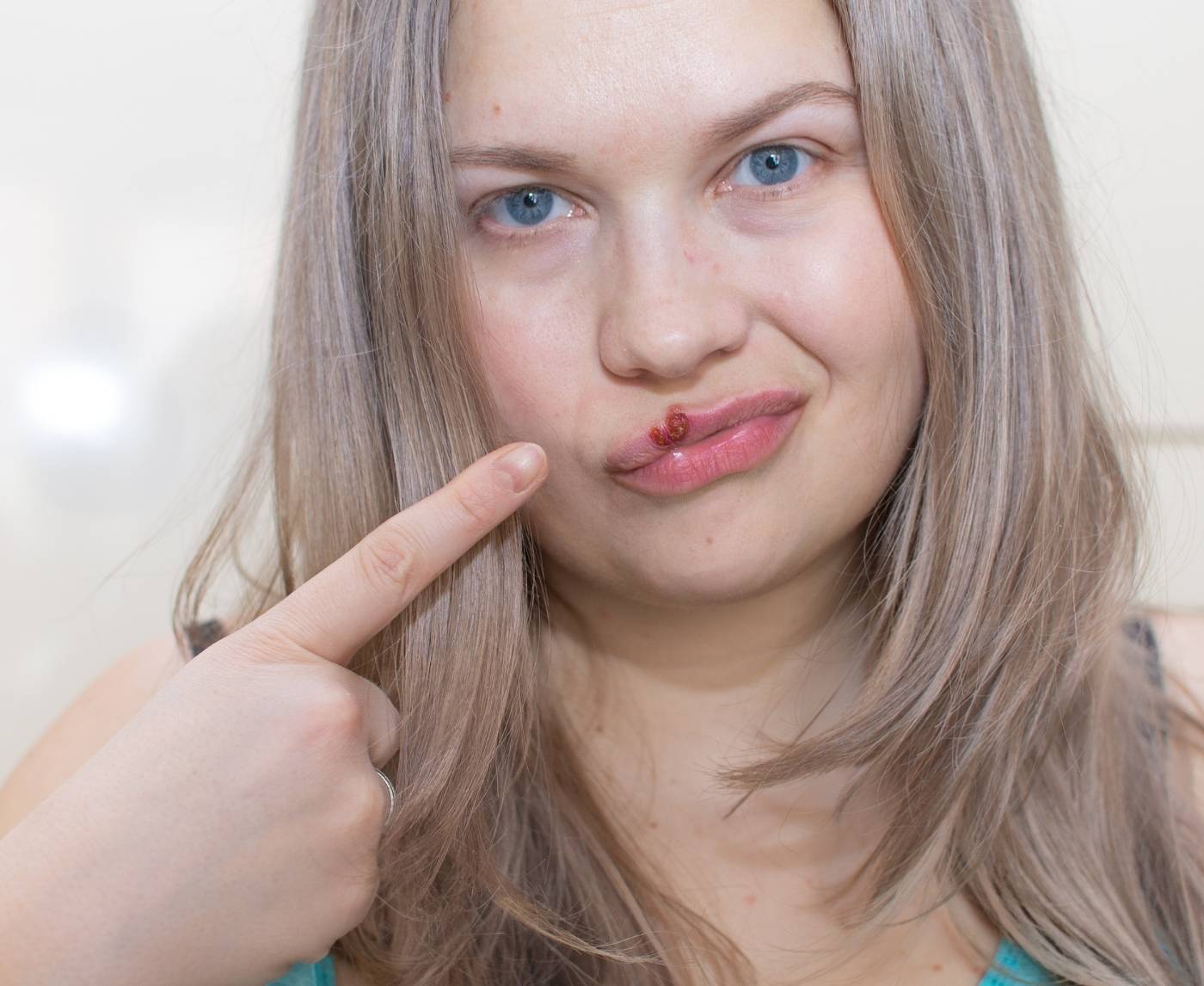
Herpes outbreaks can show up on the lips, mouth, tongue, throat, genitals, anus, buttocks, inner thighs, lower back, and, less often, the fingers and eyes. HSV-1 most commonly causes oral cold sores; HSV-2 most commonly causes genital and anal lesions. Either type can appear in either area, and recurrences usually appear at or near the original site of infection because the virus lives in nearby nerve roots.
Key Takeaways
- Herpes appears at or near where the virus first entered the body, then tends to recur along the same nerve pathway. That is why thigh, buttock, and anal outbreaks are common in people whose original genital exposure was nearby.
- Most people who carry HSV do not know it. Symptoms are often subtle or mistaken for ingrown hairs, razor burn, pimples, or eczema. A blood antibody test can confirm exposure even when no sore is currently visible.
How HSV-1 and HSV-2 behave differently
The two herpes simplex viruses are close enough that lab tests need to look for type-specific antibodies to tell them apart. Their habits, though, differ in small ways that matter when you are trying to figure out which one might be causing what.
HSV-1 is the type most people pick up early in life through casual contact: a parent's kiss, a shared cup, a childhood scrape. The World Health Organization estimates that around two-thirds of people under 50 globally carry HSV-1 (WHO herpes simplex virus fact sheet). It traditionally lives in the trigeminal nerve, the nerve that feeds sensation to the face, and reactivates as cold sores around the lips, in the corners of the mouth, or sometimes inside the mouth.
HSV-2 is more likely to be sexually transmitted in adulthood. The WHO estimates that several hundred million adults aged 15 to 49 worldwide live with HSV-2, and the U.S. Centers for Disease Control and Prevention estimated 572,000 new genital herpes infections in the United States in 2018 among people aged 14 to 49 (CDC about genital herpes). HSV-2 tends to settle in the sacral nerve roots near the base of the spine, which feed the genitals, anus, buttocks, and inner thighs.
Here is the part that explains a lot of the confusion: HSV-1 can also infect the genitals through oral sex, and HSV-2 can occasionally appear orally. Once a virus is in the wrong neighborhood, that is where it lives. HSV-1 in the genitals tends to recur less often than HSV-2 in the genitals, but the lesions can look the same on first appearance. Recent seroprevalence studies suggest an increasing share of new genital herpes infections in the United States are now caused by HSV-1, particularly in younger adults.
What both viruses share: after the first infection, they are not cleared. They retreat into the dorsal root ganglia, clusters of nerve cell bodies that branch out to the skin. From there they wake up periodically and travel back down the same nerve to the surface. That is why someone whose original infection appeared on the right buttock will often see recurrences on that same right buttock, year after year, with the left side untouched.
| Trait | HSV-1 | HSV-2 |
|---|---|---|
| Most common appearance site | Lips, mouth, around the face | Genitals, anus, buttocks, inner thighs |
| Typical age of first exposure | Childhood, often through casual contact | Adulthood, usually sexually transmitted |
| Recurrence frequency in genital infection | Less frequent over time | More frequent, especially in the first year |
| Nerve where the virus settles | Trigeminal (face) | Sacral (pelvic and lower body) |
Where herpes can actually show up on the body
Because both viruses live in nerve roots, the geography of an outbreak is governed by anatomy more than behavior. The trigeminal nerve sends branches across the face, so HSV-1 reactivations cluster around the lips, the chin, and sometimes the nose. The sacral nerve roots send branches across the entire pelvic and lower-body region, so HSV-2 reactivations can surface anywhere those branches reach.
The most common locations:
- Lips and around the mouth (HSV-1 most often): the vermilion border of the lip is the classic site, but cold sores can also appear at the corner of the mouth, on the chin, or just inside the lip.
- Penis, vulva, and perineum (HSV-2 most often): the shaft and head of the penis, the labia and vulva, the area between the genitals and anus, and the surrounding pubic skin are all common sites.
- Anus and perianal skin: anal herpes can develop after anal sex but also after genital herpes that simply spread along the same nerve. Lesions here are often confused with hemorrhoids or anal fissures.
- Buttocks, inner thighs, and lower back: because the same sacral nerves feed these areas, recurrences can appear several inches from the genitals. The NHS describes buttock and thigh sores as a recognized pattern of HSV-2 recurrence (NHS genital herpes overview).
- Inside the mouth, throat, and tongue: less common, but HSV-1 can cause stomatitis with sores on the gums, tongue, or roof of the mouth, especially during a first infection.
- Fingers (herpetic whitlow) and eyes (ocular herpes): both are uncommon and usually result from auto-inoculation or direct contact with a sore.
What looks like an outbreak in one location can also be referred from another nerve branch. Someone with genital HSV-2 may notice tingling on the upper inner thigh days before any sore appears, simply because the same nerve root is sending the warning signal. The skin you can see and the nerve underneath are not always perfectly aligned, which is one of the more disorienting parts of living with HSV at first.

What an outbreak feels like before you see it
The first sign of a recurrence is rarely a visible sore. It is usually a sensation. Clinicians call this the prodrome, the herald phase that precedes most herpes outbreaks. People describe it as tingling, itching, burning, aching, a pins-and-needles feeling, or a vague sense of pressure or sensitivity in a very specific patch of skin. The skin can look completely normal during this phase.
The prodrome usually shows up hours to a few days before the first lesion. It can also appear as a low-grade flu-like feeling: tender lymph nodes in the groin or neck, mild fatigue, a body-ache that does not quite fit a cold. For first infections, the systemic symptoms can be more pronounced and may include fever and headache, particularly in the first ten days. Mayo Clinic guidance describes this combination of localized tingling plus mild systemic symptoms as a typical early presentation (Mayo Clinic genital herpes symptoms).
Why the prodrome matters in practice: people who recognize their own pattern can sometimes shorten or soften an outbreak by starting episodic antiviral therapy at the first sign, or by extra rest and avoiding triggers like sun exposure, friction, or heat. Antiviral medications work best when started within the first 24 hours of symptoms, which is precisely when most people are still uncertain about whether anything is happening.
The most consistent prodrome locations match the eventual eruption: a tingle on the lip the day before a cold sore, an itch on the buttock the day before a sore there, a deep ache in the upper thigh the day before a labial outbreak. Tracking which area tingles and how long before the sore appears builds a personal map that becomes useful for both treatment timing and partner communication.
Keep a brief note on a phone calendar when you feel the early tingle, where exactly it appears, and how many hours pass before any sore. After two or three episodes, a pattern usually emerges. That pattern lets you start antivirals earlier next time and avoid skin-to-skin contact during the highest-shedding window.
What gets misread as herpes (and what herpes gets misread as)
One of the reasons herpes is so under-diagnosed is that it does not always look the way photos in textbooks make it seem. The classic clustered fluid-filled blisters do happen, especially during a first outbreak, but a recurrence can be a single small split in the skin, a faint red patch, or one tiny ulcer that disappears in three days. The CDC describes recurrences as often shorter and milder than first outbreaks, which means the visual cues can be subtle.
Common look-alikes that get confused with herpes, in either direction:
- Ingrown hairs and folliculitis: a red bump with a whitehead that hurts when pressed. Can look identical to an early herpes papule before it blisters.
- Pimples and cystic acne on the buttocks, thighs, or pubic area.
- Razor burn or friction rash from cycling, running, tight clothing, or shaving.
- Yeast infections and irritant contact dermatitis: itching and burning without obvious lesions, especially in vulvar tissue.
- Anal fissures and hemorrhoids: cracks or sore spots near the anus that can be mistaken for, or that can mask, anal herpes.
- Canker sores inside the mouth: technically these are aphthous ulcers and not herpes, but oral HSV can also cause inside-the-mouth sores, especially on first infection.
- Other STIs with ulcers: primary syphilis presents as a single painless chancre, and chancroid presents as painful soft ulcers, both of which can be confused with herpes on visual inspection alone.
Skin tone also matters in this picture. Herpes lesions on darker skin can present as gray, brown, or violaceous patches rather than the bright red surround that medical photographs usually show, and that visual difference contributes to delayed diagnosis in patients with darker skin tones. When a clinician relies only on visual inspection, a single sore that does not fit the textbook picture can get dismissed.
The corollary: a normal-looking patch of skin is not proof that herpes is not present. Many people with HSV never develop noticeable sores. The CDC notes that the majority of people with genital herpes are unaware they have it, often because their symptoms are too mild to register as anything in particular.
Testing for herpes: swab versus blood antibody
There are two practical questions a herpes test can answer, and they call for different methods.
If a sore is currently visible, the most accurate option is direct testing of the lesion. A clinician swabs the sore and the sample goes to a laboratory for either polymerase chain reaction (PCR) or viral culture. PCR is the more sensitive of the two and can also identify whether the virus is HSV-1 or HSV-2. The window for swab testing is short: once a sore has crusted and started to heal, the chance of recovering enough virus to detect drops sharply. The CDC's clinical guidance recommends a swab plus type-specific identification when a person presents with active lesions.
If no sore is currently visible, the test is a blood antibody test. The body produces type-specific IgG antibodies to HSV-1 and HSV-2 within several weeks of first exposure, and these antibodies persist for life. A blood test can therefore tell whether someone has been exposed at any point, even if they never had a noticeable outbreak. The catch: the antibody window means it can take roughly 12 to 16 weeks after a possible exposure for the test to reliably turn positive, so timing matters.
What blood antibody tests can and cannot tell you:
- They can tell you whether you carry HSV-1, HSV-2, or both.
- They cannot tell you when you were infected.
- They cannot tell you which body site is affected. Someone positive for HSV-2 antibodies may have genital, anal, buttock, or thigh involvement; the test does not localize the infection.
- They cannot rule out very recent exposure (within the last 12 to 16 weeks).
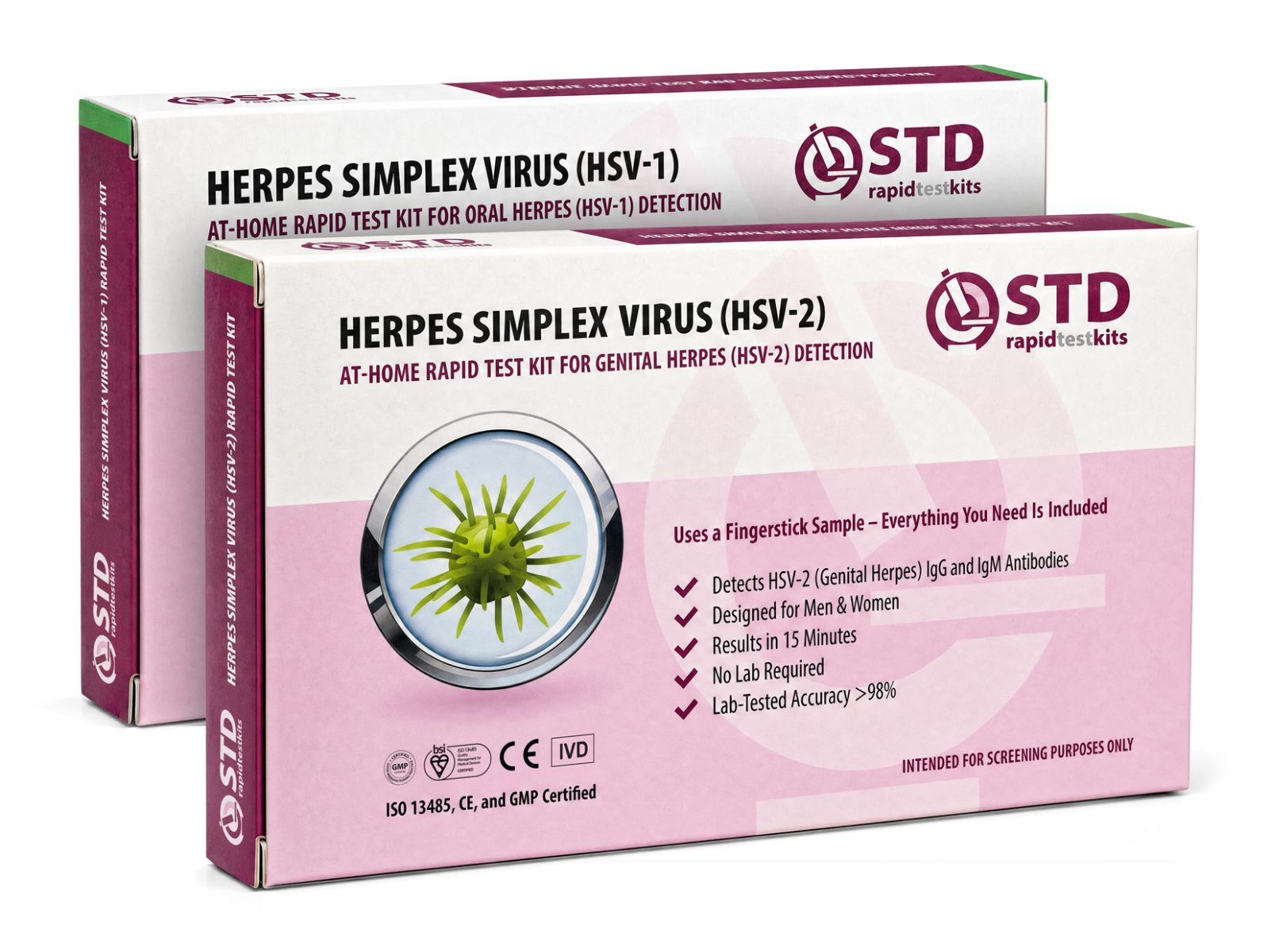
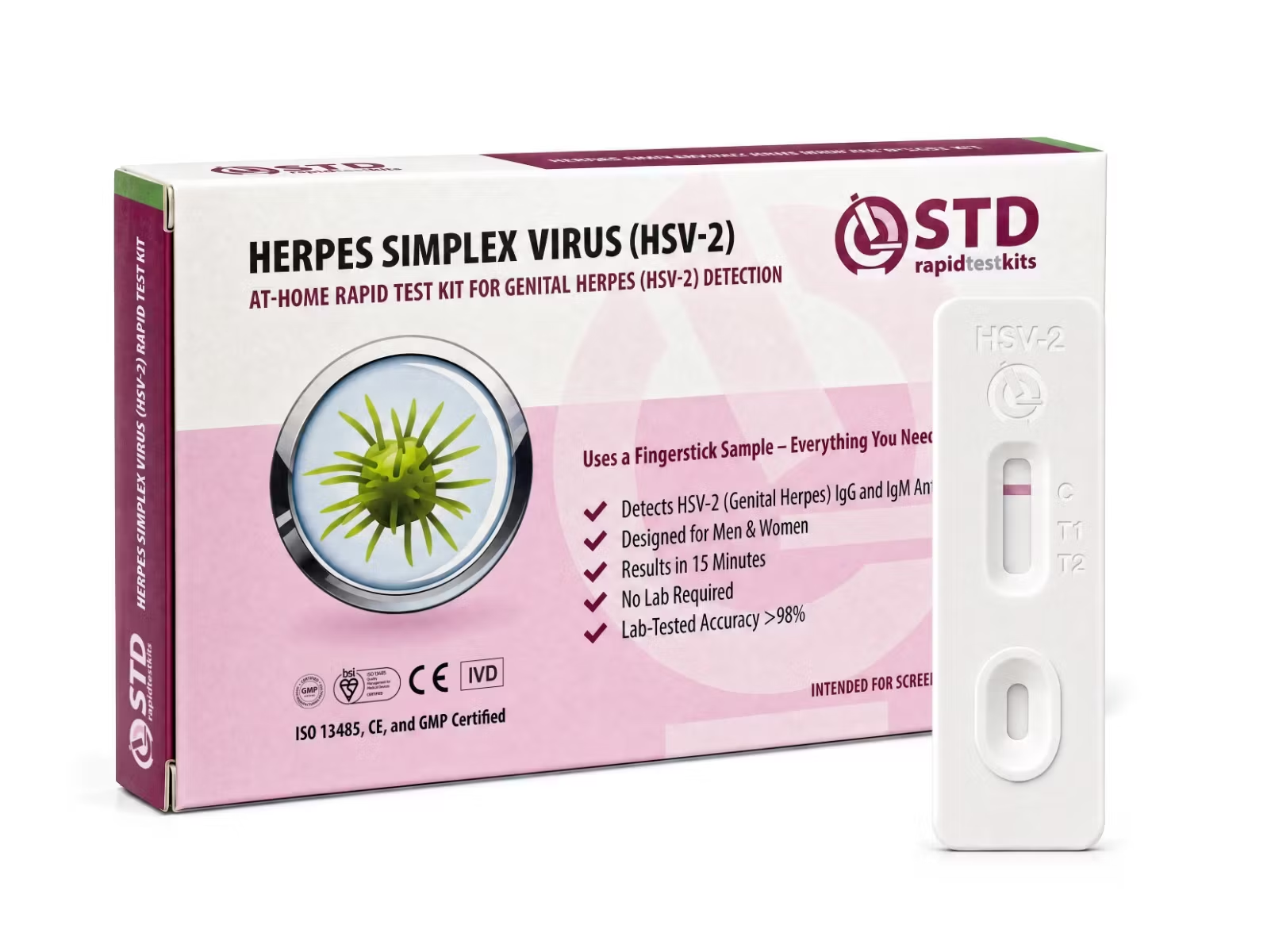
Home rapid blood tests for HSV-1 and HSV-2 use the same lateral-flow chemistry as clinic-based rapid antibody tests; they detect type-specific antibodies from a fingerstick sample. Lateral-flow rapid tests are screening tools, not laboratory NAATs, and a positive result is usually worth confirming through a clinical lab, especially for HSV-2, where false positives are well-documented when the antibody index value sits in the borderline range. Used at the right time and with appropriate confirmation, they answer the question that matters most for many people: have I been exposed at any point.
Disclosure: this site sells the rapid at-home lateral-flow blood test kits described in the product callouts below.
Most people who have herpes have no, or very mild symptoms. You may not notice mild symptoms or you may mistake them for another skin condition, such as a pimple or ingrown hair.
Reading a positive or negative test result
Context matters when reading HSV results. A positive antibody test reflects past exposure rather than confirming an active outbreak, and a negative result within the first few weeks after exposure does not yet rule out a recent infection.
A positive HSV-1 antibody result with no genital or oral sore history most likely reflects an old, childhood-era oral infection. Many people with positive HSV-1 antibodies have never had a noticeable cold sore. If the antibody is positive and there has never been an oral lesion, the practical implication is mostly about transmission risk to a partner during oral sex (especially during prodrome or asymptomatic shedding).
A positive HSV-2 antibody result almost always reflects genital, anal, or peri-genital infection, since HSV-2 rarely settles elsewhere. Even if there have never been visible sores, the virus can still be shed silently. The CDC estimates that asymptomatic shedding accounts for a substantial share of new transmissions, which is part of why partner notification matters even in the absence of obvious symptoms.
A negative test taken less than 12 to 16 weeks after a possible exposure does not rule out recent infection. The body needs time to produce antibodies. The standard clinical approach is to retest at the 12 to 16 week mark if the original test was negative and exposure is suspected.
One area where home test results need a careful read: low-positive HSV-2 antibody results, where the test reads positive but the antibody index value is in the borderline range, can sometimes be false positives. Confirmatory testing in a laboratory using a different assay method is the way to resolve uncertain results, and any positive result is worth a follow-up conversation with a clinician.
A low-positive HSV-2 antibody result in the borderline index range is worth confirming with a laboratory Western blot or a second-method assay before treating it as definitive. Borderline values are the most common source of false positives on type-specific antibody tests; a confirmation step prevents an unnecessary diagnosis from a single screening result.
Living with HSV: partners, treatment, and the stigma layer
An HSV diagnosis is medically manageable. The harder part for most people is the social and emotional weight that comes with it, much of which is a holdover from cultural framing rather than clinical reality. Herpes is common, often mild, and not associated with long-term health consequences for most adults; the day-to-day experience is mostly about pattern recognition and a few practical decisions.
What treatment looks like in practice: antiviral medications (acyclovir, valacyclovir, or famciclovir) can be used either episodically (a short course at the first sign of an outbreak) or as daily suppressive therapy. Suppressive therapy reduces the frequency and severity of outbreaks and reduces the rate of asymptomatic viral shedding, which lowers the risk of transmission to a partner. Mayo Clinic guidance notes that daily suppressive treatment can substantially reduce transmission risk to an uninfected partner when combined with consistent condom use (Mayo Clinic genital herpes).
Partner conversations need to cover the basics: the type, the typical outbreak frequency, whether antivirals are in use, and which protective measures (avoiding contact during outbreaks and prodrome, condom use, dental dams during oral contact) reduce risk. People who have had this conversation generally report it being far less destabilizing than they feared. A large share of adults already carry one or both forms of HSV, and the conversation is usually less about secrets than about coordination.
The stigma layer is worth naming directly. The framing of herpes as a uniquely shameful diagnosis is a relatively recent invention, traceable to pharmaceutical advertising and pop-culture jokes from the 1980s and 1990s. Medically, it is one of the most common chronic viral infections in adults, on par with cytomegalovirus or Epstein-Barr in terms of population prevalence.

What is changing in herpes care
Herpes research moved slowly for a long time. That has shifted. Several lines of work are now in active clinical development, while today's rapid lateral-flow panels already cover the most common at-home screening needs that an exposed reader will face right now. The kits available today use the same antibody chemistry that is being refined for the next generation of products.
Vaccine candidates are in trials. mRNA platforms, the same technology behind COVID-19 vaccines, are being studied as a way to provoke a more durable immune response against HSV than older protein-subunit vaccines could manage. None are licensed yet, but multiple candidates have moved into early-phase trials, with both prophylactic (prevent infection) and therapeutic (reduce recurrence in already-infected people) versions in development.
Topical agents that may reduce asymptomatic viral shedding are being studied as a complement to oral antivirals, particularly for serodiscordant couples where reducing transmission risk matters most. Diagnostic technology is also moving toward earlier and more accessible answers: rapid lateral-flow blood tests are widely available for at-home use, and quantitative PCR is increasingly used in clinical labs to distinguish active replication from latent infection.
The cultural conversation is shifting alongside the clinical one. Public-health communicators, clinicians, and people living with HSV are pushing back on the older framing of herpes as a uniquely shameful diagnosis. The clinical reality is becoming better known: it is a common, manageable, and rarely health-threatening infection.
- mRNA vaccine candidates: multiple HSV-2 vaccines using mRNA platforms are in early-phase trials, with both prophylactic and therapeutic versions in development. None are licensed yet.
- Topical shedding-reduction agents: investigational creams and gels aimed at reducing asymptomatic viral shedding to lower transmission risk, particularly for serodiscordant couples.
- Quantitative PCR diagnostics: clinical labs increasingly use quantitative PCR to distinguish active viral replication from latent infection, which can guide treatment decisions more precisely than antibody testing alone.

Frequently asked questions
- Can herpes show up on the buttocks or inner thigh?
- Yes. The sacral nerve roots that carry HSV-2 send branches across the entire pelvic and lower-body region, so outbreaks can appear on the buttocks, inner thighs, groin folds, or even the lower back. These spots are often confused with eczema, friction rash, or folliculitis. The pattern that points to HSV: the same patch tingles, then breaks out, then heals, and the cycle repeats in the same place over months or years.
- What does a herpes outbreak feel like before you see anything?
- Most people feel a prodrome phase first: tingling, itching, burning, or a vague sense of sensitivity in a very specific patch of skin. Some people also notice tender lymph nodes in the groin or neck, a low-grade body-ache, or mild fatigue. The skin can look completely normal during this phase. Prodrome usually starts hours to a few days before the first visible lesion.
- Is anal herpes only from anal sex?
- No. While anal sex is one route of transmission, anal herpes can also develop without it. The virus spreads through skin-to-skin contact and travels along nerve pathways, so genital herpes can extend to the perianal area through the shared sacral nerve supply. An anal lesion does not necessarily indicate the route of original exposure.
- Can herpes blisters look like pimples or ingrown hairs?
- Yes, and that is one of the main reasons herpes is under-diagnosed. Early sores can look like pimples, ingrown hairs, bug bites, or razor burn, especially during a recurrence when the lesion is small. The features that point to HSV: a clustered pattern, clear or slightly cloudy fluid in the early phase, pain or sensitivity disproportionate to size, and a tendency to recur in the same exact spot.
- How long after exposure do herpes symptoms appear?
- Usually 2 to 12 days after exposure if symptoms develop at all. Many people never notice a first outbreak, and others have such mild symptoms that they get attributed to something else. Blood antibody tests can take roughly 12 to 16 weeks to reliably turn positive after a new infection, so a negative result inside that window is not conclusive.
- Can someone with no visible sores still pass herpes to a partner?
- Yes. This is called asymptomatic shedding, and it accounts for a substantial share of new HSV transmissions per CDC estimates. Suppressive antiviral therapy reduces the rate of asymptomatic shedding, and consistent condom use further lowers (but does not eliminate) the transmission risk.
- Can I test for herpes at home reliably?
- Yes, with the timing caveats. A swab test of an active sore needs to happen within the first few days of the lesion, before it crusts; that usually means a clinic visit. A blood antibody test for HSV-1 and HSV-2 can be done at home using a fingerstick lateral-flow rapid test, ideally 12 weeks or more after possible exposure. A positive result is worth confirming through a clinical lab, especially in the borderline range.
- U.S. Centers for Disease Control and Prevention. About Genital Herpes, including U.S. incidence estimates and the proportion of cases that go undiagnosed.
- World Health Organization. Herpes simplex virus fact sheet, including global HSV-1 and HSV-2 prevalence estimates and route-of-transmission overview.
- U.K. National Health Service. Genital herpes overview, symptoms, and recurrence patterns including buttock and thigh involvement.
- Mayo Clinic. Genital herpes symptoms, causes, and treatment options including episodic and suppressive antiviral therapy.
- U.S. Centers for Disease Control and Prevention. STI Treatment Guidelines, herpes section, on swab plus type-specific testing during active outbreaks and antibody-based testing in the absence of lesions.
