







Quick Answer: STD symptoms can appear even after a negative test due to false negatives, testing during the window period, or non-STD conditions. Trust your body and retest if needed.
This Isn’t Just in Your Head, Symptoms After a “Clean” Test Are Real
Google doesn't warn you about the emotional whiplash of seeing "Negative" on your results while feeling anything but. The first signs that something’s off can be vague, an itch here, a sore there, a new kind of discharge that doesn’t match your usual. Sometimes there’s no physical symptom at all, just an internal panic that won’t go away. And if you told someone you were "clean"? The guilt can hit harder than any burning sensation ever could.
Let’s be clear: symptoms that start after a negative test don’t mean you lied. They mean your body is trying to tell you something your test didn’t catch. Testing is a snapshot, not a time machine. Depending on which STDs you were tested for, what kind of test was used, and when exposure happened, it's possible to test negative and still have an active infection.
Common post-testing symptoms people report include:
• Genital or anal itching that worsens at night
• Clear, white, or yellowish discharge with a new odor
• Internal burning or sharp pains during urination
• Throat discomfort after oral sex
• Swollen lymph nodes near the groin or neck
• Unexplained rashes or sores that don’t hurt
Each of these can signal multiple things, not just STDs. But if your test said “clean” and you still feel off? Don’t gaslight yourself. We’ve been taught that tests are the truth, but with STDs, timing is everything.
People are also reading: How Likely Is It to Pass an STD Through Breastfeeding
Why Negative Doesn’t Mean Nothing: The Window Period Trap
“It was only a week after the hookup when I tested,” said Jay, 24, who got tested early to be safe after a new partner. “When I told them I was negative, I really believed it. But I was still in the window period for HIV and gonorrhea. I didn’t even know that was a thing.”
The window period is the time between potential exposure to an STD and when it becomes detectable by a test. Different infections have different windows:
• Chlamydia & Gonorrhea: 5–14 days
• Syphilis: 3 weeks to 3 months
• HIV: up to 45 days with some rapid tests
• Herpes: varies wildly, blood tests only detect antibodies weeks after initial infection
So if you got tested too soon, your results might not have caught it, especially if you didn’t tell the clinic how recently you were exposed. Many rapid tests only detect antibodies, not the infection itself. And not all panels are comprehensive. Unless you ask, you might not be tested for herpes or oral STIs at all.
The result? A lot of people walk out with a clean bill of health and a false sense of security, only to develop symptoms days or weeks later.
“I Told Them I Was Clean.” And Now I’m Not.
There’s a special kind of panic that hits when you start showing symptoms after sleeping with someone you just reassured. Whether it was a partner, a hookup, or someone new you wanted to impress, it can feel like you’ve betrayed them, even if you didn’t mean to. This guilt spirals fast, especially for people socialized to believe that getting or giving an STD makes them “dirty.”
But here’s the truth: You didn’t lie. You believed your test, and that’s okay. Testing is an act of care, not a guarantee. And unless you got tested at exactly the right time, for every relevant infection, with the most accurate methods, there’s always a chance something was missed.
According to the Journal of Clinical Microbiology, certain rapid gonorrhea and chlamydia tests can have false-negative rates as high as 10–15%, depending on the testing site (urine vs throat vs rectal). Meanwhile, HSV-1 and HSV-2 (herpes) blood tests are notorious for missing early or asymptomatic infections entirely.
All of this means that “I’m clean” might’ve been true to the best of your knowledge, but not to your biology. And that’s not your fault. It’s the result of a system that treats testing as a one-and-done moment, rather than a part of an ongoing sexual health strategy.
If this sounds like you, symptoms after a “clean” result, you’re not alone. And you’re not bad. You’re just human in a world that makes sexual health confusing, shameful, and hard to talk about.
Check Your STD Status in Minutes
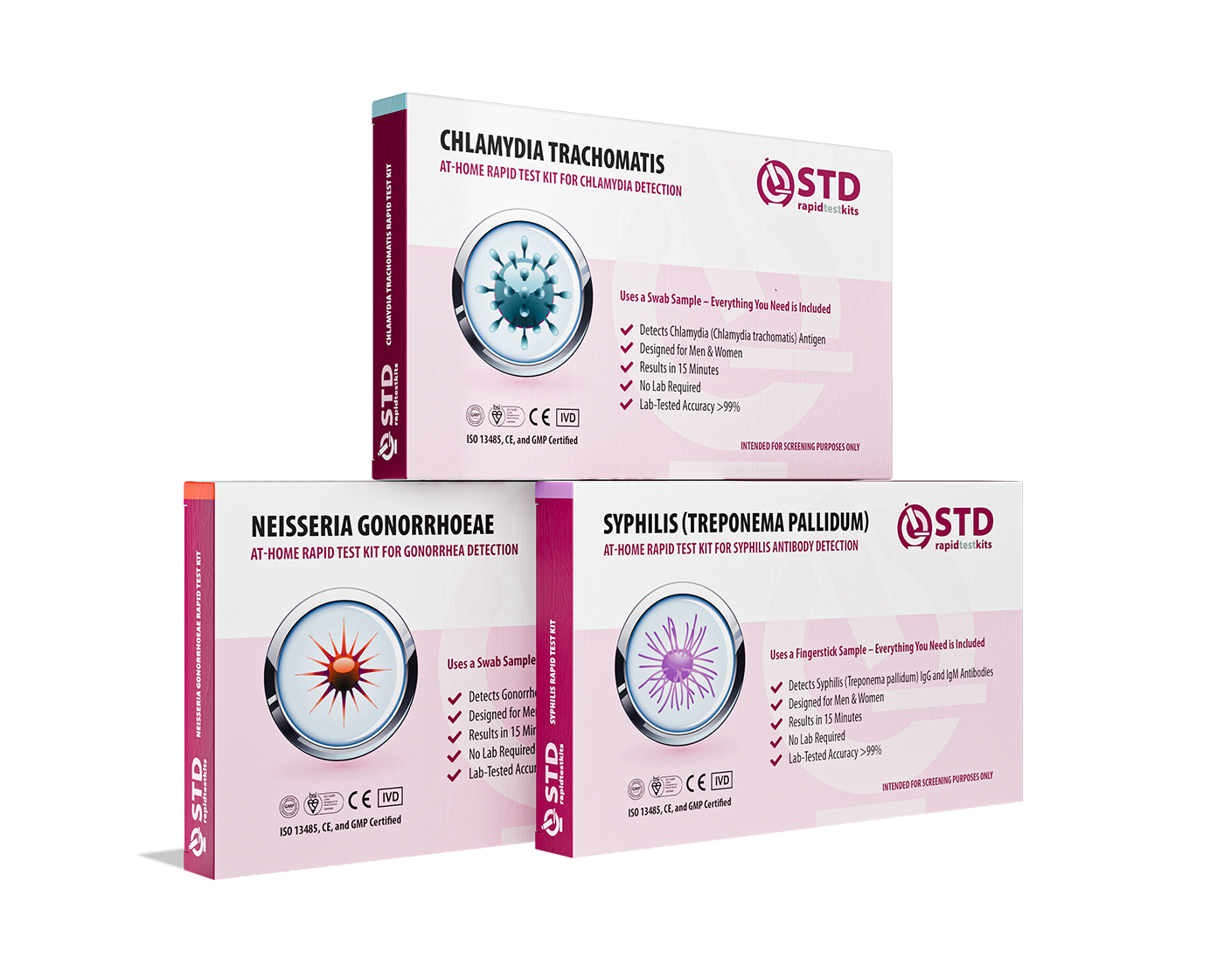
Test at Home with Remedium3-in-1 STD Test Kit
 For Men & Women
 Results in Minutes
 No Lab Needed
 Private & Discreet
Order Now $69.00 $147.00
For all 3 tests
Testing Is Care, Not Certainty. Here’s What to Do Next
If symptoms started days or even weeks after testing, it’s time to test again. This time, be specific. Ask for a full panel that includes:
• Chlamydia & Gonorrhea (urine + throat and/or rectal swabs if relevant)
• Syphilis (blood test)
• HIV (4th-gen test or PCR if within 2–4 weeks of exposure)
• Herpes (if you’ve had sores or exposure, blood test or swab)
• Trichomoniasis (often missed, especially in men)
If the anxiety is killing you now, consider an at-home option with a combo test kit like the one available here. It covers the most common STDs and gives results in minutes, no waiting, no awkward clinic conversations.
But What If It’s Not an STD? Other Causes That Mimic Infection
By now, you might be wondering: What if it’s not an STD at all? That’s a valid question, because in many cases, it isn’t.
Post-sex symptoms like itching, irritation, discharge, or even pain can come from a range of other conditions that have absolutely nothing to do with infection. What makes it hard is that these symptoms can look and feel identical to STDs. And if you’ve already spiraled once, Googling “chlamydia rash” at 3AM, your brain might not be ready to consider anything else.
But let’s talk about the real stuff that could be happening instead:
- • Yeast infections aren’t just for people with vaginas. Anyone can get them, and they often show up after antibiotic use, unprotected sex, or even a sweaty gym session. Symptoms? Itching, white discharge, redness, and burning.
- • Bacterial vaginosis (BV) is not an STD, but it can flare up after new sexual partners or changes in pH. It causes thin, grayish discharge with a fishy smell, often mistaken for an STD.
- • Allergic reactions to latex, spermicide, lubes, or even laundry detergent can cause swelling, itching, and rashes within hours of sex.
- • Friction burns from prolonged or rough sex (or toys!) are very real, and often mistaken for herpes or HPV lesions.
- • UTIs aren’t sexually transmitted, but they often strike after sex. That burning you feel while peeing? Could be a bladder infection, not an STD.
And here’s the kicker: you can have more than one of these at once. A person with a UTI might also have trich. Someone with BV might have just cleared chlamydia. The only way to sort it out? Don’t guess. Retest, and if needed, ask a clinician to do a full workup, including cultures and non-STD diagnostics.
The shame around symptoms often stops people from asking for help. But if you’re in pain, itchy, or anxious? You deserve answers, even if the answer is “just irritation.”

People are also reading: Can You Get an STD from a Tattoo or Piercing? What Science Really Says
The Guilt Spiral After You’ve Said You’re “Clean”
“We were lying in bed, and I’d already told him I’d gotten tested. He said he hadn’t yet, but he trusted me,” said Maya, 27. “A week later, he said he had burning when he peed. My stomach dropped. I thought I’d ruined everything.”
This is the moment no one talks about. The shame spiral. The checking and rechecking your test dates. The wondering if you should’ve waited longer. The internal replay of every text, every reassurance, every “I’m good, I promise.”
Here’s the truth: most people say “clean” when they mean “recently tested.” But few realize that unless testing happens after the window period, and covers all sites of exposure, it can miss things. This isn’t lying. It’s overconfidence in a flawed system.
If this is you? Take a breath. Text your partner if needed. Say, “I’m learning more about testing accuracy, I may have tested too early, and I want to retest to be sure.” That’s not shame. That’s care.
STDs Without Symptoms? Yes, It’s Still Possible to Transmit
So far, we’ve talked about symptoms that show up after a clean test. But let’s flip the script for a second, because there’s another layer to this:
What if you had an STD before the test, but it never showed symptoms? What if you’re still symptom-free, but you passed something to your partner?
According to CDC data, up to 70% of people with chlamydia and 50% of those with gonorrhea show no symptoms at all. Same goes for herpes, many people carry HSV-1 or HSV-2 without ever having an outbreak. Syphilis? Totally asymptomatic in its early stages.
This means you might feel completely fine, and still be carrying an infection that a test missed due to timing or method. You might be in that awkward window where your body is incubating the infection, and by the time symptoms appear (or don’t), it’s already spread.
This isn’t fear, it’s biology. And it’s why re-testing after any unprotected encounter or partner change is smart, not shameful. It’s also why consistent testing, not just one-time results, matters.
Sex is complicated. So is trust. But neither should rest on a single piece of paper with “negative” on it.
Check Your STD Status in Minutes
Test at Home with Remedium7-in-1 STD Test Kit
 For Men & WomenResults in MinutesNo Lab NeededPrivate & Discreet
Order Now $129.00 $343.00
For all 7 tests
So You Got Symptoms After Saying “I’m Clean”, Now What?
If your heart's racing and your brain’s screaming, “What if I gave them something?”, slow down. Symptoms don’t always mean transmission. And if they do? You’re still not a villain, you’re a person caught in the murky gray area between prevention and reality.
The first thing to do is stop panicking. The second? Test again. You owe it to yourself and your partner, not out of guilt, but clarity. Testing again isn’t a confession of guilt. It’s a confirmation of care. Whether you do it at a clinic or order a discreet at-home test kit, what matters is that you take the next step.
Depending on your last exposure and symptoms, here’s how to time it:
• If it’s been less than 14 days since the last exposure, retest now for gonorrhea and chlamydia, those usually show up first.
• If you’ve developed sores, ulcers, or flu-like symptoms, get tested for herpes and syphilis. Those often appear in the early stage.
• If you’re having ongoing symptoms with no clear STD diagnosis, ask about non-STD causes like yeast, BV, or even allergies. You’re allowed to advocate for yourself, even if you’re scared.
And most importantly: if you’re in a relationship or seeing someone regularly, tell them. Not from a place of shame, but from informed care. Say something like:
"Hey, I tested recently and thought everything was fine, but I’ve started having symptoms. I’m going to get retested just to be safe, and I wanted you to know."
That’s it. That’s emotional maturity. That’s how we undo shame without spiraling. That’s how we protect each other without playing sexual detective or assigning blame.
Why This Isn’t Just About STDs, It’s About Trust, Communication, and Recovery
The aftermath of post-testing symptoms isn’t just physical, it’s relational. I’ve seen couples split over it. I’ve also seen people grow stronger because of it. What decides that? Honest conversation, good science, and a little bit of compassion.
If you feel like your partner might blame you, remember: your job isn’t to be perfect. It’s to be honest. Testing isn’t proof of immunity. It’s a tool in a larger toolkit. And when it fails, or comes back negative despite symptoms, that’s not a personal flaw. That’s the limit of our diagnostics.
So whether you're retesting, treating, or waiting to see a provider, ground yourself in this: you’re allowed to protect your health, your heart, and your relationship all at once. And that starts with stopping the spiral and starting the truth.
FAQs
1. Can you really get an STD after testing negative?
Sadly, yes. Imagine taking a pregnancy test the morning after sex, it’s just too early to tell. Same thing with STDs. If you test during the “window period,” the infection may not show up yet even though it’s there.
2. Why do my symptoms feel so real if my test said “clean”?
Because they are real. Tests can miss things, and your body doesn’t lie. Burning, itching, weird discharge, or even just that nagging “off” feeling, if it’s happening, it’s worth paying attention to.
3. What if I already told my partner I was negative?
First, breathe. You weren’t lying; you were trusting your test. Lots of us have said “I’m clean” only to find out later that timing or test type threw us off. The best move is honesty: let them know you’re retesting so you both can stay safe.
4. Do all STDs come with obvious symptoms?
Nope. Chlamydia, for example, is called the “silent infection” for a reason, most people never feel a thing. Same with gonorrhea in the throat or rectum. You can carry and pass it without ever knowing.
5. Why didn’t my clinic test me for everything?
Here’s the secret no one tells you: a “standard panel” often skips herpes, trich, and anything in your throat or butt unless you ask. If you’ve had oral or anal sex, ask for those swabs specifically. Otherwise, you’re only getting half the picture.
6. I’m itchy and burning, but my test was negative. Could it be something else?
Totally. Yeast, BV, UTIs, allergic reactions, even a new laundry detergent, can mimic STD symptoms. That’s why ruling out STDs is step one, not the end of the story.
7. How do I bring this up without sounding guilty?
Try something simple and honest: “Hey, I tested recently and thought I was fine, but I’ve noticed some symptoms. I’m going to retest to be safe.” That’s not shame, that’s responsibility, and most people respect that.
8. Are at-home tests actually accurate?
When you buy from trusted sources, yes. Many at-home kits use the same tech as clinics, just in a discreet box. They’re perfect if you hate waiting rooms or want privacy.
9. How often should I test?
Think of it like dental cleanings: every 3–6 months if you’re sexually active with new partners. And immediately if you notice symptoms, even small ones. Waiting rarely makes things better.
10. What’s the biggest myth about being “clean”?
That it’s a permanent status. It’s not. You can be negative today and positive tomorrow depending on exposure. “Clean” isn’t an identity, it’s a moment in time.
Get Tested. If Not For You, For Others.
If you’ve made it this far, you already know the truth: it’s not always simple. You can test negative and still be infected. You can mean it when you say “I’m clean” and still pass something on. You can show up with the best intentions and still find yourself googling symptoms in the dark. That doesn’t make you a liar. It makes you human.
What matters now is how you respond. Will you panic, or will you recheck, retest, retell? Will you shame yourself, or advocate for clarity, consent, and care moving forward?
Testing isn’t just about you. It’s about everyone you touch. And when we hold that responsibility with compassion, not blame, we shift the culture from punishment to protection.
Sources
1. Personal Story – “I Thought I Was Clean” (Be in the KNOW)
2. Home STD Testing: Convenience vs. Accuracy (UAB Medicine)
3. False Negatives in STD Testing: An Issue? (Centers Urgent Care)


