

Published: November 2025 | Last updated: April 2026 | Editorial review and quality control: Martina N.
There is a particular kind of fear that arrives when you realize you breastfed your baby without a clean postnatal STI screen, or when a positive result comes back after weeks of nursing. The first reaction is panic. The science is more reassuring than most parents expect. Most sexually transmitted infections do not pass through breast milk in any meaningful way. The real risk, when it exists, comes from the condition of the breast itself: open sores, herpes lesions, cracked or bleeding nipples that mix infected blood into a feed, or in the case of HIV, a virus that genuinely lives in milk and can cross to a feeding infant.
This guide walks through every common STI and what current CDC, WHO, and U.S. Office on Women's Health guidance says about breastfeeding with it. It covers what to do if you are nursing tonight while waiting on results, when your baby actually needs testing, and how to keep breastfeeding when treatment makes that safe. Knowledge, not panic, is what protects your baby.
This article is published by stdrapidtestkits.com, which sells at-home STI testing kits. We recommend products based on fit-for-purpose for the reader's concern, not commercial benefit.
Can an STD pass to a baby through breast milk?
Most cannot. HIV is the main infection that genuinely travels through milk, and that risk drops to less than 1% when the parent is on antiretroviral therapy with a sustained undetectable viral load (<a href="https://www.cdc.gov/breastfeeding-special-circumstances/hcp/illnesses-conditions/hiv.html" target="_blank" rel="noopener">CDC, 2024</a>). For herpes, syphilis, hepatitis B, and hepatitis C, milk itself is rarely the path. Risk comes from active sores on the breast or cracked, bleeding nipples that mix infected blood into a feed. Chlamydia, gonorrhea, HPV, and trichomoniasis are not transmitted through nursing.
Key Takeaways
- Only HIV reliably passes through breast milk itself; with ART and a sustained undetectable viral load, transmission risk drops to less than 1% (CDC).
- For most other STIs, milk is not the route. The condition of the breast skin and nipples is what matters, since active sores or bleeding cracks are the real exposure pathway.
Which STDs Can Pass Through Breast Milk, and Which Cannot
Different infections behave very differently when it comes to breastfeeding. Some live in milk. Some live in lesions on the skin. Some are not in either, and the only worry is exposure during birth itself. The clearest way to think about it is to map each common infection against where the pathogen actually sits, and what that means for a feeding baby.
One headline pattern stands out: only HIV reliably moves through breast milk itself. Everything else hinges on whether the breast surface is intact and whether infected blood or fluid is in contact with the baby's mouth. That single distinction reframes the entire decision. With most infections, you do not have to stop breastfeeding the moment you find out. You have to look at your nipples, your treatment plan, and what your provider says about the specific pathogen involved.
| Infection | Through Breast Milk? | What Drives the Risk |
|---|---|---|
| HIV | Yes | Virus is present in milk; ART with undetectable viral load reduces risk to <1% (CDC). |
| Syphilis | Rare | Direct contact with a syphilitic sore on the breast or nipple. |
| Herpes (HSV-1, HSV-2) | No (not via milk) | Active herpes lesion on the breast or nipple is the route. |
| Hepatitis B | Negligible if vaccinated | Risk only with cracked, bleeding nipples; infant vaccination at birth essentially eliminates risk. |
| Hepatitis C | Not documented | Risk only with cracked, bleeding nipples mixing maternal blood into feeds. |
| Chlamydia | No | Concern is birth-canal exposure during delivery, not nursing. |
| Gonorrhea | No | Concern is birth-canal exposure; prophylactic eye drops at birth address it. |
| HPV | No | No documented breast-milk transmission. |
| Trichomoniasis | No | Not transmitted through nursing. |
HIV Is the One That Truly Travels Through Milk
HIV is genuinely present in breast milk. Without antiretroviral therapy, an HIV-positive parent who breastfeeds has a meaningful chance of passing the virus to the infant over the course of nursing. That is the historical reason guidance for HIV-positive parents in high-resource countries leaned hard toward formula feeding for decades.
Current guidance is different. The CDC's updated position is explicit: when the parent is on antiretroviral therapy with a sustained undetectable viral load during and after pregnancy, the risk of HIV transmission through breastfeeding is less than 1%, but not zero (CDC). The WHO frames it the same way: parents living with HIV should be on lifelong ART, and where authorities support breastfeeding, exclusive breastfeeding for the first six months with continued ART throughout is the recommended pattern (WHO ELENA guidance).

That changes the conversation in two important ways. The answer to "can I breastfeed if I am HIV positive?" is no longer a flat no. It has become a shared-decision conversation with your HIV provider and your baby's pediatrician, weighing your viral load, your access to ART, and your support system. At the same time, genuine ART adherence and sustained viral suppression are the precondition. Missed doses or a viral load that creeps up changes the math meaningfully, which is why close monitoring during the breastfeeding period is part of the deal.
If your viral load is not yet undetectable, or you are starting ART for the first time, formula or pasteurized donor milk from an HMBANA-accredited bank is the safer bridge. Resume direct nursing only after your provider confirms suppression.
Herpes Simplex: When a Sore on the Breast Is the Real Risk
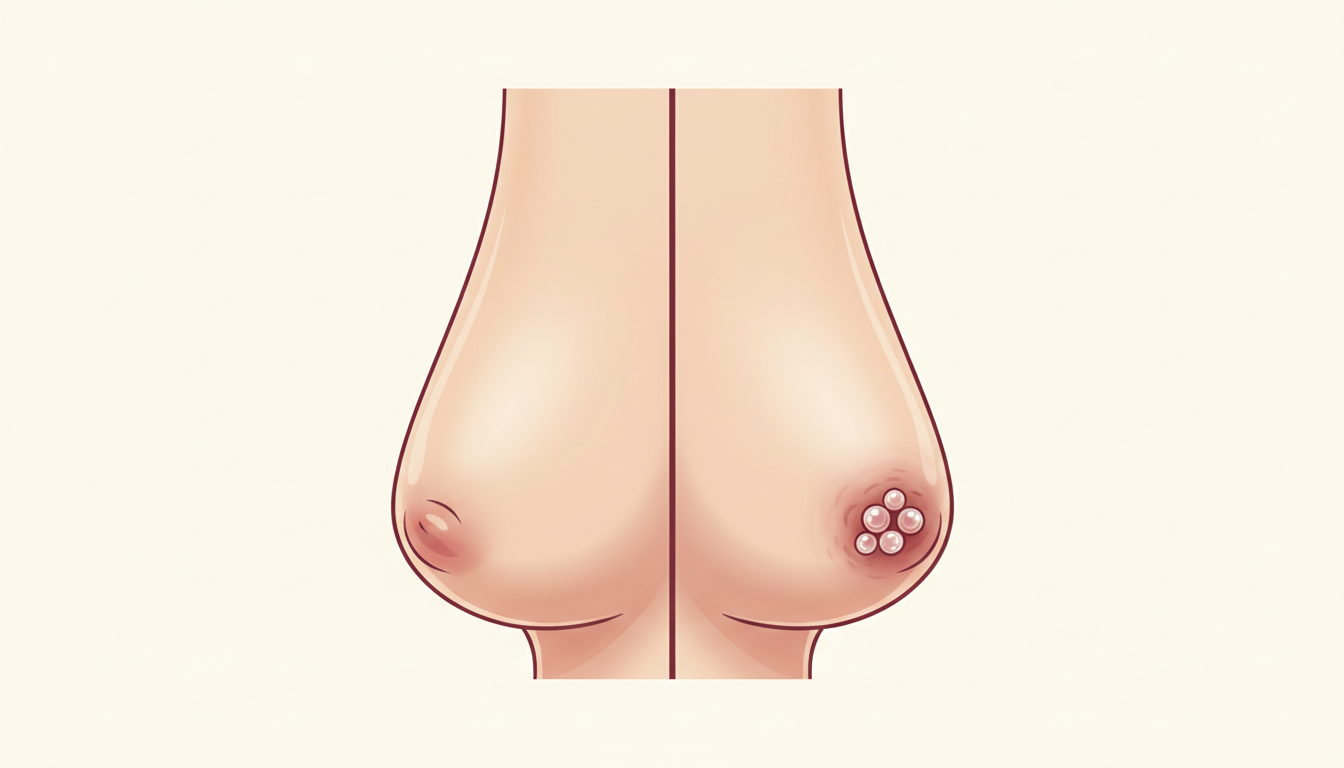
HSV-1 and HSV-2 do not appear in breast milk in any clinically meaningful way. The CDC is direct on this: the danger is a herpes lesion on the breast or nipple itself, where direct skin-to-mouth contact during a feed can transmit the virus to an infant (CDC). For a newborn, neonatal herpes can be genuinely dangerous, with potential for brain involvement and disseminated infection if it is not caught and treated promptly.
The CDC's specific guidance for parents with active lesions on the breast: temporarily stop breastfeeding from the affected breast, do not feed any expressed milk from that breast, and discard pumped milk from the affected side until the lesion is fully healed. Nursing from the unaffected breast can continue, provided any other lesions on the body are completely covered.
Herpes can also shed virus for a day or two before a visible sore appears, especially around an outbreak. Many parents catch a small cluster of lesions only after a day or two of mild tingling or itching. Daily breast checks during a known outbreak window, plus suppressive antiviral therapy in some cases, are how clinicians manage this. If you have ever had genital HSV, raise it explicitly with your OB-GYN before delivery so a plan is in place.
Syphilis, Hepatitis B, and Hepatitis C: When the Skin Is the Risk, Not the Milk
These three pathogens follow a similar pattern. The milk itself is generally not the issue; the condition of the breast skin is.
Syphilis spreads through direct contact with a syphilis sore (CDC About Syphilis). If a syphilitic chancre is on the breast or nipple, a baby's mouth in contact with that lesion is a transmission risk. With no breast lesions, breastfeeding is generally compatible with appropriate antibiotic treatment. Universal prenatal screening matters here too: your doctor should rescreen you closer to childbirth if you are at higher risk, per Office on Women's Health guidance, and catching syphilis before delivery prevents both congenital syphilis and breast-route exposure.
Hepatitis B transmission through breastfeeding is negligible when the infant has received HBV vaccination plus hepatitis B immune globulin within twelve hours of birth (CDC). The vaccine series continues at 1 to 2 months and 6 months, with a postvaccination check between 9 and 12 months. With that protocol in place, breastfeeding is fully compatible with maternal HBV.
Hepatitis C is also not documented to spread through breast milk in normal feeding, per the same CDC page. Cracked or bleeding nipples are the single caveat for both hepatitis B and C, since they can mix maternal blood with what the baby ingests. CDC instructions for that situation are straightforward: temporarily pause nursing on the affected breast, express and discard milk until the skin heals, then resume.
Infant hepatitis B vaccine paired with hepatitis B immune globulin within 12 hours of birth, then the rest of the vaccine series at 1 to 2 months and 6 months, makes breastfeeding fully compatible with maternal HBV per CDC guidance. Confirm immunity with an anti-HBs titer between 9 and 12 months.
What to Do Tonight If You're Nursing and Waiting on Results
This is one of the harder positions to be in. You have already nursed today. Test results have not come back yet. You are oscillating between not wanting to interrupt your baby's feeding rhythm and not wanting to risk anything.
What to do tonight depends on which infection is suspected and what your nipple skin looks like right now. If the suspected infection is one that does not transmit through milk (chlamydia, gonorrhea, trichomoniasis, HPV) and your nipples are intact, current CDC and Office on Women's Health guidance is to continue nursing while you wait. Pausing offers no medical benefit in that scenario, and the disruption can hurt your supply.
If the suspected infection is HIV, or you have visible sores on the breast, or your nipples are visibly cracked and bleeding, the cautious move is to pump and discard from any affected breast until you have answers. You can keep nursing from an unaffected, intact side. This protects supply and gives you something productive to do with the anxiety while you wait.
If you are not sure which category your situation falls into, call your OB-GYN or your baby's pediatrician. "I am waiting on test results and I want to know if I should pause feeding tonight" is a legitimate after-hours call. Pediatric and OB triage nurses field this kind of question constantly. They would rather guide you to the right next step than have you guess at 2 a.m.
Low-risk infection suspected (chlamydia, gonorrhea, trichomoniasis, HPV) and intact nipples: continue nursing as normal.
HIV suspected, visible sores on the breast, or cracked and bleeding nipples: pump and discard from any affected side; nurse from intact sides only.
Unsure which category applies: call your OB-GYN or your baby's pediatrician triage line before the next feed.
When Your Baby Actually Needs Testing
Not every postpartum exposure leads to testing the baby. Pediatricians decide based on the specific infection, the timing of exposure, and whether any symptoms have appeared. The pattern below is what most U.S. pediatric infectious-disease teams follow, drawn from CDC perinatal-transmission guidance and standard hospital protocols.
| Maternal Infection | Should the Baby Be Tested? | Typical Testing Timing |
|---|---|---|
| HIV | Yes | At birth, 1 to 2 months, and 4 to 6 months |
| Syphilis (untreated or active lesions) | Yes | Immediately at birth, with serial titers thereafter |
| Herpes (lesions on breast) | Maybe | If exposure occurred or symptoms appear in the infant |
| Chlamydia | Symptom-driven only | If eye discharge or respiratory symptoms appear |
| Gonorrhea | Symptom-driven only | If eye discharge or systemic symptoms appear |
| Hepatitis B (infant vaccinated) | Yes, postvaccination | Anti-HBs titer at 9 to 12 months to confirm immunity |
| Hepatitis C | Yes (one-time) | HCV antibody around 18 months, or HCV RNA earlier if indicated |
How to Keep Breastfeeding Safely After a Diagnosis
A diagnosis is not a stop sign for breastfeeding. Treat it as a checklist instead. The steps are short.
- Get on the right treatment promptly. Bacterial infections like chlamydia, gonorrhea, and syphilis clear with appropriate antibiotics within days. Antivirals shorten and dampen herpes outbreaks. ART suppresses HIV. Most of these treatments are compatible with nursing; your provider will tell you if a specific medication needs a temporary pump-and-discard window.
- Inspect the breast surface daily. Look for sores, cracks, blood, or anything that was not there yesterday. Breast skin is the variable that changes day to day. Pause nursing on any affected side until it heals, and pump-and-discard to maintain supply.
- Use lactation support. Many maternity hospitals have lactation consultants on staff who specifically know how to help parents through a diagnosis without losing supply. Telehealth lactation services have grown a lot since 2020 and can fill the gap if your hospital does not.
- Plan for retesting. Some infections need confirmatory follow-up tests so you and your provider know the treatment worked. Schedule them at the same visit as treatment, so they do not slip.
- Consider screened donor milk for high-risk windows. If you are starting ART for newly diagnosed HIV and your viral load is not yet suppressed, pasteurized banked donor milk through an HMBANA-accredited bank is a safe bridge. Informal milk sharing from friends or online groups carries unknown risk and is not screened the same way.
The CDC, WHO, and AAP all converge on the same point: with a diagnosis, treatment, and a clear plan, breastfeeding is more often a yes than a no. The narrow exceptions, like untreated HIV with a high viral load or active breast lesions that have not healed, are the ones to walk through directly with your provider.

When to Retest Yourself After Treatment
Retesting is the part most parents skip because the postpartum period is already overstuffed. It matters because some infections occasionally linger after first-line treatment, and because reinfection from an untreated partner is common. The general pattern, drawn from CDC STI treatment guidelines:
- Chlamydia and gonorrhea: retest about three months after treatment to catch reinfection. A test-of-cure is not routinely needed for an uncomplicated infection treated with the recommended regimen unless symptoms persist.
- Syphilis: serologic titers at 6, 12, and 24 months after treatment to confirm an adequate response.
- HIV: ongoing viral-load monitoring on whatever schedule your HIV provider sets, with closer monitoring during any breastfeeding period.
- Herpes: no retest after diagnosis. The condition is managed by tracking outbreaks, with suppressive antiviral therapy as the lever.
- Hepatitis B and C: follow-up labs depend on whether the infection is acute or chronic; your hepatologist or primary-care provider sets the schedule.
If a clinic visit is hard to fit around feeding and naps, an at-home rapid test can bridge the gap for a quick personal check between formal lab visits. It does not replace the follow-up labs your provider has scheduled, though it can fill the gap when you want a faster answer.
Talking to Your Partner Without Blame
An STI diagnosis postpartum is one of the most emotionally loaded conversations there is. Framing it as a shared logistics problem ("my doctor wants both of us tested so we do not pass it back and forth") tends to land better than leading with the emotional weight of the diagnosis itself. The clinical step and the relationship conversation do not have to happen in the same hour.
If direct conversation is not safe or possible, every U.S. state has anonymous partner-notification services through the local health department. They contact named partners on your behalf without revealing who notified them. Stopping the reinfection cycle is the goal; how the message gets delivered is logistically flexible.
Treatment for the partner matters for your own outcome too. Untreated partners are the single biggest reason a postpartum infection comes back after a clean retest, and most clinics will treat both of you in the same visit if you call ahead and ask.
For mothers on ART with a sustained undetectable HIV viral load during and after pregnancy, the risk of transmission through breastfeeding is less than 1%, but not zero.
FAQs
- Can my baby get HIV from my breast milk if I am on antiretroviral therapy?
- The risk drops to less than 1% when you are on ART with a sustained undetectable viral load, per CDC guidance. It is not zero, which is why the decision is a shared one with your HIV provider and pediatrician. You will need close viral-load monitoring during the breastfeeding period, and missed ART doses change the math meaningfully.
- I have herpes. Can I still breastfeed?
- Yes. Pause nursing only on the breast with an active sore and discard milk from that side until it heals; nursing from the other breast can continue. The virus is in the lesion, not the milk, so a lesion-free breast is safe. Check both breasts daily during an outbreak because viral shedding can precede a visible sore by 24 to 48 hours.
- Do I need to stop nursing if I have syphilis?
- Only if you have an active syphilitic lesion on the breast or nipple. Syphilis spreads through direct contact with a sore. If your lesions are elsewhere or are healing after antibiotic treatment, breastfeeding is generally compatible with appropriate care. Talk to your OB-GYN about timing your treatment relative to nursing.
- Are chlamydia or gonorrhea passed through breast milk?
- No. Neither infection transmits through milk. Both can be passed during birth if the parent has an active genital infection at delivery, which is why prophylactic eye drops are given to newborns. Postnatal nursing is not a transmission route, and treatment with appropriate antibiotics is compatible with continued breastfeeding.
- My nipples are cracked and bleeding. Should I still feed?
- Pause nursing on the affected side until the skin heals, especially if you have hepatitis B, hepatitis C, or unknown HIV status. Bleeding nipples mix infected blood into a feed, which is the actual exposure path for these viruses (CDC). Pump and discard to keep your supply, and ask a lactation consultant about latch correction so the cracks heal faster.
- Can my baby be tested for an STI during the newborn period?
- Yes, when the situation calls for it. Babies born to HIV-positive parents are tested at birth, 1 to 2 months, and 4 to 6 months. Babies exposed to untreated maternal syphilis are tested immediately. For chlamydia and gonorrhea, testing is symptom-driven (eye discharge, cough). Your pediatrician will tailor the schedule to your specific exposure.
- Are at-home STI tests reliable for the postpartum period?
- At-home rapid lateral-flow tests are useful for screening between formal clinic visits. Sensitivity is generally strong but lower than lab-processed NAAT for some bacterial infections, so a positive result is worth confirming with a lab test. The fastest postpartum pattern: an at-home rapid test now for a quick personal check, then the formal follow-up labs your OB-GYN orders.
- I had prenatal STI testing months ago and have not retested since. Should I now?
- Yes, especially if you have a new partner, any new symptoms, or your prenatal screen is more than 9 to 12 months old. Postpartum hormones can mask classic STI symptoms, and infections like syphilis and HIV may only be detectable on serology after a window period. A current panel is a reasonable reset, particularly while you are still nursing.
- U.S. Centers for Disease Control and Prevention. HIV and Breastfeeding: clinical guidance on antiretroviral therapy, viral-load suppression, and the less-than-1% transmission figure cited throughout this article.
- U.S. Centers for Disease Control and Prevention. Herpes Simplex Virus and Breastfeeding: guidance on active lesions on the breast and the temporary-pause-and-discard protocol.
- U.S. Centers for Disease Control and Prevention. Hepatitis B or C Infections and Breastfeeding: guidance on infant vaccination, the negligible HBV transmission risk after vaccination, and the cracked-nipple caveat for both hepatitis B and C.
- World Health Organization. ELENA: Infant feeding for the prevention of mother-to-child transmission of HIV. Source for the WHO position on lifelong ART, exclusive six-month breastfeeding where supported, and continued ART throughout.
- U.S. Office on Women's Health. STIs, Pregnancy, and Breastfeeding: source for prenatal screening framing, the recommendation to rescreen closer to childbirth in higher-risk pregnancies, and supporting context for the breast-route syphilis caveat during the perinatal period.
- U.S. Centers for Disease Control and Prevention. About Syphilis: source for the transmission-via-direct-contact-with-sore framing used in the syphilis section.
- U.S. Centers for Disease Control and Prevention. About Breastfeeding: general background on breastfeeding benefits and U.S. exclusive-breastfeeding rates referenced in framing.
