
Published: September 2025 | Last updated: May 2026 | Editorial review and quality control: Martina N.
The question most new moms want answered in one sentence is whether their baby is at risk during breastfeeding if they carry a sexually transmitted infection. The honest answer depends entirely on which infection you have. A short list of STIs do transmit through breast milk, or through direct contact with breast lesions, and warrant a different feeding plan. Most do not. Standard breastfeeding is safe for the majority of women with a treated or stable STI diagnosis.
This guide walks through each common STI, what the actual transmission route looks like at the breast, and what current CDC, WHO, and NHS guidance says. It is written for women who already know or suspect they have an STI and want a specific answer about feeding, and for partners and family members trying to help them decide.
One framing note before we start. Pregnancy, delivery, and breastfeeding are three separate transmission windows. An infection that crosses the placenta during pregnancy (syphilis, untreated HIV), or passes during vaginal delivery (gonorrhea, chlamydia, herpes), or seeds the baby in utero is a concern handled at antenatal visits and at the moment of birth, not weeks later at the breast. This article focuses specifically on the breast-milk and direct-nipple-contact question. Where the routes overlap, we say so plainly.
The short reassurance for most readers: of the eight or nine STIs in common public-health classifications, only one (HIV) routinely transmits through intact breast milk. Two others (HSV and syphilis) can transmit only through the much rarer scenario of an active lesion located on the breast itself. The remaining infections, including some that sound alarming on first hearing, are not breastfeeding contraindications under current guidance.
Key Takeaways
- Of the common STIs, HIV is the only one that reliably transmits through breast milk; HSV and syphilis can transmit only via direct contact with an active lesion on the breast or nipple.
- Chlamydia, gonorrhea, trichomoniasis, HPV, hepatitis B (with standard infant immunoprophylaxis), and hepatitis C do not pass through breast milk, but every pregnant woman should still complete a full prenatal STI screen.
Which STIs Pass Through Breast Milk?
The short list of infections that can transmit through breast milk, or through breast-skin contact during feeding, is much narrower than most parenting forums suggest. The table below summarizes what current public-health guidance says for each common STI. Detail and exceptions follow in the sections after.
Two principles guide the table. First, an STI is only relevant to breastfeeding if either (a) the pathogen is present in breast milk in transmissible quantities, or (b) the pathogen can pass through direct skin contact with a lesion in or around the nipple. Almost no STIs meet either condition. The handful that do are the ones to focus on.
| Infection | Passes through breast milk? | Breastfeeding recommendation |
|---|---|---|
| HIV | Yes, via milk itself | Formula feeding is the U.S. default; shared decision with HIV care team if mother is on suppressive ART |
| HSV-1, HSV-2 | No via milk; yes via active breast lesion | Continue from unaffected breast; pump and discard from affected side until lesion is fully healed |
| Syphilis | No via milk; yes via breast chancre | Resume 24 hours after starting penicillin; do not feed from a breast with a visible chancre |
| Hepatitis B | Theoretical only | Safe when baby receives HBIG and the first hepatitis B vaccine within 12 hours of birth |
| Hepatitis C | No | Safe; consider temporary pumping if nipples are cracked or bleeding |
| Chlamydia | No | Safe; complete antibiotic course |
| Gonorrhea | No | Safe; complete antibiotic course |
| Trichomoniasis | No | Safe; discuss timing of metronidazole with provider |
| HPV | No | Safe |
HIV and Breastfeeding: The One STI That Reliably Transmits
HIV stands apart from every other STI on this list. The virus is present in breast milk in measurable concentrations, and breastfeeding accounts for a substantial share of mother-to-child transmissions when the mother is not on antiretroviral therapy. WHO estimates that without any intervention, the combined risk of mother-to-child HIV transmission across pregnancy, delivery, and breastfeeding ranges from roughly 15 to 45 percent; with antiretroviral therapy and other interventions, that combined risk falls to below 5 percent (WHO HIV/AIDS). The breastfeeding period itself is the dominant contributor when the mother is untreated and feeding for 18 to 24 months.
In the United States, formal guidance changed in 2023. The previous position from the CDC and the American Academy of Pediatrics was a flat recommendation that women living with HIV not breastfeed. The updated framework recognizes that women on suppressive antiretroviral therapy with a durably undetectable viral load have a much lower (though not zero) breast-milk transmission risk, and that the decision should now be made through shared decision-making between the mother, her HIV clinician, and her baby's pediatrician (CDC HIV).
Three numbers worth knowing in this conversation:
- Maternal viral load matters most. A sustained undetectable plasma viral load on stable ART is associated with breast-milk transmission risk well under 1 percent per year of breastfeeding in observational studies, but the precise number is not zero and is less firmly established than the corresponding U=U (undetectable equals untransmittable) finding for sexual transmission.
- The U.S. residual-risk baseline matters because of what formula is competing against. Formula feeding in the U.S. is safe, affordable, and eliminates breast-milk transmission risk entirely. This is why it remains the default recommendation: the alternative carries no transmission risk at all, so the calculus favors it.
- Banked donor human milk from screened, pasteurized sources is a second option for mothers who want their baby to receive human milk without HIV transmission risk. Hospital-grade donor milk is the most commonly available source.
WHO guidance differs by setting. In countries where safe formula is not reliably available, WHO recommends exclusive breastfeeding for the first six months alongside maternal ART, because the infant mortality risk from formula prepared with unsafe water exceeds the residual HIV transmission risk on therapy. This is a setting-dependent calculation, not a contradiction of U.S. guidance.
The practical takeaway for any pregnant or postpartum woman in the U.S.: if you are HIV positive, the single most important step is being on ART with consistent adherence. If you do not know your HIV status, the CDC's universal screening recommendation calls for HIV testing at the first prenatal visit and again in the third trimester for women at elevated risk (CDC HIV). A new diagnosis caught early in pregnancy gives the most time for ART to fully suppress the virus before delivery.
If you are HIV positive and pregnant or breastfeeding, do not stop antiretroviral therapy without speaking to your HIV clinician first. Consistent ART is the most powerful tool you have to protect both your own health and your baby's. Suppressive ART reduces the risk of every route of mother-to-child transmission, including breast-milk transmission, by an order of magnitude or more.
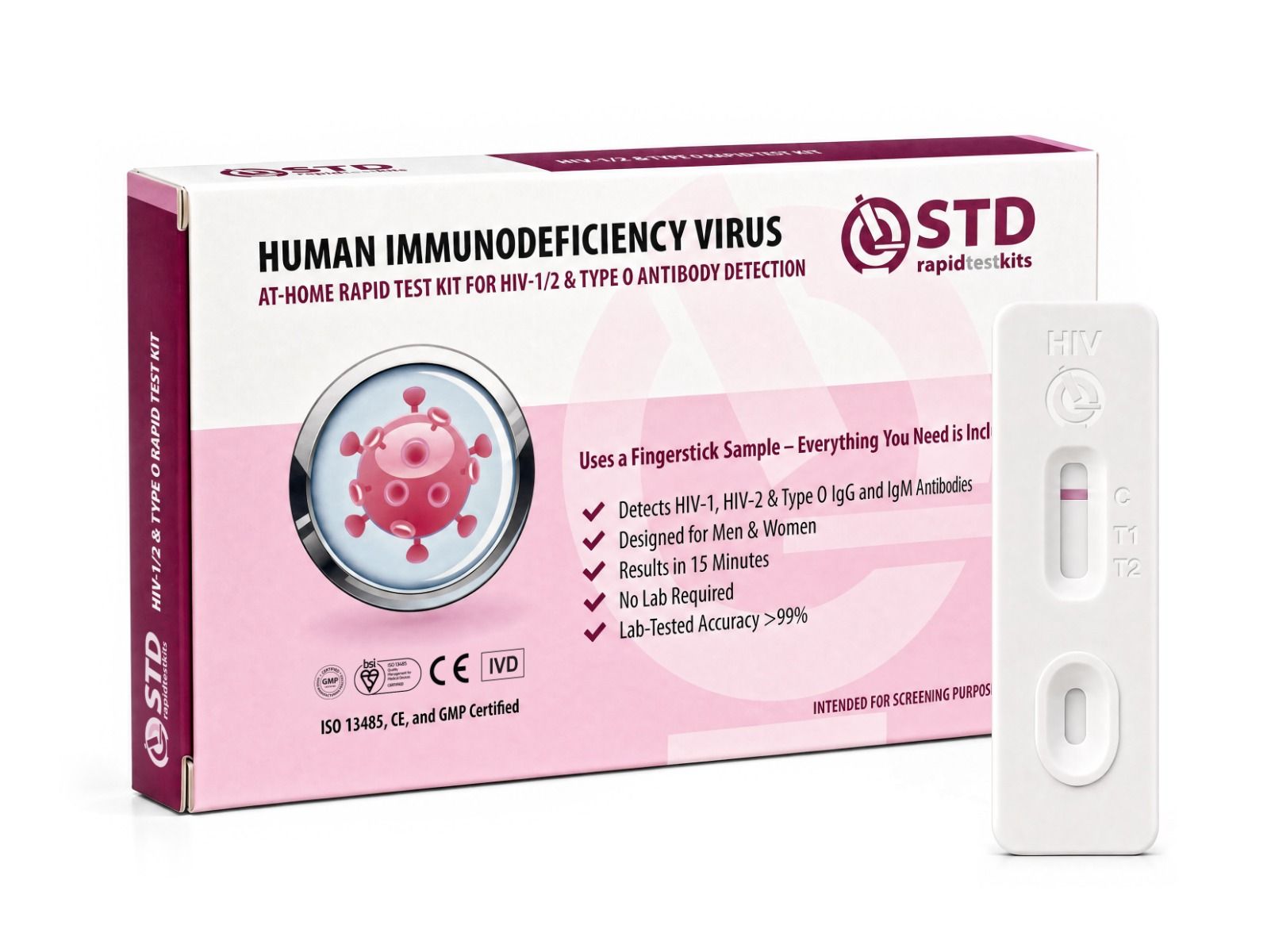
If you do not yet know your HIV status, a rapid home test is a private first step before your next prenatal or postpartum appointment.
Herpes (HSV-1 and HSV-2) and Breastfeeding
HSV-1 and HSV-2 are not present in breast milk in transmissible concentrations. The virus is contained in the vesicles and ulcers of an active outbreak, which means the only realistic transmission route during feeding is direct contact between the baby's mouth or skin and an active lesion located on the breast, nipple, or areola.
This is uncommon but not impossibly rare. Genital herpes does not migrate up the body to the breast, but primary HSV infection during pregnancy or postpartum can produce lesions anywhere the virus is inoculated, and the breast is a possible site. Recurrent breast lesions in a woman with a long-standing HSV-2 diagnosis are less common but documented in case reports.
Neonatal HSV infection is a serious illness when it occurs, with central nervous system involvement and a mortality rate that remains worryingly high despite modern antiviral treatment. This is why prevention at the feeding stage matters, even though the absolute risk is small.
The recommendations are straightforward:
- Continue breastfeeding from the unaffected breast.
- Pump and discard milk from the affected breast until the lesion is fully crusted and healed. (Discard rather than save the milk, because the pump tubing and flange may have contacted the lesion.)
- Cover any visible lesion with a clean dressing when handling the baby, to prevent accidental skin-to-skin contact.
- Wash hands thoroughly before each feeding, and before any diaper change or face-to-face contact during the outbreak.
If you have a history of recurrent HSV outbreaks, your obstetrician may recommend daily suppressive antiviral therapy (acyclovir or valacyclovir) in the third trimester to reduce the likelihood of an outbreak at or near delivery. Acyclovir and valacyclovir are both compatible with breastfeeding per current guidance.
A separate point worth flagging: cold sores on the mother's lips are a form of HSV-1 oral infection. Kissing the baby's face with an active cold sore is the relevant transmission concern there, not breastfeeding. The advice for an active cold sore is the same as for any other HSV lesion: cover or avoid until healed, wash hands carefully, and do not kiss the baby on the face.
Syphilis: The Chancre-on-the-Breast Case
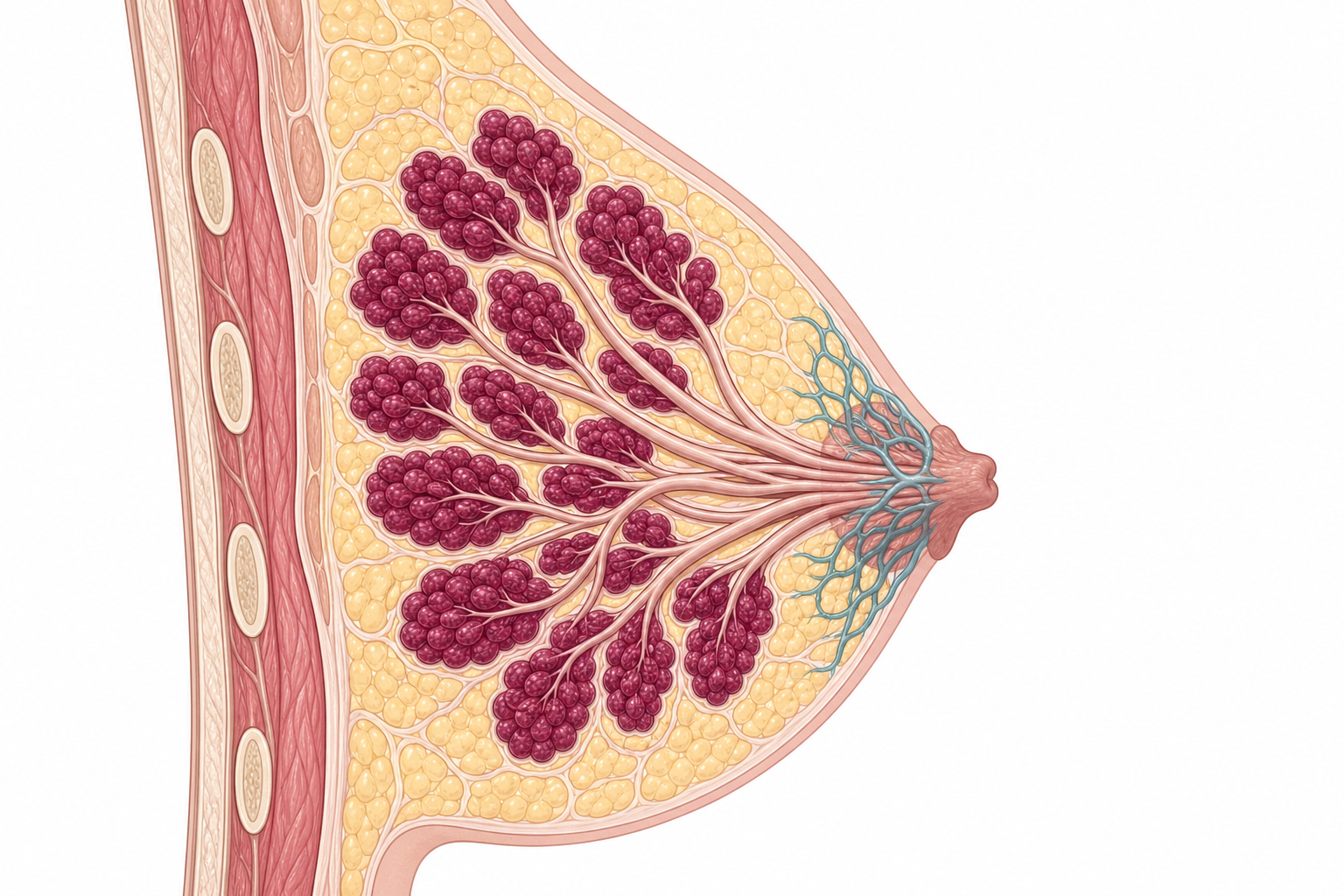
Treponema pallidum, the bacterium that causes syphilis, is not transmitted through breast milk itself. The only documented breastfeeding transmission route is direct contact with a syphilitic chancre or secondary-stage lesion located on the breast, nipple, or areola. This is rare but well-documented in case reports.
The clinical pattern matters here. Primary syphilis presents as a single painless ulcer with a firm rolled border (the chancre), most commonly at the site of inoculation. Genital chancres are by far the most common location, but oral, anal, and breast-skin chancres do occur. A breast chancre results from direct contact with an infected partner's lesion or fluids during sexual contact involving the breast. Secondary syphilis can produce a body-wide rash that occasionally involves the breast and nipple skin, and those lesions are also infectious on contact.
Per CDC guidance (CDC STD treatment guidelines), women with syphilis who have completed at least 24 hours of penicillin treatment and have no visible chancre on the breast can breastfeed safely. Penicillin is fully compatible with breastfeeding. If a breast chancre is present, the affected breast should not be used for feeding until the lesion is fully healed; the unaffected breast remains safe.
Untreated syphilis in pregnancy is far more dangerous as a vertical transmission risk during pregnancy itself than as a breastfeeding concern. Congenital syphilis rates have risen sharply in recent years, with the CDC reporting a 26 percent increase in congenital syphilis cases between 2021 and 2022 alone (CDC STD surveillance). Universal first-trimester syphilis screening is the most important intervention for both maternal and infant outcomes.
If you have a confirmed syphilis diagnosis during pregnancy or postpartum, the priority is completing the full penicillin regimen (typically one to three doses of benzathine penicillin G, depending on the stage of infection) and re-screening your partner. Untreated partners are the most common reason for repeat infections.
No breast chancre, plus at least 24 hours after the first dose of penicillin: safe to breastfeed from both sides.
Visible chancre or secondary-stage lesion on the breast: do not feed from that side until the lesion is fully healed. The unaffected breast remains safe.
Hepatitis B and Hepatitis C: Why Breastfeeding Is Usually Fine
Both hepatitis B (HBV) and hepatitis C (HCV) are bloodborne infections that are often grouped with STIs because sexual contact is a recognized transmission route. Neither is a contraindication to breastfeeding in current U.S. or U.K. guidance.
Hepatitis B. HBV is present in breast milk at low levels, but the dominant transmission route from an infected mother to her infant is at birth, not through feeding. Standard U.S. practice is to give every infant born to an HBV-positive mother both hepatitis B immune globulin (HBIG) and the first dose of the hepatitis B vaccine within 12 hours of delivery (CDC Hepatitis). With this combined immunoprophylaxis, breastfeeding does not increase infant infection risk and is recommended.
Hepatitis C. HCV has not been shown to transmit through intact breast milk. Breastfeeding is considered safe for HCV-positive mothers per CDC. The one practical caveat: if your nipples are cracked, bleeding, or have raw fissures, expressed milk may contain visible blood, and CDC recommends temporarily pumping and discarding milk from the affected side until the nipple has healed. Once healed, normal breastfeeding resumes.
If you are unsure of your hepatitis status, ask your prenatal care team to add HBV surface antigen and HCV antibody screening to your first-trimester panel. Both are standard recommended tests in current U.S. guidance, and the cost of running them once at the start of pregnancy is much lower than the cost of a missed diagnosis.
Every infant born to an HBV-positive mother should receive hepatitis B immune globulin (HBIG) and the first dose of the hepatitis B vaccine within 12 hours of birth. This combined immunoprophylaxis is what makes breastfeeding safe with hepatitis B; without it, the calculus shifts.
Chlamydia, Gonorrhea, Trichomoniasis, and HPV: No Breast-Milk Risk
These four infections do not pass through breast milk. They are still worth screening for during pregnancy, but for reasons that have nothing to do with the breast.
Chlamydia and gonorrhea are transmitted to the baby primarily during vaginal delivery, where they can cause neonatal conjunctivitis and, less commonly, neonatal pneumonia. Universal prenatal screening at the first prenatal visit, with re-screening in the third trimester for women under 25 or with risk factors, is the CDC recommendation (CDC STD). Treatment during pregnancy is with azithromycin (chlamydia) or ceftriaxone (gonorrhea), both compatible with subsequent breastfeeding.
Trichomoniasis is more commonly associated with adverse pregnancy outcomes (preterm birth, low birth weight) than with direct neonatal infection. Treatment is with metronidazole. The timing of high-dose oral metronidazole around breastfeeding is sometimes adjusted in consultation with the provider, because the drug enters milk in measurable concentrations and some clinicians prefer a 12 to 24 hour pump-and-discard window after a single high-dose treatment. The infection itself, however, is not transmitted through milk.
HPV does not transmit through breast milk in any clinically meaningful sense. Rare detection of HPV DNA in milk has been reported in research studies, but no documented cases of HPV infection acquired through breastfeeding exist. The CDC and WHO do not list HPV as a contraindication to breastfeeding.
The reason these four are still on the prenatal screening panel is that any one of them, left untreated, can complicate delivery or harm the baby through routes other than feeding. Treating during pregnancy is straightforward and removes the risk.
Chlamydia, gonorrhea, trichomoniasis, and HPV do not pass through breast milk. Treating during pregnancy protects your baby at delivery, not at the breast. A positive result for any of these is not a reason to stop breastfeeding.
When to Test During Pregnancy and Postpartum
The most important STI testing window for protecting your baby is the first prenatal visit. Universal screening at this visit covers HIV, syphilis, hepatitis B, and (for women under 25 or with risk factors) chlamydia and gonorrhea. Many practices add hepatitis C and HSV antibody testing to this panel, though those are not yet universal.
Re-screening in the third trimester is recommended for women at elevated risk: those with a new partner during pregnancy, multiple partners, a partner with a known STI, a history of an STI during the pregnancy itself, or those living in a high-prevalence area. The CDC's screening recommendations are summarized in their STD treatment guidelines (CDC STD).
Postpartum testing matters in a different way. If you were not screened during pregnancy, or if you had a possible exposure after your last prenatal screen, the postpartum period is a reasonable time to test. Treatment for any STI you discover postpartum is generally compatible with breastfeeding, with the partial exceptions noted in the metronidazole discussion above.
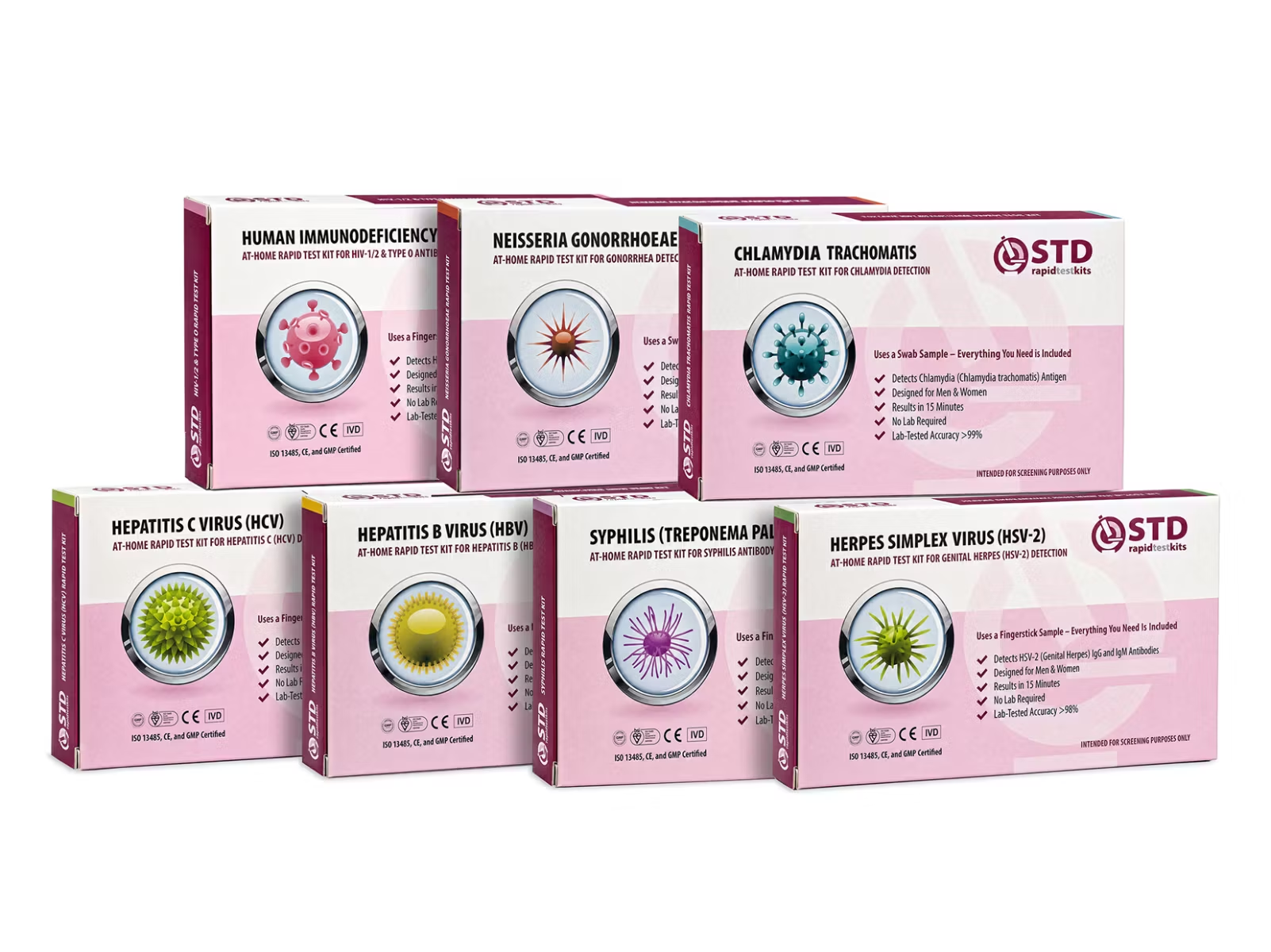
This site sells at-home rapid STI test kits; the recommendation that follows reflects our own product range. At-home rapid STI testing is one option for women who want a private, fast supplementary check between clinical visits. The kits are lateral-flow tests; a positive result should always be followed up with a confirmatory lab test through your provider. The most comprehensive kit we offer covers seven of the common STIs in a single panel, and is a reasonable supplementary tool for a partner whose screening history is unclear or for a postpartum mother who wants to retest before returning to sexual activity.
What to Do If You Test Positive While Breastfeeding
A positive STI result while breastfeeding is not, with one exception, an emergency to stop feeding. The exception is an untreated HIV diagnosis where you have not yet started antiretroviral therapy. The decision framework for every other situation looks like this:
- Contact your provider the same day. Confirm the home result with a laboratory test, start the appropriate treatment, and ask whether the medication you are prescribed is compatible with breastfeeding. Most are.
- Check whether the diagnosis is in the breastfeeding-relevant column. HIV, active HSV breast lesions, and untreated syphilis with a breast chancre are the three situations that change feeding plans. Everything else (chlamydia, gonorrhea, trichomoniasis, HPV, hepatitis B with infant immunoprophylaxis, hepatitis C without nipple injury) does not.
- Ask about partner testing and treatment. Treating yourself but not your partner often leads to reinfection. This matters more for some infections (chlamydia, gonorrhea, trichomoniasis) than others, but the conversation is worth having every time.
- If you are HIV positive and not yet on ART: formula-feed until you are on suppressive therapy, then have the shared-decision conversation with your HIV clinician about whether to discuss returning to breastfeeding. Do not stop ART without medical guidance.
- If you have an active HSV breast lesion: feed from the unaffected breast, pump and discard from the affected side, and start antiviral therapy if your provider prescribes it.
- If you have a positive syphilis test with no breast lesion: start penicillin treatment, wait at least 24 hours after the first dose, then continue breastfeeding normally.
The psychological piece matters too. A positive STI result during postpartum is genuinely difficult news to process, on top of sleep deprivation and the emotional weight of new motherhood. The medical reality for most STIs is that breastfeeding can continue safely with appropriate treatment, and the timeline from diagnosis to back-to-normal feeding is usually short, often a matter of days.
If Your Partner Tests Positive While You Are Breastfeeding
A partner's STI diagnosis during your postpartum period raises a real but specific question: have you been exposed, and what is the window of risk to your baby through milk?
The immediate steps are the same regardless of which STI is involved:
- Get tested yourself. Both the home rapid panel and a confirmatory lab test through your provider. The time window between exposure and a reliable test result matters. For HIV, fourth-generation antigen-antibody tests reliably detect infection by about 45 days post-exposure; antibody-only rapid tests by about 90 days (CDC HIV). For syphilis, antibody tests are reliable by about three to six weeks. For chlamydia and gonorrhea, NAATs can detect infection from about 1 to 2 weeks after exposure.
- Continue breastfeeding as usual while you wait for your own results, unless your provider specifically advises otherwise. Most STIs do not transmit through breast milk during the asymptomatic window, and stopping breastfeeding without confirmation creates other problems: latch loss, supply issues, and disruption of the infant's developing gut microbiome.
- Discuss post-exposure prophylaxis (PEP) for HIV with your provider if the exposure was within the last 72 hours and your partner's HIV status was previously unknown to you. PEP is a 28-day course of antiretrovirals that significantly reduces the chance of seroconversion if started promptly.
- Verify partner treatment. A partner who is being treated for a bacterial STI but with whom you are still in sexual contact should use condoms (or abstain) for the duration of the treatment course plus an additional week. Repeating the same exposure during your own test window is the most common reason for confusing or inconclusive results.
HIV post-exposure prophylaxis must be started within 72 hours of exposure to be effective. If your partner has just disclosed an HIV diagnosis and the exposure was within the last three days, contact a provider, urgent care, or an emergency department immediately. PEP is a 28-day course of antiretrovirals that meaningfully reduces the chance of seroconversion when started promptly. Waiting past 72 hours closes this window.
Practical Hygiene While Breastfeeding With Any Infection
Regardless of which STI is in the picture, a few baseline hygiene practices reduce the small residual risks that exist:
- Wash hands thoroughly before each feeding, especially if you have any active genital or oral lesion at any stage.
- Inspect your breasts daily for any new sore, redness, swelling, or visible lesion. New breast skin findings during a known STI flare warrant a call to your provider before the next feeding.
- Treat cracked or bleeding nipples promptly. Cracked nipples are not a transmission route for most STIs, but they do raise the theoretical risk for bloodborne pathogens (HIV, hepatitis C). Lanolin, proper latch correction, and a brief pump-and-discard window while the nipple heals are reasonable precautions.
- Sterilize pump parts according to manufacturer guidance, especially when expressing milk from a breast with any visible skin finding.
- Continue any prescribed antiviral or antibiotic therapy through the full course. Stopping early because symptoms have resolved is one of the most common reasons for reinfection or treatment failure.
- Keep your own follow-up appointments. Post-treatment retesting (test-of-cure for chlamydia and gonorrhea, RPR titer follow-up for syphilis, viral load monitoring for HIV) is what confirms that the infection has cleared.
A final note for any reader carrying anxiety about all of this: the underlying biology of breastfeeding is, on balance, protective for the baby. Breast milk delivers maternal antibodies, prebiotic oligosaccharides that seed the infant gut microbiome, and immune-modulating proteins. Most of the time, an STI diagnosis sits beside these protective effects rather than canceling them. The decision tree above is about the specific situations where it does cancel them. Most readers will not be in those situations.
Without intervention, the combined risk of mother-to-child HIV transmission across pregnancy, delivery, and breastfeeding ranges from roughly 15 to 45 percent. With antiretroviral therapy and other interventions, that risk falls to below 5 percent.
Frequently Asked Questions
- Can I breastfeed if I have chlamydia?
- Yes. Chlamydia does not pass through breast milk. Complete your prescribed antibiotic course (typically a single dose of azithromycin or a 7-day doxycycline course, with azithromycin preferred during breastfeeding), and make sure your sexual partner is also tested and treated to prevent reinfection.
- Is it safe to breastfeed with hepatitis C?
- Yes. Hepatitis C does not transmit through intact breast milk. The one exception is when your nipples are cracked or bleeding, in which case CDC recommends pumping and discarding milk from the affected side until the nipple has fully healed. Once healed, normal breastfeeding resumes.
- Can I breastfeed if I have HSV-2 (genital herpes) but no breast lesions?
- Yes, and a genital outbreak does not change this. The HSV-2 restriction at the breast applies only when an active lesion is physically located on the breast, nipple, or areola, which is uncommon in recurrent infection. During any outbreak, add careful hand hygiene before handling the baby and avoid skin-to-skin face contact. Breastfeeding from an unaffected breast continues normally.
- Should I get tested for STIs during pregnancy if I am in a stable relationship?
- Yes. The CDC recommends universal first-trimester screening for HIV, syphilis, and hepatitis B regardless of perceived risk, because the consequences of an undiagnosed infection during pregnancy are severe enough that testing everyone is cost-effective. Long-standing infections can be asymptomatic for years, so a stable relationship does not rule out a pre-existing diagnosis.
- Will antibiotics in breast milk hurt my baby?
- Most commonly prescribed STI antibiotics (penicillin, azithromycin, ceftriaxone, doxycycline, acyclovir, valacyclovir) are compatible with breastfeeding at standard doses. High-dose single-dose oral metronidazole for trichomoniasis is the most common exception, where some providers recommend a 12 to 24 hour pump-and-discard window after the dose. Always check with the prescriber and the infant's pediatrician.
- If I had a positive HIV test, do I have to stop breastfeeding immediately?
- No, and the 2023 U.S. guidance update specifically changed this. If you are already on suppressive ART with an undetectable viral load, observational data puts breast-milk transmission risk well under 1 percent per year of feeding. The most important thing right now: do not stop ART without speaking to your HIV clinician first. The breastfeeding decision becomes a shared conversation with your HIV clinician and your baby's pediatrician, not an immediate unilateral stop.
- Can my baby get HPV from breastfeeding?
- No documented cases of clinically meaningful HPV transmission through breastfeeding exist. HPV is not on any major public-health organization's list of contraindications to breastfeeding. Rare detection of HPV DNA in milk has been reported in research, but no clinical infections traced to that route have been confirmed.
- How early in pregnancy should I do STI testing?
- At the first prenatal visit, ideally in the first trimester. The earlier a diagnosis is made, the more time there is to complete treatment before delivery, which dramatically reduces vertical transmission risk and pregnancy complications. Some practices repeat the screen in the third trimester for women at higher risk.
- U.S. Centers for Disease Control and Prevention. HIV testing recommendations for pregnant women, fourth-generation antigen-antibody test windows, and updated infant-feeding guidance for women with HIV.
- World Health Organization. HIV/AIDS health-topic page covering mother-to-child transmission rates and the impact of antiretroviral interventions.
- U.S. Centers for Disease Control and Prevention. STD treatment guidelines and prenatal STI screening recommendations, including congenital syphilis surveillance data.
- U.S. Centers for Disease Control and Prevention. Perinatal hepatitis B prevention with HBIG and infant vaccination protocol within 12 hours of birth.
- U.S. Centers for Disease Control and Prevention. Breastfeeding special circumstances, including contraindications and infection-specific guidance.
- U.K. National Health Service. Pregnancy guidance and sexually transmitted infection screening recommendations.
