Published: November 2025 | Last updated: May 2026 | Editorial review and quality control: Martina N.
Can you get an STD from a tattoo or piercing?
Yes, but only specific ones, and almost never in a licensed shop. The bloodborne viruses (hepatitis B, hepatitis C, and HIV) can travel through contaminated needles or ink. Genital infections like chlamydia and gonorrhea cannot, because they need mucous-membrane contact rather than blood. The real risk sits with home setups, festival pop-ups, prisons, and artists who reuse equipment.
Tattoos and piercings break the skin. A contaminated needle, a reused ink cap, or unsterile jewelry can move tiny amounts of blood from one client to the next. When that happens, the infections that matter are not the classic genital ones like chlamydia or gonorrhea but a small group of bloodborne viruses: hepatitis B, hepatitis C, and HIV. The reassuring part is that licensed, regulated studios in the U.S. and most of Western Europe bring the practical risk close to zero. If your ink came from an inspected shop with sealed needles and an autoclave, routine screening on your normal schedule is the right response rather than testing in a panic on the way home. The risk that remains lives in unlicensed pop-ups, festival booths, prison and underground shops, and tattooing done at home with shared equipment.
Two ideas commonly get tangled when people search this question, and pulling them apart makes the risk clear. Most of the infections people first picture when they hear the term STD (chlamydia, gonorrhea, syphilis, herpes, HPV) are not transmitted through tattoo needles in any meaningful way. They need mucous-membrane contact, sexual fluids, or genital-area skin-to-skin contact. What can move through a contaminated needle is the small group of bloodborne viruses above. This article walks through what the science actually shows: which infections can travel through a needle and which cannot, what a clean studio looks like in practice, when to test if you are worried, and how to act if a recent procedure put you at risk.
Key Takeaways
- The infections that can travel through a tattoo or piercing needle are bloodborne viruses, namely hepatitis B, hepatitis C, and HIV. The genital STDs most people picture, like chlamydia and gonorrhea, are not transmitted this way.
- In a licensed shop with single-use needles and an autoclave the practical risk is very low; if you were exposed in an unregulated setting, the testing windows are roughly 4 to 10 weeks for hepatitis B, 8 to 11 weeks for hepatitis C, and 18 to 45 days for a fourth-generation HIV test (up to 90 days for a rapid antibody-only test).
Why a tattoo needle can transmit infection at all
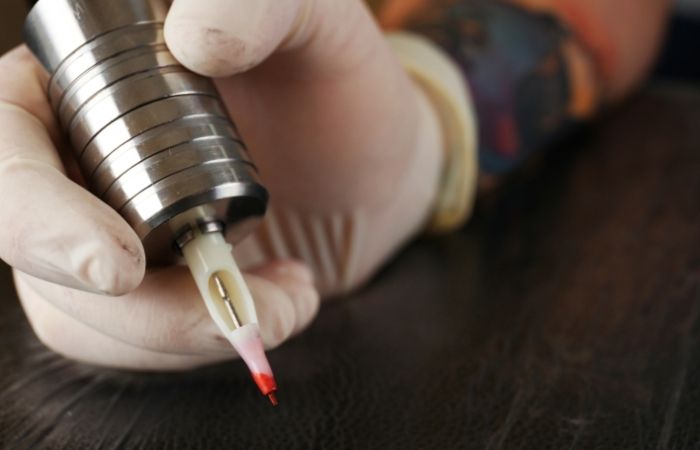
Tattooing means puncturing the skin over and over to deposit ink in the dermis. Modern coil and rotary machines do this hundreds of times per second, and each puncture is a tiny open wound that briefly bleeds. Piercing is the same idea at lower frequency: a hollow needle pushes through tissue, leaves a channel, and that channel carries jewelry through fresh wound tissue.
If the needle, the ink, or the jewelry passing through that wound carries another person's blood, microbes can move from there into the bloodstream. The same is true if blood from a previous client is on the artist's gloves, on the workstation, or in the rinse cup. The viruses that thrive in this mode of transmission are the ones that thrive in any blood-to-blood exposure: needlestick injuries among healthcare workers, shared injection-drug equipment, mother-to-baby transmission at birth, and, historically, untreated blood transfusions.
The classic sexually transmitted infections work differently. Chlamydia, gonorrhea, and trichomoniasis all need contact between mucous membranes (the genital, anal, or oral lining) where they replicate. They do not survive long on hard surfaces, and a small dose of dried blood does not carry an infectious load of them. Hepatitis B, hepatitis C, and HIV count as STDs because they can also transmit sexually, but the route through a tattoo needle is bloodborne, not sexual.
Bloodborne risk in a tattoo or piercing setting comes from two distinct vectors. The first is the implement itself: a needle, cartridge, or jewelry post that was not single-use and not autoclaved. The second is the surrounding environment: the rinse cup, the ink caps, the machine cord wrap, the artist's gloves between clients, and any high-touch surface that was not barrier-protected or wiped down. A clean implement entering a contaminated environment is still a contamination path.
The bloodborne infections that can transmit through a needle
Three viruses do most of the worry-work here. Each transmits differently, survives for a different length of time outside the body, and has its own testing window.
Hepatitis B (HBV). The most contagious of the three through blood contact. The CDC's clinical overview of hepatitis B states the virus is infectious for at least seven days on surfaces, so a machine or workstation contaminated a week earlier can still transmit if it was not properly sterilized. HBV is also far more infectious per blood exposure than HIV. Most U.S. adults under 50 received the hepatitis B vaccine series in childhood; if you are vaccinated and your antibody response held, the practical needlestick risk drops to near zero. Adults who never got the vaccine, or whose antibody response has waned over decades, carry more residual risk.
Hepatitis C (HCV). Hardier than HIV outside the body and able to persist in dried blood and inside the lumen of an unsterilized needle. There is no HCV vaccine. The CDC's clinical overview of hepatitis C names tattooing in unregulated facilities as a documented, though less common, transmission route, and the NIH lists being tattooed or pierced with tools that were not kept sterile as one of the ways hepatitis C spreads. Tattoo-associated HCV has been described particularly from prison tattooing and from unlicensed artists who reused equipment between clients. In licensed U.S. shops the documented cases are sparse, but the lack of a vaccine raises the stakes when contamination does happen.
HIV. The lowest residual risk of the three through tattooing. HIV does not survive long outside the body, typically inactivating within hours on dry surfaces, and the infectious dose needed per exposure is high. The CDC has not documented a tattoo-attributable HIV transmission in regulated U.S. commercial settings. The risk that does exist sits with shared, blood-loaded equipment in unregulated environments.
Hepatitis B virus stays infectious on dry surfaces for at least seven days, per the CDC's clinical overview. That is why autoclave sterilization, single-use needles, and fresh ink caps matter much more for HBV than for HIV, which collapses outside the body within hours. A workstation that looks clean to the eye can still carry infectious HBV days after the last client left.
STIs that do not transmit through tattoo or piercing equipment
Most of the infections people associate with the term STI cannot transmit through a tattoo needle, because they live in mucous-membrane secretions rather than in the small amount of blood that contaminates a single needle puncture. It is the same reason you cannot catch them from a bed sheet or a toilet seat.
- Chlamydia and gonorrhea. Both bacteria live in the genital, rectal, or pharyngeal mucosa. They do not survive on hard surfaces and cannot transmit through a needle.
- Trichomoniasis. A protozoan parasite that lives in genital mucous tissue. Tattoo equipment is not a transmission route.
- HPV. Requires direct skin-to-skin contact with infected genital or oral epithelium. Not a documented tattoo-needle infection route in licensed studios.
Two infections have edge cases worth naming.
Syphilis. Treponema pallidum lives mostly in active lesions and the bloodstream. Blood-to-blood contact through a contaminated needle could transmit it in theory, but documented cases tied specifically to tattooing are extremely rare. Most older case reports involved direct contact between an infected lesion on the artist and the client's open tattoo wound, not the needle itself.
Herpes simplex (HSV-1 and HSV-2). HSV transmits through direct contact with active lesions. If an artist had an active herpes whitlow (a finger infection) and touched an open tattoo without a glove, transmission is theoretically possible. With consistent glove use this risk goes away.
Cannot transmit through a tattoo or piercing needle: chlamydia, gonorrhea, trichomoniasis, HPV. These need mucous-membrane contact and do not survive on hard surfaces or in dried blood at infectious doses.
Theoretical edge cases only: syphilis (rare, and mostly through lesion-to-wound contact rather than the needle) and herpes simplex (only with an active artist whitlow and a glove failure). With consistent glove use, both go away.
What licensed studios do that eliminates almost all risk
The difference between a regulated studio and an unlicensed pop-up is procedural, not aesthetic. The defaults at a properly inspected shop look like this:
- Single-use sterile needles. Each needle cartridge is sealed, used once, then dropped into a sharps container. The artist should open the seal in front of you.
- Fresh ink portions. Ink is poured into single-use disposable caps, and any leftover is discarded at the end of the session. Bulk bottles never touch the client wound.
- Autoclaved reusable equipment. Tubes, grips, and any reusable tools go through a steam-pressure autoclave validated to kill bloodborne pathogens, including hepatitis B virus. Many shops will show their autoclave logs or spore-test results on request.
- Barrier protection on the workstation. Plastic wrap covers the chair, the machine cord, the rinse cup, and any high-touch surface, and the wraps are replaced for each client.
- Single-use razors. Disposable razors for body hair are opened in front of you and discarded into the sharps container after one use.
- Gloves and masks. Gloves change between any contact with the client and any contact with shared surfaces such as a phone, camera, or pen. Some artists also wear face masks.
- Aftercare instructions. The shop gives you written aftercare and explains what infection signs look like.
When all of these hold consistently, the practical bloodborne-infection risk drops to a level comparable to having blood drawn at a clinic. If you only have time to check one thing before your appointment starts, watch for the artist breaking the seal on a fresh needle cartridge in front of you. Many seasoned artists do this without being asked, and if yours does not, it is reasonable to ask.
What dramatically raises your bloodborne risk
The licensed-versus-unlicensed split is not vague. Specific situations multiply the bloodborne risk from body modification, and most of them are visible to a client who knows what to look for.
Shared needles or shared tubes between clients. A needle reused on more than one client without sterilization is the highest-risk pattern. Even when an artist swaps the cartridge, the tube and grip can hold contaminated residue unless they are autoclaved or barrier-wrapped between every client.
Reused ink caps or ink pots. Once a needle has touched a person's skin, the ink dipped from that cap is contaminated. Pouring leftover ink back into the master bottle, or using it on the next client, is a real transmission route. Contaminated ink has also caused outbreaks at the manufacturing level, including a nontuberculous mycobacterial cluster traced to contaminated tattoo ink in U.S. case reports in the early 2010s.
No autoclave on site. Steam-under-pressure autoclaving is the accepted standard for reusable instruments. Shops that rely only on alcohol wipes, UV sterilizer boxes, or verbal assurances of cleanliness are not meeting bloodborne pathogen control standards.
Tattoos from a friend at home. Stick-and-poke setups, apartment side gigs, and backyard sessions rarely involve autoclaved equipment, barrier-wrapped machines, sealed needle cartridges, or proper sharps disposal.
Prison tattoos. Documented as a meaningful HCV transmission route in multiple correctional-health studies, partly because of equipment improvisation and partly because of higher background HCV prevalence in that population.
Travel tattoos where there is no inspection framework. A storefront does not always mean a regulated operation. Beach-town piercing stands and festival booths are uneven on safety, and a professional-looking interior is not the same as an audited one.
Any setting where the artist does not wear gloves. Gloves protect both of you. Their absence is a flag that other infection-control basics may also be missing.
Three highest-risk signals to check first
- Needles pulled from an open shared box instead of sealed individual cartridges opened in front of you.
- No autoclave visible on site, with the shop relying only on alcohol wipes or UV sterilizer boxes for reusable instruments.
- The artist not wearing gloves, or not changing gloves after touching shared surfaces such as a phone, drawer, or register.
What the research shows about real-world infection rates
Studies on tattoo-associated infections converge on a few consistent findings.
In regulated U.S. and Western European studios, documented bloodborne transmission is rare. Case reports exist, but population-level surveys usually find no significant rise in HCV or HIV prevalence among people whose tattoos came from licensed shops once researchers control for other risk factors.
In unregulated settings the picture changes. Prison tattooing has been linked to elevated hepatitis C rates in multiple cohort studies. The World Health Organization names tattooing and piercing explicitly as hepatitis B transmission routes, alongside needlestick injury and exposure to infected blood, and the CDC's hepatitis C overview lists tattooing in unregulated facilities as a documented if less common HCV route. Unlicensed festival or pop-up tattooing concentrates that risk because it combines limited sterilization with high client throughput and informal aftercare.
So the single category of tattoos holds two very different procedures: a regulated one with very low documented bloodborne risk, and an unregulated one with meaningful documented risk. They should not be treated as equivalent in either direction. Licensed-shop risk is low, but it is not zero, and it depends on the whole chain (needle, ink, surfaces, artist, and client aftercare) staying clean.
Although there are no known cases of anyone getting HIV from tattoos or body piercings, it is possible to get HIV this way if the equipment or ink contains blood from someone with HIV.
When to test, and which window periods apply
If a tattoo or piercing came from a licensed shop with no red flags, the new ink does not change your testing cadence: the CDC recommends everyone aged 13 to 64 test for HIV at least once as part of routine care, with more frequent testing for ongoing sexual risk. Reach for targeted testing when something about the setting felt off, such as no gloves, equipment that looked reused, or an amateur, home, or prison context.
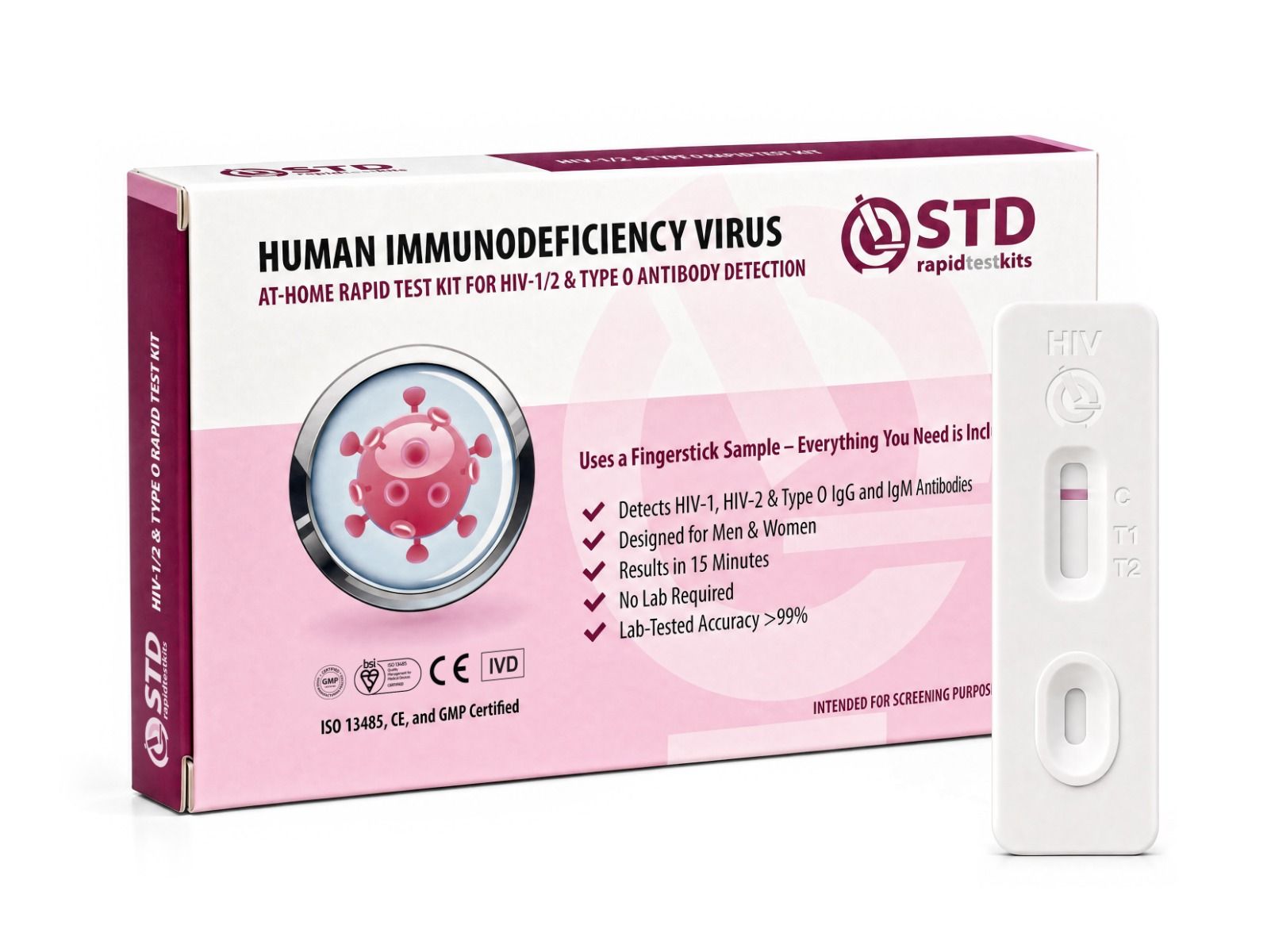
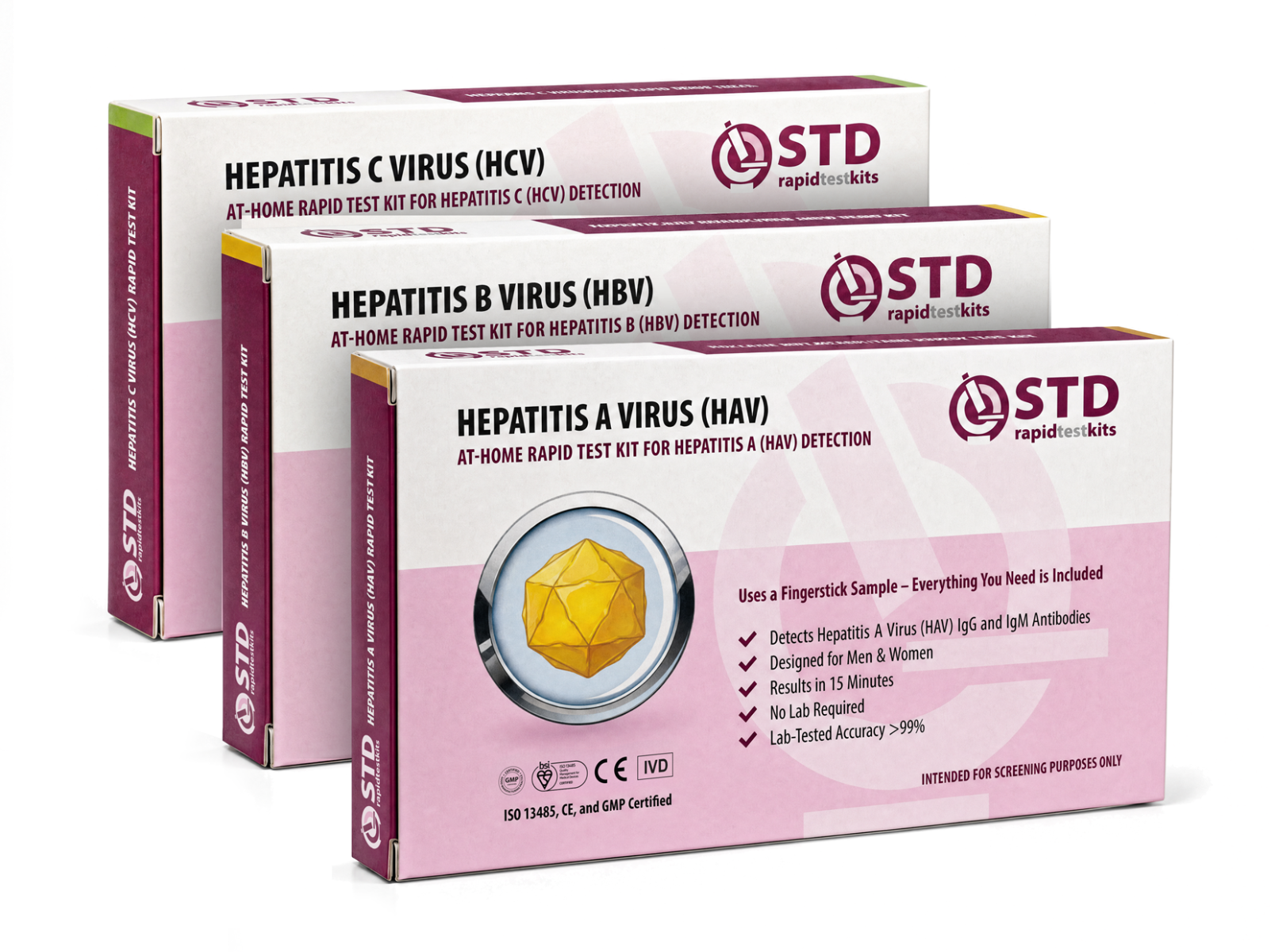
When you do test, the question is when each test becomes reliable. Every infection has its own window period between exposure and detection, so testing on day one will not catch a fresh infection because antibodies have not formed yet. A conservative approach is to take a baseline test in the first week or two (to document your status before any new infection could show) and then re-test at the right window for each one. The same at-home hepatitis B and C test and HIV test that detect these viruses from any other route work for a tattoo-related exposure too, and there is real value in testing before symptoms appear. This site sells those rapid at-home tests; a reactive result from any of them should be confirmed with a laboratory test at a clinic.
How to recognize a safe (or unsafe) shop before you sit down
You can check a handful of things before any needle touches you. If they are missing, leave.
Look for:
- A current state or local health-department license posted where you can see it. Requirements vary by state, but most U.S. jurisdictions inspect tattoo and piercing studios. Internationally, the NHS suggests asking to see the workstation setup before you agree to the procedure, and that principle travels well anywhere.
- Sealed needle cartridges opened in front of you, not pulled from an open box.
- Single-use ink caps poured fresh from the bulk bottle, not reused from a previous client.
- Fresh gloves throughout, changed whenever the artist touches a shared surface (phone, camera, doorknob, drawer).
- A separate sterilization area, often with an autoclave visible behind the desk.
- Current bloodborne-pathogens certification (OSHA training in the U.S.), usually posted alongside the tattoo license.
- Written aftercare instructions on paper or pointed to on a printed wall poster.
Walk away if you see:
- Needles pulled from an open shared box rather than sealed individual packaging.
- Ink poured from one client's leftover cap into the next client's setup.
- Visible blood on any work surface that was not wiped between clients.
- The artist using a phone or touching shared surfaces without changing gloves afterward.
- A festival or event tent with no visible license, autoclave, or sharps container.
- A piercing gun used for cartilage or any non-earlobe site, since guns cannot be autoclaved and cause more tissue trauma than a hollow needle.
- Pricing far below local rates, which often signals shortcuts in supply or sterilization.
Asking the artist directly about their sterilization protocol is reasonable. Reputable artists welcome the question, because it is the same one they asked when they trained.
If you do only one thing, watch for the artist opening a sealed, individually packaged needle cartridge in front of you. Reputable shops do this routinely, and if yours does not, it is reasonable to ask. A sealed cartridge opened at your station is the clearest single signal that the needle touching you is sterile and single-use.
Aftercare and warning signs to watch for
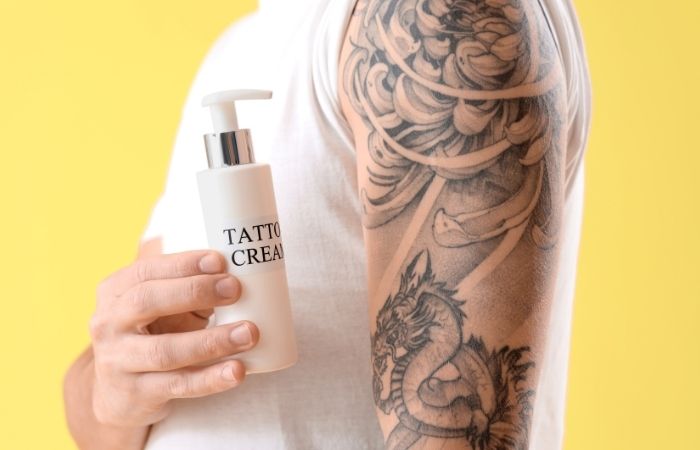
Most tattoo and piercing infections show up during the healing phase, not at the moment of the procedure. Aftercare is when ordinary bacterial skin infections (Staph, Strep) take hold, so it is half the safety equation.
Standard aftercare covers:
- Keep the wrap on as instructed, usually 2 to 24 hours for tattoos and longer for piercings.
- Wash gently with fragrance-free soap and lukewarm water, twice daily, for the first two weeks.
- Pat dry with a clean paper towel, never a shared cloth.
- Apply the recommended ointment in a thin layer.
- Avoid soaking: no pools, hot tubs, beaches, lakes, or baths until fully healed.
- Avoid the gym, dirty hands, and pet contact with the wound for the first week.
Warning signs that go beyond normal healing:
- Redness expanding beyond the immediate tattoo or piercing area.
- Pus that is yellow or green, or that has a foul smell.
- Fever or chills in the days after the procedure.
- A red streak running away from the wound, a sign of cellulitis spreading along lymphatic channels.
- Pain that worsens after day three rather than easing.
One caveat matters: bloodborne viral infections (HBV, HCV, HIV) usually do not cause local wound symptoms. They incubate quietly. So a wound that heals cleanly does not rule out a bloodborne exposure if the equipment was unsterile; window-period blood testing covers that gap separately.
Local infection versus bloodborne disease: two different problems
Two very different problems share the same trigger and the same early days, and the phrase "infection from a tattoo" gets used for both. Telling them apart matters, because the right response differs.
A local bacterial skin infection at the site is common, quick to appear, and treatable. Most are caused by Staphylococcus aureus or Streptococcus species moving into the open wound during healing. The hallmarks are expanding redness, warmth, swelling beyond the tattoo lines, yellow or green discharge, fever, and pain that worsens rather than eases. These warrant a same-day clinical visit, and the usual response is oral antibiotics, sometimes drainage if an abscess has formed.
A bloodborne viral infection from contaminated equipment is rare, slow to declare itself, and not visible at the site. HIV may show a brief flu-like illness within two to four weeks (fever, sore throat, swollen lymph nodes, fatigue, sometimes a rash), or no symptoms at all in the acute phase. Hepatitis B and C are often silent for years; chronic HCV in particular is frequently found only through screening, not symptoms. Jaundice, persistent fatigue, abdominal discomfort, and changes in urine or stool color can appear later in untreated cases.
Local infection vs bloodborne disease
| Feature | Local bacterial infection | Bloodborne viral infection (HIV, HBV, HCV) |
|---|---|---|
| Onset | Hours to days | Weeks for HIV; months to years for HBV and HCV |
| Where it shows | Visible at the tattoo or piercing site | Invisible at the site; found only by blood test |
| Early symptoms | Expanding redness, warmth, swelling, yellow or green discharge | Often none; HIV may cause a brief flu-like illness |
| Later course | Worsening pain, fever, sometimes a red streak from the wound | Often silent for years; possible jaundice or fatigue if untreated |
| Usual response | Oral antibiotics, sometimes drainage | Window-period antibody or antigen testing, then clinical care |
| What to do | Same-day clinical visit | Test on the window-period schedule above |
A hot, expanding, painful site needs a clinic now; a clean-healing tattoo from a suspect setting needs window-period blood testing.
Five common myths, and what the evidence shows
Stigma and half-remembered warnings drive a lot of confusion here. These are the five that come up most.
Tattoo and piercing infection myths
Myth: You cannot get any STD from a tattoo or piercing.
Fact: Bloodborne STDs (hepatitis B, hepatitis C, and HIV) can transmit through unsterile needles or contaminated ink. The classic genital STDs cannot, but the bloodborne route is real and well documented in unregulated settings.
Myth: A trendy, expensive shop is automatically safe.
Fact: Aesthetics are not sterilization. What matters is whether the shop is licensed, whether needles are sealed and opened in front of you, and whether there is a working autoclave. An expensive interior with no visible license is no safer than a cheap one.
Myth: Bringing your own jewelry or needle eliminates the risk.
Fact: The artist's gloves, the workstation, the ink, and the rinse cup all matter too. A clean implement entering a contaminated environment can pick up infectious material between opening and use.
Myth: If you see no infection symptoms within a week, you are fine.
Fact: HIV, hepatitis B, and hepatitis C all have weeks-to-months incubation periods, and antibody tests do not turn positive immediately. Window-period testing is what confirms your status, regardless of how the wound looks.
Myth: Aftercare does not matter if the studio was clean.
Fact: A sterile procedure can still get contaminated during healing if you swim in a pool, touch the wound with dirty hands, or skip the cleaning routine the shop sent you home with.
If you think you got infected, what to do next
The right response depends on how recent the exposure was and what you already know about your hepatitis B vaccination status. Work through the steps below in order, starting with the most time-sensitive.
Your next steps after a possible exposure
Was the procedure within the last 72 hours, with real reason to suspect blood-to-blood contact, such as visible blood on a reused needle or an unlicensed setting?
Yes: Contact a clinician, urgent care, or an ER now. HIV post-exposure prophylaxis (PEP) must start within 72 hours of the exposure to work, and hepatitis B prophylaxis (HBIG plus accelerated vaccination) is also time-sensitive in unvaccinated people. Both can be prescribed by emergency rooms and many sexual-health clinics.
Do you know you completed the three-dose hepatitis B vaccine series and that your antibody response held?
Yes: Your HBV risk from this exposure is much lower. Most U.S. adults born after 1991 were vaccinated in childhood; if you are unsure, a primary care provider can order an anti-HBs titer to confirm you are protected.
Has enough time passed for a reliable test, meaning 45 days for a fourth-generation HIV test or 90 days for a rapid antibody test, and six months for hepatitis B and C re-testing?
Yes: Test now using the windows above. An at-home rapid test is a screen, not a diagnosis, so confirm any positive with a laboratory test at a clinic (NAAT or PCR for HIV and HCV, a quantitative panel for HBV), and let sexual or needle-sharing partners know so they can test too.
No: Take a baseline test this week to document your status before any new infection could show, then mark your calendar to re-test once each window has passed.
Guidance only; a clinician can advise based on your specific situation.
FAQs
- Can I get an STD from a tattoo needle in a licensed U.S. shop?
- Very low risk. Single-use needles, autoclaved equipment, and fresh ink portions bring the practical bloodborne-infection risk close to zero, and documented infections from regulated U.S. studios are rare. The risk concentrates in unlicensed pop-ups, prison tattooing, and home setups.
- Do tattoos and piercings spread chlamydia, gonorrhea, or herpes?
- No. These infections need contact between mucous membranes or sexual fluids, not skin punctured by a tattoo needle or piercing instrument. Only the bloodborne viruses (HIV, hepatitis B, hepatitis C) are the part of the STD list that genuinely applies to tattoos and piercings.
- Are piercing guns more or less risky than hollow needles?
- Piercing guns cannot be fully autoclaved and cause more tissue trauma than a hollow needle, so most professional piercers prefer hollow-needle technique. A gun used for cartilage or any non-earlobe site is a red flag. Cartilage (helix, tragus, daith) is especially prone to hypertrophic scarring from gun piercings because the tissue is compressed rather than cleanly displaced.
- Is HIV transmission from tattooing common?
- Documented tattooing-attributable HIV cases in licensed U.S. shops are effectively zero. HIV degrades quickly outside the body and needs a high infectious dose. Hepatitis B and C are the more consequential bloodborne risks in a tattoo context.
- Are nipple, genital, or oral piercings higher risk for STDs?
- The piercing itself does not transmit traditional STDs. The location can raise local complications (oral piercings can chip teeth or cause gum recession; genital piercings can cause local trauma), but the bloodborne viral risk comes from the needle and equipment, not the body site. A shop using single-use sterile equipment is as safe for a genital piercing as for an earlobe.
- Can a home rapid test detect hepatitis or HIV picked up from a tattoo?
- Yes. The same fingerstick rapid tests that detect bloodborne infections from any route work for a tattoo-related exposure. Test at the right window: about 4 to 10 weeks for hepatitis B, 8 to 11 weeks for hepatitis C, and 18 to 90 days for HIV depending on the test type.
- What about getting a tattoo from a friend at home?
- Home or friend-administered tattoos are the highest-risk category outside prison settings, since they rarely use autoclaved equipment, barrier-wrapped machines, sealed needle cartridges, or proper sharps disposal. If you already had one done with reused or unverified equipment, plan to test for HIV, hepatitis B, and hepatitis C once you are past each window.
- I think I was exposed at an unlicensed shop. What should I do?
- Within 72 hours, call a clinician about PEP for HIV and HBIG for hepatitis B; both are time-sensitive. Take a baseline test this week, then re-test for HIV at 90 days and for hepatitis B and C at six months. Any positive rapid result needs lab confirmation.
- U.S. Centers for Disease Control and Prevention. Clinical overview of hepatitis B, including the statement that the virus is infectious for at least 7 days on surfaces.
- U.S. Centers for Disease Control and Prevention. Clinical overview of hepatitis C, which lists tattooing in unregulated facilities as a less common transmission route.
- U.S. Centers for Disease Control and Prevention. How HIV is transmitted, including the statement that there are no known cases of HIV from tattoos or body piercings, though contaminated equipment or ink could transmit it.
- U.S. Centers for Disease Control and Prevention. Preventing HIV with PEP, which states PEP must be started within 72 hours of a possible exposure.
- World Health Organization. Hepatitis B fact sheet, naming tattooing and piercing explicitly as transmission routes alongside needlestick injury and contaminated blood.
- U.S. National Institute of Diabetes and Digestive and Kidney Diseases (NIH). Hepatitis C symptoms and causes, listing tattooing or piercing with non-sterile tools as a transmission route and advising sterile tools and unopened ink.
- U.K. National Health Service. Consumer guidance on tattoos and body piercings, including the principle of asking to see the workstation setup before agreeing to the procedure.
