Can You Get an STD From a Toilet Seat, Toilet Paper, or Other Casual Contact?
Toilet paper, toilet seats, kissing: which routes actually transmit STDs?



- Toilet paper, toilet seats, swimming pools, and shared cutlery do not transmit the common bacterial or viral STDs. The CDC confirms this directly for HIV, herpes, and syphilis.
- The genuine exceptions are trichomoniasis on damp towels or swimwear, oral herpes through kissing or shared lip products, parasites like pubic lice in shared bedding, and uncleaned shared sex toys.
Published: November 2025 | Last updated: May 2026 | Editorial review and quality control: Martina N.
The question "can I get an STD from this?" sits behind a lot of bathroom anxiety, and the short answer is almost always no. This guide works through the most common scenarios, toilet paper, toilet seats, towels, swimming pools, kissing, shared cups, and sex toys, with the biology behind each answer so you can stop guessing and understand what does and does not transmit STDs.
The pathogens that cause STDs evolved to live inside human bodies. They are adapted to the temperature, moisture, and pH of mucosal tissue and bodily fluids. Strip that environment away and most of them lose viability within seconds to minutes. Understanding why casual-contact routes do not work tells you a lot about how STDs actually do spread, and where your real risk lives. For a wider look at common myths in this space, the STD myths and facts hub covers the broader landscape.
Why STD Pathogens Cannot Survive on Surfaces
Bacteria, viruses, and parasites that cause STDs are biologically designed to live in warm, moist human tissue. Most begin to die almost immediately when they leave that environment. Chlamydia trachomatis is one of the most fragile organisms in this category: it is an obligate intracellular parasite, meaning it can only replicate inside human cells, and it dies within minutes when exposed to air, drying, and ambient temperature. Neisseria gonorrhoeae lasts a little longer in moist lab conditions, perhaps an hour or two, but loses the ability to infect almost as fast as it loses moisture. Both bacteria need direct mucosal contact to start an infection.
Viral pathogens behave the same way. HIV requires direct contact with infected blood, semen, vaginal fluids, or breast milk, and it needs living cells to reproduce. Once outside the body the virus degrades quickly. The CDC states that HIV does not survive long outside the human body and cannot be spread through toilet seats, door handles, or other shared surfaces. Without a host cell to infect, the virus stops working. Treponema pallidum, the syphilis spirochete, is so fragile it cannot survive routine drying at all.
Herpes simplex virus has a slightly longer survival window on moist surfaces, but it still breaks down quickly on hard, non-porous materials like ceramic, plastic, or porcelain. Peer-reviewed systematic reviews of pathogen survival on inanimate surfaces consistently show STD organisms persist for minutes to hours at most on hard surfaces. There is also a second barrier worth naming: even if a pathogen somehow stayed viable long enough to brush against your skin, the dense, keratinized skin covering thighs and buttocks is not a route STD organisms are built to penetrate, and in normal use a toilet seat touches the back of the thighs and outer buttocks, not the genital, anal, or urethral mucosa where infection actually establishes. Both layers, biological fragility and geometry of contact, have to fail for transmission to be possible. Public restrooms add another layer of hostility: cleaning products, especially quaternary ammonium and chlorine-based solutions used in commercial maintenance, disrupt bacterial cell walls and inactivate viral envelopes within seconds.
| Infection | Survival Outside the Body | Surface Transmission Risk |
|---|---|---|
| HIV | Minutes; rapidly loses infectivity once dry | Negligible. No documented cases from surfaces |
| Gonorrhea | Seconds to minutes on dry surfaces | Negligible on dry surfaces |
| Chlamydia | Minutes on dry surfaces; up to ~45 min under moist lab conditions on certain plastics (not typical bathroom contact) | Negligible. Requires mucosal contact to infect |
| Syphilis | Very short. Fully host-dependent | None. Requires direct contact with sores or fluids |
| Herpes (HSV-1 and HSV-2) | Minutes on dry surfaces; up to about 2 hours on wet or moist | Very low. Possible only in specific moist conditions |
| Trichomoniasis | Up to 45 minutes on damp surfaces | Low but possible on damp towels or swimwear |
| Hepatitis B | Up to 7 days on surfaces at room temperature | Low. Still requires contact with infectious fluid or blood |
| Pubic lice (crabs) | 24 to 48 hours off the body | Possible via shared clothing, towels, or bedding |
Why This Fear Feels Real, Even When the Science Says No
The toilet-seat worry has been around for over a century. Long before germ theory was clear, people blamed dirty surfaces for what we now know are sexually transmitted infections. That cultural memory stuck. Public restrooms feel unclean, STDs carry stigma, and the two ideas locked together generations ago. Today, that combination still sends people into late-night spirals over a stall they used at an airport.
The fear also serves a quieter purpose. Blaming a toilet does not require admitting to a partner who might have lied, a one-time hookup, a condom that slipped, or oral sex that did not feel like "real" sex. It offers a neutral explanation for symptoms that feel embarrassing to trace. That coping move is human, but it can pull attention away from the actual exposure that needs attention. Clinicians who work in sexual health describe a familiar pattern: someone comes in convinced they caught chlamydia from a public bathroom, having spiraled for two days, and the underlying anxiety turns out to be a recent encounter they had not yet processed.
Externalizing a symptom to a public surface lets the brain skip a harder conversation about a partner, a slip, or an oral encounter that did not register as risky at the time. The fear is real. The cause is usually somewhere else.
Can You Get an STD From Toilet Paper?
No, and the biology makes this clear. Toilet paper is dry and porous, which means any pathogens deposited on it begin losing viability almost immediately. The bacteria and viruses that cause the most common STDs (gonorrhea, chlamydia, HIV, syphilis, herpes) cannot survive on dry, absorbent paper long enough to be transmitted under any realistic circumstance.
The scenario people typically imagine involves used toilet paper in a shared bathroom making contact with their skin. Even setting aside the physics of how that would have to happen, the survival window for these pathogens on toilet paper is measured in seconds. There is no documented case of an STD being transmitted via toilet paper, and the biology explains why there will not be.
To be specific about each pathogen: gonorrhea bacteria survive for seconds to minutes on dry surfaces and require direct mucosal contact to cause infection, so a skin-to-paper-to-skin transfer simply does not meet that threshold. HIV degrades rapidly on exposure to air and dry surfaces, losing infectivity within minutes. Herpes simplex virus can survive up to two hours on wet or moist surfaces, but toilet paper is absorbent by design; it draws moisture away rather than holding it. The window for any viable herpes transfer from toilet paper is negligible.
Trichomoniasis is the one infection most likely to raise concern here, because the parasite can survive on damp surfaces for up to 45 minutes. But toilet paper absorbs moisture rather than retaining it, and the specific conditions required for trich to remain viable and then infect someone through incidental contact are vanishingly unlikely in real life. The toilet paper concern is one of the more resilient bathroom myths in sexual health, and it is a myth.
Gonorrhea: seconds to minutes on dry surfaces. HIV: minutes; loses infectivity rapidly when exposed to air. Chlamydia: minutes; cannot infect without direct mucosal contact. Herpes simplex: up to two hours on wet surfaces only, and toilet paper actively wicks moisture away. Syphilis: requires direct sore-to-skin contact, no surface route exists. Trichomoniasis: up to 45 minutes on damp surfaces, but toilet paper does not retain moisture.
Can STDs survive on toilet paper or toilet seats?
No. Toilet paper is dry, porous, and absorbent, and toilet seats are hard, cold, and dry. Neither offers what bacteria, viruses, or parasites need to stay infectious outside the body. The <a href="https://www.cdc.gov/hiv/causes/index.html" target="_blank" rel="noopener">CDC confirms</a> that HIV is not transmitted through shared surfaces, and the same applies to herpes, syphilis, gonorrhea, chlamydia, and HPV. The genuine exceptions worth knowing about are trichomoniasis on damp surfaces (up to 45 minutes), oral herpes via kissing or shared lip products, pubic lice and scabies in shared fabric, and uncleaned shared sex toys.
Can You Get an STD From a Toilet Seat or Public Bathroom?
The toilet seat question is one of the most-searched STD myths on the internet, and the answer is the same: almost certainly not. The skin covering your buttocks and thighs is a dense, keratinized barrier that pathogens cannot penetrate, and the seat itself does not provide what these organisms need to remain infectious.
A useful framework comes from thinking about the two conditions that must both be true for any STD transmission to occur from a surface: the pathogen must survive long enough in a viable state, AND it must gain entry into the body through an appropriate route, usually a mucous membrane or broken skin. For bacterial STDs like chlamydia, gonorrhea, and syphilis, the first condition fails almost immediately on a hard, dry seat. For viral STDs like HIV, herpes, hepatitis B, and HPV, the first condition fails quickly and the second condition (entry through mucosal tissue) is also virtually impossible in a normal bathroom scenario.
The CDC's syphilis fact page lists toilet seats explicitly under things syphilis cannot be transmitted from, and the NHS genital herpes page states the same plainly for herpes: you cannot catch it from towels, swimming pools, saunas, or toilet seats because there is no skin-to-skin contact. The CDC's HPV overview similarly describes HPV transmission as sexual or skin-to-skin in nature, not surface-borne. The pattern is consistent across pathogens that have been studied for decades.
Handwashing prevents far more illness in a public restroom than seat-hovering does. The infections you can plausibly pick up there are gastrointestinal (norovirus, E. coli), spread by touching contaminated handles and then your face. STDs are not on that list. Wash your hands properly and the real risk is addressed.
What Public Restrooms Can Actually Transmit
Public restrooms are not pristine, and pretending they are would be its own kind of misinformation. They are full of organisms, just not the sexually transmitted kind. The pathogens that thrive in shared bathrooms are the ones built for surfaces and hand-to-mouth transfer.
Gastrointestinal bugs are the most common real risk. Norovirus is the standout: it is one of the hardest-to-kill common pathogens, which is part of why it triggers vomiting and diarrhea so easily after a single hand-to-mouth contact. E. coli and salmonella ride along on flush handles and faucet knobs, especially when handwashing is incomplete. Skin pathogens are the second category. Staphylococcus aureus, including methicillin-resistant strains (MRSA), survive on door handles and stall locks and cause skin infections through cuts and scratches, not mucous membranes. Fungi like Candida and the dermatophytes behind athlete's foot thrive on damp shower floors. Respiratory viruses round out the list during cold and flu season.
Practically: handwashing with soap, avoiding face-touching, and stepping past visibly soiled stalls handle the bulk of restroom-borne risk. Paper seat covers are fine if they make the experience more comfortable, though their job is reducing contact with general grime, not stopping any sexually transmitted infection.
| Pathogen | Where it lives in a restroom | What it causes |
|---|---|---|
| E. coli, Salmonella | Toilet seats, flush handles, sink taps | Diarrheal illness, food poisoning |
| Norovirus | Door handles, faucet knobs, stall locks | Vomiting, watery diarrhea, stomach cramps |
| Staphylococcus aureus (including MRSA) | Toilet handles, stall locks, sink edges | Skin infections, boils, abscesses |
| Candida and dermatophytes | Damp shower floors, toilet seat edges | Yeast infections, athlete's foot, jock itch |
| Influenza and rhinoviruses | High-touch handles during cold and flu season | Respiratory illness |
The Trichomoniasis Exception, Explained Honestly
Trichomoniasis is caused by a single-celled parasite called Trichomonas vaginalis. Unlike bacteria or viruses, parasites are slightly more resilient in wet environments, which is why trichomoniasis occasionally appears in the toilet seat conversation. In theory, the parasite can survive briefly on a damp surface. In practice, transmission from a toilet seat has essentially never been documented in clinical literature, and the conditions required would be so specific as to be nearly impossible in a normal restroom scenario.
This is where the difference between "possible" and "realistic" matters. Public-health guidance is built on realistic risk, the kind that shows up in confirmed cases, not on the chain of unlikely events that would have to line up for a surface to infect someone. For any theoretical transmission, the infected source material would need to be freshly deposited on the seat, the surface would need to remain visibly damp (not just used and dry), the next person would need to place their genital area in direct contact with exactly that spot, and the parasite dose transferred would still need to be high enough to start an infection, all within the survival window. That sequence does not happen in real-world bathroom use. Trichomoniasis is overwhelmingly transmitted through vaginal sex, where the parasite transfers directly between mucous membranes.
The same logic applies to pubic lice, sometimes called crabs. Pubic lice live in coarse body hair and are primarily transmitted through direct body contact during sex. They can survive off a host for 24 to 48 hours, and occasional non-sexual transmission through shared bedding or towels has been documented, though toilet seat transmission is not a recognized route. The parasite needs to physically migrate from one body's hair to another, and brief contact with a smooth, hard surface does not accomplish that.
(1) Infected vaginal fluid deposited freshly on the seat. (2) Seat surface stays visibly wet, not just used and dry. (3) Next user's genital mucosa touches that exact wet spot directly. (4) All within the parasite's ~45-minute survival window. Real bathroom use rarely meets even one of these conditions. This is why clinical literature has no documented adult case.
Sharing Towels or Clothing
For HIV, gonorrhea, chlamydia, and syphilis, sharing towels and clothing poses no meaningful transmission risk. These pathogens do not survive on fabric long enough to be transferred and then infect someone through skin contact.
There are genuine exceptions. Trichomoniasis can survive on damp towels or wet clothing for up to 45 minutes, which is long enough to theoretically transmit if a damp, recently-used towel makes direct contact with the genital area of another person. The risk is low though not zero, which is why standard advice about not sharing damp towels or swimwear is medically grounded rather than just a hygiene preference.
Pubic lice and scabies are the clearest exceptions to the "you cannot get an STD from clothing" rule. Both are parasitic infestations that can survive in fabric and bedding for 24 to 48 hours, making transmission through shared clothing, towels, or bedding a real possibility. These are not what most people picture when they worry about a towel, though they are worth knowing about.
Herpes occupies its own category. Oral herpes (HSV-1) is primarily transmitted through saliva and direct skin contact, and the virus can survive briefly on moist surfaces. During an active oral herpes outbreak, avoiding shared towels that contact the affected area is a reasonable hygiene precaution, though documented transmission from a towel is very rare and a dry towel is not considered a meaningful route by major public-health bodies.
Genuine fabric and clothing exceptions
- Trichomoniasis: damp towels or wet swimwear can carry the parasite for up to 45 minutes.
- Pubic lice and scabies: survive in shared clothing, towels, or bedding for 24 to 48 hours.
- HSV-1: precaution against sharing towels during an active oral outbreak; dry towels are not a meaningful route otherwise.
- HIV, gonorrhea, chlamydia, syphilis: no fabric transmission risk in everyday sharing.
Swimming Pools and Hot Tubs
Swimming in the same pool as someone who has an STD will not give you that STD. The dilution of water alone reduces any pathogen to non-infectious concentrations, and chlorine plus other pool disinfectants actively destroy the bacteria and viruses that cause STDs. There are no documented cases of STD transmission through swimming pool or hot tub water.
If two people have unprotected sexual contact in a pool or hot tub, STDs can absolutely be transmitted. The water does not protect against that. Sex in water carries the same transmission risks as sex anywhere else, and in some cases slightly higher risks because water disrupts natural lubrication and can cause micro-tears in tissue. The safety of the water itself is a separate question from the safety of sexual activity within it.
Hot tubs sometimes appear in trichomoniasis questions because the parasite is more surface-resilient than most. But hot tubs are treated with disinfectants, water temperatures are high, and the dilution factor makes waterborne trich transmission effectively impossible. The genuine hot-tub health risk is bacterial: poorly maintained hot tubs can harbor Pseudomonas aeruginosa, which causes folliculitis ("hot tub rash"), a skin condition with no connection to sexual transmission.
The water itself is safe. Chlorine and dilution kill STD pathogens within seconds, and there are no documented waterborne STD cases. What is not safe is unprotected sexual contact that happens to occur in a pool or hot tub. The water provides no barrier protection. Risk is identical to sex anywhere else, sometimes slightly higher because water washes away natural lubrication.
Kissing
Kissing sits in genuinely different territory from the toilet paper and swimming pool questions, because the answer here is sometimes yes, depending on which infection you are asking about.
The most important one is oral herpes (HSV-1). Oral herpes spreads through saliva and direct oral contact, and kissing is one of its primary routes, particularly when one person has an active cold sore. According to the American Sexual Health Association, HSV-1 affects the majority of adults and is often acquired through non-sexual kissing in childhood. Kissing someone with an active oral herpes outbreak creates genuine transmission risk. Kissing someone without visible sores is lower risk, though asymptomatic viral shedding means it is never zero.
One detail worth knowing here: a growing share of new genital herpes cases in young adults is now caused by HSV-1, the virus most people associate with cold sores. The route is oral-to-genital contact during oral sex, often with a partner who has no visible cold sore at the time. For most other STDs (HIV, gonorrhea, chlamydia, syphilis), casual kissing carries negligible to no risk. HIV is not transmitted through saliva. Gonorrhea and chlamydia require mucosal contact with infected secretions, and ordinary kissing does not create that pathway. Syphilis could theoretically transmit through kissing if an active sore is present in the mouth, though this is uncommon.
What kissing actually transmits
- HSV-1 (oral herpes): real transmission risk, especially with an active cold sore. Asymptomatic shedding makes it never fully zero.
- HIV: no risk from kissing. HIV is not present in saliva at infectious levels.
- Gonorrhea and chlamydia: negligible from kissing. These require mucosal contact with infected secretions.
- Syphilis: theoretically possible if an active oral chancre is present, otherwise no.
Sharing Drinks, Utensils, or Personal Items
For the same reasons that make toilet paper and surfaces low-risk, sharing cups, glasses, or cutlery does not transmit the vast majority of STDs. The pathogens simply do not survive in saliva on inanimate objects long enough to be infectious when another person comes into contact with them.
Oral herpes is again the exception. HSV-1 is present in saliva during active infection and shedding periods, and sharing lip balm, lip gloss, straws, or drinking vessels with someone who has an active cold sore does carry a low though real transmission risk. The virus does not survive long outside the body, though the transfer of infected saliva to another person's lips or mouth through shared items is a documented, if uncommon, route. During an active outbreak, specifically, not sharing these items is a sensible precaution.
Sharing razors deserves a separate note. Razors that have drawn blood create genuine risk for blood-borne infections like hepatitis B and, in theory, HIV (though HIV degrades quickly even in dried blood). For herpes, a razor used on or near an active outbreak site and then on someone else is a possible route. For everything else (gonorrhea, chlamydia, syphilis, HPV), sharing a glass or fork is not a transmission risk.
Razors that have drawn blood: genuine risk for hepatitis B and, in theory, HIV; possible route for herpes if used on an active lesion site. Do not share. Lip balm, lip gloss, straws, drink vessels: low but real HSV-1 risk during an active cold sore. Glasses, forks, plates: no STD transmission risk in normal household use.
Sex Toys: The One Where the Answer Genuinely Shifts
This is the question on the list where the answer changes most significantly. Unlike toilet paper, swimming pools, and shared towels, uncleaned sex toys used by someone with an STD and then used by another person, or on another part of the same person's body, do carry real transmission risk for several infections. Sex toys are not passive surfaces; they can carry and transfer infected bodily fluids directly to mucosal tissue.
Gonorrhea, chlamydia, herpes, trichomoniasis, and HPV have all been documented as transmissible through shared, uncleaned sex toys. HIV survival on toys depends on factors including time elapsed and whether fluid is wet or dried, though the general precaution of not sharing penetrative toys without cleaning or using a fresh condom applies. Our dedicated article on getting an STD from sex toys covers the specific risks and prevention in detail.
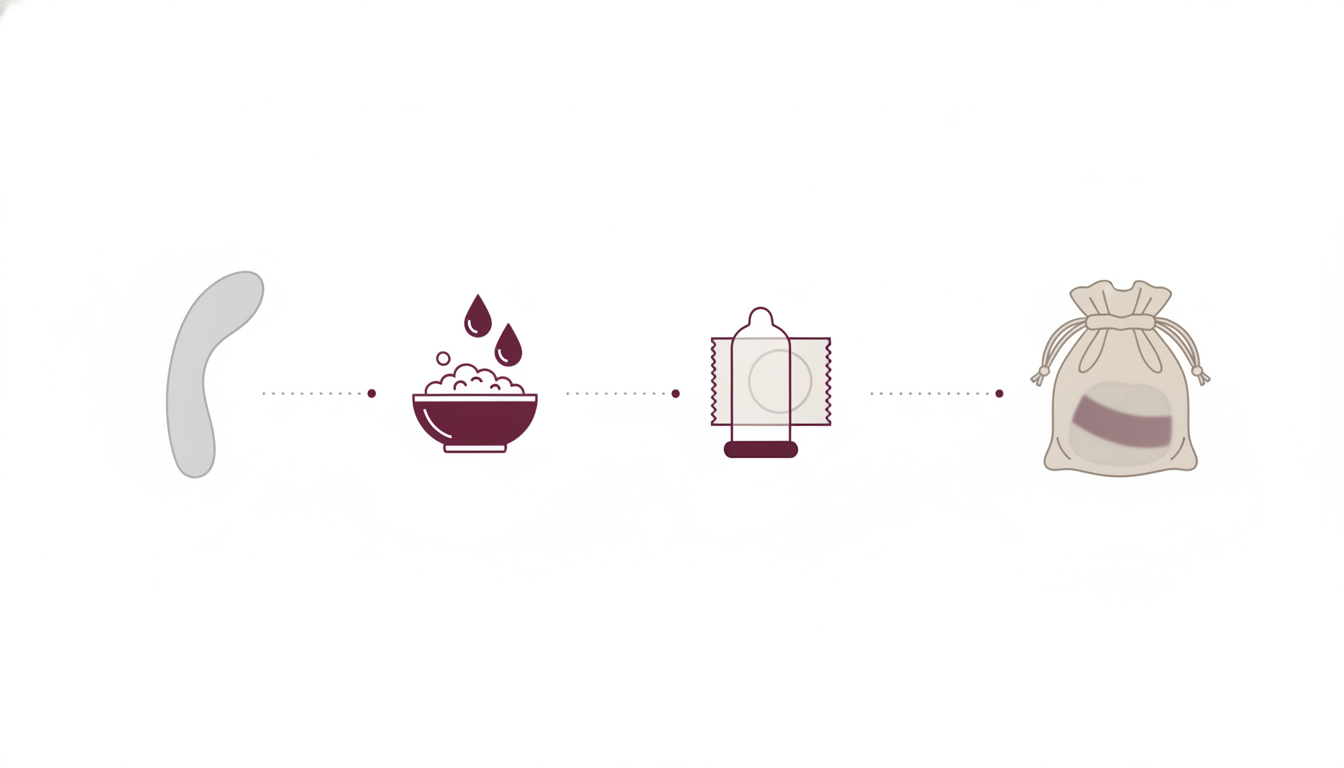
Prevention is straightforward: clean toys thoroughly between uses, and use a fresh condom on penetrative toys when sharing between partners. A toy used on one person's genitals and then immediately on another's, without cleaning in between, is a direct fluid-transfer scenario where the toy delivers infected secretions onto mucosal tissue in the same way unprotected sex would.
"I Just Used a Public Bathroom and Now I Have a Rash"
People who are anxious about STD exposure after a public restroom visit sometimes start noticing symptoms they were not paying attention to before. This is normal human psychology: attention sharpens when anxiety is active. It helps to understand what symptoms are and are not consistent with actual surface exposure.
If you notice irritation, redness, or a rash in the genital area shortly after using a public bathroom, the far more likely explanation is contact dermatitis from toilet paper, soap residue, laundry detergent, or friction from clothing. It is not a sexually transmitted infection. A lot of bathroom-blamed symptoms turn out to be something other than an STD entirely: yeast imbalance after a recent course of antibiotics, ingrown hairs after shaving, urinary tract infections from dehydration, folliculitis where sweat and bacteria meet broken skin. Bacterial vaginosis often produces a thin discharge with a fishy odor. A yeast infection looks white and clumpy. Razor burn and Fordyce spots get mistaken for herpes lesions all the time.
Genuine STD symptoms develop because of a biological process that takes time. The CDC's chlamydia overview notes that when symptoms appear at all, they may not show up until several weeks after sex with a partner who has chlamydia, not hours after using a restroom. Gonorrhea symptoms also typically take days to weeks to develop after sexual contact, and a syphilitic sore (called a chancre) can appear anywhere from about 10 days to 3 months after exposure to the bacterium through direct contact with an infected sore. These timelines exist because infection requires a pathogen to enter the body, replicate, and trigger an immune or tissue response. None of that can happen from a brief encounter with a toilet seat.
Reframing the question is the most useful step here. Instead of "what did I touch in that bathroom," the better question is "have I had any sexual contact in the last three months that I have not tested for?" If the honest answer is yes, the symptoms may genuinely be worth investigating, though through testing rather than trying to trace them back to a bathroom. Many STDs produce no symptoms at all, and many non-STD conditions look superficially similar to one, so a clinician or a properly timed test is the right way to sort it out.
Hours after a bathroom visit: almost certainly contact dermatitis from paper, soap, detergent, or friction. Not an STD. Days to weeks after sex: possible chlamydia or gonorrhea symptoms, if symptoms appear at all. 10 days to 3 months after sex: possible syphilis chancre. STDs need time to establish; rash that appears within hours of a restroom visit is not one of them.
Bathroom Habits That Help (and Ones That Do Not)
One reason people associate the bathroom with post-sex hygiene is the long-standing advice to urinate after intercourse. That advice is genuine, but it is about urinary tract infections (UTIs), not STIs. Sexual activity can push bacteria (typically E. coli from the perineum) into the urethra. The UK's NHS guidance on UTI prevention lists peeing as soon as possible after sex among the recommended preventive habits. People with vaginas have shorter urethras and are more vulnerable to this kind of UTI, which is why the advice gets repeated more often to women, though it applies to anyone.
Here is what urinating after sex does NOT do. It does not flush out HIV, chlamydia, gonorrhea, or any other STI. Those pathogens infect through different anatomical routes (mucous membranes and skin contact) and the urinary stream does not reach them. If you want to reduce UTI risk, peeing within about 30 minutes of sex is worth the effort. If you want to prevent STIs, you have to address that during sex or afterward through testing within the right window.
External washing with soap and water after sex is harmless and fine for general cleanliness, though it offers no protection against STIs. Internal douching is a different story: the CDC and the American College of Obstetricians and Gynecologists have warned for decades that douching can disrupt the normal vaginal microbiome and may actually increase the risk of bacterial vaginosis and pelvic inflammatory disease. There is no evidence that douching after sex reduces STI risk; the evidence points the other way. The table below sorts the common bathroom and post-sex habits into what they actually do.
| Practice | What it actually does for STI risk |
|---|---|
| Washing hands with soap before and after sex | General hygiene and reduces transfer of other bacteria. Not a primary STI prevention measure. |
| Wiping or covering the toilet seat | General cleanliness. Not relevant to STIs because surfaces do not transmit them. |
| Using a separate towel from your partner | Not necessary for STI prevention in normal household conditions. |
| Urinating within 30 minutes of sex | Reduces UTI risk. Does not affect STI risk. |
| Showering after sex | Personal preference. Does not prevent STIs. |
| External wash with plain soap and water | Fine for cleanliness. Does not prevent STIs. |
| Internal douching | Not recommended. May increase risk of bacterial vaginosis and pelvic inflammatory disease. |
| Using a condom or dental dam during sex | The actual STI prevention tool. Used correctly, reduces transmission of most common STIs. |
What Actually Prevents STDs
Knowing that toilet seats are not a risk does not mean STD exposure only matters for people who feel symptoms. Most STD infections produce no noticeable symptoms, especially in the early weeks. The CDC's most recent STI surveillance reports more than 2.2 million cases of chlamydia, gonorrhea, and syphilis combined in the United States in a single year, virtually none of them from surfaces. They came from unprotected vaginal, anal, and oral sex. Condoms, vaccines, PrEP, and regular testing each carry strong evidence, and they reinforce each other when used together.
Condoms and dental dams. Consistent and correct use of latex or polyurethane condoms is highly effective at preventing the spread of HIV and significantly reduces the risk of gonorrhea, chlamydia, trichomoniasis, hepatitis B, and syphilis. They reduce but do not eliminate herpes and HPV risk because those can spread from skin not covered by the condom. Dental dams are the equivalent for oral-vaginal or oral-anal contact and are underused.
Vaccines. The HPV vaccine is recommended for routine vaccination through age 26, with shared clinical decision-making for some adults age 27 through 45, per CDC HPV vaccine guidance. It prevents the strains most responsible for cervical cancer plus several that cause genital warts. The hepatitis B vaccine is part of the standard childhood schedule in the US and is recommended for unvaccinated adults. Both vaccines are highly effective and very safe.
PrEP for HIV. Pre-exposure prophylaxis (PrEP) is a daily or on-demand medication that is highly effective at preventing HIV from sex or injection drug use when taken as prescribed. For people in higher-risk situations (a partner with HIV, multiple partners of unknown status, condomless anal sex with new partners) it is one of the strongest interventions in modern HIV prevention.
Regular testing. The CDC recommends routine screening for sexually active adults: annual chlamydia and gonorrhea testing for sexually active women under 25 and for older women at increased risk, and HIV, syphilis, chlamydia, and gonorrhea testing every 3 to 6 months for men who have sex with men at increased risk. These guidelines exist because so many infections circulate without symptoms.
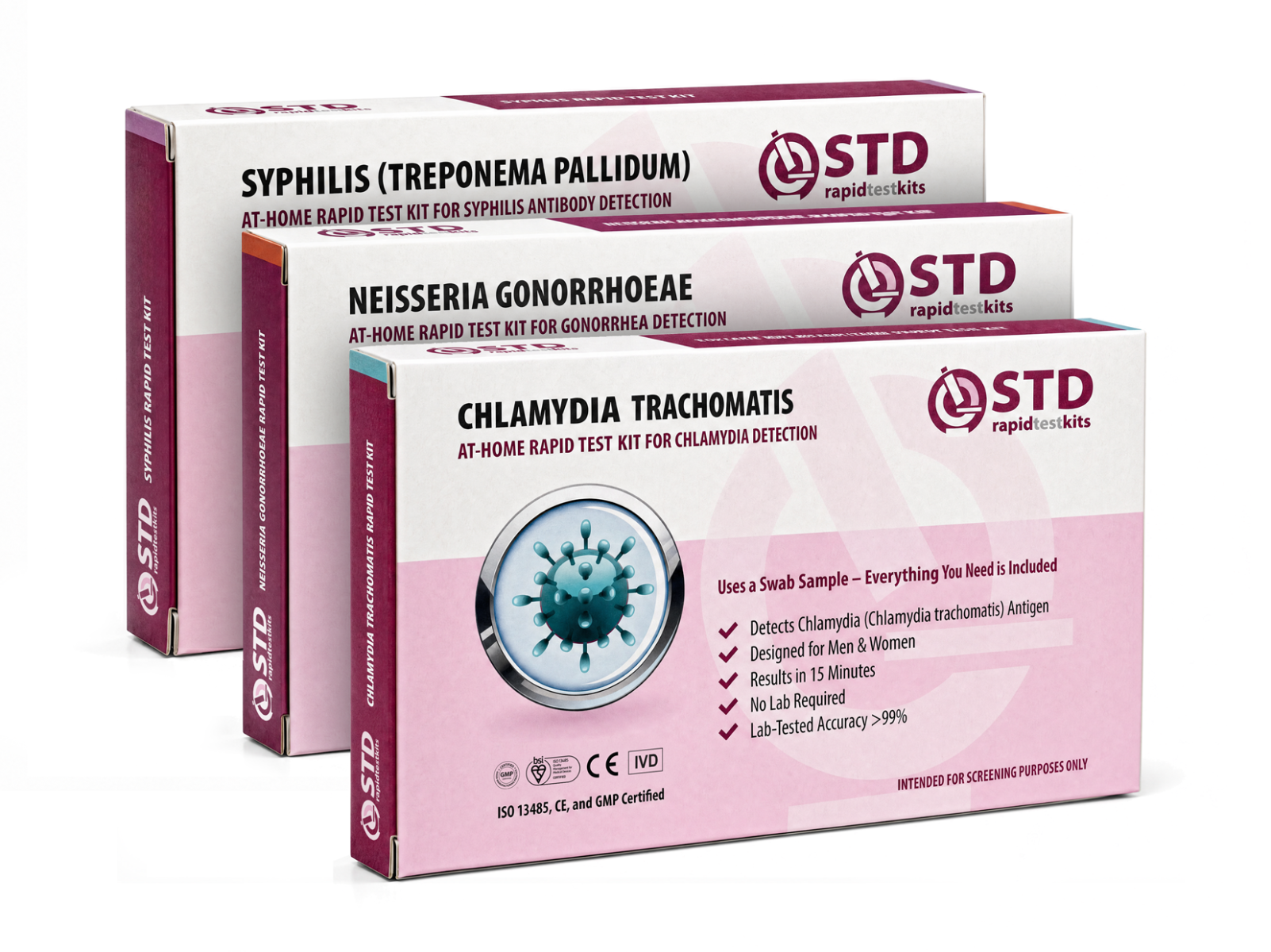
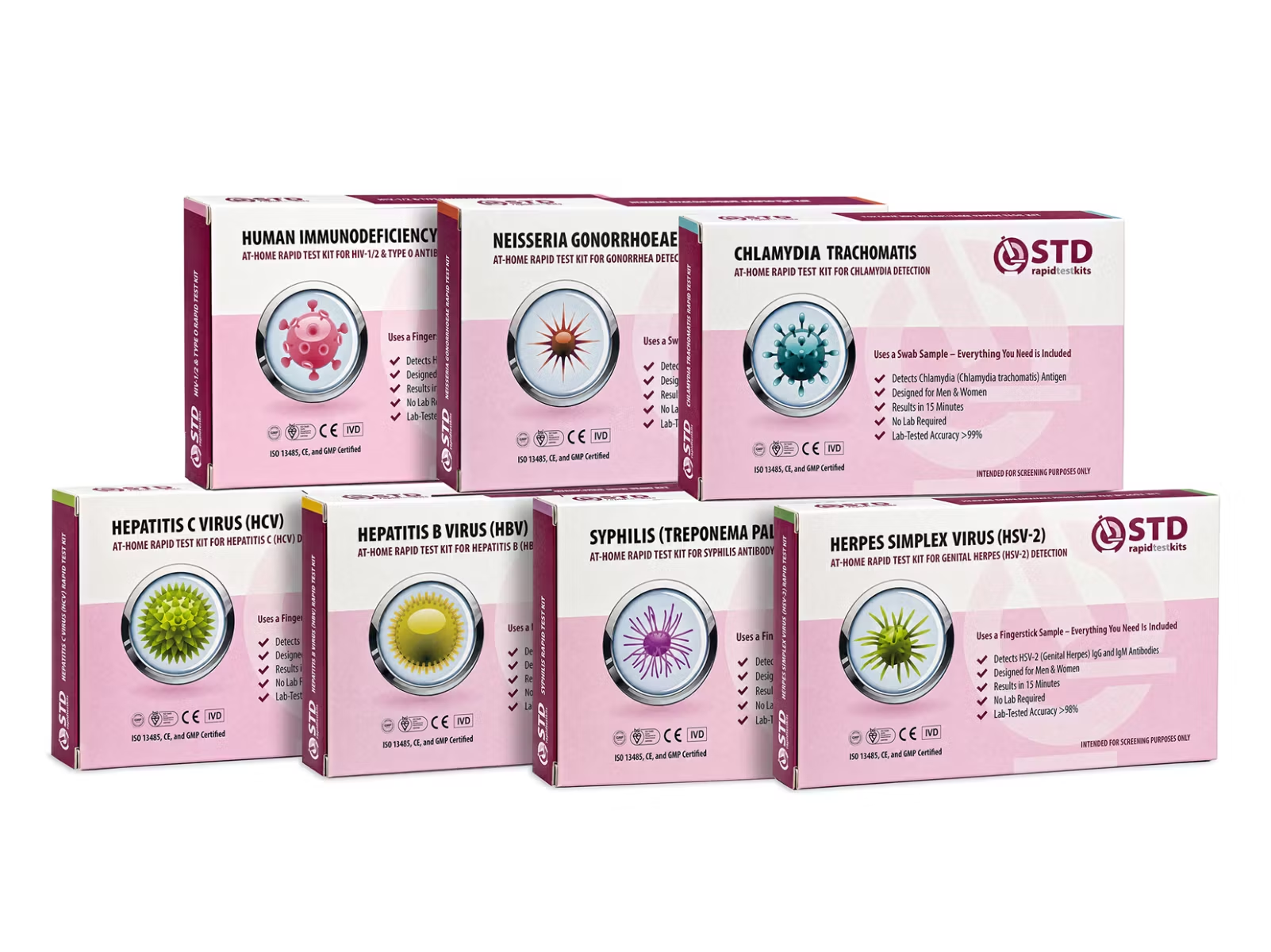
stdrapidtestkits.com sells the at-home rapid test kits referenced below. We recommend kits based on fit-for-purpose for the reader's concern, not commercial benefit. The toilet-seat scenario does not call for testing; the panels here are listed for readers whose concern involves an actual sexual exposure.
When to Actually Test
If your concern is in the "effectively no risk" category (toilet paper, toilet seats, swimming pools, casual kissing without visible sores, shared cups), you almost certainly do not need to test based on that incident alone. The biology does not support transmission, and testing in the absence of an actual exposure usually creates more anxiety than it resolves. That said, peace of mind is a legitimate reason to test, and a negative rapid result can be a useful way to break an anxiety spiral.
If your concern involves sexual contact (protected or unprotected, oral, vaginal, or anal) or shared sex toys without cleaning, testing at the right window is the right move. Every infection has its own window period: the time it takes for your body to produce enough antibodies (or for the pathogen to reach high enough levels) for a test to detect it. A negative result inside that window can be misleading because the biology has not yet reached detectable thresholds, even when an infection is present.
Our at-home rapid tests use lateral-flow chemistry on the same swab or fingerstick samples that lab testing relies on. They are screening tools designed for privacy and speed; a positive on any rapid test is worth confirming with a clinic NAAT or serology. The table below shows when each test gives a reliable result after a specific exposure.
| Infection | Test From | Notes |
|---|---|---|
| Chlamydia and gonorrhea | 14 days after exposure | Most rapid swab kits use this window; some clinicians retest at 3 months after treatment to catch reinfection |
| Syphilis | 3 to 6 weeks after exposure | Antibody-based; most positives detected by 6 weeks |
| HIV (lab antigen/antibody) | 18 to 45 days after exposure | For a very recent high-risk exposure, see a clinician within 72 hours about PEP |
| HIV (rapid fingerstick) | 18 to 90 days after exposure | Rapid home tests take longer than venous lab tests; retest at 12 weeks for certainty |
| Herpes (HSV-2 blood antibody) | Up to 12 weeks, rarely 6 months | Blood antibody tests are not useful for an active acute lesion; a clinician can swab the lesion and run PCR |
| Hepatitis B | About 4 weeks; most positives by 9 weeks | Vaccine-preventable; treatable |
| Hepatitis C | 8 to 11 weeks after exposure | Modern treatment is highly effective |
A negative result only means what it says if it was taken inside the window for that infection. Testing for HIV at two weeks, or for hepatitis C at five weeks, can produce a false negative because antibodies have not yet reached detectable levels. Note your most recent potential exposure date, count forward to the right window for each infection you want to check, and test then. If something on a home test reads positive, treat it as a strong signal to seek confirmation from a provider rather than a final diagnosis.
HIV does not survive long outside the human body (for example, on surfaces), and it cannot reproduce outside a human host.
Frequently Asked Questions
- Can you really catch an STD from a toilet seat or toilet paper?
- No. Sexually transmitted infections require direct contact between infectious fluid or actively shedding skin and a mucous membrane or open wound to establish infection. A toilet seat is hard, cold, and dry, and toilet paper is absorbent and porous; neither provides what these organisms need to survive and infect. No major public-health body, including the CDC and WHO, has documented an adult case of STI transmission via a toilet seat or toilet paper, despite decades of surveillance, and HIV in particular loses infectivity within minutes once exposed to air.
- How long can STD bacteria or viruses survive on bathroom surfaces?
- Not long. HIV is destroyed within minutes after drying. Gonorrhea and chlamydia bacteria need warm, moist mucous membranes; they cannot survive on a dry seat or doorknob. Syphilis dies within minutes. Herpes can persist briefly on warm, damp surfaces but transmission still requires direct contact before the virus dries. Trichomoniasis can persist briefly on damp surfaces (up to 45 minutes), and hepatitis B is unusually durable on surfaces when blood is involved, but neither is a real-world toilet-seat risk for adults.
- What if the seat is wet? Does moisture change the risk?
- Moisture extends survival time for some pathogens slightly, but it does not bridge the gap to infection. The seat would have to be wet with fresh, infectious bodily fluid, and you would still need direct contact with a mucous membrane or open wound. Cleaning chemicals, ambient air, and intact skin handle the rest. Most damp public seats are wet from cleaning solution or water, not bodily fluid.
- Is it possible to get herpes from a toilet seat?
- Possible in theory, though not realistic in practice. Herpes simplex virus survives only briefly in moist conditions, and toilet seats are typically too cold, hard, and dry to keep the virus viable. There are no documented cases in the medical literature of herpes transmission through a toilet seat, and the NHS states this directly.
- Can you get gonorrhea or chlamydia from a swimming pool?
- No. The bacteria are very fragile outside the body and only live for seconds to minutes. Pool water, dilution, and chlorine eliminate them entirely. There are no documented cases of either infection spreading through pool water. Sex in a pool, on the other hand, carries the same transmission risks as sex anywhere else.
- Does peeing after sex prevent STIs?
- No. Urinating after sex helps flush bacteria out of the urethra and reduces the risk of urinary tract infections, but it does not prevent chlamydia, gonorrhea, HIV, syphilis, or any other STI. Those infect through different anatomical routes and the urinary stream does not reach them. Pee after sex for UTI prevention; use condoms and test regularly for STI prevention.
- Is sharing sex toys with a partner safe?
- Not without cleaning thoroughly or using a fresh condom between partners. Uncleaned sex toys can carry and transfer infected bodily fluids directly to mucosal tissue, which is a documented route for gonorrhea, chlamydia, herpes, trichomoniasis, and HPV. This is the one casual-context scenario where surface concerns are justified, because the contact is not really casual.
- What can you actually catch from a public bathroom?
- Norovirus, E. coli, and salmonella are the genuine risks, picked up by touching contaminated handles, faucets, or flush levers and then your face. Staph (including MRSA) can survive on door handles and stall locks and cause skin infections. None of these are STDs. Thorough handwashing before you leave covers the actual risk in that environment.
- I got a positive result on a home test. What now?
- Treat it as a strong signal, not a final diagnosis. Confirm with a clinic or your provider, who will run a confirmatory test and discuss treatment. Every infection on this site's panel has effective treatment available. Notify recent partners so they can test too, and act promptly: earlier treatment means better outcomes and stops onward spread.
- U.S. Centers for Disease Control and Prevention. About HIV: How HIV is and is not transmitted, including statements that HIV does not survive long outside the body and is not spread through toilets, shared dishes, or other casual contact. Source of the pull-quote in this article.
- U.S. Centers for Disease Control and Prevention. Syphilis fact page, explicitly listing toilet seats and other surfaces under things syphilis cannot be transmitted from.
- U.S. Centers for Disease Control and Prevention. Sexually Transmitted Infections Surveillance, annual case counts for chlamydia, gonorrhea, and syphilis in the United States.
- U.S. Centers for Disease Control and Prevention. About Chlamydia, including the statement that chlamydia symptoms, when they appear at all, may not show up until several weeks after sex with a partner who has chlamydia.
- U.S. Centers for Disease Control and Prevention. STI Screening Recommendations, including annual chlamydia and gonorrhea screening for sexually active women under 25 and 3- to 6-month screening intervals for men who have sex with men at increased risk.
- U.S. Centers for Disease Control and Prevention. HPV vaccine age recommendations: routine vaccination through age 26 and shared clinical decision-making through age 45.
- U.S. Centers for Disease Control and Prevention. HPV overview, including transmission via genital skin-to-skin contact.
- U.S. Centers for Disease Control and Prevention. STI prevention overview, describing the routes through which sexually transmitted infections do and do not spread.
- American Sexual Health Association. Herpes (HSV-1 and HSV-2) fast facts, transmission routes, and asymptomatic shedding.
- National Health Service (UK). Genital herpes overview, including the explicit statement that genital herpes is not transmitted from towels, swimming pools, saunas, or toilet seats because there is no skin-to-skin contact.
- National Health Service (UK). Urinary tract infections (UTIs) overview, including recommended preventive habits such as peeing after sex.