
Published: November 2025 | Last updated: May 2026 | Editorial review and quality control: Martina N.
Which STD myths matter most in 2026?
Most STDs are silent: chlamydia and gonorrhea produce no symptoms in the majority of people who carry them, so feeling fine is not evidence of being uninfected. Toilet seats and swimming pools pose no transmission risk. Oral sex, skin contact, and a single unprotected encounter all can transmit STDs. Regular testing at the right window period tells you your status.
Some STD myths sound almost true, which is what makes them dangerous. A myth that is clearly wrong gets dismissed in a single search; a myth that is almost right gets quietly believed, and then it shapes whether someone tests, when they test, and what they tell a partner. The cost is paid weeks or months later, when an infection has progressed, a partner has been exposed, or a test result comes back surprising because nobody was watching for it.
The CDC's most recent STI surveillance summaries still show rising or persistently high case counts for chlamydia, gonorrhea, and syphilis across the U.S., and the public-health teams tracking those numbers keep pointing to delayed testing as a major driver. The eight myths below are the ones clinicians and screening programs flag most often as the reason patients waited too long. Each section names the myth, explains what is actually accurate, and points toward what to do instead. Where a claim has a specific number, the source is linked.
Key Takeaways
- The single most common reason a test comes too late is the belief that symptoms would have shown up by now. For chlamydia and gonorrhea, most infections produce no symptoms at all.
- A negative test from a partner only rules out infection at the moment it was taken. Window periods range from two weeks for chlamydia to twelve weeks for syphilis, so timing matters as much as the result.
Myth #1: "You Can't Get an STD Without Having Sex"
The framing of "sex" in this myth usually means penetrative vaginal or anal intercourse. That definition leaves out the routes most adolescents and queer adults actually use. Chlamydia, gonorrhea, syphilis, herpes, and HPV can all transmit through skin-to-skin genital contact without penetration, through oral contact, and through shared sex toys that are not cleaned between partners. HPV in particular spreads through any genital skin-to-skin contact, which is why condoms reduce HPV risk without eliminating it (see CDC STI prevention guidance).
The closely related toilet-seat myth tends to mask the same gap. STD pathogens, whether bacterial like Chlamydia trachomatis and Neisseria gonorrhoeae or viral like HSV-1, HSV-2, and HIV, need warm moist mucosal tissue to survive and infect. They die quickly on cold hard surfaces and require direct skin-to-skin or fluid contact to transfer between people. The CDC has not documented a single confirmed case of toilet-seat STD transmission. Lawsuits and family arguments around "I must have caught it from a hotel" tend to dissolve once a clinician explains the transmission routes. The more useful question to ask yourself: have I had any sexual exposures in the last few months that I have not been tested for since?
The myth traces back to how sex education was framed for decades, when "abstinence from intercourse" was treated as equivalent to "zero risk." Researchers tracking adolescent infection rates have long described the "technical virginity" pattern: teens who self-identify as virgins still acquire chlamydia and gonorrhea through oral and manual contact, sometimes at rates comparable to peers who consider themselves sexually active.
The myth is particularly costly for queer readers. Women who have sex with women still test positive for HPV, herpes, and trichomoniasis at meaningful rates, but routinely report being told they are "low-risk" by providers and skip routine screening because of it. The mismatch between provider assumptions and actual exposure is one reason private at-home testing has become a workaround for people the standard testing narrative leaves out.
The practical takeaway: if you are sexually active in a way that involves skin contact with another person's genitals, mouth, or fluids, you are in the testing pool. The intensity of risk varies, and even a single skin-to-skin exposure puts you on the testing chart.
Skin-to-skin genital contact, oral-to-genital contact, oral-to-oral contact (for HSV-1 and syphilis), and shared unwashed sex toys can each transmit most common STIs without anyone having penetrative intercourse. What does not transmit STIs in any clinically meaningful way: toilet seats, swimming pools, hot tubs, doorknobs, shared towels, or kitchen utensils. Hot tubs can spread non-STI bacteria like Pseudomonas (a skin and ear infection), but those are not sexually transmitted infections and do not show up on STI panels. If skin or mucous membrane meets skin or mucous membrane, the route is open. Otherwise, it isn't.
Myth #2: "You'd Know If You Had an STD"
This is the most damaging myth on the list, partly because it is also the most comforting. The internal logic is straightforward: no pain, no unusual discharge, no smell, therefore no infection. Clinical reality runs the other way for most common STIs.
According to the WHO STI overview, the majority of STIs cause no symptoms at all in many infected people. Chlamydia in particular is asymptomatic in the majority of women and around half of infected men, which is why screening programs target sexually active women under 25 regardless of symptom report. Gonorrhea follows a similar pattern, especially when the infection is in the throat or rectum, where local symptoms are uncommon. HIV in its earliest stage causes nothing more obvious than a flu-like illness within two to four weeks of infection that most people dismiss as a cold, then enters a long asymptomatic phase. Syphilis in its primary stage produces a single painless sore that often goes unnoticed, then disappears entirely while the infection continues silently.
The same blindness applies to a partner's body. Visual screening of a sex partner is a comforting fantasy: most STIs are invisible from the outside, even close up. HSV-2 carriers may go years between visible outbreaks, and many never develop classic genital lesions even when antibody tests are positive. HPV usually clears silently, but high-risk strains can drive cervical or oropharyngeal cancers years later, with no warning sign in between. The signal you can act on is a documented test from the last few months, and a clean appearance is no substitute for one.
The cost of relying on symptom-watching is concrete. Untreated chlamydia and gonorrhea can ascend to the upper reproductive tract and cause pelvic inflammatory disease, which scars fallopian tubes and increases the risk of ectopic pregnancy and infertility. Untreated syphilis enters a latent phase that can damage the heart, brain, and bones years later. Sexual-health programs in the U.K. NHS, U.S., and Australia all describe the same pattern: people present at a clinic only after a sexual partner tested positive, or after a routine screen picked up something they had no idea was there.
CDC screening guidance is built on that pattern: annual chlamydia and gonorrhea testing for sexually active women under 25, three-monthly testing for sexually active gay and bisexual men, and an STI panel at every prenatal visit, all independent of symptom report.

Myth #3: "Oral and Anal Sex Are Safe Sex"
Oral sex carries a lower risk of pregnancy than intercourse. That is the only safety claim it can reliably support. Chlamydia, gonorrhea, syphilis, herpes, and HIV can all transmit through oral contact, and pharyngeal (throat) gonorrhea is now common enough that CDC screening guidelines specifically recommend pharyngeal swabs for men who have sex with men and for anyone reporting receptive oral exposure in the past few months.
The trickier piece: pharyngeal infections rarely cause symptoms. A throat infection with gonorrhea usually feels like nothing at all, or at most a mild sore throat that is indistinguishable from a viral cold. Many people, and some providers, never think to swab the throat, so the infection persists and can transmit to subsequent partners. The CDC has flagged pharyngeal gonorrhea as a key reservoir for antibiotic-resistant strains, which is part of why CDC treatment guidance updated in recent years to higher-dose ceftriaxone. Oral HPV is also now a leading cause of oropharyngeal cancers in men, more common than HPV-related cervical cancer in some age groups. Herpes is the other oral-sex blind spot: HSV-1, traditionally associated with cold sores around the mouth, now causes a growing share of genital herpes diagnoses through oral-to-genital transmission.
Anal sex carries the highest per-act HIV risk of any common sexual activity, particularly receptive anal intercourse, because rectal tissue is thin and contains a high density of immune cells the virus targets. The same anatomy raises the chance of transmitting and acquiring herpes, syphilis, gonorrhea, chlamydia, and HPV. Receptive anal exposure also accounts for a disproportionate share of new chlamydia and gonorrhea diagnoses that get missed because clinicians do not always swab the relevant site.
Note about our products: we sell genital swab kits and bloodborne fingerstick tests; if you need a pharyngeal or rectal swab, that needs a clinic visit, because those sample sites are not validated for home cassettes. Blood tests for syphilis, HIV, and herpes do apply to oral-exposure and anal-exposure events, because those infections travel systemically once acquired, so a fingerstick antibody test is relevant regardless of the exposure route. Be honest about exposure type when you talk to a clinician so the right swab gets taken. (Disclosure: stdrapidtestkits.com publishes this article and sells the at-home rapid test kits referenced throughout. We recommend kits based on fit for the reader's concern, not commercial benefit.)
| Infection | Transmits via oral sex? | Common site of infection |
|---|---|---|
| Chlamydia | Yes | Throat, genitals, rectum |
| Gonorrhea | Yes (common) | Throat, urethra, rectum |
| Herpes (HSV-1 and HSV-2) | Yes | Mouth, lips, genitals |
| Syphilis | Yes | Mouth, lips, genitals |
| HIV | Rare but documented | Bloodstream via mucosal entry |
Myth #4: "If My Partner Tested Negative, I'm Safe"
This one usually comes from a place of trust. The mistake is not the trust; it is misunderstanding what a single negative test actually rules out. Every infection has a window period, defined as the time between exposure and the point at which a test becomes reliably positive. A test taken before that window closes can return a negative result even when the infection is present and will become detectable later.
The window periods vary widely. Chlamydia and gonorrhea NAAT tests become reliable around 14 days post-exposure. HIV antigen-antibody tests reach high sensitivity by about 45 days, with laboratory NAAT detecting earlier. Syphilis antibody tests can take up to 12 weeks to register reliably after exposure. If a partner tested within those windows after a recent exposure, the negative result is useful for what it ruled out at that moment, and limited in what it says about what they might still be incubating.
The second issue is what "monogamous" usually means in practice: monogamous from a stated point in time. Infections acquired before the relationship started do not disappear just because the relationship became exclusive. A partner who never tested before settling down may carry an infection from years earlier. Trichomoniasis in particular is often diagnosed in people in long-term partnerships, sometimes years after the original exposure event.
For couples consolidating into exclusivity, the cleanest practical move is for both partners to retest at a date that falls after the longest relevant window period for any pre-relationship exposure. A 12-week mark from the last outside exposure covers chlamydia, gonorrhea, syphilis, and HIV in one round.
If a partner tested before the window period for the relevant infection closed, the result reflects what was detectable at that moment, and stays silent about what could become detectable later. After any new possible exposure, the responsible move is a fresh test once the window has elapsed.
Myth #5: "Condoms Prevent All STDs"
Condoms work, and skipping them when you could use them is one of the higher-impact mistakes in this list. They dramatically lower the risk of HIV, gonorrhea, chlamydia, and trichomoniasis, and they reduce the risk of syphilis and herpes when the lesion is in a covered area. The CDC's condom effectiveness guidance treats consistent and correct condom use as a cornerstone of risk reduction.
What condoms do not do is cover every square centimeter of skin involved in sexual contact. The base of the penis, the scrotum, the vulva, the upper thighs, and the mouth all remain exposed. Herpes, HPV, and syphilis chancres in those areas can transmit despite a correctly used condom. Studies of HSV-2 transmission among couples where one partner is HSV-2 positive and the other is HSV-2 negative show that condoms reduce risk meaningfully without driving it to zero.
The other limitation is usage. Slippage, breakage, late application, and incorrect storage all reduce real-world effectiveness below the laboratory figure. Behavioral surveillance also shows that condom use has declined over the past decade as long-acting reversible contraception has expanded, with younger cohorts often skipping condoms once pregnancy is no longer a concern. Birth-control pills, IUDs, and implants offer no STI protection at all.
The right framing: condoms are necessary and they are insufficient on their own. Combine them with vaccines where available (HPV, hepatitis B), with antiviral suppression for known herpes, with PrEP (pre-exposure prophylaxis, a daily medication that prevents HIV infection) if you are at higher HIV risk, and with regular testing.
What each prevention method actually does
| Method | STI protection | Key limitation |
|---|---|---|
| External (penile) condom | Yes for most STIs | Does not cover all genital skin |
| Internal (receptive) condom | Yes for most STIs | Less common; positioning issues |
| Dental dam | Yes for oral-genital and oral-anal | Underused; can shift during contact |
| Birth-control pill, IUD, implant | No STI protection at all | Designed only for pregnancy prevention |
Pregnancy prevention and STI prevention are different tools. Stack them when both risks apply.

Myth #6: "Herpes Only Spreads During a Visible Outbreak"
Herpes spreads most efficiently during an active outbreak, when virus is being shed at high concentrations from a lesion. It also spreads when skin looks completely normal. The mechanism is called asymptomatic viral shedding, and it is well-documented in HSV-2 and increasingly in HSV-1. Studies using daily genital swabs in seropositive participants have found viral DNA on skin during a meaningful share of days, even in people with no history of visible outbreaks (see Mayo Clinic on genital herpes for clinical background).
The implications are significant. People who have never had a visible blister can still transmit the virus. Many people never experience what they would call an outbreak; what they do have are tingling sensations they attribute to ingrown hairs, friction burns, or razor irritation. Provider studies suggest a large share of herpes diagnoses come as a surprise to people who had seen no obvious lesion.
The WHO herpes fact sheet states that many people with HSV are unaware of their infection. Globally, HSV-2 affects an estimated 13% of people aged 15 to 49. The combination of high prevalence and low awareness is exactly why testing matters even in the absence of obvious symptoms, especially with a new partner.
If you have had repeated unexplained genital irritation, intermittent tingling, or unilateral nerve pain in the genital or buttock region, it is worth ruling herpes in or out with a rapid herpes blood test rather than assuming the symptom is mechanical.
Many people aren't aware they have the infection and can pass along the virus to others without knowing.
Myth #7: "At-Home Tests Aren't Reliable"
Skepticism around at-home testing tends to mix three different concerns into one. Some readers picture early-generation strips with crude antibody chemistry that miss real infections. Others worry that the lab a mail-in sample ships to is not accredited. A third group wonders whether self-sampling at home introduces enough error to undermine the result. All three deserve separate answers.
On the technology: home-collection kits fall into two categories. Lateral-flow rapid tests like the ones sold on this site use the same chemistry as the rapid tests used in clinics and emergency departments, with sensitivity comparable to in-clinic rapid kits when used at the right window. Mail-in kits typically use NAAT or PCR run in CLIA-certified labs, which is identical to the test technology behind a clinical order; the only difference is how the sample was collected.
On accuracy: rapid tests trade some sensitivity for speed, especially in the earliest part of the window period. A fingerstick HIV antigen-antibody rapid test that returns negative at three weeks is not necessarily wrong; it has not yet reached its plateau of sensitivity. The same logic applies to syphilis antibody tests and to NAAT versus rapid swab tests in general. A positive result on a rapid test is reason to confirm in a lab, while a negative result inside the window is reason to retest later.
On sample collection: studies of self-collected vaginal swabs for chlamydia and gonorrhea consistently show sensitivity equivalent to clinician-collected swabs. The main failure mode is timing; testing before the window period closes is what drives false negatives, and collection error at home is uncommon when the kit instructions are followed.
| Property | Rapid lateral-flow (home kit) | Lab NAAT (clinic or mail-in) |
|---|---|---|
| Time to result | About 15 minutes per assay | 1 to 7 days from sample receipt |
| Sample collection | Self-collected swab or fingerstick | Self-collected or clinician-collected swab |
| Sensitivity inside the window period | Lower; trades some sensitivity for speed | Higher; detects earlier in some cases |
| Best role | Private screening; confirm any positive in a lab | Confirmation and gold-standard screening |
Myth #8: "STD Testing Is Only for People Who Sleep Around"
This is the myth that wears judgment as a costume. The assumption is that testing is something risky people need and reliable people do not. The actual epidemiology disagrees: one unprotected exposure is enough, one unaware partner is enough, and one prior relationship before yours is enough.
Population data backs this up. CDC STI surveillance breaks new diagnoses down by age, gender, and reported number of partners, and the curves are not as steep as people expect. Plenty of newly diagnosed cases involve people in their first or second monogamous relationship. Trichomoniasis in particular is often diagnosed in long-term partnerships, sometimes years after the original exposure event.
The same myth has two close cousins worth naming. The first is that STI testing is something for younger people only. STI rates among adults over 50 have climbed sharply over the past two decades, with syphilis, chlamydia, and gonorrhea all rising in older age groups, per CDC surveillance. Post-divorce and post-widowhood dating is more common than it used to be, erectile-dysfunction medications and post-menopausal status both reduce the perceived need for condoms, and primary-care templates often de-prioritize STI screening after age 25. A 55-year-old starting to date again rarely gets a screening prompt during a routine visit, which means asking for one yourself is what closes the gap.
The second cousin is that STI testing is a women's-health topic. Men carry chlamydia, gonorrhea, syphilis, HIV, hepatitis B, hepatitis C, HSV, and HPV at rates broadly comparable to women, and asymptomatic infections in men frequently go undiagnosed because there is no equivalent of an annual gynecological visit to catch them. Untreated, those infections drive epididymitis, infertility, and (in the case of HPV) oropharyngeal cancers, which now affect more men than women in many age groups.
The cost of the myth shows up in two places. People in stable relationships skip routine screening on the assumption that nothing has changed, which means infections present before the relationship began go undetected. The myth also attaches shame to the act of testing itself, which makes the conversation harder to have with a partner. The healthier framing is the one many sexual-health clinics use: testing is routine maintenance, similar to a dental cleaning or a blood-pressure check.
If raising STI testing with a partner feels confrontational, change the script. "I'm due for my annual panel; want to do ours together this month?" lands as joint health planning rather than an accusation. The same shift in framing helps inside long-term relationships, where a periodic check-in protects both partners against the silent infections that condoms and good intentions cannot fully rule out.
When to Test After a Scare (And Why Timing Matters)
Testing too early is the single most common reason a result misleads someone. Testing too late delays treatment and lets an infection do more damage. The right window depends on the specific infection and the type of test used. The table below summarizes the earliest reliable detection point and the recommended window for each major STI, drawn from current CDC and WHO screening guidance.
| Infection | Earliest reliable detection | Recommended test window |
|---|---|---|
| Chlamydia (NAAT) | 5 to 7 days | 14 days or later |
| Gonorrhea (NAAT) | 5 to 7 days | 14 days or later |
| Syphilis (antibody) | 3 weeks | 6 to 12 weeks |
| HIV (antigen-antibody) | 18 to 45 days | 45 days for high confidence |
| HSV-2 (type-specific antibody) | 3 weeks | 12 weeks or later |
| Trichomoniasis | 5 to 10 days | 2 to 3 weeks |
What to Do If You're Unsure or Afraid
You do not have to figure this out alone, and you do not have to involve a clinic to take the first step. At-home testing exists for a reason: it removes the waiting room, the awkward registration form, and the conversation with a receptionist, and replaces them with a private window of clarity at your own pace.
The right kit depends on the exposure. A single recent risk involving a partner with unknown status usually calls for a combination kit covering the major curable STIs (chlamydia, gonorrhea, trichomoniasis, syphilis) along with the bloodborne tests (HIV, hepatitis). A specific concern about one infection, like a possible HSV exposure or a contact who tested positive for chlamydia, can be addressed with a single-infection kit. Either way, timing the test to fall after the window period is what makes the result meaningful.
One warning worth surfacing here: garlic, tea tree oil, colloidal silver, cranberry juice, and oregano oil are not STI treatments. Bacterial STIs (chlamydia, gonorrhea, syphilis, trichomoniasis) require specific antibiotics matched to the infection. Viral STIs (herpes, HIV, HPV, hepatitis B and C) cannot be cured by anything sold over the counter, though antivirals can suppress or, in the case of hepatitis C, often cure the underlying infection. Self-treating with herbal remedies leaves the infection to progress, sometimes to pelvic inflammatory disease, infertility, or, with syphilis, cardiovascular and neurological damage that can take years to manifest. The early stages of syphilis are particularly deceptive because the chancre heals on its own even without treatment, which can read as a successful home remedy when it is actually the infection moving into its latent phase.
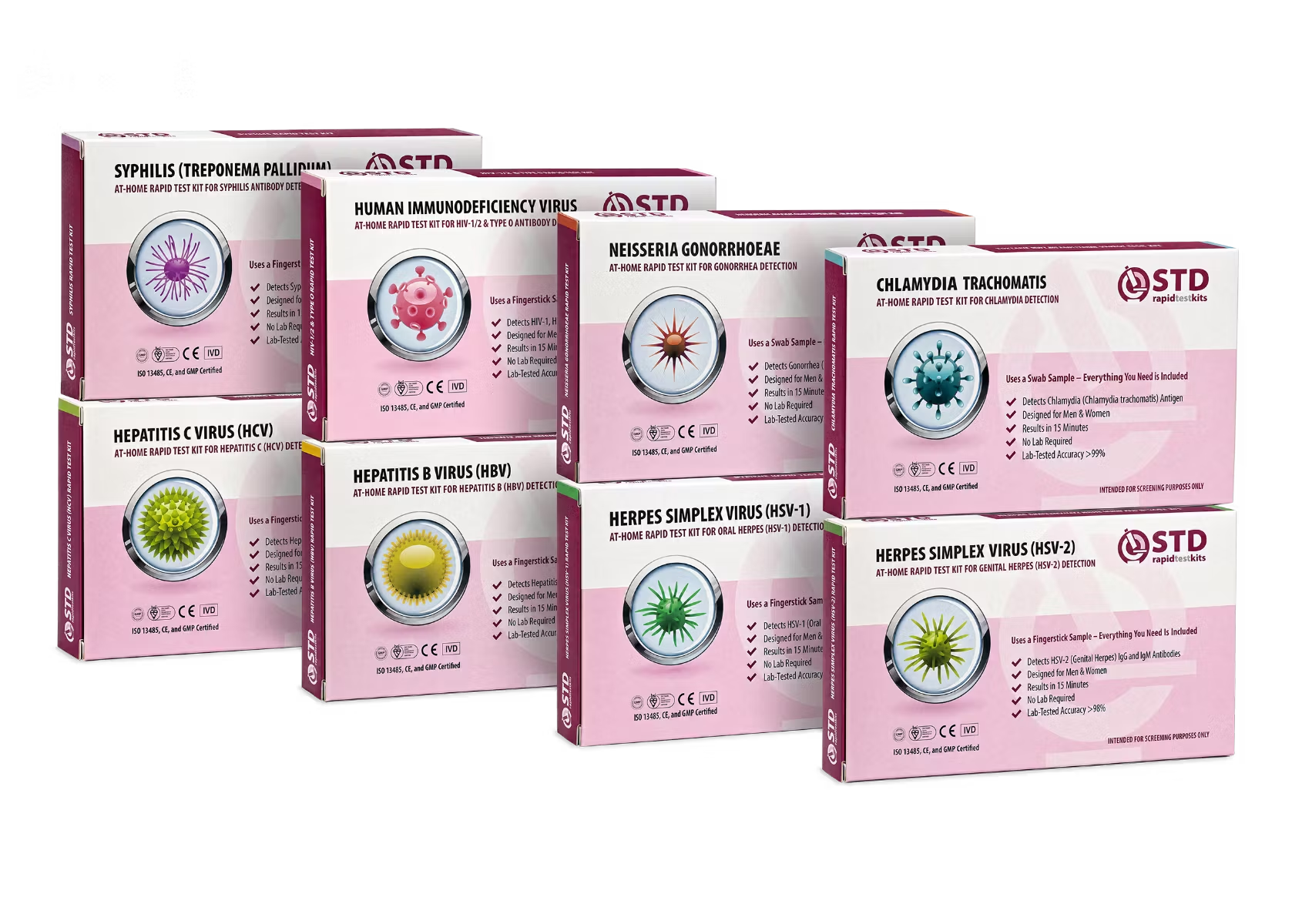
Our shop ships single-infection and combination at-home STI test kits directly to your home in discreet packaging. The combination kits are useful when you want to rule out several infections in one window rather than waiting and testing one at a time.

The Final Myth: That Testing Positive Says Something About You
This is the myth that ties all the others together. The whisper that says a positive result means you were careless, easy, or reckless. The biology does not support that interpretation. STIs are infections caused by bacteria, viruses, or parasites. They follow predictable transmission rules and respond to medical treatment. They follow the same biological rules as any other communicable disease, and the people who get them belong to every demographic and social circle.
CDC surveillance data show that tens of millions of new STI cases occur in the U.S. each year, distributed across every demographic group (see the CDC STI prevention overview for context). The diagnosed population is a meaningful share of every workplace, friend group, and dating pool. Most people do not realize this because most infections are asymptomatic, and most people who have been diagnosed do not talk about it openly.
Shame is the part of this that does measurable harm. Shame delays testing, blocks partner notification, and stops people from collecting treatment, three compounding harms from a single belief. Public-health programs that focus on destigmatizing STI testing consistently show better testing uptake and earlier treatment initiation. STIs are bacterial, viral, or parasitic infections caused by specific pathogens; they respond to the same medical workup and treatment pathways as any other communicable disease, and a positive result carries no information beyond the biology of an exposure event.
If you have delayed testing because you were afraid of what the result would mean about you, the next concrete step is choosing a window-appropriate test for the specific exposure on your mind. Bacterial STIs typically resolve with one or two antibiotic doses; viral STIs are managed with antivirals that reduce symptom severity and lower transmission risk.
Timing Your Test for an Accurate Result
The eight myths above share a single underlying pattern: each one substitutes a comforting heuristic for a piece of information you could actually verify. The cost of the heuristic is not paid at the moment it is believed. It is paid weeks or months later, when an infection has progressed, when a partner has been exposed, or when a test result comes back surprising because nobody was watching for it.
The alternative is clarity you can act on. A test, taken at the right window, used with the right kit, returns a result you can do something with. The four-step path below is what most readers ask about by the time they reach the end of this article.
Action path: from worry to result
- Identify the specific infection of concern based on what kind of exposure happened (genital, oral, blood-contact, asymptomatic partner).
- Check the window-period table above to find the date at which a test for that infection becomes reliably positive.
- Choose a single-infection kit if one exposure is the question, or a combination kit if multiple infections are in play from the same event.
- Retest after the window if your first test fell inside it, and confirm any positive result with a clinic-administered lab NAAT before starting treatment.
Frequently Asked Questions
- Can I really get an STI without penetrative sex?
- Yes. HPV and herpes spread through skin-to-skin genital contact alone, oral sex transmits chlamydia and gonorrhea without any penetration involved, and shared unwashed sex toys can move bacterial STIs between partners. Risk varies by activity, and even a single skin-to-skin exposure can transmit.
- Can I catch an STD from a toilet seat, swimming pool, or hot tub?
- No. STI pathogens do not survive on cold hard surfaces or in chlorinated water; they need direct skin-to-skin or mucosal contact to transmit. Hot tubs can spread non-STI bacteria like Pseudomonas (a skin and ear infection), and those are not sexually transmitted infections and do not show up on STI panels. The CDC has not documented a confirmed case of toilet-seat STI transmission.
- Can you get an STD from kissing?
- Most STDs do not spread through kissing. The clear exception is HSV-1 (the cold-sore virus), which transmits readily through saliva and oral contact, especially during an active outbreak. Syphilis can theoretically pass through kissing if a chancre is present in or near the mouth. HIV, chlamydia, gonorrhea, and HPV do not transmit through ordinary kissing.
- Does the HPV vaccine cover all HPV types?
- No. The Gardasil 9 vaccine protects against nine HPV types, including the seven highest-risk strains for cervical, anal, and oropharyngeal cancers, plus the two strains that cause most genital warts. It does not cover every HPV type, which is why cervical screening continues for vaccinated patients. ACIP recommends routine vaccination through age 26 and shared clinical decision-making for ages 27 to 45.
- How accurate are at-home STD tests in 2026?
- High accuracy when used at the right window. Self-collected vaginal swabs match clinician-collected swab sensitivity for chlamydia and gonorrhea, and rapid lateral-flow chemistry equals the rapid kits used in clinics. The trap is timing: a fingerstick HIV test at three weeks is not yet at peak sensitivity. Confirm any positive in a lab, and retest after the window if the first result fell inside it.
- If I had herpes, wouldn't I know?
- Probably not. Studies using daily genital swabs find HSV-2 DNA on skin during a meaningful share of days even in people with no outbreak history, and the WHO estimates that many people with HSV are unaware they have it. A type-specific antibody test is what converts suspicion into an answer.
- Once I've been treated for an STI, am I immune?
- No. Antibiotics cure the current bacterial infection and do not protect against future infections. The CDC recommends retesting roughly three months after treatment for chlamydia or gonorrhea, because reinfection is common, often because a sexual partner was not treated alongside the original patient. All recent partners should be treated on the same schedule.
- If I test positive, does that mean someone cheated?
- Not necessarily. Some infections can stay latent or asymptomatic for years. An infection acquired before the relationship began can show up later when a routine screen catches it. A positive result is information about biology, and the constructive next step is treatment and shared testing rather than accusation.
How we sourced this article: Our article was constructed based on current advice from the most prominent public health and medical organizations, then translated into plain English shaped by the situations readers actually face. Claims were checked against CDC, WHO, NHS, and Mayo Clinic source pages, and the article was refreshed in May 2026 to consolidate overlapping myth-busting coverage and reflect 2026 case trends and the latest CDC screening guidance. Where a specific number is cited in the text, the linked source supports that figure.
- U.S. Centers for Disease Control and Prevention. STI prevention overview, covering transmission routes including non-penetrative contact, condom effectiveness framing, and HPV prevention context.
- U.S. Centers for Disease Control and Prevention. Condom effectiveness for STI and HIV prevention, including correct-use guidance and protection limits for skin-to-skin infections.
- U.S. Centers for Disease Control and Prevention. HIV basics: transmission routes, testing windows, and prevention tools including PrEP and testing-frequency guidance.
- World Health Organization. Herpes simplex virus fact sheet, including the awareness statistic and asymptomatic shedding mechanism cited in Myth #6.
- World Health Organization. Sexually transmitted infections (STIs) overview with global incidence and prevalence figures plus the asymptomatic framing used in Myth #2.
- U.K. National Health Service. Sexually transmitted infections: symptoms, when to get tested, and what testing involves; reference for general reader-facing screening practice cited in Myth #2.
- Mayo Clinic. Genital herpes: symptoms, causes, asymptomatic viral shedding mechanism, and clinical context cited in Myth #6.
