Syphilis is a well-documented sexually transmitted infection that manifests symptoms commonly present in other related diseases. This infamous infection is caused by the bacterium Treponema pallidum and is mostly spread through sexual contact that involves infectious lesions or broken skin.
Starting from the issue of susceptibility, men, particularly those having sex with other men, are more likely to become infected than women. Syphilis also occurs among teens and young adults, and the infection is passed from pregnant women to babies inside the womb or during delivery. Syphilis is curable, although its diagnosis can be very complicated, provided the infection is treated on time.
05 October 2024
4 min read
6635
Four Stages of Syphilis
Syphilis has four stages of development, each stage presenting different symptoms. Early stages present mild symptoms that are not characteristic and hence cannot easily be diagnosed as syphilis. As the disease advances, the symptoms become less visible with time and more destructive.
Stage One: The Primary Syphilis Stage
Characterized by the formation of a single painless lesion or chancre at the entry point of the bacterium, which may be the vagina, anus, or penis depending on the type of sexual exposure, usually firm and round but possibly multiple. If untreated, the chancre would resolve spontaneously after three to six weeks of its appearance. However, treatment at this stage is highly advisable to avoid progression to the severe stages.
Stage Two: The Secondary Syphilis Stage
If left treated, primary syphilis progresses to become secondary syphilis, which presents with skin rashes or sores in the mouth, vagina, anus, or penis. In most instances, these rashes may occur on several areas of the body and can appear while the chancre from the primary stage is healing or weeks after its healing. The rashes are generally rough and well demarcated, red, or reddish-brown and most of the time appear on the palms or soles. They can appear very light and can be left unnoticed at times. The symptoms accompanying this may be headaches, fever, swollen lymph glands, weight loss, sore throat, muscle ache, fatigue. Like in the primary stage, these signs and symptoms may disappear even without treatment, thus moving to the latent stage if left untreated.
Stage Three: Latent Syphilis Stage
During this stage, the disease becomes inactive, and no symptoms can be observed; it is nonetheless communicable. If it is not treated, syphilis may stay in a person's body for an extended period. Latent syphilis can be categorized as either early - infection within the past year - or late - infection occurred more than a year ago. If left untreated, latent syphilis advanced into tertiary syphilis.
Stage Four: The Tertiary Syphilis Stage
Tertiary syphilis occurs in 15-30% of the untreated, beginning 10 to 30 years after the start of infection. During this tertiary stage, major organs can be affected with possible disabling or death. Neurosyphilis—a complication wherein syphilis enters the brain and spinal cord—may set in, resulting in severe headache, paralysis, problems with muscular coordination, and dementia. At this stage, treatment will cure the infection, but the damage caused by the disease cannot be reversed by antibiotics alone and may require additional supportive care and surgical intervention.
Importance of Early Diagnosis
Early diagnosis and treatment are two most important factors in the non-progressiveness of syphilis. Regular screening for STDs or home test kits for STDs can reassure early diagnosis and hence early treatment of syphilis infection.
The major course of treatment for syphilis is through the use of antibiotics, most especially Penicillin, which has been found to be effective in the disease at whatever stage. However, the medication may not reverse whatever damage already done to the body in later stages of the disease. As such, early detection still remains very essential in the prevention of debilitating health complications.
Prevention Measures for Syphilis
Prevention of syphilis is chiefly based on measures that are undertaken to protect oneself from the condition and its complications. Use of condoms while engaging in sexual relations can also significantly prevent syphilis, though not 100 percent, in that the disease may appear on parts of the body not covered by a condom. Regular screening for sexually transmitted diseases is recommended for those with multiple sexual partners and/or unprotected sex.
For pregnant women, it is essential that they receive routine prenatal care with testing for syphilis included. Syphilis can be passed to the unborn child in an infected mother; hence, detection of the disease during pregnancy and treatment are necessary to prevent congenital syphilis.
Preventing the Worst: Knowledge and Early Action
Though syphilis is one of the most common STDs in most parts of the world, proper medical treatment, early detection, and precautions can prevent the disease from reaching its worst stages. Regular testing for STDs, safe sexual habits, and awareness of the disease can go a long way in reducing both the spread and effects of syphilis. A little knowledge and proper habits will suffice to keep oneself and others safe from this ancient disease.








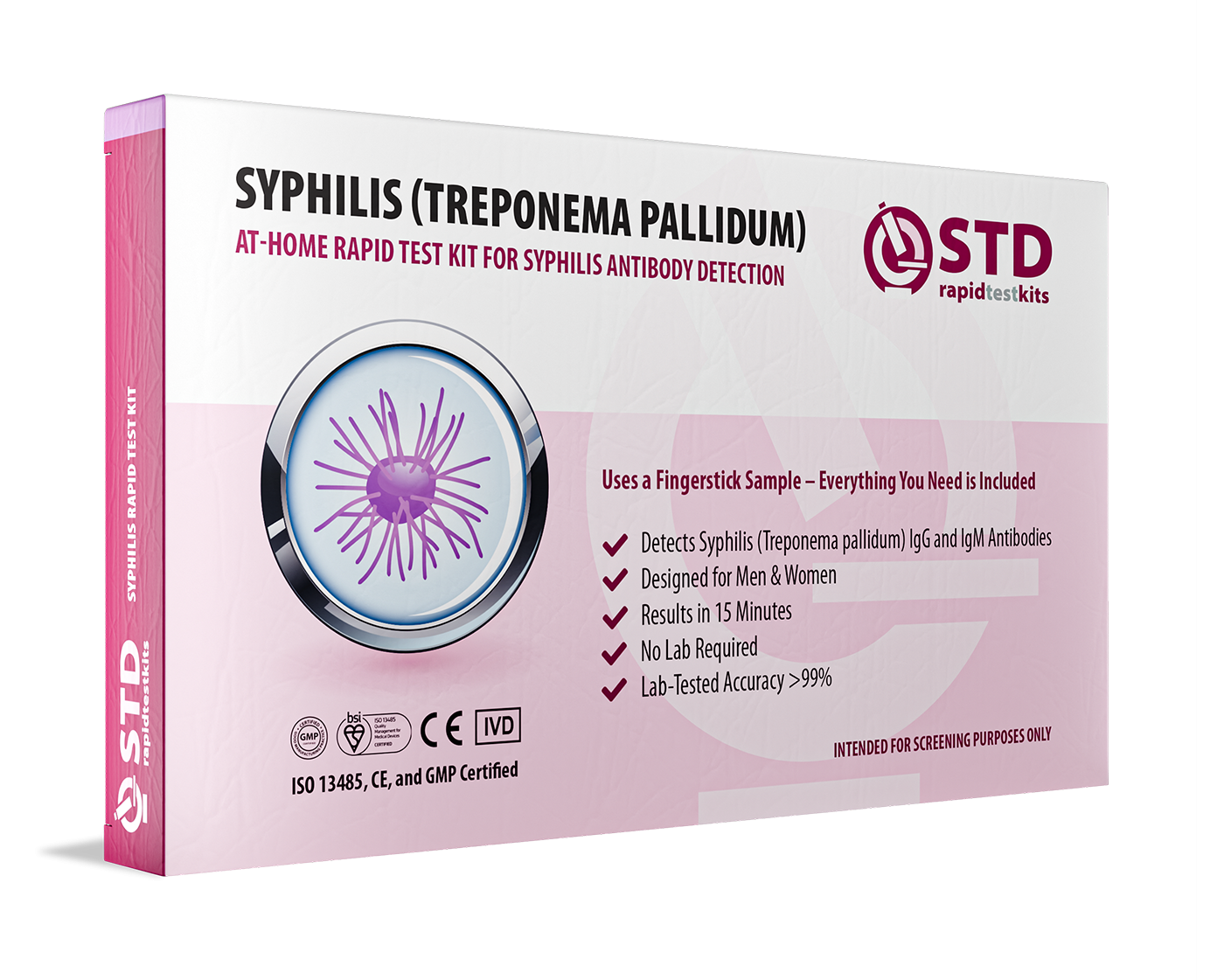
 For Men & Women
 Results in Minutes
 No Lab Needed
 Private & Discreet


