

Published: October 2025 | Last updated: April 2026 | Editorial review and quality control: Martina N.
Most people picture an STD scare as a brief panic that resolves with one clean test result. The truth is quieter and more important. A small number of sexually transmitted infections (HIV, syphilis, hepatitis B, hepatitis C) can cause fatal complications when they go untreated for years. Almost every fatal case starts the same way: a long, asymptomatic stretch when nothing felt wrong, no test was taken, and the infection had time to do its work.
This guide walks through which infections carry that risk, what the timeline of damage looks like, when each one becomes detectable on a routine test, and where early screening flips the outcome from life-altering to manageable. The aim is calm, sourced context.
Can an STD actually kill you?
Yes, but rarely and rarely fast. Four sexually transmitted infections (HIV, syphilis, hepatitis B, and hepatitis C) can cause fatal complications when they go undiagnosed and untreated for years. With early detection and modern treatment, all four are highly manageable. The mortality risk in modern STI care is overwhelmingly the risk of late diagnosis, not the infection itself. Annual screening and testing 6 to 12 weeks after any new exposure is the cleanest way to interrupt that timeline. For HIV specifically, the rapid antibody test window can extend to 90 days, so plan a re-test at that point if HIV is among your concerns.
Key Takeaways
- Four STIs carry meaningful long-term mortality risk: HIV, syphilis, hepatitis B, and hepatitis C. All four are treatable with early detection.
- Most fatal outcomes happen during years of silent, asymptomatic infection. Testing breaks that timeline before complications develop.
Which STIs can kill you, and which can't
Of the dozen-plus sexually transmitted infections tracked by public-health agencies, only a few carry meaningful long-term mortality risk in adults with access to modern treatment. The four with documented fatal complications are HIV, syphilis, hepatitis B, and hepatitis C. Each shares a common pattern: a quiet phase that can last years, during which the body adapts and damage accumulates without obvious symptoms.
The other common STIs (chlamydia, gonorrhea, trichomoniasis, HPV, herpes) cause real harm when untreated. They drive infertility, pelvic inflammatory disease, certain cancers, and neonatal infection. They rarely kill directly. The World Health Organization estimates more than one million curable STIs are acquired every day globally, and the great majority are clinically resolved with antibiotics or short antiviral courses.
Fatal cases come from a different mechanism. Time does more damage than virulence does.
| Infection group | Examples | Long-term mortality risk if untreated |
|---|---|---|
| High-mortality STIs | HIV, syphilis, hepatitis B, hepatitis C | Yes, after years of untreated infection |
| Curable bacterial STIs | Chlamydia, gonorrhea, trichomoniasis | Rare; main risks are infertility, pelvic inflammatory disease, neonatal infection |
| Common viral STIs | HPV, HSV-1, HSV-2 | Rare directly; HPV is linked to several cancers, herpes is lifelong but rarely fatal |
HIV: from terminal to manageable, but only with diagnosis
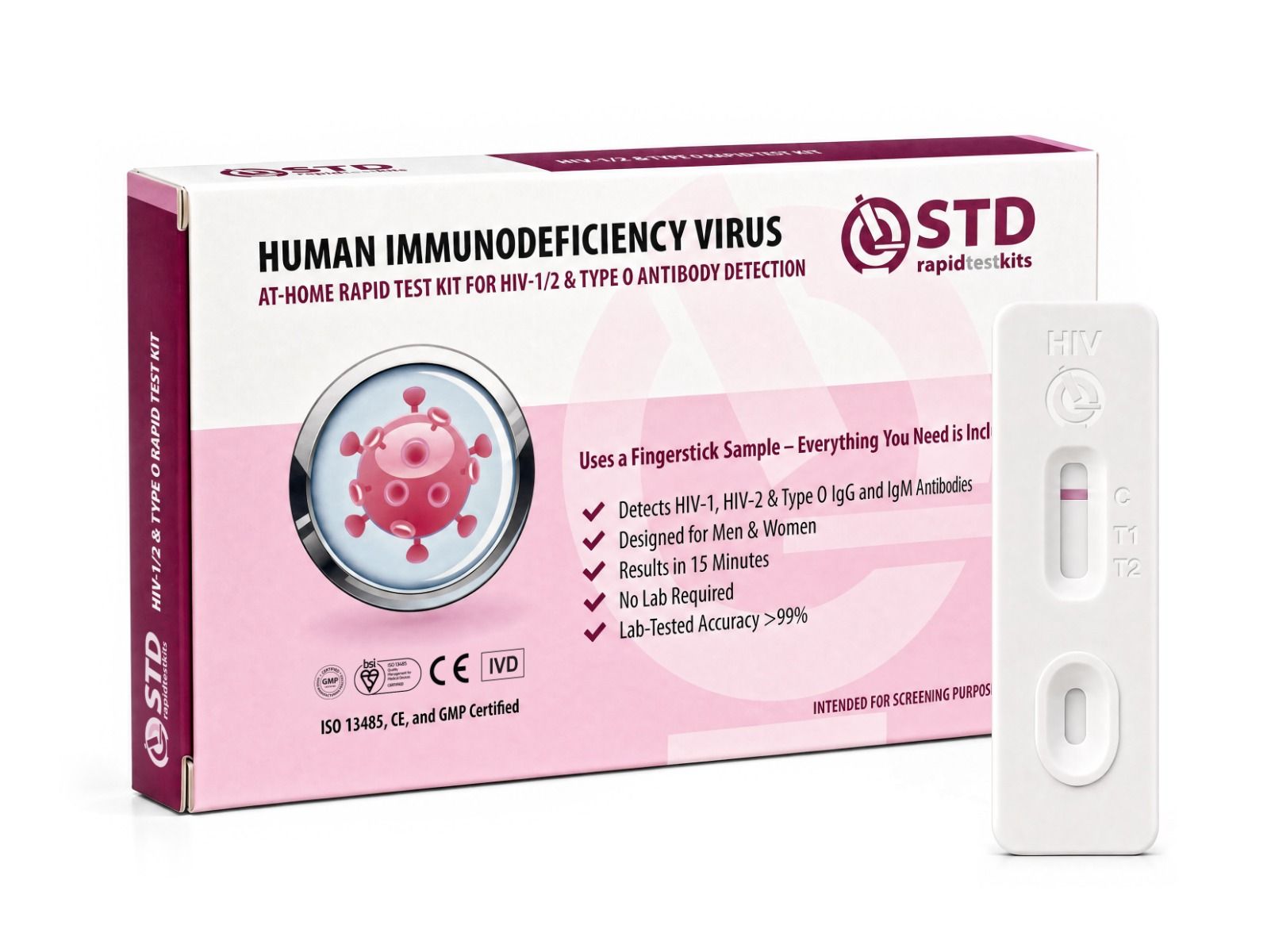
HIV attacks CD4 T cells, the white blood cells that coordinate the immune response to almost every other pathogen. Untreated, the virus replicates inside those cells and gradually depletes them. Once the CD4 count falls below a critical threshold, the body loses the ability to fight off opportunistic infections and certain cancers, the clinical syndrome called AIDS.
The clinical picture today looks nothing like it did in the 1990s. HIV.gov and CDC HIV surveillance document that modern antiretroviral therapy suppresses the virus to undetectable levels in most people who take it consistently. People diagnosed early and treated effectively now have life expectancies close to the general population. The CDC's Undetectable equals Untransmittable guidance further confirms that someone on effective ART cannot transmit HIV sexually.
The single piece that has not improved as much: detection rates. CDC surveillance reports estimate that around one in eight people living with HIV in the United States are unaware of their status. During that period the virus continues to damage immune function, and late diagnosis remains the strongest predictor of poor outcome. The mortality risk in modern HIV is largely the risk of finding out years too late.
Window-period note: a fourth-generation lab antigen-antibody test typically detects HIV by 18 to 45 days post-exposure. Rapid antibody-only home tests usually become reliable from approximately 23 to 90 days post-exposure depending on the assay. The CDC recommends a confirmatory laboratory test after any positive home result.
Syphilis: the bacterium that disappears, then resurfaces
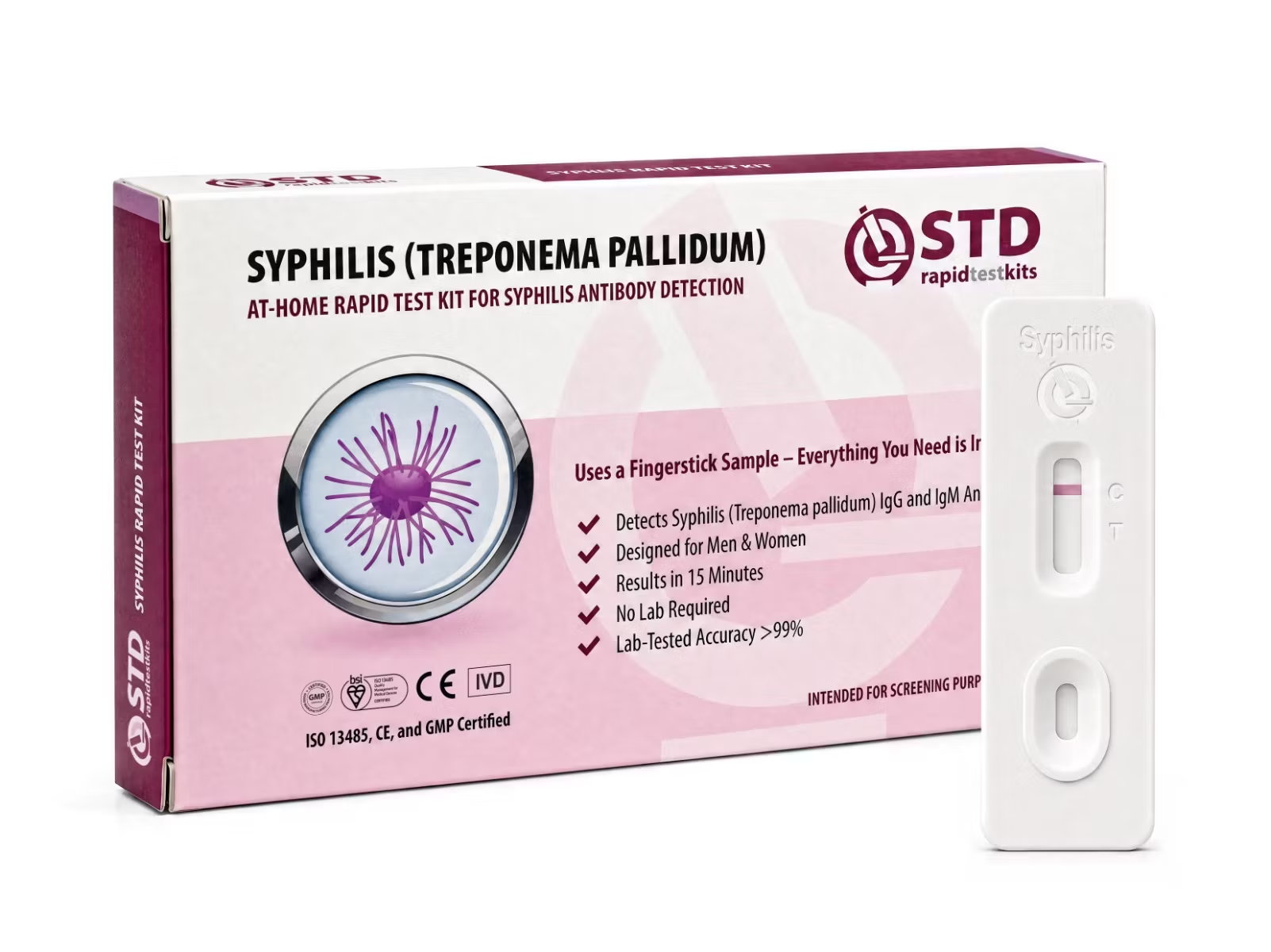
Syphilis is caused by the spiral bacterium Treponema pallidum and progresses through stages that can stretch across decades when untreated. The Mayo Clinic syphilis overview and CDC syphilis fact sheet describe the standard progression:
- Primary syphilis: a single painless sore (chancre) at the site of exposure, usually 10 to 90 days after contact. Heals on its own in three to six weeks. Often missed entirely.
- Secondary syphilis: a body-wide rash, often involving the palms and soles, with mild flu-like symptoms. Resolves without treatment in weeks to months.
- Latent syphilis: no symptoms, sometimes for years. The bacterium remains active but quiet. A blood test is the only reliable way to detect it during this phase.
- Tertiary syphilis: in roughly 15 to 30 percent of untreated cases, the infection progresses to damage the nervous system (neurosyphilis), the heart and aorta (cardiovascular syphilis), or other organs. This stage can be fatal.
Syphilis is cheaply cleared at the early stage. A single intramuscular dose of long-acting penicillin clears primary, secondary, or early latent syphilis in most cases. CDC STI surveillance statistics document that syphilis cases in the United States have risen sharply over the past decade across all populations, and congenital syphilis (passed from mother to baby) has risen alongside adult cases.
Hepatitis B and C: silent liver damage
Hepatitis B and hepatitis C are blood-borne viruses that primarily attack the liver. Both can be transmitted sexually, although hepatitis B does so more readily. Acute infection is often mild or completely silent. The danger sits in chronic infection, which the body fails to clear and which slowly inflames and scars liver tissue over years to decades.
The CDC hepatitis B page and CDC hepatitis C page describe the long-term complications: cirrhosis (irreversible liver scarring), liver failure, and hepatocellular carcinoma (a primary liver cancer). The CDC estimates hundreds of thousands of people in the United States live with chronic hepatitis B or C without knowing it, and undiagnosed hepatitis remains a leading cause of liver-related death.
Both infections are now manageable. Hepatitis C is curable in most cases with direct-acting antivirals taken for 8 to 12 weeks. Hepatitis B cannot yet be cured. Daily antivirals suppress the virus reliably, and a safe, effective vaccine has been available for over forty years (the CDC's ACIP recommends it for all infants and most adults).
Hepatitis B: currently incurable, though daily antivirals suppress the virus effectively. A safe vaccine has been available for over forty years and is recommended by the CDC's ACIP for all infants and most adults.
Hepatitis C: curable in over 95 percent of pre-cirrhosis cases with 8 to 12 weeks of direct-acting antivirals. No vaccine is currently available, so screening is the primary prevention tool.
Why "I feel fine" is the most dangerous screening signal
All four serious STIs share the same problem: long stretches of asymptomatic infection during which damage accumulates silently. Public-health agencies routinely flag the asymptomatic phase as the period when most onward transmission also happens, because people without symptoms don't seek care.
Common assumptions that fail in practice:
- Symptoms going away means the infection is gone. Usually it means the infection has entered a latent phase. Syphilis and hepatitis are the textbook examples.
- Vague fatigue or a faint rash is unrelated. Both are classic secondary-syphilis presentations that get routinely misdiagnosed as a viral illness.
- A negative test years ago still applies. Window periods and any new exposure both reset that result.
- If a partner had tested clean, you would already know. They may have tested for a different panel of infections, or tested too soon after their own exposure.
The cleanest replacement for the "feel fine" heuristic is a calendar reminder. Annual screening for sexually active adults, plus a test 6 to 12 weeks after any new partner or known exposure, is the CDC's standard recommendation.
| What you feel | What may actually be happening |
|---|---|
| Nothing unusual | An infection in its asymptomatic latent phase, still active internally |
| A faint rash that fades on its own | Secondary syphilis resolving into latency, not clearance |
| Mild fatigue you have adjusted to | Early chronic hepatitis B or C, with slow liver inflammation |
| A sore that healed without pain | A primary syphilis chancre, with the bacterium still present |
Window periods: when each test can detect each infection
A window period is the interval after exposure during which a test cannot yet reliably detect the infection. Testing too early gives a false-negative result and a false sense of safety. The figures below summarise window-period guidance from the CDC and from the FDA labeling of common rapid lateral-flow assays. They are a screening reference, not a clinical replacement for individual medical advice.
| Infection | Earliest reliable detection (rapid home test) | What is measured |
|---|---|---|
| HIV | Approximately 23 to 90 days post-exposure (assay-dependent) | HIV antibodies |
| Syphilis | Approximately 3 to 6 weeks post-exposure | Treponemal antibodies |
| Hepatitis B | Approximately 4 to 12 weeks post-exposure | Hepatitis B surface antigen and antibodies |
| Hepatitis C | Approximately 6 to 12 weeks post-exposure | Hepatitis C antibodies |
What early testing changes about the outcome
The clinical picture for each of the deadly four shifts dramatically based on detection timing. Early screening is not just about peace of mind. It changes what treatment is needed, how long it takes, and whether it works.
- HIV caught within months of exposure means antiretroviral therapy starts before significant immune damage. Life expectancy approaches the general population, and the person becomes non-infectious to partners.
- HIV caught at late-stage AIDS means starting therapy with a depleted immune system, often during active opportunistic infections. Outcomes are markedly worse.
- Primary or secondary syphilis is cleared with one penicillin shot.
- Tertiary syphilis can be treated, but neurological or cardiovascular damage already done is often permanent.
- Acute hepatitis B resolves on its own in roughly 95 percent of healthy adults. Chronic infection requires lifelong suppression.
- Hepatitis C diagnosed before cirrhosis is cured in over 95 percent of cases with 8 to 12 weeks of direct-acting antivirals.
- Hepatitis B or C diagnosed at the cirrhosis stage requires liver-disease management on top of viral treatment, with a meaningfully higher risk of liver cancer.
The pattern across all four is the same. The window where treatment is simplest, cheapest, and most effective is the window when the infection is silent. That is exactly the window when most people don't think to test.

Why people delay, and what changes when they don't
Avoidance is the single biggest reason serious STIs progress to complications. People delay because the conversation feels heavy, the result feels potentially life-altering, and the absence of symptoms makes it easy to keep waiting another month, then another year. None of this is irrational. It is human.
What gets lost in the avoidance loop: the test takes about fifteen minutes, the worry has often been running for months, and the result, whatever it is, almost always reduces the cognitive load rather than adding to it. A negative result ends the loop. A positive result moves the situation from a vague fear to an actionable plan with a clinician, while the infection is still in the window where treatment is straightforward.
Disclosure: this article is published by stdrapidtestkits.com, which sells at-home rapid testing kits. We recommend products based on what fits the reader's situation, not commercial benefit.
Many people who have a sexually transmitted infection have no symptoms. Without testing, you can have an STI and not know it.
Pick the right test for your situation
Match the test to what has been on your mind. Three common patterns:
- One specific worry, one infection. A recent exposure with a partner you have reason to think had a specific infection. Single-infection rapid kits (HIV, syphilis, hepatitis B, hepatitis C) target the question directly and cost the least.
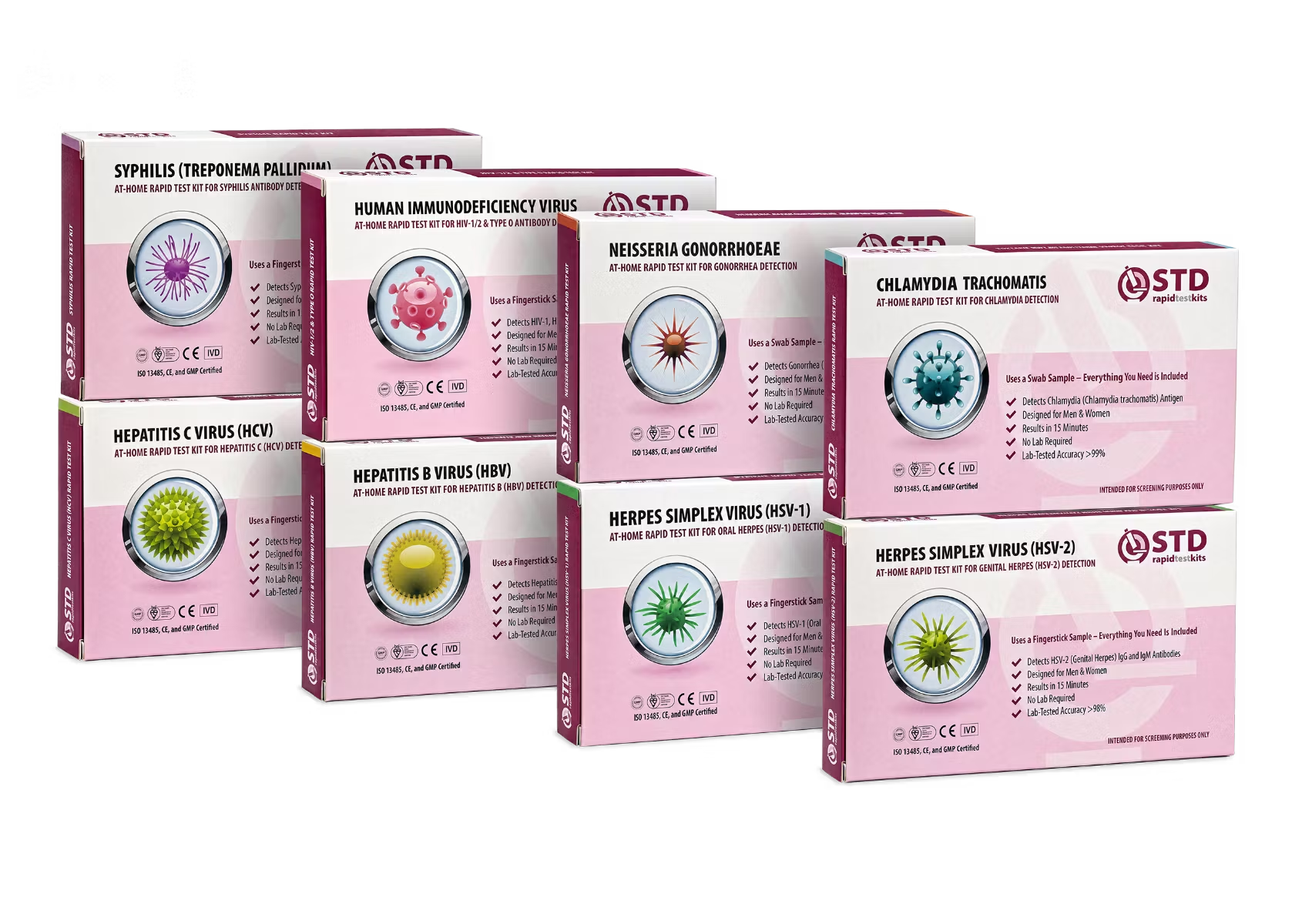
- Multiple infections, related to one event. A single risk event where several exposures are possible. A combination kit (3-in-1 or 6-in-1) checks the most common infections from the same fingerstick blood draw plus a swab.
- Annual screening, full picture. A routine yearly check, no specific event in mind. The 7-in-1 or 8-in-1 comprehensive kits cover the four serious infections plus chlamydia, gonorrhea, and herpes.
For the question this article asks, can STDs kill you, the comprehensive kits answer it most directly. They cover all four infections that carry long-term mortality risk in one box, alongside the common curable infections that should also be on a routine screen.
FAQs
- Can you actually die from an STD, or is that an outdated fear?
- Four infections carry documented fatal risk: HIV, syphilis, hepatitis B, and hepatitis C. Each has a silent phase lasting years during which damage accumulates without symptoms. Early treatment reverses that arc for all four. Modern mortality concentrates almost entirely in late-diagnosed cases, which is why the strongest predictor of outcome across all four infections is when you find out, not which infection you have.
- Which STIs are dangerous if ignored?
- HIV, syphilis, hepatitis B, and hepatitis C carry the long-term mortality risk. Chlamydia, gonorrhea, trichomoniasis, HPV, and herpes can cause serious complications such as infertility, pelvic inflammatory disease, and certain cancers, but they rarely kill directly in adults with access to standard care.
- How long can someone have an STI without knowing?
- Years, in some cases. Latent syphilis can stay silent for decades. Chronic hepatitis B or C can persist for ten to thirty years before liver complications surface. Untreated HIV can run for ten or more years without obvious symptoms before AIDS develops. The asymptomatic stretch is exactly why public-health guidelines recommend annual screening for sexually active adults.
- If I feel completely fine, is testing still worth it?
- Yes, especially for the infections that progress silently. Feeling fine is not the same as being infection-free. The four most serious STIs are characterized by long asymptomatic phases, and the most active period of internal damage is often the period when nothing feels wrong externally. The CDC recommends annual screening regardless of symptoms for anyone sexually active.
- What happens if I ignore an STI for too long?
- It depends on the infection. Untreated HIV gradually depletes immune cells and progresses to AIDS. Untreated syphilis can affect the brain, nerves, heart, or aorta in its tertiary stage. Chronic hepatitis B or C can scar the liver, leading to cirrhosis, liver failure, or liver cancer. None of this is automatic, but all of it becomes possible after years of undetected infection.
- Is HIV still a death sentence today?
- No. With early diagnosis and consistent antiretroviral therapy, people living with HIV in 2026 have life expectancies close to the general population, and someone with an undetectable viral load cannot transmit HIV sexually (the CDC's Undetectable equals Untransmittable principle). The clinical picture has changed almost completely since the 1990s. The remaining mortality risk concentrates in late-diagnosed cases.
- When should I get tested after a possible exposure?
- One test immediately after exposure will miss everything. All four serious infections need weeks to generate detectable antibodies or antigens. For most rapid home tests, syphilis can appear from about 3 weeks; hepatitis B from about 4 weeks; hepatitis C from about 6 weeks; HIV takes the longest, up to 90 days. If the exposure was higher-risk, test once early and retest at the 12-week mark to close the HIV window.
- Can an STI go away on its own if symptoms disappear?
- Sometimes acute viral infections clear on their own (acute hepatitis B clears in most healthy adults), but for the deadliest STIs, disappearing symptoms usually mean the infection has entered a latent phase, not that it has cleared. Syphilis is the textbook example: the chancre heals, the rash fades, and the bacterium is still active in the body. Only a blood test can distinguish clearance from latency.
- U.S. Centers for Disease Control and Prevention. HIV basics, surveillance data, and guidance on antiretroviral therapy and Undetectable equals Untransmittable.
- U.S. Centers for Disease Control and Prevention. Syphilis fact sheet, including stages of disease and progression to tertiary syphilis.
- U.S. Centers for Disease Control and Prevention. STI surveillance statistics, including the rising trends in adult and congenital syphilis cases.
- U.S. Centers for Disease Control and Prevention. Hepatitis B information, including chronic infection rates, complications, and ACIP vaccination guidance.
- U.S. Centers for Disease Control and Prevention. Hepatitis C information, including direct-acting antiviral cure rates and screening recommendations.
- World Health Organization. Sexually Transmitted Infections fact sheet, including the global incidence figure of more than one million new STIs acquired daily.
- HIV.gov. HIV overview, treatment, and progression background, including modern life expectancy with effective antiretroviral therapy.
- Mayo Clinic. Syphilis symptoms, causes, and stages, including the painless primary chancre and tertiary complications.
- U.K. National Health Service. Sexually transmitted infections overview and screening recommendations for sexually active adults.
