







Why Doctors Ask About Sexual Partners During STD Testing
Monogamy and STD Risk: The Myth vs. Reality
The majority of people assume that being in a monogamous relationship assures them that they are safe from STDs. However, this assumption ignores a number of crucial facts:
Asymptomatic STDs Can Last for Years
One of the most significant reasons why monogamy is not a surefire barrier against STDs is that some infections do not present themselves immediately—or ever.
- Chlamydia, gonorrhea, and HPV might go undetected for months or even years.
- Herpes and HIV may be in a person's system years before symptoms become apparent.
A partner can have contracted an STD prior to being in the relationship and spread it unknowingly.
Past Relationships Matter More Than You Think
Most STDs don't have immediate symptoms, so an infection from a previous partner can become a problem in a new relationship out of the blue.
- If someone wasn't checked after their previous sexual partner, they might be carrying an STD without knowing it.
- Some STDs such as HPV and herpes can lie dormant and flare up later.
Serial Monogamy Increases the Risk
Serial monogamy—transiting from one exclusive relationship to another—is prevalent. Although it might seem safer than casual sex, the STD risk is still high.
- Unless both partners are tested between relationships, STDs can be inadvertently transmitted.
- The belief that being exclusive means safety tends to create a tendency to skip condom use, which makes transmission more likely.

False Negatives and Testing Gaps
STD testing is required, but it may not be 100% accurate. False negatives can occur, especially when:
- The test is taken too soon after having the exposure (before the infection can be seen).
- A partner is tested for some STDs but not others (not all usual panels check for herpes or HPV).
- The testing device used is not sensitive to pick up infections early.
Non-Sexual Transmission of STDs
Although not typical, there are a few STDs that can be passed by other than sexual intercourse:
- HPV and herpes are transmitted through contact of skin on skin.
- Trichomoniasis can last for a short time on wet items like towels.
- Hepatitis B and C are passed through shared toothbrushes, razors, or improperly sterilized medical equipment.
Common Misconceptions About STDs in Monogamous Relationships
Misinformation spreads the notion that STDs happen only to people with multiple partners. Here are some myths and facts:
- Myth 1: "Monogamous couples don't need STD testing."
- False. If neither of you was tested before the relationship, an STD could already be there.
- Myth 2: "STDs always have symptoms, so I would know if I had one."
- False. Most infections are symptom-free for months or even years.
- Myth 3: "If my partner had an STD, they would have cheated."
- False. Most STDs can be lying dormant from previous relationships and don't point to cheating.
- Myth 4: "Condoms aren't necessary in monogamous relationships."
- False. If no testing was done prior, there's still a chance of transmission.
- Myth 5: "You can only get an STD from penetrative sex."
- False. Many infections are transmitted through oral sex, skin contact, or shared personal objects.
Check Your STD Status in Minutes
Test at Home with Remedium7-in-1 STD Test Kit

Claim Your Kit Today
Save 62%
 For Men & Women
 Results in Minutes
 No Lab Needed
 Private & Discreet
Order Now $129.00 $343.00
For all 7 tests
Keeping Yourself and Your Partner Safe
Monogamy isn't enough in itself to safeguard against STDs. The following are the actions that can be taken by couples to stay healthy:
Test Together
- Testing before initiating a monogamous relationship gives both partners a clean start.
- Regular checks will identify infections that may not display symptoms.
Use Protection Until Tested
- Condoms and dental dams lower the chance of transmission even in exclusive relations.
- Some STDs, including herpes and HPV, are contagious through genital contact that is not penetrative sex.
Be Honest About Past Sexual History
- There must be honest discussion about sexual history and previous STD diagnosis between partners.
- Even if an STD has been treated successfully, some of them (like herpes and HPV) are permanent residents of the body.
Understand the Limitations of Testing
- There are some STDs that require special tests which are not part of routine panels.
- Knowledge of the window period for each infection guides the timing of tests following potential exposure.
Stay Sexually Informed
STD education regarding symptoms, prevention, and treatment enables both members of a sexual relationship to become knowledgeable decision-makers.
Medical protocol updates alert each to upcoming new risks and answers.

FAQs
1.- Can I get an STD if neither myself nor my spouse cheated?
Yes. STDs from old relationships can be latent and become apparent later.
2.- What STDs will be symptom-free in the body for years?
HPV, herpes, chlamydia, gonorrhea, syphilis, and HIV can be latent in the body without symptoms.
3.- Do I need to get tested if I am in a long-term monogamous relationship?
Yes. Getting tested confirms that there are no undiagnosed or latent infections.
4.- How do false negatives affect STD testing?
Testing too soon after exposure or using a less sensitive test can result in false negatives.
5.- Can oral sex spread STDs?
Yes. STDs like herpes, gonorrhea, and syphilis can be transmitted through oral sex.
6.- If my partner tests negative, does that mean I’m safe?
Not necessarily. Some STDs take weeks or months to show up in tests.
7.- Is serial monogamy risky for STDs?
Yes. Changing from one monogamous partner to another without being tested can spread infections.
8.- Are over-the-counter STD test kits reliable?
Yes, but test results must be followed up with a healthcare provider for maximum accuracy.
9.- Can HPV or herpes be spread without intercourse?
Yes. These infections are spread by skin-to-skin contact.
10.- How can one best protect against STDs in a monogamous relationship?
Regular testing, open communication, and safe sex before both partners are tested and confirmed to be STD-free.
Check Your STD Status in Minutes
Test at Home with Remedium10-in-1 STD Test Kit
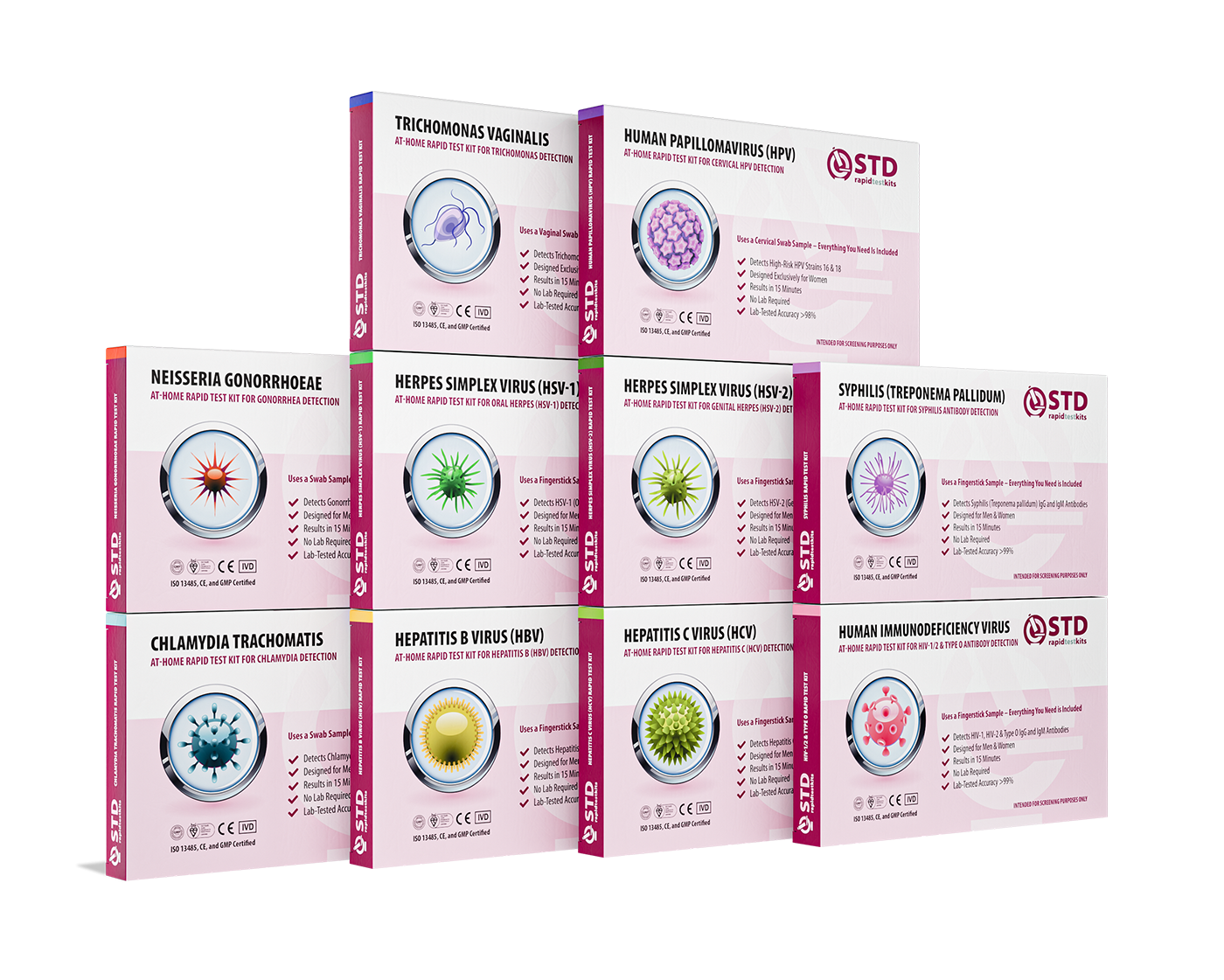
Claim Your Kit Today
Save 61%
 For WomenResults in MinutesNo Lab NeededPrivate & Discreet
Order Now $189.00 $490.00
For all 10 tests
Taking Control of Your Sexual Health
Being in a monogamous relationship does not necessarily mean protection from STDs. Numerous factors, such as previous partners, asymptomatic infections, and testing limitations, are responsible for the risk of transmission.
The ideal practice is to test frequently, practice until positive results, and engage in open sexual health conversations with your partner. At-home STD testing offers a private and convenient option for those who prefer discretion, while healthcare providers can offer comprehensive screenings.
These measures ensure that both partners are healthy, safe, and well-educated—because sexual health is a responsibility, whether in a relationship or not.
Sources
1.- Relationship Dynamics and Sexual Risk Reduction Strategies
2.- Navigating New Sexual Partnerships in Midlife: A Socioecological Perspective
3.- Monogamy as Public Policy for STD Prevention: In Theory and in Practice
4.- Long-Term Effects of Community-Based STI Screening and Mass Media Campaigns on Sexual Risk Behaviors
5.- Regular STI Testing Amongst Men Who Have Sex with Men and Use Social Media


