Chlamydia and gonorrhea are two of the most common sexually transmitted diseases in the US. Both are curable with proper treatment in time. However, if left untreated, they may cause serious complications. Thus, knowing about such STDs can help one avoid the occurrence of those diseases and the resulting health complications.
06 October 2024
4 min read
1195
The Sneaky Attacker: Chlamydia
The pathogenic organism responsible for chlamydia is the minute, bacterial Chlamydia trachomatis. It is an STI that may be passed by all forms of sexual contact, including oral, vaginal, and anal intercourse. Of course, as in any other myths, chlamydia cannot be transmitted from filthy public toilets since it requires a viable, warm, wet environment to survive.
Chlamydia Symptoms: Subtle Yet Serious
Chlamydia might be a very evasive disease because symptoms are mostly different from one person to another. And sometimes, some people may not show signs at all.
Women and Chlamydia
The cervix, in women, is the most common site of infection, but only about 50% of the infected women are symptomatic. The common symptoms include:
Vaginal discharge
Abnormal vaginal bleeding, including intermenstrual bleeding
Abdominal pain
Painful intercourse
A few women can mistake this for a urinary tract infection because they have some similar symptoms such as frequent urination and a burning sensation upon urination.
Untreated chlamydia may lead to serious complications, such as PID and scarring of the Fallopian tubes, that will adversely affect fertility and increase risks associated with miscarriage and ectopic pregnancy.
The Male's Encounter with Chlamydia
Whereas less than half of men with chlamydia are asymptomatic, symptoms that may occur include:
Painful urination
Penile discharge, similar to symptoms of UTIs
In some cases, chlamydia can spread to the epididymis, causing symptoms such as pain, swelling, and tenderness in the scrotum and penis.
Diagnosis and Treatment of Chlamydia
The diagnosis is fairly straightforward by routine screening tests, which can be done by a doctor or even by the person concerned through self-administered vaginal swabs. Since this is a bacterial infection, chlamydia has been known to respond quite efficiently to the treatment of antibiotics.
Check Your STD Status in Minutes
Test at Home with Remedium Chlamydia & Gonorrhea Test
While similar in many ways, chlamydia and gonorrhea are distinct diseases, both requiring different treatments. Sometimes, a person is coinfected with both of the sexually transmitted diseases. Antibiotic resistance in recent years, however, is what sets gonorrhea infections apart and fuels great concern that this "superbug" could be in the making.
Both infections can cause infertility. Research indicates that females suffering from chlamydia-caused PID have a higher prevalence of infertility compared to those suffering from gonorrhea-induced PID.
Moreover, individuals who have had either chlamydia or gonorrhea are at greater risk of acquiring HIV/AIDS or cervical cancer. Importantly, both diseases do not provide immunity to the previously infected individual, and the only way to prevent the spread of these diseases is through safe sex. Condoms are the only contraceptive method that prevents STDs.
While chlamydia and gonorrhea are two common STDs with similar modes of transmission and complications, a differential diagnosis is necessary since the mode of treatment differs. Knowledge about these preventable diseases, along with practicing safe sex, is arguably the best way to avoid acquiring them and their serious health risks.








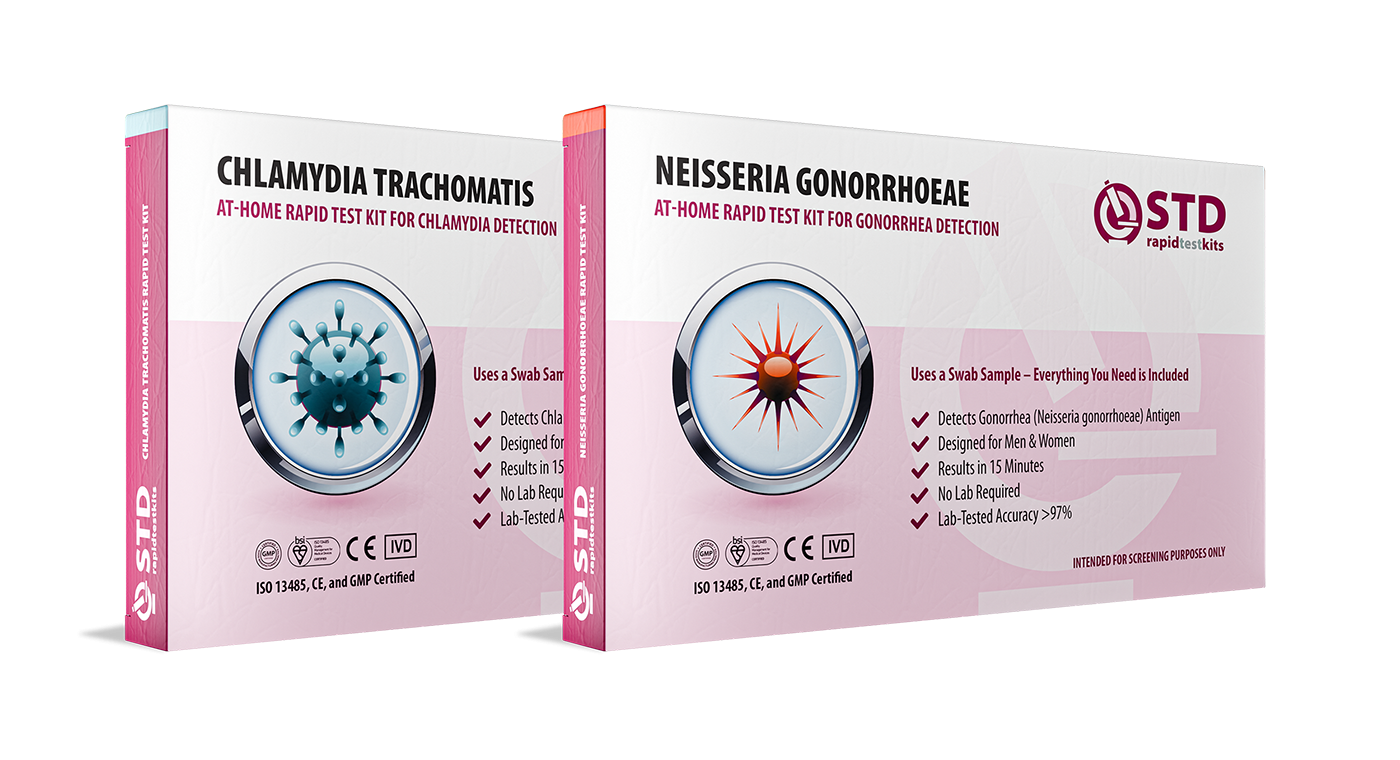
 For Men & Women
 Results in Minutes
 No Lab Needed
 Private & Discreet


