Published: November 2025 | Last updated: May 2026 | Editorial review and quality control: Martina N.
Three days after sex and something feels off: a faint burn when you urinate, an itch you can't quite place, or maybe nothing visible at all and just a vague sense that your body is reacting to something it didn't react to last week. The question that brings most people here is simple: can an STD really show up this fast?
For some infections the answer is yes, for others no, and the difference matters. A handful of bacterial and viral infections do begin causing symptoms within days. Several others stay completely silent for weeks. And many of the sensations people feel three days after sex have nothing to do with an STD at all. This guide walks through which is which, what to watch for, and when at-home testing actually gives you a useful answer.
Key Takeaways
- Gonorrhea can produce symptoms within 2 to 7 days; herpes onset ranges from 2 to 12 days. Chlamydia, syphilis, and HIV usually take longer to appear or to be detectable on a test.
- A symptom showing up on day 3 is worth paying attention to, but a negative test on day 3 doesn't rule anything out. Most home tests need at least 1 to 2 weeks after exposure to give a reliable read.
Why Three Days After Sex Feels So Unsettling
Most people don't search for early STD symptoms casually. It's usually late at night, after something unexpected happened. Maybe the condom broke. Maybe a new partner's history is unclear. Maybe everything seemed fine until a new sensation showed up a couple of days later.
In those moments, the mind runs through worst-case scenarios. A slight burn during urination becomes a possible infection. A small bump becomes a sign of something serious. The body really can react to sex in ways that have nothing to do with an STD: friction, minor irritation, dehydration, hormonal shifts, even anxiety can create sensations that mimic infection.
But doctors also take post-sex symptoms seriously for a reason. Some infections genuinely do begin quietly within the first few days. The challenge is separating normal post-sex changes from genuine warning signs, and that requires understanding which infections move quickly and which ones don't.
Friction, dehydration, and anxiety-driven sensations usually fade within 24 to 48 hours as the body rebalances. Infection symptoms tend to persist, intensify, or appear alongside discharge, visible sores, or fever. Trajectory matters more than the day-3 snapshot.
How Quickly Different Infections Can Show Symptoms
Different STDs move at very different speeds once they enter the body. Some bacteria multiply quickly and irritate tissue within days. Others take time to spread before causing any noticeable change. Viruses can behave in even more unpredictable ways, with some carriers never developing symptoms at all.
The table below shows typical incubation ranges drawn from CDC STD surveillance guidance and the NHS overview of sexually transmitted infections. These are typical ranges, not guarantees. Many people experience no symptoms at all, which is one of the reasons routine screening matters more than waiting for a sign.
| Infection | Typical Incubation Period | Symptoms That May Appear |
|---|---|---|
| Gonorrhea | 2–7 days | Burning during urination, discharge, pelvic pain |
| Chlamydia | 7–21 days | Discharge, painful urination, lower abdominal discomfort |
| Herpes (HSV-1 or HSV-2) | 2–12 days | Tingling, itching, painful blisters, flu-like symptoms |
| Syphilis | 10–90 days | A single painless sore called a chancre |
| Trichomoniasis | 5–28 days | Discharge, irritation, genital itching |
| HIV (acute) | 2–4 weeks | Fever, sore throat, swollen lymph nodes, rash |
The Early Symptoms People Notice First
When something feels off shortly after sex, the symptoms are usually subtle at first. Many people expect dramatic signs, severe pain or obvious sores, but the earliest signals are often mild and easy to dismiss. A faint burning sensation during urination. Discharge that looks slightly different than usual. Itching or irritation that's difficult to describe but clearly new.
People often describe the first hours as "not painful exactly, just different." That mild, hard-to-pin-down quality is the most common early signal, and it matters because infections like gonorrhea can begin with exactly that kind of mild irritation. At the same time, identical sensations can come from completely non-infectious causes, which is why a single early symptom rarely confirms anything on its own.
Clinical guidance from the CDC and NHS lists the following as the most common early signs:
- Burning during urination
- Unusual discharge from the penis, vagina, or anus
- Genital itching or irritation
- Mild pelvic or testicular discomfort
- Small sores, bumps, or blisters that weren't there before
None of these symptoms confirm an STD by themselves. They simply indicate that something has changed, and that testing may be worth considering once enough time has passed for a test to be reliable.

Symptoms That Look Like STDs But Often Aren't
One reason people panic after sex is that the body reacts to intimacy in ways that can easily be misinterpreted. Sexual activity creates friction, shifts vaginal pH, and exposes mucous membranes to new bacteria. All of that can trigger temporary symptoms that look almost identical to early infection.
Dehydration can concentrate urine and cause a burning sensation that feels surprisingly similar to gonorrhea. Friction during prolonged sex can irritate the urethra and produce next-day discomfort. Anxiety can amplify body awareness so much that normal sensations feel suspicious. And urinary tract infections, which often appear within days of sex, share many of the same urinary symptoms as bacterial STDs.
The table below maps the overlap. Only a test can settle the question; mapping the overlap simply shows why self-diagnosis so rarely resolves the anxiety.
| Symptom | Possible STD Cause | Other Common Cause |
|---|---|---|
| Burning during urination | Gonorrhea, Chlamydia | Urinary tract infection, friction irritation |
| Genital itching | Herpes, Trichomoniasis | Yeast infection, allergic reaction to soap or condom |
| Discharge | Gonorrhea, Chlamydia | Bacterial vaginosis, hormonal cycle changes |
| Sores or bumps | Herpes, Syphilis | Ingrown hairs, friction blisters, contact dermatitis |
When Early Symptoms Are Worth Acting On
Not every sensation after sex means infection. But certain patterns deserve closer attention, and a few are clear signals to stop second-guessing and get checked. Symptoms that grow stronger over several days rather than fading, symptoms that appear alongside discharge, and any visible sore or cluster of blisters all sit in the "act on this" category.
Most post-sex irritation settles down within a day or two as the body rebalances. When symptoms escalate instead of fading, infection becomes a more reasonable explanation. The same goes for severe pain, fever above 100.4°F, or swollen lymph nodes in the groin. While these systemic signs are rarer than mild local irritation, they can indicate infections that need prompt treatment.
- Visible sores, ulcers, blisters, or unusual bumps on or near the genitals
- Discharge that is yellow, green, foul-smelling, or noticeably thicker than usual
- Burning during urination that persists or gets worse over more than 48 hours
- Pelvic pain, testicular pain, or pain during sex
- Fever, swollen groin lymph nodes, or flu-like symptoms after a recent exposure
Mild irritation that fades within a day or two usually resolves on its own. Any of the above warrants either a clinic visit or an at-home screen at the appropriate testing window.
What Herpes Can Feel Like in the First Few Days
Among the infections that can produce symptoms quickly, herpes is one of the most misunderstood. Many people picture dramatic clusters of painful sores appearing the morning after exposure. In reality, the earliest signs are often so quiet they get blamed on razor burn, friction, or an irritated hair follicle.
The very first signal is sometimes a tingling sensation on the skin where the virus entered the body. Some people describe it as itching, others as a mild electric or buzzing feeling under the skin. This prodrome can show up a few days after exposure, before any visible blisters appear. When blisters do develop, they typically form in small clusters and can be painful for a week or two. Some people also experience flu-like symptoms during a first outbreak: low-grade fever, fatigue, and swollen lymph nodes as the immune system encounters the virus for the first time.
Many herpes infections produce no recognizable symptoms at all, which is why carriers often pass the virus to partners without knowing they have it. Note: stdrapidtestkits.com publishes this article and sells the at-home rapid kits referenced below; we recommend products based on fit for the reader's concern, not commercial benefit.
Most people with genital herpes have no symptoms or have very mild symptoms. Mild symptoms may go unnoticed or be mistaken for other skin conditions like a pimple or ingrown hair. Because of this, most people do not know they have a herpes infection.

Why Gonorrhea Sometimes Shows Symptoms Quickly
While many infections take weeks to appear, gonorrhea is known for producing symptoms relatively fast in people who do get symptoms. The bacteria irritate tissue quickly once they begin multiplying, which is why early signs can show up well within the first week.
In people with penises, one of the earliest signs is often a burning sensation when urinating, sometimes starting between days 2 and 5 after exposure. A thick discharge from the penis, which can appear yellow, white, or green, is another common early sign. In people with vaginas, the picture is usually quieter: mild pelvic discomfort, a slight increase in discharge, or pain during urination that resembles a UTI. Because those symptoms overlap so much with other conditions, vaginal gonorrhea is frequently overlooked or misdiagnosed in the first few days.
Even when gonorrhea moves quickly, many infections remain silent. Carriers can pass the bacteria to partners without realizing they have it, which is one reason public-health guidance encourages testing after a new partner or unprotected encounter even without symptoms.
In people with penises: burning urination often starts on days 2 to 5 after exposure, frequently with yellow, white, or green penile discharge. In people with vaginas: early signs are quieter, typically mild pelvic discomfort or a UTI-like burn that gets misread as a urinary tract issue. <a href="https://www.cdc.gov/std/" target="_blank" rel="noopener">CDC gonorrhea guidance</a> notes that a large share of vaginal infections produce no early symptoms at all.
Why Chlamydia Usually Stays Quiet
Compared with gonorrhea, chlamydia tends to move more slowly. Most people don't experience symptoms within the first few days. The infection typically takes one to three weeks before any noticeable change appears, and according to CDC chlamydia surveillance data, most people with chlamydia never develop noticeable symptoms at all. That's why it's frequently called a "silent infection."
When chlamydia does cause symptoms, they're often mild: discharge, mild pelvic pain, or a burning feeling during urination. Some women experience painful sex or bleeding between periods. Some men notice unusual discharge or testicular pain. The delayed timeline can be confusing, because someone who feels symptoms shortly after a new encounter may actually have had the infection from a previous partner that finally became noticeable.
For this reason, clinicians don't usually try to diagnose chlamydia by symptoms alone. Testing is the only way to confirm or rule it out.
Per <a href="https://www.cdc.gov/std/" target="_blank" rel="noopener">CDC chlamydia surveillance</a>, most chlamydia infections produce no symptoms at all. Two practical consequences: routine screening matters more than waiting for a symptom, and a day-3 sensation after sex with a new partner is often unrelated to that partner because the infection may have been quietly present for weeks or months.
How Testing Windows Affect Early Symptoms
One of the biggest misunderstandings about STDs involves the testing window. Even when symptoms appear quickly, the infection may not show up on a test right away. This gap between exposure and detectability is called the window period, and it's the main reason a negative test on day 3 doesn't actually rule anything out.
The window period is the time between exposure and when a test can reliably find an infection. During that phase, someone can have early symptoms and still test negative because the bacteria or virus hasn't reached detectable levels (or, for antibody tests, because the immune system hasn't yet produced enough antibodies to register). Testing inside the window can be reassuring in the short term but misleading in the long term.
HIV is one of the infections that drives many day-3 STD searches, and the actual numbers help calibrate the worry. Per-act transmission risk for unprotected receptive vaginal sex is roughly 0.08 percent and around 1.4 percent for receptive anal sex per CDC HIV transmission estimates. A 4th-generation antigen/antibody test is reliable from 18 to 45 days after exposure; an RNA test detects earlier but is lab-based, not at-home. If HIV is the specific concern, testing at day 45 and again at day 90 gives the most definitive picture.
| Infection | Earliest Reliable Testing Time | Preferred Testing Window |
|---|---|---|
| Gonorrhea (swab/NAAT) | 3–5 days | 1–2 weeks after exposure |
| Chlamydia (swab/NAAT) | 5–7 days | 1–2 weeks after exposure |
| Trichomoniasis | 5–7 days | 1–4 weeks after exposure |
| Herpes (swab from lesion) | When sores appear | Within 48 hours of a new lesion |
| Herpes (HSV-2 blood antibody) | 3–6 weeks | 12 weeks after exposure |
| Syphilis (blood antibody) | 3 weeks | 6 weeks after exposure |
| HIV (4th-gen antigen/antibody) | 18–45 days | 45 days after exposure |
What To Do If You Notice Symptoms After Three Days
If your body feels different a few days after sex, the most useful first step is to pause before jumping to conclusions. Panic rarely leads to better decisions, and most early sensations resolve on their own within a day or two.
Pay attention to how things change over the next 48 hours. Temporary irritation typically settles down. Genuine infection tends to persist or intensify. Drinking more water can ease urinary irritation from friction or dehydration, and gentle cleaning with mild soap can calm minor inflammation. Self-management can't treat an actual infection, which is why testing matters once symptoms persist.
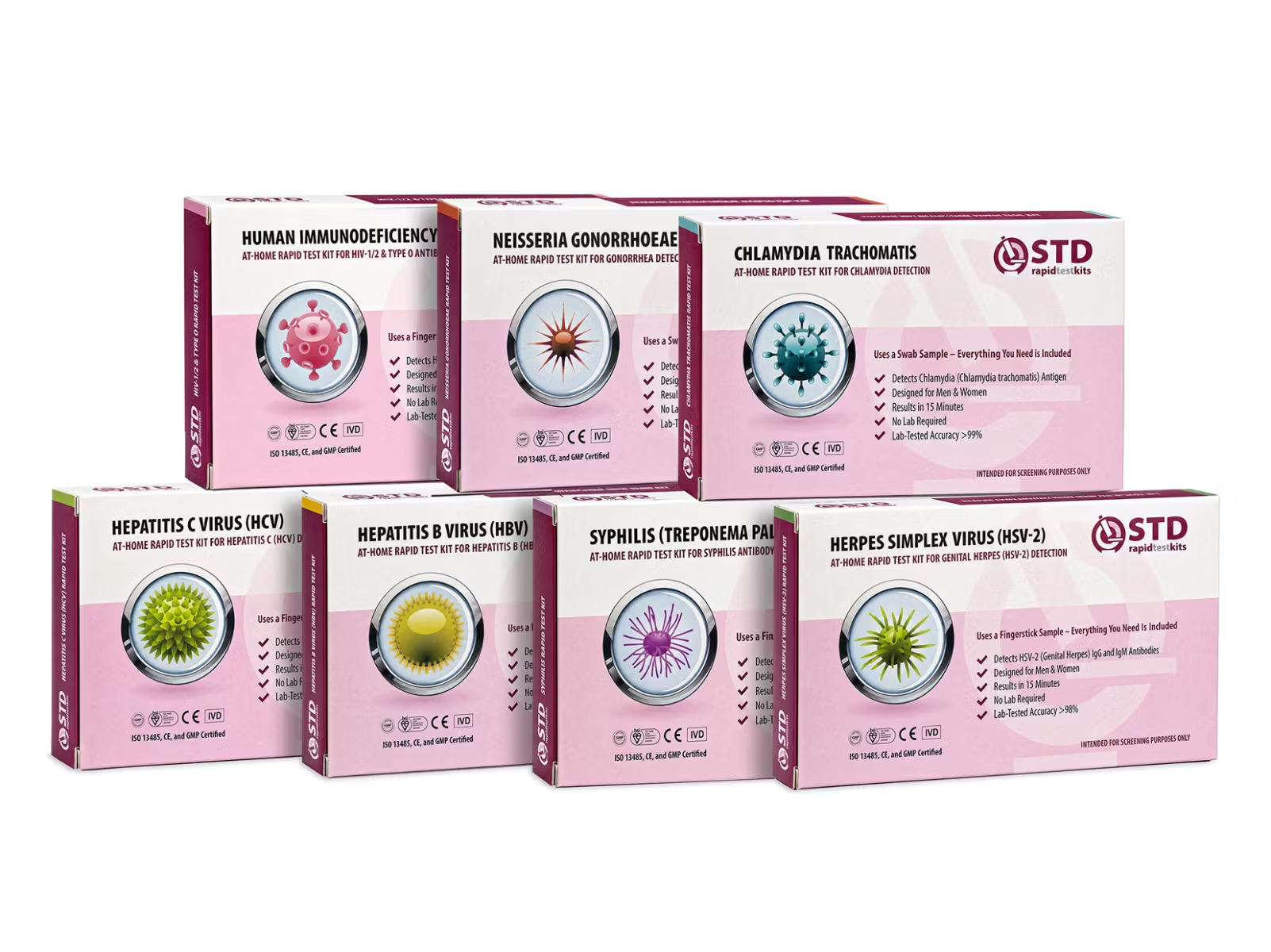
Testing matters most when you notice any of the warning signs flagged above: visible sores, abnormal discharge, strong burning sensations, pelvic pain, or systemic symptoms like fever. If timing allows (at least 1 to 2 weeks since exposure for bacterial infections), a multi-infection screen can check several conditions at once. A multi-panel at-home STD test kit gives you a fast private read while you decide whether you need a follow-up confirmation through a clinic. If you tested too early and symptoms continue, plan to retest at the preferred window in the table above.
- Watch for 48 hours. Hydrate, clean gently with mild soap, and track whether the symptom fades or intensifies.
- If it persists or escalates, test at the appropriate window. That's 1 to 2 weeks for gonorrhea and chlamydia, 45 days for a 4th-generation HIV test, and 12 weeks for HSV-2 antibodies.
- If symptoms continue after a negative result, the window period may not have elapsed. Retest at the preferred window in the table above rather than treating an early negative as definitive.
How to Reduce Risk After Future Encounters
Even when symptoms turn out to be harmless irritation, the experience often pushes people to think more carefully about sexual health going forward. A few habits significantly reduce risk during future encounters.
Barrier protection (external or internal condoms) is one of the most effective tools for lowering transmission risk for chlamydia, gonorrhea, trichomoniasis, and HIV. It's less protective against herpes and HPV, which can transmit through skin-to-skin contact outside the area a condom covers, but it still reduces the contact area meaningfully. Regular screening also matters, particularly for anyone with new or multiple partners. The CDC recommends annual STD screening for sexually active people under 25 and for anyone with risk factors like new partners.
Conversations with partners about recent test results can feel awkward at first, but they tend to build trust and shared responsibility for sexual health. Vaccines also play a role: HPV vaccination through age 26 (with shared clinical decision-making through age 45) and hepatitis B vaccination both provide long-lasting protection. Knowing where to test quickly closes the loop. Whether that's a clinic, a public-health center, or a discreet at-home option, symptoms never have to stay a mystery for long.
You Deserve Answers, Not Assumptions
Not every itch, burn, or strange sensation three days after sex means something serious. Bodies react to intimacy in complicated ways, and friction, bacterial shifts, dehydration, and anxiety can each create symptoms that feel alarming but turn out to be temporary. The data backs this up: most early post-sex sensations resolve within 48 hours without intervention.
That said, when your body feels different after a sexual encounter, it's worth paying attention. Symptoms that persist, intensify, or come with discharge, sores, or pelvic pain deserve a definitive answer instead of a 2 a.m. spiral. Guessing rarely brings peace of mind. Testing at the right window does.
If symptoms appeared shortly after sex and you're unsure what they mean, start with a discreet screen like the combo STD home test kit collection. Results stay private, the answer comes quickly, and knowing what's actually happening almost always feels better than wondering.
- Watch the symptom for 48 hours before drawing conclusions.
- Test at the appropriate window for your concern (see the testing-window table above).
- Retest if your first test fell inside the window period and symptoms continue.
- Get treated promptly if results are positive. Most STDs are curable, and the rest are manageable with treatment.
FAQs
- Can an STD really show symptoms just three days after sex?
- Sometimes, yes. Gonorrhea can begin causing symptoms within 2 to 7 days, and herpes onset ranges from 2 to 12 days for the minority of people who develop noticeable signs. Chlamydia, syphilis, and HIV usually take longer. Three days is a possible window for some infections, but plenty of early sensations also turn out to be irritation, dehydration, or anxiety rather than infection.
- I had sex three days ago and now it burns when I pee. Should I panic?
- No, but pay attention to the trajectory. Burning during urination can come from gonorrhea or chlamydia, but it's also one of the most common symptoms of a routine urinary tract infection or simple post-sex friction irritation. If the burn fades in a day or two, it was probably mechanical. If it persists or gets stronger, that's the signal to test.
- What STD symptoms usually appear first?
- The earliest signs are usually mild: a slight burn when urinating, unusual discharge, mild genital itching, or a small sore or bump that wasn't there before. They tend to be the kind of thing you notice but second-guess, not a dramatic alarm. That subtlety is part of why so many infections go undiagnosed.
- If I notice symptoms quickly, does that mean I caught it from my most recent partner?
- Not necessarily. Chlamydia in particular can stay silent for weeks or months before symptoms appear. So when something shows up a few days after sex with a new partner, it might feel obvious where it came from, but it could also be an older infection finally becoming noticeable. Testing tells you what you have; it can't always tell you when you got it.
- What if I have symptoms but my test is negative?
- That happens often when testing is done inside the window period, before the infection has reached detectable levels. If symptoms continue, plan to retest at the preferred window: 1 to 2 weeks for gonorrhea and chlamydia, 45 days for HIV with a 4th-generation antigen test, and 12 weeks for HSV-2 antibodies. A negative test on day 3 isn't the all-clear.
- How soon should I actually test after sex?
- For most common bacterial STDs, the practical sweet spot is 1 to 2 weeks after exposure. Earlier testing can produce false negatives because the infection hasn't reached detectable levels yet. HIV and syphilis blood antibody tests need longer windows (45 days and 6 weeks respectively), and HSV-2 antibody seroconversion can take up to 12 weeks.
- Is itching after sex always a sign of herpes?
- No. Itching is one of the most non-specific symptoms in sexual health. It can come from yeast infections, allergic reactions to soap or lubricant, friction irritation, contact dermatitis from a new condom, or bacterial vaginosis. Herpes itching is usually accompanied within a day or two by visible clusters of small blisters or sores in the same area.
- If something feels off after sex, what's the smartest next step?
- Watch the symptom for 48 hours. If it fades, it was probably mechanical. If it persists, intensifies, or comes with discharge, sores, or pelvic pain, test at the appropriate window. Most STDs are treatable, and the sooner you know what's going on, the easier it is to handle. Trying to self-diagnose by reading a checklist almost always lands you somewhere between paranoid and reassured for the wrong reasons.
How We Sourced This Article: We built this guide from public-health and clinical guidance published by the CDC, NHS, and WHO, focusing on STD incubation periods, testing windows, and the early-symptom profiles of chlamydia, gonorrhea, herpes, syphilis, and HIV. The goal was to translate that guidance into clear plain-English answers for people trying to read their own bodies and decide what to do next.
- U.S. Centers for Disease Control and Prevention. Sexually Transmitted Diseases (STDs) overview, including incubation periods and screening recommendations.
- U.S. Centers for Disease Control and Prevention. Genital Herpes Detailed Fact Sheet, including asymptomatic transmission and the timing of first outbreaks.
- U.S. Centers for Disease Control and Prevention. HIV Testing overview, including window periods for 4th-generation antigen/antibody and RNA tests, and per-act transmission risk estimates.
- NHS. Sexually transmitted infections (STIs) overview covering symptoms, testing, and risk reduction.
- World Health Organization. Sexually Transmitted Infections fact sheet covering global epidemiology and clinical guidance.
